WISDOM from LITTLE WOMEN

By Tess Perko, author of LEARNING TO WHISTLE, a Winner for Women’s Fiction in the 2026 International Book Awards

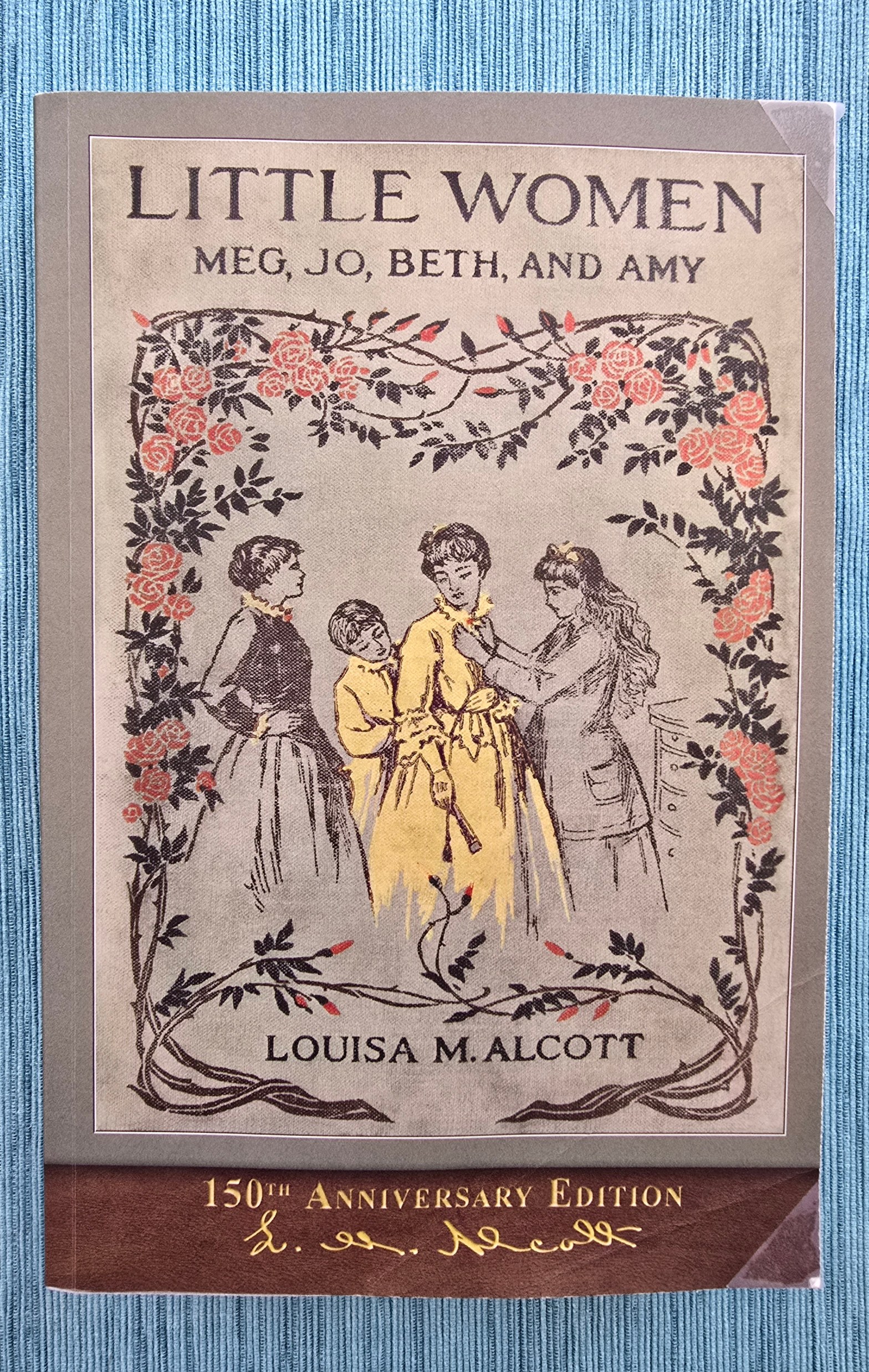
I just finished rereading LITTLE WOMEN by Louisa M. Alcott. I read this novel when I was a girl, but decided to take another look at it from a woman’s perspective. The story, based on the lives of the March family and their rich neighbors, Mr. Lawrence and Laurie, endures because its characters are flawed, endearing, and memorable. My favorite character is still Jo, one of the four March sisters, the one who writes; I identify with Jo’s yearning for independence, love of language, and passion for story-telling. But, besides its enduring characters, the novel is chock full of advice for life. Here is some of the wisdom I found among its pages as I read it for the second time.

Everyone struggles.

      Each of the eight main characters in LITTLE WOMEN struggle. Mrs. March gets angry and works hard to overcome it. Mr. March struggles with illness and from being separated from his family. Meg wants pretty things, but she is married to a poor man. Jo wants to be an independent woman, but she’s limited by what society allows women to do. Beth suffers from poor health. Amy desires to be sophisticated, but she doesn’t possess a fine vocabulary or wealth. Mr. Laurence pines for his lost son, and his grandson, Laurie, struggles with laziness and lack of purpose.

      Alcott illustrates these personal hardships so vividly that readers soon realize that everyone has difficulties in life even if they don’t talk about them. For example, Jo never realized that her seemingly serene mother had to struggle to control her anger until she revealed it during a private conversation.

      Self-reflection helps individuals overcome hardships and grow.

      The March family is comprised of extremely self-reflective characters. For example, Meg is so self-aware that when she has her own children, her mother helps her to reflect on how she has ignored her relationship with her husband while trying to be the perfect mother. Someone with less reflection would never admit to this personal failing. Once Meg sees the error of her behavior, she invites her husband, John, to participate in parenting and also sets aside time to spend with him alone.

      Travel helps people gain a larger perspective.

      Several of the characters in LITTLE WOMEN travel, including Mr. March and Mr. Lawrence, yet the excursions of Jo, Amy, and Laurie illustrate best how travel helps individuals develop a larger perspective. Jo takes a job in New York as a nanny where she meets Friedrich Bhaer. As she develops a friendship with him, she learns how much she appreciates his scholarship, humility, and the opportunity to be his equal. If she hadn’t gone to New York, she wouldn’t have discovered what type of man suited her.

      Amy travels across Europe with her rich friends, thinking to find a prosperous husband.She meets Fred Vaughn who is wealthy, and, if he proposes, she plans to accept even though she doesn’t love him. Yet, while she is waiting for Fred to propose, travel teaches her that she’d rather be a “lovable woman” than a woman of high society.

      Laurie’s grandfather convinces him to travel to Europe after Jo turns down his proposal of marriage.For the first six months, he spends money on frivolous activities, engages in gossip, and has no purpose. Finally, he meets Amy in Nice, and she scolds him for his wantonness.  They have a heart-to-heart talk about his unrequited love for Jo, and, surprisingly, fall in love with each other. Their love never would have developed without distance from the March family and, especially, from Jo.

      Grief is devastating, but can be healed.

      The saddest part of LITTLE WOMEN is when Beth dies from complications due to Scarlet Fever. For months before her death, Jo cares for her day and night, sleeping in the same room and monitoring each and every need she has. She even takes her to the ocean in the hopes that it will heal her. But, in the end, Beth dies. Jo suffers terribly with her loss. Finally, she confides in her father and together they find comfort in sharing their grief. She also assumes some of Beth’s housekeeping chores. She sings Beth’s songs and adopts Beth’s decorative habits. Over time, these activities bring her a sense of peace.

      Kindness mitigates almost any situation.

      LITTLE WOMEN includes several selfish moments such as when Amy burns Jo’s book in retaliation for Jo’s dismissive behavior toward her one night. Yet, the story also is filled with numerous examples of kindness which result in strengthening the bonds between the characters in the story. On Christmas morning, Mrs. March and her four daughters give away their own breakfast and firewood to a mother and her six starving children down the street which relieves their cold and hunger. When news arrives that Mr. March is ill, Jo sells her long luxurious hair for $25 to send with her mother, which gives Mrs. March peace of mind that she will have enough money to visit her husband and help him heal. Jo also successfully cheers up Laurie when she sees him staring wistfully out his bedroom window; she visits him and tells him stories. Jo’s act of kindness expels Laurie’s loneliness and establishes a basis for a strong friendship between the two of them. LITTLE WOMEN is a tribute to the power of kindness in alleviating hardships and generating positive outcomes.

      The first time I read LITTLE WOMEN, I merely focused on the personalities of the characters, their trials, and their decisions. Like the LITTLE WOMEN in the story, I fixated on the worries of a young woman—the search for an identity, love, and acceptance.  I didn’t have the life perspective to contemplate the larger lessons leaking out from between the pages of the story. This time around, though, I identified not only with the LITTLE WOMEN, but also with Mrs. March, an adult, mother, and wife, burdened with personal flaws and family responsibilities, yet striving to live a purposeful and happy life. I paused often, to consider the messages that Alcott may have consciously or subconsciously intended to convey, and connected those messages to my own life. This time, I discovered LITTLE WOMEN’S wisdom.

      Please share in the comments if you have ever reread a story and come away with a new perspective. What did you learn?

      Also, check out my novel, LEARNING TO WHISTLE, published in 2026 by She Writes Press and distributed by Simon & Schuster, a Winner for Women’s Fiction in the 2026 International Book Awards.

      ADAPTED FORTUNE COOKIE WISDOM

      Today, I broke open a fortune cookie to find this fortune: “The really great man is the man who makes everyone feel great.” Since I’m a woman, I immediately changed “man” to “woman” so that I could apply it to myself. Then, the more I thought about it, the more I liked my “adapted” quote better.

      When people think about the great characteristics of men, they often include “leadership” as one of those traits. Not so for women. Good traits for great women often include self-effacement, submissiveness, sweetness, and obedience.

      I inserted “woman” in this fortune to point out that women don’t have to be doormats or voiceless handmaidens to bring greatness into the world. In contrast, women who act as spineless or voiceless females hurt and limit the potential of both themselves and men. I know women who are their family’s breadwinners, but who still allow their husbands to act as the “head of the family.” I also know women who are treated so badly in their relationships that they have no power whatsoever—no equal voice in their marriage, no personal confidence, and no respect from their children. These situations occur when men act as insensitive partners and women allow men to control and diminish their lives.

      Women can be transformative leaders, but it’s going to take a global village to make that become a natural expectation.

       I’ve spent the last five years writing my first novel, Learning to Whistle, about a woman finding her personal power, something that all women struggle to do. My novel is coming out on April 7, 2026 by She Writes Press, a publisher that has been a true blessing in my life.

      Through the community of She Writes Press, I’ve learned about the countless ways that women and men can boost the success of women. First of all, I’ve learned that publishing is a process. Experiencing the progressions of editing, rewriting, re-examining, publicizing, and sharing success has given my writing life a bigger vision to follow. With my new perspective, I will forever learn better ways to express myself and to make a difference. My writing career isn’t dependent upon how much I publish, but, instead, about how I nurture my own heart and how many other souls I raise up.

      I’ve learned about the power of community and that people who promote the success of others experience their own greater rewards. I’ve cheered for my fellow She Writes Press authors when they win awards and followed their social media pages. I’ve purchased their books, read them, and written reviews.

      But, in return, I’ve received immeasurable benefits. Through my fellow She Writes Press authors, I’ve found a reputable company to publish the audio book of my novel. Through Brooke Warner’s Substack posts, I’ve discovered great memoirs, such as Joyride by Susan Orlean and All the Way to the River: Love, Loss, & Liberation by Elizabeth Gilbert, which have exposed me to examples of the grit it takes to be a successful author. Warner also connected me to Jane Friedman, who publishes her own writing blog and offers numerous writing classes. My publicist, Caitlin Hamilton Summie, introduced me to podcasts and blogs that promote writers such as Compulsive Reader that, on December 28, 2025, published an interview of me by my daughter, Rachael Brandt at https://compulsivereader.com/2025/12/28/an-interview-with-tess-perko/ on December 28, 2025. Hamilton-Summie also connected me to the author Suzanne Simonetti, who writes alluringly realistic tales about women and their struggles—good writing I can emulate.

      I don’t suppose anyone will ever label me as a “great” woman, but, then again, I don’t seek fame. I seek to be—not a doormat, not a handmaid, not only a mother, not merely a wife, not solely a friend—but a full participant in the human race who happens to have the valuable perspective of being a woman.

      What am I going to focus on in 2026—polishing my leadership skills until I lead with grace and ease.

      Marketing My Book My Way

      My first novel will be published early next year, which means I’m in the middle of marketing it. I’ve scoured social media to follow how other authors are approaching this process, but instead of finding comfort in the knowledge about what others are doing, I’ve become anxious that I’m not doing enough. I have a publicist that has guided me through the process of obtaining blurbs and is continuing to coach me through a Kirkus Review and social marketing as my publishing date approaches, but other marketing individuals and organizations have tried to convince me that I should be doing much more than I am.

      This predicament has resulted in some soul-searching. Was I doing enough? Did I need to hire more marketing experts to make sure I was getting as much publicity as possible?

      What I concluded was that I needed to stay focused on what I was comfortable doing even if it meant I did less marketing than other authors. My goal is for my publishing process to be a joyful experience more than a financial windfall, so I plan to eliminate anything that creates stress or unpleasant experiences.

      Grounding Myself

      Meditation has always been an important way for me to stay grounded when people or situations bring anxiety into my life. As part of my morning routine, I spend about ten minutes taking deep breaths to create a calm and positive attitude toward this marketing process. Throughout the day, if I notice stress building up in my body, I take more deep breathes to wipe it away.

      Avoiding Pressure and Competition

      I still examine Facebook and other social media sites to get ideas about what other writers are doing, but, now, I make a conscientious effort not to pressure myself or to compare my situation to anyone else. For example, one author I know traveled across several states to convince independent book stores to carry her book. Another author went on a nine-week book tour, visiting several book stores and other venues. When I see this kind of reporting, I remind myself that I’m only willing to do what feels joyful to me.  

      My approach is like a treasure-hunt. If I see an idea for marketing that someone has done, I picture myself doing it. If I think it will make me feel happy about my book, I’ll add it to my marketing plan.

      Refusing Comparisons

      I have no dreams of becoming a New York Times best-selling author. The only thing I care about is that the women who read my novel feel better able to cope with a difficulty in their own lives as they read about the trials of my protagonist. I’ve wanted to write a novel for decades and I’ve finally done that. If it helps make someone’s life better, then I’ve achieved my goal.

      James: Tom Sawyer’s Literate Companion

      I recently read James, Percival Everett’s story about the runaway slave, Jim, who accompanied Tom Sawyer down the Mississippi River. The story is told from the slave’s perspective which gives Everett many opportunities to reveal the slave’s character.

      The most remarkable thing about this story is how Everett portrays Jim as a well-read and highly literate man, not mentally bound by the psychological chains of slavery. Instead of being illiterate, he is able to effectively communicate ideas, can understand complicated information, and is capable of critical thinking.

      Ability to Read and to Understand Complicated Subjects

      Early on in the story, the reader learns that Jim has taught himself to read by studying the books in Judge Thatcher’s library. In addition to learning how to read, however, he also has developed the ability to think about complicated subjects such as civil liberties and how the morality of religion conflicts with the concept of slavery. He has read the literature of philosophers such as Voltaire who advocated for civil liberties through freedom of speech and freedom of religion and has seen texts by John Stuart Mill who wrote about individual liberties. We also learn that he knows of the works of Rousseau and John Locke, both of whom influenced the French and American Revolutions. Jim proves his literacy and ability to think about complicated subjects by contemplating the differences between being enslaved or possessing individual rights.

      Awareness of the Effects of Various Language Skills

      Before Jim runs away,he teaches his daughter and other slave children the difference in speaking like a slave and speaking like a literate human being. He cautions them to never make eye contact with a white person, never speak first, or ever to broach a subject directly with another slave since these are the behaviors of someone who is confident about their opinions. In fact, he teaches them not to express opinions of any kind and to let the whites identify any problems that come up.

      He coaches them on using poor pronunciation, incorrect spelling. The goal is to make the whites think that blacks are stupid and that they can’t express themselves clearly. This puts the whites in the position of feeling superior and protects the blacks from being blamed for trouble. What is made abundantly clear, however, is that Jim and the children he teaches are capable of distinguishing between the language that keeps a person subservient and a language that empowers them.

      Ability to Write

      At one point in the story, Jim asks a slave to get him a pencil so he can write. Young George steals a pencil from his owner, gives it to James, and eventually loses his life because of his “crime.”  However, James keeps the pencil in his pocket, the safest place he can find to avoid losing it. The pencil represents his ability to write down his own ideas, one of the most empowering aspects of being a literate person.

      Use of Literacy to Make Better Decisions

      Jim’s literacy allows him to make better decisions about how to survive. At one point, since he knows he’s being searched for under the name of “Jim,” he tells a white man, Norman, to call him February, but to say that he was born in June. If he hadn’t been able to read, he’d not have known the order of the months or how to manipulate them to help save his own life. When he returns to Judge Thatcher’s library, he forces Thatcher to show him how to use the map to find the farm where his wife and daughter are living.

      Jim wouldn’t have been successful at escaping slavery without his literate skills. His literacy allows him to communicate with people he meets, analyze his predicaments, and form judgments about how to survive. In the end, when the sheriff asks him if he is Nigger Jim, he elevates his name to the more formal version, James. After all, he is no longer the slave that was once given the name of Jim.

      Building a Sentence, Step by Step

      Photo by Dmitry Shamis on Unsplash

      You know what excites me? Crafting sentences that overflow with content and brim with alluring vocabulary. When I read Stanley Fish’s book, How to Write a Sentence and How to Read One, I became giddy with pleasure, thinking about all the future memorable sentences I could write. In one chapter, Fish demonstrates how to expand a four-word basic sentence into one that reveals character, moves the plot, and illustrates how the setting affects a story. Let me show you what he suggests with my own example.

      My basic four-word sentence is: her brother went to the meeting.

      Now, if I want to build the character of the brother, I must say something about him. Here’s my first addition: her brother, a tall and lanky 56-year-old with a cantankerous and rude demeanor. But I could say even more. Here goes: her brother, a tall and lanky 56-year-old with a cantankerous and rude demeanor who always arrived twenty minutes late to every appointment and made excuses for his tardiness. Now, the reader knows that this guy is unpleasant and too arrogant to take responsibility for his short-comings.

      Next, let me tackle how he went to the meeting. I replace the verb “went” with a more exact one and add some related information: her brother, a tall and lanky 56-year-old with a cantankerous and rude demeanor, who always arrived twenty minutes late to every appointment and made excuses for his tardiness, rolled his wheelchair across the snow-packed sidewalk in thirty-degree weather, wearing a down jacket, gloves, wool hat, and earmuffs. Not only does this addition explain how he got to the meeting, but under what conditions. It also infers that he was determined to go since driving a wheelchair over the snow in freezing weather is tough.

      Ok, home stretch here. Let’s finish by adding something about the meeting: her brother, a tall and lanky 56-year-old with a cantankerous and rude demeanor, who always arrived twenty minutes late to every appointment and made excuses for his tardiness, rolled his wheelchair across the snow-packed sidewalk in thirty-degree weather, wearing a down jacket, gloves, wool hat, and earmuffs, to get to his AA meeting. Whoa, I only added one more word, here, but a term full of meaning and content. Now, the reader might associate the brother’s tetchy deportment with his alcohol problem that he is struggling to overcome.

      I like this sentence so much I’m going to paste it on the bottom of this post, so I can admire it. Happy sentence-crafting to you, too.

      Her brother, a tall and lanky 56-year-old with a cantankerous and rude demeanor, who always arrived twenty minutes late to every appointment and made excuses for his tardiness, rolled his wheelchair across the snow-packed sidewalk in thirty-degree weather-wearing a down jacket, gloves, wool hat, and earmuffs-to get to his
      AA meeting.

      by Tess Perko

      Reference: Fish, Stanley. How to Write a Sentence and How to Read One. Harper. 2005.

      Five Ways to Read Like a Writer

      Photo by Michael Satterfield on Unsplash

      When I was a child, I sat in a corner on the floor, reading fairy tales and getting lost in the dreamy and, sometimes, cruel, plots. I wasn’t yet a writer.

      Now that I AM a writer, I read differently. I give myself permission to stop anywhere to observe the author’s craft. Here are five things I do.

      Make Notes in the Book

      I read books on my Kindle and via paper. The reason I use a Kindle is that it’s easy to hold while reading in bed. But, if I find an author whose writing I want to analyze, such as Barbara Kingsolver’s Demon Copperhead, I buy the paper version, and I write notes in it. Notes are better than highlighting since they help me remember why I marked a particular sentence. I’m not going to give the book away since I know I’ll come back to it over and over again to think about Kingsolver’s wording, sentence placement, or plot twists.

      Look Up Words

      Building vocabulary is a lifetime endeavor. I’m always finding new words while I read, especially when I read authors from other countries such as England and Australia. Different cultures seem to emphasize different vocabulary. For example, the other day, I came across the word “palaver” which means a prolonged and idle discussion. I look these words up, but I don’t take the paper dictionary off the bookshelf to do this. I’ll either use the dictionary feature on my Kindle or a dictionary app on my phone to make the task more efficient. Then, I’ll think about how the word fits into the author’s sentence and also how I might use it in my own writing.

      Think about Word Choice

      In Demon Copperhead, Barbara Kingsolver begins Chapter 40 with this sentence: “One look at her and I was gone” (319). The word that caught in my throat was “gone.” When I read it, I couldn’t wait to read the rest of the chapter. I had to find out what she meant by it.

      That’s how powerful one word can be. I want to be the kind of writer that can use words to grip a reader, make her heart pump, send pulses through her body, and keep her reading. The only way for me to become better at this is to read how other writer’s do it. Which word does she choose? Where does she put it?

      Evaluate How a Sentence is Structured

      Believe it or not, sentence structure can make an action more compelling. Short sentences or phrases create tension or drama. Long sentences can paint a picture. Here’s a sentence from Demon Copperhead: “In my high-water jeans and the old-man shoes Mr. Peg had loaned me at Christmas, I joined the tribe of way-back country kids with no indoor plumbing and the Pentecostals that think any style clothes invented since Bible times is a sin.” This sentence not only describes what Demon was wearing, but it also says something about the two types of kids that he hung out with. In other words, it packs a punch.

      Think about How an Author Uses Dialogue to Create Character

      People don’t use the same words, have similar accents, or form identical sentences. Writers can say a lot about a character by creating dialogue that is unique to him or her. For example, in The Great Alone by Kristin Hannah, Large Marge says, “’Sit down or I’ll knock you down” (162). Large Marge is a big woman who is not afraid to threaten a man and her words illustrate this. If she was small or complacent, she would’ve said something completely different.

      The Close

      I can’t think of any better way to become a mature writer than to read voraciously. The true writer that gets excited about great prose.