
By Tess Perko, author of LEARNING TO WHISTLE, a Winner for Women’s Fiction in the 2026 International Book Awards
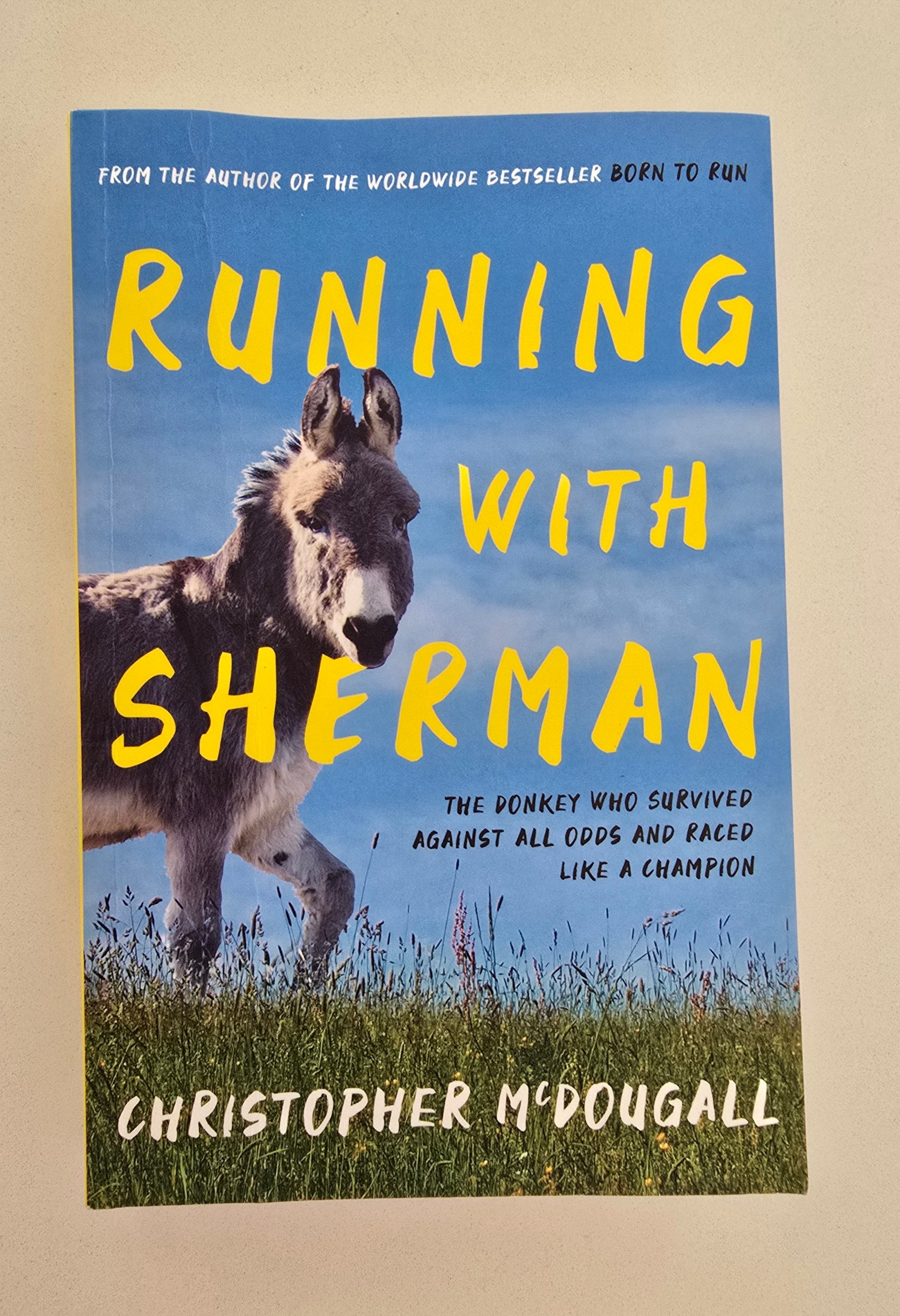
Running with Sherman by Christopher McDougall is the story of a donkey, Sherman, that McDougall and his family rescue from an abusive home. The author recounts Sherman’s liberation, the donkey’s trauma and fear, and his eventual healing as he, his wife, and their community help Sherman build a new life. McDougall, a former war correspondent for the Associated Press, uses narration and journalism expertise in his chronicle of Sherman’s tale. He includes stories about the lives of his Amish neighbors and the various individuals who inspire him as he nurses Sherman back to health. Sherman is adorable. MacDougall is big-hearted and persistent. The story is heart-warming and satisfying, but it also is much more than a story about a rescued donkey. By the time readers turn the last page, they are enthralled in the effort to heal Sherman and wiser about how to improve their own lives. Read further to discover just five of the lessons readers can glean from Sherman’s tale.
Abuse Creates Profound Mistrust and Fear
The story begins with Sherman’s rescue. A hoarder of animals has kept Sherman tied up in a dark and tiny cell inside a muddy broken-down barn, a space so small the donkey can barely move. His legs are mired in mud. When Sherman is brought to MacDougall’s farm, he has grossly overgrown hooves, filthy matted fur, intestinal parasites, and impaired digestion. The donkey is in severe pain and could possibly die. When the author puts Sherman in a pasture, he hangs his head and barely moves. Even after MacDougall arranges for the trimming of the donkey’s hooves, the shearing of his fur, and daily nutritious food, Sherman remains motionless and withdrawn. Finally, Lawrence, one of MacDougall’s chummy goats adopts Sherman as his new friend, and the donkey begins to trust other animals. It takes months, however, until he builds up enough courage to trust the new humans in his life.
Every Life Needs a Purpose
One of MacDougall’s friends, Tanya, a lover of donkeys, suggests that Sherman needs a purpose to help him overcome his abuse. Donkeys have no use on a farm, so MacDougal uses his imagination. He once had participated in a burro race in Leadville, Colorado, but had failed to get his donkey, Blue Note, to run the whole course. Eventually, he aborted the race and accepted that he was inept at donkey-racing. Nevertheless, with a bit of over-confidence, MacDougal, a runner himself, decides to train Sherman to race. As he endeavors to train the donkey, readers realize it isn’t important whether he ever gets Sherman to run in an actual race. Once he has a purpose, the donkey’s days are filled with nutritious food, healthcare, the companionship of two other donkeys, three humans, and hours of stimulating training.
Animals Feel and Think, Too
Humans have the tendency to believe that animals lack feelings and the ability to think. Sherman’s story, however, is filled with instances that prove animals have feelings, do think, and adjust their behavior accordingly. For example, when Lawrence, the goat, first meets Sherman, he takes time to sniff Sherman’s body, evaluating his needs and condition. After his thoughtful sniffing, Lawrence lies down next to the donkey and stays with him all night. Lawrence recognizes that Sherman needs nurturing.
All of the donkeys in the story prove that they can feel and think. One day, MacDougall and his wife try to take Sherman and another donkey, Matilda, out for a run without the third donkey, Flower. When they leave Flower behind in the pasture, she wails in utter despair. Sherman and Matilda try to turn around repeatedly to return to the pasture with Flower, and the day’s training is a disaster.
Humans Benefit from their Animal Friends
One of the most satisfying aspects of this story is when readers realize that MacDougall and his friends benefit from their relationships with the animals as much as the animals benefit from them. One of MacDougall’s neighbors has a son, Zeke, who quits attending college after he attempts to commit suicide. MacDougall recruits him to run with the donkeys. Zeke spends hours training with Sherman and the two develop good communication and trust. The training sessions improve both of their lives, providing them with purpose and a distraction from their individual traumas. Later, Zeke breaks his foot and can’t participate in the Colorado burro race, but he still goes to the race and supports Sherman before and after the event.
Relationships Are More Valuable than Getting Rich
In one chapter, MacDougall discusses the values of the Amish culture, which are health, happiness, and security. A man he knows, Sam, tells him about his uncle who started making money by fixing buggy carriages. His reputation grew so much that he was hired to fix carriages for Disney and the Smithsonian. These jobs made him lots of money, but took him away from his family and community. Instead of his life improving, he was no longer happy and content. Finally, he gave his business to his nephews and moved his family to a small farm. Why? To devote himself to his family and community and to regain his health, happiness, and security.
The lessons of Sherman’s story are profound. Have compassion for people and animals who experience trauma. A purpose can enrich the life of anyone, even if its ultimate goal is never achieved. Humans can improve the lives of animals, and animals can enhance human lives. And finally, the most precious aspect of life are the connections we make with other people and other living beings.
Tess Perko is the author of LEARNING TO WHISTLE, published in 2026 by She Writes Press and distributed by Simon & Schuster, a Winner for Women’s Fiction in the 2026 International Book Awards.

