Armistice Day Duck Hunt, 1940

Armistice Day, 1940 is remembered as the day a fierce storm altered the lives of hundreds of families living near the Mississippi River in Winona, Minnesota.

The ducks hadn’t flown down from Canada as they usually did each fall, flocking to the soggy islands and inlets of the Mississippi on their way south to avoid the bitter cold of the north. After weekends rowing their skiffs in vain through the currents of the river, hunters came home empty-handed. Instead of golden-breasted ducks for Sunday dinners, wives substituted farm hens or smoked sausages from the icebox.

There was talk, though, that on Armistice Day, the ducks were coming. Leon heard it from his friends at the Brom Foundry. After church on Sunday, it was the main topic of conversation.

The night before November 11, Leon cleaned his shotgun and packed a lunch of three bologna and cheese sandwiches and a thermos of coffee.  The next morning, he dragged his skiff away from the dock of his boathouse at Minnesota City and paddled over to an island near Twin Creeks before the sun slit the horizon.

Hundreds of other men joined him. They wedged their canvas-protected bodies in sand pits and damp gullies. Gusts of wind and promises of the ducks’ imminent arrival blew in from the south and west.

About eleven that morning, the ducks came, their forms propelled by the wind as they soared over the hunters’ heads. Thousands covered the sky like a swarm of disturbed bees.

The men pointed their shotguns at the flocks, took aim, and fired repeatedly.  They hardly contained their joy as masses of plumage fell to the ground. Leon was so preoccupied, he didn’t notice, at first, how fierce and cold the winds had become.

By early afternoon, his hands were so stiff, he couldn’t hold his rifle, much less point the barrel and shoot. He started to pick up the dozens of ducks around him, but lost interest as the winds threw him to the ground and curled down his neck into his bones.

Within hours, temperatures dropped more than 50 degrees and winds reached 80 miles per hour. Water skated over the great river like sheets of glass and soaked Leon and other hunters on the unprotected island. Angry waves beat the men’s canvased bodies and gripped them with a hurtful cold. Their fingers numbed; their noses and cheeks became frost-bitten.

Leon, his friend, Gerald, and three other men used their boats as shields against the wind. They squatted behind the tin defenses, ducking their heads and scrubbing their gloves together. Leon shouted out to Gerald about lighting a fire. Gerald shook his head, his eyes filled with fear.

Finally, Leon poked his head over the rim of his upturned boat, awkwardly aimed his gun, poked a numb finger in the trigger, stiffly pulled it back, and shot at the branches of a dogwood tree. Again and again, he volleyed until a branch fell, lifted by the gale on the way down. At first Gerald watched, then he aimed and shot, too, and after about twenty minutes, several more branches had collapsed to the ground.

Leon and Gerald gathered the branches while the other men huddled behind their boats. Leon waved to instruct the men to create a circle with their boats, the open sides facing inside. Leon and Gerald then arranged the branches in the center of the circle and lit a fire, Gerald using the lid of an ice chest to buffer the lit match against the wind.

Outside the circle of boats, winds blew snow into steep drifts as the daylight waned. Between the trunks of trees and knives of rain, Leon saw other hunters crouched near the ground, their arms crossed against their chests, their heads bent so low that their necks looked broken. One man was layingh with his back against a stump, his head thrown back, his mouth open. His hair was stiff in the rain. His eyes were closed.

The sky darkened quickly. Leon no longer could see the men among the trees. The rain turned colder and hit his face like steel pins. Even the darkness felt frozen.

Between slices of rain, Leon saw shadows crawling on their hands and knees toward the black river. They moved like crabs, their arms and legs clumsily dragging across the mushy ground and one by one tumbling over the banks into the gloomy abyss of water.

Leon’s group of men huddled around the fire inside the circle of skiffs, beating their hands until they were bruised and blue. They lost feeling in their limbs. Sometime in the middle of the night, they pulled the boats closer together for more protection and waited in bleak darkness.

The hours of fear and oblivion dragged on and on, and, when Leon could barely stand the cold, he howled into the wind like a wolf. His voice, unheard by his companions, warmed his chest. He squatted, then sat, then laid inside the rim of the boat, hoping that movement would keep his blood from freezing. When he could focus his thoughts, he pictured his wife—Lily’s face as she peeled cucumbers over the sink, her farm apron hitched around her thick waist. He imagined the blonde heads of his five children. Their faces bobbed in his mind like balloons, and then they were lost again.

Finally, daylight touched the eastern side of the river like a glimmer of hope. As the sky brightened, the icy rain unfroze. The gale-force winds relaxed, and the men felt their bodies unthaw like slabs of beef. They let the rain put out the fire, then crawled out of their makeshift hut of skiffs and started for home.

As soon as the sun came up along the Mississippi River, relatives gathered at boat docks for news of their men. Planes droned overhead searching for life and dropping packages of sandwiches, whiskey and matches where they found it. Parties of men in boats with broken motors paddled with difficulty out to the islands. They returned with chilled and shriveled hunters, breathing, but frozen with dreams of death.

Leon rowed up to the Minnesota City boat dock by himself. From the riverbank, his eleven-year-old son, Paul, watched him guide a strange boat alongside the pier, stiffly throw its rope around the post, and crawl onto the ledge. Once safe, Leon laid face up on the wood, his arms and legs askew. He didn’t move for a full five minutes.

Finally, Paul ran down the bank and down the pier until he reached his father. “Dad, Mom was scared. She prayed the rosary all night. Us kids fell asleep, but when I woke this morning, she was still sitting in her rocking chair, praying.”

Leon looked up at Paul’s face. His blonde hair was covered by a wool cap. He wore a parka and gloves. His cheeks and nose were red. Even dressed for winter, he was skinny.

Slowly, Leon positioned himself on his hands and knees. He put one boot down, and stood up by pushing himself up, first on his elbows, then his hands, then knees, and finally to his feet.

When he put his arms around Paul’s 11-year-old body, his heart thawed.

He had made it home.

The Sugar Cookie Grandma

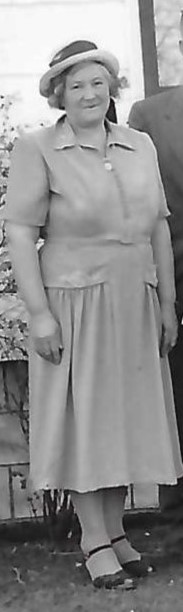
Grandma Lillian in her 40s

Back in my grandmother’s day, women didn’t get much notoriety, so I decided to write a blog about my Grandma Lillian. She’s not famous, but she deserves some long-overdue attention.

Grandma Lillian was born in Winona, Minnesota on November 9, 1903. Both of her parents’ families were originally from Trhove Swiny, South Bohemia, which is now part of the Czech Republic. This town dates back to the 1200s as part of an ancient trade route. In the 1400s, King Vladislaus II, who was then King of Bohemia, authorized the town to build a market. The town’s name comes from the Czech word trh which means market. The two most popular sites in Trhove Swiny are The Most Holy Trinity Church, which replaced a Catholic pilgrimage chapel, and an iron mill called Buškův hamr.

My Grandma Lillian, however, never visited the Czech Republic. In fact, she never traveled outside the United States except for Canada. She was a short woman, less than five feet tall, and a little plump. When she first married my grandfather Leon Jr., she lived in his father’s house on an 800-acre piece of property that is now a Minnesota State Park. Later, she and her husband bought their own house in Goodview, a town next to Winona. The house was painted white and sat on a flat parcel of land covered in shamrock green grass with a large vegetable garden in the back. Her brother Leo lived next door.

Grandma Lillian’s House in 2022

Grandma Lillian had five children, including my father who was the oldest. Then came David, Mary, Gerald, and Daniel. My father moved to California with the United States Air Force which stationed him at Mather Air Force Base. Once my parents came to California, they settled down to stay.

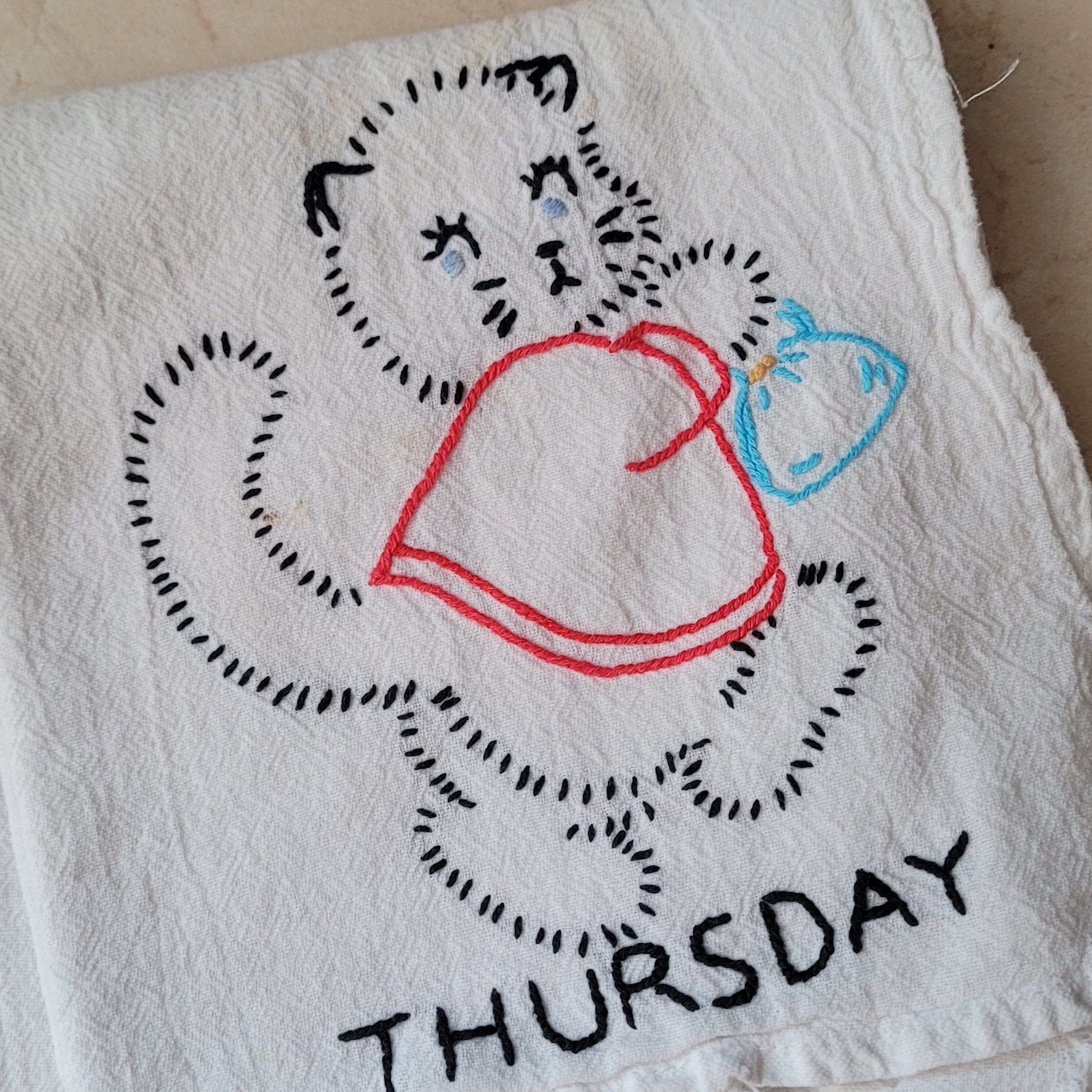
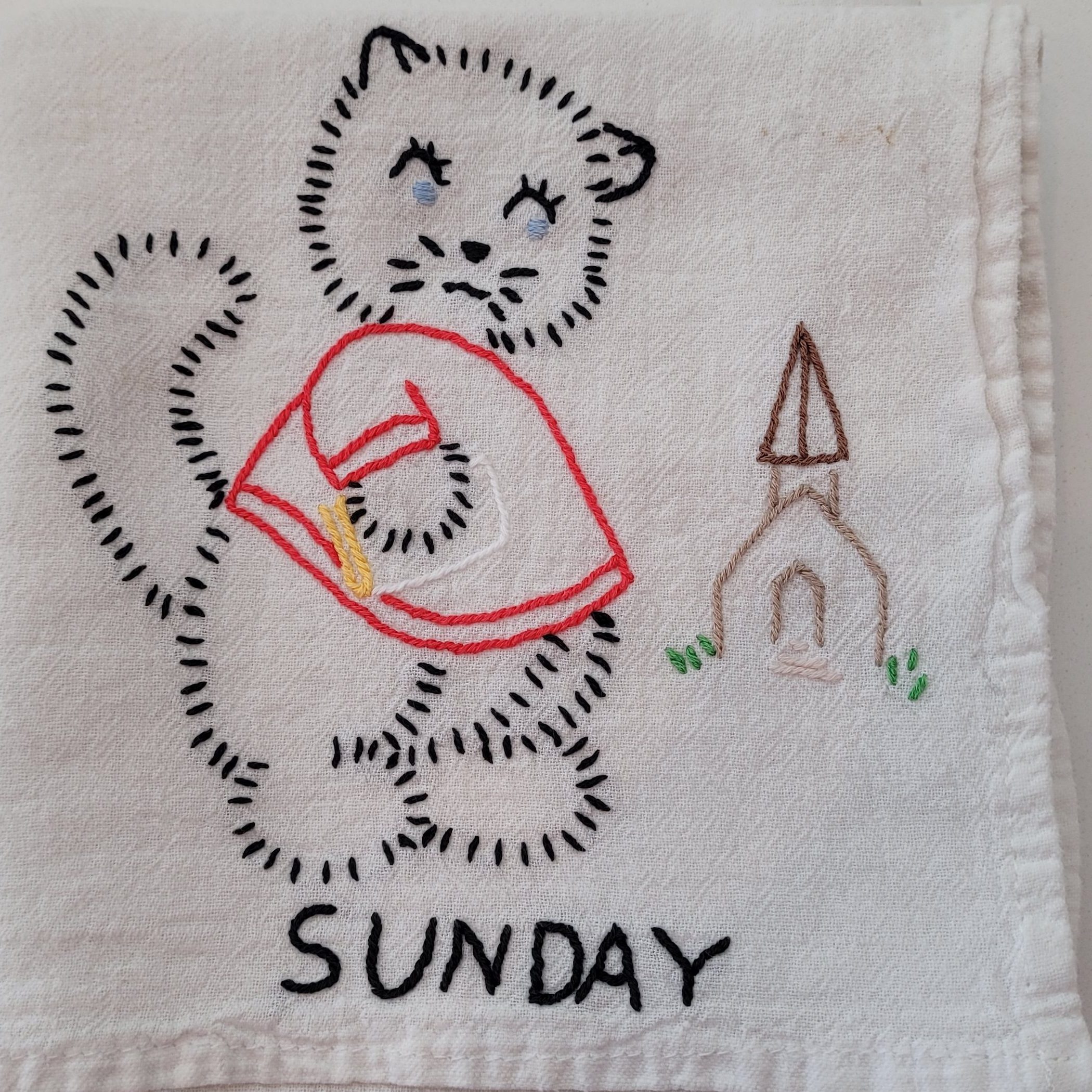
Grandma Lillian took the train to California several times to help my parents when my mother was in the hospital having another child. During these times, I learned about who she was as a person. I watched her embroider cotton tea towels, one for every day of the week. For each day, she embroidered a kitten performing a different kitchen task with one exception. For example, on Thursday’s towel, the kitten was carrying a tea kettle to the stove. On Sunday, the kitten was not doing kitchen work since she was going to church. She taught me how to embroider, but I was too impatient to make the stitches neat.

Even though Grandma Lillian didn’t ever travel to Bohemia, she used many recipes that came from the old country. She was famous for her Refrigerator Pickles. To make these, she combined seven cups of sliced cucumbers and one sliced yellow onion with a tablespoon of salt. She let the salt leach some of the water out of the cucumbers for about an hour. For the dressing, she combined one cup of vinegar, two cups of sugar, and one teaspoon of celery seed. She poured this over the cucumbers and stored the dish in the refrigerator to use as needed. By the time her recipe reached my family, we were eating the pickles as a side salad, all in one day.

My favorite memory about Grandma Lillian was how she made sugar cookies. Maybe we didn’t have cookie cutters. Maybe we didn’t have the shapes of cookie cutters that Grandma wanted. I don’t recall, but I do remember how Grandma folded a piece of newspaper in half and used scissors to cut out a heart about the size of her hand. Then she placed the heart shape over the rolled-out cookie dough and cut the dough with a sharp knife to make heart-shaped cookies. She placed the hearts on a cookie sheet and decorated them with colorful sprinkles. When we ate them warm out of the oven, they were buttery sweet.

Grandma loved to garden both vegetables and flowers. Many days, she spent hours out in her garden weeding, pruning, harvesting and enjoying the ambiance. My father inherited her green thumb since he also cultivated a big garden every year to feed his family.

Grandma Lillian was in her garden when she died on July 16, 1991. The weather was over 100 degrees, and my cousin Karen found her late in the day. Now, she is buried next to her husband Leon and her youngest son Daniel in a country cemetery. She didn’t become a movie star, a Congress woman, a Supreme Court judge, or even a newscaster on television. Yet, she lives on in the lives of her thirty-one grandchildren and more than forty great-grandchildren. That’s an accomplishment of which I am proud.

Photo by Diane Helentjaris on Unsplash

Cousin Love

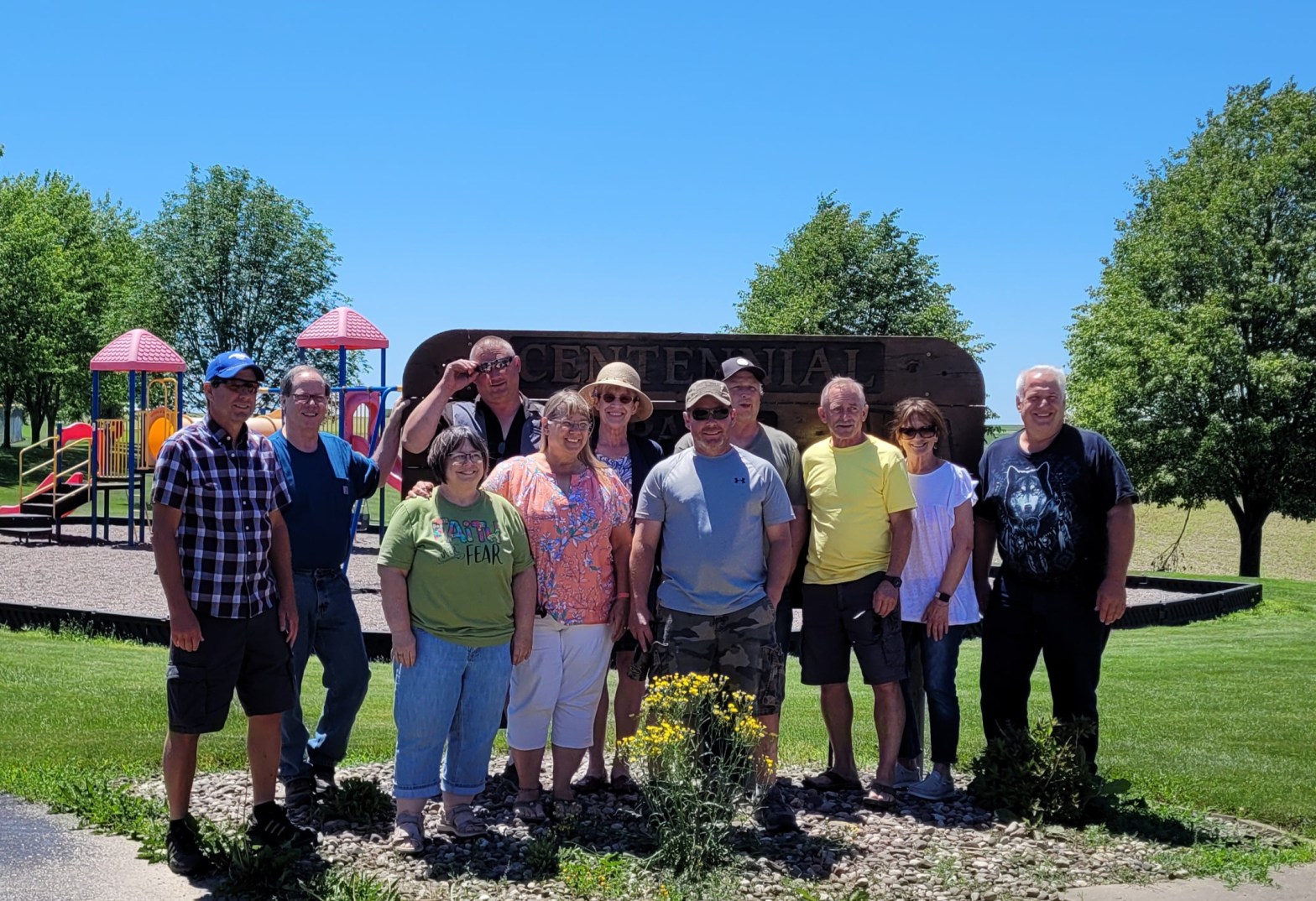
No one ever talks about their cousins, except my family. I have 44 first cousins that live all over the United States and beyond. I have friended many of them on Facebook. Many receive Christmas cards from me, and I visited many in Wisconsin and Minnesota this last year. I feel as close to my cousins as I do my own siblings.

My parents assured us that we would enjoy being from a large family since we’d always have friends. They were right. Even though I don’t see my cousins on a daily basis, they bring me so much joy and satisfaction.

My cousin Tim lives in Montana. He recently retired as the Superintendent of a tiny school district. Since I was a college professor, our careers were focused on helping students and improving education. We also comforted each other when we went through our divorces by sitting in a car in San Diego in the middle of the night and sharing stories after his brother’s wedding.

My cousin Roslyn is a high-school history teacher in Michigan. We both believe that students are better off when they learn history from more than one perspective and understand the difference between equity and equality since we worked with those concepts in the classroom. Roslyn is my philosophical partner in our extended family.

Carolyn lives in Winona, Minnesota. She raised her son as a happy single parent and now has two grandchildren. Yesterday, she posted a picture of her front yard packed with snow where she had painted flowers on the three-foot snow walls beside the path to her front door. What a creative spirit!

Cousin Dan lives in Japan with his wife and two pretty daughters. He works for the United States Navy and leaves his family for months at a time while stationed on the U.S.S. Reagan. I love his mustache and fun-loving family, who spend their afternoons searching for pottery on the beaches and artistic manhole covers in the towns.

My cousin Arlie is a handsome devil who has worn his once-dark-but-now-gray curly hair both long and short over the years. Once he drove a truck full of Wisconsin cheese to my parent’s house in California. We ate cheddar for weeks. Now, Arlie rides horses with his wife and works at an auto store. Even though we have little in common, at every reunion, we share heart-felt cousin hugs.

Patty lives in Boston and is married to Steve, who completely adores her. They go to baseball games and concerts on date nights, and inspire the rest of us not to give up on love. Patty sure knows how to pick a good partner.

Diane lives with her husband Matt in Minnesota. Now this is a fun girl. If you want to kayak in the Winona Lake, she’ll do it. She knows all the best restaurants in town and will even accompany you to the local spice and Polish museums for an afternoon. If you’re up for it after dinner, she’ll go with you to a bar for a beer and sit outside with the mosquitoes. One year, I watched on Facebook as she and Matt took their motorcycle on a cross-country trip through Minnesota, South Dakota, and Montana. Wow, what a woman!

Scott, a happy tall guy with a strong build, owns a dairy farm in Minnesota where he produces thousands of gallons of milk per day for American milk-drinking consumers. If you ask, he’ll take you on a tour of the farm and you’ll see where the calves are raised, cows are milked by machine, statistics are collected for each animal, and cow manure is recycled. Even a town-girl like me learns something every time I visit his farm.

I could go on talking about Lisa in Florida, Marilyn in Ohio, Marjorie in Minnesota, Randy in Minnesota, Karen in Wisconsin, Dewey, Joanne, Debbie, Denise, Renee, Kathy, Scott, Jim, and more, more, more, but you get the idea. I have interesting cousins in my life, and I interact with them frequently enough to maintain vibrant relationships.

Thank you, Mom and Dad, for maintaining such close family ties over the years. My cousins are an essential part of my happiness. I love them.

Winona: The Daughter Whose Choice Inspired a City’s History

My father was born in Winona County, Minnesota, an area dominated by Winona—a tranquil, medium-sized city on the west banks of the Mississippi River. 

What I love about Winona is its history.  Before white settlers came to the area, Dakota Sioux natives called it Keoxa.  They lived in the area for centuries and stayed for years, even after the the United States government purchased the land from them in the Traverse des Sioux and Mendota treaties in 1851. 

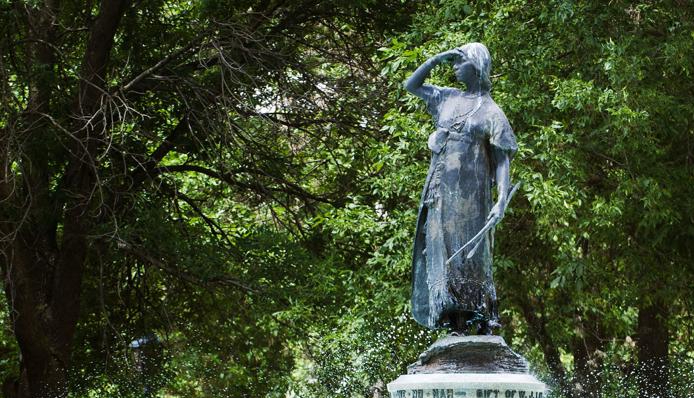
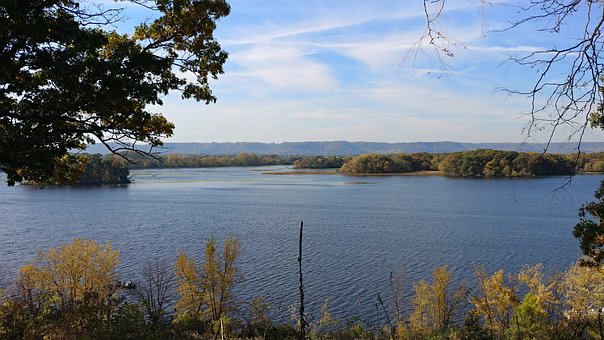
The first known white man to see Winona was Lieutenant Zebulon Pike in 1805, who traveled from Fort Bellefontaine in Missouri to find the source of the Mississippi River. In his journal, he writes about the Dakota legend of Winona, a daughter of Chief Wabasha III who throws herself from Maiden Rock, a precipice on the Wisconsin side of Lake Pepin—a wide expanse of the Mississippi River just north of present-day Winona. 

On October 15, 1851, Captain Orrin Smith, Mr. Erwin Johnson, and two other men—knowledgeable of the Traverse des Sioux and Mnedota treaties—claimed title to the riverfront and surrounding prairie land. When the town site was surveyed and plotted in 1852, Smith and Johnson named it “Montezuma.” 

Why this Aztec name was chosen for the town is a mystery.  Montezuma means “angry like a lord.”  Perhaps the swift current of the Mississippi River was the motivation for this label, but, nevertheless, the name didn’t last long. 

In 1853, Henry D. Huff bought an interest in the town site, and he was successful in changing the town’s name to Winona.  Huff was in town to make money by building railroads.  He also wanted to develop Winona into a classic city.  When he changed the city’s name, he also created streets and street names: Huff Street after himself, Harriet Street after his wife, and Wilson Street after his son.  The town was still a muddy expanse, but Huff built a family a mansion to signal to future residents that Winona was to be a town of sophisticated architecture and graceful culture.

What better way to achieve this than to name the city Winona, which means first-born daughter in Dakota.  Her story is tragic but inspiring.  She threw herself to her death so that she wouldn’t have to marry a man she did not love.  She settled for nothing but the best, and that’s what Huff wanted for himself and his new home.

References:

History of Winona, Olmsted, and Dodge Counties Together with Biographical Matter Statistics, Etc. H.H. Hill. 1884. pp. 352.

Withington, Ross.  “Henry D. Huff.” Writing in Winona: A student and community writing project. https://medium.com/wicwinona/henry-d-huff-b7ffb6102672. July 3, 2022.