Marketing My Book My Way

My first novel will be published early next year, which means I’m in the middle of marketing it. I’ve scoured social media to follow how other authors are approaching this process, but instead of finding comfort in the knowledge about what others are doing, I’ve become anxious that I’m not doing enough. I have a publicist that has guided me through the process of obtaining blurbs and is continuing to coach me through a Kirkus Review and social marketing as my publishing date approaches, but other marketing individuals and organizations have tried to convince me that I should be doing much more than I am.

This predicament has resulted in some soul-searching. Was I doing enough? Did I need to hire more marketing experts to make sure I was getting as much publicity as possible?

What I concluded was that I needed to stay focused on what I was comfortable doing even if it meant I did less marketing than other authors. My goal is for my publishing process to be a joyful experience more than a financial windfall, so I plan to eliminate anything that creates stress or unpleasant experiences.

Grounding Myself

Meditation has always been an important way for me to stay grounded when people or situations bring anxiety into my life. As part of my morning routine, I spend about ten minutes taking deep breaths to create a calm and positive attitude toward this marketing process. Throughout the day, if I notice stress building up in my body, I take more deep breathes to wipe it away.

Avoiding Pressure and Competition

I still examine Facebook and other social media sites to get ideas about what other writers are doing, but, now, I make a conscientious effort not to pressure myself or to compare my situation to anyone else. For example, one author I know traveled across several states to convince independent book stores to carry her book. Another author went on a nine-week book tour, visiting several book stores and other venues. When I see this kind of reporting, I remind myself that I’m only willing to do what feels joyful to me.  

My approach is like a treasure-hunt. If I see an idea for marketing that someone has done, I picture myself doing it. If I think it will make me feel happy about my book, I’ll add it to my marketing plan.

Refusing Comparisons

I have no dreams of becoming a New York Times best-selling author. The only thing I care about is that the women who read my novel feel better able to cope with a difficulty in their own lives as they read about the trials of my protagonist. I’ve wanted to write a novel for decades and I’ve finally done that. If it helps make someone’s life better, then I’ve achieved my goal.

Five Things I Love about Living in the San Francisco Bay Area

It’s expensive to live here. Probably the most expensive place in the United States. I, however, bought my home years ago, and I’m not planning on moving. There’s so much to love about the San Francisco Bay Area, why would I? Here are five things I appreciate about this place.

Outdoor Life

Tess and Bob in the San Jose Rose Garden

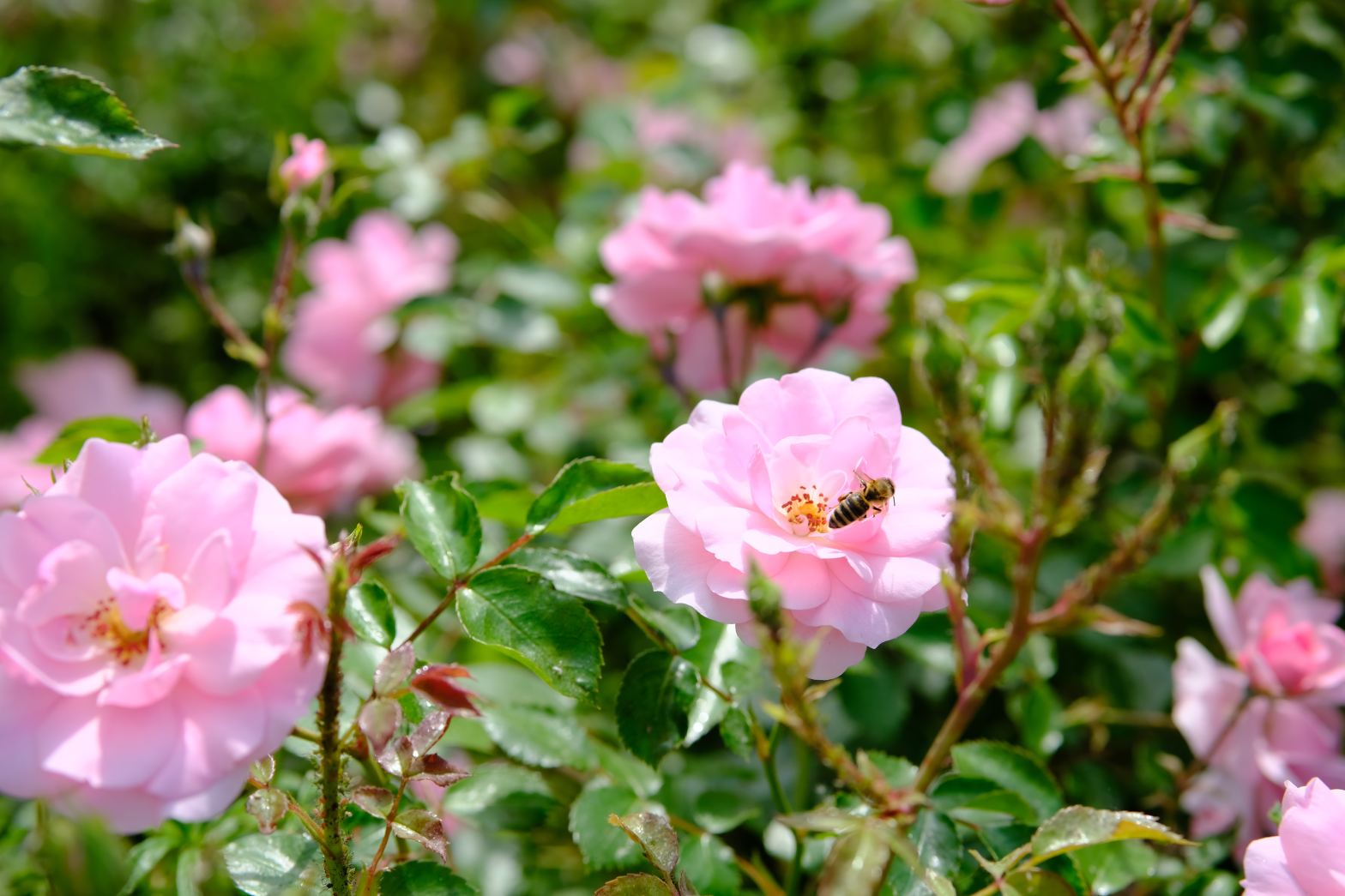
I’m a flower person, so I need to live where flowers are prolific. In the Bay Area, flowers bloom all year because of the mild temperatures: for example, camellias in the winter; daffodils, irises, and tulips in the spring; roses all summer; and chrysanthemums during the fall.

All year, Bay Arians can play outside in the thousands of parks and trails.  Golden Gate Park, over 1,000 acres, is the first urban park I ever visited. My dad took us to the Japanese Tea Garden; we ordered tea and cookies to eat while surrounded by lush foliage and quiet streams.

The Iron Horse Trail in the East Bay follows the former Southern Pacific Railroad right-of-way from Concord to Pleasanton for 32 miles. I use this trail for easy biking or flat walking. It also meanders near some towns, so I can stop in Danville for a latte or in Alamo for breakfast with my friends.

One of my favorite places to hike is on Mount Diablo. The whole mountain is covered with trails, lakes, and wildlife. One October, I hiked with a group to find tarantulas. From June to October, the males migrate to find a female to mate with. We found several. I even let one crawl across my hand.

Incredible Food

I don’t know of anywhere else in the world where I can enjoy fresh food used in cuisines from every continent.

San Francisco is next door to the vast California farm belt so our stores are filled year-round with seasonal fruits and vegetables. We also enjoy local fish such as oysters from Tomales Bay and Dungeness crab from the Pacific. And for people who like steak, California grows that, too.

In the Bay Area, I can eat foods from many continents and stay home. Tony’s Pizza Napoletana on Stockton Street in San Francisco has won awards for its memorable Italian and Sicilian pizza. My favorite is the Gigante Sicilian style pizza that features salami, linguica, pepperoni, and a host of veggies.

I love Mexican food, and the Bay Area is home to thousands of Mexican taquerias and restaurants. I order mahi mahi burritos at Taqueria Azteca in Dublin which is merely a kitchen with a few tables inside a linoleum-lined dining room. But the food is SOOO delicious.   

The Nix Company on Unsplash

Diversity

Many cities in the United States have diverse populations these days, but I think that the Bay Area has the best integrated diverse population. For example, last month, San Francisco hosted the Gay Pride Parade. My daughter and I walked through the parade festival on our way to a theater. On television, Bay Area channels feature advertisements with heterosexual AND gay couples. Our news programs have Caucasian, Hispanic, Asian, and Black newscasters.

And diversity isn’t only about race. I love my home because we have people from all walks of life—electricians, high tech workers, waitresses, students—and all ages—from babies to seniors.

I never feel weird interacting with a different culture from mine or a different age group. I believe that is unique.

Weather

We have a saying in the Bay Area: if you don’t like the weather, drive ten miles. Yes, San Francisco Bay Area has micro-climates. One day, it can be 60 degrees in San Francisco, 80 degrees in Mountain View, and 90 degrees in Walnut Creek.

But the point is, the weather is almost always great. We rarely wear down jackets here because it just doesn’t get that cold. What I wear most days is a T-shirt and a sweater, if I need it. Wearing light clothes and flip flops makes me feel “free.”

Golden Gate Bridge

One thing I never get tired of seeing is the Golden Gate Bridge which spans from San Francisco to the Marin headlands at the mouth of the San Francisco Bay. It’s not really “golden,” but its vermillion paint, named “International Orange,” contrasts so beautifully with the green and gold landscape and the mineral blue water of the Bay that the effect is stunning.

I’ve walked across the bridge several times, and, one time—long before I was married, someone proposed to me in the middle of the span.

Recently, at the Presidio Park, my daughter and I sat in Adirondack chairs to gaze at the bridge under a cloudless blue sky. It was heaven on the Bay.

What Writing Letters Taught Me

Photo by Hans Isaacson on Unsplash

My mother hated writing letters, but she had three sisters who loved to communicate with her via writing. Mom was. however, an excellent problem-solver; using her exceptional negotiation skills, she convinced me to write letters to her sisters on her behalf.

For someone who didn’t like to write, she was a pretty good writing coach. From her coaching, I developed a passion for writing. This is what she taught me.

Brainstorming is Useful

When Mom asked me to write a letter, I first said, “I don’t know what to write.” Mom asked me to make a list of things I could write about, and she gave me some ideas: the weather, the garden, church, school. After a while, I started coming up with some of my own ideas in addition to these. My list included making cookies, going to the snow, and having my friends over to spend the night.

I still make lists before I write. Sometimes, I get ideas for a blog, like this one, while I’m sleeping. I get out of bed, go to the other room where I keep an arm chair and a pad of paper, and write down the ideas before I forget them.

If I get a dose of writer’s block, I jot down impressions that I want to include in a blog or chapter. I list as much information as I can and then leave it alone for a day or two. The notes help me get into the mood to write, and soon my writing juices are flowing.

How to Warm Up

“I don’t know how to start the letter,” was another refrain I often used. Mom said to start with “How are you? I am fine,” and then move onto another topic.

Asking about someone’s health seemed to be such a gracious opening, and it made me feel like a polite niece. Believe it or not, this introduction helped me warm up for the next subject.

How do I warm up for writing today? I have several methods that I’ve created to get me into the mood.

The first one is to take a walk in my garden where I have dozens of rose bushes that I’ve planted. Sometimes, I prune, other times I fertilize, but I always at least enjoy how beautiful they are. In my garden, I express my creativity, and enjoying it stimulates my creativity for writing.

Another thing I do to warm up is to read one of the affirmations that I’ve posted on my bulletin board to the right of my desk. Currently, I have three affirmations typed on 8 ½ by 11-inch paper to inspire me.

The first one says, “I lead with grace and ease.” When I read this, I see my writing as a way to lead the world to a better place. Thinking about being a leader dispels fear and encourages me to stand tall and feel calm.

The second one says, “I possess perfect self-expression.” I developed this affirmation when I started writing my first novel three years ago. I didn’t want writer’s block to inhibit my progress, so I thought of how I wanted to feel when I sat down to write.

The third affirmation on my bulletin board is, “The Midas Touch.” A few months ago, I was discussing my writing with a friend, and she said, “You possess The Midas Touch.” What she meant was that I was a brilliant and prolific writer. This gave my confidence such a boost that I decided to make it another affirmation for daily motivation.

Sentence Clarity

The letters I wrote on behalf of my mother taught me how to write clear sentences. As any serious writer knows, practice is the key to improvement. My mother had faith in my ability, so I was writing letters to her sisters at least once a month, and I started when I was six years old. Due to my mother’s coaching, my writing career and my writing practice started early in life. I’m sure, by now, I’ve written at least as much as The Beatles sang during their band years.

Paragraphing

Even though mother didn’t like to write or read, she was organized; therefore, she coached me to start a new paragraph every time I started to write about a new topic.

For example, I started each letter with “How are you. I am fine.” If the next topic was the weather, I’d start a new paragraph, which often turned into an interesting slice of my life. Here’s an example:

Today, the weather was sunny. We played outside all afternoon, and the bees were buzzing around the plums that had dropped to the ground. Since I was barefoot, I stepped on three bees and got stung three times. Luckily, Mom took out the stingers and I was fine.

Revising is Okay

If I made mistakes on my letters, my mother coached me to cross them out and to write the corrections after them. If I made too many mistakes, she convinced me to reprint the whole letter.

Maybe I was going to be a writer anyway, but knowing that I could make mistakes and fix them took off the pressure of being perfect the first time. For me, this was an important process to learn since, deep down, I hate making mistakes.

I also learned about revising from the letters I received from my Aunt Mary Ann. Today, Aunt Mary Ann is over 90 years old and still writes letters. If she makes a mistake, she crosses it out and rewrites what she meant to say. She demonstrates the perfect example of the writing process.

The Courage to Write

The other day, I told my five-year-old granddaughter that she could be a writer. Using one of her books, I showed her where her name would appear on the title page. She smiled at that, but then said, “I can’t write a story.”

For many people, writing is a daunting task. I know this since I taught writing at the college level for fifteen years.

Fortunately for me, I had a mother who didn’t take “no” for an answer. She had confidence that I could write.

Even now, when writer’s block stops my creative flow, I write letters: to Aunt Maryann, Aunt Dorothy, my friend in New Mexico, my sister-in-law in Florida.

Where did I get the courage to write? From a non-writer who believed in me.

I Want to Be a Rosarian

One day as I was driving through a neighborhood in my town, I saw a front yard surrounded by a white picket fence. Inside the fence was a garden full of rose bushes—tea roses, floribundas, grandifloras, pinks, reds, whites, lavenders, and yellows. Roses of every classification and color. In their midst, was a white head of hair belonging to an elderly woman. With a clipper in her gloved hands, she was snipping roses to take into her house. That’s what I want to be when I get old, I told myself. I want to be a rosarian.

The Definition of a Rosarian

A rosarian doesn’t have to be a professional rose gardener. Anyone can claim the title if they are fond of and/or cultivate roses. To cultivate means to nurture, and I already foster a large family of carpet rose bushes and three tea roses. As soon as my new retaining wall and patio is installed, I will plant at least six more tea roses against the fence. So, I’m technically already a rosarian, but I want to be a more involved one, and the goal of this post is to help me identify what a rosarian needs to do on a regular basis to grow big, bountiful, gorgeous, fragrant roses.

A Rosarian Knows Where to Plant Roses

Roses like as much sun as possible. I live in Northern California where the sun is plentiful so finding sunny places to plant my roses is not a problem. In addition to sun, however, roses need good soil with ample drainage. My yard has fertile soil with plenty of drainage so I’m lucky there, too.

A Rosarian Feeds Her Roses

I once read that roses are hungry feeders. They like to receive a lot of water, nutrients like nitrogen, phosphorus, and potassium to create strong, vigorous growth, and calcium for plentiful blooms. I used to fertilize my roses with chemicals, but, after I went to France and saw the gorgeous organic roses in the Chateau de Chenonceau Garden, I came home determined to become an organic rosarian myself. Now, I fertilize my roses with chicken manure and bone meal to promote their healthy growth and blossoming.

A true rosarian continues to learn about her expertise. I just read about Dan Bifano, the master rosarian to Oprah Winfrey who makes his own blend of fertilizer. According to an article in Veranda on April 1, 2021, Bifano creates his fertilizer using alfalfa meal, chicken manure, worm castings, cottonseed meal, and fish meal. I don’t know where I would find all these ingredients or what proportion to use, but I’m keeping this recipe for future reference.

A Rosarian Learns the History and Vocabulary of Roses

I’m currently building a library of books about roses and I’ve joined the American Rose Society. I also may join the local chapter of the rose society to learn more about growing roses in my specific area.

In the handbook from the American Rose Society, I learned that roses are grouped into three main categories: wild roses; old garden roses which existed prior to 1867; and modern roses which were not in existence before 1867.

From my reading, I also learned that the first rose breeder was Guillot who created La France, the first hybrid tea rose. Contemporary breeders focus on creating hybrids that are disease resistant and more fragrant. Modern roses come in all shapes and sizes with varying characteristics including blooms with differing numbers of petals. My favorite are the hybrid tea roses that have large blooms with over 30 to 50 petals. Who doesn’t love gigantic flowers?

A Rosarian Grows the Right Roses for Her Climate

I recently purchased The Color of Roses: A Curated Spectrum of 300 Blooms by Danielle Dall’Armi Hahn, which includes beautiful photographs of 300 kinds of roses in all shapes and sizes. While browsing through this book, I fell in love with certain rose types, but I didn’t know whether they would grow well in my garden.

In the same Veranda article, Dan Bifano recommends that rosarians become familiar with the roses that grow in their local area by visiting local rose gardens and nurseries. Luckily, just four miles from my house is a park with hundreds of rose bushes that are labeled with their names. I’ve walked in this park many, many times, but now I’ll go to inspect the rose name tags.

I also plan to tour some of our local nurseries. I’ve already been to Home Depot and found some of the roses that are listed in Dall’Armi Hahn’s book including Marc Chagall. I have also identified a few local nurseries that specialize in roses. I can’t wait to choose some for my new garden.

A Rosarian Prunes for Winter

In the past, I always pruned my roses almost to the ground for winter. Recently, however, I read that winter pruning depends on the type of rose. Climbing roses, for example, should not be pruned to the ground. The main branches should be retained while weak offshoots should be trimmed back. This winter, when I get my pruning shears ready, I’ll think carefully before I cut.

A Rosarian Removes Spent Blooms in Summer

To keep roses looking gorgeous, conscientious rosarians clip off blooms that have bloomed to maturity and then start to wilt. I think this is my most favorite rosarian task since it is an opportunity to reshape the rose bush into an attractive shape. I am careful to clip the stalks just above a three-leaf pattern so that another rose is encouraged to bloom.

When I think about the elder woman’s rose garden, my breathing slows and my heart feels peace. Someday soon, after I have added my new tea roses, my own garden will give me the same feeling, and I’ll be the rosarian wandering amongst my bountiful blooms.

Fabulous Fred

Some people are more memorable than others. They pop up in your mind. You visualize their wicked grin, beguiling smile, or musical voice as you recall old travels or past meetings. Recently, when I toured France with Insight Tours, I met such a man, and his name was Fred.

My fist exposure to Fred was an email he sent me before the trip started. The note contained clear details about where to meet in the hotel and what I had to do to label my luggage as part of the tour. Fred’s words were business-like and direct. He signed his name Frederique, but suggested that we call him Fred.

Fred dressed in a well-ironed red-and-purple-checked button-down shirt over a gray pair of casual trousers. His head was bald and he had a salt and pepper mustache and closely-cropped beard. It didn’t take long for this trim, conservative and snappy dresser to impress me. These are the qualities that he possessed to make him the best tour director I’ve ever had.

Clear with Directions

I came to appreciate Fred’s detailed directions, especially when he let us wander in the middle of ancient French villages and described how we could find the bus at the assigned time. He made use of landmarks such as the gothic church or the town hall. He used his arms to indicate left and right and repeated the directions as many times as we asked him. He seemed to understand that many people didn’t listen well until they realized they had to rely on themselves to find their way.

Timely

Whenever it was time to meet, Fred arrived first. He finished breakfast before us and waited for us in the lobby. He was at the bus at all the designated times, and he made sure that our luggage was picked up from our rooms and loaded into the bus timely.  How? He helped the hotel bellhops gather it and transfer it outside so as not to delay our departure.

Personable

Fred turned out to be a friendly and approachable human being. Every morning, when the bus started moving toward the next destination, Fred wished us Bonjour. After we responded, he continued with Avez-vous bien dormi? Did you sleep well? When we responded negatively, as many travelers might, he taught us a more positive way to answer that question. Say oui first, and then indicate how you might sleep better next time, coached friendly Fred.

He joked about his baldness and described how he once had a mop of hair in his twenties. On Day 2, he sprained one of his fingers moving our luggage and, most unfortunately, a pigeon defecated on his head in the middle of a town square. Neither of these incidents ruined his sunny demeanor. He allowed two tour members to clean the pigeon poop off his head and shirt and continued the tour with humor. 

Later in the tour, he was comfortable enough to describe his recent bout with cancer, showing that he was just another human being with human problems. Since many of the travelers were seniors, I’m sure they felt more at ease with him since many of them had suffered from medical problems themselves.

Caring and Attentive

Fred demonstrated sensitivity to all of us in many ways. He stood at the bottom of the bus steps and helped us climb safely to the ground. He also instructed the bus driver to stand at the other door and do the same.  When we stepped down, he smiled at each one of us as if we were the most important person on the bus.

One of the single tour members appeared to have a memory problem and Fred always made sure she was back on the bus and physically safe. He never complained that she was forgetful or not walking as fast as the rest of us. He simply took care of her kindly.

Interesting and Informative

The tour covered the country roads of France, which means, sometimes, our bus driver would drive us over remote mountain passes, into narrow tunnels, or over roads that circled country vineyards and farmland.

We were never bored while touring these far-flung French trails since Fred provided us with detailed and stimulating lectures that described what we were seeing and what the history of the area was. For example, when we were approaching Arles, where Vincent Van Gogh lived for many years, Fred revealed that the artist painted over 300 painting in Arles, but sold only two. While we drove through the walnut groves of the Dordogne Region, Fred explained that every part of the walnut tree was valuable to the French farmer. The nuts are sold for food, the shells are used as fertilizer, and the wood is used to make furniture. After listening to Fred’s lectures, I felt a little smarter and a little more French-savvy.

Resourceful

Several times throughout our trip, Fred informed us that he and our bus driver had poured over the map and found new country roads to explore that day. He assured us that the driver was an expert driver so we were sure to enjoy the new adventure.

Another way that Fred proved his resourcefulness was when we stopped in various places and he went out of his way to improve his understanding of the area. For example, when we visited Pont du Gard, a three-storied Roman aqueduct in the Languedoc Roussillon Province, Fred climbed up the trail beside the structure to view the third level, something he had never done before.

Helpful to French Travelers

In my past visits to France, I have had negative experiences with French people. Waiters ignored me. People on the street merely walked away when I asked them a question.

Fantastic Fred provided us with a remedy for situations like this. He explained that French people learn English in school, but when tourists come up to them and ask them a question in English, they freeze, once again experiencing those dreaded English classes.

Fred recommended that we approach French people with a polite Bonjour and allow them a moment to warm up to us before launching into our English question.

I put this method into action. Whenever I entered a shop, I said Bonjour to the shop clerk. Each time, I was rewarded with warm eyes and a smile. If I wanted to use a restroom in a restaurant where I wasn’t eating, I said Bonjour to a waiter, then asked to use the restroom, and the waiter never turned me away. Fred’s method seemed to be foolproof.

Funny

Who doesn’t like a comic? On the first day of the bus tour, Fred demonstrated that he had a repertoire of jokes in his tour director cache. The first joke he told us was a parody of the French people according to the Germans.

The joke went like this. When God made France, he created the dazzling Alps to the East, the stunning and bountiful Atlantic Ocean to the West, the beautiful Mediterranean to the South, fertile farmland, prolific vineyards, and bountiful orchards, ample rain, and plentiful sunny days. No other country had been blessed with such advantages.

The Germans were upset, and they asked God why he gave France so many wonderful characteristics. They insisted that it just wasn’t fair.

Upon hearing the Germans, God became contemplative. He thought and thought and thought. Finally, to balance everything out, God made the French people.

When we heard the punchline, the bus erupted in raucous laughter. You would think that we were laughing at the French people, but Fred was quintessentially French, so his joke helped us appreciate their humanness instead of thinking poorly of them.

Here’s another joke by Fred that had to be told in English to be funny. What do you call someone who jumps into the Seine River?

Answer. In Seine.

It takes a certain personality to tell a joke well. Fred could do it because he wasn’t afraid to be self-deprecating and he was naturally good-natured.

I will remember Fred every time I travel on a tour. I’ll unconsciously look for his snappy ensemble in every hotel lobby and wistfully hope that he comes walking through the door to lead us on another well-organized, comfortable, informative, and fun adventure.

Why I Make New Year’s Resolutions

Every year, just before New Year’s, I take out my diary and write down New Year’s Resolutions. I don’t show them to anyone, not even my husband. They are only for me to see, only for me to enjoy. I hide my resolutions where no one can ever find them, and I look at them throughout the year and at the end of each year.

Some of my friends never make New Year’s resolutions. Maybe they don’t want to disappoint themselves. Maybe they don’t want to change their lives. I read once, though, that as long as a person continues to grow, she will feel young. I like to challenge myself to continue to grow in various ways. Resolutions help me do that, but here are more specific reasons why I make them every year.

New Year’s Resolutions Help Me Clarify My Goals

I am not always clear on how to accomplish my goals, but when I make a New Year’s resolution, I try to make it specific enough so that I know exactly how to succeed.

Let’s say that I want to pay off my mortgage early. A New Year’s resolution will help me decide exactly how to do that. For example, I could promise myself to pay an extra $500 a month for the whole year. This makes it easy for me to follow through on my promise.

Resolutions Help Me Grow

When I want to learn something major, I make it part of my New Year’s Resolutions, so I don’t forget about it.

For example, after I retired, I decided that I wanted to become fluent in Spanish. I realize that this is going to take me years to accomplish, but I’m not going to worry about that. I’m just going to practice until I achieve it. In order to do that, I made a resolution to practice Spanish for at least fifteen minutes every day. Along with this resolution, I am taking a two-hour Spanish class every Wednesday morning for which I complete homework. Nevertheless, outside of the class and homework, I still promise to practice fifteen minutes a day. This is not too long so that I become overwhelmed, but long enough for me to improve my speaking, listening, and vocabulary. I’ve been practicing Spanish for fifteen minutes a day for two years now, except for the three weeks I went to Italy. I can now speak in Spanish without have a brain freeze.

Resolutions Act Like a Measuring Stick

I love looking back on my resolutions from prior years and thinking about how they helped me accomplish something.

Last year, I resolved to write the first draft of my novel. By the end of October, I had finished it. Even if I hadn’t finished it, I would have written far more of it than if I had never made the resolution. I can always measure my progress against the promise I made. I don’t berate myself for not accomplishing my goal; instead, I’m happy of the progress I made.

I’ve made eight resolutions for 2023. One is about how I promise to exercise a certain amount each week. Another is about how I plan to write the second draft of my novel. Practicing Spanish is the third one, and the other five are for my own eyes only.

During 2023, I’ll look back on my personal promises, and coach myself to stay on track. I’ll be my own best, supportive friend.

Struggling to Revise My Novel

Photo by Ann Fossa on Unsplash

I took two years to write the first draft of my novel. Not bad. Then I asked a good writer friend of mine to read and critique it.

Boy did she. She not only gave me comments about wordiness, redundancy, perspective, and verb tense, she also lent me a book about plot.

My friend’s critique was exactly what I needed. I suspected my plot needed work. Now, after reading and rereading the book she lent me, I’m certain my whole novel needs a major revision.

I’m not talking about little changes here and there. I’m talking about taking down the whole church and rebuilding it with most of the old bricks and some new ones.

Luckily, this epiphany struck me in December, just before the holidays, when I could convince myself that it was o.k. to take a break from writing my novel. Still, I continued to fixate about it while I attended holiday luncheons, Christmas craft sales, girlfriend gatherings, choral concerts, The Christmas Carol at a local theater, and festive dinner and dance parties.

In fact, this blog post is one way that I’ve been avoiding revising my book. It’s easier for me to think of blog ideas than it is for me to start rewriting the plot, so I’ve successfully added several more posts during the holidays.

The book my friend gave me was about writing plots for screenwriting, so I bought a similar version of the book that focused on novels. In a nutshell, both books promote the idea of creating a beat sheet, a type of outline for the plot that includes certain characteristics such as an opening image, theme, and a catalyst. One way to create a beat sheet is to post index cards on a bulletin board with scenes for each part of the novel. An online program is also available for a fee.

I cleared a bulletin board that I have upstairs so I could use it for this purpose, but my writing desk is downstairs. After several days of thinking about how to arrange the board and buying color-coded index cards, I concluded that my beat sheet needed to be close to my computer. This led me to create my own version of a beat sheet using Microsoft Word table features. I even typed in some notes for each section. For example, for the opening scene, my main character is with her sick mother in a chemotherapy lab.

I’m struggling with the theme of the novel, which I think means that I still don’t fully understand the point I’m trying to make. Is the story about my character’s grief? Is it about her growing up? Is it about healing? My head hurts.

Another aspect that I struggle with is writing about a character who acts immature or angry because she is hurting. Emotionally, I’d rather write about a person who has her act together and makes positive decisions. Stories, though, need problems to solve, and I need to immerse myself in my character’s problem while she is learning to overcome it. It’s a painful process for me.

Writing about an imperfect character makes me feel vulnerable. My secret fear is that if I write about someone who makes poor choices, my readers will think I have experience doing the same. I do have experience making bad decisions, but I don’t really want that fact discussed at book clubs.

I’m coming to the conclusion that to be a novelist, a writer has to develop a thick skin. She has to be tough enough to take criticism from anyone while, at the same time, realizing her unique ability to write about people and how they navigate life.

Not everyone can do this. If they could, people would be writing on their laptops instead of browsing on Facebook or Amazon. They’d save money. The world would be quieter.

It’s almost New Year’s, and one of my New Year’s resolutions is to revise my novel. In January, I have to get to work, whether I’m ready or not.

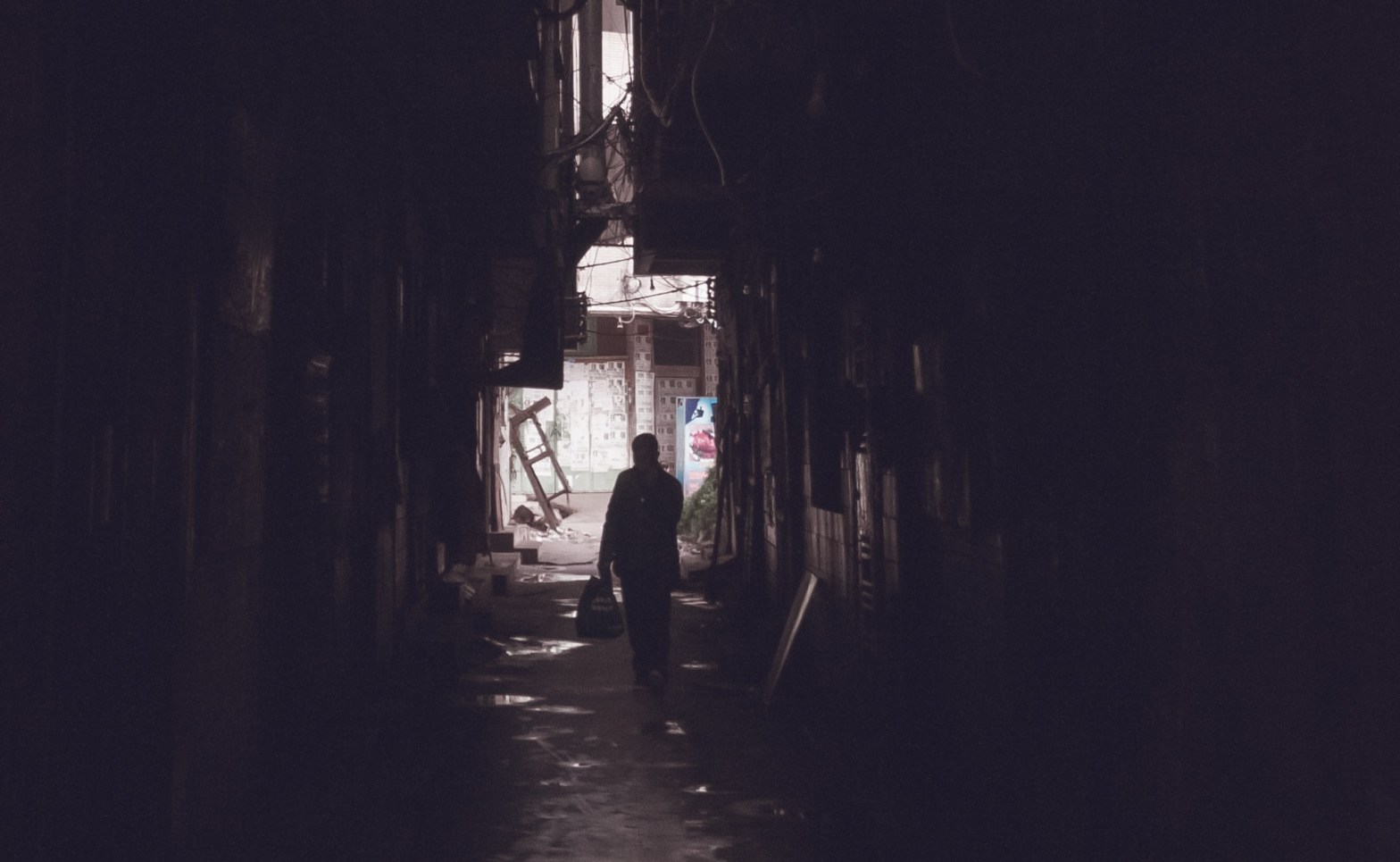
I know I’ll have to start writing an imperfect revision because I know I’m still struggling with my novel’s main theme. I need a way to proceed even while feeling like I’m wandering around in a dark alley where I can’t see around all the parked vehicles.

You know, I’m just going to accept that I may never publish this novel, but I’m going to revise it anyway. Someday, I’m going to have a second draft. It won’t be perfect, but it’ll be a better story than I have now.

I’ll just get the biggest flashlight I can find and step into the alley.

Slapdash Biography

My first memory of reading was my mother reading to me before bedtime. We were sitting on my twin bed which was covered in a blue chenille bedspread. The overhead light was on and my mother’s hip touched mine as she read. Her brown hair hung in soft curls around her cheeks and her blue eyes followed the words of the book like a typewriter carriage.

As soon as I could read, I snuck away from my raucous large family to find a spot where it was quiet and where nobody would find me until my reading was done. My favorite stories were fairy tales with happy endings. I liked it when Cinderella married the prince, Sleeping Beauty was awakened with a kiss, and Hansel and Grettel pushed the witch into the oven, stuffed their pockets with precious stones from her cottage, and found their way back to their loving father. In my bookshelf, I still have two of those books of fairy tales with broken spines and frayed covers; I read them from cover to cover over and over.

When I was nine, I wrote my first poem. It was an impression of the first time that I saw my reflection in a pond. That poem revealed my deep nature. I loved to think about growing, impressions, beauty, and spirituality. I continued writing poetry through high school, college, and at lunch time when I started my first career, which wasn’t writing. I was an accountant with a hidden passion to write.

No matter what I did during my day job, I continued writing poetry and eventually started writing short stories. After I left accounting, I tried journalism for two years and finally found my way back to fiction and my deep thoughts.

My writing journey has been long. I inherited the writing gene from my father, but the road I took to become a competent writer took decades. As a teen, I overused adjectives and created syrupy-sweet descriptions. As an accountant, I learned how to get the facts and get to the point. As a short-story writer, I learned that the character had to be the center of a story.

Finally, I went back to college and got a degree in Early Modern Literature and Composition. Early Modern Lit includes the poetry of Sir Philip Sidney; the stories of Edmund Spenser; and the plays and sonnets of Shakespeare. As background knowledge for these authors, I studied Homer, Virgil, Dante, and Boccaccio. In my opinion, a student could study these authors her whole life and still not stop learning.

Still, my writing wasn’t ready. I had no plot for a novel and no verifiable income coming in from what I wrote, so I took a job teaching English in college. What a great tool for learning, teaching is. I learned not only how to teach students how to write a great essay, but I practiced writing great examples. I gleaned how to analyze poetry for theme, symbols, word choice, and figures of speech. I studied how to discuss novels for character development and plot development.

When I retired, I decided I was ready to write. I didn’t need to make money from it. I had certainly written over 10,000 times in my lifetime by then, so I was as expert as I ever would be. I had the time, the discipline, and the courage.

So here I am writing my biography. You see, I’ve written the first draft of a novel, but I now have to tear it apart and put it back together. It’s not publishable like this biography will be in a few minutes.

Each day that I post an article or story on my blog, I consider a productive day that I can share with the world. I can’t share my productive novel days yet, so this keeps me going in the meantime.

What else should I share about myself in my biography? That I have nine brothers and sisters, forty-four first cousins, and a charitable organization of eighty female friends? That my favorite color is pink and my least favorite food is cooked carrots? That I love to cook and hate to fold clothes? That I exercise daily except those days when I sip coffee on the couch until 10:00 a.m. thinking about writing?

These are interesting tidbits to be sure, but I hope that my fiction writing is more fascinating and thought-provoking. After all, its fiction, not reality. Stay tuned.

10,000 Hour Sisters

Lately, I’ve been thinking about the incredible abilities that my sisters possess. Some of them post photos of their accomplishments on FACEBOOK or just share them with me in conversations—over lunch, on the phone, in the car on the way to San Francisco.

My oldest sister Beverly is an incredible cook and an artist at food presentation. My sister Ruth worked as a nurse for about 40 years and can talk about heart attacks, blood pressure, and strokes as if they are common knowledge. My sister Margaret makes jam, salsa, pickles, chutney and preserves almost every Saturday morning during the school year and more often during the summer.

Have you heard of the 10,000 Hour rule? Since my sisters are so good at what they love, I think this rule must apply to them.  

Anders Erickson, a Florida State psychologist came up with the concept in 1993 after he became aware of a study in Berlin. In this study, psychologists researched violin players; they found out that the best performers had practiced playing for 10,000 hours or more by the time they were 20 years old. Malcolm Gladwell made Erickson’s concept famous when he wrote his book Outliers: The Story of Success.

Whatever does this mean? Well according to Erickson, 10,000 hours is the amount of time a person must invest in an activity or skill in order to master it. To master a skill means to become proficient in it or to gain a thorough understanding of it.

Several people have been used as examples to demonstrate the credence of the 10,000 Hour Rule: Bill Gates, Paul Allen and The Beatles, for example.  By the time Bill Gates and Paul Allen graduated from high school, they had spent over 10,000 hours experimenting with developing software.

By the end of 1962, the Beatles had performed 270 nights for five hours (1,365 hours) a night in Hamburg Germany clubs. Their stint is often referred to as “The Hamburg crucible.” By February 9, 1964 when they debuted on The Ed Sullivan Show, they had performed over 1,200 times, more than most bands ever perform throughout their whole careers. These statistics don’t even include the countless hours they spent writing songs or practicing in each other’s garages.

But to be really good at something, you can’t just put in the time. They have to use what Erickson termed “deliberate practice.” This means that people who want to become experts at what they do work hard to improve their abilities. They strive to overcome weaknesses or a lack of knowledge about one specific area. For example, a cook might take a class in cutting skills to learn how different cuts enhance a variety of dishes.

When I think about my proficient sisters, I think about they spent hours and hours trying to learn what they like to do—better.

My sister Beverly has been married for 46 years and had 6 children. I think I can safely assume that she cooked dinners for at least 300 days each of those years. Let’s assume that each dinner took 2 hours to prepare. That means that she has spent at least 27,600 (46 x 300 x 2) hours cooking. Since she loves chicken, she searched for new chicken dishes all the time: oven fried chicken, Dijon-maple chicken, five-spice roasted chicken legs, chicken curry with coconut milk, slow cooker chicken cacciatore, and chicken and waffles. Now that both her and her husband are focusing on healthy choices, she reads cookbooks to find recipes low in fat, high in nutrition, and superlative in freshness. I can just see her putting down her cookbook and reaching for the mixing bowl to try out a newer, tastier, healthier meal with deliberate practice.

My sister Ruth worked in nursing full time for about 40 years. That’s 80,000 hours considering that she had two weeks of vacation a year. She had to take classes to maintain and upgrade her skills. Also, she cared tremendously for her patients, putting her heart as well as her skill into helping them get better. She too was deliberate in her quest to improve his skills. She continued sharing her nursing expertise even after she retired by administering COVID shots.

As I write this blog, my sister Margaret is making three kinds of pickles in her kitchen. For our mother’s memorial last year, she made 53 jars of jam to give to our friends. From her, I’ve received strawberry jam, lemon jar, apricot salsa, pomegranate champagne jelly, blood orange jelly, and blueberry-lime jam. She told me that this year she has already made 13 jars of apricot salsa, 8 jars of peach Bar-B-Que sauce, 8 jars of zesty salsa, 22 jars of pickles, 6 jars of fire-roasted tomato salsa—57 jars so far this year.

She’s been making jam since she was a teenager or at least 30 years. I can’t even begin to estimate the hours she has spent stirring a steaming kettle, filling jars, and sealing them. Since she works on this hobby almost every Saturday morning, she likely also has reached the magical 10,000 hours to have become an expert. She looks for new recipes, examines the quality of a jelly’s viscosity, and evaluates the color and taste of everything she puts inside a jar. Think about it. Margaret has “jammed” as much as the Beatles.

Even ordinary people can be extraordinary.

References:

Andre Bouquet. “Bill Gates on Malcolm Gladwell’s 10,000 Hour Rule.” The Talkative Man. https://www.talkativeman.com/bill -gates-10000-hour-rule/. July 13, 2022.

Angela Duckworth. Grit: The Power of Passion and Perseverance. Scribner. 2016.

Calvin Miller, “How Long is 10,000 Hours?” NCESC. https://www.ncesc.com/how-long-is-10000-hours?/. July 13, 2022.

My Epiphany: I’m not Retired, I’m Now a Full-time Writer

Last year, I retired from my English professor job. Throughout the years, I had always claimed to be a writer. Heaven knows, I wrote countless essays, paragraphs, articles, and lesson plans for my courses, but I also wrote poetry, articles, and short stories whenever I found free time–in-between semesters or during the summer. What I never wrote was a novel. I’ve had ideas on the table for years. Scribblings in pretty journals. Scratchings in lined notebooks. Never a complete draft or a completely formed plot waiting to be expressed.

When I retired a year ago, I looked at my retirement as a time when I would fill my days with hobbies. I even developed a list of hobbies and stuck it on my little bulletin board next to my computer in my library. That’s where I write, and one of the hobbies on the list is writing. I also wrote gardening, cooking, learning Spanish, and, of course, writing. The list was for whenever I didn’t know what to do. I would just read the list, choose an activity and proceed.

I made such glorious dinners for my husband and me the first six months of my retirement: chicken and shrimp gumbo, mushroom risotto, marinated leg of lamb, and grilled flat iron steak. I created recipes for healthy versions of pumpkin bread and blueberry breakfast bars. I experimented with turmeric and cinnamon in oatmeal and developed personal breakfast egg sandwiches with tortillas and flat breads. I filled my recipe blog with over a hundred recipes and attracted followers from all over the globe. My culinary prowess was astounding until I decided that eating out looked like a lot less work.

By summer, my garden was cleaned of weeds, pruned, fertilized, swept, and raked. The flowers grew like happy children and the fruit trees hung heavy with lemons, blood oranges, and figs. My pots of herbs provided me with lush clippings of thyme, parsley, mint, chives, lavendar, oregano, and basil. By the time fall came, I had done such a remarkable job at sprucing up the front and back yards that there was little else to do except to sit outside and enjoy my beautiful environment.

I started studying Spanish, but in the summer, I started taking classes every Wednesday at a local adult education school. Now, after a whole year of practice, I’m conversing with my classmates in conversations that span paragraphs.

The most difficult activity that I started, however, was to write a novel. I now felt that I had an overall plot in mind. I didn’t have all the pieces, but I was just going to start and see what happens. To ward away writer’s block, I decided not to make any rules or promises. I would write a novel even if I never published it. I would write even when I didn’t know what to say. I would write even when the words came out stilted and awkward. Revision is so much easier than a first draft anyway.

What’s funny is that I’ve just had an epiphany after being retired for a year. Cooking is not that important to me. Gardening is fine, but my little yard will not require much of my time to keep up. Besides, Alfred comes once a week to cut the grass and clean up the leaves.

Spanish is so much fun, but I’ve found that writing is really where my passion lies.

The other day, Valarie from the Alamo Women’s Club called me to ask if I would run for an office for next year. I joined the club last year to help them raise money for scholarships for college students, and I’ve done that. But run for an office?

No. If I became an officer, I wouldn’t have enough time for writing.

I need time to stir up ideas, time to catch up on sleep when I’ve gotten up at 2:00 in the morning to write, time to outline scenes, and lots and lots of time to write.

Next time someone asks me what I do, I’m not going to say I’m retired. They’ll think I have time to fill.

My time is full–of writing.

Retiring Is Hard to Do

I retired just over a year ago, and I’m just starting to figure out what “retirement” is all about.

I must admit, that before I gave my retirement notice, I didn’t spend a lot of time thinking about what I would do. I was, after all, still working as a college English professor, a job that seemed to require a 24-hour-a-day, 7-days-a-week commitment. I knew, however, that I wouldn’t be lying around on a beach chair in Hawaii; I wanted to continue to make a difference in people’s lives. I just didn’t know what that would look like.

I spent the first month of my new life walking around like a zombie. I cooked elaborate dinners, went on long hikes with my girl friends, and spent hours and hours pulling weeds in my garden and making tiny changes in my front yard landscape.

But I didn’t really feel like I knew what I was doing. I was “just keeping busy” enough to fool myself that I “was retired.”

Finally. about two months into this new endeavor, I made some critical decisions. Not that I was sure of them. Not that I was confident that I’d continue to do them forever. I just felt like I needed to make some decisions in order to be productive.

I continued to create new recipes and post them on my recipe blog. That was fun for about nine months, and then, all of a sudden, I decided that the pressure of posting recipes every day was a bit like working again. Since the beginning of 2022, I’ve only posted one new recipe. I feel fine about that. Instead, I’m enjoying watching my older sister post gorgeous photos of her cooking on FACEBOOK. I like to think that I’ve inspired her to display her own cooking talent with confidence and pride.

During the summer, I planted an herb garden that tickled me to my very core. I had basil, thyme, oregano, chives, parsley and mint growing lushly in pots just outside my kitchen window. I used the herbs in my new recipes, blended them into pestos and herb sauces, and dropped them into pitchers of water for cool summer evening thirst-quenchers. Along the way, I learned some incredible secrets about how to enrich the soil with calcium and when to plant cilantro, an herb that doesn’t grow well in summer.

I decided to take up Spanish again since I hadn’t been able to practice much while I was teaching English courses. I found my old Spanish books and got to work. Every day, I wrote sentences, used a flash card app to practice vocabulary, and even told my Argentine son-in-law what I was doing. That, I thought, was brave.

I also started writing a novel that had been simmering in my head for a couple of years. I told people I was doing this, but I also explained that I didn’t have any requirements except to write it. As soon as you tell people you are writing a novel, they ask questions like, “When will it come out on Amazon?” “What percentage of the book have you written so far?” “Can I read what you’ve written so far?” I decided that, since I was retired, I wanted to experience complete freedom in my writing: no deadlines, no demands, no rigid outlines, just the sheer joy of being creative and writing from my heart.

I also took a giant step. I joined a women’s club so that I could help raise money and award scholarships to students going to college. This was my jackpot activity, I thought. By working with this club, I would continue to make a difference for college students; however, what a commitment it might turn out to be.

At one of the women’s club meetings, one woman said, “Retirement is a time when you keep reinventing yourself.” After about six months, I knew that was true.

My Spanish practice was fine, but, whenever I tried to speak it aloud, I forgot all my vocabulary. My brain fogged up and my eyes got buggy as I dug around in my head for words, so I signed up to practice with a tutor online. Jessica was fabulous, but, I noticed that after twenty minutes into an hour lesson, I was watching the clock and getting frustrated. Finally, a friend told me about some weekly, online adult ed classes which would allow me to learn at a less strenuous pace. I signed up for a summer course and found the right fit. I’m now taking Spanish 2 for this year, and I can keep taking these classes up to level 5. After that, I’ll reinvent my Spanish learning.

The writing of my novel has proven to be more successful than I ever dreamed. My main character has traveled across Argentina and into Chile in pursuit of finding out what she wants to do with her life. She’s gutsy, intelligent, and courageous, and, most importantly, I like her. I’m still getting those annoying questions from people about deadlines, but I’m more confident about asserting that I have “no rules or expectations.” What they don’t know is that when I get to the end of my story, I’m going to start at the beginning and rewrite it. They must think that my writing is so good that my first draft drips with eloquence and comes complete with sophisticated figures of speech. I’m okay if they think that. I’m just enjoying the writing.

I’ve given myself a break when it comes to cooking, and my husband and I go out to eat more often. My herb garden is dormant for the winter, and my freezer is stocked with pestos and herb sauces. And you’ll never guess what happened just nine months after I retired and only six months after I joined the women’s club. I volunteered to be the Chair of the Scholarship Committee even though the other women on the committee all have at least ten more years of philanthropy experience than I do. I’ll try to act like a student of philanthropy and listen as I lead a group that is much wiser than I.

One day, I sat down in my living room to take a break from all my projects. My husband was sitting in a big arm chair. His Kindle was on the table beside him, and he was staring straight ahead of him, his eyes and mouth relaxed and content. “What are you doing?” I asked him.

“I’m relaxing,” he said. “I spent my whole life working hard. I’m going to spend my retirement relaxing and having fun.”

Oh, I thought. I don’t know how to do that.

Hmmm. It’s time to reinvent myself, again.

Wisdom of the Trees: Chapter 2/3

Chapter 2 – Birch

During the last week of class, Profesora Casti took the class on field trips so the international students could experience the culture of Buenos Aires.

On Monday, the class walked to the Manzana de Las Luces.  Profesora Casti explained that this was the Block of Enlightenment and contained some of the oldest buildings in Buenos Aires, including the Baroque church of San Ignacio, a church built by the Jesuits between 1686 and 1722. 

The students listened as their instructor explained how the Jesuits also built a school, museum, and pharmacy on the site, and operated all of them until the Spanish came and suppressed the Jesuits.  Since then, the site has been transformed into a university, cathedral, and Argentina’s first medical college.  Later, the Spanish opened Buenos Aires’ first printing press and orphanage on the site, extending its colorful and diverse history. 

What most fascinated Leonie was the warren of tunnels underneath the street, once used to store ammunition during Argentina’s fight for independence.  The students followed each other single file through the narrow, brick tunnels, stooping their heads low under the arched ceilings.  Here and there, the tunnels stopped, the entryways blocked by dirt and rocks from centuries of neglect. Utility lights lit up the corridors, and the lights created shadows on the walls that walked with them. 

When they came outside again, the sunlight blinded Leonie, and she shielded her eyes with her arm, squinting and squeezing her eyes shut until they became adjusted to the brightness.  The students sat down on stone walls in the courtyard to rest.

Leonie sat next to an older woman who was wearing a straw hat and drinking out of a metal flask.   Beside the woman leaned a walking stick, hewn out of white wood marled with yellow scars.  Leonie had never seen a walking stick so beautiful and unusual.

“Are you wondering about my stick?” the woman asked suddenly.

Leonie looked down at the ground quickly, fluttering her eyelids.  “Yes, I am,” responded Leonie.  “It’s so unusual.  What kind of wood is that?”  She slowly raised her eyes to look at the stick and then noticed the woman’s smile.

“I carved this out of birch wood when I was about your age, a wood that signifies new beginnings.  I can see that you are about to start a long journey, one that will give you a new beginning and help you find out your life’s purpose.”

Leonie opened her eyes wide and stared into the woman’s face.  “How did you know that I was going on a journey?  How did you know I was searching for my purpose in life?”

“I am an old soul, and old souls can read energy.  From your energy, I can see that you have suffered a great loss, but this loss will help you gain wisdom and strength, and, in the end, the loss will become your constant companion.”

“My mother died, and I miss her terribly.”  Leonie sank onto the rock perch, remembering the last time she saw her mother’s face.  Her mother had been beautiful, even when she suffered from the cancer.  Her face always glowed with an even sunny complexion, and her smile lit up her eyes like emeralds under a jeweler’s lamp light. 

“The first thing you need to do is to write down your affirmations,” said the old woman, rustling her wide skirts as she turned more to face Leonie.  “Whatever you wish to have, write it down like your already have it.”

“I don’t know what you mean.”  Leonie scratched the back of her head.

“An affirmation is a positive assertion that claims something is true.  When you put forth a personal affirmation, all of creation conspires to help you attain it.” 

“That sounds very interesting,” said Leonie, “but my father wants me to go home right after I finish this Spanish class.  I keep thinking I should stay here longer so I can find out what to do with the rest of my life.”

“You must learn how to believe in yourself and not to rely on the opinions of anyone else.  Your father cares for you, but your life is not his.  You must follow your own heart, or you will feel like you are not living.”  The woman stuck one of her tanned hands into the folds of her skirt and took out a small book, about the size of Leonie’s cell phone. 

“This is a gift from me.  Inside this journal are blank pages.  Today, start writing down your affirmations, and then your life and fulfillment will begin.”  The woman smiled at Leonie just as the sun poked through the branches of an oak tree.  Leonie had to close her eyes it was so bright, and when she opened them, the woman with the birch walking stick was gone.

That night, Leonie sat up in bed, the journal opened before her, a pen in her hand.  She wrote—I want to make a difference.  No, that wasn’t right.  The old woman had told her to write as if what she wanted was already true.  She put a line through the sentence and tried again—I am making a difference, she wrote.

Pressing the journal to her chest, she leaned back to see if she felt better.  No.  She still felt like she hadn’t a clue of what to do or how she could contribute to the world. 

Contribute—a good word, she thought.  She wrote another sentence underneath the first one—I am contributing something positive to the world.  Now she felt a little better.  The way she would make a difference would be by contributing something positive.  She didn’t know what that was yet, but she was determined to find out. 

Leonie placed the journal and pen on her nightstand, turned out the lamp, laid her head on her pillow, and fell asleep with a feint smile on her face.

Chapter 3 – Myrtle

On Wednesday, Profesora Casti took the class to Iglesia de Santa Felicitas on Calle Isabel la Catolica in the Barracas District.  The students learned that this church was built in the early nineteenth century in honor of Felicia Antonia Guadalupe Guerrero, considered to be the most beautiful woman in Buenos Aires.  Her husband died from yellow fever, leaving her a widow.  Later, she was killed by her rejected suitor, Enrique Ocampo. 

Leonie walked through the eclectic gothic interior of the church, gazing into the faces of the marble statues of Felicitas and her son and husband.   Around the perimeter of the church, she paused in front of the stained-glass windows, looking into the faces of the saints and admiring the colors of the roses.  She was so intrigued by how the natural light lit up the panes of glass that she didn’t see the young girl until she bumped into her.

“I’m sorry, said Leonie.  I didn’t see you there.  I was so interested in these beautiful windows.”

The girl didn’t respond.  She seemed lost in thought and sad.

“Are you o.k.?” asked Leonie.  She gently touched the girl on her wrist, which she noticed was tied with a long, red ribbon.

The girl was about the same age as Leonie.  She had long brown hair, big brown eyes, full lashes, and a mouth that was wide and voluptuous.  Leonie thought she was beautiful. 

The girl looked at her.  “Oh, I was lost in thought.”  Her eyelashes scanned Leonie from head to toe, and then she smiled.  “Are you a student at the university?”

“Yes, I am.  I’m on a field trip with my Spanish professor.  This is the last week of classes, and we’re touring around Buenos Aires to learn more about the Argentine culture.  May I ask you why you are here?”

“I’m looking for love,” said the girl, waving her wrist in front of her. 

“I don’t understand,” responded Leonie.

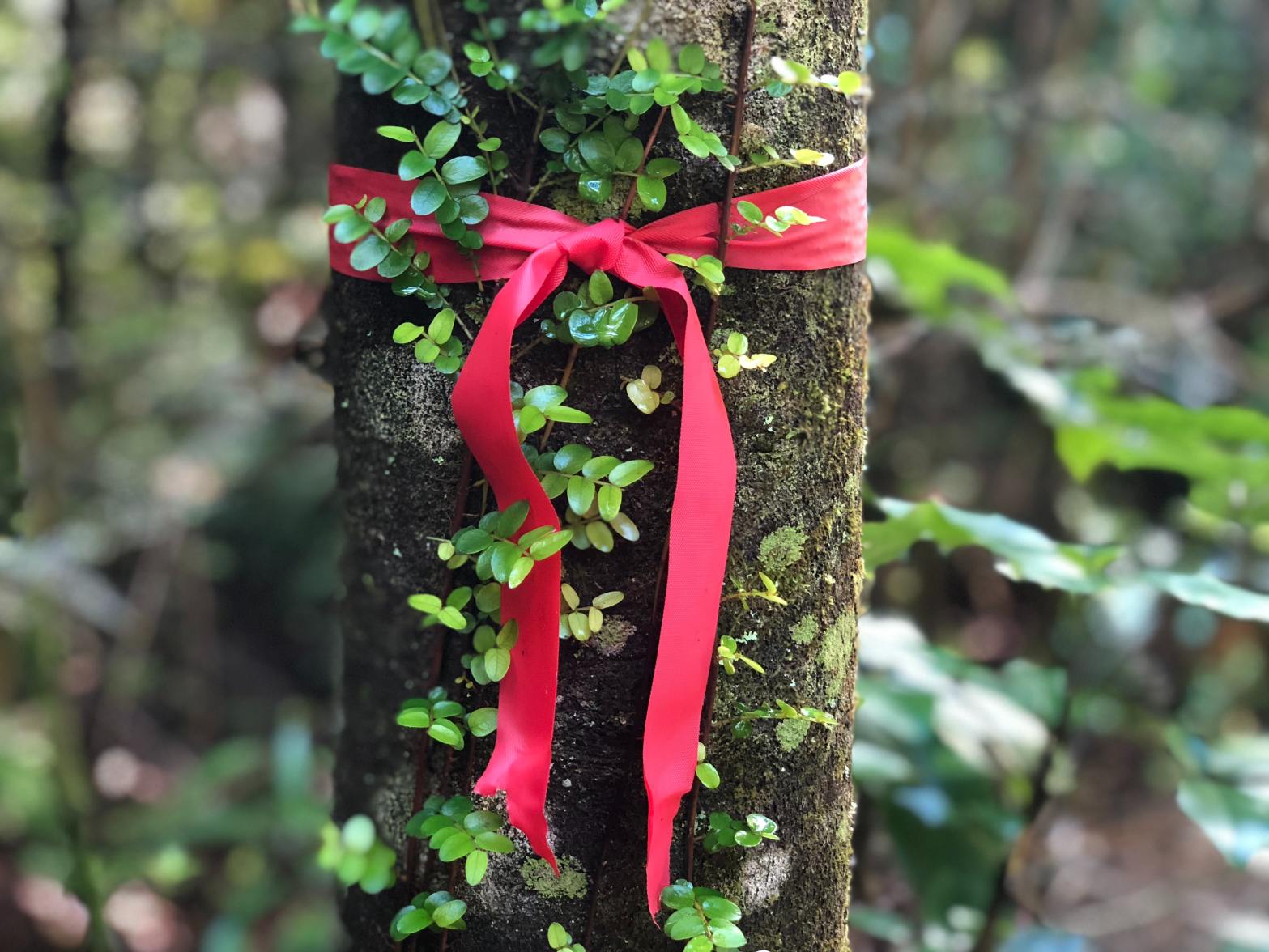
“We have a tradition.  If a girl wants love, she comes to the cathedral and ties a ribbon on a branch of the myrtle tree in the garden, which symbolizes romantic and devoted love.  Soon, she will find a love that will be true and lasting.”

“What a nice tradition.”  Leonie smiled at the girl.

“Did your professor tell you that this church is haunted by its namesake?”

“No. What do you mean?”

“The woman for whom this church was built, Felicia, was murdered.  She was shot in the back by her suitor and died on January 30.  People say that on that day, a woman with a pale face and dark hair, dressed all in white, walks from the garden, opens the door to the church, proceeds down the aisle to the main altar and leaves a trail of tears behind her. 

“That’s such a sad story.”

“Now, Felicia brings love to all the women who request it by tying their ribbons on the myrtle tree.  She has turned her tragedy into positive deeds—bringing love to all women of her beloved city.”

“So, you are going to tie your ribbon on the gate?”

“Yes, to find my love.”

“May I help you?”

“I’d like that. Let’s go.”

The two girls walked out of the church together, smiling and chatting as they went.  Once they reached outside, they walked through the roses in the garden until they reached the myrtle tree.  The brown-eyed girl untied the ribbon from her wrist and, with Leonie’s help, tied it around one of the tree’s branches. 

“Thank you for helping me,” said the girl.  “I believe I will find my love even faster because of your kindness.”

“I was honored to share your dream,” said Leonie. 

“Let’s tie a ribbon on the tree so you can find your love.”

“Oh, I’m not ready for love,” said Leonie.

“That doesn’t matter.  Your love will arrive when you are ready.  Here, I have another ribbon.”  The girl pulled another red ribbon out of her pocket and handed it to Leonie.

Leonie raised her chin back and laughed which sounded like the rise and fall of a musical scale.  “I guess it won’t hurt.”  She chose another branch close to the girl’s ribbon and tied hers around it in a bow.

“I’m happy that you will find love too,” said the girl.  The girl smiled at Leonie, placed her hands on her shoulders, and kissed her lightly on each cheek.  Her eyes shone like topaz.

“I will never forget you,” said the girl, and she walked away, her skirts swishing gently from side to side. 

That night, before Leonie fell asleep, she wrote in her book of affirmations.  She wrote—I provide love to the world.  She looked at the words that she had written and thought about the girl with the full lashes who wanted to find love. 

I must first find out what I want, Leonie thought.  Until I know who I am and what my purpose is, I won’t attract the right kind of love. 

One thing I know.  I know I can provide love to others.  I’ll do this first and then, when the time is right, I’ll let someone love me. 

She turned out the light and dreamt about the myrtle tree and its red ribbons.

The Imagination Grandpa Story 2: Blooming Wisdom

Grandpa came to visit Rosie just after the nurse had taken away her lunch tray. She wanted so badly to get out of bed, but Grandpa put his arm on her shoulder and said, “Time to rest. Let me tell you another story from my imagination.”

“Oh, I’d love that,” Rosie said.

So Grandpa began his story . . .


Before their daughter Rosie was born, Mr. and Mrs. Grower bought a farm in Northern California where the winters were mild and the summers were long and hot.  They named their property Ollybrook Farm after the small stream that wandered through the valley from the great Sacramento River.  The farm began in the valley and rose over the hills that turned gold in the summer. 

Mr. and Mrs. Grower planted olive trees that grew into gnarly sculptures, their arms reaching up to the blue sky.  In spring, the trees bloomed with creamy flowers like drops of milk from every branch. 

Rosie’s parents harvested the ripe green olives from September to November, using ladders to reach the fruit and carefully pick the olives off each branch, tree by tree.  Sometimes, more than 1,000 olives hung on a single tree, making picking a slow and arduous task. 

Then, they soaked the olives in water, changing the water twice a day until the olives lost their bitter flavor.  After soaking out the bitterness, Rosie’s parents submerged their olives in a saltwater brine for about a month.  Finally, they removed the pits and stuffed their olives with pimientos, capers, almonds, jalapenos, or anchovies.  They packed the stuffed olives into tall, skinny jars and sold them to produce markets and grocery stores all over California. 

Rosie first watched her parents work from the baby seat that her father set up in the shade in the orchard.  She cooed in the mornings and drank her milk from a tiny cup with a lid and two handles.  In the warm autumn afternoons, Rosie fell asleep listening to the warblers chirp in the trees.

Soon, Rosie was walking and, while her parents harvested the trees, she wandered on her own, picking the wildflowers that she found growing in both the sun and the shade of the orchard—handfuls of yellow mustard, coppery poppies, and fragrant purple and blue lavender. 

“I’m growing flowers,” Rosie repeated as she picked the blooms.  “I’m a flower farmer.”  Rosie’s mother smiled down at her from her perch in the tree and laughed.  Rosie thought that her mother’s laugh was as beautiful as a bird’s song, rising and falling in the air in a multitude of tones. 

When the day was done, Rosie brought her flowers into the house and stuck them in little vases to decorate the dinner table.

“Why don’t we grow flowers?” she asked her mom and dad. 

“Our olives take enough time,” said her father.  “We don’t have time to grow flowers, too.”

Year after year, Rosie picked the wildflowers while her parents picked the olives, until, one year, because Rosie’s aunt Lily was getting married, Rosie and her parents drove to Berkeley to attend her wedding. 

Rosie’s mom drove the car into the parking lot on a hill.  The sun hung like a lemon drop in the pale blue tablecloth of sky, and, in the distance, Rosie could see the wide caerulean San Francisco Bay where the Golden Gate and Oakland Bay Bridges crossed the water like glittering, diamond necklaces.  Looking at such beauty, Rosie’s eyes opened up like saucers and she sighed, “Oh.” 

When Rosie and her parents entered through a gate into the wedding garden, Rosie gasped.  The hill before them, shaped like a half circle, was planted with row after row of rose bushes.  Yellow, white, pink, orange, lavender, red, scarlet, and burgundy flowers bloomed from every bush and the air was filled with fragrances that made Rosie feel like she was floating into the air.  Wedding guests strolled through the rows in their fancy dresses and suits which perfectly complimented the colors of the roses. 

In one row, a lady with a sun hat and pair of shears was snipping old roses off of a rose bush one by one.

“What are you doing?” asked Rosie.

“I’m making sure that the rose bush stays beautiful,” said the sun hat lady.

“Cutting the old flowers one by one takes a lot of work I think,” said Rosie.

“Yes, it does,” said the sun hat lady.  “But flowers are so important that we should work hard to keep them beautiful.  They make people smile.  They offer a pretty setting for special occasions like weddings.  They help people forget their troubles, relax from their daily chores, and feel happy to be alive.  Just as food nourishes our body, flowers feed our spirit.”

Rosie nodded her head slowly; the roses had made her incredibly happy as soon as she walked into the garden.

After Aunt Lily got married, the guests threw rose petals over the bride and groom’s heads to congratulate them.  Rosie saved one of the petals by putting it into the pocket of her dress. 

That night when she got home, Rosie put the pink rose petal up to her nose and inhaled the sweet fragrance again and again.

“I’d like to plant a rose bush,” said Rosie to her mother the next morning.

“I was hoping you would,” her mother said.  “I bought a rose bush from the Berkeley Rose Garden flower shop yesterday, and I need some help in planting it.”

“What color did you buy, Mama.  I saw pink, orange, yellow, red, purple and white roses yesterday.  What did you choose?”

“I bought a pink rose called Blooming Wisdom,” Mama said.  “Let’s plant it by the front porch.”

So Rosie and her mother dug a hole into the rich earth by the steps of the front porch and planted Blooming Wisdom.  The rose bush thrived in the hot sun of the summer and produced dark, pink and red blooms with a powerful floral scent that Rosie could smell all evening as she sat on the porch to watch the sun go to bed. 

Rosie grew tall and strong and helped her parents harvest the olives and plant vegetables in the garden behind the house.  She saved her money, and every January, she bought new rose bushes to plant near the front porch.  In a few years, she had planted a row of roses all the way across the front of the house. 

Rosie and her mother went to the library to read about roses.  They learned that rose hips, the knob just beneath the bloom, contains Vitamin C, A, and E and can be used to fight colds and flu.  Together, they soaked the rosehips from their own roses in honey and sold the honey in clear jars with pink lids.  They infused glycerin water with the rose petals and used it to clean their faces at night, leaving their skin glowing and clean. 

“I want to grow more flowers,” Rosie told her parents one night at the dinner table.  “I love the colors, scents, variety, and beauty.”

“We don’t have room for more flowers, Sweetie,” said her father.  “Our olive trees cover most of our property, and we need them to pay our bills.  Let’s just be happy with the rose bushes in front of the house.

But Rosie was determined.  Every week when she went to the library, she found more books about flowers.  She memorized their names: tulips, ranunculus, larkspur, lilies, aster, belladonna—all of which grew in California.  Peonies grew in the sun and azaleas grew best in the shade.  Orchids liked humid climates, and they came in hundreds of colors. 

When Rosie and her mother went for walks, Rosie took pictures of the flowers in other people’s yards.  She wrote the names of each flower on the back of the photos and pinned them onto the bulletin board above the desk in her room.  She read about flowers in magazines and newspapers and roamed through her family’s orchards to find as many wild flowers as she could. 

“Let’s grow more flowers,” she often suggested to her mom and dad.

“We need to grow olives because we know how to,” answered her father.  “Sorry, Rosie, just be happy with your row of rose bushes. 

By the time Rosie went to college, she knew more about flowers than anything else, so she decided to get a degree a floriculture farming.  The classes taught her about how certain flowers grew better in certain areas and how farmers had to take care of the soil in order for the flower crops to be successful.  She graduated in no time at all because she was so interested in what she was learning.

When Rosie came home after graduation, her father said that he had a surprise for her.  “My Uncle Bob in Oceanside retired and gave me his tiny one-acre farm.   I’ll give it to you as a graduation present, if you like, so you can have your own farm.”

“Oh, yes!” shouted Rosie.  She squeezed her dad around his skinny waist until he couldn’t breathe. 

Soon, Rosie moved to Oceanside to become a farmer.  She named her tiny farm Blooming Wisdom Flower Farm after the first rose bush that she and her mother had planted by the front porch. 

Rosie tilled her new farm’s soil until it was dark and loamy and planted roses.  She sold her flowers to the local florists for their bouquets.  The next year, she planted ranunculus, gerbera daisies, and freesia, and she sold her flowers to the local flower markets.   The more flowers she grew, the more flowers she sold, and soon, Rosie bought more and more land until her farm was as big as her parent’s olive tree farm.

When her mom and dad came to visit, she showed them her acres and acres of flower crops.  They wondered at the colorful rows of petals that covered the hills and valleys of Rosa’s flower farm.  In the rows grew ranunculus, stock, larkspur, callas, aster belladonna, gerbera daisies, and roses, covering the land like rows of rainbows.   

“I can’t understand why you want to grow flowers so much,” said her father, shaking his head.  “You can’t eat them.  You can only look at them.”

“You’re wrong about that Dad.  I sell some of my flowers to local grocery stores because they are edible.”

“Well, I’ll be,” her dad replied, his eyes widening as he looked around.

“But most of all, I grow flowers because they are beautiful.  People need food for their bodies to grow and beautiful flowers for their spirits to be happy,” Rosie said, beaming like a bright pink gerbera daisy.

“Well, being here in front of your beautiful fields makes me incredibly happy,” said Rosie’s father.  “But my body’s hungry.  Got anything I can eat?”

“I’m hungry, too.  Come inside, and I’ll make you some rosewater pancakes.”

Rosie opened the kitchen door for her parents and they stepped in.  Before she went in behind them, she turned her head and looked back up to the hills at the rainbows of flowers.

She had learned so much from her flowers, but even more, they had kept her spirit happy.


“Thank you, Grandpa. I can see the beautiful rows of flowers that Rosie grew in her flower farm.”

“Do you feel happier, now?” Grandpa asked.

“Yes. Rosie has my name so we are alike. Flowers make me happy too.”

Grandpa opened a bag that he had placed on the little table by the door and pulled out a bouquet of pink gerbera daisies. “These are for you, to feed your spirit when I’m not here with you.”

Rosie couldn’t speak for a few minutes, she was so happy. Grandpa put the flowers on the table beside her hospital bed where she could see them.

“I love you, Grandpa, and I love your imagination.”

“I’ll bring you another story tomorrow,” Grandpa said. “You’re my flower, and you feed my spirit.”

“Oh,” Rosie said, nodding her head. Because Grandpa had told her about Rosie’s Blooming Wisdom Flower Farm, she knew exactly what he meant.
Taunting Mr. Kingsley

On Saturday, I went with my mother to Cornhill Market. We waited at the wooden bus stop for the red double-decker bus which arrived tardily after 8 a.m. Side by side, we sat for the forty minute ride to town, propping empty market baskets on our laps.

Up ahead in the old seats, I noticed a hat that looked familiar–a collard-green hat with a tuck on the top and a medium brim all the way around. The man wearing it wore a heavy wool coat. HIs big neck was lined with sagging skin and his hair was pewter gray. Mr. Kingsley, it was. I swallowed hard.

Mr. Kingsley was the man who monitored the children on the school bus. He was old, and when it was cold outside, he stomped his heavy, brown shoes on the metal floor in rhythm with the turning of the wheels on the bus. Every day, he wore a full length wool coat and beat his covered hands crossways against his chest to keep warm. Like a teapot, each blow on his chest released a burst of steam from his mouth.

As our market bus followed the rolling hills of farms and meadows, I watched the collard-green hat nod over the old man’s chest. Once in a while, I gazed out the window at the squares of empty fields covered in frost.

The children on the bus feared Mr. Kingsley. “Keep away from that door, you ragamuffins!” he yelled at the boys who wandered out of their seats.

We created stories about him. We told each other how he lived in a dark castle, dined alone at a long, wooden table, and ate the legs and arms of poor children for dinner. After dinner, he sat in a huge arm chair in front of a blazing fire, reading the gospel of Satan and blowing smoke rings with his pipe.

Soon, the frosty fields outside my window dissolved into the red brick factories and churches of the town Bury St. Edmunds. The bus would soon leave us off at the bus station near Cornhill Market.

I had never provoked Mr. Kingsley, but had laughed heartily at the boys who did. Some boys, those with a higher dose of daring, knocked off his hat when his back was turned, baring his baldness as if it were a hole in his armor. Kingsley would swirl around and swat at them while they tossed the dull hat from one seat to another.

Once, when his hat fell into my lap, Kingsley snapped it up and scowled into my face, “You’re naughty children, you are. Some day you’ll pay for this. Just you wait.”

The bus rolled into the station at the corner of Cornhill Market. In my haste to get off before Kinsley saw me, I dropped my basket in the aisle. I bent down, grabbed the basket’s handle, reached for my mittens which had fallen out, and hurried behind my mother to the exit.

“Meet me here at 11:30,” my mother said as she set out with both baskets towards the food stalls which filled the market. The stalls were covered in a kaleidoscope of colorful awnings which shaded slanted displays of farm vegetables, baskets of berries of all kinds, fish on ice, and jars of mincemeat, currant jellies, lemon curd, and pickles. I waved to my mother and rushed away before Mr. Kingsley appeared behind her.

First, I walked briskly to the shops surrounding the open market. In the chemist shop, I climbed the stairs to the second floor to smell the scents of the bath cubes lined up like tiny gifts. I closed my eyes and imagined gardens full of blooming flowers: violets, roses, sweet peas, and jasmine.

When I opened my eyes, I saw Mr. Kingsley coming up the stairs and heading my way. I dropped the bath cube I was holding and heard it crumble inside its wrapper. Some customers blocked his way, and I circled around several perfume aisles until I reached the stairs, skipped down the steps and out of the store.

My breath made puffs of smoke in the cold air. I must have left my scarf in my basket, so I swaddled my collar around my neck and looked for an escape. Curry’s Book Store was just around the corner of the market, so I decided to go there to hide and keep warm.

“Could you direct me to the young adult section, Sir?” I asked the man behind the counter.

“Yes, darlin’. It’s in the very back behind the dictionaries.”

I passed through the rows of best sellers with the big signs until I reached the very back of the store. Scanning the shelves, my eyes lit upon a section full of fairy tale volumes. Stooping down, I read the titles and slipped one out titled Old English Folk Tales. At the end of the bookcases was an empty space in the corner. I squatted up to it with my back and scrunched my body into its opening until I was hidden and began to read, raising the book to cover my face.

Every few minutes, I leaned out to see if Mr. Kingsley had followed me, but I seemed to have lost him. I read “Herne the Hunter,” a scary story about a ghost who haunts Windsor Park with a pack of hounds.

Suddenly, I heard Mr. Kingsley talking to the man at the front of the store. Soon, I heard his heavy shoes pacing toward the back, so I jumped up. Holding my breath and clenching my hands inside my pockets, I poked my head out, scooted, slipped behind the shelves of dictionaries, and crept along the rows at the edge of the store until I reached the door and escaped.

What would he do if he caught me? I imagined being stuffed into a black laundry bag, hurled over his shoulder, and carried on his back across open fields all the way to his black castle.

The market clock pointed to 10:30. Running into the stalls, I searched for my mother’s coat and ocean blue scarf. At every vendor, ladies in navy coats were selecting potatoes and turnips, tasting berries, and talking over codfish.

I dashed in a zigzag across the square to Moyses Hall, the town museum. Kingsley wouldn’t guess I was in there. Children never went to museums by themselves.

Moyses Hall, a massive flint and stone house, was the largest building surrounding the square. It was shaped like two huge but simple houses, connected by a thick stone pillar. At the base of the pillar was a smooth stone with the year 1180 carved into it. I had been inside during a school field trip and learned that it was once housed a Jewish family, and built as strong as a fortress. An air of mystery hid in its shadows as if the ghosts of the family were still there, witnessing the visitors who wandered in and around their former hearth.

I ran inside and caught my breath against the cold stone wall beside a life-sized suit of armor. After a few minutes, I wandered around the glass cases filled with cracked cups and bowls, fat statues of gnomes and dwarfs, hand shovels, coins, torture chains and screws. I read all the display descriptions waiting for the next hour to pass until I would meet my mother at Purdy’s, next to the bus station.

At 11:30, my mother was waiting. Two fat baskets leaned together on the ground next to her feet. I ran, anxious to hear the security of her voice. “Hi, Mom! Can we get some sausage rolls?”

“Claire, I already bought them from Purdy’s. Let’s hurry or we’ll miss the bus.” I didn’t tell her about Mr. Kingsley following me. She didn’t know how the children taunted him, and she wouldn’t like it. We boarded the bus and perched the heavy baskets on our laps.

Heavy shoes stomped up the back stairs. They sounded like Mr. Kingsley stamping his feet on the metal floor of the old school bus. I hunched my shoulders and bent my head down behind the basket on my lap.

A gruff voice bellowed right behind us: “At last, I’ve caught up with you.” Mr. Kingsley towered over me in the aisle. His eyebrow hairs stuck out like bent stickpins. Looking up, I saw the yellowness of his teeth and the gray hairs inside his nostrils, and I shivered as a chill swirled at the base of my neck and crept down the back of my coat.

“Mr. Kingsley?” my mother said with her eyes opening wide.

Mr. Kingsley thrust his gnarled hand into his oversized pocket. I squeezed my eyes shut. Seconds filled with silence. Cautiously opening my eyes, I saw that Mr. Kingsley was holding my red plaid scarf out to me. “Claire, I saw you leave the bus this morning. You dropped your scarf on your way out,” he said, a smile spreading beneath his salt and pepper mustache.

My mouth dropped open. I reached out a hand, took the scarf, and twisted it self-consciously around my hands. “Thank you.”

“Well, I have more shopping to do before I go home. I’d better get off this bus before it takes off. See you Monday, Claire.”

“Goodbye Mr. Kingsley. Stay warm,” said my mother.

The picture of Mr. Kingsley’s twinkling eyes lingered in my thoughts as I rolled the scarf around my neck.

“What a nice man Mr. Kingsley is,” my mother said. “and I’m glad he found your scarf. Get warm now.” My mother smiled and looked out the window.

The bus jerked into motion. Maybe Mr. Kingsley didn’t live in a black castle and eat children for dinner. Maybe he liked children instead and that was why he took care of us on the school bus.

The next time I saw him, I would smile and wish him a “Good morning.” Maybe those boys would get to like him, too.

Five Features of a Perfect Democracy

Ever since the pilgrims landed on the North American Continent, Americans have struggled with freedom. 

On January 7, 2021, Darren Walker, President of the Ford Foundation made this statement in the Foundation’s Equals Change Blog: “Our founding aspirations were just that: aspirations.”  What he means is that the freedom which we aspire to in the Declaration of Independence, the Constitution, and the Bill of Rights has not yet been achieved.  In fact, Walker admits that these aspirations were a “founding contradiction.”  When white settlers took control and settled across what is now the United States, they took away the rights of the natives who had previously lived on the land.  As white plantation owners built tobacco, rice, and cotton empires, they enslaved human beings from Africa to serve like cattle in the muddy fields under sweltering sun.

On January 6, 2021, a mob of white supremists stormed the capital, our citadel of democracy.  This event horrified most American citizens and made them realize how fragile our democracy really is. 

Yet, some good came from this insurrection toward our government.  It signifies that we have not achieved the freedom that we strive for; we have not reached the level of a true democratic government.  This violent, but sad act against our government makes the brokenness of our democracy blatantly clear, and that is what is good.  We have clarity that we must act to improve our democratic dream.

In his blog post, Walker makes it clear that “inequality is the greatest threat to justice—and, the corollary, that white supremacy is the greatest threat to democracy.”  As long as people exist who do not seek equality for all peoples, our democracy is flawed. 

What is a true democratic freedom?  I mused over this question for days, and my mind constantly wandered back to Aristotle’s rhetorical philosophy practiced in the original democracy of Greece which solved community issues, not with force, but with respectful dialogue. 

I wondered about how a citizen should act or what a person should be in order to promote democratic freedom.  I’m not a specialist, but I do have aspirations to promote democratic freedom for every person in the United States.  As I mused about what qualities would promote freedom for all peoples, I came up with five overlapping features that must exist in the populace for a truly democratic community: openness, self-discipline, moral courage, empathy, and respect.

Openness

The United States is a diverse country, and, therefore, in order for us to achieve to true democracy, different types of people with dissimilar customs and cultures must live together without criticism or conflict.  This requires citizens to adopt an openness to customs and cultures that are diverse, even when those practices are against what citizens may choose for their own lives. 

To be open means to be imaginative, curious, and ready to learn about the lives of other people, no matter how unlike they are to oneself.  Being open means to be receptive to new ideas without feeling threatened.  It means to be attentive to all people no matter what their background is.  It means to be transparent in action, acknowledging what is new, but accepting it anyway. 

Here are some examples of openness.  A heterosexual couple willingly accepts the lifestyle of a homosexual couple who moves into the apartment next door to them.  They treat this couple as a respected neighbor and do not make judgments about them just because they are homosexual.  A pedestrian encounters a peaceful demonstration while he is walking down the street.  Instead of prejudging the participants, he reads their signs and engages in a conversation with one of them to hear their point of view.  A manager who is hiring a new employee does not discriminate when an applicant comes into an interview wearing a turban on his head. 

Self-discipline

Most humans work on improving their self-discipline throughout their whole lives.  In a truly-perfected democracy, self-discipline is important since one person must never infringe upon the freedom of another for any reason.  Whites cannot take away the freedom of Blacks or Hispanics.  The rich cannot take away the freedom of the poor.  City dwellers cannot erode the freedom of rural dwellers.

Self-discipline is the ability to control personal feelings and overcome personal weaknesses. It is the aptitude to pursue what is right despite temptations or any private fears.  Self-discipline involves acceptance, willpower, commitment, hard work, and persistence. 

Acceptance requires that people look at reality accurately and acknowledge it.  For example, the reality is that Whites have greater privileges in American society than other races; however, even today, many Whites don’t understand this.  They don’t understand what White privilege really is. 

The “willpower” part of self-discipline helps individuals set a course of action and start on it.  They set an objective, create a plan, and then execute their plan.  For example, I wanted to become a professor whose African American students succeeded in my classes.  That was my objective.  My plan was to use more African American authors in my course readings and more visuals of African Americans in my online course.  My plan also included in improving my own knowledge about African American history that was never taught in school; through study, I would better understand African American history and, through their history, my students’ current needs and feelings.  Then, I executed my plan, and my courses became more inclusive, I became more knowledgeable, and my students became more successful and happier.  Even I became happier in my growth and their success.

Commitment cannot be underestimated.  To be committed means putting in the time to whatever goal you have in order to achieve it.  For my goal of improving the success of my African students, I committed to reading numerous books on the African American experience even when reading those books took time away from more pleasurable activities.  I read every day.  When I finished one book, I started another right away.  If I wasn’t committed, I often would have chosen to read a light-hearted mystery or go outside to do some gardening in the sunny weather. 

Self-discipline also requires hard work.  I had to read challenging books even when I was tired after a long day teaching.  I had to look up new vocabulary words, reread certain paragraphs until I understood them, and take continuing education courses that complemented my newfound knowledge. 

Finally, nothing of value is accomplished without perseverance.  I started my quest to learn more about my African American students over five years ago, and now, I have accumulated a lot of understanding of the African American history.  This knowledge has allowed me a greater understanding of the current political issues today such as the George Floyd murder and the Black Lives Matter protests.  If I hadn’t persevered in my growth, I would never be able to comprehend the complicated issues America faces today.  And now, I’m at a new level of citizenship, ready to make new goals.

Moral Courage

Moral Courage is integrity.  People with moral courage are honest, true to their word, do the best they can, and own up to their shortcomings.  They do not make excuses or blame others for their actions or faults.  They do not try to cover up their mistakes.   They try to make others feel better, and they do the right thing even when it is difficult. 

Here are some examples.  Travis intervenes when Roger bullies Mario on the playground.  When Sarah goes for a walk, she takes a plastic bag so she can pick up litter on the street.  Ivan completes his chores without being reminded by his father.  Killian pays for the college tuition for his nephew without telling anyone.  Recently, Vice-President Pence refused to block the electoral vote in Congress even though it would have been easier to submit to President Trump’s aggressive demands. 

Practicing moral courage is hard, but our country needs citizens who possess it.  People can draw inspiration from people who have demonstrated great courage such as John Lewis, the former Georgia Congressman who helped Martin Luther King, Jr. demonstrate against prejudice and then worked in Congress for decades to continue King’s work. 

Another way to strengthen moral courage is to practice acts that require courage and to avoid actions that lack courage.  People can compliment those who treat them badly, and consciously can avoid gossiping.  They can think of new acts of courage on a daily basis so that acting with courage becomes a habit. 

Empathy

To help America attain a perfect democracy, people must possess an empathy for their fellow citizens.  The type of empathy required is a compassionate empathy where a person’s logic and emotion are balanced.  Compassionate empathy is a combination of logic and emotion—a concern that leads someone to act for the betterment of another. 

When someone intervenes for a bully victim, they feel compassion for the victim and they are able to stop the bullying from taking place because of their intervention.  When a professor feels compassion for a Hispanic student who lacks the technology necessary to pass her course, she uses her resources to provide technological resources to that student.  The effect of the action is to improve the lives of those for whom you feel compassion, thus enhancing their freedom—to live without fear, to attain an education, to secure decent housing, to acquire a job that pays adequate wages, or to be able to vote in an election.

Respect

 Of course, in a perfect democracy, citizens must respect each other.  We must treat each other with dignity, with regard for each other’s feelings, wishes, rights, traditions, and needs.  Citizens must treat each other with kindness and politeness, hold each other in high esteem, and exude a positive attitude toward one another.

Citizens show respect when they discuss mistakes with kindness instead of hatred or criticism, when they make decisions based on what is right rather than whom they like.  Respectful citizens listen and hear one another and honor physical boundaries.  They treat each other’s property with care and they never violate or intrude to cause physical or psychological harm. 

Respect means never making assumptions about people just because they are poor or transgenders, or because they live in Oakland, wear a turban, or attend a synagogue or a Catholic church every weekend. 

We have many blemished citizens in our country, and this is why our democracy is flawed.  Maybe we will never achieve the perfect democracy where every human being is treated with equality, but we can do better than we are doing today.

Walker has not lost hope.  He says, “while much remains to be done, and undone, I believe we can emerge—and are emerging—a more unified, more equal, more just, more American America.”

It’s time to start talking about the qualities that will help us fulfill our democratic dream again.  Now that we have been awakened by the riots in our capital, we can use our new awareness to upgrade ourselves, fight against privilege that demeans others, and make plans to spread freedom to more people and to grow closer to a perfect democracy.

A Belly of Snow

Where I live it never snows.  Hardly ever rains.  Winter starts and finishes with fog huddling close to the ground like a damp layer of dust coating a glass tabletop.  The one day it did snow, I was stuck inside.

“You have to stay in the house, Carlota,” said Mama, tucking the blanket around me in my wheelchair.  She was always so careful with me.  “The ramp to the yard is icy and dangerous.” 

Usually I liked Mama’s special attention, but sometimes it got in the way.  Like now.  I wanted to feel that snow, ball it up in my hands to see if it stuck.  It would be fun to make a snowman.  I thought about how I’d carve the cheekbones and eyebrows on the head.  Javier, my little brother, would help find bark and sticks for the eyes, nose, and happy mouth.  I’d wrap my red scarf around its neck.

I pressed my face against the window, the glass feeling like a jar of chilis just taken from the refrigerator.   The yard was all white, the trees draped with snow lace doilies.  I watched Arnoldo, my older brother, Maria, my sister, and Javier playing in the yard.  They were lying back in the snow, swooshing their arms up and down to make angels.

Mama carried baby Jessie to his bedroom.  As soon as she was down the hall, I wheeled myself over to the door, opened it, and rolled out onto the patio.   The air gripped me like the draft from the freezer, chilling and exciting. 

“Carlota, what are you doing out here?” Maria asked.  “Mama told you to stay inside.”

“I’m just coming out for a little while, to see what it’s like. Mama won’t mind.”  I turned to the ramp and stopped at the top.   The cement looked slick and glossy like a mirror, reflecting the snaking branches of the mulberry tree.

With my hands gripping the rims of the wheels, I inched down the ramp, braking, almost going nowhere.

“Careful, Carlota. It’s really slippery there,” Arnoldo said.  He dropped a fistful of snow.  Javier gawked at me.  Maria’s mouth opened.  I couldn’t tell if their faces showed fear or admiration.

The chair twisted on the ice, and I lost hold of the other wheel.  The chair slid across the glassy surface, crashing into the rail, thrusting my chest and head over the side like I a floppy, rag doll.  My rib muscles throbbed. 

Maria, screeching, ran to me, grabbed my collar, and folded me back into the chair.  Arnoldo gripped the wheelchair’s handles, braced himself against the opposite rail, and pushed me back up to the patio.

“Are you all right?” Maria asked, hunching down and peering into my face.

“My chest hurts .  .  .  where I hit the rail,” I said, breathing hard.  I rubbed where the wood had stopped me, feeling to see if my ribs were broken.  “I’m O.K.”

“You almost killed yourself, you fool!” Maria said.  “Does Mama know you’re out here?”

I didn’t answer.  I looked down at my legs and noticed that my shoes were jammed behind the footpads.  Javier lifted my feet and placed them on the pads.

“Let’s cart you back in there before Mama finds out what you did,” Maria said.       Javier held open the screen door as Arnoldo drove me back into the house.  Long before Mama came out of baby Jessie’s bedroom, I was back, looking out the window.

I leaned my arms on the sill and breathed mouthfuls of fog onto the glass.  Arnoldo was shaking his head as Maria squawked at him and flapped her arms. 

After a while when she calmed down, Maria walked out into the yard under the naked walnut trees with Arnoldo and Javier following behind.  As I looked at the sky through the craggy branches of those trees, a tear drizzled down my cheek onto my lips.

Stupid wheelchair!   I wanted to be outside.   I wanted to play in the snow with everyone else.   It wasn’t fun being cooped up in here with nothing to do.

I was surprised Maria didn’t tell Mama what I’d done.  Instead, she told Arnoldo to get the red wagon from the patio and pull it out under the trees where the snow was smooth and thick.      

My brothers and sister filled the wagon with a mountain of snow.  I watched as they packed it in, patting it with the palms of their mittens, building it higher than even the wooden slats on the wagon’s sides.  Arnoldo dragged the wagon up the yard to the side of the house out of my view, everyone trailing behind him.

I sighed, turned my chair away from the window, and rolled over to the desk where I laid my head on my folded arms.  I had nothing to do, and, now,  couldn’t even watch Maria and the others playing.   Was Maria still mad at me for scaring her?   Is that why they went to play where I couldn’t see them?

“Carlota, go to the garage. Maria is asking for you,” Mama said from the kitchen.  I could hear the chopping of her knife on the cutting board. 

As I turned my chair around towards the garage door, I felt a flutter in my chest, a lump in my throat.  Would Maria tell Mama what I had done?

I opened the door and rolled down the ramp.  Maria, Arnoldo, and Javier stood in the middle of the garage floor, next to the snow-filled wagon.  They were all smiling with big, toothy grins.  Arnoldo patted the snow like it was a big belly.  Javier laughed so big that I could see the spaces where his two teeth were missing.

I squeezed my eyes shut.  Something good was about to happen.  Something warm and comfortable and happy just the way I liked it.  Like when I woke up in the morning and smelled fresh tortillas.  Like when Mama gave me her ribbons and sewing kit to decorate my doll clothes, or when Daddy wrote poems to me on the back of my birthday cards.  This something would be like that. 

“Now you can have snow, too,” Maria said. 

I wheeled over and braked abruptly in front of the wagon. “Help me build a snowman!” I shouted as I dug a hand into the cold, white mound.

Outside the garage window, sunshine peeked through a gray cloud.  The snow would be melting soon.  Daffodils would poke their heads through the dirt liked it hadn’t been cold at all.

It never snows where I live. It hardly ever even rains.  

Graffiti and Staircases

Today, I drove to Oakland.  On an overpass, across the highway, graffiti was sprawled across the cement. “Resist authority,” it said.

People in the suburbs don’t understand graffiti, but it’s been around for centuries—since Egyptian, Greece, and Roman times.  Graffiti is a word or a picture that is scribbled, scratched, or painted, usually illegally, in a public place.  Most often, the words express social or political views that defy authority or criticize the status quo.  These words are powerful expressions; they often infuriate conservatives into passions of criticism and revulsion.

DSC00112

In 1964 in his song “Sounds of Silence,” Paul Simon wrote, “’The words of the prophets are written on the subway walls and tenement halls.’”

I think Simon was telling society to pay attention.  We shouldn’t ignore graffiti; it foreshadows the protests of people who exert great effort to be heard.  Energy is pent up behind graffiti’s words, and until that power is spent, it continues to build until it can no longer be contained in the paint on a wall, across a bridge, or around a garbage can.  It represents the howl of people who don’t have a legitimized voice.

I listen to graffit.  I want to sit down with the graffiti artists to hear their whole story, not just the few words that are sprayed on a wall.  Why?  Because graffiti artists, although not formally voted into office, are the true representatives of their community.  They empathize with the story of their neighbors, and they have the courage to paint the pain of their friends over the arch of a highway.  They have nerve.  Audacity. In another word, courage.

Whenever I want to feel more understood and relevant, I tell my stories to somebody.  I cry that my mother died a few days before Christmas and that Christmas will never be the same again.  I talk about the ache from a break-up that has lasted for twenty years.  And I repeat my worries about money and love and job security and children and my dead aunt over and over again, until one day, I have talked enough, and I stop crying.

Every community consists of staircases.  In San Francisco, on Filbert Street, over two hundred stairs climb the hill to Coit Tower.  In Berkeley, 125 Oakridge steps ascend to a stunning view of San Francisco Bay and the City.  In Oakland, the Grand Lake and Trestle Glen neighborhood staircases guide residents away from the sidewalks among the blooms of spring and summer.

I’ve been climbing the staircases of these cities for years now.  I started right after I underwent chemotherapy.  I don’t mean to stir up any sympathy; I just want to demonstrate that I had a good reason for not being able to climb very far or very fast in the beginning.  I’d stare up at the wild ascent from the bottom like I was a finless salmon at the foot of a river.  The incline was daunting, and I panicked that I would never feel the heady rush of reaching the top.  I was afraid of being doomed to crawl back and forth on the first few stairs, feeling weak and powerless, without hope or optimism.

Then one day, I climbed past the first flight of stairs.  I rested on the landing like a panting dog, my torso leaning against the railing for support.  I scrambled up the second flight and sloughed across the next landing, gripping the rail with clenched claws, too winded to speak.

I scaled and mounted the steps like they were enemies.  I heaved and sighed, trudged and tripped.  I counted and lost count.  I ascended the steps while dots danced across my eyes and pins jabbed the center of my chest.  Then, when I was too weary to go any farther, a stranger grabbed me around the waist and pushed me up.  We climbed like one unit, in a slow march for a common purpose.   And I found the top of the stairs, my head in a fog, deficient of breath and oxygen, with a new friend beside me.

Not every stair can be climbed alone if you don’t have shoes, can’t afford a cane, or just don’t have the stamina.

DSC00113

This is why I want to listen to the graffiti.  Graffiti is the story of people who want to climb the stairs, but who are trapped at the bottom.  I want to listen to their stories and walk a few stairs with them until they can see their way to the top.  Along the way, I will make new friends.  I could use more.  While I listen to their stories and help them mount the stairs, I realize that I’ll be climbing higher, too.

Kindergarten Sandwich

I fall asleep when it’s dark outside the half-open blinds, when the twilight is burned by the golden street lamps.  First, I search for the oversized moon, whose light beams through the slats, and then close my eyes.

When I fall asleep, my dreams are fears about my mother.  I tell her that she needs to move to an assisted living facility so someone can help her shower.  She says she’s fine.  My brothers and sisters can take turns helping her shower, cleaning her house, and cutting the lawn.  She’ll pay them $10 an hour.

In the next scene, I’m sitting at my desk, looking at the application for Sunrise Assisted Living and Memory Care.  I see one of her doctor’s bills and remember that she needs a TB shot to move into assisted living.  I call Mom and ask her to tell her doctor to give her the shot.  “I don’t want it,” she says.

I turn over on my other side in bed, and, as I do, I feel my shoulders tense up.  My jaw tightens, too, and I fall back asleep.

In the next dream, Mom is sitting in her recliner with the massage pad that she uses to alleviate the pain running down her right leg.  I ask her what she wants for lunch.  “I’m not hungry,” she says.

“I’m having a peanut butter and jelly sandwich,” I say.  I toast two pieces of the whole grain bread that I have brought her, spread one piece with peanut butter and the other one with strawberry jelly.

“Cut me a quarter,” she says.  I cut the sandwich into four pieces like she did for me when I got home from Kindergarten.  When I was five, it took me half an hour to eat those little four pieces, and my mother prompted me over and over again until they were gone.

Mom takes the little quarter sandwich that I hand her and nibbles on it in her chair.  Nibbles.  By the time I have eaten my part of the sandwich, a banana, and a bottle of water, she has finished her single quarter and is licking her fingers.

I flip over onto my other side.  The pillow that I have bunched up beside me on this side is a little firmer and feels better between my knees. 

My mother says, “I need to take my pills.”

“You just took them ten minutes ago,” I reply, wondering what happens when I am not watching her.  The pill bottles cluster like condiments in the middle of her round dining room table.

Dawn peeks through the blinds, and I think about my mother as the light grows brighter over the distant mountains.  I know she’s scared to go to sleep in her empty house.  She won’t use the stove because she can’t read the numbers on the dials anymore; instead, she buys packaged meals high in sodium and low in nutrients to warm up in the microwave.  Or, she doesn’t eat because she says it’s not fun to eat alone.

My brother Joe cuts her lawn every week on his day off.  Don blows the millions of leaves into piles and puts them into the two big garbage cans on Saturdays.  Margaret sorts her pills into daily am and pm doses on Sundays after she has graded papers for her second-grade class.  And somebody has to scrub the floors, clean the bathrooms, put the washed sheets back on her bed, make sure she has groceries in the house.  I live two hours away.

Twenty years ago, she asked me to take over if she couldn’t make decisions.  Now, she asks, “Who gave you the right to run my life?”

I swallow hard, looking around for the back door. “You did, Mom.  Look, you took good care of your children for years, and now it’s my turn to take care of you.”

“I don’t want to leave my house and be cooped up in a home.”

“I get that, Mom.  But, if you live at Sunrise, you can still go to church, go shopping, see your friends, do anything you want.  You won’t have to cook or worry about when to take your pills.  Also, three of your friends live there.  You can see them every day.”  How do I get my mother from living alone in her big house to feeling safe and happy at a place where someone can take care of her? 

Back in bed, I swing my legs off the side, grab my robe, and scour my memory.  What did my mother say to get me to eat that Kindergarten sandwich, one small quarter at a time?

Newly Married and Sheltering-in-Place

“I want to spend the rest of my life with you,” my new husband has told me about a thousand times.

That’s nice, I think, but now we’re sheltering-in-place. 

Bob and I married in April last year and just celebrated our first wedding anniversary.  One of our goals was to spend the rest of our lives in a relationship that forever stayed in a “honeymoon stage.”

We both have grown children, and this marriage promised to be a time just for us, not for raising children.  Just our time.  Bob retired before we got married, and this January, I changed my job from full-time to part-time so we could spend more time together.  (Being a college professor is so much fun that I just couldn’t retire completely.)

What a nice idea, but whoever thought that we would have to spend 24/7 with each other.  This shelter-in-place requirement is the ultimate test of our new marriage.

Back in the old days when I was single, I would teach all day and then come home to my quiet little library and finish work at home.  My desk looks out onto my back yard where the roses bloom, the hummingbirds flit in and out of the trees, and the Adirondack chairs beckon to me.  A wall of bookcases stands within arm’s reach to help me plan my courses, research literature and lecture topics, and grade my college student papers. 

Now, my once lively courses, glowing with the energy and over-ripeness of young adults, have been forced online.  Gone are the daily face-to-face smiles and overwhelming questions.  In exchange are hours of planning, documenting, emailing, and recording course instructions—all over the internet.  Even though I talk to my students in videos and see their eager faces via Zoom office hours, the days are quieter, less exciting, and all at home.

Bob wasn’t kidding when he said he wanted to spend the rest of his life with me.  When my classes got transitioned to online, I could see the joy in his face as he realized I’d be home with him every day, every hour, every minute, and every second.  Apparently, he decided that, since I had to stay home, he’d get to spend all that new time with me. 

If I sat at my desk to record a video, he stared from the perch of his leather chair just outside my library.  He didn’t seem to care if I was grading essays, talking to students or colleagues via Zoom, or answering emails; he sat and ogled at me with a smile on his face. 

First, I closed the double doors between the library and the family room so I couldn’t see him and he couldn’t see me.  That worked fine except my sensitive fourth dimension could still feel his energy pulsating my way like a friendly and happy alien with blinking eyes and beating heart. 

Then, he’d turn on the television, which is right outside the double doors. 

The hardest part of being a college English professor is grading essays.  Professors don’t just write a grade on the essay; if we want our students to improve their critical thinking and writing skills, we have to offer them detailed advice about how to improve their work.  If I had known about the stress of this part of my job, I doubt if I would have chosen it.  (Some things, like raising children, should never be explained ahead of time, or no one would do them.)

So critical thinking and writing advice takes time and thought, and, when a television is blasting just outside the door of my workspace, I can’t think. 

Earlier this year, we’d already bought a new television for the spare bedroom so that Bob could go upstairs to watch tv if I was working at home.  Why wasn’t he doing that, I wondered?

What I have learned in the last thirty days of this sheltering-in-place episode is that wives have to tell husbands exactly what they want them to do and when they want them to do it.  And just because they told them yesterday does not mean that they won’t have to tell them the same thing today.  

I stick my head out of the double doors.  “Honey, would you mind watching tv upstairs.  I’m grading essays and I can’t think,” I say.

“I’d rather watch tv down here so I can be with you,” he replies.  Fortunately, even though he’s pretty intuitive, he can’t read my mind that is swirling with fantastic visions about how I’d like to see him in outer space light years away, floating like a fat-suited astronaut in between the stars.  Up, up, and away.

“Remember, we bought that other tv so you could go up there and so I could work without being disturbed,” I say sweetly, with a syrupy smile on my face.  “I’d really appreciate it, Sweetie.”

“O.K.” he says with a glum look on his face which makes me feel just terrible.  Why does he have to be so sweet?  Just once, I wish he’d stand in front of me and say, “I need some time alone right now.”

The other irritating thing about my husband, especially now that I am prevented from socially distancing from him, is that he’s dervishly handsome.  You know, the kind of guy that’s tall, lanky, long arms and legs, with a bad-boy grin.  When we used to go to church on Sundays, he’d sit down, lean back, and cup his elbows over the back of the pew like he was watching a basketball game at a stadium.  Who does that in church?  If I turned to look at him when he did this, he’d lean over and kiss me. 

Bob is a former basketball player and he’s so knowledgeable about sports that he makes the calls even before sportscasters when he watches games on tv.  Which brings me to another recent wrinkle in the fabric of our honeymoon marriage.  No sports on tv right now.  Steph Curry and all his friends are sheltering-at-home too. 

If this Corona Virus Pandemic hadn’t happened, Bob would have flown to Las Vegas in March for four days of betting on March Madness, and I would have had four days of girl time and solitude.  If Steph Curry and LeBron James weren’t evicted from the basketball courts, Bob would be watching the Cleveland Cavaliers and their NBA colleagues two or three nights a week, and I would have time to read a book while the crowds cheered and yelped in the background.  

The other sports that I miss is Sunday afternoon golf tournaments.  Not that I watched them, but Bob loved to watch the last day of these star-studded tournaments with Phil Mickelson, Rory Mcilroy, and Tiger Woods.  What a great time for me to go out browsing the furniture consignment store or go wine-tasing with my girlfriends.  Those sweet Sundays once upon a time. 

This man just won’t leave me alone.  Before this whole tragedy happened to our marriage, I used to fall asleep at night and dream about my new husband, just like I did before we were married.  In my dreams, we’d be walking on the beach holding hands, drinking a glass of wine at the counter of a winery, leaning over the balcony of our stateroom on a cruise on the Danube, sharing calamari at the bar of a golf course, or laughing on the Adirondack chairs in the back yard. 

Now when I sleep, I dream of being alone. 

I’ve been working on developing more cultural humility so that I can become a better professor to my students.  Developing cultural humility entails putting yourself in the shoes of the other person so that you can empathize with their situation and feelings. 

I’ve been wondering how I could use cultural humility to deal with this new development in my marriage.  This means I would have to think like I’m wearing a salt and pepper mustache that curves over a sensual mouth and a polo shirt striped across broad shoulders.  How would I think if I was Bob?

Someone once told me that men think through their stomachs, so I guess, if it was morning, I’d want to eat my banana and bowl of Cheerios.  If later in the day, I’d want a cup of cashews while I was watching the news or a hamburger for lunch.  If it was 7 o’clock at night, I’d likely be thinking about having that sniffer of brandy. 

Wait, this isn’t helping me.  I don’t think that embodying Bob’s stomach will help me understand him any better. 

All I can think about is my own perspective during this hopefully once-in-a-lifetime pandemic.  I need alone time.  I want space.  I yearn for quiet moments where no one asks me what I’m doing, or when I’m going to be done, or what I just put in the washer, or what I think about this or that polo shirt. 

This is going to require an intervention.  I need to get all the individuals affected by this crisis and sit them down together to resolve the predicament of t-o-o m-u-c-h Bob.  Everyone is going to have to express how they feel and how they think we can solve our problem. 

So tomorrow I’m going to get everyone in the same room—that would be, I guess, Bob and me—and have a big family meeting.  I’m going to tell Bob that I don’t want to be the bad guy anymore.  I don’t want to have to ask him to turn off the tv and go up to the spare room to watch his annoying news shows.  He’s going to have to take more responsibility from now on, so I know he’s thinking about me and leaving me alone at the same time.

What a wonderful solution.  After our little family meeting, we’ll be able to resume our honeymoon marriage, and I’ll be able to fall asleep and dream about Bob again. 

Sometimes, cultural humility not just about perspective, but also about honest communication.

My Mother, the General: Sheltering-in-Place

Photo by Damir Bosnjak

I asked my 91-year-old mother if the Corona Virus Pandemic was as bad as World War II.

“It’s worse” she said.  “During World War II, we could go outside.  We worked.  We played.  We walked in the sun.”

She was in eighth grade when Pearl Harbor was bombed, and a junior in high school on May 8, 1945, the day the Axis powers surrendered.

“When we heard the war ended, everybody ran outside and celebrated.  We partied all night,” she remembers.  “I don’t think that’s going to happen this time.”

What I heard in my mother’s voice was hopelessness.  As we talked on the phone, she sighed over and over again, anxiety filling each breath with fear. 

During the last six months, I’ve been on a clear journey of trying to develop my own cultural humility so that I can become a stronger college professor and help my marginalized students better succeed.  When I heard my mother’s sighs, however, I recognized that I could work on developing some cultural humility within my own family relationships. 

Two and a half years ago, when my mother became unable to care for herself at home, I and my siblings helped her move into an assisted living facility.  Since we have a LARGE family, all of us have contributed to visiting her regularly, taking her shopping, driving her to her doctors and dentists, paying her bills, completing her tax returns, buying her supplies, taking her shopping, and planning family holidays and birthday parties for her to attend.  From the perspective of being loved, she has been the luckiest mother and grandmother in the world.    

My mother, however, has macular degeneration, can’t read small type, and finds it difficult to sign her name.  Instead of engaging in activities such as reading, she has created a new life for herself at her assisted-living home by socializing with other 90+-year-old women, exercising, playing BINGO with giant BINGO cards, and participating in discussions about topics found on Google.  I am impressed with her ability to form relationships with new neighbors and, also, with her caregivers.  She keeps track of their lives and even gives them some of her firmly-expressed advice.

“Don’t go on walks by yourself, Miriam,” I saw her tell one of her new friends. “You could fall and break your hip.”

“Did you run that marathon last weekend, Sylvia?” she asked one of the waitresses at lunch when I was eating with her one day.  I didn’t even know my mother knew what a marathon was and was even more surprised that she was interested in people who ran them.

My mother never was a strong reader.  At one point during her retirement, she joined a Bible group at her church.  She attended two of the meetings and then gave it up.  “Why’d you stop going?” I asked. 

“I didn’t understand anything,” she said.  “That’s why we have priests.”  Instead of thinking too much about spiritual values, my mother is comfortable just following rules and using already-prepared prayers to get her into heaven.

Clearly, she is not the philosophical type, but she’s excellent at belting out orders to her children or care-givers.  If she had been born later in the twentieth century, she would have made a formidable general in the military; she knows how to command and expects complete compliance. 

She’s strong at math as well and likes to think about how much money she has in the bank and plays Solitaire.  She also loves to pull the handles on slot machines whenever she can manage to get a ride to a casino.  A numbers gal, for sure. 

Which means, when the Corona Virus Pandemic forced her assisted living facility to shelter-in-place, her strengths did not prepare her for staying in her apartment all day by herself.  She’s a social animal, not a solitary thinker. 

She’s endured the slowly-dwindling social activities at her facility.  First, visitors had to use hand sanitizer, then they were locked out.  The residents played BINGO while sitting six-feet apart, then they perched in chairs at the doorway of their apartments and followed their exercise leader while using their own personally-assigned exercise props.  Now, all social activities are terminated, and, if residents want to talk to each other, they have to make a phone call.

The trouble is, unless my mother has your phone number programmed into her cell phone, she can’t phone you.  She can’t see well enough to punch in a new number on her phone, and her children can’t visit her in order to program new numbers for her.  This means she can only call people who are already in her phone, albeit, she has nine children, numerous relatives, and several friends already ready to dial. 

But as we’re all finding out, a person can only spend so much time on the phone, watching movies, or doing whatever it is he or she has found to do during this shelter-in-place. 

It’s hard being old, and harder being aged when you can’t even fill your days with pleasant activities.  Being cooped up in an assisted-living facility might feel like being in prison.  You’re probably not planning on going on a vacation the next summer or even buying a new home.  The activities that you can look forward to—going out to lunch, visiting nearby lakes and theaters, or shopping at Raley’s once a week on the facility bus—all have been cancelled until further notice. 

My siblings and I are sending letters to my mother in large type (48-point font) so she gets more mail that she can actually read.  A few of us have sent her flowers, which she loves to watch bloom on the desk in her room.

Two of my sisters have created word puzzles for her; unfortunately, word puzzles are related to reading, and not one of her favorite things to do.  She admitted to me that she tries to cheat on the puzzles by asking her care-givers to look over the puzzle and point out a word or two.  I thought she taught me not to cheat, but I never experienced a pandemic during my childhood, so maybe there are exceptions. 

This is why my mother is making heavy sighs over the phone.  She has played too much Solitaire, watched too much news, listened to too many soap operas, and spent too much time waiting listlessly for the next meal. 

My quest for more cultural humility seems to apply here.  I might be able to help her weather this shelter-in-place.

Cultural humility encourages me to develop empathy for how my mother feels and what she is experiencing, not as I would, but as she does. I asked myself, what can a person do if she can’t see or talk to another person very often?  In addition, what would help my mother attain a greater level of peace while she socially distances during this pandemic?  Since my mother is a doer and socializer, not a solitary thinker, my ideas must keep that in mind. 

Perhaps I can also consider what her life achievements have been; in my mother’s case, she grew up on a farm, worked as a bookkeeper, was married for 52 years, raised a brood of children, served on the school board and church council, worked in voter polling places, and practiced traditional Catholicism her whole life. 

As I thought about ideas for her, I kept seeing that red recliner in her apartment, situated so perfectly in the corner of the room, so she can hear sounds from both outside her window and from all parts of the apartment.  I also thought about how to help her decrease her anxiety.

Since she is a doer, I felt that short activities would be best, and, for the anxiety, I thought that I could suggest activities that encouraged a meditative state—because, on her own, she would never engage in meditation, thinking it was too foreign and too hard.  This is a woman, remember, who wants fast results. 

Also, my ideas would have to be typed in 48-point font, meaning that I can only list as many large-type activities as I can fit onto one or two pages. 

So, at four o’clock in the morning, when my sleep was interrupted by my thoughts about her, I got up to type my suggestions.   I set up my computer to 48-point font in a landscape layout and typed up “Corona Virus Shelter-in-Place Things to Do.”  Here is a sample:

1.        Pray the rosary for your own intentions.

2.        Breathe slowly 5 times.

3.        Stretch your fingers and toes, one at a time.

4.        Picture flowers,one at a time, and name them out loud.

6.        Think about people you love, one at a time.

7.        Create math problems for your great-grandchildren, then call them and tell them to solve them.

8.        Create a new prayer and say it out loud.

9.         Compliment a care-giver.

10.      Lift your arms 5 times.

11.      Close your eyes and think about a candle burning.

12.      Remember funny events, one at a time.

13.      Tell a joke to a care-giver.

14.      Watch a talk show on television. 

I typed half of these suggestions on one page, put them in an envelope, and mailed them today.  I put the other half in a second envelope to mail to her next week.

I’m not sure if my attempt at cultural humility toward my mother will help her navigate through this crisis.  I’ll have to wait until she lets me know. 

Oh, believe me, General Mom will be letting me know.