ADAPTED FORTUNE COOKIE WISDOM

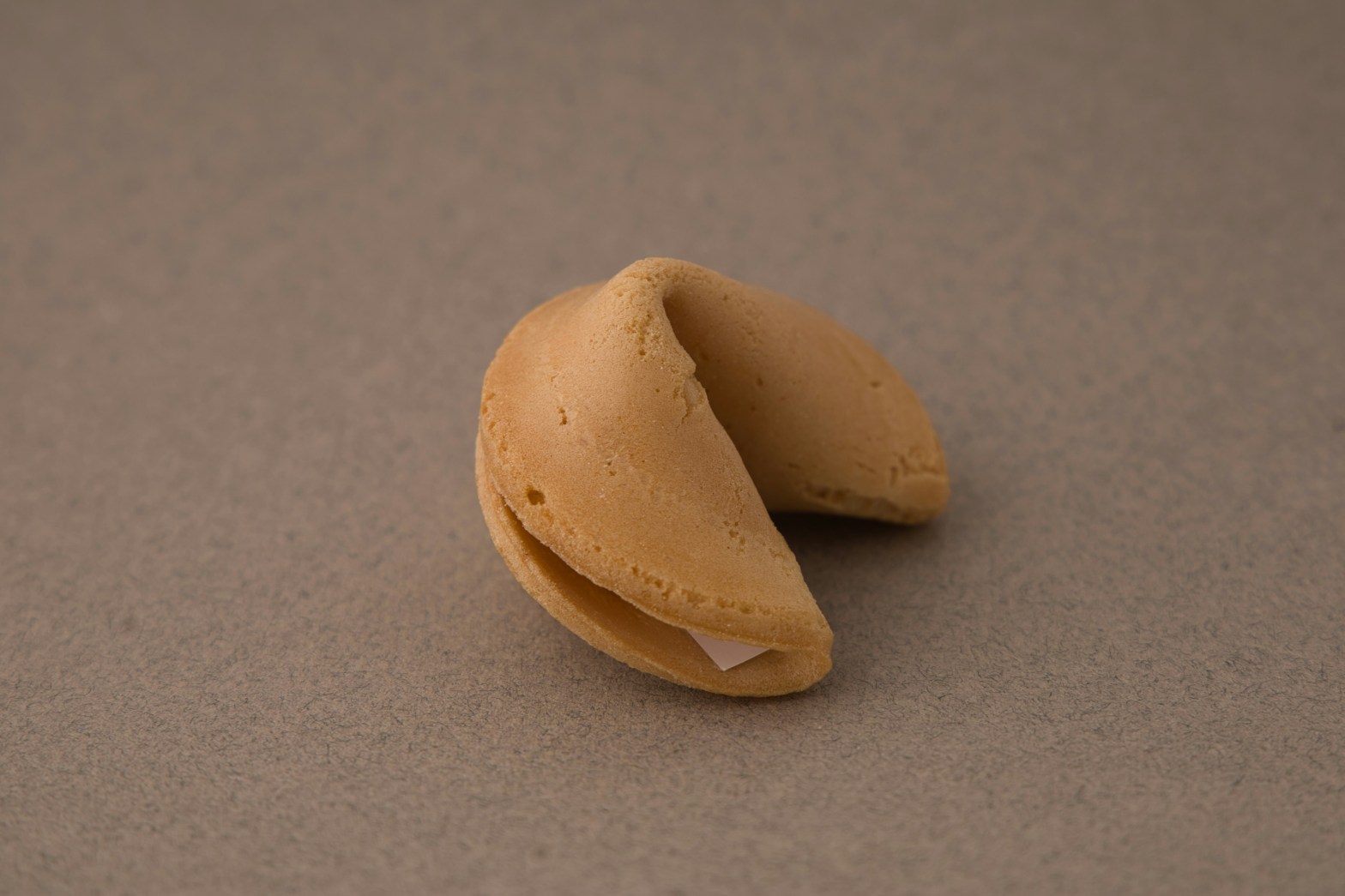
Today, I broke open a fortune cookie to find this fortune: “The really great man is the man who makes everyone feel great.” Since I’m a woman, I immediately changed “man” to “woman” so that I could apply it to myself. Then, the more I thought about it, the more I liked my “adapted” quote better.

When people think about the great characteristics of men, they often include “leadership” as one of those traits. Not so for women. Good traits for great women often include self-effacement, submissiveness, sweetness, and obedience.

I inserted “woman” in this fortune to point out that women don’t have to be doormats or voiceless handmaidens to bring greatness into the world. In contrast, women who act as spineless or voiceless females hurt and limit the potential of both themselves and men. I know women who are their family’s breadwinners, but who still allow their husbands to act as the “head of the family.” I also know women who are treated so badly in their relationships that they have no power whatsoever—no equal voice in their marriage, no personal confidence, and no respect from their children. These situations occur when men act as insensitive partners and women allow men to control and diminish their lives.

Women can be transformative leaders, but it’s going to take a global village to make that become a natural expectation.

 I’ve spent the last five years writing my first novel, Learning to Whistle, about a woman finding her personal power, something that all women struggle to do. My novel is coming out on April 7, 2026 by She Writes Press, a publisher that has been a true blessing in my life.

Through the community of She Writes Press, I’ve learned about the countless ways that women and men can boost the success of women. First of all, I’ve learned that publishing is a process. Experiencing the progressions of editing, rewriting, re-examining, publicizing, and sharing success has given my writing life a bigger vision to follow. With my new perspective, I will forever learn better ways to express myself and to make a difference. My writing career isn’t dependent upon how much I publish, but, instead, about how I nurture my own heart and how many other souls I raise up.

I’ve learned about the power of community and that people who promote the success of others experience their own greater rewards. I’ve cheered for my fellow She Writes Press authors when they win awards and followed their social media pages. I’ve purchased their books, read them, and written reviews.

But, in return, I’ve received immeasurable benefits. Through my fellow She Writes Press authors, I’ve found a reputable company to publish the audio book of my novel. Through Brooke Warner’s Substack posts, I’ve discovered great memoirs, such as Joyride by Susan Orlean and All the Way to the River: Love, Loss, & Liberation by Elizabeth Gilbert, which have exposed me to examples of the grit it takes to be a successful author. Warner also connected me to Jane Friedman, who publishes her own writing blog and offers numerous writing classes. My publicist, Caitlin Hamilton Summie, introduced me to podcasts and blogs that promote writers such as Compulsive Reader that, on December 28, 2025, published an interview of me by my daughter, Rachael Brandt at https://compulsivereader.com/2025/12/28/an-interview-with-tess-perko/ on December 28, 2025. Hamilton-Summie also connected me to the author Suzanne Simonetti, who writes alluringly realistic tales about women and their struggles—good writing I can emulate.

I don’t suppose anyone will ever label me as a “great” woman, but, then again, I don’t seek fame. I seek to be—not a doormat, not a handmaid, not only a mother, not merely a wife, not solely a friend—but a full participant in the human race who happens to have the valuable perspective of being a woman.

What am I going to focus on in 2026—polishing my leadership skills until I lead with grace and ease.

Marketing My Book My Way

My first novel will be published early next year, which means I’m in the middle of marketing it. I’ve scoured social media to follow how other authors are approaching this process, but instead of finding comfort in the knowledge about what others are doing, I’ve become anxious that I’m not doing enough. I have a publicist that has guided me through the process of obtaining blurbs and is continuing to coach me through a Kirkus Review and social marketing as my publishing date approaches, but other marketing individuals and organizations have tried to convince me that I should be doing much more than I am.

This predicament has resulted in some soul-searching. Was I doing enough? Did I need to hire more marketing experts to make sure I was getting as much publicity as possible?

What I concluded was that I needed to stay focused on what I was comfortable doing even if it meant I did less marketing than other authors. My goal is for my publishing process to be a joyful experience more than a financial windfall, so I plan to eliminate anything that creates stress or unpleasant experiences.

Grounding Myself

Meditation has always been an important way for me to stay grounded when people or situations bring anxiety into my life. As part of my morning routine, I spend about ten minutes taking deep breaths to create a calm and positive attitude toward this marketing process. Throughout the day, if I notice stress building up in my body, I take more deep breathes to wipe it away.

Avoiding Pressure and Competition

I still examine Facebook and other social media sites to get ideas about what other writers are doing, but, now, I make a conscientious effort not to pressure myself or to compare my situation to anyone else. For example, one author I know traveled across several states to convince independent book stores to carry her book. Another author went on a nine-week book tour, visiting several book stores and other venues. When I see this kind of reporting, I remind myself that I’m only willing to do what feels joyful to me.  

My approach is like a treasure-hunt. If I see an idea for marketing that someone has done, I picture myself doing it. If I think it will make me feel happy about my book, I’ll add it to my marketing plan.

Refusing Comparisons

I have no dreams of becoming a New York Times best-selling author. The only thing I care about is that the women who read my novel feel better able to cope with a difficulty in their own lives as they read about the trials of my protagonist. I’ve wanted to write a novel for decades and I’ve finally done that. If it helps make someone’s life better, then I’ve achieved my goal.

Building a Sentence, Step by Step

Photo by Dmitry Shamis on Unsplash

You know what excites me? Crafting sentences that overflow with content and brim with alluring vocabulary. When I read Stanley Fish’s book, How to Write a Sentence and How to Read One, I became giddy with pleasure, thinking about all the future memorable sentences I could write. In one chapter, Fish demonstrates how to expand a four-word basic sentence into one that reveals character, moves the plot, and illustrates how the setting affects a story. Let me show you what he suggests with my own example.

My basic four-word sentence is: her brother went to the meeting.

Now, if I want to build the character of the brother, I must say something about him. Here’s my first addition: her brother, a tall and lanky 56-year-old with a cantankerous and rude demeanor. But I could say even more. Here goes: her brother, a tall and lanky 56-year-old with a cantankerous and rude demeanor who always arrived twenty minutes late to every appointment and made excuses for his tardiness. Now, the reader knows that this guy is unpleasant and too arrogant to take responsibility for his short-comings.

Next, let me tackle how he went to the meeting. I replace the verb “went” with a more exact one and add some related information: her brother, a tall and lanky 56-year-old with a cantankerous and rude demeanor, who always arrived twenty minutes late to every appointment and made excuses for his tardiness, rolled his wheelchair across the snow-packed sidewalk in thirty-degree weather, wearing a down jacket, gloves, wool hat, and earmuffs. Not only does this addition explain how he got to the meeting, but under what conditions. It also infers that he was determined to go since driving a wheelchair over the snow in freezing weather is tough.

Ok, home stretch here. Let’s finish by adding something about the meeting: her brother, a tall and lanky 56-year-old with a cantankerous and rude demeanor, who always arrived twenty minutes late to every appointment and made excuses for his tardiness, rolled his wheelchair across the snow-packed sidewalk in thirty-degree weather, wearing a down jacket, gloves, wool hat, and earmuffs, to get to his AA meeting. Whoa, I only added one more word, here, but a term full of meaning and content. Now, the reader might associate the brother’s tetchy deportment with his alcohol problem that he is struggling to overcome.

I like this sentence so much I’m going to paste it on the bottom of this post, so I can admire it. Happy sentence-crafting to you, too.

Her brother, a tall and lanky 56-year-old with a cantankerous and rude demeanor, who always arrived twenty minutes late to every appointment and made excuses for his tardiness, rolled his wheelchair across the snow-packed sidewalk in thirty-degree weather-wearing a down jacket, gloves, wool hat, and earmuffs-to get to his
AA meeting.

by Tess Perko

Reference: Fish, Stanley. How to Write a Sentence and How to Read One. Harper. 2005.

Five Ways to Read Like a Writer

Photo by Michael Satterfield on Unsplash

When I was a child, I sat in a corner on the floor, reading fairy tales and getting lost in the dreamy and, sometimes, cruel, plots. I wasn’t yet a writer.

Now that I AM a writer, I read differently. I give myself permission to stop anywhere to observe the author’s craft. Here are five things I do.

Make Notes in the Book

I read books on my Kindle and via paper. The reason I use a Kindle is that it’s easy to hold while reading in bed. But, if I find an author whose writing I want to analyze, such as Barbara Kingsolver’s Demon Copperhead, I buy the paper version, and I write notes in it. Notes are better than highlighting since they help me remember why I marked a particular sentence. I’m not going to give the book away since I know I’ll come back to it over and over again to think about Kingsolver’s wording, sentence placement, or plot twists.

Look Up Words

Building vocabulary is a lifetime endeavor. I’m always finding new words while I read, especially when I read authors from other countries such as England and Australia. Different cultures seem to emphasize different vocabulary. For example, the other day, I came across the word “palaver” which means a prolonged and idle discussion. I look these words up, but I don’t take the paper dictionary off the bookshelf to do this. I’ll either use the dictionary feature on my Kindle or a dictionary app on my phone to make the task more efficient. Then, I’ll think about how the word fits into the author’s sentence and also how I might use it in my own writing.

Think about Word Choice

In Demon Copperhead, Barbara Kingsolver begins Chapter 40 with this sentence: “One look at her and I was gone” (319). The word that caught in my throat was “gone.” When I read it, I couldn’t wait to read the rest of the chapter. I had to find out what she meant by it.

That’s how powerful one word can be. I want to be the kind of writer that can use words to grip a reader, make her heart pump, send pulses through her body, and keep her reading. The only way for me to become better at this is to read how other writer’s do it. Which word does she choose? Where does she put it?

Evaluate How a Sentence is Structured

Believe it or not, sentence structure can make an action more compelling. Short sentences or phrases create tension or drama. Long sentences can paint a picture. Here’s a sentence from Demon Copperhead: “In my high-water jeans and the old-man shoes Mr. Peg had loaned me at Christmas, I joined the tribe of way-back country kids with no indoor plumbing and the Pentecostals that think any style clothes invented since Bible times is a sin.” This sentence not only describes what Demon was wearing, but it also says something about the two types of kids that he hung out with. In other words, it packs a punch.

Think about How an Author Uses Dialogue to Create Character

People don’t use the same words, have similar accents, or form identical sentences. Writers can say a lot about a character by creating dialogue that is unique to him or her. For example, in The Great Alone by Kristin Hannah, Large Marge says, “’Sit down or I’ll knock you down” (162). Large Marge is a big woman who is not afraid to threaten a man and her words illustrate this. If she was small or complacent, she would’ve said something completely different.

The Close

I can’t think of any better way to become a mature writer than to read voraciously. The true writer that gets excited about great prose.