
Five Ways to Read Like a Writer

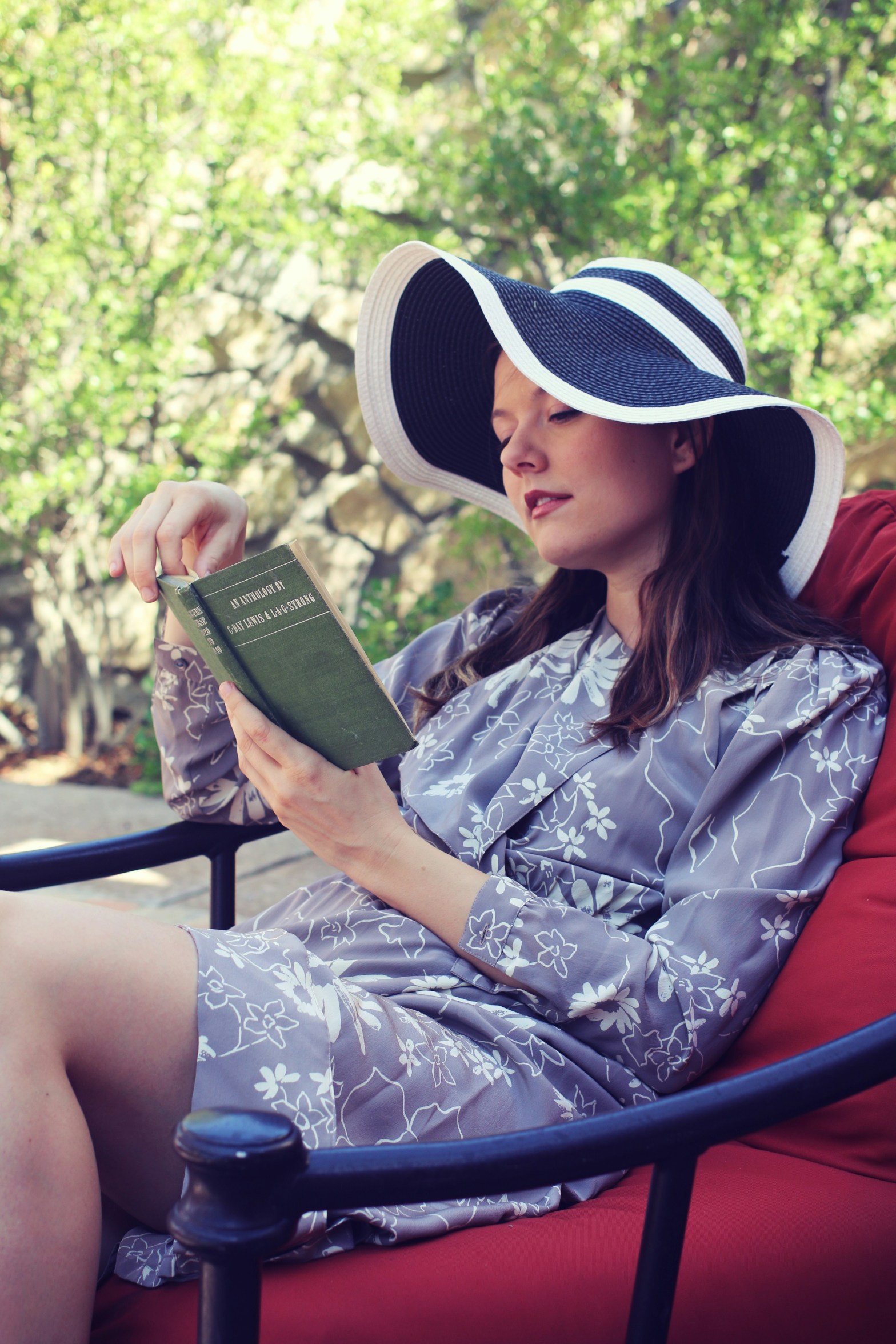
Photo by Michael Satterfield on Unsplash

When I was a child, I sat in a corner on the floor, reading fairy tales and getting lost in the dreamy and, sometimes, cruel, plots. I wasn’t yet a writer.

Now that I AM a writer, I read differently. I give myself permission to stop anywhere to observe the author’s craft. Here are five things I do.

Make Notes in the Book

I read books on my Kindle and via paper. The reason I use a Kindle is that it’s easy to hold while reading in bed. But, if I find an author whose writing I want to analyze, such as Barbara Kingsolver’s Demon Copperhead, I buy the paper version, and I write notes in it. Notes are better than highlighting since they help me remember why I marked a particular sentence. I’m not going to give the book away since I know I’ll come back to it over and over again to think about Kingsolver’s wording, sentence placement, or plot twists.

Look Up Words

Building vocabulary is a lifetime endeavor. I’m always finding new words while I read, especially when I read authors from other countries such as England and Australia. Different cultures seem to emphasize different vocabulary. For example, the other day, I came across the word “palaver” which means a prolonged and idle discussion. I look these words up, but I don’t take the paper dictionary off the bookshelf to do this. I’ll either use the dictionary feature on my Kindle or a dictionary app on my phone to make the task more efficient. Then, I’ll think about how the word fits into the author’s sentence and also how I might use it in my own writing.

Think about Word Choice

In Demon Copperhead, Barbara Kingsolver begins Chapter 40 with this sentence: “One look at her and I was gone” (319). The word that caught in my throat was “gone.” When I read it, I couldn’t wait to read the rest of the chapter. I had to find out what she meant by it.

That’s how powerful one word can be. I want to be the kind of writer that can use words to grip a reader, make her heart pump, send pulses through her body, and keep her reading. The only way for me to become better at this is to read how other writer’s do it. Which word does she choose? Where does she put it?

Evaluate How a Sentence is Structured

Believe it or not, sentence structure can make an action more compelling. Short sentences or phrases create tension or drama. Long sentences can paint a picture. Here’s a sentence from Demon Copperhead: “In my high-water jeans and the old-man shoes Mr. Peg had loaned me at Christmas, I joined the tribe of way-back country kids with no indoor plumbing and the Pentecostals that think any style clothes invented since Bible times is a sin.” This sentence not only describes what Demon was wearing, but it also says something about the two types of kids that he hung out with. In other words, it packs a punch.

Think about How an Author Uses Dialogue to Create Character

People don’t use the same words, have similar accents, or form identical sentences. Writers can say a lot about a character by creating dialogue that is unique to him or her. For example, in The Great Alone by Kristin Hannah, Large Marge says, “’Sit down or I’ll knock you down” (162). Large Marge is a big woman who is not afraid to threaten a man and her words illustrate this. If she was small or complacent, she would’ve said something completely different.

The Close

I can’t think of any better way to become a mature writer than to read voraciously. The true writer that gets excited about great prose.

Why This Writer Reads Stories: Reasons 6 & 7

I became a better reader when I started teaching college-level English courses in writing, literature and critical thinking. Since I had to lead discussions relating to literature, I studied authors who were renowned for their literary prowess such as John Milton who wrote Paradise Lost and Paulo Coelho who wrote The Alchemist. I read books on how to develop plot, build characters, use a setting to strengthen a story, and employ figures of speech to heighten meaning.

Today, through reading, I’m still studying all of these topics in great detail. Here are two more specific writing techniques I’ve studied recently from reading other author’s stories.

Reason 6: How to develop characters with different speech patterns and thoughts

The best stories have memorable characters, and memorable characters are unique people who have a distinct voice, extraordinary thoughts, and notable physical characteristics.

In my novel, my main character, Leonie, is from San Francisco. Her companion on the hike to Machu Picchu, Luna, is a woman from Argentina. These two women meet many people on their journey—a winery owner, a young woman who seeks love, a tango instructor, a fortune teller, and tourists who are visiting South America from all over the world. Each of these characters must be distinctive in order to effectively contribute to the story.

In West with Giraffes, Lynda Rutledge does a fantastic job at creating likable characters that entice the reader to stay with the story until the final curtain. In this story, an old man has the task of transporting two giraffes from New York to the San Diego Zoo by truck. One giraffe is wounded, so he must take great care not to injure the giraffe further and to provide it with enough comfort to heal.

The old man is rather gruff with his first driver when the driver drinks too much and threatens the giraffes’ safety, but he is gentle with the giraffes, as gentle as a mother soothing a baby. Rutledge develops his personality by creating dialogue in which he shouts at the driver and threatens him. Immediately afterwards, she describes how the old man climbs up to the giraffes and speaks to them until they are calmed down. In other words, the author develops the old man’s character with careful dialogue and action to show that he can be impatient with people who are irresponsible, but also kind with creatures under his care. These are two techniques that I can use to develop the characters of my story.

Reason 7: How to connect the setting to the plot of the story

From real life, writers learn that setting is intricately linked to the plot of a story since characters’ choices are strongly influenced by where they live, travel, or wish to go.

In my novel, my two main characters decide to take a four-day hike to Machu Picchu in Peru. The hike is strenuous, risky, and uncomfortable. For example, some of the elevation on the trail is steep and the hikers must either do everything they can to endure it or choose to give up.  Some of the hike is at 12,000 feet elevation and some hikers are not conditioned for such altitudes. In addition, no showers are available at the camps until day 3, so the hikers must decide what to do for hygiene. All of these conditions greatly influence the choices that characters make.

In The Alchemist by Paulo Coelho, Santiago goes to Tangier, a dangerous port city, where he is robbed of all of his money. He had wanted to use that money to go to Egypt. Because he is now destitute, the boy takes a job in a glass shop where he learns patience, business skills, and a new language–skills he needs to travel to Egypt.  As he learns the skills, he also learns not to give up on his dream. The setting of the dangerous city shows the boy that he is naïve and must decide whether to give up or to persevere. The setting gives the author the opportunity to show that the boy is strong and determined to achieve his goal.

If the purpose of stories are to help humans learn how to navigate through their own lives, then stories must imitate life realistically enough to be instructive. Human lives are challenged by their environments on a daily basis—riches, poverty, war, traffic jams, noise, isolation, abuse, and advantage all impact what people can or can’t do.

A good author puts a character into a challenging setting and shows the reader what a strong character does with it.