
Building a Sentence, Step by Step

Photo by Dmitry Shamis on Unsplash

You know what excites me? Crafting sentences that overflow with content and brim with alluring vocabulary. When I read Stanley Fish’s book, How to Write a Sentence and How to Read One, I became giddy with pleasure, thinking about all the future memorable sentences I could write. In one chapter, Fish demonstrates how to expand a four-word basic sentence into one that reveals character, moves the plot, and illustrates how the setting affects a story. Let me show you what he suggests with my own example.

My basic four-word sentence is: her brother went to the meeting.

Now, if I want to build the character of the brother, I must say something about him. Here’s my first addition: her brother, a tall and lanky 56-year-old with a cantankerous and rude demeanor. But I could say even more. Here goes: her brother, a tall and lanky 56-year-old with a cantankerous and rude demeanor who always arrived twenty minutes late to every appointment and made excuses for his tardiness. Now, the reader knows that this guy is unpleasant and too arrogant to take responsibility for his short-comings.

Next, let me tackle how he went to the meeting. I replace the verb “went” with a more exact one and add some related information: her brother, a tall and lanky 56-year-old with a cantankerous and rude demeanor, who always arrived twenty minutes late to every appointment and made excuses for his tardiness, rolled his wheelchair across the snow-packed sidewalk in thirty-degree weather, wearing a down jacket, gloves, wool hat, and earmuffs. Not only does this addition explain how he got to the meeting, but under what conditions. It also infers that he was determined to go since driving a wheelchair over the snow in freezing weather is tough.

Ok, home stretch here. Let’s finish by adding something about the meeting: her brother, a tall and lanky 56-year-old with a cantankerous and rude demeanor, who always arrived twenty minutes late to every appointment and made excuses for his tardiness, rolled his wheelchair across the snow-packed sidewalk in thirty-degree weather, wearing a down jacket, gloves, wool hat, and earmuffs, to get to his AA meeting. Whoa, I only added one more word, here, but a term full of meaning and content. Now, the reader might associate the brother’s tetchy deportment with his alcohol problem that he is struggling to overcome.

I like this sentence so much I’m going to paste it on the bottom of this post, so I can admire it. Happy sentence-crafting to you, too.

Her brother, a tall and lanky 56-year-old with a cantankerous and rude demeanor, who always arrived twenty minutes late to every appointment and made excuses for his tardiness, rolled his wheelchair across the snow-packed sidewalk in thirty-degree weather-wearing a down jacket, gloves, wool hat, and earmuffs-to get to his
AA meeting.

by Tess Perko

Reference: Fish, Stanley. How to Write a Sentence and How to Read One. Harper. 2005.
Five Ways to Read Like a Writer

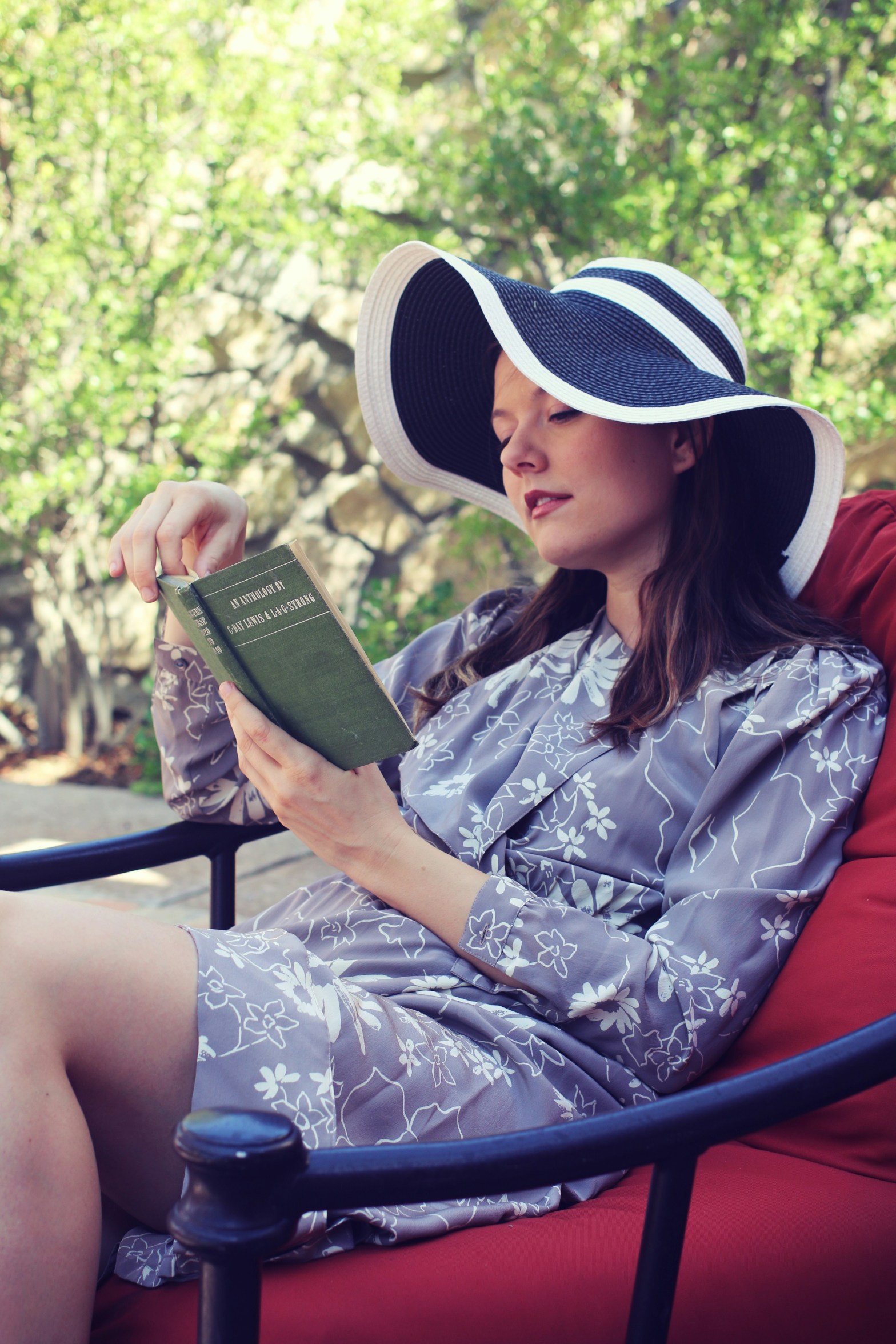
Photo by Michael Satterfield on Unsplash

When I was a child, I sat in a corner on the floor, reading fairy tales and getting lost in the dreamy and, sometimes, cruel, plots. I wasn’t yet a writer.

Now that I AM a writer, I read differently. I give myself permission to stop anywhere to observe the author’s craft. Here are five things I do.

Make Notes in the Book

I read books on my Kindle and via paper. The reason I use a Kindle is that it’s easy to hold while reading in bed. But, if I find an author whose writing I want to analyze, such as Barbara Kingsolver’s Demon Copperhead, I buy the paper version, and I write notes in it. Notes are better than highlighting since they help me remember why I marked a particular sentence. I’m not going to give the book away since I know I’ll come back to it over and over again to think about Kingsolver’s wording, sentence placement, or plot twists.

Look Up Words

Building vocabulary is a lifetime endeavor. I’m always finding new words while I read, especially when I read authors from other countries such as England and Australia. Different cultures seem to emphasize different vocabulary. For example, the other day, I came across the word “palaver” which means a prolonged and idle discussion. I look these words up, but I don’t take the paper dictionary off the bookshelf to do this. I’ll either use the dictionary feature on my Kindle or a dictionary app on my phone to make the task more efficient. Then, I’ll think about how the word fits into the author’s sentence and also how I might use it in my own writing.

Think about Word Choice

In Demon Copperhead, Barbara Kingsolver begins Chapter 40 with this sentence: “One look at her and I was gone” (319). The word that caught in my throat was “gone.” When I read it, I couldn’t wait to read the rest of the chapter. I had to find out what she meant by it.

That’s how powerful one word can be. I want to be the kind of writer that can use words to grip a reader, make her heart pump, send pulses through her body, and keep her reading. The only way for me to become better at this is to read how other writer’s do it. Which word does she choose? Where does she put it?

Evaluate How a Sentence is Structured

Believe it or not, sentence structure can make an action more compelling. Short sentences or phrases create tension or drama. Long sentences can paint a picture. Here’s a sentence from Demon Copperhead: “In my high-water jeans and the old-man shoes Mr. Peg had loaned me at Christmas, I joined the tribe of way-back country kids with no indoor plumbing and the Pentecostals that think any style clothes invented since Bible times is a sin.” This sentence not only describes what Demon was wearing, but it also says something about the two types of kids that he hung out with. In other words, it packs a punch.

Think about How an Author Uses Dialogue to Create Character

People don’t use the same words, have similar accents, or form identical sentences. Writers can say a lot about a character by creating dialogue that is unique to him or her. For example, in The Great Alone by Kristin Hannah, Large Marge says, “’Sit down or I’ll knock you down” (162). Large Marge is a big woman who is not afraid to threaten a man and her words illustrate this. If she was small or complacent, she would’ve said something completely different.

The Close

I can’t think of any better way to become a mature writer than to read voraciously. The true writer that gets excited about great prose.