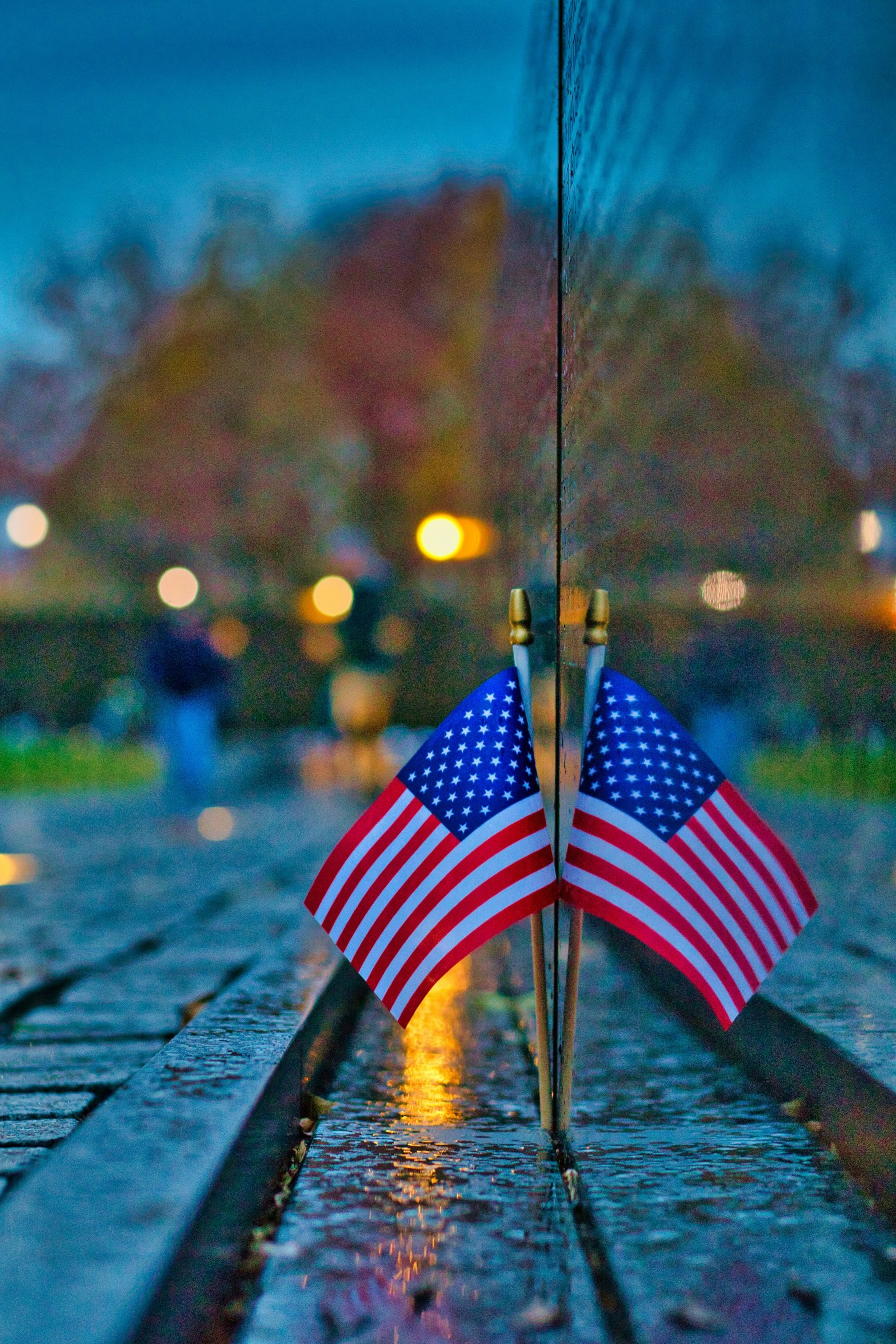
What I Learned about My Dad’s Vietnam Deployment from Reading The Women by Kristin Hannah

Photo by Kirt Morris on Unsplash

I was fifteen years old when my father went to war in Vietnam, not old enough to understand the news or to pay attention to adult worries. But I remember my dad standing at the front door with my mother hanging onto him, tears streaming down her face.

When my dad came home, we expected that he’d sit in his big armchair set in a corner of the living room, gather his children around his feet, and tell stories about what he saw. But he didn’t. He sat in his armchair, staring at the blank television with furrows in his brow for hours each night after work and during the long afternoons on the weekend. We crept past his chair silently afraid of his morose temperament.

When I discovered The Women by Kristin Hannah, I thought it would be an opportunity for me to learn about my father’s Vietnam experience that he never shared with us. The book tells the story of a young woman, Frances Grace McGrath, who becomes a nurse and signs up to serve in the army in Vietnam in 1965. She joins the Army Nurse Corps since the Air Force and Navy require her to have more clinical experience than she has.

Frances, known as Frankie, is inspired to sign up for service because her father has a wall in his study of the family’s military heroes, and she wants to be on that wall. The only woman on the wall is her mother in a wedding picture. Just before her brother leaves for the war, one of his friends tells her that women can be heroes, too.

My father, on the other hand, tried to avoid going to Vietnam. By 1965, he had been in the Air Force for twelve years and was a senior flight mechanic, a valuable skill for a war being fought with helicopters and airplanes. 1965 was the year that President Johnson increased troop deployment to Vietnam and began direct combat operations to shore up the South Vietnamese defense against the communist Viet Cong and North Vietnamese forces. My father petitioned not to be sent, so he was deployed instead to Mildenhall, a U.S. Air Force base in the United Kingdom. I was only nine years old. The bad news was that he had to leave his circle of friends in California to serve there for almost four years. The good news was that his family could join him, his wife and all nine kids. We came back to California in 1969. But this alternate deployment did not protect him from being shipped off to Vietnam.

In 1972, when the war was raging and tempers were flaring at home about it, I still didn’t know much about the war even though I had seen pictures of U. C. Berkeley students protesting it on television.

In April 1972, my dad closed the front door on his family and flew to serve at Cam Ranh Bay, an air base Vietnam used for the offloading of supplies, military equipment, and as a major Naval base. My father was assigned to serve as the senior flight mechanic on a huge transport plane known as a C-5B, a plane that can transport a fully equipped combat unit with oversized cargo. He wrote numerous letters home. In one, he writes about how he sprained his ankle in the shower. In another, he describes how a bomb went off outside the plane, the noise ringing in his ears.

I know my father took soldiers to the front lines and brought home dead men in body bags. He didn’t tell us that, but when I read about the use of C5-B planes, that’s what I learned. I know also that the planes were used to rescue Vietnamese women and children and bring them to the United States. Once, my father described how they had to shut the cargo door to keep out the hordes of civilians trying to board the plane.

After my father died and I was helping my mother with his estate, I came across some paperwork relating to a lawsuit about Agent Orange. Apparently, my father had been exposed to it in Vietnam. I had heard of it and thought that it was some kind of chemical used in a war. In The Women, I learned that it was a deadly herbicide used to kill jungle foliage to prevent the Viet Cong from hiding. Exposure to it causes cancer, birth defects, and other illnesses. My father died when he was 76 years old from heart trouble. His grandfather had lived to the age of 98 years old. Could he have lived longer if he hadn’t been exposed to Agent Orange?

Dad only stayed in Vietnam for eight months. He came home early since President Nixon had decided to withdraw U.S. troops by January 1973. Dad flew into Beale Air Force Base and my mother rushed to see him as soon as he landed.

By 1972 in the book, Frankie is home, experiencing nightmares and guilt for being part of a war that Americans didn’t want. She had seen soldiers without limbs, chest wounds, and mangled heads. They haunted her in her dreams, and when loud noises went off around her, she ducked for cover.

I don’t know if my father had nightmares like Frankie. I don’t know how the war protesters made him feel. Unlike Frankie, whose military service was ignored by her family and country, I think my father had emotional support waiting for him at home. My parents had a large community of friends in their church, who rallied around him when he returned. Finally, after months of grim silence, he got out of his armchair and settled into life again. A few years later, he retired from the Air Force and went back to school to get his contractor’s license. His last job was building candy stores for See’s Candies.  

Frankie’s story taught me how the women who served in Vietnam received little or no credit for their valor even from their own families. As a woman, I’ve experienced a lot of inequality, so the story affected me deeply. But as the child of a soldier in Vietnam whose life was profoundly affected by a parent’s suffering,  I’m thankful that it uncovered some of the mystery of my father’s Vietnam deployment.

Sausage Roll Saturdays

One of my favorite comfort foods is a sausage roll – a flaky pastry crust surrounding a warm filling of seasoned ground sausage. When I went shopping with my mother on Saturday at the outdoor market in Bury St. Edmunds, Suffolk, England, she bought each of us a sausage roll just before we got on the bus to go home. 

But a lot happened before that magical moment. When we arrived at about 9 a.m., my mother let me wander around by myself while she and her woven basket went grocery shopping. First, I crept into the 900-year-old Moyses Hall, the town museum built of stone. One of its twin-pointed roofs was topped by a steeple and weather-vane. A gigantic clock built into the stone kept time for the market-goers. Like a slueth, I inspected the manacles used for prisoners during Medieval times, gawked at paintings of local pastoral scenes, and read about superstitions and witchcraft.

Next, I hurried over to Boots, a pharmacy store that had two stories. On the second floor, the shelves were filled with fragrant soaps, lotions, and bath salts. I held my nose over the shelves, inhaling the scents one by one. Once in a while, when I had a little money, I’d buy a single rose or lavendar-scented bath salt square to keep in my dresser drawer. 

My final destination was the Waterstones Bookstore, a narrow retail space lined with wooden shelves from floor to ceiling, filled with more books than I had ever seen in my life. I found tomes of fairy tales stashed in the shelves in the back corner of the store. Since I had no money to buy one, I sat on the floor, cross-legged with a book in my lap, and read as long as I could, absorbing the words and stories into my brain so I could think about them long after I went home. 

But magical mornings never last long enough. Too soon, it was 11:45 and time to meet my mother at the bus stop. When I arrived, she held a greasy Purdy’s bakery bag in her hand with two sausage rolls. We ate them on the bus, licking the flakes of pastry off our fingers and wishing that the morning didn’t have to end.

Making a Plan to Have Fun

This is not my idea. I got it from my daughter who is the most entertaining person in our family. She’s an adult—thirty-three-years-old—who loves to have fun. What she did is to make a list of things she wanted to do during Fall to make her life more enjoyable. She downloaded a free template from Canva and made one column for the activity and another for checking it off when she completed it.

What did she include in the columns? Well, for one, nothing cost a lot of money. One thing she wrote was to buy paper Halloween cups to enjoy when she had coffee. She has a dog, so she walks a lot, and a holiday coffee cup would be a super conversation starter for all the other dog walkers in her neighborhood.

Here are some things I would write:

  • To make lamb stew
  • To read On Writing: A Memoir of the Craft by Stephen King
  • To watch a movie in a movie theater
  • To take flowers to a friend that needs cheering up
  • To go to a craft fair with a friend
  • To take a hike to a natural labyrinth near my house
  • To visit my local library
  • To wander around in a large nursery
  • To prune my roses
  • To send my daughter a card for no reason except to say “I love you.”

What Writing Letters Taught Me

Photo by Hans Isaacson on Unsplash

My mother hated writing letters, but she had three sisters who loved to communicate with her via writing. Mom was. however, an excellent problem-solver; using her exceptional negotiation skills, she convinced me to write letters to her sisters on her behalf.

For someone who didn’t like to write, she was a pretty good writing coach. From her coaching, I developed a passion for writing. This is what she taught me.

Brainstorming is Useful

When Mom asked me to write a letter, I first said, “I don’t know what to write.” Mom asked me to make a list of things I could write about, and she gave me some ideas: the weather, the garden, church, school. After a while, I started coming up with some of my own ideas in addition to these. My list included making cookies, going to the snow, and having my friends over to spend the night.

I still make lists before I write. Sometimes, I get ideas for a blog, like this one, while I’m sleeping. I get out of bed, go to the other room where I keep an arm chair and a pad of paper, and write down the ideas before I forget them.

If I get a dose of writer’s block, I jot down impressions that I want to include in a blog or chapter. I list as much information as I can and then leave it alone for a day or two. The notes help me get into the mood to write, and soon my writing juices are flowing.

How to Warm Up

“I don’t know how to start the letter,” was another refrain I often used. Mom said to start with “How are you? I am fine,” and then move onto another topic.

Asking about someone’s health seemed to be such a gracious opening, and it made me feel like a polite niece. Believe it or not, this introduction helped me warm up for the next subject.

How do I warm up for writing today? I have several methods that I’ve created to get me into the mood.

The first one is to take a walk in my garden where I have dozens of rose bushes that I’ve planted. Sometimes, I prune, other times I fertilize, but I always at least enjoy how beautiful they are. In my garden, I express my creativity, and enjoying it stimulates my creativity for writing.

Another thing I do to warm up is to read one of the affirmations that I’ve posted on my bulletin board to the right of my desk. Currently, I have three affirmations typed on 8 ½ by 11-inch paper to inspire me.

The first one says, “I lead with grace and ease.” When I read this, I see my writing as a way to lead the world to a better place. Thinking about being a leader dispels fear and encourages me to stand tall and feel calm.

The second one says, “I possess perfect self-expression.” I developed this affirmation when I started writing my first novel three years ago. I didn’t want writer’s block to inhibit my progress, so I thought of how I wanted to feel when I sat down to write.

The third affirmation on my bulletin board is, “The Midas Touch.” A few months ago, I was discussing my writing with a friend, and she said, “You possess The Midas Touch.” What she meant was that I was a brilliant and prolific writer. This gave my confidence such a boost that I decided to make it another affirmation for daily motivation.

Sentence Clarity

The letters I wrote on behalf of my mother taught me how to write clear sentences. As any serious writer knows, practice is the key to improvement. My mother had faith in my ability, so I was writing letters to her sisters at least once a month, and I started when I was six years old. Due to my mother’s coaching, my writing career and my writing practice started early in life. I’m sure, by now, I’ve written at least as much as The Beatles sang during their band years.

Paragraphing

Even though mother didn’t like to write or read, she was organized; therefore, she coached me to start a new paragraph every time I started to write about a new topic.

For example, I started each letter with “How are you. I am fine.” If the next topic was the weather, I’d start a new paragraph, which often turned into an interesting slice of my life. Here’s an example:

Today, the weather was sunny. We played outside all afternoon, and the bees were buzzing around the plums that had dropped to the ground. Since I was barefoot, I stepped on three bees and got stung three times. Luckily, Mom took out the stingers and I was fine.

Revising is Okay

If I made mistakes on my letters, my mother coached me to cross them out and to write the corrections after them. If I made too many mistakes, she convinced me to reprint the whole letter.

Maybe I was going to be a writer anyway, but knowing that I could make mistakes and fix them took off the pressure of being perfect the first time. For me, this was an important process to learn since, deep down, I hate making mistakes.

I also learned about revising from the letters I received from my Aunt Mary Ann. Today, Aunt Mary Ann is over 90 years old and still writes letters. If she makes a mistake, she crosses it out and rewrites what she meant to say. She demonstrates the perfect example of the writing process.

The Courage to Write

The other day, I told my five-year-old granddaughter that she could be a writer. Using one of her books, I showed her where her name would appear on the title page. She smiled at that, but then said, “I can’t write a story.”

For many people, writing is a daunting task. I know this since I taught writing at the college level for fifteen years.

Fortunately for me, I had a mother who didn’t take “no” for an answer. She had confidence that I could write.

Even now, when writer’s block stops my creative flow, I write letters: to Aunt Maryann, Aunt Dorothy, my friend in New Mexico, my sister-in-law in Florida.

Where did I get the courage to write? From a non-writer who believed in me.

Turning Ordinary Events into Writing

I used to think that my life was too ordinary for fostering ideas for writing. But finally, I realized that the best story-telling is about human nature itself. That’s when I started looking for writing ideas everywhere and every day.

In this blog post, I share five ordinary life events that I turned into stories or posts.

The Pancake Contest

When I was five years old, I competed against my brother Don in a pancake contest. The contest happened at home at breakfast time. My mother made as many pancakes as we could eat. My brother lost the contest and I won by one pancake.

Fifty years later, I turned this ordinary childhood event into a funny story with descriptions of my brother groaning in pain and of me raising my arms in victory.

A Picture of a Road Bike

One day at 5 p.m., my son sent me a picture of the handlebars of his new trail bike. By 6 p.m., it was dark outside, and I started to wonder if he was biking out in the hills in darkness. Luckily, he wasn’t.

I wondered what it would be like if a bicyclist did get caught in the middle of the hills in the dark. I wrote a story about a girl who starts her bike ride at dusk and gets distracted when she finds a tarantula. She ends up in a valley at nightfall and has to find her way back to the deserted parking lot while the night wildlife threatens her safety.

Taking a Stuffed Bear to a Cemetery

A week after my mother died, my brother texted me and my siblings to tell me that he took a stuffed bear with him to visit her grave. The bear was created from clothes that my mother once wore.

I invented a story about this visit, which I titled Rain. The story describes a man driving a truck to the cemetery to see his mother as it rains. When he arrives, the rain stops. He thinks about how his siblings have connected via text messages since his mother died. He puts the bear next to her tombstone and says a prayer. As he drives away, the rain starts again.

A Hike in San Francisco

A few years ago, I joined a Meetup group that hosted walks all over San Francisco. One walk started at the Embarcadero and crossed the city from east to west for seven miles until we reached Land’s End. Another hike circled the exclusive neighborhoods of Twin Peaks and climbed up to the Sutro Tower, one of the highest points in the city.

When I was writing my novel Whistle, I used these hiking experiences in one chapter to help my protagonist escape the sorrow of her home after her mother dies. She walks along the ocean to Golden Gate Park.

Filbert Street Steps and Graffiti

When my friend came to town, I met her in San Francisco to climb the Filbert Street Steps. This staircase covers three ascending blocks from Sansome Street to Coit Tower and includes well over two hundred steps. On my way to the city in Oakland, I saw some graffiti on an overpass that said “Resist Authority.”

I turned the staircase and graffiti experiences into a short commentary about how I like to read graffiti so I can hear what the needs of people are. This post received a lot of attention on my blog. It seems like many people identified with it.

Now, I have a fertile writing attitude. My whole life is a garden of ideas, waiting for my creativity to take them from a personal experience into the world.

Character Study: Frannie

I was afraid of Daddy.

He had a loud voice and big hands. He wore glasses over his eyes. They reflected the light so much that I couldn’t tell what color his eyes were. When he slept on the couch, he snored like a bear. I covered my ears so I couldn’t hear him.

One day, Mama, who had calm blue eyes and smelled like fresh apples, was carrying me from my bedroom through the hallway that led to the living room.

It was morning, and she had just dressed me in a pink shirt and matching pants. She had combed my blonde curls and used a tiny barrette to hold them back from my face.

Momma told me it was time for breakfast. My two older sisters were playing in the family room, waiting for me.

As Momma carried me down the hall, Daddy met us and reached out his hands for me. I started crying.

“What’s wrong, Frannie?” Momma asked me, turning me away from Daddy and peering into my face.

“Not Daddy,” I cried. “Not Daddy.”

Momma turned back toward Daddy, a puzzled look on her face. Daddy reached for me again. I screamed.

“Not Daddy. Not Daddy,” I buried my face in Momma’s apple-scented shoulder and reached my arms around her neck to hold on.

Momma bounced me up and down in the air. I let go of her neck to enjoy the bounce, but kept my face hidden in her shoulder. Quietly, she sang “Ring Around the Rosie”. Suddenly, she pulled me away from her chest. I saw Daddy’s arms get bigger as he reached for me again. Those huge hands with padded fingers.

“Come to Dad,” he boomed.   

I inhaled so sharply that I couldn’t make a sound. My eyes opened like oranges. As Momma continued to rock me in the air, my head dangled like a branch in the wind. Finally, I gripped Momma’s sleeves. My fingers ached.

I howled like I had just fallen and skinned my knee on the sidewalk. Like my knee had been ripped open and blood dribbled down my shin. My mouth was open so wide I could feel the air on my tongue.

“Not Daddy. Not Daddy,” I screamed again, then hiccupped as tears started rolling down my cheeks.

Momma stopped her rocking and slapped me on my padded diapered butt.

“Stop this crying, Frannie. You’re making such a fuss.” She swung me toward Daddy’s arms, then pulled me back to her chest, then swung me again toward Daddy, then back to her again.

I saw myself on the back yard swing, back and forth, up and down. The sand under my feet and then the fence where Momma’s roses bloomed. The sand. Then the fence. The sand. The roses. The sand. I laughed as the air rushed past my face and my curls tickled my neck.

Then I felt Daddy’s big hands catch me and Momma’s arms let me go.

I held my breath, closed my eyes, and shook like a leaf.

What Really Makes Me Tick (Happy)

Wouldn’t it be a better world if everyone knew what they needed to be happy? I’m retired, and I loved my teaching job; however, now that I don’t have to commute to work five days a week or grade college essays on the weekends, I just want to do things that make me happy. Here they are.

Admiring Flowers

Stopping to smell a rose may seem like an unimportant action, but, when I do it, it brings me joy. I have rose bushes in my front yard and back yard, and every morning, I wander outside to inspect every bush to see the new blooms. I sniff and stare and smile to my heart’s content.

I remember the flowers of my childhood, too. In January, crocuses poked out of the soil in the flower beds in the front yard. In February, the daffodils came. Tulips arrived in March, and Irises after them.  By the time Lent was over, Easter Lilies grew like sophisticated ladies in white hats in our back yard. And in May, the meadows were carpeted with Bluebells.

For four years of my childhood, I lived in England with my family, and I was impressed by the colorful blooms of summer that thrived in the temperate climate. Rambling roses climbed up cottage walls. Cosmos waved their rainbow heads in the breezes like pretty bonnets. Hydrangeas brightened shady nooks of gardens with their puffy burst of blue and pink. I was entranced by their beauty.

At Christmas, my mother bought at least one Poinsettia to decorate the house. She bought red poinsettias, white poinsettias, and ones with white flowers with red stripes. Sometimes, she had an amaryllis bulb growing in a pot. Every day, I’d inspect it to see whether it was blooming or not. I was in more of a hurry than it was.

Making a Stew or Pot of Soup

Whenever my dad cooked, he made “water” soup. He added pieces of beef and vegetables to a pot of water to create soup. Ugh. We kids would cringe when we saw him taking out a pot. His were the worst soups I’ve ever tasted.

Maybe that’s why I love making delicious soups.

I own an old Dutch oven that is the perfect size for making one-pot meals. Some mornings even before I change out of my pajamas, I scour the refrigerator and pantry for the ingredients for a minestrone—onions, celery, carrots, zucchini, chick peas, barley, chicken broth, chopped tomatoes, oregano, salt, and pepper. Sometimes I add cooked shredded chicken. Often, I don’t.

Or I find the fixings for chicken noodle soup for a recipe from a William’s Sonoma Soups book that I bought a long time ago. While I’m chopping the carrots and celery for this soup and simmering the chicken breasts in the broth, I think back when I made this for my two children who loved it. I see their little faces above their steaming bowls, their hands holding spoons, their mouths filled with savory egg noodles.

On one European trip, I bought cookbooks in the Czech Republic and Austria, so when I want to make goulash, I search for recipes from those books. My favorite goulash is a beef, onion, and smoked paprika concoction that is topped with cornmeal dumplings. I first ate cornmeal dumplings at the restaurant at the Belvedere Palace Museum in Vienna. I’m still practicing to make mine taste as good as those were.

Reading Inside When It’s Cold Outside

To me, the essence of decadence is waking up in the morning, seeing that it’s cold and rainy outside, then reaching for a novel and reading it in bed. To take all the time in the world to read a story, then stopping and thinking about it is heaven on earth.

Reading when its cold outside reminds me of when I read as a child. I had time to sit on the floor in a corner of the house with a treasured book of fairy tales and get lost in another world. When my mother took me to the open-air market, I found the bookstore, walked to the back shelves, pulled out a tome, and read it while sitting on the floor. I was always afraid that the shop owner would find me and kick me out, but he never did.

Decorating My Home

When I was a child, we never had an expensive home, but that didn’t keep us from making it beautiful. In the spring and summer, I picked flowers in the meadows, poked them into vases and brightened every table and dresser in the house. In the fall, I cut branches of colored leaves for the mantel in the living room. For winter, my mother and I found pine cones and spray-painted them silver and gold for Christmas. We added holly and pine branch garlands in-between them.

Today, when a new season comes, I still have the irresistible urge to celebrate it with seasonal décor. Right now, I have a collection of pumpkins on my front porch accompanied by a little witch. I also have put pumpkins on the table on the back patio so we can feel the season when we go outside in the afternoons. Every time I pass these decorations, I feel like celebrating.

Writing

I wrote my first poem when I was nine years old, and I’ve been writing ever since. Sometimes, I use writing to help me sort out a problem. Currently, I’m the chair of a scholarship committee for a charitable organization. When I’m planning the meeting agendas, I write them to organize my thoughts. When I’m thinking about how to improve my author’s platform, I write my thoughts down. I write down daily affirmations and New Year’s Eve resolutions. I write every day.

Even when I’m traveling, I have a journal that I use to take notes or write a spontaneous poem. I remember one vacation that I took by myself to Boston. After I toured Paul Revere’s tomb and all of Boston’s historic sites, I drove north up the Atlantic coast. I stopped in Salem and visited another graveyard where a huge oak tree that had gotten so big over the centuries that tombstones were poking out of its bark halfway up. There was so much to write about. Finally, I stopped the car at the edge of the road near a beach. As I sat in the sand and gazed over the surging navy-blue sea, I wrote a poem about the peace that I felt.  

When I visited Sorrento, Italy, I stayed in the Grand Hotel Excelsior Vittoria. Our room had a large terrace that overlooked the Sorrento Harbor. Across the Bay of Naples with its slate-blue ripples, we could see Mount Vesuvius. Every day, I sat at the patio table on this terrace with my journal to write about the gorgeous scenery or about my excursions into the town of Sorrento or its nearby attractions. I wrote how my husband had to scrunch down going into the Blue Grotto Cave in Capri. I described the ceramic factories that we toured in Almalfi. With words, I wondered what it was like to be a citizen of Pompeii in 79 AD when Mount Vesuvius spewed its lava all over the populated city.

Now that I think about it, I’ve been doing these happy things my whole life. Naturally. Now, though, I have more time to do them. What joy.

A Eulogy for my Sister Carol

Photo by Cristina Anne Costello on Unsplash

Good morning. My name is Tess, the third child in a family of ten children and Carol’s older sister. Carol was the sixth child in our family, born on October 20, 1960 at Mather Air Force Base hospital in Sacramento.

As a baby, Carol was a pretty little blonde girl with fine hair and features that mirrored her mother’s: a long forehead, an awfully straight nose, and a smile that created dimples in her cheeks.

Carol loved, loved, loved music.

She enjoyed old-fashioned country music by the likes of Hank Williams who wrote “Hey Good Lookin,” which she heard when Mom and Dad played the radio.

When Carol still lived with us, Beverly, Carol’s oldest siter and another musician in the family, sang songs to her, such as “Do, Re, Mi” from the musical Mary Poppins and “My Favorite Things” and “Edelweiss” from The Sound of Music. Carol smiled, laughed enthusiastically, and sometimes rocked to the beat.

Just before Carol died, Ron and I visited her in the hospital. She was anxious, and the only noises in the room were the beeping of the medical monitors. We turned on some music by the Russian composer Sergei Rachmaninoff. Immediately, Carol turned her head toward the music speaker and calmed down. Her eyes gleamed with joy.

We believe Carol would have been a great musician if she hadn’t suffered from Cerebral Palsy.

Carol possessed determination.

Even though she didn’t speak, Carol had ways of letting people know what she didn’t like. Whenever someone tried to brush her teeth or feed her sour fruit, she clenched her mouth closed to prevent anyone from getting anything past her teeth.

While she was in the hospital, Carol demonstrated determination as well. She didn’t like having oxygen tubes in her nose, so she moved her head from side to side until they fell out. One time, after I had inserted the tubes back in, Carol used her left hand to accurately bump the tubes out of her nose and above her head. A look of satisfaction spread across her face as she became free of them. I laughed out loud realizing that her spirit was still strong and impressive.

Carol was sometimes mischievous and annoyed.

One time when Margaret visited Carol while she was living in transitional housing, she found a caretaker feeding her.

Margaret knew that Carol had been attending school to learn how to eat on her own, so Margaret said to Carol, “Carol, you know how to feed yourself.”

Carol swallowed, looked up at Margaret, and laughed heartily.

Apparently, she was hungry, and, if she had to feed herself, it would take much longer. She knew what she was doing.

When Carol was annoyed, she set her mouth in a tight straight line to let us know. Her expression was so like the countenance of Mom’s face when she was irritated that we recognized it easily.

Carol enjoyed the support of a loving family throughout her life.

Our parents’ greatest gift was a strong family bond, and Carol was an integral part of our family unit.

Carol lived with our family for nine years. When she was a little girl, I lifted her onto the swing and pushed her. She raised her face to the sky to feel the breeze. I also took her by the hand and walked her around the back yard so she could see the animals. Her eyes followed the ducks and chickens as they strutted around for food.

When we flew to England to live for almost four years, I sat next to Carol on the plane. I thought I was luckier than my two older sisters because they had to take care of more siblings than me. As long as I took good care of Carol, Mom was happy. I danced stuffed animals in front of her, fed her the airplane food, of which she didn’t complain, and sang her to sleep.

After we returned from England, my parents decided to arrange for Carol to live in an assisted living home. One of her homes was in Santa Clara. At the time, I worked in Santa Clara, so, once a week, I visited Carol and fed her dinner. Sometimes, I was able to take her outside to enjoy the warm sun and soft breezes by the Bay. We sat on the expansive lawn under the shade of an oak tree, and I told her stories about the people in our family while her hazel eyes stared at my face.

Margaret and Liz also visited Carol in Santa Clara. First, they went to Great America for a day of fun, then called Carol’s facility to see if they could visit. Since they were arriving after visiting hours, they knocked on the back door. Once admitted, they sat next to Carol in the sitting room and told her about their day at the amusement park. Since Margaret and Liz love roller-coaster rides, they described the thrill of bouncing up and down and all around, and Carol stared at them, probably day-dreaming about a calmer choice such as “It’s a Small World.”

Finally, my parents arranged for Carol to move to Sacramento so she could live closer to them.

Once, while visiting, Margaret took Carol to Starbucks and ordered her a Strawberry Créme Frappuccino. She wheeled Carol outside since it was summer and she wanted Carol to enjoy the good weather. Margaret held the Frappuccino up to Carol’s mouth and told her not to drink it too fast or she would get a brain freeze. Carol eagerly sucked quickly through the straw for a few seconds, then let the straw go, wrinkled up her nose, and squeezed her eyes shut. Oops, she got a brain freeze.

When Carol moved to a home in Penryn, she was extremely popular with her roommates. She had more visitors than anyone, and her roommates thought she was Miss Congeniality. When we visited her, not only did we talk to Carol, we spent time with her friends. The joy on all the faces was rewarding. We felt popular, too. 

Mom and Dad supported Carol throughout their lives, making sure she was well-cared for wherever she lived. Often, they brought her home for holidays such as Christmas so everyone could see her. Carol even showed up at Mom and Dad’s 50th wedding anniversary at St. Mel’s Church, accompanied by her caregiver.

Later, after Dad passed away, Mom visited Carol as often as she could even after she moved into an assisted living facility herself when she was 89. Whenever Carol saw Mom, she didn’t have eyes for anyone else. She gazed into her face with a tender look of love, often accompanied by a smile.  

Mom was a dedicated mother; she called Carol’s home every Sunday afternoon to check up on her. Our parents also purchased a burial plot for Carol next to their own so she could rest beside them.

Closing

We will miss Carol. Like any sibling, she was our friend, our companion, our entertainment, and most of all our teacher. She inspired us to slow down our racing lives to enjoy basic joys and connection with her. She showed us the value of unconditional love and how to practice it. She taught us that family bonds go beyond childhood and are maintained by commitment.

Our lives were and still are enriched by hers, and we are grateful to God that she was our sister.

Leona’s Tacos

Photo by Jeswin Thomas on Unsplash

My friend Leona taught me how to make tacos when I was in my early twenties. She was the grandmother of one of my college friends, and I stayed with her for two weeks when I first moved to Los Angeles. Leona was fifty years older than me, but we developed a deep friendship.

Leona lived on Verde Street, on a hill in East Los Angeles in a house built by hand by her late husband. All the houses on the street looked homemade, each one like a small collection of shoe boxes glued together on tiny lots overlooking the San Bernadino freeway.

When Leona made tacos, she browned ground beef in one pan. She didn’t add any spices, not even salt and pepper. In another pan, she fried tortillas in vegetable oil until they were golden on each side, then flipped one half over the other to make a half-moon. With a spatula, she tossed the slightly crispy tortillas on a plate, using paper towels between each one to soak up the oil. She put grated cheddar cheese and a jar of mild salsa on the tiny chrome and Formica kitchen table.

When everything was ready, we sat down and combined the simple ingredients to make our own tacos while we looked out the window. From our eagle’s perch, we could watch the freeway as automobiles, trucks, and police cars lit up the night like Christmas. We also talked about the people in our lives, her children, her grandchildren, my friends, and each other. This is when I learned that the best lives are simple ones, no drama, no difficult entanglements, easy to manage. Those were the first tacos I had ever eaten, and I loved them.

While raising my two kids, I made tacos all the time. My dad was an avid fisherman, yet he didn’t like to eat fish; therefore, he brought freezer chests full of frozen fish to my house for us to eat. From his bounty, I made fish tacos—long before they became popular in restaurants. I invented sturgeon tacos with lettuce, sour cream, cilantro, and salsa. I created salmon tacos with fresh guacamole, basil leaves, shredded lettuce, and salsa. When we ran out of grandpa’s fish, I made tacos with shrimp, ground turkey, left-over steak, and pork chops. My kids loved them and, at the end of every taco meal, the serving plates were empty. In between bites, my kids told me about what had happened at school that day, what their friends were doing, and how they had to write papers for English and history class. As their mother, I learned to listen to them carefully before jumping in with advice and was thrilled they were confiding in me.

Now my kids are grown, and they have to feed themselves. My son is a taco specialist. For two years, he lived off of rice and bean tacos with shredded carrots, lettuce and salsa. It was his way of eating healthy and saving money at the same time.

The other day, I stopped at a farmer’s market on my way home from Sacramento. I bought red onions, peaches, cilantro and peach salsa. At home, I had some leftover roasted leg of lamb and spinach tortillas, and had decided I was going to make tacos for dinner.

Like Leona taught me, I fried the tortillas on each side until they were golden and then flipped one half over the other to make a half-moon. I transferred each one to a plate with paper towels to soak up the oil, even though I was using olive oil instead of vegetable oil.

I chopped up some red onion, cilantro and peaches, then sliced the lamb in finger-sized pieces and warmed it up in the same skillet that I had used for the tortillas. When everything was ready, I assembled the tacos: roast lamb, chopped red onion, chopped peaches, cilantro leaves, and peach salsa. I arranged two tacos on each of two dinner plates and called my husband to supper. Before we started eating, we expressed our gratitude for each other and the life we had built together. From listening to my husband’s prayer, I have learned that he is most grateful for having me in his life.

Leona and I were friends until she died at the age of ninety-five. We drove together from Los Angeles to Sacramento to visit our respective families. We stopped to taste olives and almonds. We visited missions. We ate lunch at Bob’s Big Boy and Denny’s. She made quilts while watching movies, and I made needlepoint pillows.

Leona taught me that life was a journey, and that every stop along the way was just one sojourn in a series of manageable experiences. Simply, Leona was a precious friend. I still love her, and am most grateful that she taught me how to make tacos. From that first day when she made them for me until today when I make them for my husband, I’ve learned that the relationships in my life are my most important possessions.

The Sugar Cookie Grandma

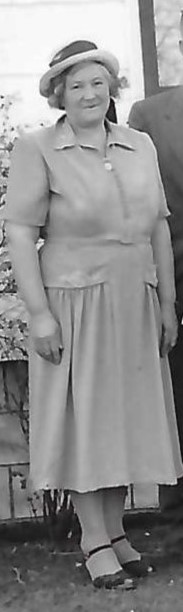
Grandma Lillian in her 40s

Back in my grandmother’s day, women didn’t get much notoriety, so I decided to write a blog about my Grandma Lillian. She’s not famous, but she deserves some long-overdue attention.

Grandma Lillian was born in Winona, Minnesota on November 9, 1903. Both of her parents’ families were originally from Trhove Swiny, South Bohemia, which is now part of the Czech Republic. This town dates back to the 1200s as part of an ancient trade route. In the 1400s, King Vladislaus II, who was then King of Bohemia, authorized the town to build a market. The town’s name comes from the Czech word trh which means market. The two most popular sites in Trhove Swiny are The Most Holy Trinity Church, which replaced a Catholic pilgrimage chapel, and an iron mill called Buškův hamr.

My Grandma Lillian, however, never visited the Czech Republic. In fact, she never traveled outside the United States except for Canada. She was a short woman, less than five feet tall, and a little plump. When she first married my grandfather Leon Jr., she lived in his father’s house on an 800-acre piece of property that is now a Minnesota State Park. Later, she and her husband bought their own house in Goodview, a town next to Winona. The house was painted white and sat on a flat parcel of land covered in shamrock green grass with a large vegetable garden in the back. Her brother Leo lived next door.

Grandma Lillian’s House in 2022

Grandma Lillian had five children, including my father who was the oldest. Then came David, Mary, Gerald, and Daniel. My father moved to California with the United States Air Force which stationed him at Mather Air Force Base. Once my parents came to California, they settled down to stay.

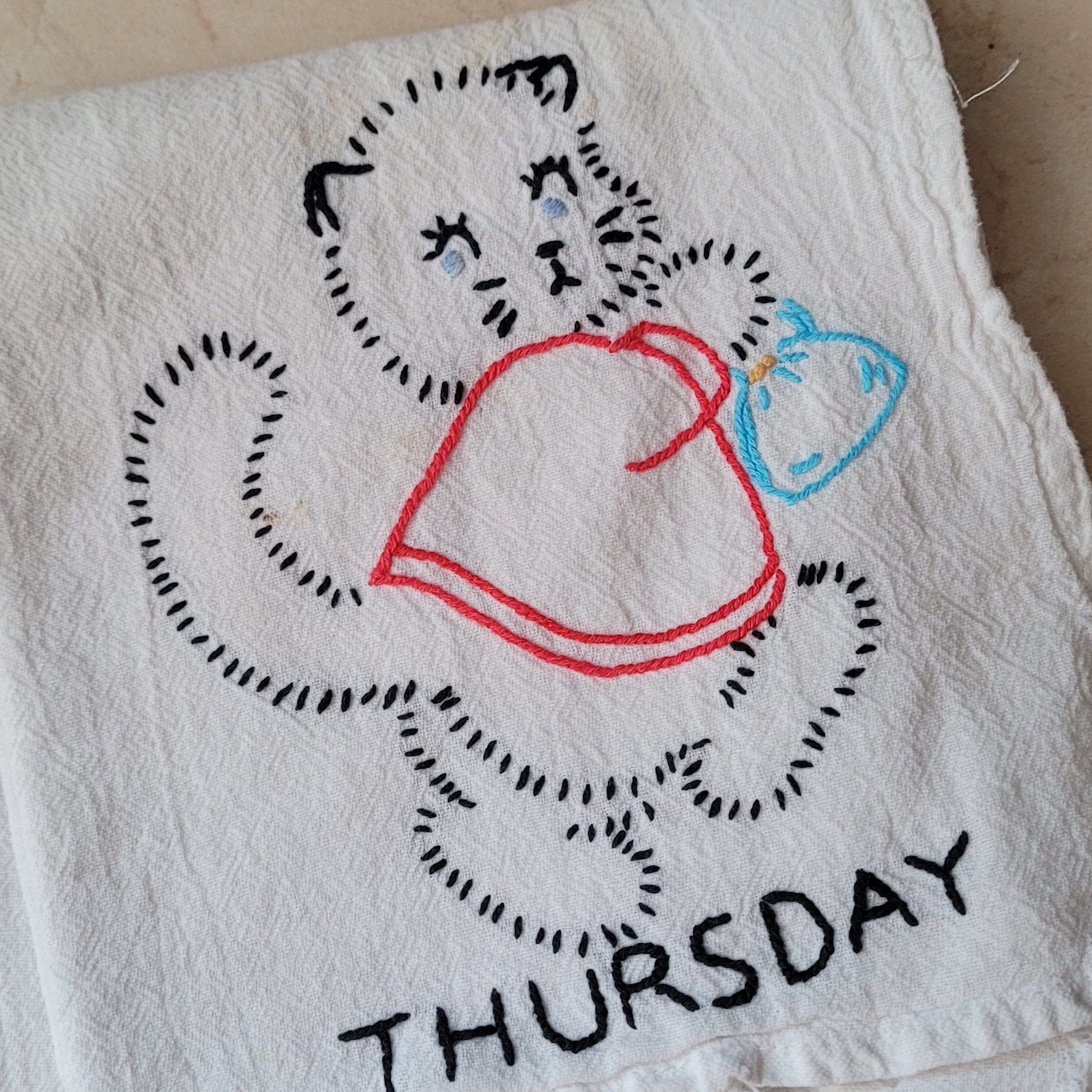
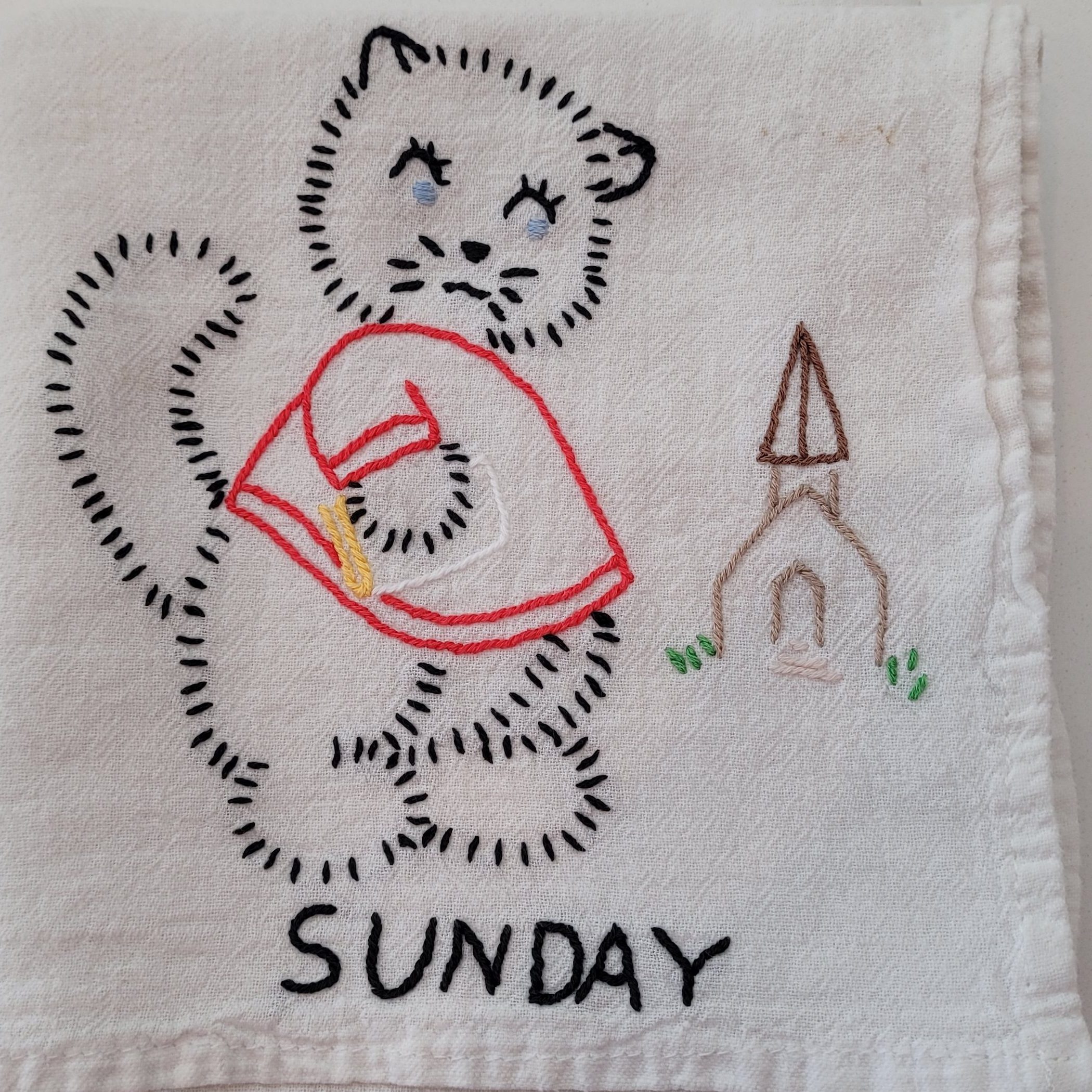
Grandma Lillian took the train to California several times to help my parents when my mother was in the hospital having another child. During these times, I learned about who she was as a person. I watched her embroider cotton tea towels, one for every day of the week. For each day, she embroidered a kitten performing a different kitchen task with one exception. For example, on Thursday’s towel, the kitten was carrying a tea kettle to the stove. On Sunday, the kitten was not doing kitchen work since she was going to church. She taught me how to embroider, but I was too impatient to make the stitches neat.

Even though Grandma Lillian didn’t ever travel to Bohemia, she used many recipes that came from the old country. She was famous for her Refrigerator Pickles. To make these, she combined seven cups of sliced cucumbers and one sliced yellow onion with a tablespoon of salt. She let the salt leach some of the water out of the cucumbers for about an hour. For the dressing, she combined one cup of vinegar, two cups of sugar, and one teaspoon of celery seed. She poured this over the cucumbers and stored the dish in the refrigerator to use as needed. By the time her recipe reached my family, we were eating the pickles as a side salad, all in one day.

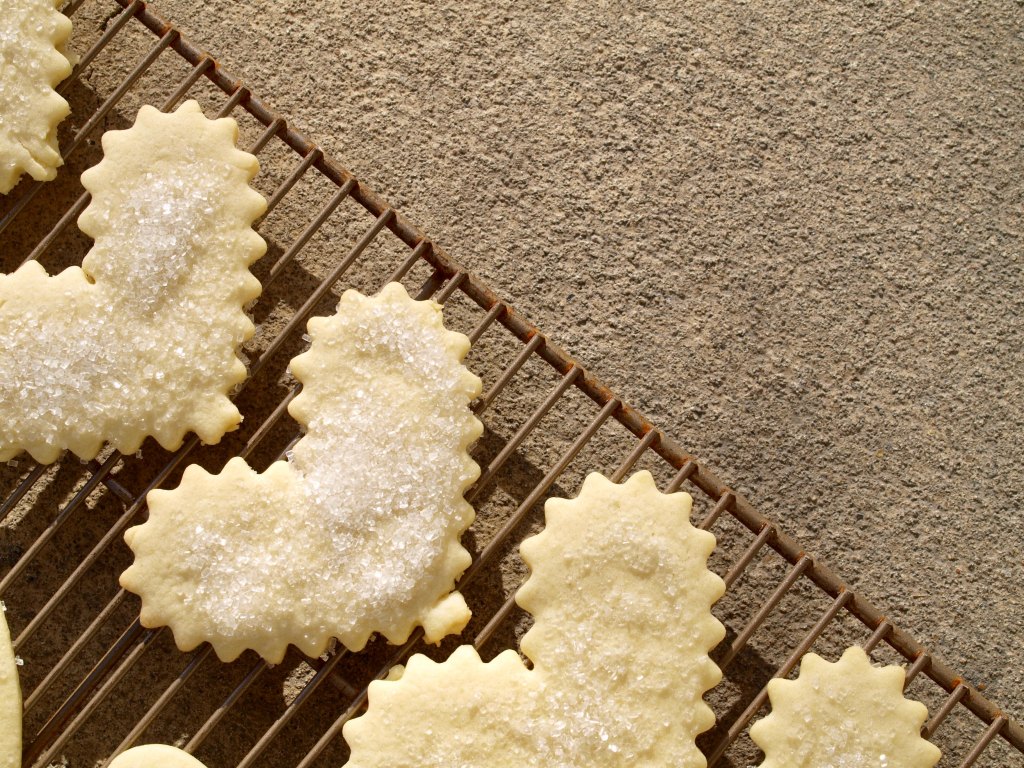
My favorite memory about Grandma Lillian was how she made sugar cookies. Maybe we didn’t have cookie cutters. Maybe we didn’t have the shapes of cookie cutters that Grandma wanted. I don’t recall, but I do remember how Grandma folded a piece of newspaper in half and used scissors to cut out a heart about the size of her hand. Then she placed the heart shape over the rolled-out cookie dough and cut the dough with a sharp knife to make heart-shaped cookies. She placed the hearts on a cookie sheet and decorated them with colorful sprinkles. When we ate them warm out of the oven, they were buttery sweet.

Grandma loved to garden both vegetables and flowers. Many days, she spent hours out in her garden weeding, pruning, harvesting and enjoying the ambiance. My father inherited her green thumb since he also cultivated a big garden every year to feed his family.

Grandma Lillian was in her garden when she died on July 16, 1991. The weather was over 100 degrees, and my cousin Karen found her late in the day. Now, she is buried next to her husband Leon and her youngest son Daniel in a country cemetery. She didn’t become a movie star, a Congress woman, a Supreme Court judge, or even a newscaster on television. Yet, she lives on in the lives of her thirty-one grandchildren and more than forty great-grandchildren. That’s an accomplishment of which I am proud.

Photo by Diane Helentjaris on Unsplash

4th Time to Paris

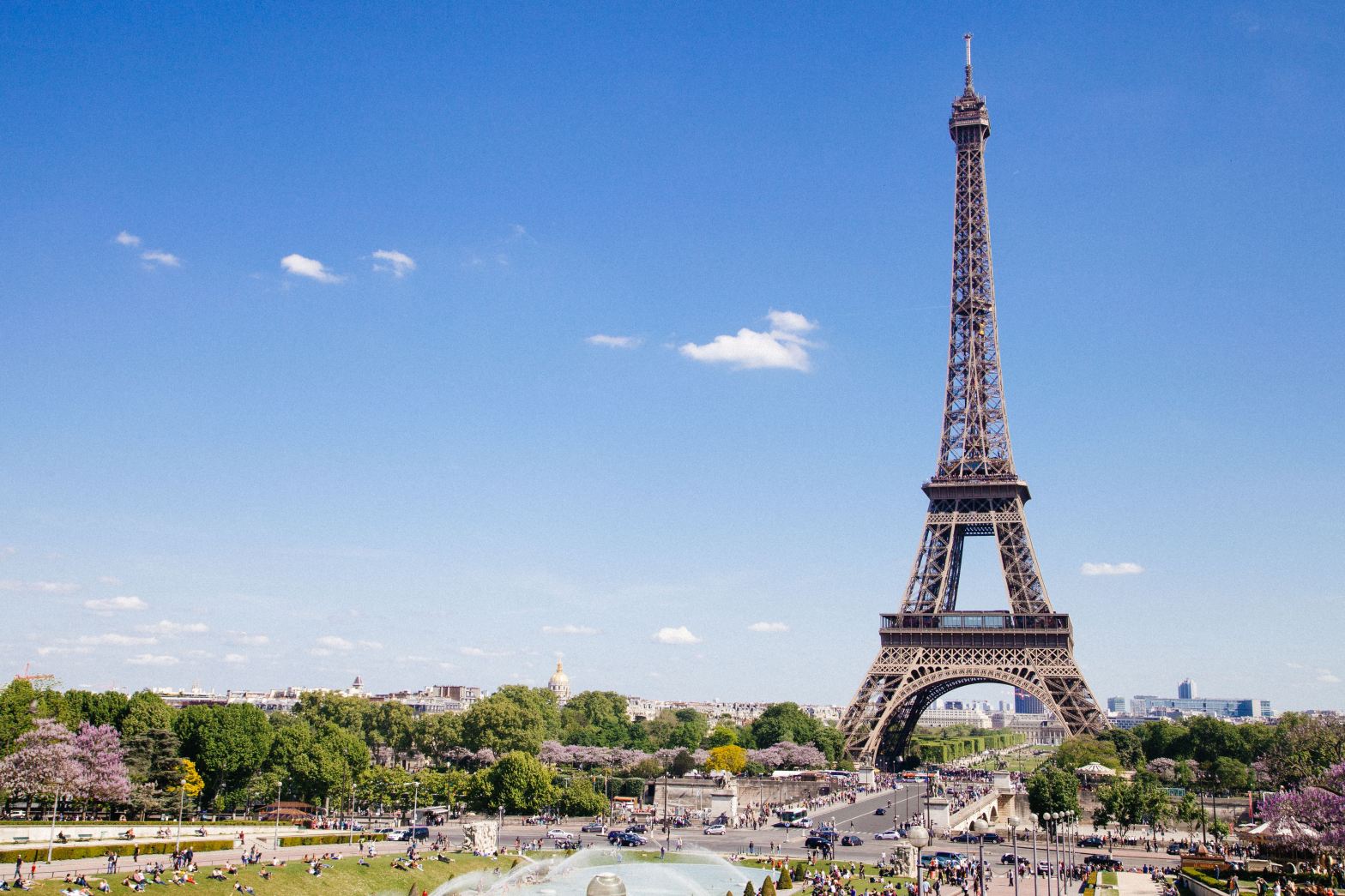
(Photo by Anthony Delanoix on Unsplash)

Next month, I’m going to Paris for the fourth time.

The first time I visited Paris was with six other college students. We were there on Bastille Day, July 14th, which commemorated the beginning of the French Revolution when the Parisians stormed the Bastille Prison. My friends and I were in the midst of a throng of human beings on the Champs Elysees since everybody celebrates the day by gathering in the streets. Two young men set off fireworks, and the police swept in and arrested them. To disperse the crowd, they launched tear gas grenades into the mass of bodies blocking their way. Suddenly, my throat was filled with knife-sharp chemicals and I croaked like an old frog. The crowd, a mass of forms heaving as a single unit, dragged me and my friend Nancy away from our friends. We never found them until hours later.

The second time I flew to Paris was for work. I stayed at a hotel where, every night, I watched the Eiffel Tower light up at dusk and twinkle over the city until 1:00 a.m. in the morning. I met Olivier at the office who became my French friend until he married and his wife ended our friendship. Olivier took me to a small Franc concert in a beautiful Gothic church and out for a crepe lunch where I enjoyed both savory and sweet crepes—the most delicious pancakes in my life.

The third time, my 17-year-old daughter came with me to Paris. One night, while we were sitting outside the pyramid beside the Louvre, we watched the sun set over the most beautiful skyline in the world. At 8:30, we decided to rush into the Louvre before it closed at 9 p.m. It was a free admission day, so we walked right in. We passed the headless Winged Victory of Samothrace as we climbed the grand staircase up to the gallery where the Mona Lisa was displayed behind bullet-proof glass. No one was there. No one. This gave us the unusual opportunity to gaze at Leonardo’s mystery woman from several vantage points and to watch her eyes follow us from side to side.

My daughter and I also toured the French Catacombs which contain the bones of over 6 million people who were once buried in the cemeteries of Paris above ground. We walked for miles within the old limestone tunnels underneath Paris, discovering piles of skulls, femurs, hips, and other bones stacked in piles along the shaft walls. I don’t want to ever visit those unfortunate disassembled people again.

Now, I’m going to Paris for my fourth time with my husband who has never been. We’re boating down the Seine, visiting the Louvre, inspecting the Impressionists at the Musee D’Orsay, witnessing Napoleon’s Tomb, and touring the Pantheon; however, I want to make sure we make it to Pere Lachaise Cemetery this time. This cemetery is above ground and within walking distance of the Louvre. Although people of all faiths are now buried there, the cemetery takes its name from a Jesuit priest, Francois Le Chaise, the confessor of King Louis XIV, who lived in a Jesuit house on the original site.  Hundreds of famous writers, artists, and musicians are buried there including Oscar Wilde, Honor de Balzac, Chopin, Gertrude Stein, and Jim Morrison. I’m trying not to think about why I’m so fascinated with cemetery tourist sites.

Well, I need to get started with my packing. I also have some projects to finish before I go, including completing the homework for my Spanish class. I know it’s ironic that I’m going to France while studying Spanish, but c’est mon vie.

Dying Words

Rose Marie could feel it. Life slipping away.

For years, the Macular Degeneration in her eyes had slowly darkened her vision. The blindness had started in the middle of her eyes and took over more and more of her sight as it covered her vision like a dark blanket. At the lunch table, her friend Ruth read the menu to her.

Last year, her doctor had diagnosed her with Alzheimer’s. She had called each of her ten children with the news. They didn’t know how to react, and she didn’t either. She didn’t think her memory was bad. She still knew her children’s and friends’ names and the address where she had lived for sixty years.  

Her apartment was on the second floor overlooking the front garden of the assisted-living facility. When she had moved in, she could see the roses blooming and the branches of the sycamore trees swaying in the breeze. Now, she knew the roses and trees were outside the window, but she had to turn her head to see them from the perimeter of her eyes. Sometimes, she didn’t bother. She just let the circle of light enter her mind without trying to focus on any details.

She had gone down to the dining room for breakfast. Ruth didn’t have to read the breakfast menu to her since the server knew that she ate the same thing every morning: a piece of bacon, toast with jam, and a full glass of milk. Sometimes, her daughter Margaret brought her some homemade jam that she stored in the refrigerator in her studio apartment. Strawberry-rhubarb was her favorite. She would carry the small jar of jam down to the dining room and ask the server to spread it on her toast.

She found her way around her studio by reaching out to touch the furniture as she walked to the bathroom, the bed, or her recliner. To get down to the dining room, she found the knob on her front door, twisted the door open, scooted her body around it, closed it behind her, took the apartment key that she hung on a lanyard around her neck, and locked the door by finding the keyhole with her left fingers.

Once she got outside of her studio into the second-floor hallway, she reached out to touch the armchairs, side tables, lamps that led her to the elevator. Since her studio was at the end of the hallway and the farthest from the elevator, she passed many other apartments along the way. She could discern from her perimeter vision that some had wreaths on the doors. She knew when she was passing Nellie’s door since she could hear her chihuahua barking.

Lately, she’d noticed that she had trouble talking to her friends at the dining room table. She knew what she wanted to say, but it seemed hard to get the actual words out. The same thing happened to her when she phoned her children. In fact, it was exhausting to talk for any amount of time.

“Wait a minute,” she would say as she struggled to express herself. They waited so patiently, much more patient than she had been as their mother. Then, slowly and deliberately, she would answer their question with a complete sentence.

Since she had moved into the assisted-living facility, two of her long-time friends had died. Jim had severe back pain for a week before her passed away. She and her husband had known him and his wife for sixty years. They attended the same church. Their kids went to the same schools.

Patty passed away in her sleep one night. When her daughter came to clean out her studio, Rose Marie asked if she could have Patty’s tiny cabinet desk. The handyman had moved it into her apartment, and she kept her calendar and pens in it now. When she opened it, the wood felt warm, like Patty’s arms.

Rose Marie had always told her children that death was part of life. This time, however, the death that was coming was her own. Throughout the day, more and more of her life was transitioning to a new place with which she was unfamiliar. She couldn’t play Solitaire anymore at her desk because she couldn’t see, so she sat in her recliner and let the window’s light stimulate her thinking.

She was afraid. What would happen to her children when she died? Would they still be a family? Who would her sons talk to when they had problems to discuss? Who would need her when they got a divorce or lost a baby?

When she had first moved into the facility, her friend Morgan had picked her up every Sunday and drove her to Mass. She didn’t come anymore since Rose Marie no longer felt safe enough to walk around a place where she hadn’t memorized the placement of the furniture. Now on Sundays, she went down to the chapel when the priest came to bring Communion for the Catholics.

“I don’t know how to die,” she said one day. She could see him put his hands in his lap before he answered her. “I’m fully aware that I will die soon, but what should I be doing right now, before it happens.”

Father Moyer took a deep breath through his nose, and let the air out like a sigh before responding. “Well,” he said. “You don’t need to worry about dying. Just spend your days loving your family and friends. That’s all that matters.”

“So simple,” she said. She heard Father take another calm breath. When he exhaled, she was reminded of the ocean. She thought his answer would have involved praying, repenting, forgiving, or philosophical discussions. “I’m afraid of what will happen to my children when I’m gone. I’m the matriarch of the family. I keep them together. Shouldn’t I talk to them about these things?”

“No. They won’t remember anything like that, but they’ll remember how you love them.” He breathed in and out like the ocean again. It sounded so beautiful and relaxing to her.

Later, when Rose Marie went back to her apartment, she sat down in her recliner and picked up her cell phone. She pushed “1” which would dial her oldest daughter’s phone number automatically.

They only talked for two minutes. It was so hard to get out the words she wished to say. At the end of the phone call, Rose Marie said, “I love you.”

“I love you, too, Mom,” Celia said. “So much.” Rose Marie hung up.

Then she pushed “2” so she could talk to her second child. Then “3,” then “4,” then “5.” Her fifth child Ron didn’t answer. She’d have to call him later. By the time she had talked to the rest of her children, she could tell that the sun was setting between the branches of the sycamore trees outside her window. Soon, she’d have to walk down for dinner. She dialed “5” again, and Ronald picked up.

“I just wanted to say I love you,” she told him. She took a long slow breath and exhaled. The ocean flowed through her lungs.

Cousin Love

No one ever talks about their cousins, except my family. I have 44 first cousins that live all over the United States and beyond. I have friended many of them on Facebook. Many receive Christmas cards from me, and I visited many in Wisconsin and Minnesota this last year. I feel as close to my cousins as I do my own siblings.

My parents assured us that we would enjoy being from a large family since we’d always have friends. They were right. Even though I don’t see my cousins on a daily basis, they bring me so much joy and satisfaction.

My cousin Tim lives in Montana. He recently retired as the Superintendent of a tiny school district. Since I was a college professor, our careers were focused on helping students and improving education. We also comforted each other when we went through our divorces by sitting in a car in San Diego in the middle of the night and sharing stories after his brother’s wedding.

My cousin Roslyn is a high-school history teacher in Michigan. We both believe that students are better off when they learn history from more than one perspective and understand the difference between equity and equality since we worked with those concepts in the classroom. Roslyn is my philosophical partner in our extended family.

Carolyn lives in Winona, Minnesota. She raised her son as a happy single parent and now has two grandchildren. Yesterday, she posted a picture of her front yard packed with snow where she had painted flowers on the three-foot snow walls beside the path to her front door. What a creative spirit!

Cousin Dan lives in Japan with his wife and two pretty daughters. He works for the United States Navy and leaves his family for months at a time while stationed on the U.S.S. Reagan. I love his mustache and fun-loving family, who spend their afternoons searching for pottery on the beaches and artistic manhole covers in the towns.

My cousin Arlie is a handsome devil who has worn his once-dark-but-now-gray curly hair both long and short over the years. Once he drove a truck full of Wisconsin cheese to my parent’s house in California. We ate cheddar for weeks. Now, Arlie rides horses with his wife and works at an auto store. Even though we have little in common, at every reunion, we share heart-felt cousin hugs.

Patty lives in Boston and is married to Steve, who completely adores her. They go to baseball games and concerts on date nights, and inspire the rest of us not to give up on love. Patty sure knows how to pick a good partner.

Diane lives with her husband Matt in Minnesota. Now this is a fun girl. If you want to kayak in the Winona Lake, she’ll do it. She knows all the best restaurants in town and will even accompany you to the local spice and Polish museums for an afternoon. If you’re up for it after dinner, she’ll go with you to a bar for a beer and sit outside with the mosquitoes. One year, I watched on Facebook as she and Matt took their motorcycle on a cross-country trip through Minnesota, South Dakota, and Montana. Wow, what a woman!

Scott, a happy tall guy with a strong build, owns a dairy farm in Minnesota where he produces thousands of gallons of milk per day for American milk-drinking consumers. If you ask, he’ll take you on a tour of the farm and you’ll see where the calves are raised, cows are milked by machine, statistics are collected for each animal, and cow manure is recycled. Even a town-girl like me learns something every time I visit his farm.

I could go on talking about Lisa in Florida, Marilyn in Ohio, Marjorie in Minnesota, Randy in Minnesota, Karen in Wisconsin, Dewey, Joanne, Debbie, Denise, Renee, Kathy, Scott, Jim, and more, more, more, but you get the idea. I have interesting cousins in my life, and I interact with them frequently enough to maintain vibrant relationships.

Thank you, Mom and Dad, for maintaining such close family ties over the years. My cousins are an essential part of my happiness. I love them.

Chemotherapy Christmas

The room was large, windowless, and sterile. Blinding florescent lights. Beige linoleum floors. Twelve green reclining chairs placed with their backs against the walls around the room. Each chair accompanied by a metal stand hung with bags of fluid and tubes.

The woman sitting in one of the chairs wore a scarf around her head. I looked for wisps of hair, but couldn’t see any. Her body filled up the chair like of sack of potatoes, lumps everywhere. She wasn’t smiling like the nurse who stood next to her, hooking up a tube to a port embedded in her upper chest.

A man whose body disappeared within his baggy shirt and trousers sat in a recliner in a corner. His scrawny hands hung over the chair’s arms like shriveled leaves caught on the edge of a forgotten lawn chair in the fall. His bald head shone in the florescent lights like a bare bulb. His face was gaunt, lined, and dry, and his eyes were closed. A young woman sat in a chair in front of him reading the Bible.

I watched the room’s activity with a lump in my throat as I stood behind my mother and brother by the door. A woman with a cane was led to another recliner in the room. The male nurse helped her sit into the chair, gently pushed her back, and lifted the foot rest. The nurse lifted a matching green blanket from a small chair nearby and laid it over the woman’s body, tucking the edges around her snugly. Then he efficiently began hanging the bags of chemicals on a metal stand and hooking up the bags with the tubes.

This was my mother’s chemotherapy room. Mom’s last chemotherapy session was scheduled for December 24, Christmas Eve. She had asked my brother Zach and me to accompany her to the appointment. My brother had flown home from college in Southern California for Christmas, and I was home from college too. The only thing my mother wanted for Christmas was to finish chemotherapy with her children around her.

A female nurse wearing an ugly, plain, blue smock and pants led my mother to a chair on the emptier side of the room. Zach helped Mom take off her coat and climb into the chair. She looked small, dressed in her pink cotton beanie, pink V-neck sweater, and jeans. How pale her pretty face was. Mom nodded when the nurse asked if she wanted a blanket, and Zach took it from the nurse and covered her gently like he was placing a precious jewel into a new setting.

This was not how I wanted to spend my Christmas. Wasn’t college supposed to be one of the happiest times of my life? I was too young to worry about my mother dying or even being too sick to visit me at school.

The nurse pulled two straight-back chairs close to my mother’s recliner, and invited us to sit down. I took the chair farther away and leaned back as if my mother was contagious. My brother pulled his chair closer to Mom and took hold of her left hand. When she smiled at him, her eyes watered like green pearls.

Before long, Mom was hooked up to the tubes that would feed chemicals into her body. I could tell that she was putting on a brave face because, underneath her smile, she looked tired and weak.

I didn’t want to think about her being that way. Instead, I wanted her to jump out of her chair, hug me tight around the waist, and ask me about college. I wanted to tell her about Jasmine’s new boyfriend, Sara’s job offers, and David’s article in the college newspaper.

Her smile withered away as the chemicals dripped into her veins. She gave up trying to hold a conversation with my brother, who was bent towards her in his chair, his chocolate eyes full of concern. She looked at me several times, but I retreated away from her with a grimace on my face.  I didn’t want to be here.

Once in a while, Mom opened her eyes and looked up at the bag hanging beside her as if gaging how long she had to endure the procedure, but, for the most part, she kept her eyes closed, and we sat in front of her fidgeting in our chairs, biting our lips, and staring at each other with worried eyes.

Three hours later, the nurse in the blue smock and pants pulled the catheter out of my mother’s port, gathered up the tubes, and rolled away the metal stand with the empty bags.

A young woman with brunette hair and rosy cheeks pushed a wheel chair up to our station.  She asked my brother to move his chair, then maneuvered the wheel chair as close to my mother’s chair as she could.

“I’ll help you,” she said kindly. She took ahold of my mother’s upper arm and guided her from the recliner into the wheel chair.

My mother let out a whimper as she moved. Zach helped her put on her coat as she sat in the wheel chair, wrapped her pink scarf around her neck, and gave her a wool cap to pull over her pink beanie. Still, she shivered when the nurse wheeled her outside to the car.

Zach drove us home, and the next day was Christmas.

Postcards from Italy

You know that feeling you get when you’re incredibly happy? Like you have butterfly wings and have flown so high that the clouds kiss your face. Your chest is so open that you can blow a star across the sky. Your arms are so wide that you can wrap them around the moon.

That’s how I felt this last August when I was visiting Italy. When I opened the sliding door to the balcony in my Sorrento hotel room and looked down at the rows of boats in the harbor, the blue-green water of the Bay of Naples, and the rising cone of Mount Vesuvius across the Bay.

Italy makes everyone happy. It’s incredibly beautiful. I wish you could have been with me and my husband as we boarded a little row boat at the bottom of a cliff off Capri Island so we could duck into the opening of the Blue Grotto and experience the most heavenly crystal-blue water. My heart was filled with elation as I watched my husband gaze at the water, the boats, and the walls of the cave. My heart quickened as I listened to the deep masculine voice of a sailor who sang an opera in baritone that echoed off the cave walls.

The people of Italy believe in making beautiful objects. In Amalfi, the streets were lined with shops that sold brightly painted ceramic pots, plates, plaques, and wall sconces. The blue, red, green, and yellow fruits and leaves on the pottery enthralled me so much that I couldn’t pass a shop without walking inside.

The architects and artists of Italy have been so prolific over the centuries that not one town in Italy lacks a beautiful church or fountain. When we toured St. Peter’s in Rome, I fell in love with the numerous doves holding olive branches in their beaks that decorate the walls of this catholic cathedral. The face of Mary on Michelangelo’s Pieta is such a beautiful example of a mother’s love for her child that my heart expanded as I stared at it for twenty minutes.

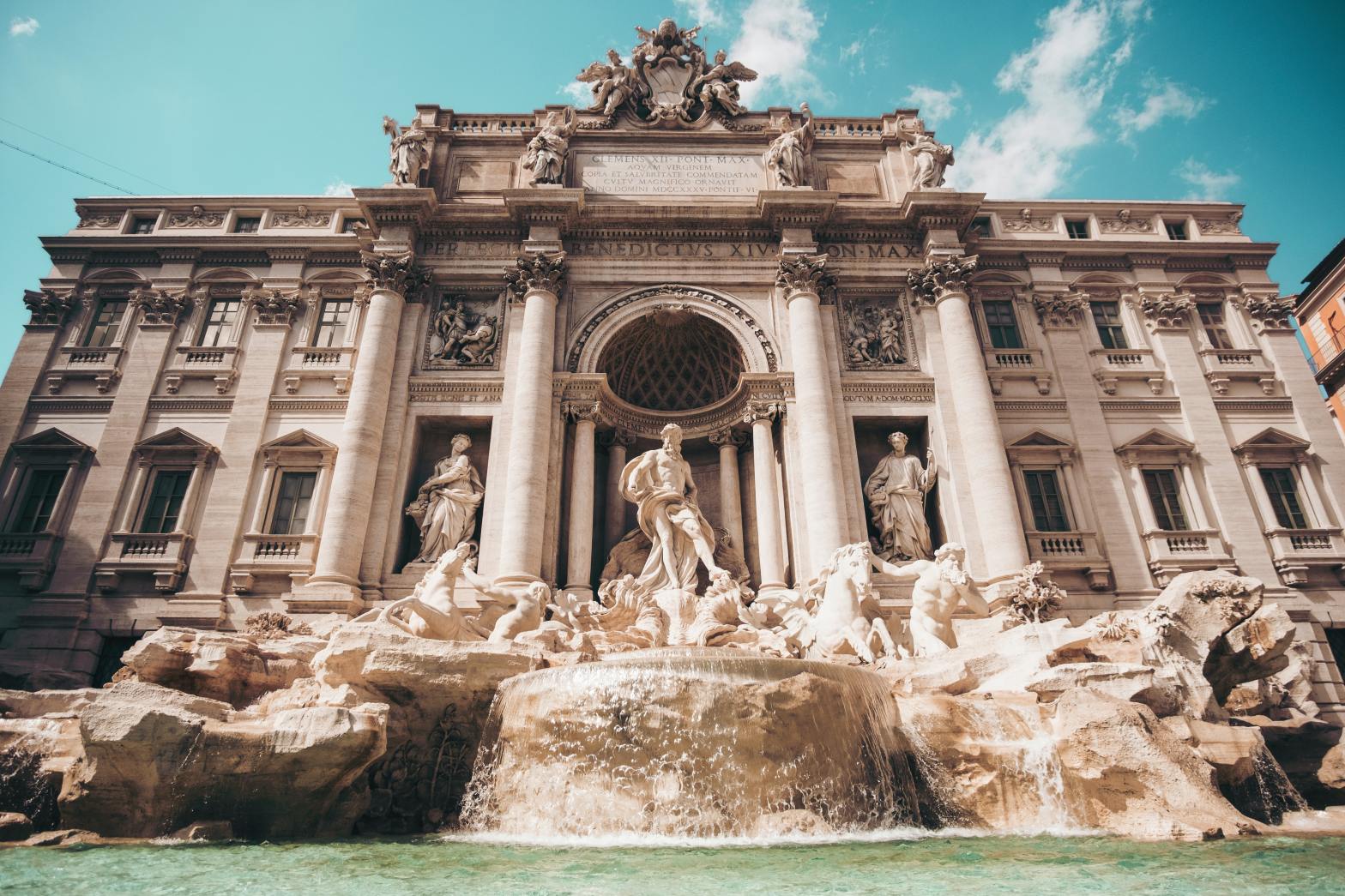
My husband had never been to Rome before, so when we visited the Trevi Fountain, I showed him how to toss his penny over his left shoulder so he would be sure to return. I took a photo of him in front of the colossal Baroque fountain, mostly made of travertine marble on the back of Palazzo Poli, with two-story Corinthian pilasters and a scene that conveys the taming of the waters. Through my camera lens, I could see Oceanus framed by a massive arch, with the goddess Abundance on one side and Salubrity, representing health, on the other. Below these immense statues, gigantic statues of titans guided a shell chariot, taming the sea-horse hippocamp. Above all of this marbleized action, I spied the story of the Roman aqueducts carved in bas relief. Tears filled my eyes before I had clicked the camera.

At one dinner during our tour, Theresa, our tour guide, gave me two post cards that she promised to mail for me after I filled them out. I wrote love letters to each of my children, addressed them, and gave the cards back to Theresa. After that, I promptly forgot about them since Italy had effectively mesmerized me.

When we weren’t gawking at architecture and charming alleys, we were eating. One day in Rome, I ordered a Napoli pizza with mozzarella and anchovies. The cheese was so light and creamy and the anchovies so fresh and sweet that I closed my eyes as I chewed—heaven on the lightest dough I’ve ever eaten. I sipped a bright Pino Grigio as I ate and my mouth had never been more fulfilled.

I’d never been to Umbria before, and so when we visited Orvietto, I was charmed by the quaint alleyways and stone staircases that led up to homes and shops. I was attracted by the beautiful mosaic cathedral dedicated to the Virgin Mary. When the sun hit the façade, the mosaics, gold, stain-glass windows, and bronze doors glowed like the entrance of paradise.

In Italy, charm is everywhere. We climbed countless steps in the town of Assisi, sailed along the coast from La Spezia to Cinque Terre, observed the Carrara marble quarries used by Michelangelo, and walked miles and miles on the cobblestone streets of Florence. We were enchanted by Ponte Vecchio in Florence which was lined with little huts last time I had visited. Now, it is filled with shops of glass windows to safely display the silver, gold, and gem jewelry for sale. One day, while walking to the Uffizi Gallery to see the colossal statue of David, we found an ancient window that had been used to sell cups of wine during medieval times.

Our last Italian stop was Venice, another place that my husband had never been. I dragged him across the city from our hotel, over one cobblestone bridge after another. Coming back, we found a piazza where an orchestra was playing music for tables outside. We sat down, ordered wine and listened to Gershwin and Beethoven for an hour, watching the sun change the shadows on the stones of the buildings as it trailed across the sky.

Italy filled me up with happiness. When I got home, I rushed out to visit my son at his studio a few miles away. When he let me inside, I noticed that he had tacked up the postcard I sent him from Italy on his refrigerator. My next stop was my daughter’s apartment. On her refrigerator, she had her postcard attached to her refrigerator too.

You know that feeling you get when you’re extremely happy? When you have wings and you fly high enough that the clouds can kiss you, you can blow the stars, and hug the moon with your arms? When I saw those postcards on my son’s and daughter’s refrigerators, I felt just like that.

Why Queen Elizabeth II Matters to Me

In 1966 when I was nine, my family moved to England. My father was in the United States Air Force and he was stationed at Mildenhall Air Force Base in Suffolk County, about one hundred miles north of London. Queen Elizabeth II had already been queen of England for fourteen years.

My parents sent my siblings and me to an English Catholic school named St. Edmund’s in Bury St. Edmund’s. I started in Junior 2, and every day I had to dress in a blue uniform and tie a blue tie around the collar of my blouse.

By the time I entered Junior 3, I had developed some strong friendships with girls in my class. Elizabeth invited Ann and me to spend weekends at her historical English home in the countryside where we slept together in her late grandfather’s bed and heard the grandfather’s clock chime every fifteen minutes during the dark night.

Ann invited me to spend weekends at her house as well, where I learned the English custom of having tea each afternoon. We also walked for miles around the town of Bury St. Edmund’s exploring the 11th century, ancient ruins of the St. Edmundsbury Cathedral and the dark nave of St. Mary’s Church. We visited Moyses Hall and found ancient instruments of torture that had been used by former leaders of East Anglia. In Bury, I learned that history was a long story about the human race and its complicated nature. I learned about selfishness, arrogance, faith, power, tactics, and greatness.

In class, beside studying math and English, we memorized famous English poems and old songs that had enriched the English culture for years. In fact, the first tune that I ever played on the recorder was “Greensleeves,” an old English ballad first recorded in 1580 by Richard Jones. This unforgettable tune was mentioned in Shakespeare’s play The Merry Wives of Winsor, and also serves as a favorite Christmas hymn in England “What Child is This?” that I sang in church. Thinking about how I was exposed to ancient English ballads and Shakespeare at such a young age, it’s no wonder that I later became a college English professor who specialized in the Early Modern Literature of writers such as Shakespeare.

Since I attended English school during my elementary school years, I never learned American history until I went to college. Instead, I developed a deep interest in English history, all the way from the Anglos and Saxons who brought rudimentary English to the island, to William the Conqueror who established French as the language of English politics, to Henry VIII with his six wives, to Elizabeth I with her fierce independence which I admired, to Elizabeth II who I saw on television night after night shaking hands, breaking bottles on the hulls of ships, and opening parliament, dressed in regalia. I grew to know even more about her than John F. Kennedy who had been assassinated when I was in first grade.

Perhaps I was so attracted to Elizabeth II because she reminded me of my own mother, who was also calm and dignified. They both wore a fluffy, curled hairstyle, red lipstick, and pastel clothing. My mother liked to wear rings and she loved flowers and hats. If Queen Elizabeth needed a double, you could adorn my mother in her royal robes and priceless jewelry and put a scepter in her hand and no one would know the difference. 

But their real similarity was their endurance and generosity. I watched my mother give love to my father for over fifty years as a consistent and reliable spouse. I watched her endure the deaths of her friends and her sister with tenderness and strength. I admired the way she loved all of her ten children regardless of their talents, mistakes, and weaknesses. She lived until she was 92 years old, and the last year of her life, she called each of her children once a week and told them that she loved them. I couldn’t believe she could die.

I never believed Elizabeth would die either. I had felt her in my life like a steady light for so long. My parents loved her, and I loved her.

I don’t have any qualms about loving a monarch that represented a country once involved in colonialism. Elizabeth didn’t represent her country’s history. She represented its last 70 years, a time when Canada achieved full independence of Britain, a time when I grew up from an innocent, little girl to an independent woman who now possesses some of the characteristics of my mother. She ruled with grace at all times, during sadness, amidst anguish, and throughout the joyful times.

But most of all, Elizabeth represented a woman who accepted her role of service to her country. She served England with love and generosity; if everyone could lead with the commitment and humility that she demonstrated, our world would be a happier land.

Today, I’m English again, eagerly basking in her influence.

The Brother-Sister Dollar-Pancake Contest

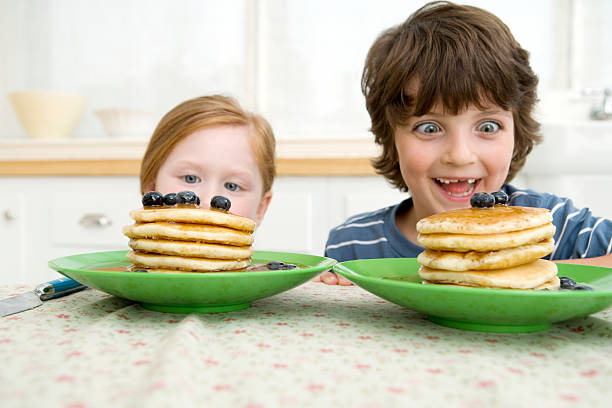
Every kid in my family loved pancakes. Most of the time, we drenched our “cakes” in squares of butter and maple syrup.

My mother stood at the stove making the pancakes while us kids sat around the table eating them, so they were hot from the griddle. The butter was cold, but it melted into a golden pudding on top. My mother warmed the syrup bottle in a pan of water, and then she poured the syrup into a child-sized pitcher for the table. It smelled like an autumn hot toddy and dripped down the sides of the stacked pancakes like teeny waterfalls.

One morning, after the rest of our siblings had left the table, my brother Don and I were still cutting into helpings of pancakes with all their sticky toppings. As I chewed on my sweet breakfast, I said, “I bet I can eat more pancakes than you can.” I was five with a confident attitude, and my brother was four with a hollow stomach.

“No, you can’t. I’ll beat you,” Don said with a full mouth.

“Mom, Don and I are havin’ a pancake-eating-contest. Will you make us some more?”

My mother looked into the mixing bowl and found out that she still had batter left, so she agreed. “I’ll make dollar-sized ones for you.”

First of all, I have to tell you that my mother made pancakes using Betty Crocker’s Bisquick. Her pancakes were bready and fluffy with a flavor that you just can’t replicate without the secret Bisquick recipe. 

She had taught us what dollar-sized pancakes were.  Her regular pancakes were about 6 inches in diameter, and Don and I had already had about four of them that morning. Dollar-size pancakes, on the other hand, were about only 3 inches. They apparently were about the size of a silver dollar, but I’ve never seen a 3-inch silver dollar. 

We started counting from 1. My mother gave us each a small stack of three dollar-sized pancakes. I melted the butter and swirled the syrup on top, then cut the cakes down the middle and scarfed them down. Don ate his too.

The next helping came. More butter and syrup. More chowing down. Don had a smile on his face like the Cheshire Cat from Alice in Wonderland. He was feeling assured of his success, so I stuck out my tongue at him. Mom couldn’t see me because she was up the three stairs and behind the kitchen wall. 

The next helpings came. Don rubbed his stomach and groaned. I didn’t dare complain that I was full. Winning was important.

The next helping came. By this time we both had eaten 12 little pancakes, not to mention the 6-inch ones we had eaten before we started recounting. Syrup was dripping out of the sides of our mouths, and the butter plate was empty.

Mom used a spatula to set three more pancakes down on each of our plates. I scraped the butter plate for any leftover bits, and poured the syrup in between my pancakes so they were nice and moist all the way through. Easier to digest that way. Don was stooped over the table like an old man, looking down at his plate. I kept my back tall, and my Buddha belly rounded out in front of me like a balloon. We kept eating.

Both of us ate through the next helping slowly. The syrup failed to make the pancakes irresistible. I felt like throwing up.

Soon, another little stack of three was on my plate. Don poured the syrup, and cut into his stack like a drunken sailor. When he got half-way through, he pushed his plate away from him, put his head down on the table, and let out a deep moan. “Mom, I can’t do it,” he said.

There wasn’t enough syrup for me to pour it in between each pancake, so my stack of pancakes was a little dry. I used both my knife and fork to cut the stack, chewed the dry pancakes into a pulp, and swallowed the damp pulp of dough down my throat. Don was finished. All I had to do was get through this whole stack and I would be the winner.

I chewed and swallowed without tasting. The stack got smaller and smaller with each bite. I belched. I swallowed some more. Finally, I jabbed the last piece of pancake onto my fork, stuffed it into my mouth, chewed, swallowed, and put my fork back down.

I sat up straight, acting as if my stomach didn’t ache like an overblown balloon and raised my arms up into the air, my fists together like a champion. A full and painful stomach would pass. The feeling of retching would too. Winning was everything.

Rain

Photo by Ahmed Zayad on Unsplash

When Don woke up, it was raining.  The water that he ran in the tub sounded like rain chortling out of a storm pipe.  The water that streamed from the kitchen faucet for his tea beat into the kettle like rain on a wheelbarrow left out in the yard.  Rain. Rain. Rain.  It had rained for months.

Don’s mother had died at 10:05 a.m. on the same morning that Don worked his last day.  He was looking forward to retirement, and one thing he would do more was spend time with his mother—playing Scrabble, going out for hamburgers for lunch, driving her past her old house where prolific flowers signaled the change of seasons. 

At 10:06 on the day she died, the rain started.  He had kissed her on the forehead as she lay quiet in her hospital bed, checked to see if she was safe, and slipped out of the room to live the rest of his life without her. 

Claire had managed the funeral and service arrangements which were beautiful.  On the day Mom was buried, the sun came out for a couple hours—just enough time for Mom’s ten children to say their prayers and lay red roses on her casket.  When the casket was lowed into the ground and the earth filled in her vacancy, the grounds men laid the large spray of red roses over the dirt.

Then the rain began again.  It rained while they cleaned out Mom’s room at the assisted living home.  Maddy took all their mother’s clothes home in garbage bags.  A few weeks later, she knocked on Don’s door and handed him a teddy bear.  The bear was blue and green and peach and red, made from pieces of Mom’s shirts, pants, and dresses.  It looked both happy and sad as Don sat it on the couch in his living room.

Soon, the group texts began.  Don shared memories of his mother with his nine siblings every day.  Old memories.  Vague memories.  Disputed memories.  Sunny memories.  Rainy memories. 

Some people in the text posted pictures of what they made for breakfast.  Don posted pictures of his new seedlings and old pumpkins.  He talked about his clocks inherited from Mom and Dad.  Claire posted perfect plates of salmon dinners.  Rita identified the birds that Maddy found in her garden by looking them up in her bird bible.  Beatrice posted old photos of Mom from her twenties when she was thin, before she had ten children. 

The siblings discovered each other again.  Most of them had moved out of town since their childhood, and their communication had been through Mom for the most part.  Through their texts, they found out that Don had the best green thumb, Claire grew flowers but not vegetables, Rita was a bird and owl watcher, Maddie loved wine and dessert most of all, Beatrice was just starting a walking routine, Minnie continuously created new jam recipes, Jim was the handyman at his job, Carol had learned how to play guitar, Ron still told the best jokes, and Geo wrote poetry in his spare time. 

The texts started usually around 7 a.m. in the morning and lasted until the last sibling drifted off to bed.  Good mornings.  Breakfast recipes. Descriptions of walks.  Flower postings.  Loaves of bread.  Jars of jam.  Bowls of soup.  Directions to parks.  Comments on the news.  Revelations about hobbies.  Progress on quilts, puzzles, and charity projects.  Movie recommendations and dinner plans.  All these subjects and pictures streamed between the ten children that Mom left behind.

A few months later, the rain stopped.  The sun came out like a herald of good news, and Don woke up to the birds chirping outside his bedroom window. 

When he wandered out into his living room, he saw his colorful teddy bear leaning over on its side and bent down to sit it upright, and, as he did, the sun blazed through the window and lit up the bear in a shaft of light.

“Let’s go visit Mom, today,” Don said to his bear.  “The sun is out and I know she’ll be happy to see us.”

Half an hour later, after an oatmeal breakfast and coffee with chocolate, Don put the bear in the passenger seat of his blue truck, and drove to the cemetery.

When he got there, the sun streamed like yellow curtains through the oak trees whose branches spread over the graves like kind arms.  The green grass, which covered the shallow hills and valleys, glistened with diamonds of left-over rain. 

Don drove his truck onto the center road and stopped it in front of his parents’ graves.  There they were—lying side by side like happy campers in sleeping bags.  Their gravestone rose from the top of their plots like a crown, and Don noticed that one of his siblings had stuck some colorful plastic flowers into the metal vase in front of the headstone. 

Don knelt down in the middle of his two parent’s plots, reached out, and placed his teddy bear on his mother’s side of the stone near the flowers.

He paused for a few minutes, furrowed his brow, then recited the Hail Mary prayer, and his words wafted through the cemetery like a low whisper.  When he finished praying, he looked up at his teddy sitting quietly.

“You can’t stay here,” he said.  “We’re just visiting.  You and I have to go home and live some more.”

Don looked at the words of his mother’s name on the head stone and the dates of her birth and death.  92 years long.  Somehow, not long enough.

“Thank you for giving me life, Mom,” Don said, placing his hand on his heart gently. 

He reached over, lifted his teddy bear from the ledge beside the plastic flowers, and held the bear against his bent frame.

“I’m always here, Mom, for you, just as you were always here for me.”  Then Don slowly stood up from the ground, brushed the wet grass off his jeans, and walked back to his truck.

When he got into his seat, he checked his phone to see if any of his siblings had posted another message.  A few rain drops fell onto the windshield as he drove away. 

Winona: The Daughter Whose Choice Inspired a City’s History

My father was born in Winona County, Minnesota, an area dominated by Winona—a tranquil, medium-sized city on the west banks of the Mississippi River. 

What I love about Winona is its history.  Before white settlers came to the area, Dakota Sioux natives called it Keoxa.  They lived in the area for centuries and stayed for years, even after the the United States government purchased the land from them in the Traverse des Sioux and Mendota treaties in 1851. 

The first known white man to see Winona was Lieutenant Zebulon Pike in 1805, who traveled from Fort Bellefontaine in Missouri to find the source of the Mississippi River. In his journal, he writes about the Dakota legend of Winona, a daughter of Chief Wabasha III who throws herself from Maiden Rock, a precipice on the Wisconsin side of Lake Pepin—a wide expanse of the Mississippi River just north of present-day Winona. 

On October 15, 1851, Captain Orrin Smith, Mr. Erwin Johnson, and two other men—knowledgeable of the Traverse des Sioux and Mnedota treaties—claimed title to the riverfront and surrounding prairie land. When the town site was surveyed and plotted in 1852, Smith and Johnson named it “Montezuma.” 

Why this Aztec name was chosen for the town is a mystery.  Montezuma means “angry like a lord.”  Perhaps the swift current of the Mississippi River was the motivation for this label, but, nevertheless, the name didn’t last long. 

In 1853, Henry D. Huff bought an interest in the town site, and he was successful in changing the town’s name to Winona.  Huff was in town to make money by building railroads.  He also wanted to develop Winona into a classic city.  When he changed the city’s name, he also created streets and street names: Huff Street after himself, Harriet Street after his wife, and Wilson Street after his son.  The town was still a muddy expanse, but Huff built a family a mansion to signal to future residents that Winona was to be a town of sophisticated architecture and graceful culture.

What better way to achieve this than to name the city Winona, which means first-born daughter in Dakota.  Her story is tragic but inspiring.  She threw herself to her death so that she wouldn’t have to marry a man she did not love.  She settled for nothing but the best, and that’s what Huff wanted for himself and his new home.

References:

History of Winona, Olmsted, and Dodge Counties Together with Biographical Matter Statistics, Etc. H.H. Hill. 1884. pp. 352.

Withington, Ross.  “Henry D. Huff.” Writing in Winona: A student and community writing project. https://medium.com/wicwinona/henry-d-huff-b7ffb6102672. July 3, 2022.

The Kashubian Warriors of Winona

Even the sweetest human being contains a little bit of wickedness, and the most awful person possesses at least a little goodness.  This is because each person is made from a complex collection of DNA that has been blended over and over again, generation after countless generation; furthermore, these durable genes have survived a variety of political systems, religions, geographic locations, war, peace, cruelty, and kindness—all of the experiences of their ancestors. 

One day, when I visited the Polish Museum in Winona, Minnesota, I saw a photograph of one of my ancestors, Lawrence Bronk.  I thought I was looking at a photograph of my father—a man of fine build, blonde hair, and handsome face; however, Lawrence was the brother of my Great-great-grandfather Ignatius, and he immigrated to Winona, not from Poland, but from Kashubia, a place that bordered the Baltic Sea. This man inspired me to find out just who these Kashubians were and what made them Kashubian instead of Polish.

Not only did I research the immigration of the Kashubians to North America, but I also investigated how the Kashubians settled in Kashubia.  What I found out was that I was related to people who had lived complex lives of peace, aggression, oppression, and chaos throughout the centuries.  This is their story.

After the Roman Empire dissolved in the 6th Century, Slavic tribes from the East, mainly from the Ukraine area, migrated north into Russia, west into what is now known as Germany and Poland and the Czech Republic, and south into the Adriatic Region.  These were distinct from the Germanic tribes that had migrated from Scandinavia into the Roman Empire starting in the 4th Century.

The Kashubians were a Slavic tribe that settled in Eastern Europe on the coast of the Baltic Sea at that time.  Specifically, they claimed a region of land that was south of Sweden, north of Poland, east of the German homeland, and west of Lithuania.   Their ancient territory stretches from the Kashubian capital city of Gdansk to as far as the German Capital of Berlin. It lies between the Odra River to the west and the Vistula River to the east. The whole north side borders the Baltic Sea.

During the migration, the Slavs became a nuisance to the Byzantine Empire, which was really the eastern part of the Roman Empire that lasted for a thousand years after the fall of the western Roman Empire.  Since Slavs were an adaptable species, they learned how to use the weapons of those they conquered and attacked cities instead of trade routes. 

These pillaging Slavs believed in nature, and they had adopted a mythology consisting of a pantheon of gods.  Their shamans were known for telling great tales about their gods, and the Slavs traditions and way of life were developed from these tales.  

The Byzantine rulers wished to calm these robust terrorists, so they ordered two scholars and brothers, Cyril and Methodius, to educate the Slavs in the Glagolitic alphabet, which was closely connected to the teachings of Christianity.  This is how Kashubians and other Slavs became Roman Catholics. 

When the Byzantine Empire ended, the Slavs created Slavic kingdoms across Eastern Europe, effectively squelching the influence of the Mongol tribes who wished to spread their Muslim religion. 

The Kashubs were also called Pomeranians, which translates to “the people by the sea”. When they settled by the Baltic Sea, they spent many years isolated from other Slavs and peoples.  This allowed them to develop their unique Kashubian dialect and create their own traditions, folklore, music, dance and cuisine. Their access to land induced them to become an agricultural people, farmers who worked the land to provide for their families.  They organized their smallest community structure into Catholic parishes, and their lives centered around their religion. 

Eventually, the German Empire encroached upon the independence of the Kashubian people, and Kashubia became part of Prussia.  Their German rulers forced priests to say Mass in German instead of the native Kashubian language, and the Kashubians strongly resented this.  Farmers had large families so that children could help work the land, but when these broods of children grew into adulthood, there wasn’t enough farmland for them to farm; therefore, the German government offered Kashubians free or cheap travel to North America where homesteads and land were abundant.

On May 14, 1859, three sailing ships left Hamburg, Germany for Quebec, Canada, carrying a host of Kashubian families.  The names of the ships were the Laura, Donau, and Elbe.  The river that connects Hamburg to the Baltic Sea is the Elbe, so the ship named Elba was likely named after this river, a common German practice for naming ships.

On board the Elbe were families with the surnames of von Bronk, Galewski, Kistowski, Konkel, Libera, Piekarski, Platowna, Rzenszewicz (Runsavage), Walinski, who knew each other in their homeland.  The records of the ship were posted in German using Prussia as the land of origin; however, Kashubians never did consider themselves German. 

My ancestors on the Elbe consisted of the Joseph and Francisca von Bronk family, including their five sons—Johann, Ignatz, Vincent, Lorenz, and Jacob.  Von is a German preposition meaning “from,” so this label indicates they came from a place called “Bronk.”  In the Kashubian region, there is a forest known as “Bronki” so they may have originated from that specific place.  All of the passengers listed on this ship were classified as “Landsmann,” indicating that they were farmers. 

Joseph von Bronk is my Great-great-great grandfather.  His son Ignatz, who changed the spelling of his name to Ignatius, is my Great-great grandfather mentioned above.  The family left Quebec and traveled south, eventually arriving in the Winona area before the end of 1859.  Many of the families who traveled across the Atlantic with them also settled in the Winona area.  Others stayed in Canada and founded another Kashubian town known as Wilno. 

The Winona area was a lot like their home in Kashubia where there were plentiful forests, abundant water and fishing, and land for farming.  At first, the Kashubians settled on the east side of what is now known as Winona where they established a Kashubian village.  In 1886 after his second wife died, Ignatius bought land in Pine Creek, Wisconsin.  This property is owned by my Uncle David and Aunt Linda today. 

Artifacts in the Polish Museum in Winona revealed that the Kashubians were a literary and creative people.  Many of their descendants have continued the strong story-telling and writing traditions of the culture, including me, for instance.  Their colorful embroidery and distinctive pottery are world-renowned, and their flag and national symbols are celebrated today, not only in Kashubia, but now in the Kashubian communities all over North America. 

Today, in Winona and in the surrounding farms, the Kashubian descendants live in harmony with Polish, German, and Swedish peoples.  They work in each other’s businesses, attend each other’s weddings and baptisms, and share the same merry-go-rounds. 

This is the Kashubian story.  Now this is my advice.  If you have a Kashubian neighbor, laugh at their jokes, never insult them, keep the peace.  A Kashubian is a warrior.  Behind that friendly gleam in his eye, behind her engaging smile is a constitution of ferocity.  Those DNA have migrated over mountains, through valleys, into war, across water, and have survived. 

References:

  1. Larry Reski.  Poland to Pine Creek, Wisconsinhttps://polandpinecreek.blogspot.com/2014/02/elbe-departing-from-hamburg-14-may-1859.html.
  2. Haden Chakra.  The Great Migration and Early Slavic Historyhttps://about-history.com/the-great-migration-and-early-slavic-history/.
  3. Welcome to Wilno. Wilno.com.