What I Learned about My Dad’s Vietnam Deployment from Reading The Women by Kristin Hannah

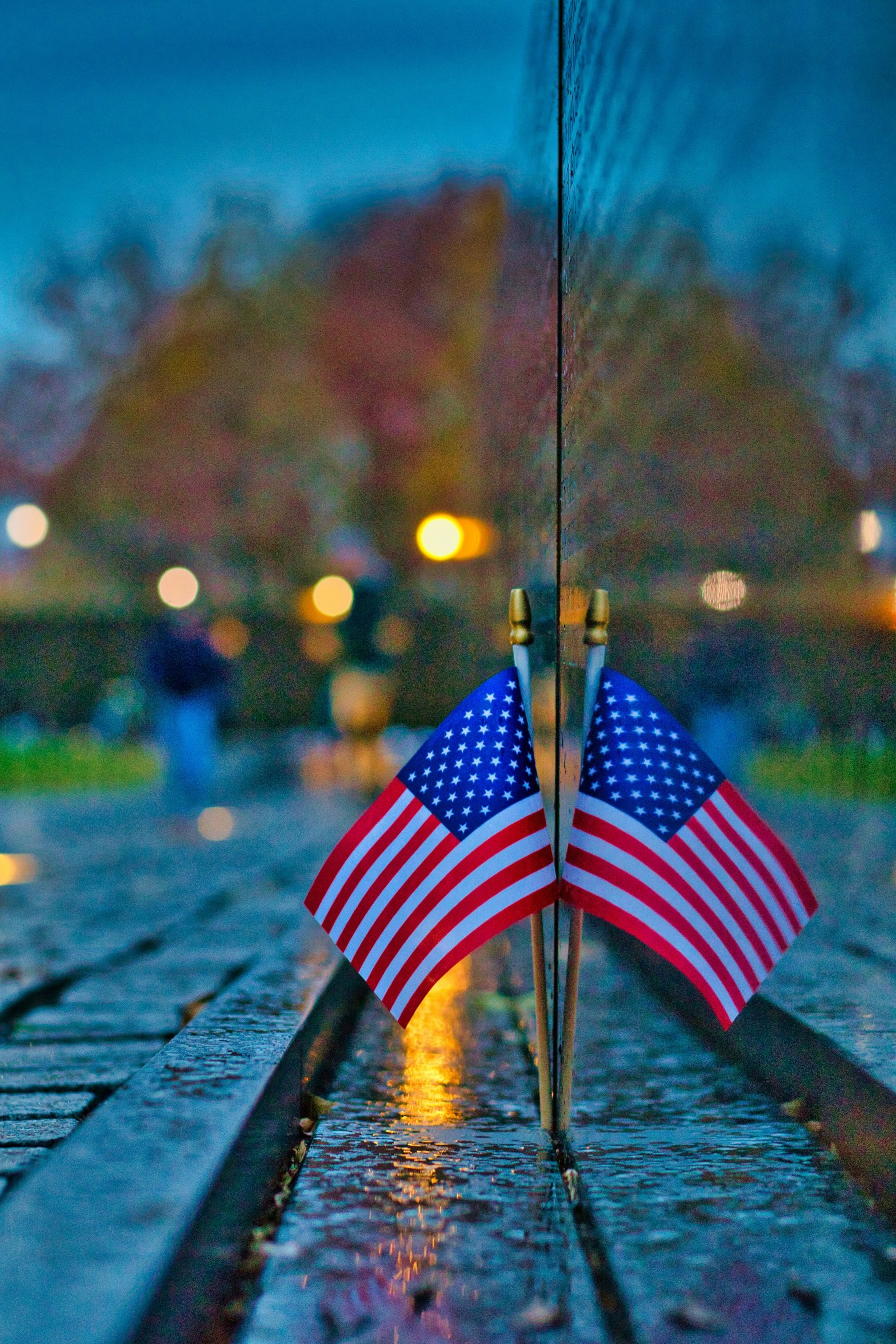
Photo by Kirt Morris on Unsplash

I was fifteen years old when my father went to war in Vietnam, not old enough to understand the news or to pay attention to adult worries. But I remember my dad standing at the front door with my mother hanging onto him, tears streaming down her face.

When my dad came home, we expected that he’d sit in his big armchair set in a corner of the living room, gather his children around his feet, and tell stories about what he saw. But he didn’t. He sat in his armchair, staring at the blank television with furrows in his brow for hours each night after work and during the long afternoons on the weekend. We crept past his chair silently afraid of his morose temperament.

When I discovered The Women by Kristin Hannah, I thought it would be an opportunity for me to learn about my father’s Vietnam experience that he never shared with us. The book tells the story of a young woman, Frances Grace McGrath, who becomes a nurse and signs up to serve in the army in Vietnam in 1965. She joins the Army Nurse Corps since the Air Force and Navy require her to have more clinical experience than she has.

Frances, known as Frankie, is inspired to sign up for service because her father has a wall in his study of the family’s military heroes, and she wants to be on that wall. The only woman on the wall is her mother in a wedding picture. Just before her brother leaves for the war, one of his friends tells her that women can be heroes, too.

My father, on the other hand, tried to avoid going to Vietnam. By 1965, he had been in the Air Force for twelve years and was a senior flight mechanic, a valuable skill for a war being fought with helicopters and airplanes. 1965 was the year that President Johnson increased troop deployment to Vietnam and began direct combat operations to shore up the South Vietnamese defense against the communist Viet Cong and North Vietnamese forces. My father petitioned not to be sent, so he was deployed instead to Mildenhall, a U.S. Air Force base in the United Kingdom. I was only nine years old. The bad news was that he had to leave his circle of friends in California to serve there for almost four years. The good news was that his family could join him, his wife and all nine kids. We came back to California in 1969. But this alternate deployment did not protect him from being shipped off to Vietnam.

In 1972, when the war was raging and tempers were flaring at home about it, I still didn’t know much about the war even though I had seen pictures of U. C. Berkeley students protesting it on television.

In April 1972, my dad closed the front door on his family and flew to serve at Cam Ranh Bay, an air base Vietnam used for the offloading of supplies, military equipment, and as a major Naval base. My father was assigned to serve as the senior flight mechanic on a huge transport plane known as a C-5B, a plane that can transport a fully equipped combat unit with oversized cargo. He wrote numerous letters home. In one, he writes about how he sprained his ankle in the shower. In another, he describes how a bomb went off outside the plane, the noise ringing in his ears.

I know my father took soldiers to the front lines and brought home dead men in body bags. He didn’t tell us that, but when I read about the use of C5-B planes, that’s what I learned. I know also that the planes were used to rescue Vietnamese women and children and bring them to the United States. Once, my father described how they had to shut the cargo door to keep out the hordes of civilians trying to board the plane.

After my father died and I was helping my mother with his estate, I came across some paperwork relating to a lawsuit about Agent Orange. Apparently, my father had been exposed to it in Vietnam. I had heard of it and thought that it was some kind of chemical used in a war. In The Women, I learned that it was a deadly herbicide used to kill jungle foliage to prevent the Viet Cong from hiding. Exposure to it causes cancer, birth defects, and other illnesses. My father died when he was 76 years old from heart trouble. His grandfather had lived to the age of 98 years old. Could he have lived longer if he hadn’t been exposed to Agent Orange?

Dad only stayed in Vietnam for eight months. He came home early since President Nixon had decided to withdraw U.S. troops by January 1973. Dad flew into Beale Air Force Base and my mother rushed to see him as soon as he landed.

By 1972 in the book, Frankie is home, experiencing nightmares and guilt for being part of a war that Americans didn’t want. She had seen soldiers without limbs, chest wounds, and mangled heads. They haunted her in her dreams, and when loud noises went off around her, she ducked for cover.

I don’t know if my father had nightmares like Frankie. I don’t know how the war protesters made him feel. Unlike Frankie, whose military service was ignored by her family and country, I think my father had emotional support waiting for him at home. My parents had a large community of friends in their church, who rallied around him when he returned. Finally, after months of grim silence, he got out of his armchair and settled into life again. A few years later, he retired from the Air Force and went back to school to get his contractor’s license. His last job was building candy stores for See’s Candies.  

Frankie’s story taught me how the women who served in Vietnam received little or no credit for their valor even from their own families. As a woman, I’ve experienced a lot of inequality, so the story affected me deeply. But as the child of a soldier in Vietnam whose life was profoundly affected by a parent’s suffering,  I’m thankful that it uncovered some of the mystery of my father’s Vietnam deployment.

Sausage Roll Saturdays

One of my favorite comfort foods is a sausage roll – a flaky pastry crust surrounding a warm filling of seasoned ground sausage. When I went shopping with my mother on Saturday at the outdoor market in Bury St. Edmunds, Suffolk, England, she bought each of us a sausage roll just before we got on the bus to go home. 

But a lot happened before that magical moment. When we arrived at about 9 a.m., my mother let me wander around by myself while she and her woven basket went grocery shopping. First, I crept into the 900-year-old Moyses Hall, the town museum built of stone. One of its twin-pointed roofs was topped by a steeple and weather-vane. A gigantic clock built into the stone kept time for the market-goers. Like a slueth, I inspected the manacles used for prisoners during Medieval times, gawked at paintings of local pastoral scenes, and read about superstitions and witchcraft.

Next, I hurried over to Boots, a pharmacy store that had two stories. On the second floor, the shelves were filled with fragrant soaps, lotions, and bath salts. I held my nose over the shelves, inhaling the scents one by one. Once in a while, when I had a little money, I’d buy a single rose or lavendar-scented bath salt square to keep in my dresser drawer. 

My final destination was the Waterstones Bookstore, a narrow retail space lined with wooden shelves from floor to ceiling, filled with more books than I had ever seen in my life. I found tomes of fairy tales stashed in the shelves in the back corner of the store. Since I had no money to buy one, I sat on the floor, cross-legged with a book in my lap, and read as long as I could, absorbing the words and stories into my brain so I could think about them long after I went home. 

But magical mornings never last long enough. Too soon, it was 11:45 and time to meet my mother at the bus stop. When I arrived, she held a greasy Purdy’s bakery bag in her hand with two sausage rolls. We ate them on the bus, licking the flakes of pastry off our fingers and wishing that the morning didn’t have to end.

What Writing Letters Taught Me

Photo by Hans Isaacson on Unsplash

My mother hated writing letters, but she had three sisters who loved to communicate with her via writing. Mom was. however, an excellent problem-solver; using her exceptional negotiation skills, she convinced me to write letters to her sisters on her behalf.

For someone who didn’t like to write, she was a pretty good writing coach. From her coaching, I developed a passion for writing. This is what she taught me.

Brainstorming is Useful

When Mom asked me to write a letter, I first said, “I don’t know what to write.” Mom asked me to make a list of things I could write about, and she gave me some ideas: the weather, the garden, church, school. After a while, I started coming up with some of my own ideas in addition to these. My list included making cookies, going to the snow, and having my friends over to spend the night.

I still make lists before I write. Sometimes, I get ideas for a blog, like this one, while I’m sleeping. I get out of bed, go to the other room where I keep an arm chair and a pad of paper, and write down the ideas before I forget them.

If I get a dose of writer’s block, I jot down impressions that I want to include in a blog or chapter. I list as much information as I can and then leave it alone for a day or two. The notes help me get into the mood to write, and soon my writing juices are flowing.

How to Warm Up

“I don’t know how to start the letter,” was another refrain I often used. Mom said to start with “How are you? I am fine,” and then move onto another topic.

Asking about someone’s health seemed to be such a gracious opening, and it made me feel like a polite niece. Believe it or not, this introduction helped me warm up for the next subject.

How do I warm up for writing today? I have several methods that I’ve created to get me into the mood.

The first one is to take a walk in my garden where I have dozens of rose bushes that I’ve planted. Sometimes, I prune, other times I fertilize, but I always at least enjoy how beautiful they are. In my garden, I express my creativity, and enjoying it stimulates my creativity for writing.

Another thing I do to warm up is to read one of the affirmations that I’ve posted on my bulletin board to the right of my desk. Currently, I have three affirmations typed on 8 ½ by 11-inch paper to inspire me.

The first one says, “I lead with grace and ease.” When I read this, I see my writing as a way to lead the world to a better place. Thinking about being a leader dispels fear and encourages me to stand tall and feel calm.

The second one says, “I possess perfect self-expression.” I developed this affirmation when I started writing my first novel three years ago. I didn’t want writer’s block to inhibit my progress, so I thought of how I wanted to feel when I sat down to write.

The third affirmation on my bulletin board is, “The Midas Touch.” A few months ago, I was discussing my writing with a friend, and she said, “You possess The Midas Touch.” What she meant was that I was a brilliant and prolific writer. This gave my confidence such a boost that I decided to make it another affirmation for daily motivation.

Sentence Clarity

The letters I wrote on behalf of my mother taught me how to write clear sentences. As any serious writer knows, practice is the key to improvement. My mother had faith in my ability, so I was writing letters to her sisters at least once a month, and I started when I was six years old. Due to my mother’s coaching, my writing career and my writing practice started early in life. I’m sure, by now, I’ve written at least as much as The Beatles sang during their band years.

Paragraphing

Even though mother didn’t like to write or read, she was organized; therefore, she coached me to start a new paragraph every time I started to write about a new topic.

For example, I started each letter with “How are you. I am fine.” If the next topic was the weather, I’d start a new paragraph, which often turned into an interesting slice of my life. Here’s an example:

Today, the weather was sunny. We played outside all afternoon, and the bees were buzzing around the plums that had dropped to the ground. Since I was barefoot, I stepped on three bees and got stung three times. Luckily, Mom took out the stingers and I was fine.

Revising is Okay

If I made mistakes on my letters, my mother coached me to cross them out and to write the corrections after them. If I made too many mistakes, she convinced me to reprint the whole letter.

Maybe I was going to be a writer anyway, but knowing that I could make mistakes and fix them took off the pressure of being perfect the first time. For me, this was an important process to learn since, deep down, I hate making mistakes.

I also learned about revising from the letters I received from my Aunt Mary Ann. Today, Aunt Mary Ann is over 90 years old and still writes letters. If she makes a mistake, she crosses it out and rewrites what she meant to say. She demonstrates the perfect example of the writing process.

The Courage to Write

The other day, I told my five-year-old granddaughter that she could be a writer. Using one of her books, I showed her where her name would appear on the title page. She smiled at that, but then said, “I can’t write a story.”

For many people, writing is a daunting task. I know this since I taught writing at the college level for fifteen years.

Fortunately for me, I had a mother who didn’t take “no” for an answer. She had confidence that I could write.

Even now, when writer’s block stops my creative flow, I write letters: to Aunt Maryann, Aunt Dorothy, my friend in New Mexico, my sister-in-law in Florida.

Where did I get the courage to write? From a non-writer who believed in me.

Character Study: Josette

Photo by Christopher Campbell on Unsplash

I’ve gone to church on Sunday for 18 years.

My parents were Catholic. They named each of their nine children after saints. I was named after St. Joseph, but, since I turned out to be a girl, they changed my name from Joseph to Josette.

I remember sitting in the back seat of our Chevy, four kids across the seat, each with a kid in their lap. Mom held the baby in the front passenger seat while Dad drove. When we got to church, we filed out of the car like sardines that had been packed tightly, but then loosened out of the can one at a time.

Our family always sat in the right third row from the front. Nobody was ever there before us because we got to church early. Early enough for boredom to set in before Mass even started.

I swung my Mary Jane shoes under the pew and out in front of me like a swing. I opened the back of the prayer book and read the words of the songs as if they were poems.

I inspected the architecture and décor of the interior: the brown confessional doors with red lights over them; the blue carpet trailing up the middle aisle like a wide strip of the sky; the podium where the readers stood; the steps to the altar also carpeted in blue; the altar covered with a starched white linen cloth; the silver candlesticks that held thick yellow candles. I even stared at the statues of Mary, Joseph, and Jesus that stood to the sides of the altar. Mary looked like a contented mother. Joseph seemed a little distracted as chubby Jesus gazed up to the ceiling.

On Good Friday, Sister Genevieve took our class to the church to participate in the Stations of the Cross. This was a pre-Easter ritual that involved the priest visiting 14 stations around the church while leading the congregation in a series of prayers. The stations were icons that depicted scenes from Jesus’ last day on earth.  

The whole process took about three hours. My feet ached as I stood on the hard linoleum floor in the pews with my classmates. I became light-headed while watching the priest slowly move from station to station, his figure gradually transforming into a hazy image in the semi-darkness. One time, I feinted backwards and slumped onto the wooden pew. Sister Genevieve scooted between the children on my left, folded me into a seated position and put my head between my knees. I was nauseous for the longest time. Finally, Sister Genevieve stood me up and half-carried me outside. I lay on the cement wall with my arms cushioning my head in the shade until the ritual was over.  

I remember promising myself that, once I was out of Catholic school, I would never attend the Stations of the Cross again.

Now, I am going to college in Los Angeles. There is a Catholic church two blocks from my apartment. In the front of the church is a spacious plaza, perfect for a gathering of friends after a celebration. I have walked past it several times on my way to campus, pedaling faster if people are streaming out the doors.  

Today, I’m going to conduct an experiment. Dad always said that if we didn’t go to church every Sunday, we’d be struck by lightning. I have decided to test this theory.

I open the door to my apartment, turn around and lock it. Then, I walk into the center courtyard of the building where the pool and spa are. My neighbor, Jason, is lying prone on a chaise lounge, mirror sunglasses shielding his eyes, sun tan lotion scenting the air around him. His already-tan skin shines like polished brass. His breathing is slow, so I tiptoe around him to the front hall.

The iron gate locks behind me and I turn right on Santiago Street. Leafy liquid amber trees buffer me from the sun as I stride past apartment complexes, gated communities of families interspersed with college students.

Santiago Street joins Junction Boulevard at a three-way stop. I swing my steps to the left to continue onto Junction. Now, neat, boxy front yards line the sidewalk. Two-story houses rise up behind them. Open windows. Curtains sailing out from inside second-story rooms. Front doors with lion-head knockers, single windows, and brass kick plates. Porch lights left on. Doormats askew.

Now I can see St. Angelo’s Catholic Church ahead on my side of the street. The curb is filled with parked cars. People get out and walk across the church’s front plaza to the wide-open double doors.

I’m in front of the church now. Inside, through the open doors, I see rows of wooden pews that remind me of my childhood. They are spaced like concentric circles around the altar. The church is round.

People are walking inside, dipping their fingers in a water font, and making the sign of the cross: their forehead, chest, shoulder and shoulder. Amen.

My chest tightens as I take a step toward the entrance. I struggle to breathe deeply. I pause in the middle of the plaza as the church bell rings the time. Time for Mass.

Now, several people are rushing past me to get a seat before Mass starts. I watch them, pretending they can’t see me there. No one knows I’m here.

Deliberately, I turn around and tread back to the sidewalk away from organ music that signals the Mass is beginning. Voices sing words like poetry.

I continue walking farther away. My ritual-heavy childhood.

The tree canopies are waving like sails, the sheer blue sky is splashed with sun.

Lightning wouldn’t dare strike me on such a beautiful day.

Character Study: Frannie

I was afraid of Daddy.

He had a loud voice and big hands. He wore glasses over his eyes. They reflected the light so much that I couldn’t tell what color his eyes were. When he slept on the couch, he snored like a bear. I covered my ears so I couldn’t hear him.

One day, Mama, who had calm blue eyes and smelled like fresh apples, was carrying me from my bedroom through the hallway that led to the living room.

It was morning, and she had just dressed me in a pink shirt and matching pants. She had combed my blonde curls and used a tiny barrette to hold them back from my face.

Momma told me it was time for breakfast. My two older sisters were playing in the family room, waiting for me.

As Momma carried me down the hall, Daddy met us and reached out his hands for me. I started crying.

“What’s wrong, Frannie?” Momma asked me, turning me away from Daddy and peering into my face.

“Not Daddy,” I cried. “Not Daddy.”

Momma turned back toward Daddy, a puzzled look on her face. Daddy reached for me again. I screamed.

“Not Daddy. Not Daddy,” I buried my face in Momma’s apple-scented shoulder and reached my arms around her neck to hold on.

Momma bounced me up and down in the air. I let go of her neck to enjoy the bounce, but kept my face hidden in her shoulder. Quietly, she sang “Ring Around the Rosie”. Suddenly, she pulled me away from her chest. I saw Daddy’s arms get bigger as he reached for me again. Those huge hands with padded fingers.

“Come to Dad,” he boomed.   

I inhaled so sharply that I couldn’t make a sound. My eyes opened like oranges. As Momma continued to rock me in the air, my head dangled like a branch in the wind. Finally, I gripped Momma’s sleeves. My fingers ached.

I howled like I had just fallen and skinned my knee on the sidewalk. Like my knee had been ripped open and blood dribbled down my shin. My mouth was open so wide I could feel the air on my tongue.

“Not Daddy. Not Daddy,” I screamed again, then hiccupped as tears started rolling down my cheeks.

Momma stopped her rocking and slapped me on my padded diapered butt.

“Stop this crying, Frannie. You’re making such a fuss.” She swung me toward Daddy’s arms, then pulled me back to her chest, then swung me again toward Daddy, then back to her again.

I saw myself on the back yard swing, back and forth, up and down. The sand under my feet and then the fence where Momma’s roses bloomed. The sand. Then the fence. The sand. The roses. The sand. I laughed as the air rushed past my face and my curls tickled my neck.

Then I felt Daddy’s big hands catch me and Momma’s arms let me go.

I held my breath, closed my eyes, and shook like a leaf.

My Passion for Flowers

My first recollection of flowers was when I was ten and my family lived in the countryside in England. Across the road from our house was a forest which, that spring, was carpeted in bluebells.

I took my family’s scrub bucket into those woods, squatted down in the middle of the bluebells, and picked them. Milky juice squirted out of their stalks and trailed down my arms, making me sticky from hand to shoulder. When the bucket was full, I took it back home into the kitchen, knelt down to find my mother’s vases, and cut the bluebells’ stems to fit into them. Soon all the vases were full, but I found some quart Mason jars and filled them, too. Then, I put a vase of flowers on every bookcase and dresser in the house. My mother smiled when she saw them.

I love flowers. Flowers in my garden. Flowers in vases. The floral department in the grocery store. Flower fabrics and clothes. Flower pillows and bedspreads. Flower photographs and paintings. I just can’t get enough of them. Let me describe how my fascination with flowers has made my world beautiful.

Flowers Connect Me to My Mother

My mother loved flowers, too. Her name was Rose Marie and her favorite flower was a rose. When she lived in an assistant living facility near the end of her life, I brought her a bouquet of roses every time I visited. After my visit was over and I went back home, she would call me to tell me how the flowers were doing, when she had watered them, and where she had placed them in her studio.

But my mother had demonstrated her love for flowers all through my childhood. While we lived in England, she planted tulip and daffodil bulbs in front of our living room window. In spring, those bulbs bloomed like happy children and made our simple home bright and cheery.

When we moved back to California, my parents planted flowers all over their property. They took out the front yard grass and planted daffodils under the trees. Some of the trees were orange trees, and the combination of the yellow daffodils and the oranges was striking.

Easter lilies were planted in the back yard so that they would bloom for the Easter season, which was important to my family. Azaleas were planted in the shade, and my parents planted camelia bushes all along the patio railing. They bloomed all winter like red, pink, and white Christmas ornaments hanging amongst the glossy leaves. My mother would often comment on the camelias during our phone calls. Their buds were out. They were just about to bloom. They were in full bloom. One bush was white and the next was red. The humming birds liked them. We could have a whole conversation about her flowers.

A Flower Library

I’m an avid reader and have a library in my house. In my library, are books that I used during my teaching career such as the plays of William Shakespeare, The Norton Anthology of African American Literature, poems by Robert Frost, and the novels of more contemporary authors such as Toni Morrison and Tara Westover. But I’m retired now, and I’m starting a new collection of books based on the theme of flowers.

I was inspired to start a library about flowers when I read an article about Martha Stewart’s flower library. In the magazine, I found a picture of her bright book room with books stacked on mismatched tables around the perimeter and in the middle of the room. Every wall was filled with windows above the tables, making the room fabulous for reading. The books themselves were beautiful covered with photographs of roses, azaleas, and bouquets of every kind.

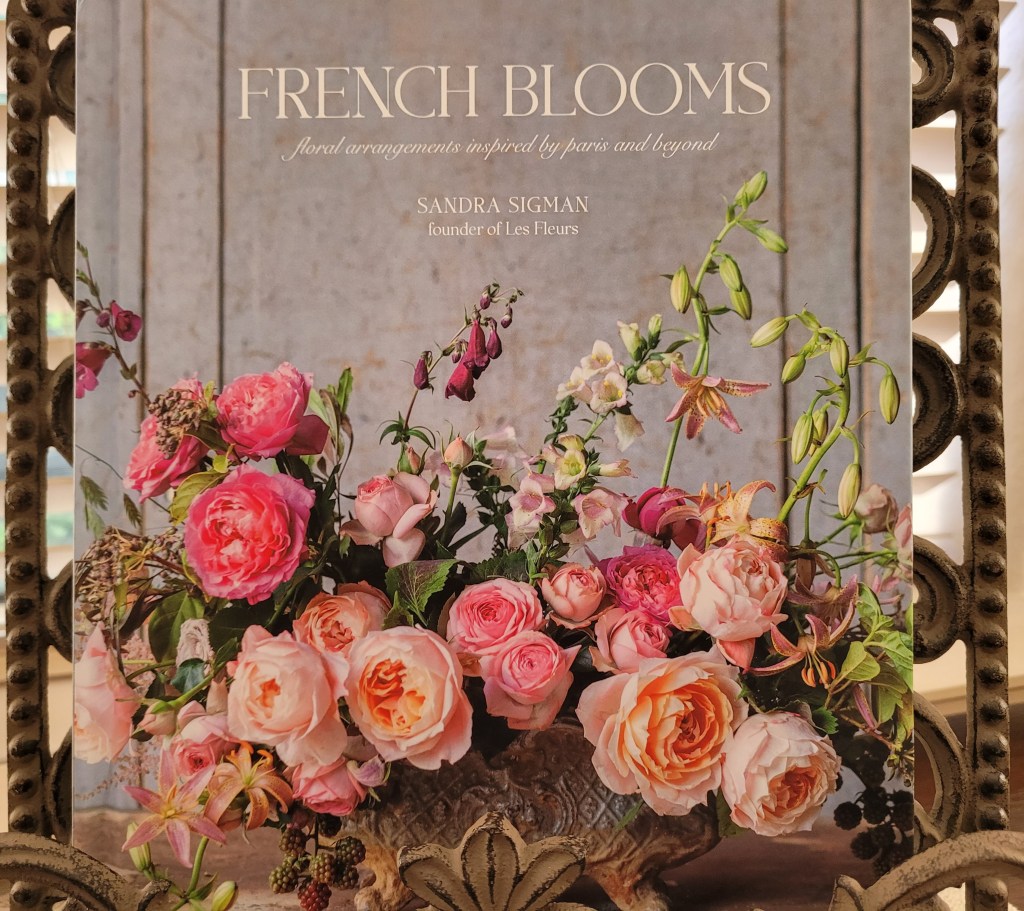
Now that I’m retired, I have more time for gardening, and, this summer, I’m in the middle of re-designing my front and back yards. To do this right, I bought a book about hydrangeas so I can do what I need to do so they grow healthy and vibrant. I also bought a book about 300 varieties of tea roses since I’m going to plant six new rose bushes along my new western fence. Oh yes, I also bought a book about French flower arrangements that I have displayed in my French décor living room.

Flowers, Flowers, Everywhere in the House

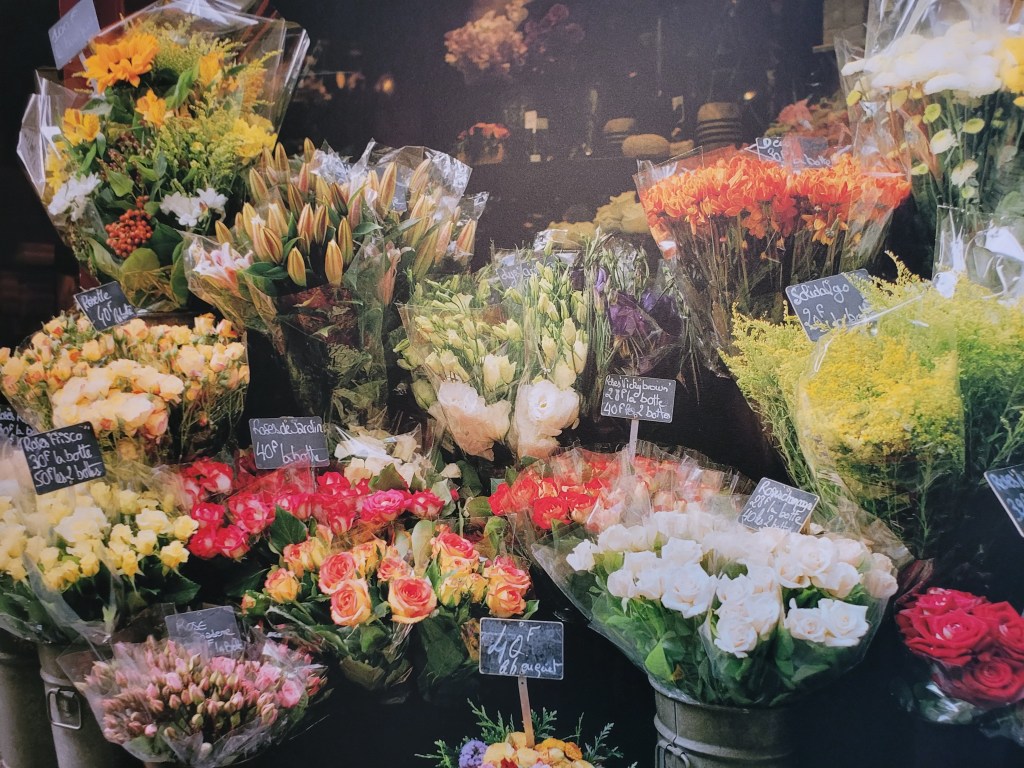
As soon as people step into my home, they learn how obsessed I am with flowers. In the living room, I am using three artificial flower arrangements to create a beautiful ambiance. Currently, I also have a vase filled with over a dozen red, yellow, and white roses from my own rose bushes in the back yard. I have bouquets of artificial flowers in each of the three bedrooms, flower urns in the library, and a real Christmas cactus in the family room. My bedroom walls all have pictures of flowers in them. The guest room, which also has a French theme, has a photograph of a flower vendor shop in Paris.

Flowers, Not Chocolate

Here’s a secret. I can be bribed, not with chocolates, but with flowers. When anyone gives me flowers, my heart melts like a warm candle. My husband gives me roses and sometimes other types of flowers on Christmas, my birthday, and Valentine’s Day. I love each and every bouquet as if it is the only bouquet I’ve ever received.

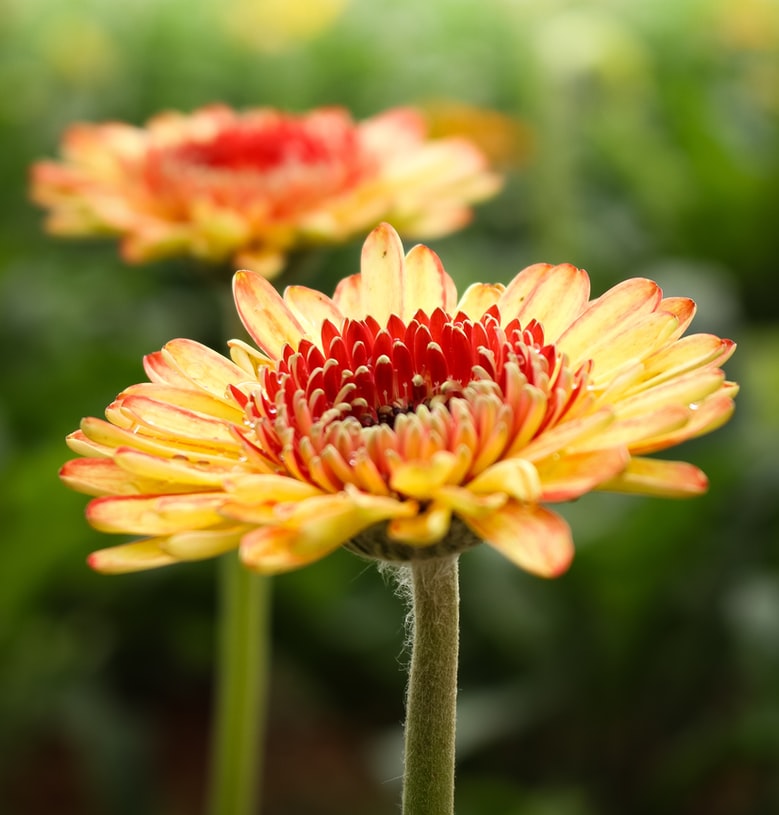
My daughter gives me flowers often because she loves flowers too. Her favorite flower is the Gerber Daisy. When I want to get her some blooms, I look first for those.

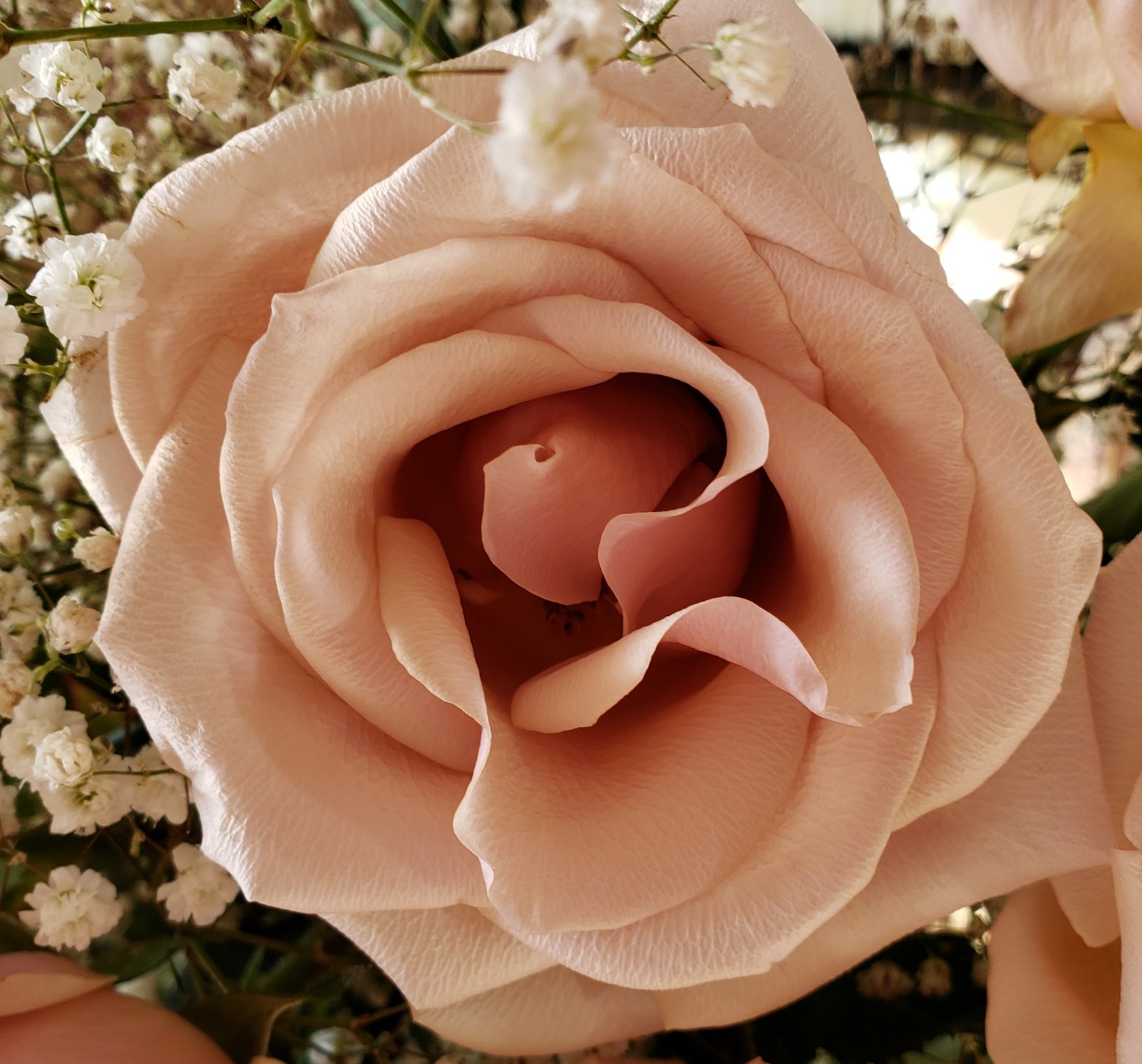
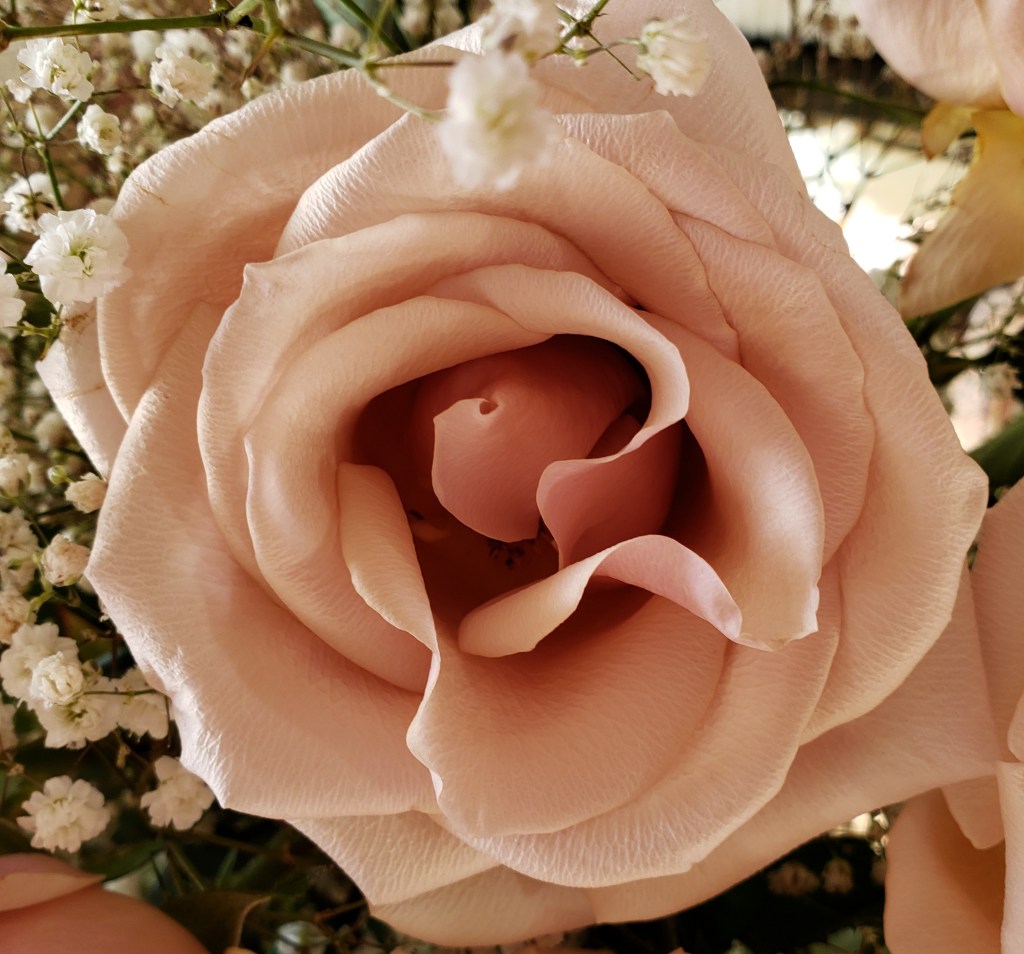
The most beautiful flowers I have ever received, however, were pink roses from my son. The pink was so delicate and the roses were incredible as buds and astonishing when they were fully bloomed. I took photo after photo of them, and, now, I have two photographs of these roses upstairs. My heart skips a beat whenever I see them.

I’m inspired by beauty and that’s why I love flowers. This afternoon, I plan to read more about how to perfect hydrangeas and how to promote more blooms on all my blossoming plants. You can find me sitting in my garden amongst my flowers. Where else?

The Sugar Cookie Grandma

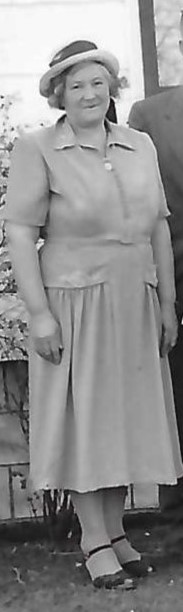
Grandma Lillian in her 40s

Back in my grandmother’s day, women didn’t get much notoriety, so I decided to write a blog about my Grandma Lillian. She’s not famous, but she deserves some long-overdue attention.

Grandma Lillian was born in Winona, Minnesota on November 9, 1903. Both of her parents’ families were originally from Trhove Swiny, South Bohemia, which is now part of the Czech Republic. This town dates back to the 1200s as part of an ancient trade route. In the 1400s, King Vladislaus II, who was then King of Bohemia, authorized the town to build a market. The town’s name comes from the Czech word trh which means market. The two most popular sites in Trhove Swiny are The Most Holy Trinity Church, which replaced a Catholic pilgrimage chapel, and an iron mill called Buškův hamr.

My Grandma Lillian, however, never visited the Czech Republic. In fact, she never traveled outside the United States except for Canada. She was a short woman, less than five feet tall, and a little plump. When she first married my grandfather Leon Jr., she lived in his father’s house on an 800-acre piece of property that is now a Minnesota State Park. Later, she and her husband bought their own house in Goodview, a town next to Winona. The house was painted white and sat on a flat parcel of land covered in shamrock green grass with a large vegetable garden in the back. Her brother Leo lived next door.

Grandma Lillian’s House in 2022

Grandma Lillian had five children, including my father who was the oldest. Then came David, Mary, Gerald, and Daniel. My father moved to California with the United States Air Force which stationed him at Mather Air Force Base. Once my parents came to California, they settled down to stay.

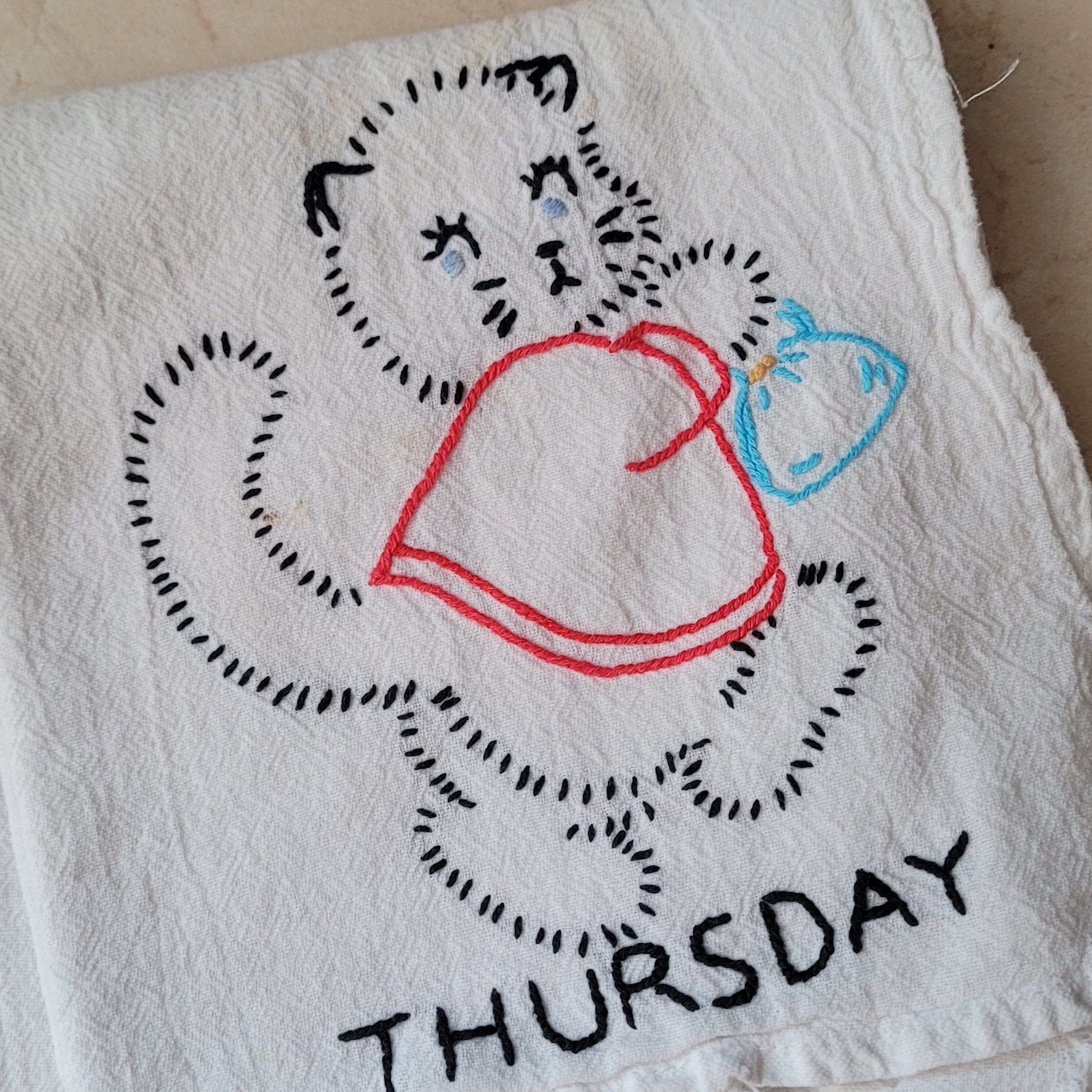
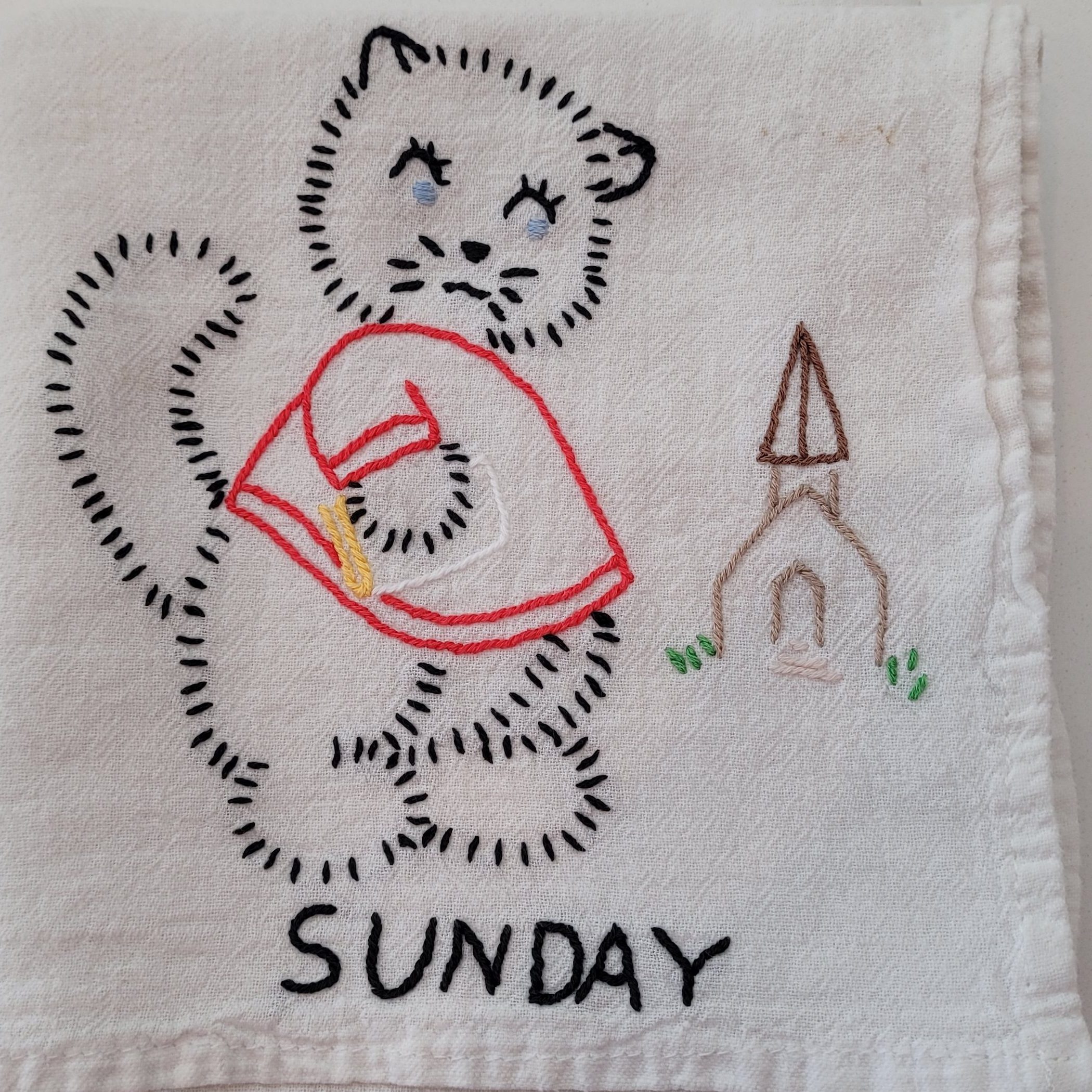
Grandma Lillian took the train to California several times to help my parents when my mother was in the hospital having another child. During these times, I learned about who she was as a person. I watched her embroider cotton tea towels, one for every day of the week. For each day, she embroidered a kitten performing a different kitchen task with one exception. For example, on Thursday’s towel, the kitten was carrying a tea kettle to the stove. On Sunday, the kitten was not doing kitchen work since she was going to church. She taught me how to embroider, but I was too impatient to make the stitches neat.

Even though Grandma Lillian didn’t ever travel to Bohemia, she used many recipes that came from the old country. She was famous for her Refrigerator Pickles. To make these, she combined seven cups of sliced cucumbers and one sliced yellow onion with a tablespoon of salt. She let the salt leach some of the water out of the cucumbers for about an hour. For the dressing, she combined one cup of vinegar, two cups of sugar, and one teaspoon of celery seed. She poured this over the cucumbers and stored the dish in the refrigerator to use as needed. By the time her recipe reached my family, we were eating the pickles as a side salad, all in one day.

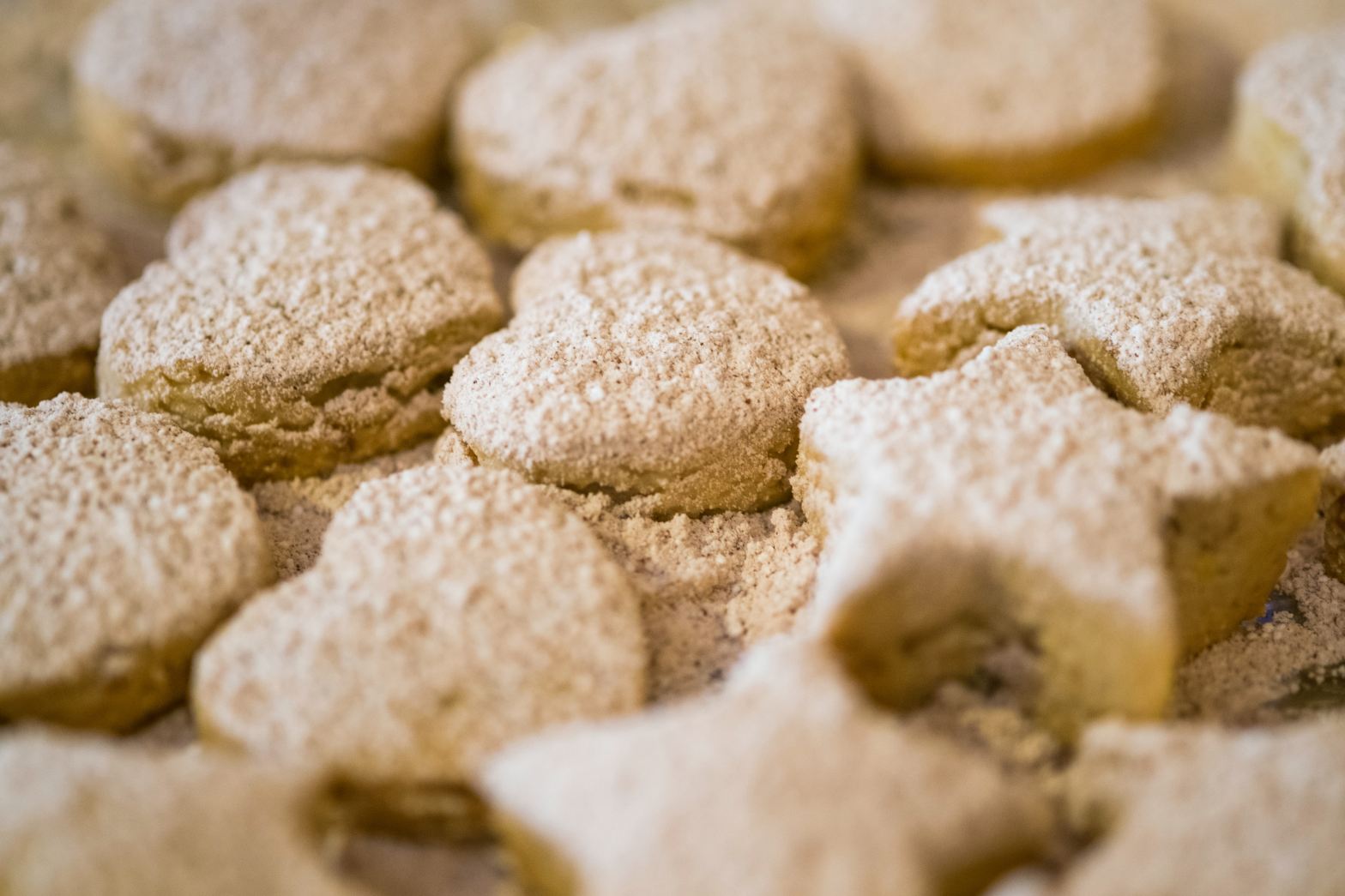
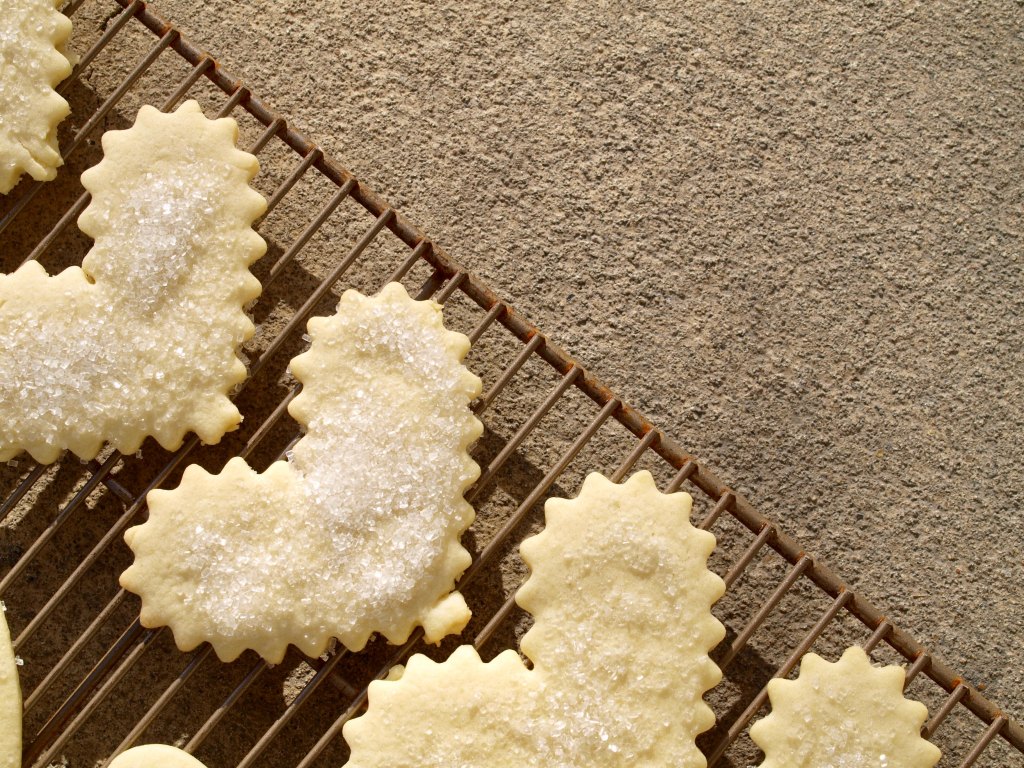
My favorite memory about Grandma Lillian was how she made sugar cookies. Maybe we didn’t have cookie cutters. Maybe we didn’t have the shapes of cookie cutters that Grandma wanted. I don’t recall, but I do remember how Grandma folded a piece of newspaper in half and used scissors to cut out a heart about the size of her hand. Then she placed the heart shape over the rolled-out cookie dough and cut the dough with a sharp knife to make heart-shaped cookies. She placed the hearts on a cookie sheet and decorated them with colorful sprinkles. When we ate them warm out of the oven, they were buttery sweet.

Grandma loved to garden both vegetables and flowers. Many days, she spent hours out in her garden weeding, pruning, harvesting and enjoying the ambiance. My father inherited her green thumb since he also cultivated a big garden every year to feed his family.

Grandma Lillian was in her garden when she died on July 16, 1991. The weather was over 100 degrees, and my cousin Karen found her late in the day. Now, she is buried next to her husband Leon and her youngest son Daniel in a country cemetery. She didn’t become a movie star, a Congress woman, a Supreme Court judge, or even a newscaster on television. Yet, she lives on in the lives of her thirty-one grandchildren and more than forty great-grandchildren. That’s an accomplishment of which I am proud.

Photo by Diane Helentjaris on Unsplash

Why Queen Elizabeth II Matters to Me

In 1966 when I was nine, my family moved to England. My father was in the United States Air Force and he was stationed at Mildenhall Air Force Base in Suffolk County, about one hundred miles north of London. Queen Elizabeth II had already been queen of England for fourteen years.

My parents sent my siblings and me to an English Catholic school named St. Edmund’s in Bury St. Edmund’s. I started in Junior 2, and every day I had to dress in a blue uniform and tie a blue tie around the collar of my blouse.

By the time I entered Junior 3, I had developed some strong friendships with girls in my class. Elizabeth invited Ann and me to spend weekends at her historical English home in the countryside where we slept together in her late grandfather’s bed and heard the grandfather’s clock chime every fifteen minutes during the dark night.

Ann invited me to spend weekends at her house as well, where I learned the English custom of having tea each afternoon. We also walked for miles around the town of Bury St. Edmund’s exploring the 11th century, ancient ruins of the St. Edmundsbury Cathedral and the dark nave of St. Mary’s Church. We visited Moyses Hall and found ancient instruments of torture that had been used by former leaders of East Anglia. In Bury, I learned that history was a long story about the human race and its complicated nature. I learned about selfishness, arrogance, faith, power, tactics, and greatness.

In class, beside studying math and English, we memorized famous English poems and old songs that had enriched the English culture for years. In fact, the first tune that I ever played on the recorder was “Greensleeves,” an old English ballad first recorded in 1580 by Richard Jones. This unforgettable tune was mentioned in Shakespeare’s play The Merry Wives of Winsor, and also serves as a favorite Christmas hymn in England “What Child is This?” that I sang in church. Thinking about how I was exposed to ancient English ballads and Shakespeare at such a young age, it’s no wonder that I later became a college English professor who specialized in the Early Modern Literature of writers such as Shakespeare.

Since I attended English school during my elementary school years, I never learned American history until I went to college. Instead, I developed a deep interest in English history, all the way from the Anglos and Saxons who brought rudimentary English to the island, to William the Conqueror who established French as the language of English politics, to Henry VIII with his six wives, to Elizabeth I with her fierce independence which I admired, to Elizabeth II who I saw on television night after night shaking hands, breaking bottles on the hulls of ships, and opening parliament, dressed in regalia. I grew to know even more about her than John F. Kennedy who had been assassinated when I was in first grade.

Perhaps I was so attracted to Elizabeth II because she reminded me of my own mother, who was also calm and dignified. They both wore a fluffy, curled hairstyle, red lipstick, and pastel clothing. My mother liked to wear rings and she loved flowers and hats. If Queen Elizabeth needed a double, you could adorn my mother in her royal robes and priceless jewelry and put a scepter in her hand and no one would know the difference. 

But their real similarity was their endurance and generosity. I watched my mother give love to my father for over fifty years as a consistent and reliable spouse. I watched her endure the deaths of her friends and her sister with tenderness and strength. I admired the way she loved all of her ten children regardless of their talents, mistakes, and weaknesses. She lived until she was 92 years old, and the last year of her life, she called each of her children once a week and told them that she loved them. I couldn’t believe she could die.

I never believed Elizabeth would die either. I had felt her in my life like a steady light for so long. My parents loved her, and I loved her.

I don’t have any qualms about loving a monarch that represented a country once involved in colonialism. Elizabeth didn’t represent her country’s history. She represented its last 70 years, a time when Canada achieved full independence of Britain, a time when I grew up from an innocent, little girl to an independent woman who now possesses some of the characteristics of my mother. She ruled with grace at all times, during sadness, amidst anguish, and throughout the joyful times.

But most of all, Elizabeth represented a woman who accepted her role of service to her country. She served England with love and generosity; if everyone could lead with the commitment and humility that she demonstrated, our world would be a happier land.

Today, I’m English again, eagerly basking in her influence.

The Brother-Sister Dollar-Pancake Contest

Every kid in my family loved pancakes. Most of the time, we drenched our “cakes” in squares of butter and maple syrup.

My mother stood at the stove making the pancakes while us kids sat around the table eating them, so they were hot from the griddle. The butter was cold, but it melted into a golden pudding on top. My mother warmed the syrup bottle in a pan of water, and then she poured the syrup into a child-sized pitcher for the table. It smelled like an autumn hot toddy and dripped down the sides of the stacked pancakes like teeny waterfalls.

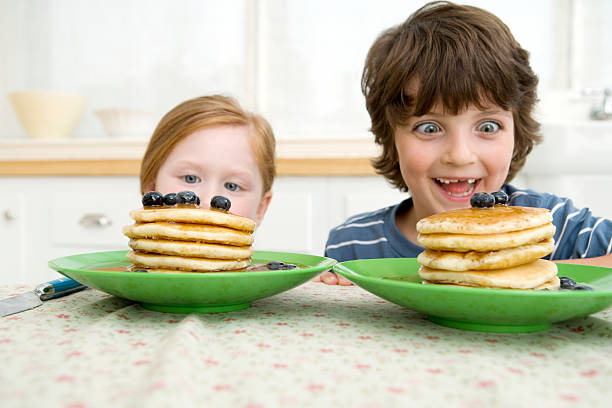
One morning, after the rest of our siblings had left the table, my brother Don and I were still cutting into helpings of pancakes with all their sticky toppings. As I chewed on my sweet breakfast, I said, “I bet I can eat more pancakes than you can.” I was five with a confident attitude, and my brother was four with a hollow stomach.

“No, you can’t. I’ll beat you,” Don said with a full mouth.

“Mom, Don and I are havin’ a pancake-eating-contest. Will you make us some more?”

My mother looked into the mixing bowl and found out that she still had batter left, so she agreed. “I’ll make dollar-sized ones for you.”

First of all, I have to tell you that my mother made pancakes using Betty Crocker’s Bisquick. Her pancakes were bready and fluffy with a flavor that you just can’t replicate without the secret Bisquick recipe. 

She had taught us what dollar-sized pancakes were.  Her regular pancakes were about 6 inches in diameter, and Don and I had already had about four of them that morning. Dollar-size pancakes, on the other hand, were about only 3 inches. They apparently were about the size of a silver dollar, but I’ve never seen a 3-inch silver dollar. 

We started counting from 1. My mother gave us each a small stack of three dollar-sized pancakes. I melted the butter and swirled the syrup on top, then cut the cakes down the middle and scarfed them down. Don ate his too.

The next helping came. More butter and syrup. More chowing down. Don had a smile on his face like the Cheshire Cat from Alice in Wonderland. He was feeling assured of his success, so I stuck out my tongue at him. Mom couldn’t see me because she was up the three stairs and behind the kitchen wall. 

The next helpings came. Don rubbed his stomach and groaned. I didn’t dare complain that I was full. Winning was important.

The next helping came. By this time we both had eaten 12 little pancakes, not to mention the 6-inch ones we had eaten before we started recounting. Syrup was dripping out of the sides of our mouths, and the butter plate was empty.

Mom used a spatula to set three more pancakes down on each of our plates. I scraped the butter plate for any leftover bits, and poured the syrup in between my pancakes so they were nice and moist all the way through. Easier to digest that way. Don was stooped over the table like an old man, looking down at his plate. I kept my back tall, and my Buddha belly rounded out in front of me like a balloon. We kept eating.

Both of us ate through the next helping slowly. The syrup failed to make the pancakes irresistible. I felt like throwing up.

Soon, another little stack of three was on my plate. Don poured the syrup, and cut into his stack like a drunken sailor. When he got half-way through, he pushed his plate away from him, put his head down on the table, and let out a deep moan. “Mom, I can’t do it,” he said.

There wasn’t enough syrup for me to pour it in between each pancake, so my stack of pancakes was a little dry. I used both my knife and fork to cut the stack, chewed the dry pancakes into a pulp, and swallowed the damp pulp of dough down my throat. Don was finished. All I had to do was get through this whole stack and I would be the winner.

I chewed and swallowed without tasting. The stack got smaller and smaller with each bite. I belched. I swallowed some more. Finally, I jabbed the last piece of pancake onto my fork, stuffed it into my mouth, chewed, swallowed, and put my fork back down.

I sat up straight, acting as if my stomach didn’t ache like an overblown balloon and raised my arms up into the air, my fists together like a champion. A full and painful stomach would pass. The feeling of retching would too. Winning was everything.

Green Beans & Marshmallows

My relationship with food started with a tummy ache.

 When I was born, my parents soon learned I was allergic to cow’s milk. My mother had grown up on a farm in Wisconsin where her father milked his cows to provide milk on the table. My father loved cow’s milk so much that he scooped the cream off the top of pasteurized milk with a spoon and put it in his mouth, right over the bottle. So my allergy to milk was unusual for them. To solve the problem, they bought a goat, milked it, and put the goat’s milk into my bottle.

Our family was large—two parents and ten children to feed. This meant that the preparation of food required a major effort, not just by my mother but the whole family. Since my father grew up on a farm, our first home was a rented farmhouse on top of a barn on a two-acre property in Fair Oaks, California. My dad’s day job was in the military, but before he went to work and after he got home, he milked the goat and cow, fed the chickens and ducks, collected their eggs, gave lettuce to the rabbits, sheered the sheep, picked fruit from the fruit trees, and planted, weeded, and harvested the vegetable garden.

When I was three, my parents bought a house right down the street on a half-acre lot, and it was the most prolific half-acre I’ve ever known. We didn’t keep a cow there, but we still had sheep, ducks, chickens, fruit trees, and a year-round vegetable garden. Radishes, carrots, lettuce, and green onions in the spring. Zucchini, cucumbers, tomatoes, and peppers in the summer. Pumpkins and acorn squash in autumn, and potatoes in the winter.  I remember running bare-foot under the plum trees over fallen, ripe plums that were magnets for the honey bees. Before I went to Kindergarten, I had been stung dozens and dozens of times each summer.

We weren’t legally allowed to work when we were kids, except as harvesters in my father’s garden. Under the blazing summer sun, I stooped between the rows of tomato plants and picked tomatoes until my arms itched with rashes. When I complained, I was switched over to the rows of green beans where the purple dragon flies terrified me as they flitted among the bean plants’ twirling tendrils.  I hated the hot sun, the rashes, the dragon flies, and the repetition of picking.

One day at the dinner table, I came up with the incredible idea that I didn’t like green beans, and, if I didn’t like them, I wouldn’t have to pick them anymore.  With this inventive scheme in mind, I looked down at the green beans on my plate and said out loud, “I don’t like green beans.” As fast as lightening, my brother stuck his fork in my green beans and lifted them over to his plate. All I had left were fish sticks and mashed potatoes, and the serving dishes on the table were all empty. Nevertheless, I spent my whole childhood hating green beans.  It wasn’t until I was around thirty that I tried them again and discovered they were delicious. 

Cow’s milk and green beans weren’t the only foods that traumatized me. My mother was a decent cook, but she often lost track of the vegetables cooking on the stove. By the time she remembered to turn off the zucchini, it had turned into a gelatinous mass of green sludge, and she made us eat it anyway. 

My mother employed her daughters as helpers in the kitchen as soon as we could reach over the counter. When we had French fries for dinner, I had to peel ten pounds of russet potatoes and slice them into French fry fingers. Then, Mom deep-fried them in oil and we cooled them on racks placed over cookie sheets. 

I never complained about not liking French fries. I loved them as much as everyone did. In fact, if I didn’t protect the fries on my plate, one of my siblings would snitch them when I wasn’t looking. The best course of action was to eat the French fries on your plate first, get another helping, then eat the rest of your food. To this day, I don’t dip my French fries in catsup while I’m eating them. When I was a kid, I didn’t have time.

Some of my food trauma also stems from the creative ways that my father punished us when he caught us committing food crimes. I think my dad could have earned a PhD in psychology if he had the notion to get more than a two-year college degree. He was thoughtful, and, because his sentences were so inventive, they were effective.  One time after dinner, he caught me popping a large marshmallow into my mouth. “You still hungry?” he asked. “Next time you eat when you’re at the dinner table.” He made me sit at the table and finish eating the leftover pork and beans. That was a “tooty” experience that I never forgot. Today I don’t even like marshmallows.

A Story about Straw Pile Hill

Between Stockton Valley and the west side of the Mississippi near Winona, Minnesota is a ridge covered with white pine trees.  Once upon a time, my great grandfather, Leon Ambrose Bronk Sr., bought land on this ridge to grow alfalfa and corn.  Throughout the years, he bought more adjoining farms until his land holdings reached 761 acres. 

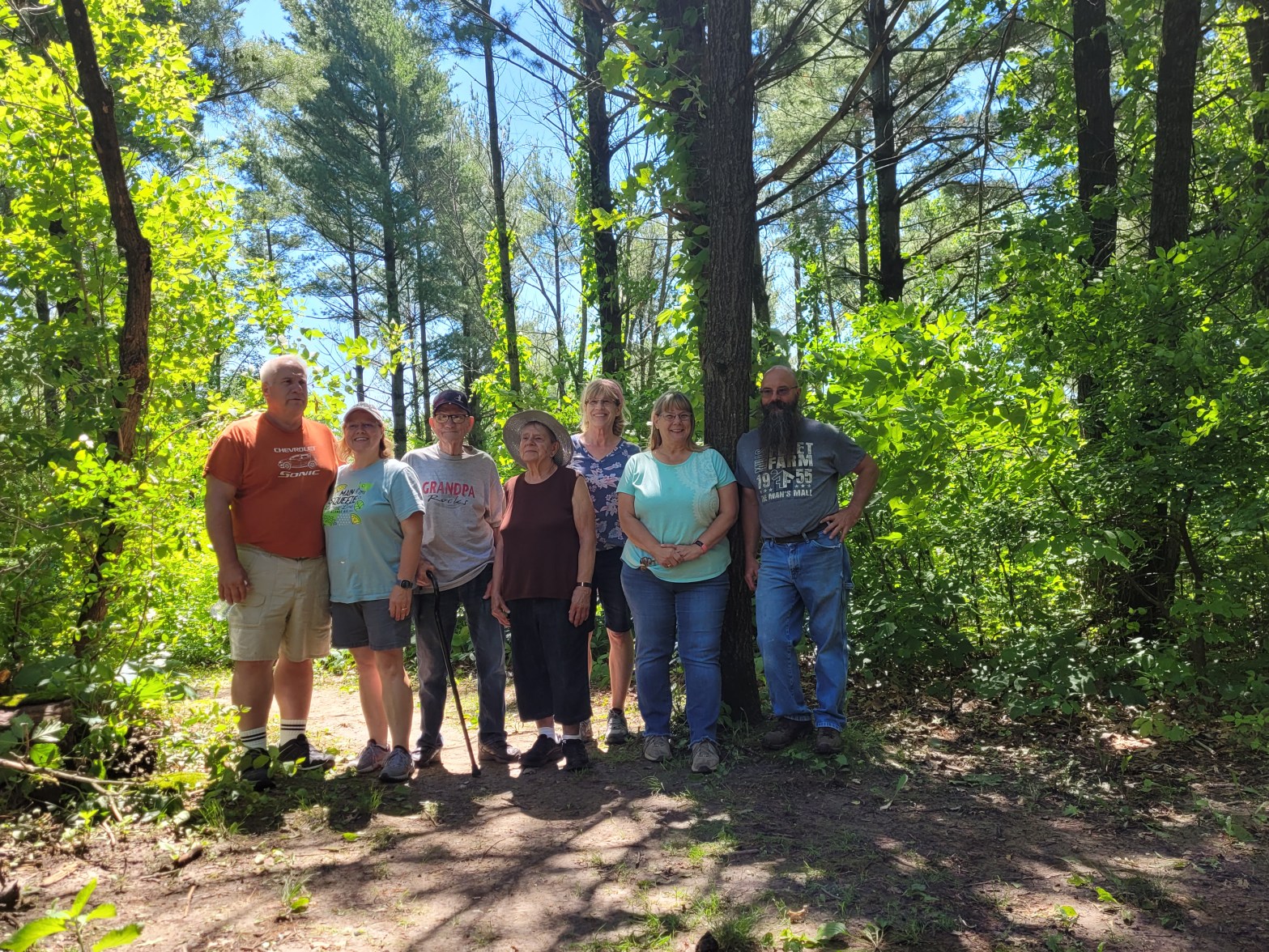
On June 16, 2022, when I was visiting, two of my cousins arranged for a group of family members to ride up into the park in 4-wheel drive trucks so that my 92-year-old uncle could see the land where he spent the first 14 years of his childhood. 

Great-grandfather Leon bought this property in the 1920’s and lived in a white wooden house at the bottom of the ridge where he planted a family garden and built a barn for cattle and horses.  Twenty years ago, I remember walking through the ruins of that house.  When he bought some farms at the top of the ridge, Leon Sr. let his oldest son Leon Jr. and his family live in one of the farm houses up there.  Leon Jr.’s first son, Paul—my father, was born in 1929 and his second son, David, was born in 1931.  David is the father of ten of my closest cousins.  Twenty years ago, we found a rusted sled that Paul and David used to travel down the snowy slopes of the ridge when they were little. 

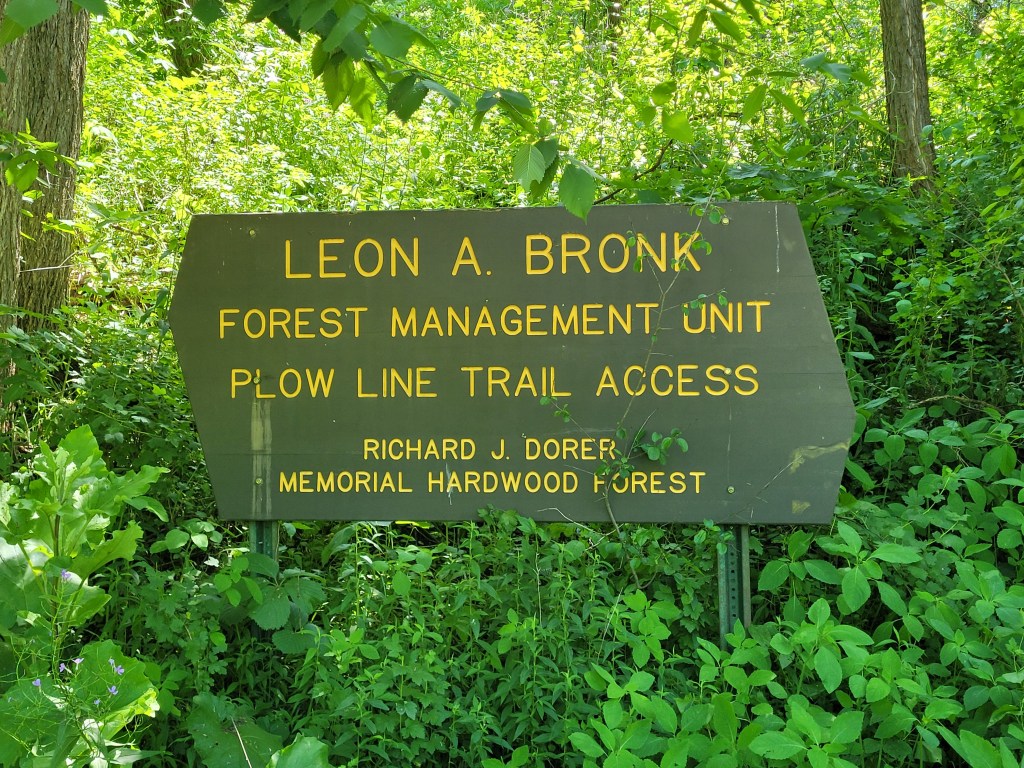
In 1969 when he was 81-years-old, Leon Sr. sold the land to the State of Minnesota, and it became part of the Richard J. Dorer Memorial Hardwood State Forest.  Since much of the property rises 500 feet above the surrounding valleys, it provides hikers and bikers tremendous scenic views of the land and water below.  The State of Minnesota planted thousands of white pine trees in rows, a forest that now covers up any evidence of houses, gardens, and alfalfa fields.

On this day, cousins Diane and Bill drove the trucks into the park and up the ridge under the supervision of a park volunteer named Mark.  Mark is an avid off-road bicyclist, and he started to maintain the 6.5 miles of hiking trails in this park by using his electric weed-whacker to cut the weeds. One day when he was working, he met a state park ranger, and he explained how he biked up the ridge with his whacking machine to keep the trails open.  He also wished that the gate was open so he could use his four-wheeler jeep to bring his mower up; because the weeks grew so fast, the mower would do a better job in a shorter amount of time.  The ranger gave Mark a key to the gate and unlimited access to the park.

When my cousin Diane wanted to arrange a family drive, she called Mark to get the State’s permission to drive trucks through the gate and up to the top of the ridge.  He helped her out because he wanted to meet the oldest living Bronk relative, my Uncle David, who had actually once lived on the property.

Mark was excited to hear stories about the property’s history.  The park is named the Bronk Unit Plowline Trail referring to the line where the Bronks stopped plowing their fields.  Uncle David revealed that one ridge is known as Cherry Hill, probably due to the cherry trees growing there.  Another ridge is known as Straw Pile Hill.  That’s where, when he was a mere boy, David dumped the hay that he harvested from the fields, and Paul would pick it up and haul it off to be sold.  David had to plow the fields and collect the hay with a horse-drawn contraption.  Paul got to drive the tractor since he was older. 

My dad used to say that “You can take a man away from the farm, but you can’t take the farm out of the man.”  All his life, my father was an excellent farmer.  When I was born, my family rented a two-acre farm in Fair Oaks, California.  I was allergic to cow’s milk, so my parents bought a goat and gave me its milk.  We had chickens, bunnies, and geese.  My mother made butter and ice cream by hand. 

Later, when we moved to a smaller property, my dad raised sheep.  One sheep was our favorite, and we named him Jerimiah.  One day when we got home from school, we couldn’t find him.  At dinner, we asked my parents where he was.  “He’s on your plate!” said my dad with a grin. 

David, too, farmed his whole life.  He bought a farm that had been owned by my Great-Great Grandpa Ignatius Bronk, who immigrated to the area from Gostomie, Poland and bought this farm in 1886.  When Ignatius died in 1896, his son Theodore took over the farm; Theodore was the older brother of my Great-Grandfather Leon Sr.  Today, David lives on the farm with his wife Linda and a herd of cows that his son, Bill, manages for him.  While I was visiting, about twenty-five of us cousins, first-cousins-once-removed, second cousins, and Uncle David and Aunt Linda had a picnic on a hot and humid 100-degree day. To stay cool, we sat under the spreading branches of a white oak tree and slapped the gnats that buzzed around our faces.

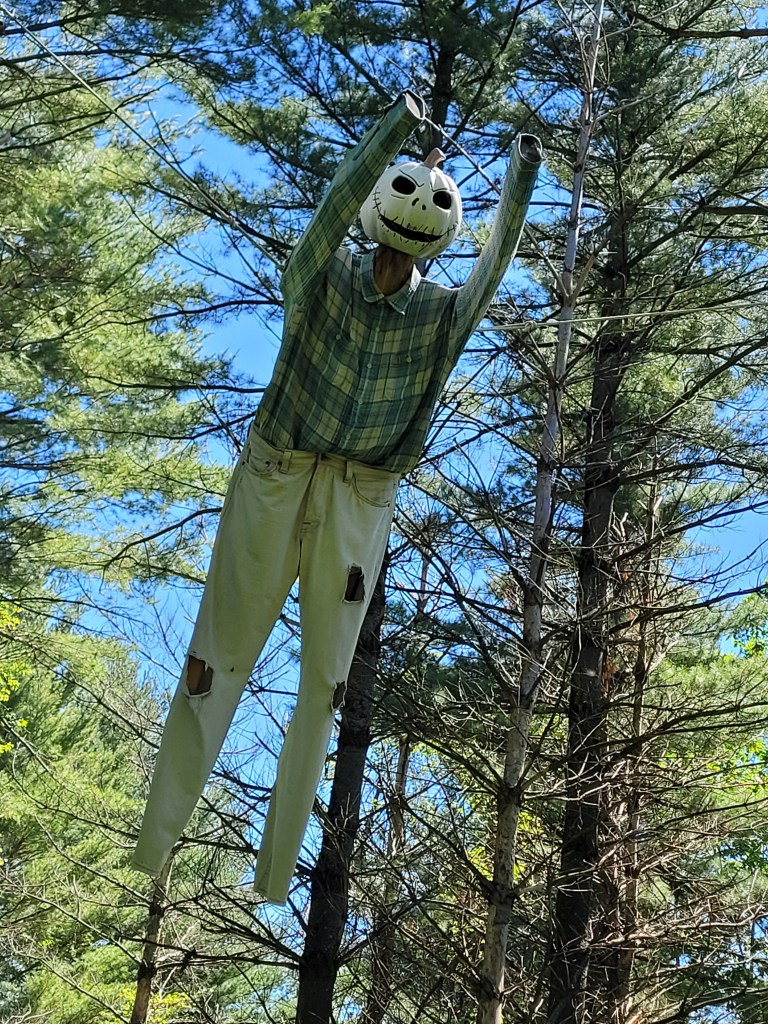
While we walked around the top of the ridge on Great-Grandpa’s property, we found wild carrots and asparagus—souvenirs from the gardens that once fed the Bronk families.  Hanging high above a hiking trail, we found a scarecrow with a Jack-o-lantern head, plaid shirt, and farmer pants.  Mark told us that a solar light made the head light up at night, creating an unexpected scary encounter.  We watched big, Eastern Tiger Swallowtail butterflies settle on wild flowers and examined tiny pine cones that fell from the white pine trees.  The floor of the forest was covered in a thick matting of dead pine needles, hiding the remnants of our relatives’ lives. 

What occurred to me that day was that all of the farmers who worked on my great-grandfather’s land had been removed from it: my great-grandfather, my grandfather, my father, and my uncle.  Yet, there was evidence all around the area and in places far away, like California, that these people and their descendants were still farming.  David’s son Bill will one day take over David’s historic farm.  My brother, Donald, can grow any vegetable or flower in his patch of garden in California.  I have a green thumb when it comes to growing flowers. Apparently, you can’t take the farm out of a farming family. 

A Tule Fog Morning

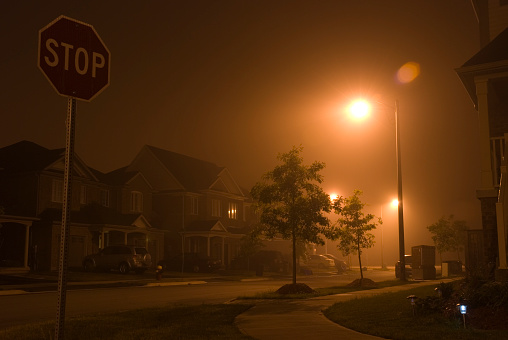
When I walked outside to get the newspaper this morning, tule fog blanketed my world. The blades of grass chilled my slippered feet, and the air bathed my face in cold breath. The street lamps glowed like steaming, yellow jewels. Houses wore shrouds of gauze, and both ends of the street disappeared into a thick, milky blanket.

I grew up in Sacramento where tule fog covers the neighborhoods, hills, and American River from November to early March. When the humidity is high and the nights cool down fast, the condensation lifts from the ground like a thick mist, as white as a clean sheet.

I paused in the front of my house to enjoy the mystical sensation. I couldn’t see any details past about a hundred feet, and the whole morning was clothed in mystery. My heart skipped a couple beats at the excitement of remembering long bicycle rides in the tule fog, not knowing whether I’d be cycling head-on into a mailbox or a person walking on the street. I rode slowly, but deliberately, tempting the fog to clear just in time to save my life from a disaster.

While I was standing outside this morning, my almost bare feet chilling, my arms cupped around my torso, holding my robe together, I felt the thrill of the mystery of not knowing what the fog was hiding.

Mystery is an exciting part of life. We never know what will happen the next day, the next year, or the next decade, even if we plan conspicuously. Life has a way of retaining a sense of mystery.

I thought back to the day when I was nine-years-old, writing my first poem. When I was a teenager and I got up early in the morning to walk in the dew-filled yard just so I could write a poem about how it looked. About when I won the Cadbury’s Essay Contest before I ever knew that writing would become my major passion. Mystery.

I thought back to the times when my parents and nine brothers and sisters celebrated Thanksgiving, Christmas, and Easter, sitting around a plain, mahogany dining room table. Later, when some of us got married and had kids, the food would be set off to the buffet; we’d line up, say prayers, and then jostle for a seat. Lots of fried chicken, sliced ham, potato salad, broccoli salad, a tray of raw vegetables, ranch dip, fruit salad, pecan pie, trifle, and pop out of the can. Never would I have imagined that these family dinners would create an unbreakable bond between me and my siblings that is even more important now that both of our parents have passed. Mystery.

I thought back to my first college adventure when I majored in accounting. I planned to work in finance my whole career since it was a good field for women at the time. I admired my mother’s sharp ability to manage money, and thought that this major would give me the independence I sought. I did. What I didn’t know was that my love of writing would eventually win out, and I’d go to graduate school to become an English professor. The change was exciting, and I’m sure a lot of the excitement came from studying a completely different topic.

I saw myself in a silk wedding dress walking down the aisle of a church in Sonoma, California toward my first husband. The mystery of not knowing that the marriage would become a disaster allowed me to stay married for nineteen years, long enough to almost get my two beloved children raised and launched, and long enough for me to pick my crippled self off the floor and walk decidedly out the door to a healthier life.

So this morning when I stood in my robe in awe at the impenetrable tule fog, I became astutely aware that my life was still full of mystery, and I felt excited. Will I ever truly become fluent in Spanish? Will I ever get the chance to fly to Argentina to visit my son-in-law’s mother and be able to chat with her?

Will I finish writing my novel? If I finish it, will I publish it? If it’s published, will I visit bookstores to read and sign it?

Will I live to be sixty-five, seventy, eighty, or ninety? If I do, will I be able to write until the very end, or will my health limit my ability to follow my passion.

That’s the thing about mystery and the future. We just don’t know what’s going to happen until it happens. This forces us to focus on the present and helps us do the best we can now so that our future has a chance of imitating our dreams.

The tule fog covered the ground for hours this morning, reminding me to make the best of my day. That’s as far as I really can see.

My Christmas Story

I had a fabulous Christmas with my husband and family. My spouse’s eyes lit up like candles when he kissed me and said, “Merry Christmas.” My two-and-a-half year old granddaughter spent two hours drawing on the paper tablecloth with me at Christmas Eve lunch. Her impish smile radiated up as she labeled her squiggly circle as a “rock.” These moments made me happy, but my Christmas blazed with joy on December 20 when I helped Youth Homes organize a holiday party for their former foster young adults at Clayton Valley Bowl in Concord.

Youth Homes is a non-profit organization that provides homes for youth who have grown too old to be housed in foster care, but who don’t have enough experience or financial means to live on their own. Most of their youth take daily medication to help regulate anxiety or other emotional conditions resulting from their troubled pasts. Some have been sexually abused. Others are victims of physical violence. Some have experienced homelessness under cold freeway overpasses, and others have lost parents to prison or untimely death.

With my partner from the Alamo Women’s Club, I arrived at Clayton Valley Bowl at 2 p.m. with boxes of gifts and envelopes of gift cards. We wore double masks to ward off any Covid viruses that might be floating around in such a public place and carried the heavy boxes through the glass doors of the building, across the tattered carpet to the back of the dull, cavernous room.

My friend is a miniature five-foot-tall, sixty-five-year-old woman, but she and I pulled ten foot folding tables out of the side hallway and set them up against the dirty white walls to display our gifts. I wet a paper towel in the nearby restroom to clean sticky patches off of two round tables.

On one long table, we arranged knit hats made by the knitting group of our club; they came in every color imaginable, knitted by hand and by looms by senior women who felt good sharing their talents with people who needed them. Next to the hats, we lined up pillow cases made from floral, Christmas, cowboy, leaves, patchwork and other fabric designs. Each youth would get to take home two of these. Beside the pillow cases, we spread out rows of brightly colored placemats, also made by talented women, generous with their money and time. Each youth could choose two of these.

On the second table, we set up an assortment of prizes, such as a George Forman burger grill, little purses, cozy socks, hand knit scarves, gift bags of candies, and make-up kits. Each youth could trade in his or her raffle ticket for one of these.

The manager of Youth Homes arrived just before 3 p.m. and he greeted us with sparkling eyes, a Christmas mask that wrinkled when he smiled, and knuckle handshakes. Slowly, one by one and two by two, the youth arrived with shy faces and quiet demeanors.

Most of the youth seemed to be about eighteen to twenty two years old. They were tall, small, skinny, overweight, light-skinned, dark-skinned, male, female, happy, and sad.

One girl, taller and larger than me, with dark skin and a head of long, black braids, had taken great care with her outfit. She wore fashionably-torn blue jeans, a plain white Tshirt, and a pretty turquoise, brushed-cotton plaid, long-sleeved shirt. I complimented her immediately and guided her to the two round tables so she could first sign the thank you cards for the donors of all the gifts. When she got to the raffle prize table, she chose the George Forman hamburger grill so she could cook hamburgers in her bedroom.

One young man, about five-feet, six-inches tall, messy dark curly hair, and a warm voice chose all of his presents with his mother in mind. For her, he chose a flowered placemat, a pink pillowcase, and a pink hat with a large tassel. The light in his eyes was soft and tender as he picked up a gift bag of candy for Mom at the raffle-prize table.

Another youth showed my partner and I her artistic eye make-up and proudly proclaimed that she was now working as an event planner. “My job requires a lot of creativity,” she said. She signed the donor thank you cards with a large, flamboyant signature.

Also arriving one-by-one, came the counselors, who worked with these youth, guiding them in their daily living and helping them overcome emotional handicaps and the lack of family support. Ed wore blue jeans and a bright blue shirt; his jolly, outgoing, gregarious personality made us feel appreciated and welcome.

Cheyenne remembered me from two of the online college success workshops that she had conducted for the youth from the interior of her car. During these workshops, I taught the youth how college differed from high school and gave them tips for being successful in college. When she recognized me, I really felt part of the Youth Homes family.

Later, I found out that these counselors would have dinner with the youth on Christmas Day and then take them out for a movie so that none of them would be alone on the holiday. I knew I would be spending Christmas with my family, but part of me wanted to tag along with them, doing what I could to show them how much I wished for them to be happy.

For two hours, we guided the young adults through the gift lines, ensuring that they all received hand-made presents. We gave them $50 gift cards from Target or Kohl’s, and we watched the counselors set up bowling teams, bring out boxes of pizza and jugs of soda, and circle among the youth like they were the best of friends.

Finally, we boxed up the remaining beanie hats, pillowcases, placemats, and raffle prizes for the manager to take back to the office for any youth who couldn’t make it. We tucked the left-over gift certificates into the envelope and handed them over for safe keeping. New youth came into the program at any time, and they all needed clothes, personal items, and financial support.

The counselors masks wrinkled into beaming smiles as they wished us a happy holiday. Some of the youth looked up with big eyes from their pizza as we passed by their tables. Others shouted “thank you” and waved. Two of the larger youth continued playing a competitive bowling game, so when both of them bowled a strike back to back, I raised my firsts and yelled, “Alright!”

Christmas was still a few days away, but, this day, this afternoon that I spent in a dim-lighted bowling alley with no manger scene, no Santa Claus, no reindeer, no twinkling lights, became my favorite day of Christmas 2021.

Wisdom of the Trees: Chapter 4

Chapter 4 – Willow

Friday was the last day of class, and Profesora Casti lead her students to Almagro, the part of the city known for its flower vendors.  First, the group wandered among the flower stalls on Acuňa de Figueroa where baskets of roses filled the air with intense fragrances.  Leonie bent over the bunches to breathe in their perfume, and she took turns saying their names out loud with her classmates.  They chatted with the vendors who told them where they grew their flowers and how they worked from early in the morning until late at night planting seeds, hand-watering, and pruning in order to produce the most beautiful flowers. 

The vendors smiled when they talked about Mother’s Day, weddings, and baptisms for which they sold the most flowers.  Some vendors stayed open 24 hours a day.  The best time to buy flowers—late at night or early in the morning.

Then, the class meandered to Calle Sarmiento where even more vendors had their shops.  One shop was filled with tuberose and jasmine, which filled the shop and the air outside its door with heady perfume.  Inside, the vendor was busy wrapping flower bouquets in cellophane paper for a woman and her two daughters. 

Leonie wandered away from the group to admire the lilies of another vendor.  While she was reaching out to touch a petal, a woman dressed in a green apron came out to greet her. 

“Your lilies are gorgeous,” exclaimed Leonie.

“Thank you.  My grandfather used to sell flowers on the streets of Buenos Aires.  My father sold flowers in the old market in stall 8, and, now, I rent this shop here to continue our family tradition.”

Leonie moved under the shade of the willow tree that grew right in front of the storefront.  “I love flowers,” she said.

“I love flowers, too,” replied the vendor.  “I’m sure I’ll sell flowers until I’m old and frail.”

Leonie paused in thought, running the woman’s response through her mind.  Forever was a long time to do just one thing.  Leonie didn’t know that she would ever find something that she wanted to do for so long.

“So,” Leonie asked, “You don’t ever wish that you could do anything else?”

The woman smoothed down the front of her green apron with hands that were crusted with dirt and chapped from years of working with plants.  “No, I never wish to do anything else,” she finally said.  “I feel that each day in my flower shop is another day where I get to express my creativity, and doing that gives me intense joy.  Besides, I know that I like to be around beautiful things, and what could be more beautiful than a shop full of flowers.”

“You seem so contented,” said Leonie.

“You see this willow tree that’s giving you shade?  A willow tree symbolizes fulfilling wishes of the heart.  It also symbolizes inner vision.  I’m lucky to know what fulfills my life.  That knowledge is my inner wisdom.”

The vendor showed Leonie around her tiny shop, identifying the names of all the flowers and inviting her to smell their fragrances.  Leonie told the vendor that she was about to take a trip to search for her life’s purpose.  As the woman listened to her story, her eyes glistened and a whisper of a smile set upon her lips.

Before Leonie left, she held out a yellow rose.  “This rose symbolizes our new friendship,” she said.  “Friends are one of the most precious treasures of your life.  From now one, you and I are lifelong friends.  I wish you success on your trip and hope that you find your version of life fulfillment. 

That night, just before Leonie went to bed, she sat at her desk to write in her journal.  I know what fulfills me, she wrote.  After setting down her pen, she felt anxious.  But I don’t know what fulfills me, she worried.  I don’t know what I want to do with the rest of my life.  I don’t know what makes me happy day after day after day. 

As she sat, she thought about the vendor in the green apron and how she had found fulfillment.  She remembered how gently the woman had picked up each flower and described its characteristics.  She had moved among her flowers with grace, touching each blossom with respect and admiration; her movements were filled with love. 

Now Leonie knew.  The woman had been a messenger from her own soul to teach her how to find her own purpose.  Love was an integral part of finding fulfillment.  When she found out what she loved, she would find her contentment. 

Hidden

Photo by Anton Darius on Unsplash

Sylvia had a secret.  One that rolled around in her stomach like a marble in a maze, bashing against the walls until they bruised, swirling her energy into anxiety.

Sylvia’s friend Ruth told detailed stories about how her mother psychologically abused her during her teenage years.  When they were cleaning out her grandmother’s house after her death, Susan had wanted her grandmother’s wooden chest full of yarn.  Her mother refused to let her have it, and, instead, gave it to Susan’s older sister who didn’t even knit.  Susan wondered for decades why she wasn’t good enough to have such a treasured keepsake and why her mother had favored her sister over her.  Ruth told everyone about the hurts in her background, but she still walked around like a broken doll, permanently damaged, as if nothing could ever erase the scars she had suffered.

When Ruth talked about her feelings, Sylvia flashed her own memories across her mind about how her father had favored her sister over her.  “Isn’t she beautiful,” she remembered he had said.  Sylvia had looked in the mirror countless times wondering why no one ever called her beautiful.  She had clear skin, thick hair, blazing green eyes.  Weren’t green eyes as pretty as blue ones? 

Her friend Paul had told her about how his father was never around.  He never played sports with him, never sat with him on the couch for a game of chess, never even got to his high-school graduation until Paul had already walked across the stage and waved to his mother who was frantically waving back with both hands, as if she was waving for two.  Even today, Paul’s father didn’t act like a father, but like a distant friend who sent him an article once in awhile about a topic that never related to Paul’s life.  Paul had worked hard to build self-confidence, but struggling with a narcissistic father made that an up-and-down journey.

Sylvia’s friend Jen talked about her childhood, too.  She told Sylvia how a sixteen-year-old neighbor boy had raped her when she was eleven, luring her into his backyard shed one afternoon and slowly removing her clothes while he talked to her about the different birds in the garden.  Jen said that it was therapeutic to talk about it after so many years of keeping it hidden.  At first, she was embarrassed that it had happened to her.  What did she do to encourage that boy anyway?  Why did she let him get her into the shed by herself?  Didn’t she know better?  Sylvia didn’t see how Jen had let go of the trauma if she still had all these questions in her mind.

When Jen talked, Sylvia nodded empathetically: “It wasn’t your fault.  He took advantage of you.  He was stronger, and you couldn’t have stopped him.”  Inside her chest, however, Sylvia carefully drew a curtain in front of her own heart, shielding it from the memory of her own secret, stopping her from the minute-by-minute re-enactment of the scene, her shame, her acquiescence, her fear of exposure. 

Sylvia didn’t want her friends to know she had suffered so much, had been irreparably violated.  Maybe someone would use the information about her secret as revenge if they ever got angry at her.  They would expose her in front of people she didn’t trust, and she would endure more embarrassment than she could handle. 

Sylvia had spent years searching for her own self-esteem, her worthiness to be loved, her value as a treasured friend, her worth as an employee, her right to be happy at all.  She thought that she should go talk to someone about her secret so that she could get it off her chest.  Would that even work? 

Finally, she made an appointment with a female minister at a church she did not attend.  She told the woman about her secret, and asked her what she should do to heal from it.  

“First, ask God for forgiveness.  God will forgive anyone, even if you can’t forgive.  Once, you’re comfortable that God has forgiven you, then forgive yourself and anyone else involved.”

Sylvia had worked on forgiving herself and the other person involved for years.  Nevertheless, the memories, surfaced again and again like a nightmare when she least expected them.  Sometimes, she even invited them into her thoughts as if she could purge them out of existence by focusing on them one last final time. 

Nothing stopped the nightmares.  They came while she was sleeping in a vivid stream, and her fear rose incrementally during the dream until she would awaken all of a sudden, gasping for breath like she had been under water the whole time.  Her forehead was drenched with sweat, her heart tight with shame.

Sylvia did feel the pain of her friends, and because she did, she could listen to their stories and offer some solace just by suffering with them.  She also understood the pain that her students told her about. 

Samantha was a student in Sylvia’s college composition class.  Samantha’s mother had kicked her and her three-year-old daughter out of the house, and, now Samantha experienced anxiety that interfered with her performance at school.  Sylvia had counseled Samantha through several episodes of anxiety, and she had passed her English class in spite of her mother.

Van suffered from post-traumatic-stress-syndrome ever since he returned from Iraq, and his significant other left him right in the middle of the semester.  Since Sylvia knew what anxiety and poor self esteem felt like, she coached Van step by step until he, too, passed his writing class.

So many of her community college students needed emotional support in order to pass their classes.  Owen’s father beat him.  Misty lived with five family members in a noisy, two-bedroom apartment.  Monica’s parents wanted her to get married like a dutiful Islam daughter and give up going to school.  Randall had spent two weeks living out of his car during the semester until his uncle let him live in his garage. 

Sylvia knew that if she put in more effort to help these students, they could succeed and improve their lives through education and awareness of other opportunities.  Yet, sometimes, as Sylvia sat beside one student or another, she felt like a broken human being trying to help another broken soul.    

Was it true that people who never felt loved died of heart attacks?  Most mornings, she woke up with a tight chest.  She lay in bed breathing in and out of her nose until her chest relaxed a little, but the tightness never fully went away. 

Most people had a secret, didn’t they?  Weren’t most people walking around, hiding their secrets underneath their shirts, their polite manners, their rudeness, their abusive characters, their anxiety, their bullying, their surrender, and their repeated attempts at survival?

Yes, they were, Sylvia knew.  She was, too.  She had endured so many scars and affronts to her character, yet here she was, carrying her secret around like a satchel of wisdom.

Really, she thought she deserved a medal.

Child of Light

That child of mine. 

She was like the black sheep of the family, but that didn’t mean there was anything wrong with her.  On the contrary.  Ever since she was a little girl, she walked like she was floating on air—her feet swishing out from beneath her, her body gliding like a spirit, her head held up and her eyes cast high like she was watching a movie in the sky. 

Little Beth had a heart-shaped face, her blue eyes spaced perfectly apart and framed with blonde eyebrows, her pale rosy cheeks glowing like pink pearls, her plump cherub mouth, and soft chin.  But she was a shy creature and shunned the limelight, so most people didn’t notice her as she peeked into the room around a wall, hid in a corner on a stool, or swung on the swing outside, alone, when the rest of the kids were in the house. 

After Beth turned seven and received her Holy Communion, I walked up behind her to Communion at one Sunday Mass.  When Beth reached the priest, his eyes opened wide as he looked into her face, his hand paused with the wafer above the chalice.  After a frozen moment in time, he said, “The face of God.”

What did he mean?

My daughter stood there with her hands joined together, her fingers pointing to the ceiling like dove wings.  Finally, the priest fluttered his eyes, seeming to compose himself and said, “The body of Christ.”

“Amen,” said Beth, her voice rising like a musical whisper.  She stuck out her tongue and the priest placed the wafer there, then she circled around so I could see her. 

And then I knew.  A spotlight from the ceiling lit up her face, and I saw a glow in her eyes like the sun breaking through the clouds after a rain, radiant globes of love.  A warmth filled my body as she passed me, and I knew from then on that I was extraordinarily blessed to have her in my life. 

The priest’s eyes followed her as she left, and, because he was preoccupied, I also turned around and watched her glide down the aisle like a sail on the breeze.   Quickly, I faced the altar again, but still had to wait for him to recover and remember that more people waited in line for Holy Communion. 

***

My husband and I asked Beth to be the executor of our will.  We asked her because she studied finances in college and we thought she’d be qualified to deal with the mechanics of disbursing our assets. 

Peter died young so he wasn’t around when I started to go blind and I couldn’t write checks, cook on the stove, or drive my car anymore.

Beth told me that it was time that she took care of me.  She helped me move into an assisted living place where three of my friends already lived.  She helped me sort through the sixty years of belongings in my house, found charities to pick up unwanted furniture, hired a gardener to keep the lawn cut until the house could be sold, worked with my realtor, accepted a great offer on the house, and filled my bank account with the money. 

“You have enough money to live for 35 more years,” she told me.  “You saved and scrimped, and now, I’m going to make sure you are treated like a queen.”

I couldn’t see very well, but Beth knew that I could still smell the roses, so every time she came to visit, she brought a dozen roses, a chrysanthemum plant, Easter lilies, Gerber daisies, or an African violet to put on my windowsill. 

I died on a December morning instead of a January afternoon because Beth was beside me in the hospital, making sure that the medical professionals didn’t exceed their zeal in pointlessly extending my life with hoses down my throat, catheters in my neck, and countless blood transfusions. 

She ordered a giant spray of red roses to cover my coffin at the viewing and to decorate my grave after I was buried.  Red roses signify eternal love. 

That child of light of mine. 

The Imagination Grandpa Story 3: The Multiplication Staircase

 Grandpa walked into Rosie’s hospital room with a handful of daisies.

“I brought you some flowers today, Rosie,” he said.  He grabbed one of Rosie’s tall water cups from her side table and put the flowers right into the water left in the cup.

Rosie smiled.  She was so happy to talk to someone who wasn’t a nurse or a doctor. 

“I used my imagination this morning to make up a new story for you,” said Grandpa.

“I’m ready to hear it!” replied Rosie.

So Grandpa began.


The Multiplication Staircase

Rosie lived in a house that was older than her grandmother.  Her family’s Berkeley home was a cottage really, a tiny home with a brick staircase leading up from the street.  On both sides of the stairs, hydrangeas grew in the spring and summer under the shade of the ancient redwood trees that stood like giant sentinels on each side of the steps. 

Every front yard on Rosie’s street had one or two coastal redwood trees, natives that had been planted when the houses were built in the early 1900’s.  None of the houses matched, but each of them looked cozy with their open front porches; low-pitched gable roofs; and earth-tone sidings of wood, stone, or brick.   The street was a tidy three-block stretch of narrow sidewalks, and, on the east side, a 43-step stone staircase descended to Euclid Street where, her mother told her, a street car once stopped to take passengers to San Francisco.    

Rosie was born on this street–Hawthorne Terrace, and had spent her eight years of life walking around all the winding streets and staircases with her mother.  Now, she was in third grade, and every day when she walked from school to home, she paused on Buena Vista Way, a hilly street, where she could see a staggering view of the San Francisco Bay—Oakland, the Bay Bridge, San Francisco’s ever-changing skyline, the small and big islands in the Bay, and the Golden Gate Bridge. 

But today, when she reached the section of Buena Vista where she could get the best view, she was lost in thought.  Today, Rosie had failed her math test.

Failed. 

She just couldn’t memorize her multiplication tables.  The numbers got all jumbled up inside her head, and when she sat at her desk staring at the test, the numbers filled her mind with fear and confusion. 

Rosie turned right on Euclid while a tear dropped onto her cheek.  She wiped it off quickly with her fingers and took a sharp left to ascend the 43 steps to Hawthorne Terrace.  Rosie grabbed the black wrought-iron bannister and pulled each foot up the cement stairs, one by one.  Usually, she counted the stairs to make the trek easier, but, today, she thought about how she had to tell her mother that she had failed her test. 

Rosie slipped on one of the stairs, her body twisting around the arm that held onto the bannister, like a flag being whipped by a cruel wind around a flag pole.  She rammed into the bannister as she fell, hitting her hip hard on the vertical bars.  She let go of the bannister and plopped onto a cement stair, her legs crossed beneath her. 

How did Mom climb these stairs without falling when she walked to the store or caught the bus on Euclid Way?  Every day that Rosie had to climb them, she ran out of breath before she reached the top and, often, she fell and scraped a knee or grazed her hands. 

Mom was snipping the hydrangeas in the front yard when Rosie finally reached home.  “Hey, buddy, how ya doin’?” Mom said, standing up from her garden stool, her hands clutching her shears.  A pail of old blossoms stood next to her stool.  The hydrangea bushes were bursting with vibrant pink blossoms behind her—each flower bursting like a ballerina’s dancing tutu on a crowded stage of dancers. 

Rosie looked down at her shoes, one of which was untied and dragging behind her.

“What’s up?” Mom laid her shears on the stool, stepped over to the stairs where Rosie was standing, and put her arms around her.  “Did something happen at school today?” she asked, lines furrowing her brow.

“Well, you’re going to be disappointed,” Rosie said, staring but not seeing anything.

“You must tell me anyway,” Mom said.  “Otherwise, I can’t help you.”

Finally, Rosie sat down on the brick steps next to Mom and told her about the test.  “I just can’t remember them,” she said, wringing her hands in her lap.  “Not only that, when I was climbing the stairs today, I fell and hurt my hip, bloodied my leg, and scratched my arm.”  Rosie rubbed her hip and showed her mother her injuries.

“Hmm,” said her mother.  “We’ll have to think about how to solve your problem, and I believe I have an idea.  Let’s first have a snack and rest, then, we’ll figure this out.”

Rosie and her mom ate slices of apples and cheese while they sat on the front porch watching the bees flitting among the hydrangeas.  Rosie told Mom about how she had painted a pink hydrangea with dots of watercolor paint during art time.   “I can’t wait until you see it, Mom,” Rosie said, her face lighting up as she spoke.  “I think it’s really good.  After I used pink dots to make the flower, I used a leaf coated with bright green paint as a press to make the flower’s leaves.” 

Her mom put her arm around her.  “I can’t wait to see it.  Maybe we’ll have to frame it when you bring it home.  Well, it’s time for your math lesson,” she said.  “Let’s take a walk.”

“What?” Rosie looked up at her mother with a question on her face. 

Rosie’s mom stood up and reached for Rosie’s hand.  She pulled Rosie to her feet and they walked down the brick stairs together. 

“Where are we going, and what does a walk have to do with math?”

“You’ll see,” said Rosie’s mother.  When they reached the narrow street sidewalk, they turned left and walked north where another set of stairs on the street rose up to Scenic Avenue.  This staircase was made out of thick eight-foot wide old railroad tie planks, each dark step set into the hill and secured with large, iron bolts.  The bannister was built out of redwood posts with a diagonal lattice in-between.

Rosie’s mother sat down on the bottom step and gestured for Rosie to sit down next to her.

“Aren’t we going to climb the stairs?” Rosie asked, rubbing her forehead with the back of her right hand.

“We will,” said her mother.  “When you’re ready.” 

Rosie sat down.

“Multiplication tables are like addition which repeats itself,” said Rosie’s mom.  “We’re going to practice the two-times-table while sitting on this step.”

Rosie looked up at her mother out of the corner of one eye.  “Hmmp!” she said.

“Two times one is just a single two.  Two times two is two 2s.  If I hold up two 2s with my fingers and count them—one, two, three, four, I find out that I’m just adding two—two times.”

“That makes sense,” said Rosie.  She nodded her head and counted her mother’s fingers.

“If I add another two, then I have four plus six,” said her mother.

“And another two is eight.  Another two is ten.  Six twos is twelve!  This is easy,” said Rosie. 

Rosie and her mother sat on the bottom step while Rosie figured out how to multiply two from one to twelve.  Her mother tested her several times and soon, she wasn’t making any mistakes. 

“Time to move,” said Rosie’s mother.  She inched herself up to the next big step.  While Rosie and her mother sat on the second step, Rosie practiced the three times table.  She used her fingers at the beginning, but pretty soon she was seeing the number three multiply in her head and she soon memorized all the threes up to twelve.

“Let’s go up,” said Mom, scooting up one more stair.

Rosie memorized the four times table in less time than she had memorized the three times table.  The breeze felt good on her face and the velvety, seashell-shaped gardenias blooming on the bushes nearby filled the air with a heavy perfume.

“One more up,” said Mom, lifting herself with her arms to the next step.

First, Rosie’s mom counted in fives, “5, 10, 15, 20, 25, 30, 35, 40, 45. Can you do that?” She asked Rosie.

“I don’t know,” said Rosie, but she tried anyway.  “5, 10, 15,” counted Rosie all the way up to 60.

“You just gave me the answers to all the five-time tables,” said Rosie’s mom. 

Rosie’s eyes opened wide.  She started with five times two and the rest were easy.  Before her mom could even move, Rosie rolled herself up to the next step. 

Rosie worked hard memorizing the six-, seven-, eight-, nine-, and ten-times tables.  Each time she completely memorized a number’s multiplication table, Rosie and her mom moved up another step.  After ten, they practiced the elevens.  After the hard elevens, they practiced the twelves. 

By the time Rosie had memorized from the twos to the twelves, Rosie’s stomach was growling.  It was almost dinner time.

“The final challenge,” said Rosie’s mom, rising to the next step.  Rosie followed her. 

On each step, Rosie’s mom tested her with a time table from two to twelve.  Each time Rosie got the right answer, until, just before the top of the stairs, she got the answer wrong for 11 times 11. 

Rosie’s mom wasn’t worried at all.  She just worked with Rosie on the same step while Rosie reviewed all the answers for the 11 times table.   Then, Rosie’s mom tested her again, “What’s 11 times 11?” she asked.

“121!” shouted Rosie, clapping her hands together and raising them above her head like a champion.

“Up to the last stair!” said her mom.  “You’ve won the championship of the Staircase Multiplication Tables!” she said, clapping wildly. 

Rosie shook her head in disbelief.  Just a few hours ago, she had been crying about failing her math test, and, now, she knew she’d never fail a multiplication test again.

“How’d I do that, Mom?” 

“You just climbed one step at a time until you were ready for the next one,” said Rosie’s mom.

Rosie looked up at the cloudless, azure blue sky that rose upward into forever and ever.  She imagined all kinds of staircases up there: wooden, cement, tile, and marble stairs; ascending and descending stairs; stairs with flowers growing through their cracks; stairs in the rain; stairs with tears of joy and sadness; and stairs full of families and friends.

Rosie wrinkled her brow and stared down the stairs for a minute, reaching out for her mother’s hand.  She knew that she would always have to climb staircases, but, now she knew how—one step at a time.


“Wow,” said Rosie, looking up from her bed at Grandpa who was now sitting in a chair beside her bed.  “I need to learn my multiplication tables, too.”

“You won’t have any trouble at all,” said Grandpa.  My imagination just showed you the best way to learn them.”

Grandpa put on his beret, stood up from his seat, and bent over to kiss Rosie on her forehead.

“Your imagination is a genius!” said Rosie, her eyes glistening like diamonds. 

The Imagination Grandpa Story 1: The Clock Man’s Wise Clocks

Photo by Ella de Kross on Unsplash

Instead of going to Third Grade, Rosie was in a hospital bed with tubes connected all over her body.  Rosie’s heart had a problem and the doctors took her into an operating room one day to fix it.  Now, she had to lie down in bed all the time, and she couldn’t play.

The day after the operation, Grandpa Joy came in to visit Rosie.  He wore his blue jean jacket that had lots of pockets.  When he came in the door, he took off his beret and placed it on the table beside Rosie’s bed. 

“Should I tell you a story?” he asked.

“O.K.” said Rosie.  She was so bored just lying in bed. 

Grandpa started his story. 


Once upon a time, an old man owned a clock shop.  The shop was a huge room, and clocks covered every inch of the four walls.  He had clocks with black hands, silver hands, gold hands, and bronze hands.  Some clocks had round faces with 12 birds to mark the numbers.  Some clocks were carved out of wood with long pendulums hanging from the clock faces all the way to the bottom of the cases.  On one wall, a whole line of coocoo clocks hung silently, their birds frozen in various stages of entering or leaving through the coocoo doors. 

In the middle of the great room, large trunks were propped on their sides, and, against these great boxes, grandfather and grandmother clocks leaned silently.  No ticking escaped from their chambers because all the them were broken. 

In fact, all of the clocks in the whole store were broken and quiet.  The only noise in the vast room was the scratching from a mouse family that lived inside one of the walls and came out whenever the old man dropped crumbs and bits of cheese from his sandwiches.

One day, a young man came in to buy a clock.  He smiled at the old clock seller when he opened the creaking door and walked right up to the counter.  This young man wanted a clock to give to his wife for her birthday

“What kind of clock should I buy for my wife?” the young man asked. 

“Well, a grandmother clock might be nice,” said the old man.  I have several of them leaning against these big trunks.  Which one do you like?”

The young man hemmed and hawed.  He tucked his first under his chin and looked at the clocks with big eyes.  He peered into the clocks’ faces, and inspected inside the glass doors that held the pendulums. 

“I like this one,” the smiling man said.  “but it doesn’t seem to be working.”

“All of these clocks are broken,” said the old man.  “I get them from people who no longer want to fix them, and I save them until someone new comes along that will appreciate them.  Some of these clocks are over a hundred years old.  When someone wants to buy one, I fix it until it works perfectly again.”

“Is an old clock be better than a new one?” asked the young man.

“I’d say so,” said the clock man.  “Old clocks have seen so many years go by.  They’ve watched girls and boys fall in love, lovers get married, babies being born, Christmases and Easters and Passovers celebrated.  And as they’ve watched these stories, they’ve saved these memories as wisdom to pass onto their next owners.  A new clock is just a metal face or a wooden box, but an old clock is a treasure chest of life.”

The smiling man stood in thought for a long minute, and then looked straight into the clock man’s face.  “Well, someday my wife and I would like to have a family, and we’re going to need a lot of wisdom when we do.” 

He peered again into the Grandmother clock standing next to him.  Her face shone like mother-of-pearl and the numerals glistened in the tiny spotlights that hung from the ceiling.  The face was set into a rosewood box and the rose-bronze pendulum matched the numerals.

“I’ll take this one,” said the smiling man.  “My wife will not only love how beautiful it is, but she’ll also love the stories that come with it.”

So the clock man fixed the clock.  He bought new wheels and whirs and inserted them behind the face so that the hands of the clock started moving and the pendulum swung gently from side to side.  He rubbed the face until it shone like a pearl and the rosewood until it gleamed like a shiny chestnut, and he cleaned and dusted every part inside and out.  One week later, the clock was ready.

The next day, the smiling man came into the shop.  With him, he brought a pile of blankets.  He looked around for his clock and his eyes found it standing under a single spotlight, glistening like a mermaid in the sun.

“My wife is going to be so happy,” the smiling man said.  “I can’t wait to get this home.”

The two men helped each other wrap a small blanket around the pendulum inside the clock case.  They covered the outside of the clock with more blankets and tucked the blankets securely so the clock wouldn’t get broken.  Then the smiling man paid for the clock and carried it out the door, his eyes shining like buttons. 

For a whole year, the clock man ate his sandwiches inside his clock shop where only his silent clocks kept him company.  Every day, he dropped crumbs and cheese bits from his sandwiches, and the mouse family darted into the room to pick them up, then rushed back to the hole in the wall. 

People came in to give him their old clocks, and other people came in to buy one of the broken clocks.  The man worked hard to make the clock customers happy, but he was lonely.

Then one day, the smiling man opened the creaking door and stood back.  Inside walked a young smiling woman holding a baby in her arms.  The smiling man walked in behind her.

“I want you to meet my family,” said the smiling man.  “This is my wife Sharon and my new daughter Rosie.”

The old man was so surprised that, at first, he couldn’t speak.  He just stood by the counter and opened and closed his mouth like a goldfish for several long seconds.

“I’m so happy to meet you,” he finally uttered.  “Did you like your birthday present?”

“Oh, yes!” replied Sharon.  “My birthday clock is so beautiful that it inspired me to name our new daughter Rosie, like the beautiful rosewood and the mother-of-pearl face.”

The clock man beamed like a shiny copper penny.

“You were right about old clocks,” said the smiling man.  “Sharon’s clock not only inspired us to name our daughter, but it also reminds us to sing every hour, and that makes us happy.”

The old man’s face lit up like a flashlight.

“Would you mind if we visited you once a week so that Rosie gets to know you and learns about your shop of wise clocks.

The clock man looked around his clock shop as if he had never really looked at it before. These clocks were all potential friends, he thought. Then he looked back at the rosewood clock family and knew then that he’d never feel lonely again.


Grandpa was finished with his story, and Rosie looked up at him with shining eyes.

“That was a wonderful story, Grandpa,” she said.  “That baby had the same name as me?  Was it a true story?”

“No, Rosie.  I used my imagination to make it up.  Of course, the idea for the story is true.”

“What do you mean Grandpa?”

“Well, I wanted to tell you a story that started with you, and so I told my imagination to use your name to invent one.”

“Oh, I like that Grandpa.  That makes me happy.”

The Grandpa kissed Rosie’s cheek and tucked her blankets around her.  “When I come back tomorrow, I’ll tell you another story,” he said.  “Meanwhile, you can use your imagination to keep you company until your next visitor comes.”

“O.K. Grandpa.”  Rosie snuggled into her blankets and feel asleep a few minutes later, her face glowing . . .

Taunting Mr. Kingsley

On Saturday, I went with my mother to Cornhill Market. We waited at the wooden bus stop for the red double-decker bus which arrived tardily after 8 a.m. Side by side, we sat for the forty minute ride to town, propping empty market baskets on our laps.

Up ahead in the old seats, I noticed a hat that looked familiar–a collard-green hat with a tuck on the top and a medium brim all the way around. The man wearing it wore a heavy wool coat. HIs big neck was lined with sagging skin and his hair was pewter gray. Mr. Kingsley, it was. I swallowed hard.

Mr. Kingsley was the man who monitored the children on the school bus. He was old, and when it was cold outside, he stomped his heavy, brown shoes on the metal floor in rhythm with the turning of the wheels on the bus. Every day, he wore a full length wool coat and beat his covered hands crossways against his chest to keep warm. Like a teapot, each blow on his chest released a burst of steam from his mouth.

As our market bus followed the rolling hills of farms and meadows, I watched the collard-green hat nod over the old man’s chest. Once in a while, I gazed out the window at the squares of empty fields covered in frost.

The children on the bus feared Mr. Kingsley. “Keep away from that door, you ragamuffins!” he yelled at the boys who wandered out of their seats.

We created stories about him. We told each other how he lived in a dark castle, dined alone at a long, wooden table, and ate the legs and arms of poor children for dinner. After dinner, he sat in a huge arm chair in front of a blazing fire, reading the gospel of Satan and blowing smoke rings with his pipe.

Soon, the frosty fields outside my window dissolved into the red brick factories and churches of the town Bury St. Edmunds. The bus would soon leave us off at the bus station near Cornhill Market.

I had never provoked Mr. Kingsley, but had laughed heartily at the boys who did. Some boys, those with a higher dose of daring, knocked off his hat when his back was turned, baring his baldness as if it were a hole in his armor. Kingsley would swirl around and swat at them while they tossed the dull hat from one seat to another.

Once, when his hat fell into my lap, Kingsley snapped it up and scowled into my face, “You’re naughty children, you are. Some day you’ll pay for this. Just you wait.”

The bus rolled into the station at the corner of Cornhill Market. In my haste to get off before Kinsley saw me, I dropped my basket in the aisle. I bent down, grabbed the basket’s handle, reached for my mittens which had fallen out, and hurried behind my mother to the exit.

“Meet me here at 11:30,” my mother said as she set out with both baskets towards the food stalls which filled the market. The stalls were covered in a kaleidoscope of colorful awnings which shaded slanted displays of farm vegetables, baskets of berries of all kinds, fish on ice, and jars of mincemeat, currant jellies, lemon curd, and pickles. I waved to my mother and rushed away before Mr. Kingsley appeared behind her.

First, I walked briskly to the shops surrounding the open market. In the chemist shop, I climbed the stairs to the second floor to smell the scents of the bath cubes lined up like tiny gifts. I closed my eyes and imagined gardens full of blooming flowers: violets, roses, sweet peas, and jasmine.

When I opened my eyes, I saw Mr. Kingsley coming up the stairs and heading my way. I dropped the bath cube I was holding and heard it crumble inside its wrapper. Some customers blocked his way, and I circled around several perfume aisles until I reached the stairs, skipped down the steps and out of the store.

My breath made puffs of smoke in the cold air. I must have left my scarf in my basket, so I swaddled my collar around my neck and looked for an escape. Curry’s Book Store was just around the corner of the market, so I decided to go there to hide and keep warm.

“Could you direct me to the young adult section, Sir?” I asked the man behind the counter.

“Yes, darlin’. It’s in the very back behind the dictionaries.”

I passed through the rows of best sellers with the big signs until I reached the very back of the store. Scanning the shelves, my eyes lit upon a section full of fairy tale volumes. Stooping down, I read the titles and slipped one out titled Old English Folk Tales. At the end of the bookcases was an empty space in the corner. I squatted up to it with my back and scrunched my body into its opening until I was hidden and began to read, raising the book to cover my face.

Every few minutes, I leaned out to see if Mr. Kingsley had followed me, but I seemed to have lost him. I read “Herne the Hunter,” a scary story about a ghost who haunts Windsor Park with a pack of hounds.

Suddenly, I heard Mr. Kingsley talking to the man at the front of the store. Soon, I heard his heavy shoes pacing toward the back, so I jumped up. Holding my breath and clenching my hands inside my pockets, I poked my head out, scooted, slipped behind the shelves of dictionaries, and crept along the rows at the edge of the store until I reached the door and escaped.

What would he do if he caught me? I imagined being stuffed into a black laundry bag, hurled over his shoulder, and carried on his back across open fields all the way to his black castle.

The market clock pointed to 10:30. Running into the stalls, I searched for my mother’s coat and ocean blue scarf. At every vendor, ladies in navy coats were selecting potatoes and turnips, tasting berries, and talking over codfish.

I dashed in a zigzag across the square to Moyses Hall, the town museum. Kingsley wouldn’t guess I was in there. Children never went to museums by themselves.

Moyses Hall, a massive flint and stone house, was the largest building surrounding the square. It was shaped like two huge but simple houses, connected by a thick stone pillar. At the base of the pillar was a smooth stone with the year 1180 carved into it. I had been inside during a school field trip and learned that it was once housed a Jewish family, and built as strong as a fortress. An air of mystery hid in its shadows as if the ghosts of the family were still there, witnessing the visitors who wandered in and around their former hearth.

I ran inside and caught my breath against the cold stone wall beside a life-sized suit of armor. After a few minutes, I wandered around the glass cases filled with cracked cups and bowls, fat statues of gnomes and dwarfs, hand shovels, coins, torture chains and screws. I read all the display descriptions waiting for the next hour to pass until I would meet my mother at Purdy’s, next to the bus station.

At 11:30, my mother was waiting. Two fat baskets leaned together on the ground next to her feet. I ran, anxious to hear the security of her voice. “Hi, Mom! Can we get some sausage rolls?”

“Claire, I already bought them from Purdy’s. Let’s hurry or we’ll miss the bus.” I didn’t tell her about Mr. Kingsley following me. She didn’t know how the children taunted him, and she wouldn’t like it. We boarded the bus and perched the heavy baskets on our laps.

Heavy shoes stomped up the back stairs. They sounded like Mr. Kingsley stamping his feet on the metal floor of the old school bus. I hunched my shoulders and bent my head down behind the basket on my lap.

A gruff voice bellowed right behind us: “At last, I’ve caught up with you.” Mr. Kingsley towered over me in the aisle. His eyebrow hairs stuck out like bent stickpins. Looking up, I saw the yellowness of his teeth and the gray hairs inside his nostrils, and I shivered as a chill swirled at the base of my neck and crept down the back of my coat.

“Mr. Kingsley?” my mother said with her eyes opening wide.

Mr. Kingsley thrust his gnarled hand into his oversized pocket. I squeezed my eyes shut. Seconds filled with silence. Cautiously opening my eyes, I saw that Mr. Kingsley was holding my red plaid scarf out to me. “Claire, I saw you leave the bus this morning. You dropped your scarf on your way out,” he said, a smile spreading beneath his salt and pepper mustache.

My mouth dropped open. I reached out a hand, took the scarf, and twisted it self-consciously around my hands. “Thank you.”

“Well, I have more shopping to do before I go home. I’d better get off this bus before it takes off. See you Monday, Claire.”

“Goodbye Mr. Kingsley. Stay warm,” said my mother.

The picture of Mr. Kingsley’s twinkling eyes lingered in my thoughts as I rolled the scarf around my neck.

“What a nice man Mr. Kingsley is,” my mother said. “and I’m glad he found your scarf. Get warm now.” My mother smiled and looked out the window.

The bus jerked into motion. Maybe Mr. Kingsley didn’t live in a black castle and eat children for dinner. Maybe he liked children instead and that was why he took care of us on the school bus.

The next time I saw him, I would smile and wish him a “Good morning.” Maybe those boys would get to like him, too.

Patrice’s Spanish Lesson

photo by 🇸🇮 Janko Ferlič on Unsplash

Every day after dinner, Mama sat with me at the dining room table to teach me Spanish. I didn’t like it. I didn’t want to say “hola” instead of “hello,” “adios?” instead of “goodbye” or “Me llamo Patrice. Tengo ocho años.”

“Why do I have to learn Spanish?” I asked Mama.

“Grandpa lives in Guadalajara, Mexico, and we’re going to visit him this winter. You can speak Spanish with Grandpa when you see him.

Reading English was hard enough. Learning Spanish words only confused me more. Besides, it was silly to learn words that meant the same thing as the words I already knew. I wanted to play jump rope, not learn Spanish.


Mama taught me more Spanish words every day. She taught me how to say the colors of the rainbow. She told me that, in Mexico, children went to una escuela instead of a school, and they counted uno, dos, tres instead of one, two, three.

One day, Mama said she had a surprise. “Today, I’m going to teach you Spanish words for your favorite games,” she said. “‘¿Quieres saltar la comba?” means ‘Do you want to jump rope?'”

I loved jumping rope. If I had to learn Spanish, at least I could think about something I liked to do. Later, as I jumped rope outside, I made a song of the new words: “¿Quieres saltar la comba? ¿Quieres saltar la comba?”


When Grandpa met Mama and me at the Guadalajara airport, he gave us big hugs. “Hola,” he said. “Como estan?”

“Hola!” said Mama. “I missed you.” I just smiled and said nothing.

“I thought you were learning Spanish, chica,” said Grandpa.

“I don’t need Spanish. You speak English, Grandpa. I can talk to you in English.”

“I like speaking Spanish, Patrice,” said Grandpa. “That’s what people speak in Mexico.”

“It’s silly, Grandpa, and I feel silly doing it,” I said. I took Grandpa’s hand and told him all about the airplane trip on the way to the car.


Grandpa’s house was beautiful. It was surrounded by high walls, but inside, all the rooms opened onto a central courtyard filled with brightly, colored flowers. A yellow-tiled water fountain made into a fish and seashells trickled into a blue-tiled basin.

I stood with Grandpa on the steps to the garden. “I’ve never seen a house so pretty,” I said, looking at all the pots of flowers.

“In Mexico, you’ll see and learn many new things,” said Grandpa. “Come, let me show you your bedroom before my friends arrive for dinner.”

Soon, Grandpa’s friends arrived. In the dining room, Grandpa introduced Mama to the grownups, Ricardo and Mari. Beside Mari stood a girl with a long black braid and big brown eyes. “Patrice, this is Anana. She is eight years old, too,” said Grandpa.

Anana took a few steps away and leaned into her mother’s skirt. Her dark eyes opened wide as she looked at me. Grandpa smiled, said something in Spanish, and the grownups walked into the kitchen.

I felt small standing in the middle of the room with Anana and her big eyes. “Do you want to play hide and seek?” I asked nervously. Anana just opened her brown eyes wider.

“Do you want to play with puppets?” I asked. “I brought some with me from my home.” Anana inched around the other side of a pillar and hid one eye against its plaster.

This isn’t any fun, I thought. Grandpa invites friends over for me to play with and they don’t even talk to me. I looked at Anana hiding behind the pillar, then ran to my bedroom.

My jump rope was lying on top of the bedspread. I crawled onto the bed, wound the rope around my hands, and thought about Anana. What big eyes she had, so dark compared to my blue ones. Anana’s black hair was longer than mine, too. I wished my hair was long enough to braid like hers.

Things in Mexico were different than at home. Anana wore a fancy dress with ruffles and ribbons. I looked down at my shorts and Tshirt. Why did she get so dressed up to play, I wondered.

There was no one to play with and strange things to get used to. All my friends were far away.

I crawled off the bed with the jump rope in my hand. The brown tiled floor was perfect for jumping, so I swung the rope over my head and began to sing, “¿Quieres saltar la comba? ¿Quieres saltar la comba?” like Mama taught me. On the third jump, I stopped singing and slowly lowered the rope in front of me.

“¿Quieres saltar la comba?” I repeated slowly, over and over again. I opened the bedroom door just enough to peek through the crack. Anana was still out in the courtyard, leaning on the pillar. I inched my body through the door and slowly walked out to her.

When she turned toward me, I held out the jump rope and asked, “¿Quieres saltar la comba?”

The brown eyes smiled. “Si, si, yo quiero saltar la comba!” She reached out, took the rope from my hand, walked out to the patio, and started jumping. I followed her into the sun and sat down on a step to wait my turn.

The sun felt good on my face. Remembering the Spanish numbers Mama taught me, I began counting out loud in rhythm with Anana’s skips, “Uno, dos, tres . . .”