Patrice’s Spanish Lesson

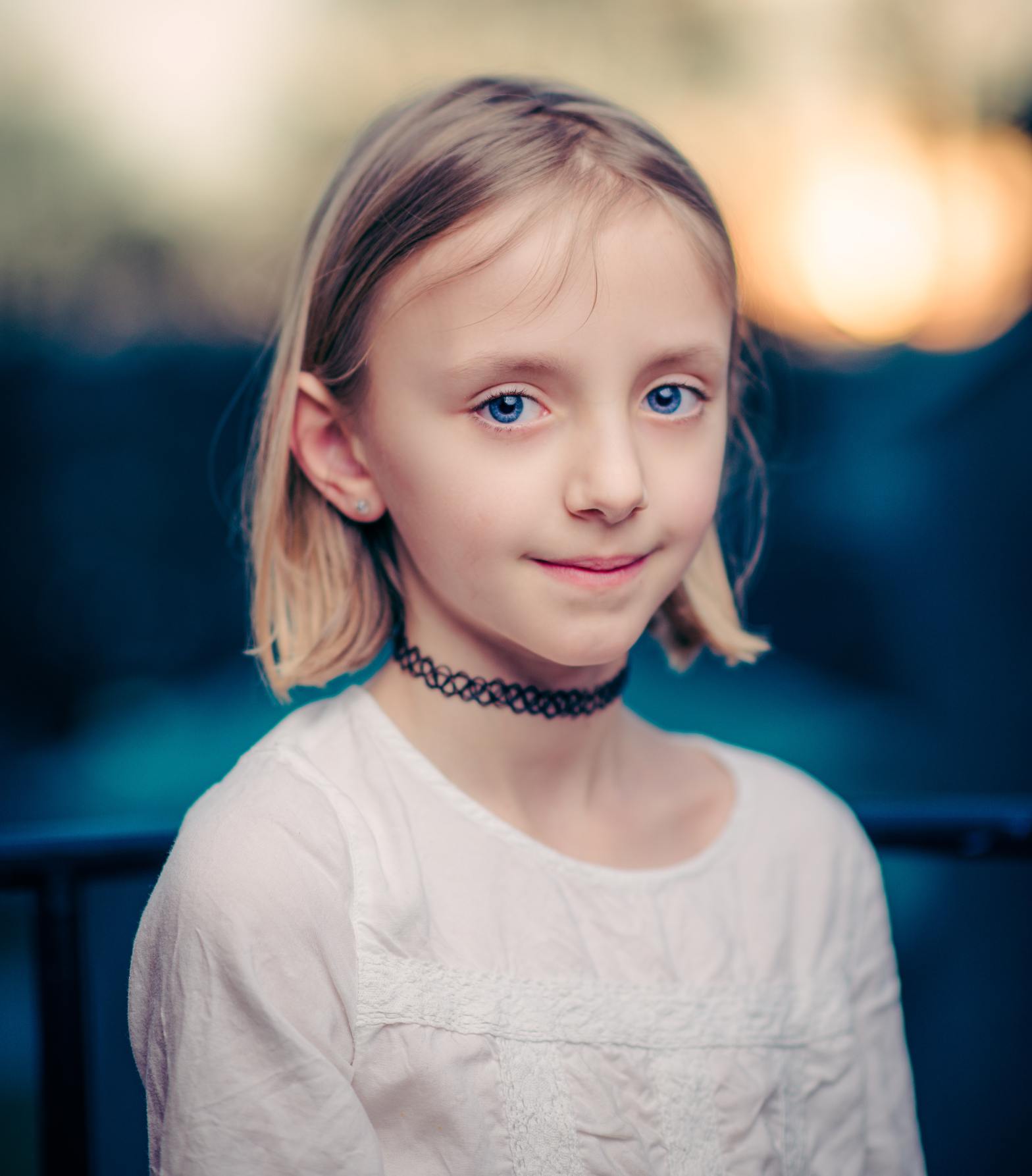
photo by 🇸🇮 Janko Ferlič on Unsplash

Every day after dinner, Mama sat with me at the dining room table to teach me Spanish. I didn’t like it. I didn’t want to say “hola” instead of “hello,” “adios?” instead of “goodbye” or “Me llamo Patrice. Tengo ocho años.”

“Why do I have to learn Spanish?” I asked Mama.

“Grandpa lives in Guadalajara, Mexico, and we’re going to visit him this winter. You can speak Spanish with Grandpa when you see him.

Reading English was hard enough. Learning Spanish words only confused me more. Besides, it was silly to learn words that meant the same thing as the words I already knew. I wanted to play jump rope, not learn Spanish.


Mama taught me more Spanish words every day. She taught me how to say the colors of the rainbow. She told me that, in Mexico, children went to una escuela instead of a school, and they counted uno, dos, tres instead of one, two, three.

One day, Mama said she had a surprise. “Today, I’m going to teach you Spanish words for your favorite games,” she said. “‘¿Quieres saltar la comba?” means ‘Do you want to jump rope?'”

I loved jumping rope. If I had to learn Spanish, at least I could think about something I liked to do. Later, as I jumped rope outside, I made a song of the new words: “¿Quieres saltar la comba? ¿Quieres saltar la comba?”


When Grandpa met Mama and me at the Guadalajara airport, he gave us big hugs. “Hola,” he said. “Como estan?”

“Hola!” said Mama. “I missed you.” I just smiled and said nothing.

“I thought you were learning Spanish, chica,” said Grandpa.

“I don’t need Spanish. You speak English, Grandpa. I can talk to you in English.”

“I like speaking Spanish, Patrice,” said Grandpa. “That’s what people speak in Mexico.”

“It’s silly, Grandpa, and I feel silly doing it,” I said. I took Grandpa’s hand and told him all about the airplane trip on the way to the car.


Grandpa’s house was beautiful. It was surrounded by high walls, but inside, all the rooms opened onto a central courtyard filled with brightly, colored flowers. A yellow-tiled water fountain made into a fish and seashells trickled into a blue-tiled basin.

I stood with Grandpa on the steps to the garden. “I’ve never seen a house so pretty,” I said, looking at all the pots of flowers.

“In Mexico, you’ll see and learn many new things,” said Grandpa. “Come, let me show you your bedroom before my friends arrive for dinner.”

Soon, Grandpa’s friends arrived. In the dining room, Grandpa introduced Mama to the grownups, Ricardo and Mari. Beside Mari stood a girl with a long black braid and big brown eyes. “Patrice, this is Anana. She is eight years old, too,” said Grandpa.

Anana took a few steps away and leaned into her mother’s skirt. Her dark eyes opened wide as she looked at me. Grandpa smiled, said something in Spanish, and the grownups walked into the kitchen.

I felt small standing in the middle of the room with Anana and her big eyes. “Do you want to play hide and seek?” I asked nervously. Anana just opened her brown eyes wider.

“Do you want to play with puppets?” I asked. “I brought some with me from my home.” Anana inched around the other side of a pillar and hid one eye against its plaster.

This isn’t any fun, I thought. Grandpa invites friends over for me to play with and they don’t even talk to me. I looked at Anana hiding behind the pillar, then ran to my bedroom.

My jump rope was lying on top of the bedspread. I crawled onto the bed, wound the rope around my hands, and thought about Anana. What big eyes she had, so dark compared to my blue ones. Anana’s black hair was longer than mine, too. I wished my hair was long enough to braid like hers.

Things in Mexico were different than at home. Anana wore a fancy dress with ruffles and ribbons. I looked down at my shorts and Tshirt. Why did she get so dressed up to play, I wondered.

There was no one to play with and strange things to get used to. All my friends were far away.

I crawled off the bed with the jump rope in my hand. The brown tiled floor was perfect for jumping, so I swung the rope over my head and began to sing, “¿Quieres saltar la comba? ¿Quieres saltar la comba?” like Mama taught me. On the third jump, I stopped singing and slowly lowered the rope in front of me.

“¿Quieres saltar la comba?” I repeated slowly, over and over again. I opened the bedroom door just enough to peek through the crack. Anana was still out in the courtyard, leaning on the pillar. I inched my body through the door and slowly walked out to her.

When she turned toward me, I held out the jump rope and asked, “¿Quieres saltar la comba?”

The brown eyes smiled. “Si, si, yo quiero saltar la comba!” She reached out, took the rope from my hand, walked out to the patio, and started jumping. I followed her into the sun and sat down on a step to wait my turn.

The sun felt good on my face. Remembering the Spanish numbers Mama taught me, I began counting out loud in rhythm with Anana’s skips, “Uno, dos, tres . . .”
Squirrel Art

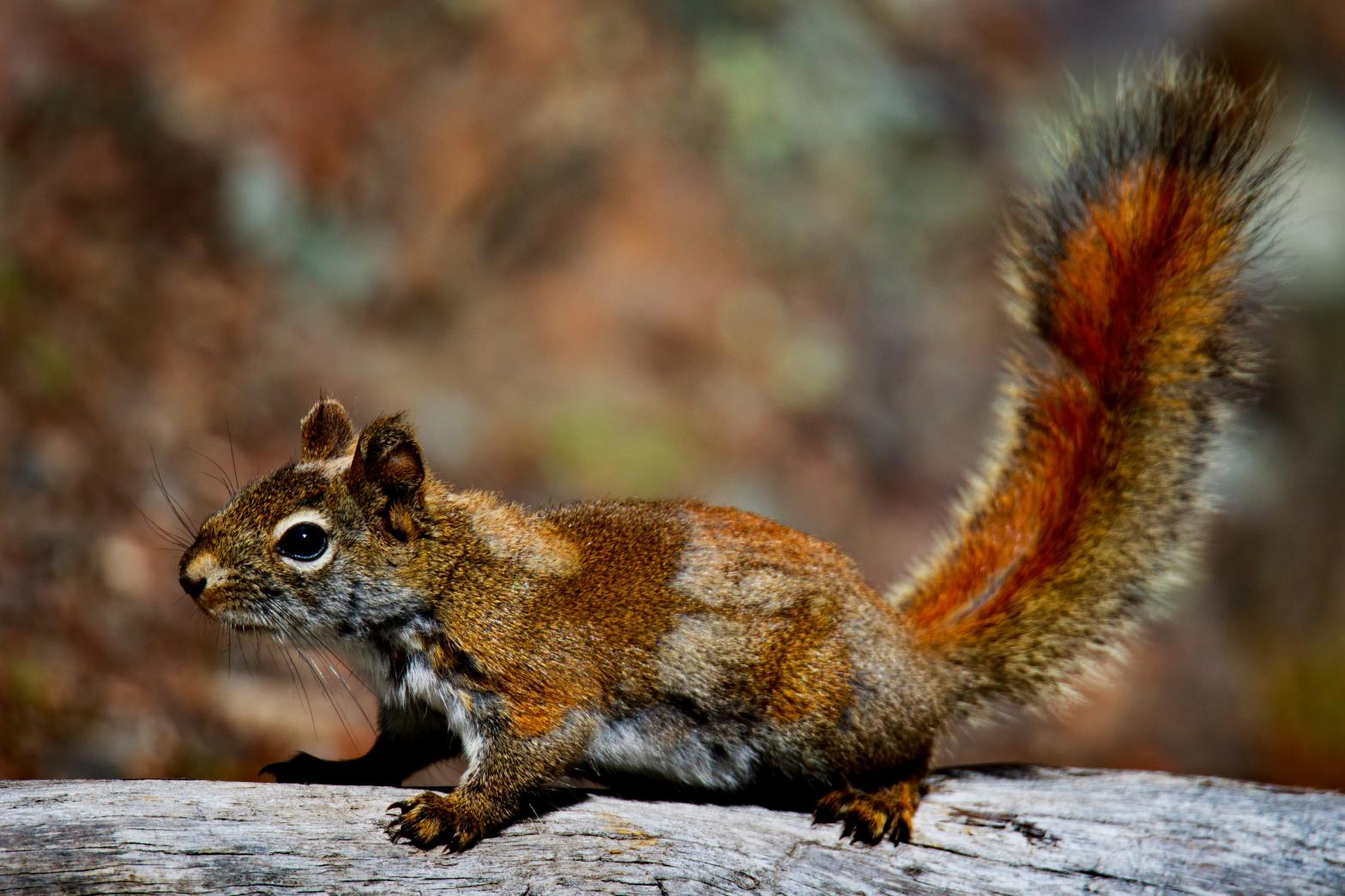
One summer day, Curly and Twirly waddled up to the school. They flatterned their round bodies, took a deep breath, and inched their way under the art room door.

“What a wonderful place to live!” exclaimed Curly. A large bookshelf held piles of colored paper. The faucet over the wide, deep sink dripped drops of water.

Using his tail, Curly opened a cupboard door. Stacked on the bottom shelf were bags of beans and flour. Using his strong teeth and paws, he dragged a sack of beans off the shelf and tore it open. Twirly kicked a bag of flour. It teetered over the edge and fell onto the floor. The cupboard’s latch tore a whole in the side.

Flour, flour, flour flew everywhere. It dusted the chairs and low table like a frosting of snow. The squirrels nibbled some flour. They cracked some beans in their jaws. They jumped up to the chairs and slid across the table. As they hurried back and forth, their paws made prints in the flour.

Curly noticed the footprints first. He stood up on his hind legs and turned all around for a better look. “Look, Twirly, our footprints make a design!” he said.

Curly stepped into the flour with both feet and made a four leaf clover. Twirly used his big toe to trace a footprint daisy. They drew straight lines and wiggly lines. They outlined pictures of all the animals that lived in the forest beside the school. They danced, they pounced, they skated all over the floor. Finally, they grew tied and fell asleep under the table.


The next morning, Curly and Twirly awoke; their back were stiff from lying on the hard floor.

“We need beds,” said Curly.

“Let’s make pretty beds, said Twirly. They chose green construction paperr that reminded them of unripe nuts in the spring. They ripped up yellow paper that looked like buttercups. The red paper was as deep as the poppies they had seen in the fields. The blue paper looked like the summer sky. Soon, inside the corner of the cupboard, they each had a rainbow-colored bed of construction paper.

The squirrels spent every day exploring the art room. One morning, Twirly reached for the handle of another cupboard and swung on it until it opened. On the top shelves, he saw row of colored liquid in jars. Inside them was the most beautiful thick dew Twirly had ever seen.

“Look Curly, delicious dew!” said Twirly. Twirly crawled onto the bottom shelf, pulled himself up onto boxes until he reached the jars of dew. His paws were too small to turn the wide, white covers. He squirmed in behind a bottle and pushed it with his two feet. It landed on the floor with a crack. Thick, yellow dew oozed from its side.

Curly climbed up and inched his body behind a red bottle and pushed. Twirly squirmed behind a green bottle and pushed. The green bottle hit the side of the table on its way to the floor and splattered green-colored dew from one end of the room to the other.

The squirrels climbed down to taste. Twirly dipped his paw into green dew, stuck it into his mouth, and slurped. “Yuck, it tastes like dirt!”

“It makes the sides of my mouth stick together,” grimaced Curly, who was trying to wipe paint off his tongue. He waved his paws in the air, flicking it off his furry paws. A pattern of dots settle all over the floor.

“Whee!” exclaimed Curly. “Wow!” yelled Twirly when they saw the dots on the floor. Curly thought hard for a minute. “The children don’t drink this dew,” he said. “They decorate with it.”

“Let’s do that, too,” replied Twirly.

Curly and Twirly spent the rest of the summer decorating their new home with colored dew, paper, and flour. Curly painted dots on the cupboard doors. Twirly created a carpet of patterns with flour and footprints. They had never been happier.


One morning, when the squirrels were still fast asleep inside their bedroom cupboard, a key turned in the lock.

“What happened here?” a lady’s voice exclaimed. Curly and Twirly rubbed their eyes and knelt behind a crack in the cupboard door to see who it was. A woman, wearing an artist’s apron, stood in the doorway. A group of children ran in behind her.

“Are you teaching us art today?” one child asked, her eyes bright and shining.

The woman didn’t answer. Her eyes opened wide as she gazed around the room. The children’s eyes glistened as they, too, noticed all of Curly’s and Twirly’s art work.

“It must have taken someone all summer,” said another little girl, “to make the art room look so beautiful.”

Curly and Twirly smiled, then hid behind a cardboard box until everyone left.

The squirrels knew they ahd to leave their comfortable home now that the children were back. They had to find new beds and more food.

As Curly and Twirly slipped under the art room door, they grinned at each other. This time, they didn’t have to leave everything behind. Curly now knew how to paint dots anywhere he lived. Twirly would always remember how to make a footprint carpet.

“I’ll paint lines on our pillow,” said Curly.

“I’ll draw zigzags on our blankets,” Twirly exclaimed.

By the time they reach the flagpole, they had thought of dozens of new ways to decorate their new home. What a beautiful home it would be.

Jumping Four Eyes

Ginger swung her jump rope over her head, under her feet, and tripped on it.

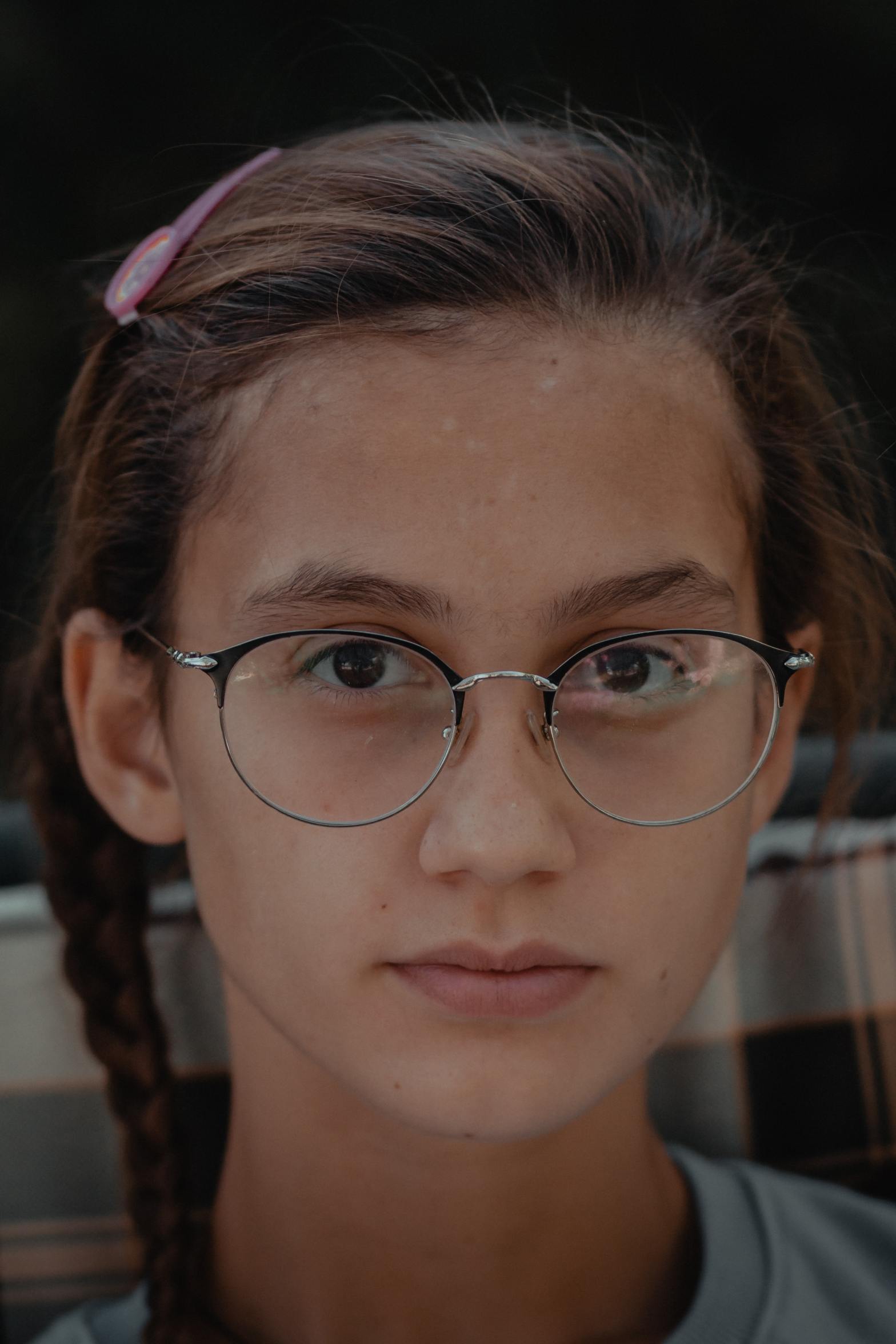
“What a dunce!” said Natasha who was skipping by. “You’re just a four-eyed freak.” Natasha’s chestnut braids fell over her shoulders as she glared at Ginger. Her hair was almost the same color as Ginger’s, not carrot red, not brown–a shade in-between. Ginger thought it shone like the cedar chest in Grandma’s hallway after it was polished.

“That’s not a nice thing to say, Natasha,” said Ginger as she poked her glasses behind her ears and back up her nose.

“Well, it’s true.” Natasha grinned, flicked back her braids, and skipped away.

“She is so pretty and smart, thought Ginger. I wish she liked me.

The next day, Kimmie, who also wore glasses, walked up to Ginger holding a jump rope. “Do you want to jump together?” she asked.

“Sure,” said Ginger. “Can you do this?” Ginger swung her rope over her head, crossed her arms in front of her and jumped through the rope.

“I’ll try,” said Kimmie. “Let’s do it together.”

The two girls jumped. Just as they crossed their arms, Natasha walked by. Ginger tripped on her rope, and Kimmie’s left foot got caught up in hers.

“Now I see two four-eyed freaks,” said Natasha.

“There’s nothing wrong with wearing glasses,” said Ginger.

“Except you can’t see anything,” answered Natasha. “You can’t see even as far as your own feet.”

“We can see just fine,” said Ginger. “Come one, Kimmie, let’s go somewhere else.

That night while Ginger lay in bed, she thought about Natasha. Why did she tease her about her glasses? She was just as fun to play with, just as talented and smart. Last week, she and Natasha both got one-hundred percent on their math tests.

If I’m teased about my glasses, thought Ginger, other kids might be, too, so she decided to do something about it.

The next morning, Ginger searched through her bookcase to find her book about jump rope rhymes. At recess, she asked Mrs. Humphrey if she could borrow a long jump rope from the P.E. equipment. With the rope in her hands, she invited Kimmie and her friend Austin to jump with her.

“If we practice, we’ll be the jump rope experts on the playground,” said Ginger. We can use my rhyme book, but we must agree to some rules first. When anyone makes a mistake, the rest of us can only say something kind, like “Good try.”

“Great idea,” said Austin, adjusting his glasses.

Kimmie and Austin took the rope handles and beat out a rhythm on the asphalt.

“I’ll start out jumping and see how far I can go,” said Ginger. She jumped into the swinging rope. At the count of seven, she tripped on her shoelace.

“Hey, four-eyes, I knew you couldn’t see as far as your feet,” yelled Natasha from the monkey bars. Ginger sighed, then squatted down to tie her shoelace.

“Good start,” said Kimmie. “Natasha doesn’t know what she’s talking about.” Kimmie chose a rhyme and started to jump:

Candy, candy in a dish
How many pieces do you wish?
One, two, three, four, five . . . 

Kimmie jumped to twenty. As she counted through the twenties and thirties, dozens of kids gathered around to count with her. They counted to fifty. They continued to sixty and seventy, clapping in rhythm with the rope. “Seventy-six, sevety-seven, seventy-EIGHT!” breathed Kimmie, dropping to the ground holding her side.

“Wow!” exclaimed Ginger. “You did great , Kimmie. Austin, you’re next.”

“I plan to get a little fancy,” said Austin. “Just watch.”

Benjamin Franklin went to France
To teach the ladies how to dance.
First the heel, then the toe,
Spin around and out you go.

As he sang, Austin placed his heel on the ground, then jumped. He pointed his toe. On the last line, he twisted himself around in the air, skipped over the rope, and ran out to the side. Squeals of delight erupted from the crowd. Everyone cheered and clapped.

Day after day in the playground, Ginger, Kimmie, and Austin sang rhymes from Ginger’s book. More kids joined them. Austin jumped as the girls raised the rope higher and higher.

Ginger practiced after school. She tied one end of the rope to a ladder rung on the swing set in her back yard and asked her brother Ron to turn the other end. Finally, one day while Natasha watched from the bars, Austin sang a rhyme from the book about the face of a clock. Two new jumpers, Holly and Henry turned the rope ends, Kimmie skipped in the middle of the rope while Ginger skipped all around her. She didn’t trip even once.

Boys and girls clapped in rhythm with them, laughed when they heard their rhymes, and complimented them on what good jumpers they were.

The next Monday, while Ginger was jumping to a tune about the Mississippi, she missed a beat. The rope hit her in the nose and her glasses fell off. Tears filled her eyes and trailed down her sweaty cheeks. She pressed her nose with her fingers to stop the pain.

“Good try, Ginger,” said Kimmie as she picked up her glasses and patted her on the back.

Ginger checked to make sure her glasses weren’t broken, then put them on. She noticed Natasha walking up to her, so she turned around and walked away. She didn’t feel like being insulted, again.

Someone lightly tapped Ginger on the shoulder. She stopped, wiped her face, and turned around. Natasha was staring at her only two feet away. “I’m sorry you got hurt,” she said, taking in a deep breath. “You guys are really good. Could I jump with you?”

Ginger stared at Natasha’s braids for a minute. Each one was tied with a bright, yellow ribbon. “I thought you didn’t want to play with people who wore glasses.”

“I was wrong,” said Natasha. “It doesn’t matter if someone wears glasses or not. You guys are having so much fun. I really want to play with you.”

“I want to play with you, too,” said Ginger, grinning. She started running back to Kimmie, Austin, and the others. “Come on, you’ve got a lot to learn about jumping!”

Bluebells

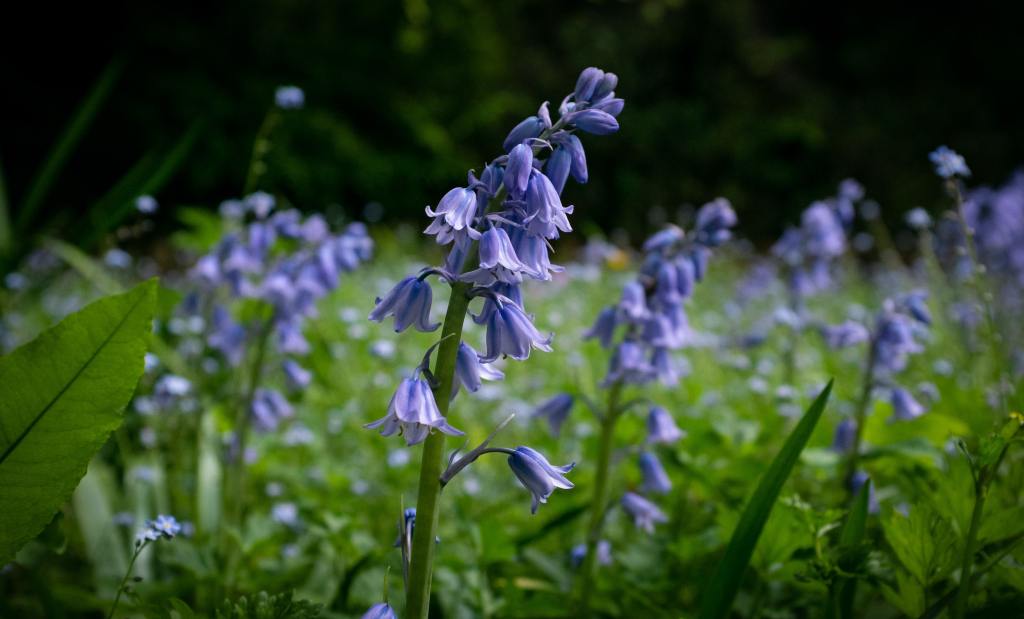
            When my mother was rested and happy, her eyes were the color of bluebells.  During late March in England, bluebells carpeted the forest and unfarmed hillsides.  Each blossom was a bell, a delicate invested cup the color of a late summer sky, rolling over acres of mature cornfields.  A sky on a day after the rains have stopped, unadorned and simple in beauty.  Their petals are the color of periwinkle, like cold water lapping over a pool of shallow rocks beside a shore of snow.  The blue of smooth silk dresses and spring tablecloths.  In full bloom, these blue cups tilt toward the sky hiding the earth with a shimmer of sapphire sheen.

            When I was eleven, I stood at the edge of the bluebell meadows, feasting on their color.  Running back to the house, I grabbed the bucket used for scrubbing to carry the bluebells that I wanted to take home. 

            My mother’s home was lacking in softness; beauty took a back seat to the basic necessities involved in caring for her ten children.

            Then, in my mother’s life, the day included no time for picking and arranging flowers.  She woke up children, fried bacon and eggs, supervised the wearing of school uniforms, matching socks, coats, and hats.  In the mornings, she gathered piles of laundry, washed it, ironed shirts, smoothed tablecloths, swept floors, and made beds.  Dinner was such a tremendous feat to accomplish that its beginnings were initiated right after breakfast.  My mother’s daily crowning achievement was sending her children to school with clean hands and clothes and feeding them a hearty dinner each night. 

            The bluebells started at the edge of the trees.  As I entered the woods, my legs became tangled in the cluster of their stalks.  Crouching into the sea of blue, I found the base of each flower, gently bent its stalk, and twisted it loose.  Milky nectar oozed over my fingers and down my forearms like pancake syrup, sticky and viscous. I held the flowers close to my face to inspect the little bells as they shook in the breeze like bells around the necks of cows walking through a pasture.  Then, carefully to prevent crushing them, I placed each long stem into the bucket so the blossoms poked out of the top. 

            On the way to a full bucket, I examined the hairy moss on the barks of trees and the other gifts that the woods offered.  In-between picking the bluebells, I cradled fallen chestnuts from under the greening trees, cracking their hulls and rubbing the shiny boot-brown nut underneath with my sticky hands.  In the hollows between the trees, I found walls built with old dead tree branches, scattered rocks, and other debris from the forest floor.

            Eventually, the bucket was full, and I skipped home with it swinging from my arm like the milk maids that I read about in fairy tales who carried pails full of milk from the barn to the house every morning. 

            I took out my mother’s two empty vases and filled them with flowers for the dining room table and the bookcase in the living room.  After these were arranged, I stooped down to the cupboard where my mother kept empty jars, jars used for everything from leftover dinner vegetables to fish bowls for the brown fish we caught in the pond on the other side of the woods.   I picked fat jars with large openings.  When I tucked the bluebells inside them, they were transformed into wide-mouthed jars of crystal.  The stalks showed straight and strong through the sides of the jars, and the bursts of bell blossoms sprayed over the ridges, bursting with profusions of blue so intense that, as I admired them, I felt like my feet rose off the floor and my heart fluttered like the wings of a hummingbird. 

            Once the bucket was emptied, every room in the house was accented by a bouquet of bluebells . . . on a dresser here, table there, or a windowsill. 

            My mother passed me as I stood back to appreciate their beauty.  Her eyes creased into jewels, and, at that moment, her irises were the same hue as the petals of the bluebells, even though she wasn’t rested and had a whole list of things to do that day.