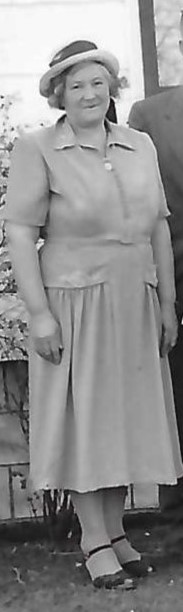
The Sugar Cookie Grandma

Grandma Lillian in her 40s

Back in my grandmother’s day, women didn’t get much notoriety, so I decided to write a blog about my Grandma Lillian. She’s not famous, but she deserves some long-overdue attention.

Grandma Lillian was born in Winona, Minnesota on November 9, 1903. Both of her parents’ families were originally from Trhove Swiny, South Bohemia, which is now part of the Czech Republic. This town dates back to the 1200s as part of an ancient trade route. In the 1400s, King Vladislaus II, who was then King of Bohemia, authorized the town to build a market. The town’s name comes from the Czech word trh which means market. The two most popular sites in Trhove Swiny are The Most Holy Trinity Church, which replaced a Catholic pilgrimage chapel, and an iron mill called Buškův hamr.

My Grandma Lillian, however, never visited the Czech Republic. In fact, she never traveled outside the United States except for Canada. She was a short woman, less than five feet tall, and a little plump. When she first married my grandfather Leon Jr., she lived in his father’s house on an 800-acre piece of property that is now a Minnesota State Park. Later, she and her husband bought their own house in Goodview, a town next to Winona. The house was painted white and sat on a flat parcel of land covered in shamrock green grass with a large vegetable garden in the back. Her brother Leo lived next door.

Grandma Lillian’s House in 2022

Grandma Lillian had five children, including my father who was the oldest. Then came David, Mary, Gerald, and Daniel. My father moved to California with the United States Air Force which stationed him at Mather Air Force Base. Once my parents came to California, they settled down to stay.

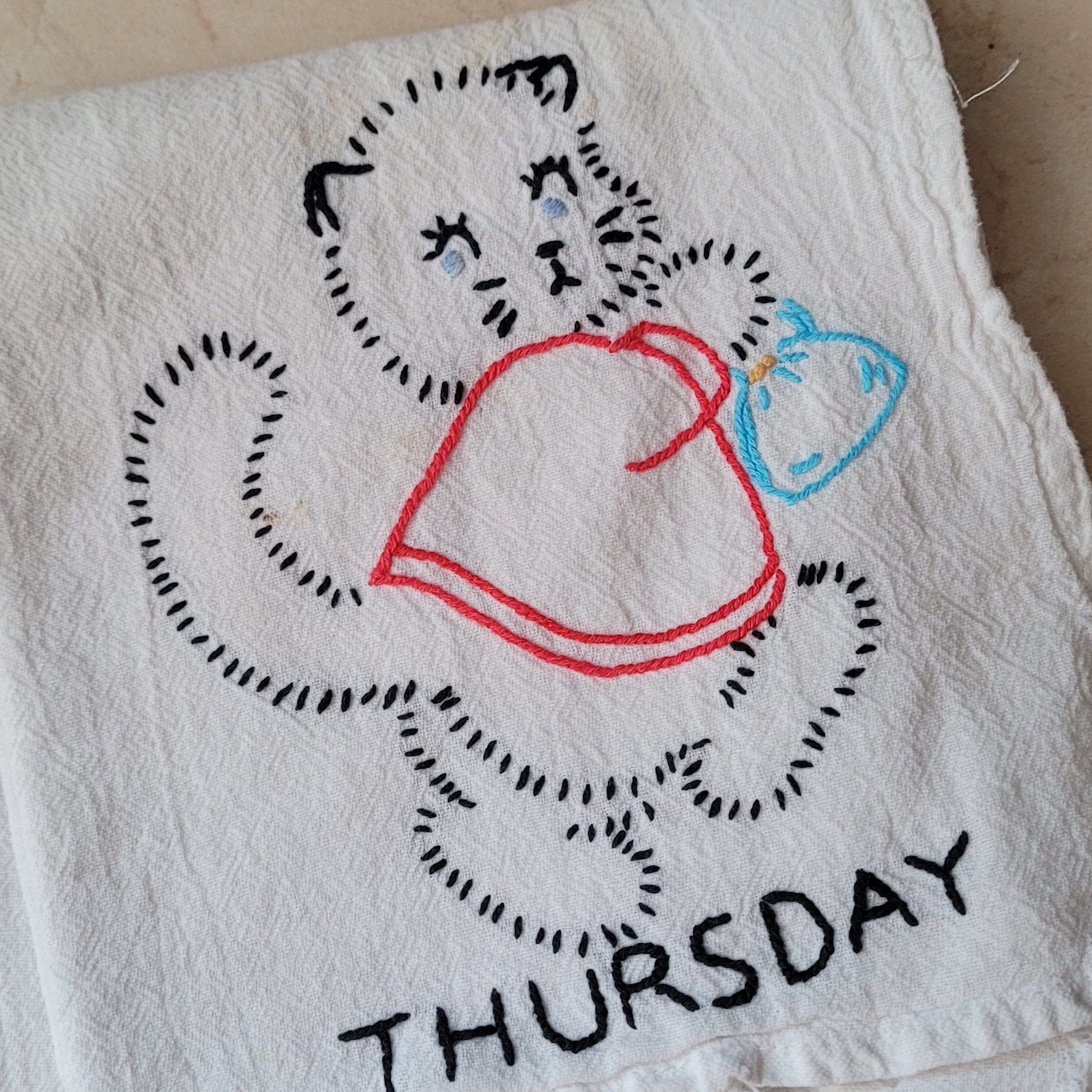
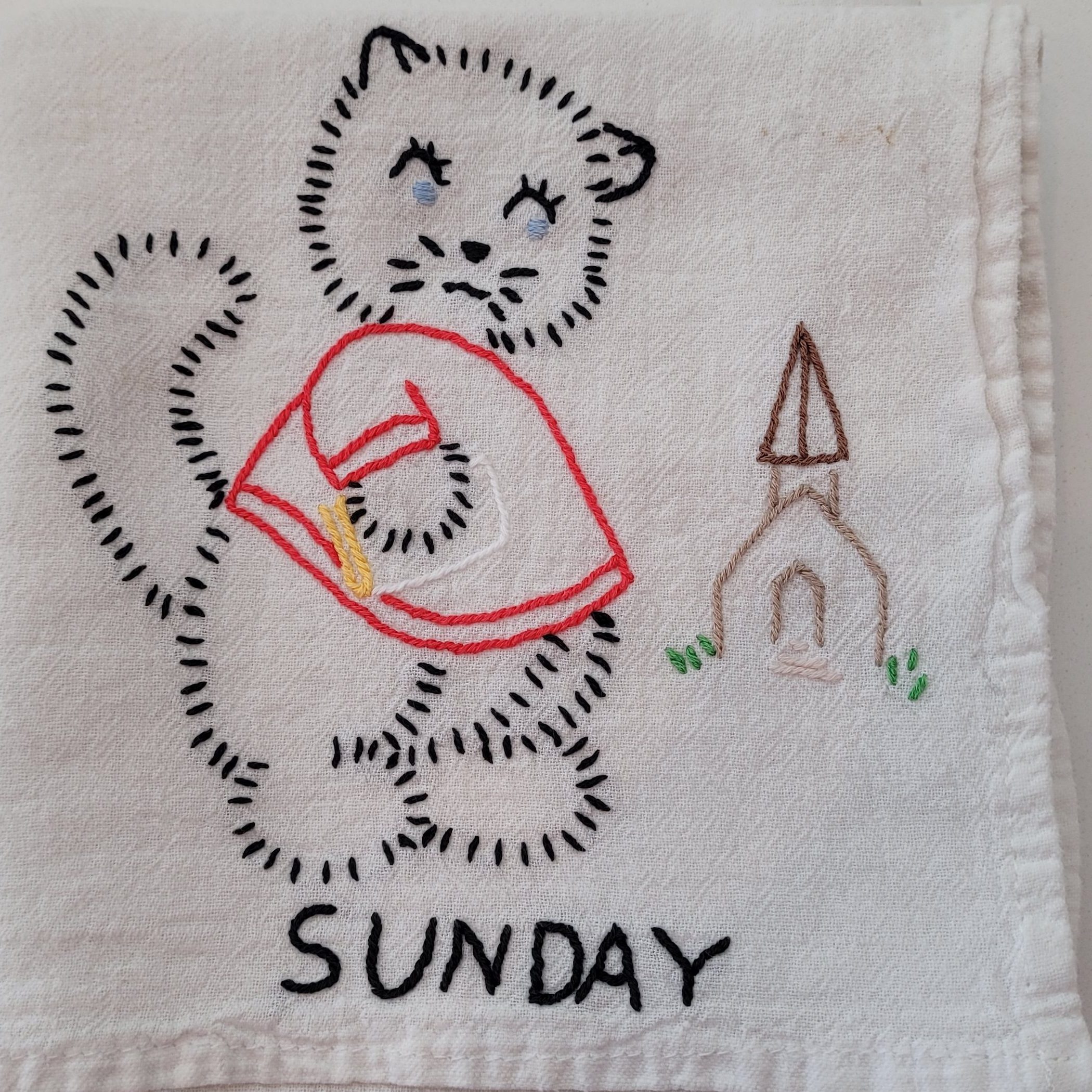
Grandma Lillian took the train to California several times to help my parents when my mother was in the hospital having another child. During these times, I learned about who she was as a person. I watched her embroider cotton tea towels, one for every day of the week. For each day, she embroidered a kitten performing a different kitchen task with one exception. For example, on Thursday’s towel, the kitten was carrying a tea kettle to the stove. On Sunday, the kitten was not doing kitchen work since she was going to church. She taught me how to embroider, but I was too impatient to make the stitches neat.
Even though Grandma Lillian didn’t ever travel to Bohemia, she used many recipes that came from the old country. She was famous for her Refrigerator Pickles. To make these, she combined seven cups of sliced cucumbers and one sliced yellow onion with a tablespoon of salt. She let the salt leach some of the water out of the cucumbers for about an hour. For the dressing, she combined one cup of vinegar, two cups of sugar, and one teaspoon of celery seed. She poured this over the cucumbers and stored the dish in the refrigerator to use as needed. By the time her recipe reached my family, we were eating the pickles as a side salad, all in one day.

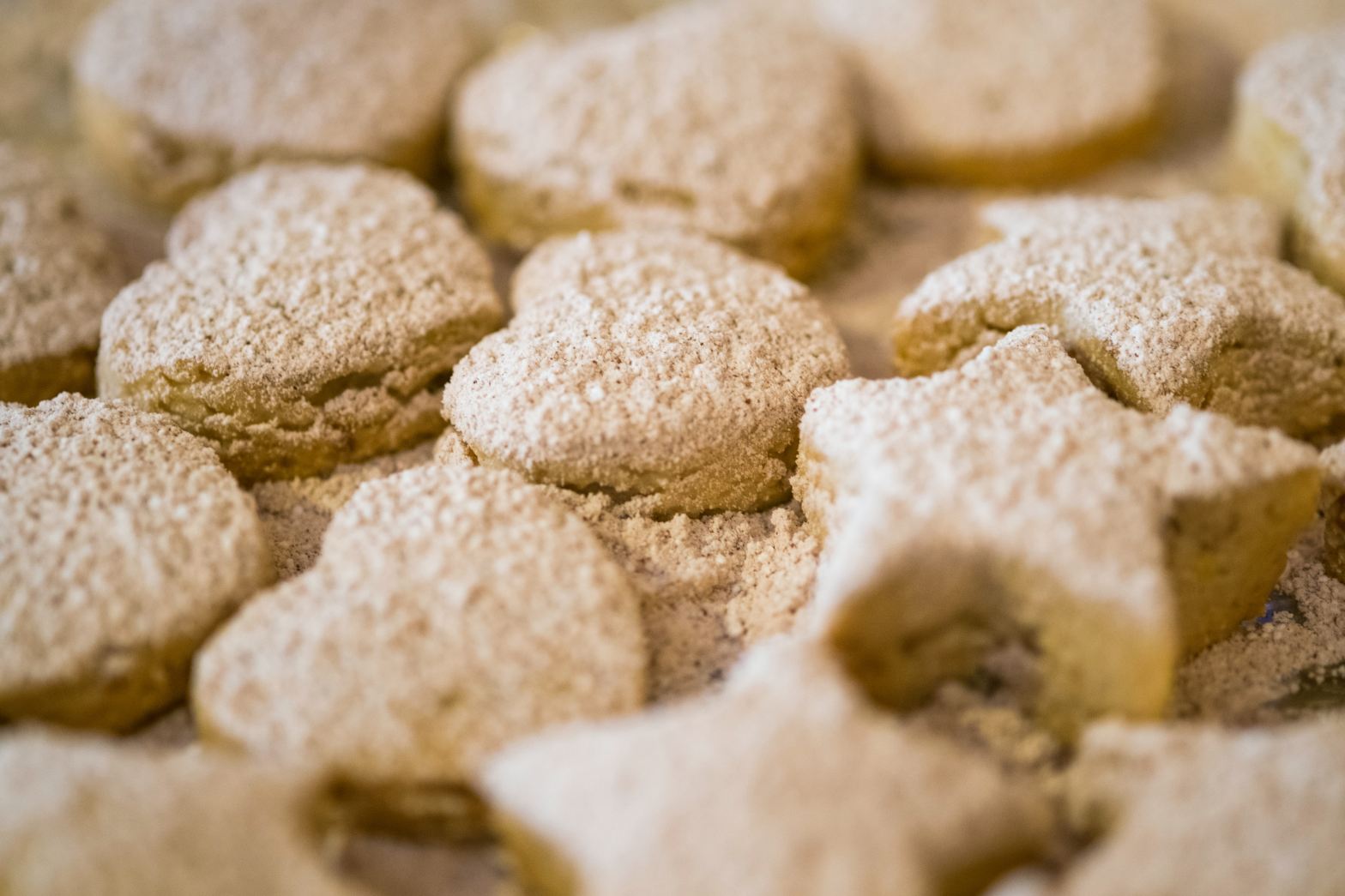
My favorite memory about Grandma Lillian was how she made sugar cookies. Maybe we didn’t have cookie cutters. Maybe we didn’t have the shapes of cookie cutters that Grandma wanted. I don’t recall, but I do remember how Grandma folded a piece of newspaper in half and used scissors to cut out a heart about the size of her hand. Then she placed the heart shape over the rolled-out cookie dough and cut the dough with a sharp knife to make heart-shaped cookies. She placed the hearts on a cookie sheet and decorated them with colorful sprinkles. When we ate them warm out of the oven, they were buttery sweet.

Grandma loved to garden both vegetables and flowers. Many days, she spent hours out in her garden weeding, pruning, harvesting and enjoying the ambiance. My father inherited her green thumb since he also cultivated a big garden every year to feed his family.

Grandma Lillian was in her garden when she died on July 16, 1991. The weather was over 100 degrees, and my cousin Karen found her late in the day. Now, she is buried next to her husband Leon and her youngest son Daniel in a country cemetery. She didn’t become a movie star, a Congress woman, a Supreme Court judge, or even a newscaster on television. Yet, she lives on in the lives of her thirty-one grandchildren and more than forty great-grandchildren. That’s an accomplishment of which I am proud.
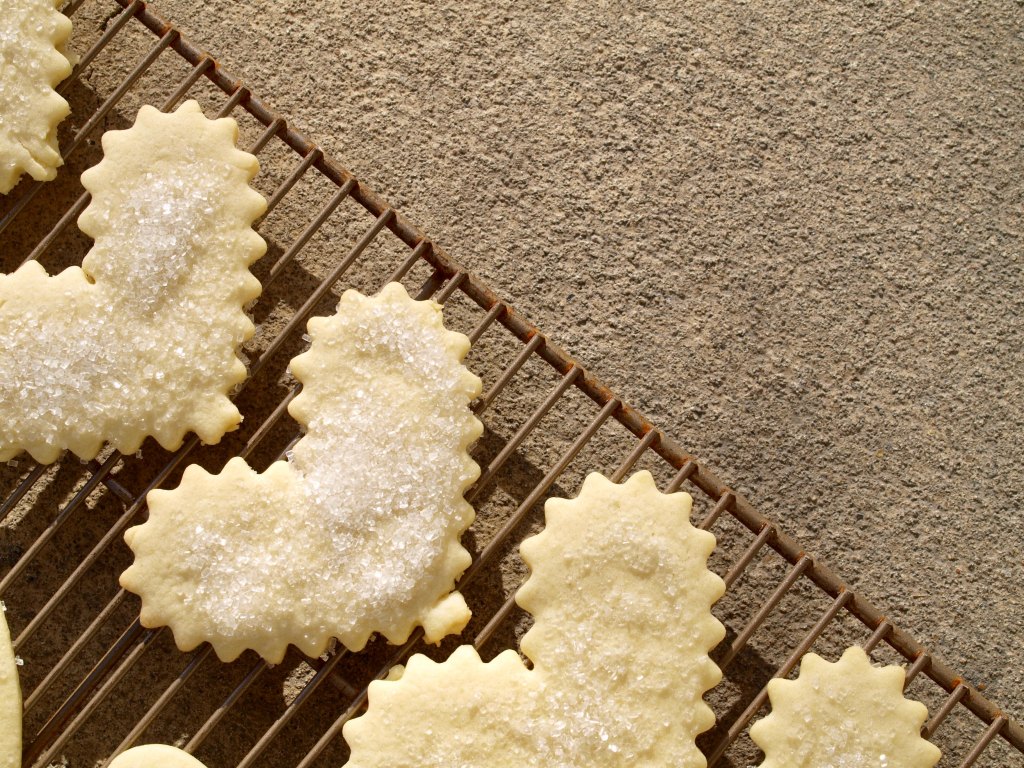
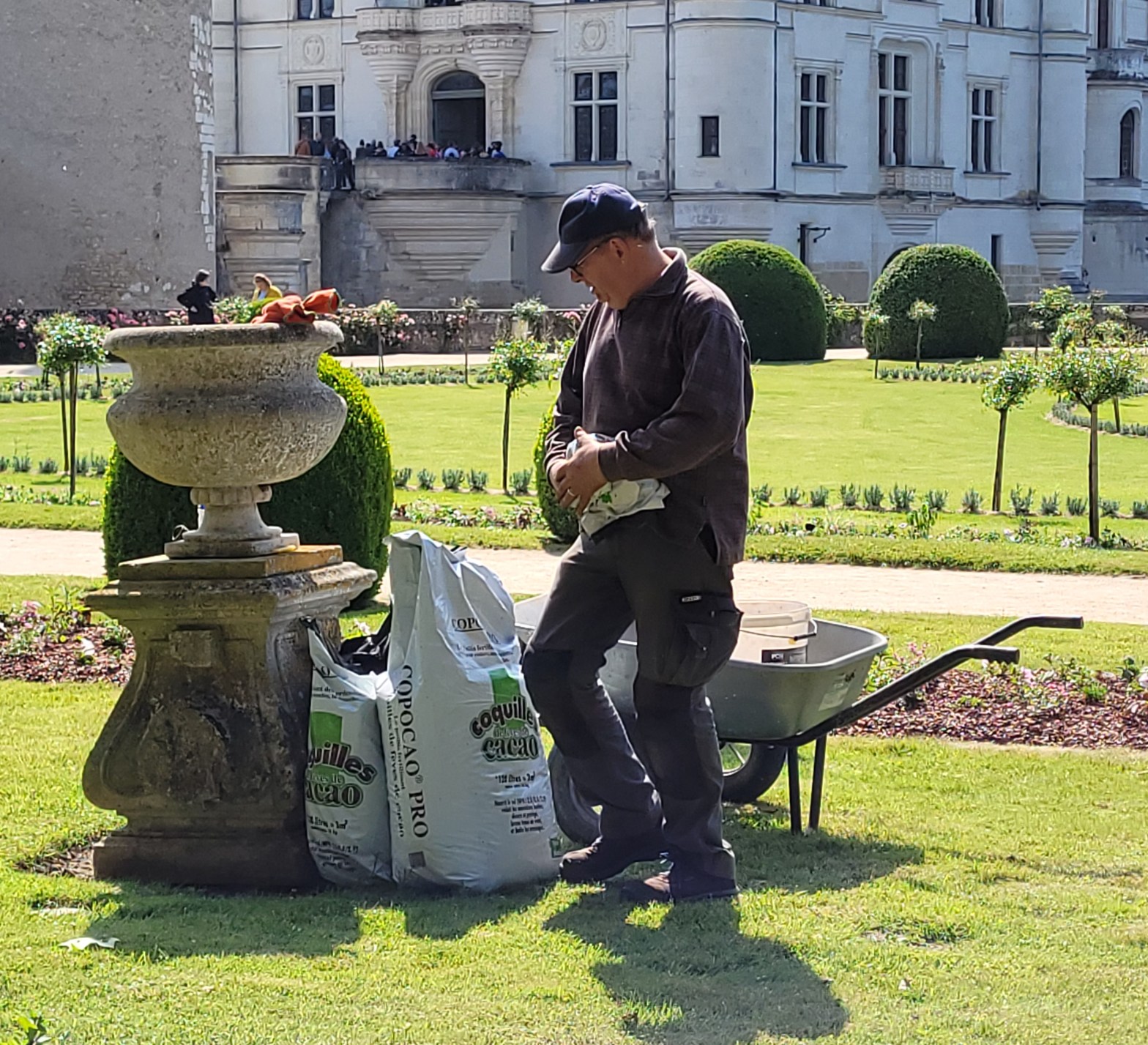
Photo by Diane Helentjaris on Unsplash

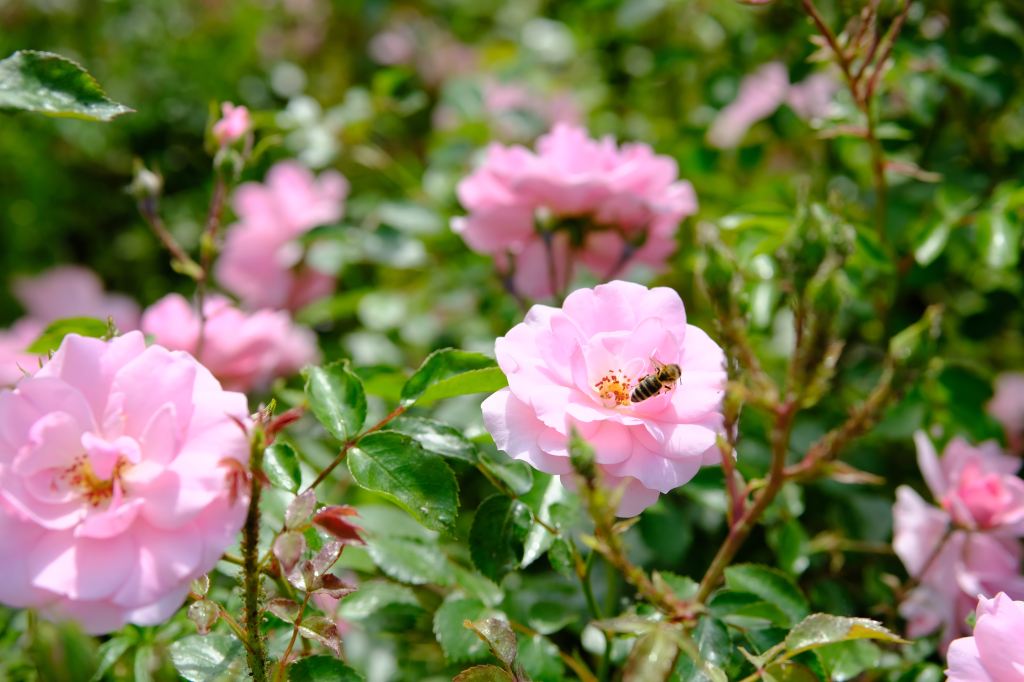
How French Chickens Saved My Roses

A few months ago, I was touring through the gardens of Chateau Chenonceau in the Loire Valley in France with my husband. A guide had told us that the chateau used organic gardening methods for all the plants. As I walked past the gorgeous rose bushes, I wondered how the gardeners made them so healthy and beautiful. They had no black spot disease, no pests, and their blooms were vibrant and vigorous. What was their secret?

As I was about to leave the gardens, I saw a man leaning over a rose bush while sprinkling something brown around its base. Nearby, leaning up against an ancient stone urn next to his wheelbarrow, were two bags of coquilles caocao. I have had enough French training to know that the bags were full of chicken manure, and he was fertilizing the roses with them. This momentary experience transformed me from a chemical rose grower to an organic rose gardener with much better results. Here’s how I care for my roses now, and they have never been more beautiful.

Chicken Manure

I have roses under the window in my front yard, on my side yard, all along the lawn in the back, and a raised bed of my prized tea roses on the other side of the house. I’ve fertilized them, sprayed them, clipped them and I’ve always had problems. As soon as I got home from France, I bought six bags of chicken manure and spread it at the base of every rose bush. I was smelly. The mosquitoes seemed to like it, too, and they bit both me and my husband. I drank wine in my lawn chair with the smell in my nostrils. But it was worth it. Slowly, day by day, the rose bushes became stronger and their diseases cleared up. I didn’t use the fertilizer or disease control liquid at all. The chicken manure, which contains large amounts of nitrogen, phosphorus, and potassium, revitalized my roses all by themselves. And that smell, it’s gone now.

Vinegar Water

It took several days to almost two weeks for the chicken manure nutrients to be absorbed by the rose bushes, and while that was happening, some of the rose bushes had mildew. I did some research and found another organic solution to this problem. In an empty spray bottle, I combined a quarter of a cup of apple cider vinegar and one quart of water and sprayed it on the mildewed leaves of stems. I kept this container of solution near my tea roses so it was easy to use whenever I found problems. It worked. Now, two months after first applying the chicken manure and spraying the mildewed stalks and leaves, my roses are as healthy as the roses at Chateau Chenonceau.

Bone Meal Fertilizer

I was on a roll, and I kept reading about organic gardening for roses. What I found out next is that bone meal is good for promoting blooms. Its phosphorus and calcium strengthen the plant and promote bloom growth. I applied the bone meal, and low and behold, my roses staring producing more roses that ever before. I also gave some bone meal to my African irises, and they gave me the most beautiful white, yellow and purple irises I had ever seen. I only have to apply bone meal every four months since it releases its nutrients over time.

Clipping Old Blooms

I have known that a good rose gardener should clip off the old roses in order to preserve the rose plants energy for the new blooms, but when my plants were diseased and ugly, I had little incentive to do this. In the last two months, however, I’m excited to take a pair of sharp clippers and to snip off the spent flowers, making sure that I cut the stalk just above a five-pattern of leaves. While I’m clipping the old blooms, I also clip the vibrant flowers to take into the house to enjoy in a vase on the table.

I never expected that my life would be changed by walking through an ancient garden in France. Even though my roses didn’t go to France with me, I brought them back something better than a souvenir: healthier lives.

Photo by Yuliia Dementsova on Unsplash

Fabulous Fred

Some people are more memorable than others. They pop up in your mind. You visualize their wicked grin, beguiling smile, or musical voice as you recall old travels or past meetings. Recently, when I toured France with Insight Tours, I met such a man, and his name was Fred.

My fist exposure to Fred was an email he sent me before the trip started. The note contained clear details about where to meet in the hotel and what I had to do to label my luggage as part of the tour. Fred’s words were business-like and direct. He signed his name Frederique, but suggested that we call him Fred.

Fred dressed in a well-ironed red-and-purple-checked button-down shirt over a gray pair of casual trousers. His head was bald and he had a salt and pepper mustache and closely-cropped beard. It didn’t take long for this trim, conservative and snappy dresser to impress me. These are the qualities that he possessed to make him the best tour director I’ve ever had.

Clear with Directions

I came to appreciate Fred’s detailed directions, especially when he let us wander in the middle of ancient French villages and described how we could find the bus at the assigned time. He made use of landmarks such as the gothic church or the town hall. He used his arms to indicate left and right and repeated the directions as many times as we asked him. He seemed to understand that many people didn’t listen well until they realized they had to rely on themselves to find their way.

Timely

Whenever it was time to meet, Fred arrived first. He finished breakfast before us and waited for us in the lobby. He was at the bus at all the designated times, and he made sure that our luggage was picked up from our rooms and loaded into the bus timely.  How? He helped the hotel bellhops gather it and transfer it outside so as not to delay our departure.

Personable

Fred turned out to be a friendly and approachable human being. Every morning, when the bus started moving toward the next destination, Fred wished us Bonjour. After we responded, he continued with Avez-vous bien dormi? Did you sleep well? When we responded negatively, as many travelers might, he taught us a more positive way to answer that question. Say oui first, and then indicate how you might sleep better next time, coached friendly Fred.

He joked about his baldness and described how he once had a mop of hair in his twenties. On Day 2, he sprained one of his fingers moving our luggage and, most unfortunately, a pigeon defecated on his head in the middle of a town square. Neither of these incidents ruined his sunny demeanor. He allowed two tour members to clean the pigeon poop off his head and shirt and continued the tour with humor. 

Later in the tour, he was comfortable enough to describe his recent bout with cancer, showing that he was just another human being with human problems. Since many of the travelers were seniors, I’m sure they felt more at ease with him since many of them had suffered from medical problems themselves.

Caring and Attentive

Fred demonstrated sensitivity to all of us in many ways. He stood at the bottom of the bus steps and helped us climb safely to the ground. He also instructed the bus driver to stand at the other door and do the same.  When we stepped down, he smiled at each one of us as if we were the most important person on the bus.

One of the single tour members appeared to have a memory problem and Fred always made sure she was back on the bus and physically safe. He never complained that she was forgetful or not walking as fast as the rest of us. He simply took care of her kindly.

Interesting and Informative

The tour covered the country roads of France, which means, sometimes, our bus driver would drive us over remote mountain passes, into narrow tunnels, or over roads that circled country vineyards and farmland.

We were never bored while touring these far-flung French trails since Fred provided us with detailed and stimulating lectures that described what we were seeing and what the history of the area was. For example, when we were approaching Arles, where Vincent Van Gogh lived for many years, Fred revealed that the artist painted over 300 painting in Arles, but sold only two. While we drove through the walnut groves of the Dordogne Region, Fred explained that every part of the walnut tree was valuable to the French farmer. The nuts are sold for food, the shells are used as fertilizer, and the wood is used to make furniture. After listening to Fred’s lectures, I felt a little smarter and a little more French-savvy.

Resourceful

Several times throughout our trip, Fred informed us that he and our bus driver had poured over the map and found new country roads to explore that day. He assured us that the driver was an expert driver so we were sure to enjoy the new adventure.

Another way that Fred proved his resourcefulness was when we stopped in various places and he went out of his way to improve his understanding of the area. For example, when we visited Pont du Gard, a three-storied Roman aqueduct in the Languedoc Roussillon Province, Fred climbed up the trail beside the structure to view the third level, something he had never done before.

Helpful to French Travelers

In my past visits to France, I have had negative experiences with French people. Waiters ignored me. People on the street merely walked away when I asked them a question.

Fantastic Fred provided us with a remedy for situations like this. He explained that French people learn English in school, but when tourists come up to them and ask them a question in English, they freeze, once again experiencing those dreaded English classes.

Fred recommended that we approach French people with a polite Bonjour and allow them a moment to warm up to us before launching into our English question.

I put this method into action. Whenever I entered a shop, I said Bonjour to the shop clerk. Each time, I was rewarded with warm eyes and a smile. If I wanted to use a restroom in a restaurant where I wasn’t eating, I said Bonjour to a waiter, then asked to use the restroom, and the waiter never turned me away. Fred’s method seemed to be foolproof.

Funny

Who doesn’t like a comic? On the first day of the bus tour, Fred demonstrated that he had a repertoire of jokes in his tour director cache. The first joke he told us was a parody of the French people according to the Germans.

The joke went like this. When God made France, he created the dazzling Alps to the East, the stunning and bountiful Atlantic Ocean to the West, the beautiful Mediterranean to the South, fertile farmland, prolific vineyards, and bountiful orchards, ample rain, and plentiful sunny days. No other country had been blessed with such advantages.

The Germans were upset, and they asked God why he gave France so many wonderful characteristics. They insisted that it just wasn’t fair.

Upon hearing the Germans, God became contemplative. He thought and thought and thought. Finally, to balance everything out, God made the French people.

When we heard the punchline, the bus erupted in raucous laughter. You would think that we were laughing at the French people, but Fred was quintessentially French, so his joke helped us appreciate their humanness instead of thinking poorly of them.

Here’s another joke by Fred that had to be told in English to be funny. What do you call someone who jumps into the Seine River?

Answer. In Seine.

It takes a certain personality to tell a joke well. Fred could do it because he wasn’t afraid to be self-deprecating and he was naturally good-natured.

I will remember Fred every time I travel on a tour. I’ll unconsciously look for his snappy ensemble in every hotel lobby and wistfully hope that he comes walking through the door to lead us on another well-organized, comfortable, informative, and fun adventure.

My Aussie Lesson

Photo by James Wainscoat on Unsplash

I know this post may reveal my ignorance about a major country of the world, but let’s face it. Australia is far away from most places. I’m not used to thinking about this down-under country unless their government does something incredible like it did in 1996: banning assault weapons within two weeks of a mass shooting in Port Arthur, Tasmania.

I, however, recently spent over three weeks in France with about twenty Australians, who dominated the atmosphere of our bus rides and dinner conversations with their jolly personalities and proud Australian heritage. Here is what they taught me about their country and themselves.

The Aussie Name for the U.S.

My new friends consistently referred to the United States as America. Australia is on the other side of everywhere, so maybe they had never heard of Canada, Mexico or any of the countries of Central or South America. They pronounced America with wistfulness and admiration, while, at the same time blinking their eyes, then looking briefly toward the horizon as the shadow of a smile lit up their lips. My heart swelled with pride and warmth knowing that my home still generated such positive vibes.

States

As the United States adopted the names of its 50 states, it chose both creative and unique names such as California, which originated from a Spanish romance novel, named after an island located close to Paradise.

Australia has six states with less original names. Whoever came up with the names Western Australia and South Australia either lacked imagination or ran out of time. The states Queensland, New South Wales, and Victoria, regrettably, represent a devotion to England more than they do Australia. Only the state’s name Tasmania, an island southeast of the country shows any modicum of ingenuity, named after the Dutch explorer, Abel Tasmin, who first sited the island in 1642.  

Apparently, both Tasmin and Christopher Columbus thought 1642 was an excellent year for finding new lands.

Australia’s National Dessert

Apple pie? Pumpkin pie? Ice cream? I did a little research, but I couldn’t find any conclusive evidence that the United States has a national dessert. In contrast, my new Australian friends were adamant about the existence of a national Australian dessert called pavlova. This round dessert consists of a crispy meringue outside, a soft interior, and fresh fruit and whipped cream on top. The Australians eat it all summer and for special occasions.

What’s so funny about this dessert is that it was named in honor of a Russian ballerina who visited the country in the 1920’s, Anna Pavlova. I guess if you’re going to name a state after a queen of England, you can name your national dessert after a Russian ballerina.

An Aussie Kind of Domestic Terrorist

In Northern California, deer sometimes jump fences to chew off the roses on bushes, but what kind of fence could keep a hungry kangaroo out of your garden? My Aussie friends have a kangaroo problem.  In their neighborhoods, kangaroos break through fences, trample flower beds, gnaw on trees, savor all kinds of fruit, and feast on flowers and shrubbery. 

My image of a friendly kangaroo mommy with her baby poking out of her pocket has been shattered.

Upside-down Seasons

Because Australia is located in the Southern Hemisphere, the country’s seasons are reversed from those up north. Australia’s fall is at the same time as the northern spring. Their winter is our summer. Their spring is our fall, and their summer happens when we’re celebrating Christmas and Hannukah.

Honestly, I knew this, but I’m so surprised at how much confusion this difference caused during conversations about weather and holidays. I found myself tilting my head to the side, as if I was preparing to do a cartwheel, and blinking my eyes as I attempted to clarify the vision of Santa Claus wearing shorts and sunglasses while sliding down a cold, unused chimney.

Outgoing Personalities

All the Aussies on our tour were bold, outgoing, and confident. Not only did they make up the majority of our group in number, but they made most of the noise. I’ve never considered myself shy, but my assertiveness could not compete with these extroverted dispositions.

One 4’11” woman made up for her short stature with her bellowing voice and bravado mannerisms. According to her, marriage was a lifetime commitment, a fifth Covid vaccine had been approved, and Perth was a friendlier city than Sidney. I didn’t dare disagree with any of her opinions because her balled-up fists seemed serious.

One of the funny men who was married to, according to him, the best researcher on the bus, took a big liking to me and my husband. As we rotated seats around the bus during the tour, they were either sitting directly in front of us or directly behind us, which meant we had lots of opportunities for conversation. His name was Roger, but he referred to himself by his nickname, Candy Evergreen, given to him by a neighbor. Candy Evergreen claimed my husband as his bestie and told me to leave men business alone. I wasn’t insulted by Candy Evergreen’s kidnapping of my guy since both seemed to thoroughly enjoy this juvenile male-bonding experience.  

The more I learned about Australians during my days in France, the more I appreciated the brash and fulsome Australian character, and the more I empathized with them. They were opinionated, but in the next moment, they were buying your lunch. They were loud, but they were good-natured. They were corny, but funny.

After all, when you live at the end of the planet, you’ve got to shout louder to get noticed.

How to Look Good in Every Selfie

Everyone is taking selfies these days, including me. The problem is, I don’t always like how I look. To improve my appearance in this modern practice, I decided to investigate how I can look my best every single time. My solutions are not earth-shattering, but I think there are people out there that could use some tips. The answer to great selfies is to use props that bring out your best physical qualities or at least cover up what you don’t like. Here are the solutions that I’ve found.

Use the Ocean as a Background

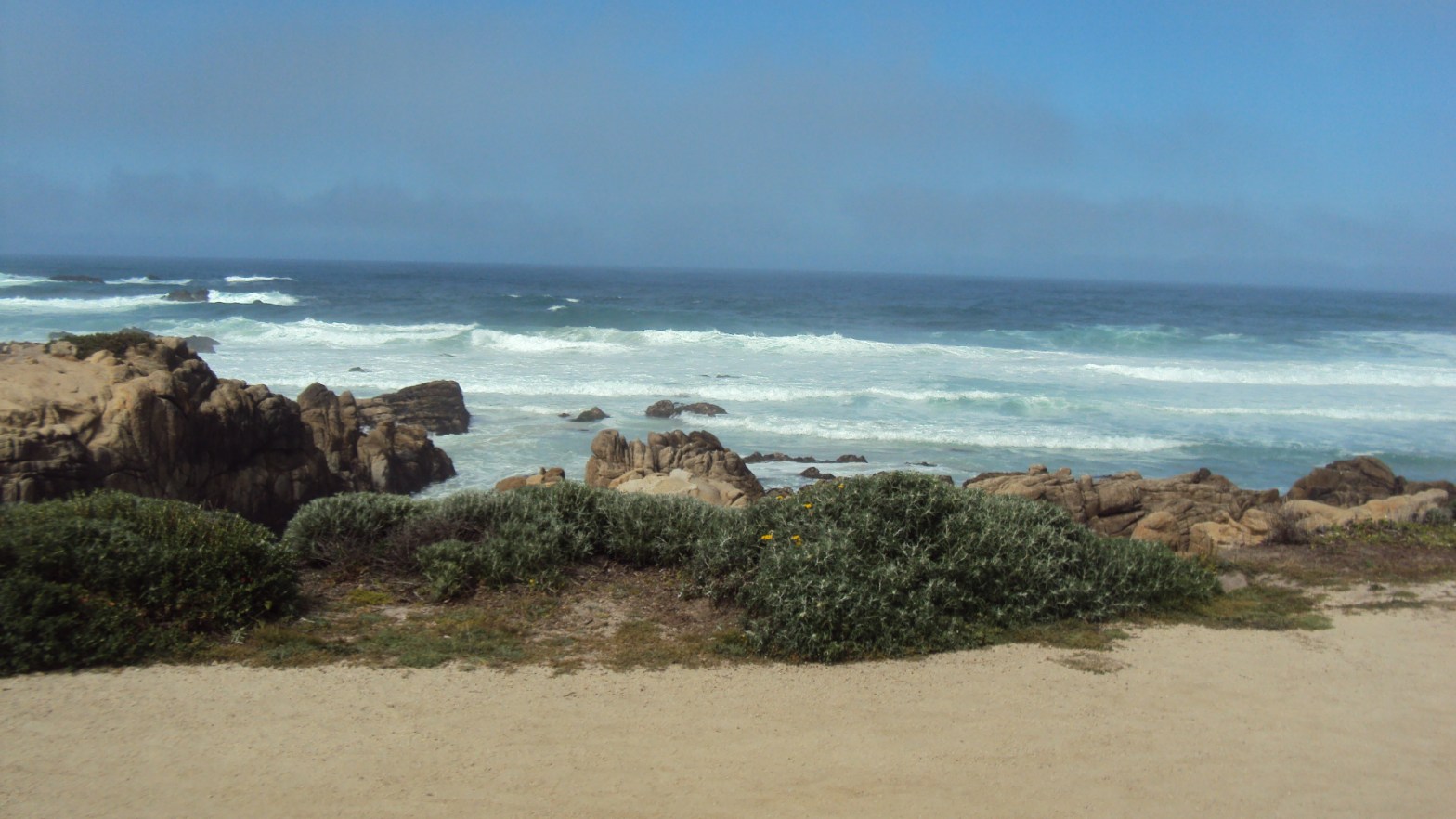
Every picture of me taken at the beach with the ocean in the background is a stunner. My hair is golden. My skin is smooth and clear of blemishes, and my smile always shines. Apparently, the grey-blues and white foam of the ocean waves complement every shade of skin and hair color. Even when my hair is blowing directly across my face, I look young and adventurous, wild and free. Doesn’t everyone want to look like that?

Wear a Pair of Sunglasses

I’ve discovered why movie stars wear sun glasses in so many of their photos. Sunglasses cover up squinty, little, cross-eyed, or tired eyes. I, for example, have small eyes that turn into half-moons when I smile too hard or when the sun is blazing into my face. When I put on a pair of sunglasses, however, I can make my eyes as big as I want and change the color from green to luscious brown. Depending on what I’m wearing, I can imitate any celebrity from a rock star to a sultry soap opera actress.

Put On a Hat

I know a professor who is bald on top of his head. He wears a beret hat every day, all day, and, instead of people thinking about how bald he is, they notice his charming hat and admire his taste. I’m not bald, but I do have bad hair days when my cowlicks decide to stick straight up. If I’m taking a photo on one of those days, I just cover my hair with a floppy hat and paste my bangs to my forehead with a wet comb. Using this technique at the beach makes so much sense.

Wear Pink

O.K. Not everyone looks good in pink, but I do. It’s my best color, so, when I know I’m going to be in a photo, I wear it. My husband looks great in medium blue. My daughter looks great in orange, and my son looks best in deep red. Everyone compliments you when you’re wearing the color that looks best on you. Pay attention next time and wear that color for your next selfie.

Add a Dog to the Picture

Even people who don’t own dogs love them. Adding a dog to the photograph will distract anyone from noticing your crooked smile, squinty eyes, the pimples on your chin, or the ear that’s missing an earring. They won’t be looking at you at all since your dog will capture their heart with her floppy ears, mischievous eyes, or pug nose.

If all else fails and you still don’t like the selfie you took, I recommend that you keep it anyway. File it on your laptop and don’t look at it for a few years. When you finally do, you’ll love seeing how young you looked back then.

Female Philanthropy

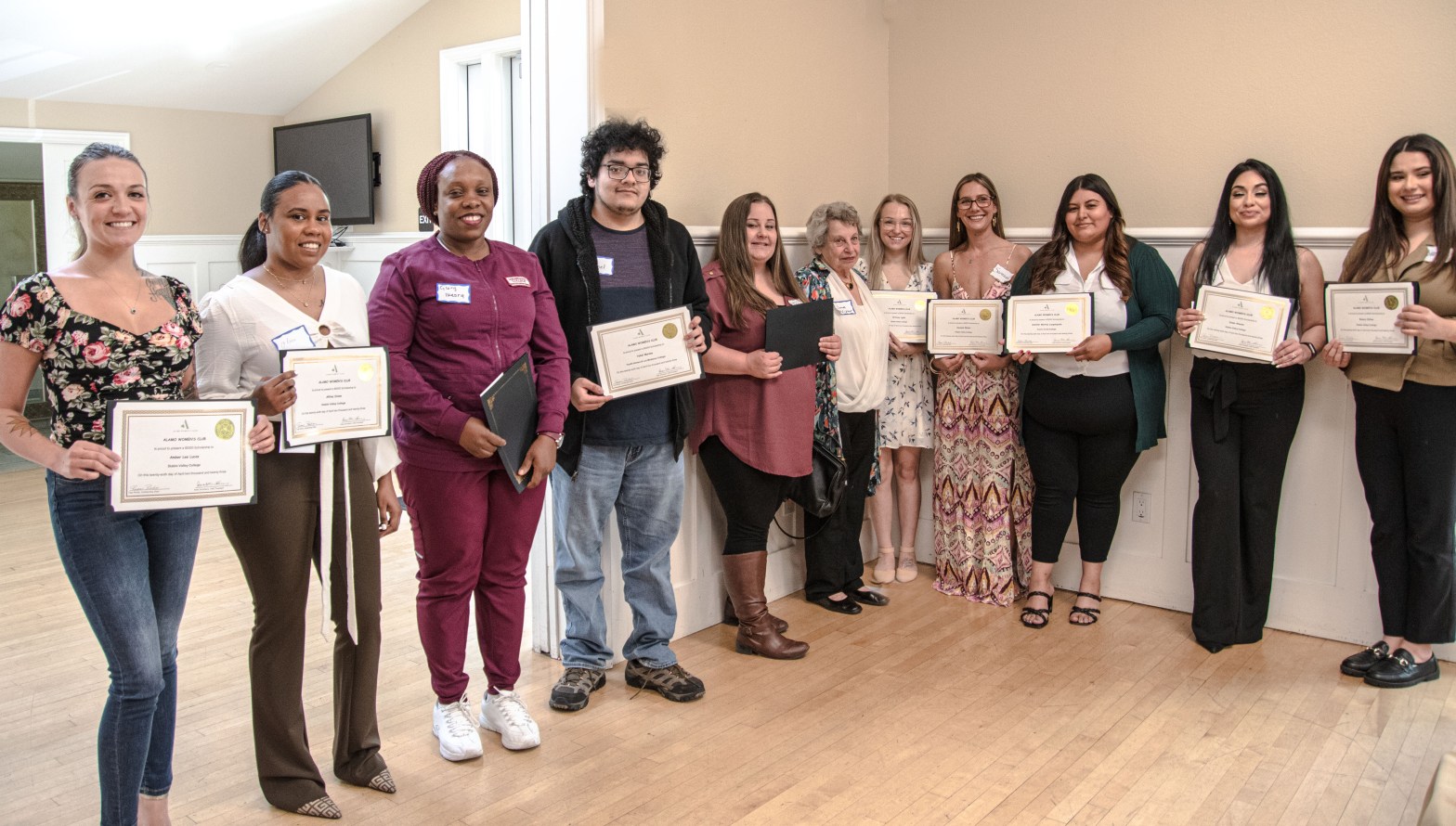
Photo taken by Peggy Fleming

This is the story of 69 women who dedicate themselves to improving their community.

Every year, for the last 87 years, the Alamo Women’s Club (AWC) has given scholarships to college-bound students. For the last several years, they have offered $5,000 scholarships to single parents who are attending local community colleges and to students who have been emancipated from the California foster system. They also offer financial-needs scholarships to local high schools, but that topic is for another blog post.

How do they raise money for these scholarships? Well, in creative ways. First of all, every October, AWC hosts an Authors’ Faire to which they invite five to six authors to speak at a catered luncheon. The authors sell more books and AWC makes a profit on the event.

Most importantly, for raising money for scholarships, AWC collaborates with a local senior group to collect unwanted used jewelry, both precious and costume. Four times a year, AWC sponsors jewelry sales to which they invite the public. They’ve raised over $200,000 from these sales so far.

Most of these AWC women are retired, but in no way inactive. The organization has a five-year-plan for growth and an updated website for both members and the public. They attend business meetings one Wednesday a month and social luncheons with speakers for another Wednesday a month.

Most of all, however, these women work hard on philanthropy. The Author’s Faire takes a boatload of women to recruit new authors; choose a venue with great food, sufficient parking, and reliable service; and orchestrate the luncheon. A crew of women set up the jewelry sales. Others help sell it, and another team packs it up for the next event. While they’re working, they discover common interests and develop new friendships.

The AWC Scholarship Committee started its work last September. First, they contacted the Contra Costa community colleges and Youth Homes (for emancipated foster children) to notify them about their scholarships.

The important thing about offering scholarships is getting the information to the students. AWC’s Scholarship Committee worked hard to stay in contact with the counselors of each school and to ensure that students could access the scholarship information on AWC’s and the schools’ websites. For example, as soon as AWC received the first application from Diablo Valley College, they wrote an email to the counselor thanking her for her work. This continued all the way up to the due date.

Meanwhile, the Author’s Faire was a resounding success with over 200 people in attendance, and the jewelry sales earned money bracelet by bracelet.

In March, the Scholarship Committee chose ten single parents and one former foster child to receive $5,000 scholarships. The recipients were chosen for their financial need and their dedication to continuing their college education. Several were nursing majors and the former foster student wants to become a programmer. If they can stay in school despite their financial hardships, they can all become successful.

Immediately, the AWC members started planning the Scholarship Luncheon. One group chose the caterer. Another arranged for the table decorations. A kitchen crew covered the tables with tablecloths and set the China and silverware. A video was developed to honor the Scholarship Committee and the recipients. Finally, a cake was ordered and decorated with the words We Are the Champions!

The Scholarship Committee created and ordered a new banner to hang outside the clubhouse that said Congratulations to our 2023 Scholarship Recipients! They also designed and ordered the programs, arranged for members to greet and escort the scholarship recipients throughout the luncheon, and hosted the presentation of the certificates.

On that special day, over 70 people came together to celebrate boosting the success of students who may not otherwise achieve it. The recipients came with their guests and sat with the AWC members for lunch. They received their certificates and shared their stories. The women were all smiles and the recipients blushed with gratitude.

One of the students stood up to tell her story of single parenting. She ended her speech by saying that, for her, the scholarship was more than just money. It represented support and new friendships, gifts that would last a lot longer than money.

The AWC members nodded their heads. Philanthropy and friendship were natural companions.

4th Time to Paris

(Photo by Anthony Delanoix on Unsplash)

Next month, I’m going to Paris for the fourth time.

The first time I visited Paris was with six other college students. We were there on Bastille Day, July 14th, which commemorated the beginning of the French Revolution when the Parisians stormed the Bastille Prison. My friends and I were in the midst of a throng of human beings on the Champs Elysees since everybody celebrates the day by gathering in the streets. Two young men set off fireworks, and the police swept in and arrested them. To disperse the crowd, they launched tear gas grenades into the mass of bodies blocking their way. Suddenly, my throat was filled with knife-sharp chemicals and I croaked like an old frog. The crowd, a mass of forms heaving as a single unit, dragged me and my friend Nancy away from our friends. We never found them until hours later.

The second time I flew to Paris was for work. I stayed at a hotel where, every night, I watched the Eiffel Tower light up at dusk and twinkle over the city until 1:00 a.m. in the morning. I met Olivier at the office who became my French friend until he married and his wife ended our friendship. Olivier took me to a small Franc concert in a beautiful Gothic church and out for a crepe lunch where I enjoyed both savory and sweet crepes—the most delicious pancakes in my life.

The third time, my 17-year-old daughter came with me to Paris. One night, while we were sitting outside the pyramid beside the Louvre, we watched the sun set over the most beautiful skyline in the world. At 8:30, we decided to rush into the Louvre before it closed at 9 p.m. It was a free admission day, so we walked right in. We passed the headless Winged Victory of Samothrace as we climbed the grand staircase up to the gallery where the Mona Lisa was displayed behind bullet-proof glass. No one was there. No one. This gave us the unusual opportunity to gaze at Leonardo’s mystery woman from several vantage points and to watch her eyes follow us from side to side.

My daughter and I also toured the French Catacombs which contain the bones of over 6 million people who were once buried in the cemeteries of Paris above ground. We walked for miles within the old limestone tunnels underneath Paris, discovering piles of skulls, femurs, hips, and other bones stacked in piles along the shaft walls. I don’t want to ever visit those unfortunate disassembled people again.

Now, I’m going to Paris for my fourth time with my husband who has never been. We’re boating down the Seine, visiting the Louvre, inspecting the Impressionists at the Musee D’Orsay, witnessing Napoleon’s Tomb, and touring the Pantheon; however, I want to make sure we make it to Pere Lachaise Cemetery this time. This cemetery is above ground and within walking distance of the Louvre. Although people of all faiths are now buried there, the cemetery takes its name from a Jesuit priest, Francois Le Chaise, the confessor of King Louis XIV, who lived in a Jesuit house on the original site.  Hundreds of famous writers, artists, and musicians are buried there including Oscar Wilde, Honor de Balzac, Chopin, Gertrude Stein, and Jim Morrison. I’m trying not to think about why I’m so fascinated with cemetery tourist sites.

Well, I need to get started with my packing. I also have some projects to finish before I go, including completing the homework for my Spanish class. I know it’s ironic that I’m going to France while studying Spanish, but c’est mon vie.

Why I Make New Year’s Resolutions

Every year, just before New Year’s, I take out my diary and write down New Year’s Resolutions. I don’t show them to anyone, not even my husband. They are only for me to see, only for me to enjoy. I hide my resolutions where no one can ever find them, and I look at them throughout the year and at the end of each year.

Some of my friends never make New Year’s resolutions. Maybe they don’t want to disappoint themselves. Maybe they don’t want to change their lives. I read once, though, that as long as a person continues to grow, she will feel young. I like to challenge myself to continue to grow in various ways. Resolutions help me do that, but here are more specific reasons why I make them every year.

New Year’s Resolutions Help Me Clarify My Goals

I am not always clear on how to accomplish my goals, but when I make a New Year’s resolution, I try to make it specific enough so that I know exactly how to succeed.

Let’s say that I want to pay off my mortgage early. A New Year’s resolution will help me decide exactly how to do that. For example, I could promise myself to pay an extra $500 a month for the whole year. This makes it easy for me to follow through on my promise.

Resolutions Help Me Grow

When I want to learn something major, I make it part of my New Year’s Resolutions, so I don’t forget about it.

For example, after I retired, I decided that I wanted to become fluent in Spanish. I realize that this is going to take me years to accomplish, but I’m not going to worry about that. I’m just going to practice until I achieve it. In order to do that, I made a resolution to practice Spanish for at least fifteen minutes every day. Along with this resolution, I am taking a two-hour Spanish class every Wednesday morning for which I complete homework. Nevertheless, outside of the class and homework, I still promise to practice fifteen minutes a day. This is not too long so that I become overwhelmed, but long enough for me to improve my speaking, listening, and vocabulary. I’ve been practicing Spanish for fifteen minutes a day for two years now, except for the three weeks I went to Italy. I can now speak in Spanish without have a brain freeze.

Resolutions Act Like a Measuring Stick

I love looking back on my resolutions from prior years and thinking about how they helped me accomplish something.

Last year, I resolved to write the first draft of my novel. By the end of October, I had finished it. Even if I hadn’t finished it, I would have written far more of it than if I had never made the resolution. I can always measure my progress against the promise I made. I don’t berate myself for not accomplishing my goal; instead, I’m happy of the progress I made.

I’ve made eight resolutions for 2023. One is about how I promise to exercise a certain amount each week. Another is about how I plan to write the second draft of my novel. Practicing Spanish is the third one, and the other five are for my own eyes only.

During 2023, I’ll look back on my personal promises, and coach myself to stay on track. I’ll be my own best, supportive friend.

Struggling to Revise My Novel

Photo by Ann Fossa on Unsplash

I took two years to write the first draft of my novel. Not bad. Then I asked a good writer friend of mine to read and critique it.

Boy did she. She not only gave me comments about wordiness, redundancy, perspective, and verb tense, she also lent me a book about plot.

My friend’s critique was exactly what I needed. I suspected my plot needed work. Now, after reading and rereading the book she lent me, I’m certain my whole novel needs a major revision.

I’m not talking about little changes here and there. I’m talking about taking down the whole church and rebuilding it with most of the old bricks and some new ones.

Luckily, this epiphany struck me in December, just before the holidays, when I could convince myself that it was o.k. to take a break from writing my novel. Still, I continued to fixate about it while I attended holiday luncheons, Christmas craft sales, girlfriend gatherings, choral concerts, The Christmas Carol at a local theater, and festive dinner and dance parties.

In fact, this blog post is one way that I’ve been avoiding revising my book. It’s easier for me to think of blog ideas than it is for me to start rewriting the plot, so I’ve successfully added several more posts during the holidays.

The book my friend gave me was about writing plots for screenwriting, so I bought a similar version of the book that focused on novels. In a nutshell, both books promote the idea of creating a beat sheet, a type of outline for the plot that includes certain characteristics such as an opening image, theme, and a catalyst. One way to create a beat sheet is to post index cards on a bulletin board with scenes for each part of the novel. An online program is also available for a fee.

I cleared a bulletin board that I have upstairs so I could use it for this purpose, but my writing desk is downstairs. After several days of thinking about how to arrange the board and buying color-coded index cards, I concluded that my beat sheet needed to be close to my computer. This led me to create my own version of a beat sheet using Microsoft Word table features. I even typed in some notes for each section. For example, for the opening scene, my main character is with her sick mother in a chemotherapy lab.

I’m struggling with the theme of the novel, which I think means that I still don’t fully understand the point I’m trying to make. Is the story about my character’s grief? Is it about her growing up? Is it about healing? My head hurts.

Another aspect that I struggle with is writing about a character who acts immature or angry because she is hurting. Emotionally, I’d rather write about a person who has her act together and makes positive decisions. Stories, though, need problems to solve, and I need to immerse myself in my character’s problem while she is learning to overcome it. It’s a painful process for me.

Writing about an imperfect character makes me feel vulnerable. My secret fear is that if I write about someone who makes poor choices, my readers will think I have experience doing the same. I do have experience making bad decisions, but I don’t really want that fact discussed at book clubs.

I’m coming to the conclusion that to be a novelist, a writer has to develop a thick skin. She has to be tough enough to take criticism from anyone while, at the same time, realizing her unique ability to write about people and how they navigate life.

Not everyone can do this. If they could, people would be writing on their laptops instead of browsing on Facebook or Amazon. They’d save money. The world would be quieter.

It’s almost New Year’s, and one of my New Year’s resolutions is to revise my novel. In January, I have to get to work, whether I’m ready or not.

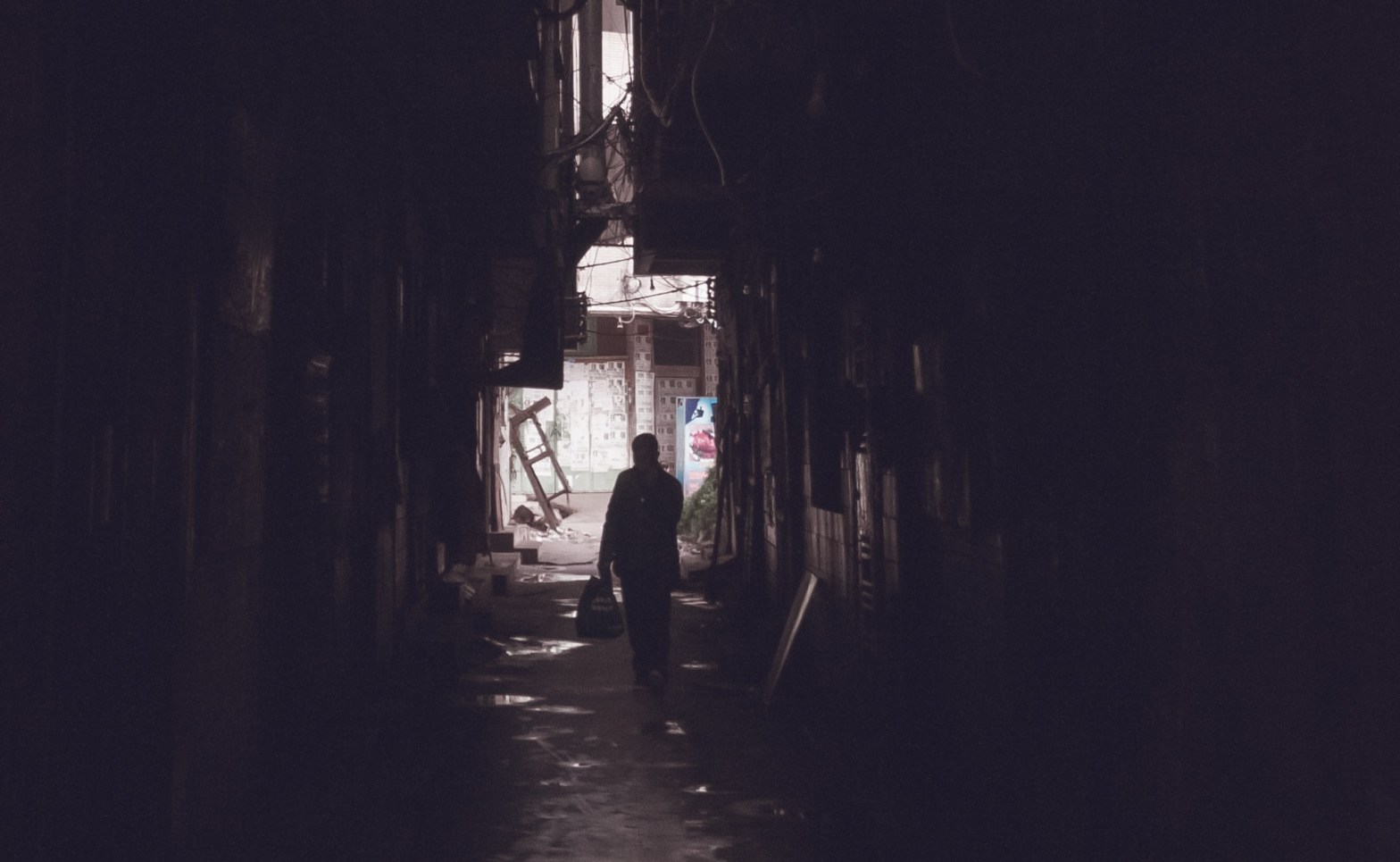
I know I’ll have to start writing an imperfect revision because I know I’m still struggling with my novel’s main theme. I need a way to proceed even while feeling like I’m wandering around in a dark alley where I can’t see around all the parked vehicles.

You know, I’m just going to accept that I may never publish this novel, but I’m going to revise it anyway. Someday, I’m going to have a second draft. It won’t be perfect, but it’ll be a better story than I have now.

I’ll just get the biggest flashlight I can find and step into the alley.

Dying Words

Rose Marie could feel it. Life slipping away.

For years, the Macular Degeneration in her eyes had slowly darkened her vision. The blindness had started in the middle of her eyes and took over more and more of her sight as it covered her vision like a dark blanket. At the lunch table, her friend Ruth read the menu to her.

Last year, her doctor had diagnosed her with Alzheimer’s. She had called each of her ten children with the news. They didn’t know how to react, and she didn’t either. She didn’t think her memory was bad. She still knew her children’s and friends’ names and the address where she had lived for sixty years.  

Her apartment was on the second floor overlooking the front garden of the assisted-living facility. When she had moved in, she could see the roses blooming and the branches of the sycamore trees swaying in the breeze. Now, she knew the roses and trees were outside the window, but she had to turn her head to see them from the perimeter of her eyes. Sometimes, she didn’t bother. She just let the circle of light enter her mind without trying to focus on any details.

She had gone down to the dining room for breakfast. Ruth didn’t have to read the breakfast menu to her since the server knew that she ate the same thing every morning: a piece of bacon, toast with jam, and a full glass of milk. Sometimes, her daughter Margaret brought her some homemade jam that she stored in the refrigerator in her studio apartment. Strawberry-rhubarb was her favorite. She would carry the small jar of jam down to the dining room and ask the server to spread it on her toast.

She found her way around her studio by reaching out to touch the furniture as she walked to the bathroom, the bed, or her recliner. To get down to the dining room, she found the knob on her front door, twisted the door open, scooted her body around it, closed it behind her, took the apartment key that she hung on a lanyard around her neck, and locked the door by finding the keyhole with her left fingers.

Once she got outside of her studio into the second-floor hallway, she reached out to touch the armchairs, side tables, lamps that led her to the elevator. Since her studio was at the end of the hallway and the farthest from the elevator, she passed many other apartments along the way. She could discern from her perimeter vision that some had wreaths on the doors. She knew when she was passing Nellie’s door since she could hear her chihuahua barking.

Lately, she’d noticed that she had trouble talking to her friends at the dining room table. She knew what she wanted to say, but it seemed hard to get the actual words out. The same thing happened to her when she phoned her children. In fact, it was exhausting to talk for any amount of time.

“Wait a minute,” she would say as she struggled to express herself. They waited so patiently, much more patient than she had been as their mother. Then, slowly and deliberately, she would answer their question with a complete sentence.

Since she had moved into the assisted-living facility, two of her long-time friends had died. Jim had severe back pain for a week before her passed away. She and her husband had known him and his wife for sixty years. They attended the same church. Their kids went to the same schools.

Patty passed away in her sleep one night. When her daughter came to clean out her studio, Rose Marie asked if she could have Patty’s tiny cabinet desk. The handyman had moved it into her apartment, and she kept her calendar and pens in it now. When she opened it, the wood felt warm, like Patty’s arms.

Rose Marie had always told her children that death was part of life. This time, however, the death that was coming was her own. Throughout the day, more and more of her life was transitioning to a new place with which she was unfamiliar. She couldn’t play Solitaire anymore at her desk because she couldn’t see, so she sat in her recliner and let the window’s light stimulate her thinking.

She was afraid. What would happen to her children when she died? Would they still be a family? Who would her sons talk to when they had problems to discuss? Who would need her when they got a divorce or lost a baby?

When she had first moved into the facility, her friend Morgan had picked her up every Sunday and drove her to Mass. She didn’t come anymore since Rose Marie no longer felt safe enough to walk around a place where she hadn’t memorized the placement of the furniture. Now on Sundays, she went down to the chapel when the priest came to bring Communion for the Catholics.

“I don’t know how to die,” she said one day. She could see him put his hands in his lap before he answered her. “I’m fully aware that I will die soon, but what should I be doing right now, before it happens.”

Father Moyer took a deep breath through his nose, and let the air out like a sigh before responding. “Well,” he said. “You don’t need to worry about dying. Just spend your days loving your family and friends. That’s all that matters.”

“So simple,” she said. She heard Father take another calm breath. When he exhaled, she was reminded of the ocean. She thought his answer would have involved praying, repenting, forgiving, or philosophical discussions. “I’m afraid of what will happen to my children when I’m gone. I’m the matriarch of the family. I keep them together. Shouldn’t I talk to them about these things?”

“No. They won’t remember anything like that, but they’ll remember how you love them.” He breathed in and out like the ocean again. It sounded so beautiful and relaxing to her.

Later, when Rose Marie went back to her apartment, she sat down in her recliner and picked up her cell phone. She pushed “1” which would dial her oldest daughter’s phone number automatically.

They only talked for two minutes. It was so hard to get out the words she wished to say. At the end of the phone call, Rose Marie said, “I love you.”

“I love you, too, Mom,” Celia said. “So much.” Rose Marie hung up.

Then she pushed “2” so she could talk to her second child. Then “3,” then “4,” then “5.” Her fifth child Ron didn’t answer. She’d have to call him later. By the time she had talked to the rest of her children, she could tell that the sun was setting between the branches of the sycamore trees outside her window. Soon, she’d have to walk down for dinner. She dialed “5” again, and Ronald picked up.

“I just wanted to say I love you,” she told him. She took a long slow breath and exhaled. The ocean flowed through her lungs.

Cousin Love

No one ever talks about their cousins, except my family. I have 44 first cousins that live all over the United States and beyond. I have friended many of them on Facebook. Many receive Christmas cards from me, and I visited many in Wisconsin and Minnesota this last year. I feel as close to my cousins as I do my own siblings.

My parents assured us that we would enjoy being from a large family since we’d always have friends. They were right. Even though I don’t see my cousins on a daily basis, they bring me so much joy and satisfaction.

My cousin Tim lives in Montana. He recently retired as the Superintendent of a tiny school district. Since I was a college professor, our careers were focused on helping students and improving education. We also comforted each other when we went through our divorces by sitting in a car in San Diego in the middle of the night and sharing stories after his brother’s wedding.

My cousin Roslyn is a high-school history teacher in Michigan. We both believe that students are better off when they learn history from more than one perspective and understand the difference between equity and equality since we worked with those concepts in the classroom. Roslyn is my philosophical partner in our extended family.

Carolyn lives in Winona, Minnesota. She raised her son as a happy single parent and now has two grandchildren. Yesterday, she posted a picture of her front yard packed with snow where she had painted flowers on the three-foot snow walls beside the path to her front door. What a creative spirit!

Cousin Dan lives in Japan with his wife and two pretty daughters. He works for the United States Navy and leaves his family for months at a time while stationed on the U.S.S. Reagan. I love his mustache and fun-loving family, who spend their afternoons searching for pottery on the beaches and artistic manhole covers in the towns.

My cousin Arlie is a handsome devil who has worn his once-dark-but-now-gray curly hair both long and short over the years. Once he drove a truck full of Wisconsin cheese to my parent’s house in California. We ate cheddar for weeks. Now, Arlie rides horses with his wife and works at an auto store. Even though we have little in common, at every reunion, we share heart-felt cousin hugs.

Patty lives in Boston and is married to Steve, who completely adores her. They go to baseball games and concerts on date nights, and inspire the rest of us not to give up on love. Patty sure knows how to pick a good partner.

Diane lives with her husband Matt in Minnesota. Now this is a fun girl. If you want to kayak in the Winona Lake, she’ll do it. She knows all the best restaurants in town and will even accompany you to the local spice and Polish museums for an afternoon. If you’re up for it after dinner, she’ll go with you to a bar for a beer and sit outside with the mosquitoes. One year, I watched on Facebook as she and Matt took their motorcycle on a cross-country trip through Minnesota, South Dakota, and Montana. Wow, what a woman!

Scott, a happy tall guy with a strong build, owns a dairy farm in Minnesota where he produces thousands of gallons of milk per day for American milk-drinking consumers. If you ask, he’ll take you on a tour of the farm and you’ll see where the calves are raised, cows are milked by machine, statistics are collected for each animal, and cow manure is recycled. Even a town-girl like me learns something every time I visit his farm.

I could go on talking about Lisa in Florida, Marilyn in Ohio, Marjorie in Minnesota, Randy in Minnesota, Karen in Wisconsin, Dewey, Joanne, Debbie, Denise, Renee, Kathy, Scott, Jim, and more, more, more, but you get the idea. I have interesting cousins in my life, and I interact with them frequently enough to maintain vibrant relationships.

Thank you, Mom and Dad, for maintaining such close family ties over the years. My cousins are an essential part of my happiness. I love them.

Too Many Goulash Gourmets

About 40 minutes by bus from Budapest, Hungary is a colorful town named Szentendre. Situated right on the Danube River, this village is laid out over cobblestone streets where brightly painted storefronts and houses offer tourists charm and entertainment.

While we were visiting Szentendre, our tour took us to the Szabadtéri Néprajzi Muzeum (The Hungary Open Air Museum), established in 1967, to illustrate the typical country life of Hungarian folk.

When our group of about 30 people arrived, the museum’s guide gathered us around long wooden tables, arranged under a wooden pavilion outside. A tiny fire was burning in a pit near the front of the pavillion, and, on the flame, rested an old dented black cast iron pot.

A guide, dressed in old jeans and a button-down shirt with holes in the elbows, sauntered up in front of the group with his hands deep in his pockets. “My name is Taksony. I’m going to supervise you in cooking a pot of the national Hungarian dish known as goulash.” He took his hands out of his pockets, grabbed a thick gray potholder, lifted the cast iron pot off the fire, and set it on the dirt in front of him.

I hadn’t washed my hands when I got off the bus. No one had, and we were going to cook something? I wrinkled my nose.

“The word goulash,” he said, “comes from the ancient Hungarian word gulyás, which means herdsmen or cowboys. People out in the country made goulash from whatever beef, vegetables, and spices they had on hand. Since paprika is widely grown in Hungary, it became the favored spice for the dish.”

Each person had a knife on the table in front of them. Mine was a small paring knife with a worn wooden handle and dull blade. I thought about the sharp knives I had at home to slice, chop, mince, and quarter my vegetables. This frail little blade didn’t look too promising. I looked over at the knife in front of my husband. His was longer than mine, but so skinny that it didn’t seem to be useful either.

Girls in gathered skirts wandered around the long wooden tables and gave each of us a vegetable to chop. I was given a tomato and my husband was given a pepper, the likes of which I’d never seen at home. Our vegetables sat right on top of the wooden table tops, which contained knife marks from hundreds of lessons in making goulash. Was this sanitary?

By the time we all got our vegetables—onions, tomatoes, potatoes, or peppers—the guide was cutting off a piece of lard into the cast iron pot.

“I’m going to brown the beef first.” He put the pot back on top of the fire and the lard sizzled as it heated up.

“Who wants to be an assistant?” Taksony asked, and he pointed to a man from our group who was over six-feet tall and wore a grin that lit up his face. “What’s your name, sir?” Taksony asked him.

“Richard,” said the man with the bright grin.

“I need you to dump these cubes of beef in the lard and stir them until they get brown. Don’t let them burn!”

Taksony gave Richard a long-handled wooden spoon and the bowl of beef. We watched Richard dump the beef into the pot and jump back as the lard hissed and sputtered. He began to stir.

“What’s your name, miss?” Taksony asked a sixty-year-old woman in a yellow sun dress. He waved her up to the front next to Richard.

“Carol,” she said, biting her lip. Her hands were tightly clenched in front of her.

“Carol, here’s the garlic and paprika. Please count out six cloves of garlic and put them in the pot. Take the paprika and spoon in 4 heaping tablespoons.”

Carol bent over the bowl of garlic that Taksony was holding and counted. She tossed six heads into the pot. He handed her the canister of paprika and a measuring spoon. She pried off the lid, gave it to Taksony, then heaped the dark red powder onto the spoon four times and tipped it into the mixture.

“The meat is burning, Richard! Here, take it off the fire with this.” Taksony gave Richard the pot holder. Richard lifted the pot by its handle and placed it on the ground.

Taksony bent over the pot and whistled. “Saved it. Now keep stirring,” he said to Richard. “Carol, you can go back to your table.”

The guide looked out at all of us. “O.K. Cut your vegetables into slices.

I took my old paring knife into my right hand, the tomato in my left hand, and attempted to slice it. The blade barely made a mark in the tomato’s skin, it was so dull, but I persevered. Finally, after using the point of the knife to poke holes into the skin, I managed to create slices, the juice of the tomato oozing into the wood of the table top.

My right-handed husband was holding his knife in his left hand and staring at his four-inch yellow pepper as if it were a venomous snake. His giant basket-ball-sized hands floated in the air in front of his chest.

“Cut it,” I said.

“I don’t know how,” he said. “A deep furrow appeared between his eyebrows. “This is a knife. I only know how to use a microwave.”

“You can do it,” I replied as sweetly as I could manage while thinking what a complete idiot he was.

His hands kept floating in front of his chest like he was swimming the dog-paddle.

“No. You do it for me, honey. You’re so good at cooking.” He gave me his knife and rolled the pepper towards my tomato slices.

“Fine,” I said, looking quickly around to see what all the other men in our group were doing. I didn’t see anyone else handing his knife over to his wife. They were all bent over their tomatoes, onions, potatoes, and peppers and diligently stabbing their food with worn-out knives. Geez.

I admired the four-inch little pepper before attempting to cut it, and then used my husband’s skinny little knife to slice the pepper into several rounds. I didn’t remove the seeds since no one had mentioned anything about that. When I was done, I used the knife to push the pepper slices back over in front of my husband. Nobody seemed to notice that we cheated.

The girls in long, gathered skirts came to each of us and scraped our vegetables off the top of the wooden tables into large bowls. They took them over to Taksony who ladled them into the cast iron pot and placed it over the fire again. 

“Richard, keep stirring.” Richard bent his tall frame over the smoking fire and stirred the vegetables into the meat mixture. I could smell the toasty aroma of the paprika as he stirred while I thought about all the germs swirling around the spoon.

“This is going to take awhile to cook,” said Taksony, so you guys can go wander around the open-air museum to see what a country village in Hungary once looked like. Come back in forty-five minutes to eat lunch.” He waved his hands to shoo us out of the pavilion.

Wiping our hands with the little sanitary wipes we were given, we wandered out into the dirt roads to view the church, the mill, the knitting house, the store, the bakery, and the cottages where villagers lived. Since we were all hungry, however, in forty-five minutes, we were back in the pavilion ready to eat.

Taksony showed us into a room filled with newer wooden tables with benches. We sat down side by side and poured lemonade into our glasses from pitchers on the table. The girls in the swishing skirts brought baskets of coarse bread and placed them in the center of the long tables, one basket at about every two feet. Then they carried steaming bowls of goulash in flat bowls and placed them in front of each person. My mouth watered as I hoped that all the germs in the pot had evaporated in the heat. I squeezed my eyes shut.

Heat did kill germs, didn’t they? I hoped so. Nevertheless, I thought I’d ask a question.

Taksony was standing at the front of the room watching the girls bring out the bowls of goulash. I raised my hand. He nodded at me to indicate I had his attention.

“Are we eating the goulash that we made out in the pavilion?” I asked, trying not to wrinkle my nose. I glanced down at my bowl, trying to reassure myself that the cooking process had surely eliminated any dangerous microorganisms.

“Oh, no!” said Taksony, chuckling. “We gave that pot to the pigs.”

“Thank goodness,” I said, dipping my spoon into the delicious-smelling concoction in front of me. I immediately imagined the pigs eagerly scarfing up the national dish of Hungary. I bet they liked it.

Chemotherapy Christmas

The room was large, windowless, and sterile. Blinding florescent lights. Beige linoleum floors. Twelve green reclining chairs placed with their backs against the walls around the room. Each chair accompanied by a metal stand hung with bags of fluid and tubes.

The woman sitting in one of the chairs wore a scarf around her head. I looked for wisps of hair, but couldn’t see any. Her body filled up the chair like of sack of potatoes, lumps everywhere. She wasn’t smiling like the nurse who stood next to her, hooking up a tube to a port embedded in her upper chest.

A man whose body disappeared within his baggy shirt and trousers sat in a recliner in a corner. His scrawny hands hung over the chair’s arms like shriveled leaves caught on the edge of a forgotten lawn chair in the fall. His bald head shone in the florescent lights like a bare bulb. His face was gaunt, lined, and dry, and his eyes were closed. A young woman sat in a chair in front of him reading the Bible.

I watched the room’s activity with a lump in my throat as I stood behind my mother and brother by the door. A woman with a cane was led to another recliner in the room. The male nurse helped her sit into the chair, gently pushed her back, and lifted the foot rest. The nurse lifted a matching green blanket from a small chair nearby and laid it over the woman’s body, tucking the edges around her snugly. Then he efficiently began hanging the bags of chemicals on a metal stand and hooking up the bags with the tubes.

This was my mother’s chemotherapy room. Mom’s last chemotherapy session was scheduled for December 24, Christmas Eve. She had asked my brother Zach and me to accompany her to the appointment. My brother had flown home from college in Southern California for Christmas, and I was home from college too. The only thing my mother wanted for Christmas was to finish chemotherapy with her children around her.

A female nurse wearing an ugly, plain, blue smock and pants led my mother to a chair on the emptier side of the room. Zach helped Mom take off her coat and climb into the chair. She looked small, dressed in her pink cotton beanie, pink V-neck sweater, and jeans. How pale her pretty face was. Mom nodded when the nurse asked if she wanted a blanket, and Zach took it from the nurse and covered her gently like he was placing a precious jewel into a new setting.

This was not how I wanted to spend my Christmas. Wasn’t college supposed to be one of the happiest times of my life? I was too young to worry about my mother dying or even being too sick to visit me at school.

The nurse pulled two straight-back chairs close to my mother’s recliner, and invited us to sit down. I took the chair farther away and leaned back as if my mother was contagious. My brother pulled his chair closer to Mom and took hold of her left hand. When she smiled at him, her eyes watered like green pearls.

Before long, Mom was hooked up to the tubes that would feed chemicals into her body. I could tell that she was putting on a brave face because, underneath her smile, she looked tired and weak.

I didn’t want to think about her being that way. Instead, I wanted her to jump out of her chair, hug me tight around the waist, and ask me about college. I wanted to tell her about Jasmine’s new boyfriend, Sara’s job offers, and David’s article in the college newspaper.

Her smile withered away as the chemicals dripped into her veins. She gave up trying to hold a conversation with my brother, who was bent towards her in his chair, his chocolate eyes full of concern. She looked at me several times, but I retreated away from her with a grimace on my face.  I didn’t want to be here.

Once in a while, Mom opened her eyes and looked up at the bag hanging beside her as if gaging how long she had to endure the procedure, but, for the most part, she kept her eyes closed, and we sat in front of her fidgeting in our chairs, biting our lips, and staring at each other with worried eyes.

Three hours later, the nurse in the blue smock and pants pulled the catheter out of my mother’s port, gathered up the tubes, and rolled away the metal stand with the empty bags.

A young woman with brunette hair and rosy cheeks pushed a wheel chair up to our station.  She asked my brother to move his chair, then maneuvered the wheel chair as close to my mother’s chair as she could.

“I’ll help you,” she said kindly. She took ahold of my mother’s upper arm and guided her from the recliner into the wheel chair.

My mother let out a whimper as she moved. Zach helped her put on her coat as she sat in the wheel chair, wrapped her pink scarf around her neck, and gave her a wool cap to pull over her pink beanie. Still, she shivered when the nurse wheeled her outside to the car.

Zach drove us home, and the next day was Christmas.

Glitter, Gloss & Human Dignity

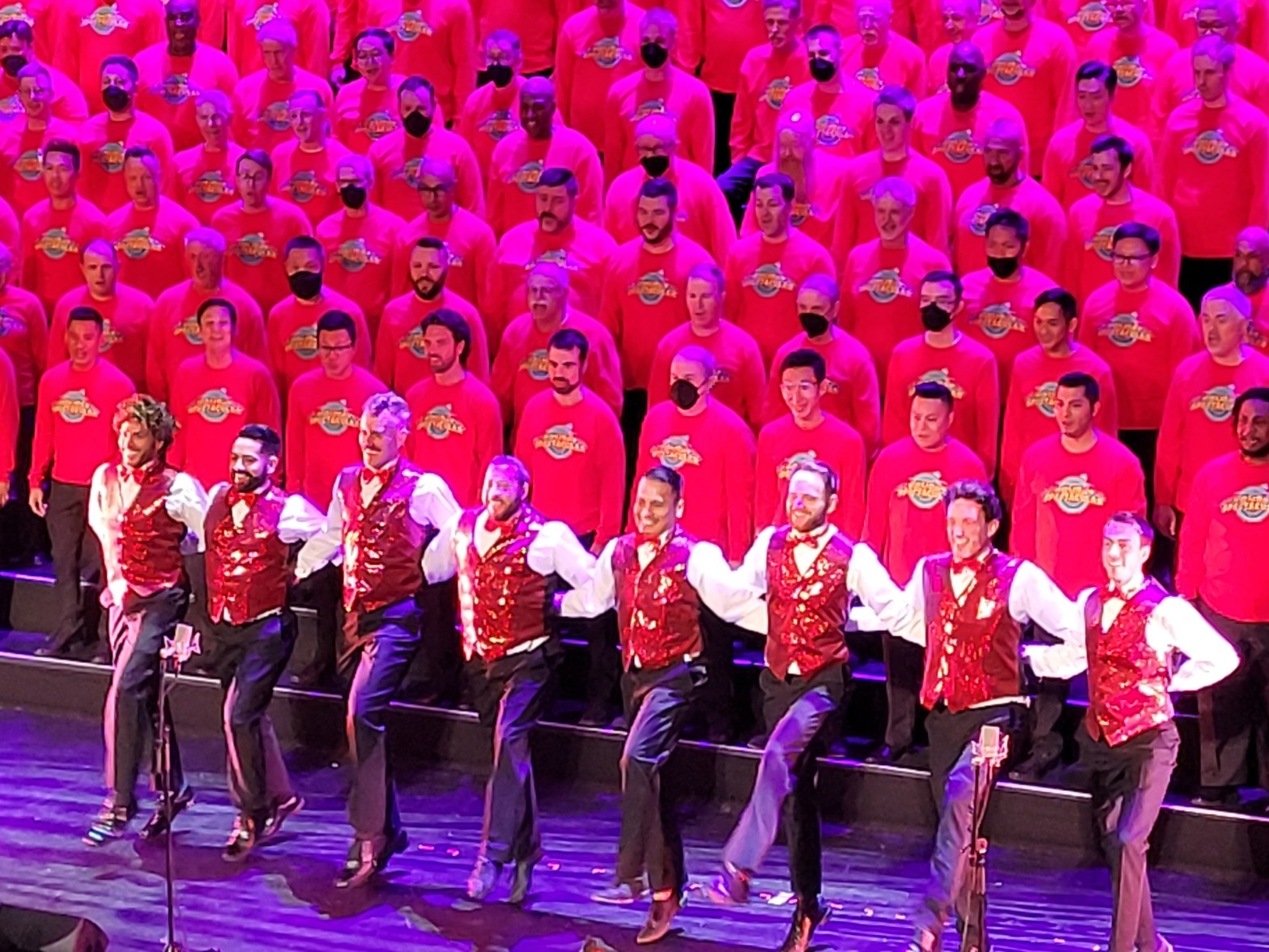
Last Saturday, I attended the San Francisco Gay Men’s Holiday Spectacular at the Sydney Goldstein Theater in San Francisco for the first time. Oh! What a night!

When my daughter and I arrived, a quiet but eager crowd was gathered around the theater’s entrance. We donned our required Covid masks and presented our tickets to a friendly usher who pointed to the stairs. Above, another smiling usher led us to our excellent seats and we sat down—only two in a theater filled with Christmas sweaters and holiday cheer. Excited voices murmured throughout the cavernous room.

The stage curtain was lit up with the title of the chorus in capitalized red letters, and, a few minutes later, the curtain opened to reveal the silhouette of risers brimming with over 200 singers. The lights came on, and the audience suddenly saw ten rows of men dressed in long-sleeved red T-shirts and black bottoms on a staircase of risers. The orchestra began, the conductor raised his arms, and the men began to sing.

Young men, gray-haired men, bald men, men with beards, men wearing skirts, men with canes, and men sitting on stools all crowded the risers and faced the music conductor with professionalism and purpose. No one read lyrics from a song sheet. All of them sang by memory.

The chorus sang “On this Shining Night” by Morten Lauredsen, a song I had sung with the Blackhawk Chorus a few years ago. The men’s voices were rich, on tune, piano and forte. I fell in love with their sound.

After each song, several chorus members quietly exited from the risers and went back stage. As the next song began, these members came back on stage as dancers in various costumes to complement the chorus. Some stood at microphones at the front of the stage to sing solos.

In the middle of the performance, the chorus sang a long rendition of “Jingle Bells” that got the audience toe-tapping and clapping. They sang many verses in a variety of styles that became more exuberant all the way to the song’s finale.

The song that sent shivers up my spine was “Huddled Masses” by Shaina Taub, a song about the plight of immigrants and our moral duty to support them. The conductor explained to the audience that, although this wasn’t a Christmas song, it promoted the spirit of Christmas, which is love.

On the right side of the stage, in front of a glowing Christmas tree, was a sign-language interpreter who signed the words of each song. His hands gracefully moved as the singers slowed their tempo and stretched the lyrics over a series of beats.

One of the last songs was “Silent Night.” The orchestra began the introduction and then the chorus, instead of singing, signed the first verse silently. When it was time for the second verse, the orchestra stopped, and the chorus continued to sign the verse as the audience watched in silent wonder. In the quiet of the moment, my heart filled with so much gratitude to the chorus for expressing what a deaf person hears and how silence can evoke wonder and awe.

Later in the program, the chorus held a moment of silence for the five LGBTQ persons recently gunned down in Colorado Springs. For two hours, without an intermission, and with energy and vitality, the chorus recited lyrics of peace and promoted love in both prose and lyrics. This was a night filled with joy despite life’s hardships and disappointments.

I left the theater with happiness in my heart—contentment that I live near San Francisco, a city filled with respect and love for the LGBTQ community—because I know, that a culture that treats all persons with dignity is the cheeriest place on earth.

Before Revising My Novel

I’ve written essays, newspaper articles, poems, short stories, and more, but never a novel. People who have written several novels impress me since I’m writing my first novel and learning so much in the process.

Since I retired as an English professor almost two years ago, I started a novel. Now, I have a first draft and it’s time for me to revise it. Here are the steps I’m taking before I proceed.

I Found a Good Critic

I asked a writer friend to read my novel and give me her criticism and suggestions. She was worried that our friendship would suffer if she gave me honest feedback, but I assured her that I was open to any constructive feedback. I’ll refer to her as Lila for this post.

The reason I chose Lila as a critic was because she has published numerous children’s books and one adult book. In other words, she has experience at doing what I want to do. She also taught high school Spanish, so her language skills are strong. Finally, Lila’s criticism is clear and she gives reasons for her comments.

Even though I reviewed and edited my novel before I gave it to Lila, I found that I didn’t catch all my errors and I needed a fresh brain to show me inconsistencies and mistakes. My mind was so overwhelmed at the daunting task of writing a whole book that I needed support to catch mistakes. Lila found places where I had changed my point of view, and she identified sentences that were unclear or out of place. She taught me that prose written in past tense must never include this; instead, I should use that. Lila even found a few spelling errors and typos.

Lila also gave me positive criticism. She identified the two most interesting sections of my novel. One was when my character goes to work in a winery and the other was when she hikes to Machu Picchu.

The most important advice she gave me, though, was a book about how to develop a plot. She recommended that I read Save the Cat! The Last Book on Screenwriting That You’ll Ever Need by Blake Snyder. This leads me to my next topic.

I Read a Good Book about How to Develop a Plot

I started reading Save the Cat! but then I found out that Jessica Brody had written another version of Save the Cat! titled Save the Cat! Writes A Novel: The Last Book on Novel Writing You’ll Ever Need.  I opened the paper version of Brody’s book and read it carefully. I learned about a plot planning tool called Beat Sheet and I confirmed that my novel belonged to the genre referred to as Rites of Passage. I also read about how to write attention-grabbing loglines and alluring synopses to pitch my novels to everyone, including people at the dinner table, agents, and prospective publishers.

Wow, I learned so much! The last chapter, however, that discussed common plotting problems was helpful all the way to the last word. Still, I wasn’t ready to begin revising my novel.

I Read Books in the Same Genre as my Own

I didn’t have enough courage to start revising my novel yet, so I decided to read books that had similar themes as my own to see how their authors developed their plots. Sarah Dessen wrote The Truth About Forever, a novel about Macy Queen whose father died while he was waiting for Macy to join him for a morning run. In my novel, my main character’s mother dies. As I read Dessen’s book, I tried to identify the 15 beats that Brody says every novel requires. For example, at the beginning of a novel, Brody insists that the opening scene must engage the reader. Dessen’s opening scene did get my attention. Brody also says that the themes of the novel must be included in the early chapters. Dessen’s theme of there are no accidents appears on page 27.

I Watched Movies to Practice Finding Save the Cat!’s 15 Beats

I love watching movies because they are stories, too. Since Brody’s book is actually based on a book about screenwriting, the 15 beats apply to movies as well. I watched Michael O. Sajbel’s The Ultimate Gift, a story about a spoiled adult grandson who must complete a series of tasks in order to earn his inheritance. I successfully identified one of the beats called the catalyst in the movie, which is when the grandfather dies and leaves his grandson specific instructions he must perform.

I’m still reading examples of my genre, but soon I’ll have to gather my courage, plot out my novel on a bulletin board, and start rewriting.

Whew. Wish me luck and stay tuned.

Slapdash Biography

My first memory of reading was my mother reading to me before bedtime. We were sitting on my twin bed which was covered in a blue chenille bedspread. The overhead light was on and my mother’s hip touched mine as she read. Her brown hair hung in soft curls around her cheeks and her blue eyes followed the words of the book like a typewriter carriage.

As soon as I could read, I snuck away from my raucous large family to find a spot where it was quiet and where nobody would find me until my reading was done. My favorite stories were fairy tales with happy endings. I liked it when Cinderella married the prince, Sleeping Beauty was awakened with a kiss, and Hansel and Grettel pushed the witch into the oven, stuffed their pockets with precious stones from her cottage, and found their way back to their loving father. In my bookshelf, I still have two of those books of fairy tales with broken spines and frayed covers; I read them from cover to cover over and over.

When I was nine, I wrote my first poem. It was an impression of the first time that I saw my reflection in a pond. That poem revealed my deep nature. I loved to think about growing, impressions, beauty, and spirituality. I continued writing poetry through high school, college, and at lunch time when I started my first career, which wasn’t writing. I was an accountant with a hidden passion to write.

No matter what I did during my day job, I continued writing poetry and eventually started writing short stories. After I left accounting, I tried journalism for two years and finally found my way back to fiction and my deep thoughts.

My writing journey has been long. I inherited the writing gene from my father, but the road I took to become a competent writer took decades. As a teen, I overused adjectives and created syrupy-sweet descriptions. As an accountant, I learned how to get the facts and get to the point. As a short-story writer, I learned that the character had to be the center of a story.

Finally, I went back to college and got a degree in Early Modern Literature and Composition. Early Modern Lit includes the poetry of Sir Philip Sidney; the stories of Edmund Spenser; and the plays and sonnets of Shakespeare. As background knowledge for these authors, I studied Homer, Virgil, Dante, and Boccaccio. In my opinion, a student could study these authors her whole life and still not stop learning.

Still, my writing wasn’t ready. I had no plot for a novel and no verifiable income coming in from what I wrote, so I took a job teaching English in college. What a great tool for learning, teaching is. I learned not only how to teach students how to write a great essay, but I practiced writing great examples. I gleaned how to analyze poetry for theme, symbols, word choice, and figures of speech. I studied how to discuss novels for character development and plot development.

When I retired, I decided I was ready to write. I didn’t need to make money from it. I had certainly written over 10,000 times in my lifetime by then, so I was as expert as I ever would be. I had the time, the discipline, and the courage.

So here I am writing my biography. You see, I’ve written the first draft of a novel, but I now have to tear it apart and put it back together. It’s not publishable like this biography will be in a few minutes.

Each day that I post an article or story on my blog, I consider a productive day that I can share with the world. I can’t share my productive novel days yet, so this keeps me going in the meantime.

What else should I share about myself in my biography? That I have nine brothers and sisters, forty-four first cousins, and a charitable organization of eighty female friends? That my favorite color is pink and my least favorite food is cooked carrots? That I love to cook and hate to fold clothes? That I exercise daily except those days when I sip coffee on the couch until 10:00 a.m. thinking about writing?

These are interesting tidbits to be sure, but I hope that my fiction writing is more fascinating and thought-provoking. After all, its fiction, not reality. Stay tuned.

Friendly Italians

A whole country full of friendly people. That’s Italy. Besides the beauty of the countryside and beaches, the outstanding history, the scrumptious food, the satisfying wine, the awe-inspiring architecture and art, the people of Italy are incredibly welcoming, social, hospitable, approachable, and responsive. I visited Italy last August and I can remember so many encounters with friendly Italians.

The Limoncello Merchant

First, there was the shop-owner in Sorrento, Gino, who sold limoncello and other liquors. He started a conversation with me as soon as I entered his shop. I learned that he had a family in Naples and he rode a scooter to work every day, even in the rain. He thought it might be time to buy a car.

As I wandered around his miniature shop, I enjoyed the brightly-colored bottles of limoncello, meloncello, and other treats. He kindly pointed out the advantages of each size of bottle. Some were small enough to tuck into carry-on luggage so they wouldn’t break. Some were sold in sets with one bottle of three different flavors. As we chatted about the liquors, I told him I was from San Francisco, and he said that he visited there with his family a few years back. They also went to Yosemite and loved the hiking. We talked about the different trails and the gorgeous views in the City.

Finally, I chose some bottles of cello, and he wrapped them up for me in brown paper to protect them. We smiled at each other when he was done, and then he reached out around my shoulders and gave me a hug.

“I can tell what a nice person you are,” he said. “I will never forget you.”

I know that I will never forget Gino.

The Florentine Woman with Beautiful Hair

Then there was the day in Florence when I got lost in the warren of cobblestone streets. I had started out from The Basilica of Santa Croce where I had visited the tombs of Michelangelo and Galileo, and walked north on Borgo Allegri, knowing that I’d have to turn left on a street in order to find the Mercato Centrale. I turned left onto Via Sant’Egigio and walked and walked until it turned into Via del Pucci. Unfortunately, Via del Pucci ended at Basilica de San Lorenzo, and I was lost. I couldn’t even tell the direction of the Arno River which would help me get back to my hotel. I walked, and turned, and walked, and turned, and finally stopped an elderly Italian woman to ask for directions.

This olive-skinned beauty with graying but lustrous hair wore a black pencil skirt, a maroon cardigan, and a white blouse. I was worried that she would be bothered by my question, but she smiled at me right away.

“The river is that way,” she pointed. “You’re not too far. Just keep following this street and you’ll see it in a few blocks.”

“Grazie, grazie,” I repeated to her, and her smile became even warmer. Her eyes twinkled in the shadow of the narrow street, and I felt so much better. We gave each other a lasting smile and she waved to me as I walked away, following her directions.

The Venetian Painter

I met a painter in Venice in front of my hotel, the Danieli, which was situated on the waterfront of the Canale di San Marco, right across from the island of San Giorgio Maggiore and a few steps away from the Doge’s Palace and Piazza San Marco.  His miniature pop-up stand stood in a row with the stands of two other painters, their paintings hung on every side of their stands’ frames and propped up on the sidewalk.

The old painter, with white hair, a scruffy T-shirt, and paint-splattered trousers, welcomed me when I stopped to look at one of his paintings—an impressionistic portrait of a café with colorful tablecloths and umbrellas that sat on an island between two canals. I loved the flashes of paint that let my imagination wonder about the details that were elusive to the eye. 

The old man gave me a tour of all his paintings. He described where they had been painted by pointing in all directions of Venice. Most of the paintings were realistic, and these took more time to finish, he said. The impressionistic one, the only one in his collection, took less time since the detail was left up to the viewer’s imagination. 

My eyes kept trailing back to the impressionist café, and I paid for it, but this painter wasn’t done with me. He held out the painting and made suggestions as to how to frame it, how to make the picture look like it continued beyond the canvas. We stood in the hot, September sun and discussed color and materials, technique and effect. Finally, the old painter rolled up my canvas, slid it into a thick, cardboard cube, and handed it to me with a bow. I walked away feeling that I had purchased not only a painting but a cherished memory.

Oh those Italian gente (people). They clearly believe that happiness is found in relationships most of all. I believe, they’re right. When I think back on my Italian trip, I remember the people I met more than anything else.

Dreaming of Wine Windows

I love wine and live in California where it is delicious and abundant, so when I visited Italy a month ago, I was eager to enjoy Italian vintages. I drank Pino Grigio while eating pizza garnished with creamy mozzarella and sweet anchovies, Soave with pasta tossed in freshly-made pesto, and Chianti with salami and cheese.

What I didn’t expect was that Italian architecture had been influenced by the wine culture of Italy. One day, while we were walking to the Uffizi Gallery in Florence, I came across a tiny, filled-in window on the side of a grand palace. The Italian friend who was walking with us told us that it was a wine window from the late medieval times.

Families, such as the Strozzi, Albizi, Pazzi, Ricasoli, and Antinori, who owned vineyards in the country often built palaces in Florence and other towns. Most of the wine grown in Italy in the late medieval times and early Renaissance era was sold to local customers. The wine families installed the tiny windows into the sides of their palaces so they could sell wine to customers without allowing the public into their homes or without coming into contact with them. For a reasonable price, customers could purchase a wicker wine bottle or glass of wine and maybe some ham to go with it. These tiny portals, once referred to as wine tabernacles were popular in Florence from the 15th Century to the early 20th Century.

The Italian word for this architectural feature is buchette. Each one is about 15 inches high and most are little arched doors carved into the stone wall of the noble palaces. This shape has also been used to hang street lanterns, and these are referred to as false buchette. Another type of false buchette is an arched, stone border used to frame a sacred image made out of fresco, terra cotta, or porcelain. These religious images were placed higher up on the wall of a building and served as protector for the inhabitants.

The Association Buchette del Vino has counted 179 buchette windows in Florence and about 280 in the Tuscany Region. I couldn’t find any indication of buchette that were still functioning as wine windows; now, most are filled in with stone, but some serve other purposes today. The portal of the Palazzo Landi on Borgo degli Albizi 17 is now a mailbox. Two others serve as doorbells and some others have been filled in with sacred pictures of Christ or the Virgin Mary.

Last night, I dreamed that I was standing on the outside of a buchette ordering a glass of Pino Grigio. It was a blistering, hot day—the sun beat on my head like a furnace. I ordered a Pino Grigio with a small bowl of olives. Mmm. Nothing tastes better than a Pino Grigio when the heat parches your throat.

I hope the buchette tradition catches on in California like the Little Free Libraries. When I go walking in my neighborhood, I walk past three of these tiny libraries and have so much fun perusing through the titles. I think a glass of wine would be wonderful to accompany my reading.  

Sources:

Cornsini, Diletta and Lucrezia Giordano. Wine Windows in Florence and Tuscany. 2021.

Gheesling, Robbin. Wine Doors of Florence. 2021

“Le Buchette del Vino, Florence’s Little Wine Tabernacles.” L’Italo Americano. August 31, 2017. litaloamerican.org/buchette-vino/.

Postcards from Italy

You know that feeling you get when you’re incredibly happy? Like you have butterfly wings and have flown so high that the clouds kiss your face. Your chest is so open that you can blow a star across the sky. Your arms are so wide that you can wrap them around the moon.

That’s how I felt this last August when I was visiting Italy. When I opened the sliding door to the balcony in my Sorrento hotel room and looked down at the rows of boats in the harbor, the blue-green water of the Bay of Naples, and the rising cone of Mount Vesuvius across the Bay.

Italy makes everyone happy. It’s incredibly beautiful. I wish you could have been with me and my husband as we boarded a little row boat at the bottom of a cliff off Capri Island so we could duck into the opening of the Blue Grotto and experience the most heavenly crystal-blue water. My heart was filled with elation as I watched my husband gaze at the water, the boats, and the walls of the cave. My heart quickened as I listened to the deep masculine voice of a sailor who sang an opera in baritone that echoed off the cave walls.

The people of Italy believe in making beautiful objects. In Amalfi, the streets were lined with shops that sold brightly painted ceramic pots, plates, plaques, and wall sconces. The blue, red, green, and yellow fruits and leaves on the pottery enthralled me so much that I couldn’t pass a shop without walking inside.

The architects and artists of Italy have been so prolific over the centuries that not one town in Italy lacks a beautiful church or fountain. When we toured St. Peter’s in Rome, I fell in love with the numerous doves holding olive branches in their beaks that decorate the walls of this catholic cathedral. The face of Mary on Michelangelo’s Pieta is such a beautiful example of a mother’s love for her child that my heart expanded as I stared at it for twenty minutes.

My husband had never been to Rome before, so when we visited the Trevi Fountain, I showed him how to toss his penny over his left shoulder so he would be sure to return. I took a photo of him in front of the colossal Baroque fountain, mostly made of travertine marble on the back of Palazzo Poli, with two-story Corinthian pilasters and a scene that conveys the taming of the waters. Through my camera lens, I could see Oceanus framed by a massive arch, with the goddess Abundance on one side and Salubrity, representing health, on the other. Below these immense statues, gigantic statues of titans guided a shell chariot, taming the sea-horse hippocamp. Above all of this marbleized action, I spied the story of the Roman aqueducts carved in bas relief. Tears filled my eyes before I had clicked the camera.

At one dinner during our tour, Theresa, our tour guide, gave me two post cards that she promised to mail for me after I filled them out. I wrote love letters to each of my children, addressed them, and gave the cards back to Theresa. After that, I promptly forgot about them since Italy had effectively mesmerized me.

When we weren’t gawking at architecture and charming alleys, we were eating. One day in Rome, I ordered a Napoli pizza with mozzarella and anchovies. The cheese was so light and creamy and the anchovies so fresh and sweet that I closed my eyes as I chewed—heaven on the lightest dough I’ve ever eaten. I sipped a bright Pino Grigio as I ate and my mouth had never been more fulfilled.

I’d never been to Umbria before, and so when we visited Orvietto, I was charmed by the quaint alleyways and stone staircases that led up to homes and shops. I was attracted by the beautiful mosaic cathedral dedicated to the Virgin Mary. When the sun hit the façade, the mosaics, gold, stain-glass windows, and bronze doors glowed like the entrance of paradise.

In Italy, charm is everywhere. We climbed countless steps in the town of Assisi, sailed along the coast from La Spezia to Cinque Terre, observed the Carrara marble quarries used by Michelangelo, and walked miles and miles on the cobblestone streets of Florence. We were enchanted by Ponte Vecchio in Florence which was lined with little huts last time I had visited. Now, it is filled with shops of glass windows to safely display the silver, gold, and gem jewelry for sale. One day, while walking to the Uffizi Gallery to see the colossal statue of David, we found an ancient window that had been used to sell cups of wine during medieval times.

Our last Italian stop was Venice, another place that my husband had never been. I dragged him across the city from our hotel, over one cobblestone bridge after another. Coming back, we found a piazza where an orchestra was playing music for tables outside. We sat down, ordered wine and listened to Gershwin and Beethoven for an hour, watching the sun change the shadows on the stones of the buildings as it trailed across the sky.

Italy filled me up with happiness. When I got home, I rushed out to visit my son at his studio a few miles away. When he let me inside, I noticed that he had tacked up the postcard I sent him from Italy on his refrigerator. My next stop was my daughter’s apartment. On her refrigerator, she had her postcard attached to her refrigerator too.

You know that feeling you get when you’re extremely happy? When you have wings and you fly high enough that the clouds can kiss you, you can blow the stars, and hug the moon with your arms? When I saw those postcards on my son’s and daughter’s refrigerators, I felt just like that.

How I Wrote My First Novel

I’ve been a writer my whole life. In grade school and high school, I wrote poetry and essays. In college, I wrote my first short story. When I became an accountant, I wrote financial reports and audit recommendations. I also learned how to eliminate “fluffy” words and overly-embellished ideas. While I was raising my children, I wrote newspaper articles and more short stories. Finally, I became an English professor and I spent most of my busy career writing lesson plans and college letters of recommendations; yet, I hadn’t yet attained my ultimate dream of writing a novel. I either had writer’s block, low writer-esteem, or not enough time.

Then I retired a year and a half ago. Immediately, I decided that one of my activities would be to write a novel. This project, however, had no requirements—except one. I didn’t promise to finish it, publish it, or be tied to any kind of working schedule. The only requirement was for it to be fun.

People started to ask me numerous questions. When would it be finished or published? Was it a personal story? What percentage had I written so far? My answers were always the same: I have no requirements and no timetable.

Meanwhile, I started and wrote my novel. I posted a few chapters on this blog and received positive feedback. I discussed my ideas with my writing-oriented daughter who got excited about the story. I researched and researched and researched the setting and background of some of my characters’ activities. That was fun.

When I got stuck, I buried my nose into books that I thought could help me with my own novel. Books that had female characters and writers that used imaginative writing techniques to propel their plots forward. While reading, I stopped many times and thought about writing practices. Since reading is my favorite hobby, this was sheer joy.

I wrote when my husband played golf and on the weekends while he was watching football and basketball. I dreamed about my plot and got up in the middle of the night to write down notes so I wouldn’t forget my new ideas. I wrote outside in the garden when the sun was shining and my flowers kept me company. I wrote after my Pilates class and after hiking 4 miles in the open space. I wrote blog posts, and then I wrote my novel again. The thing was, since I had no requirements, I found a comfortable way to fit writing my novel into my life. I didn’t worry about ever getting rejected by a publisher or poorly reviewed by The New York Times.

My opinion was the only one that counted. And you know what? Because I didn’t care what anyone else thought, I developed courage to create scenes that I never would have written otherwise. I also broke grammar rules to emphasize settings or to create tone for important events in the story. I’ve never written with such creative abandon, and I’ve had the time of my life.

I finished my novel a few days ago–after starting twenty months ago. I wrote the story’s epilogue, typed a dedication, and printed out my manuscript. Now I’m getting my daughter and one of my writing friends to read it. Whoa. This is a little scary, but I keep reminding myself that I’m still having fun and don’t have to do anything that I don’t want to do. That includes listening to all their comments.

I’ll read their comments though, and use my creativity to incorporate those that I like into the draft. Then I’ll have to decide what to do next. Get an agent? Send it to a publisher? Put it on a shelf in my library?

All I can say for sure is that my heart is all aflutter. I feel fulfilled at last.