
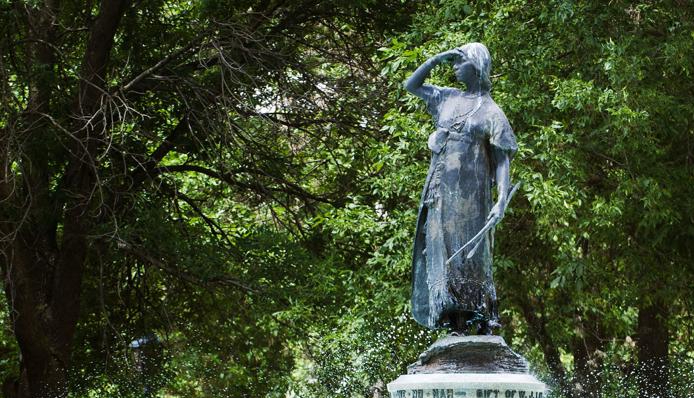
My father was born in Winona County, Minnesota, an area dominated by Winona—a tranquil, medium-sized city on the west banks of the Mississippi River.
What I love about Winona is its history. Before white settlers came to the area, Dakota Sioux natives called it Keoxa. They lived in the area for centuries and stayed for years, even after the the United States government purchased the land from them in the Traverse des Sioux and Mendota treaties in 1851.
The first known white man to see Winona was Lieutenant Zebulon Pike in 1805, who traveled from Fort Bellefontaine in Missouri to find the source of the Mississippi River. In his journal, he writes about the Dakota legend of Winona, a daughter of Chief Wabasha III who throws herself from Maiden Rock, a precipice on the Wisconsin side of Lake Pepin—a wide expanse of the Mississippi River just north of present-day Winona.
On October 15, 1851, Captain Orrin Smith, Mr. Erwin Johnson, and two other men—knowledgeable of the Traverse des Sioux and Mnedota treaties—claimed title to the riverfront and surrounding prairie land. When the town site was surveyed and plotted in 1852, Smith and Johnson named it “Montezuma.”
Why this Aztec name was chosen for the town is a mystery. Montezuma means “angry like a lord.” Perhaps the swift current of the Mississippi River was the motivation for this label, but, nevertheless, the name didn’t last long.
In 1853, Henry D. Huff bought an interest in the town site, and he was successful in changing the town’s name to Winona. Huff was in town to make money by building railroads. He also wanted to develop Winona into a classic city. When he changed the city’s name, he also created streets and street names: Huff Street after himself, Harriet Street after his wife, and Wilson Street after his son. The town was still a muddy expanse, but Huff built a family a mansion to signal to future residents that Winona was to be a town of sophisticated architecture and graceful culture.
What better way to achieve this than to name the city Winona, which means first-born daughter in Dakota. Her story is tragic but inspiring. She threw herself to her death so that she wouldn’t have to marry a man she did not love. She settled for nothing but the best, and that’s what Huff wanted for himself and his new home.
References:
History of Winona, Olmsted, and Dodge Counties Together with Biographical Matter Statistics, Etc. H.H. Hill. 1884. pp. 352.
Withington, Ross. “Henry D. Huff.” Writing in Winona: A student and community writing project. https://medium.com/wicwinona/henry-d-huff-b7ffb6102672. July 3, 2022.
 Tess Perko's Blog