What I Learned about My Dad’s Vietnam Deployment from Reading The Women by Kristin Hannah

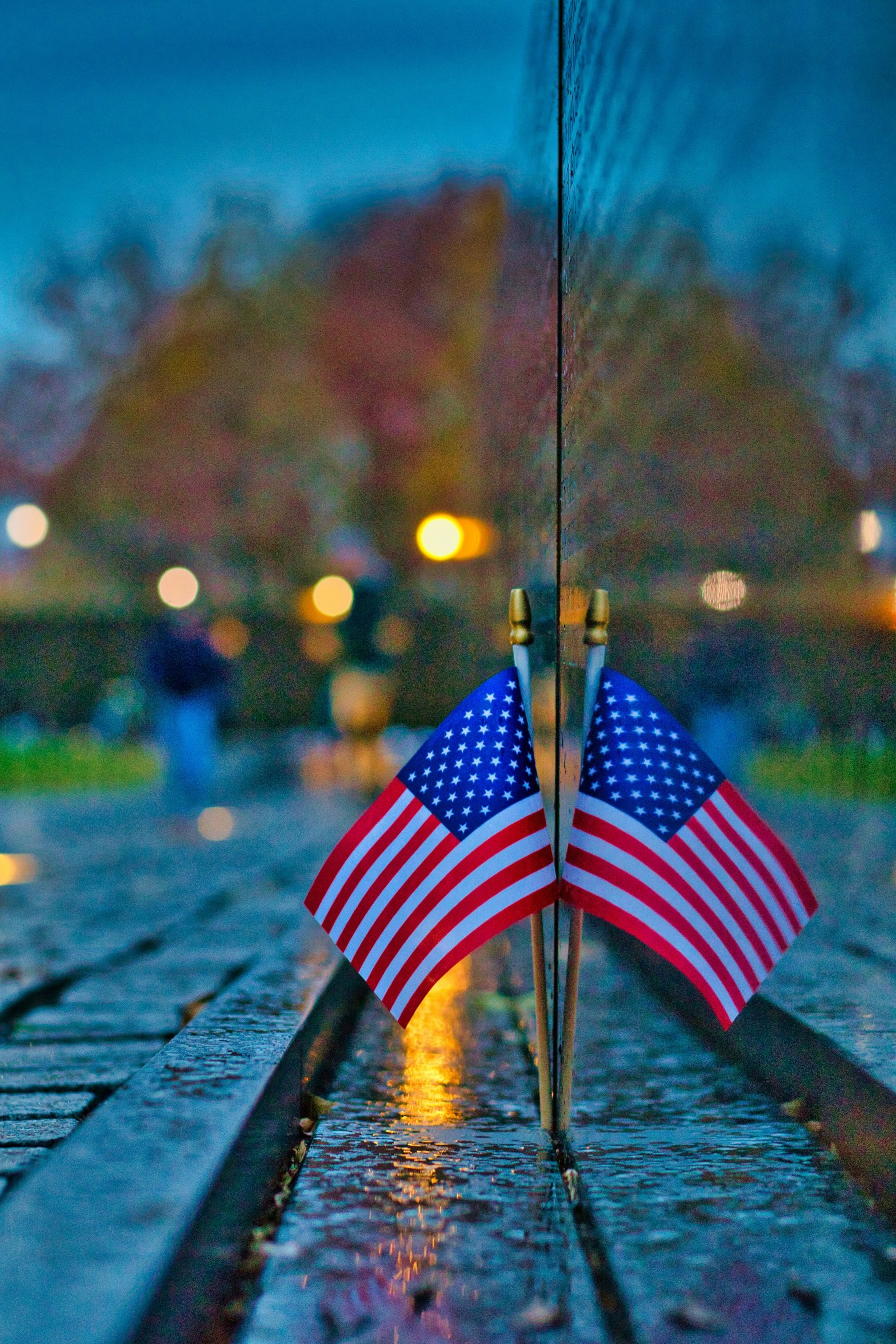
Photo by Kirt Morris on Unsplash

I was fifteen years old when my father went to war in Vietnam, not old enough to understand the news or to pay attention to adult worries. But I remember my dad standing at the front door with my mother hanging onto him, tears streaming down her face.

When my dad came home, we expected that he’d sit in his big armchair set in a corner of the living room, gather his children around his feet, and tell stories about what he saw. But he didn’t. He sat in his armchair, staring at the blank television with furrows in his brow for hours each night after work and during the long afternoons on the weekend. We crept past his chair silently afraid of his morose temperament.

When I discovered The Women by Kristin Hannah, I thought it would be an opportunity for me to learn about my father’s Vietnam experience that he never shared with us. The book tells the story of a young woman, Frances Grace McGrath, who becomes a nurse and signs up to serve in the army in Vietnam in 1965. She joins the Army Nurse Corps since the Air Force and Navy require her to have more clinical experience than she has.

Frances, known as Frankie, is inspired to sign up for service because her father has a wall in his study of the family’s military heroes, and she wants to be on that wall. The only woman on the wall is her mother in a wedding picture. Just before her brother leaves for the war, one of his friends tells her that women can be heroes, too.

My father, on the other hand, tried to avoid going to Vietnam. By 1965, he had been in the Air Force for twelve years and was a senior flight mechanic, a valuable skill for a war being fought with helicopters and airplanes. 1965 was the year that President Johnson increased troop deployment to Vietnam and began direct combat operations to shore up the South Vietnamese defense against the communist Viet Cong and North Vietnamese forces. My father petitioned not to be sent, so he was deployed instead to Mildenhall, a U.S. Air Force base in the United Kingdom. I was only nine years old. The bad news was that he had to leave his circle of friends in California to serve there for almost four years. The good news was that his family could join him, his wife and all nine kids. We came back to California in 1969. But this alternate deployment did not protect him from being shipped off to Vietnam.

In 1972, when the war was raging and tempers were flaring at home about it, I still didn’t know much about the war even though I had seen pictures of U. C. Berkeley students protesting it on television.

In April 1972, my dad closed the front door on his family and flew to serve at Cam Ranh Bay, an air base Vietnam used for the offloading of supplies, military equipment, and as a major Naval base. My father was assigned to serve as the senior flight mechanic on a huge transport plane known as a C-5B, a plane that can transport a fully equipped combat unit with oversized cargo. He wrote numerous letters home. In one, he writes about how he sprained his ankle in the shower. In another, he describes how a bomb went off outside the plane, the noise ringing in his ears.

I know my father took soldiers to the front lines and brought home dead men in body bags. He didn’t tell us that, but when I read about the use of C5-B planes, that’s what I learned. I know also that the planes were used to rescue Vietnamese women and children and bring them to the United States. Once, my father described how they had to shut the cargo door to keep out the hordes of civilians trying to board the plane.

After my father died and I was helping my mother with his estate, I came across some paperwork relating to a lawsuit about Agent Orange. Apparently, my father had been exposed to it in Vietnam. I had heard of it and thought that it was some kind of chemical used in a war. In The Women, I learned that it was a deadly herbicide used to kill jungle foliage to prevent the Viet Cong from hiding. Exposure to it causes cancer, birth defects, and other illnesses. My father died when he was 76 years old from heart trouble. His grandfather had lived to the age of 98 years old. Could he have lived longer if he hadn’t been exposed to Agent Orange?

Dad only stayed in Vietnam for eight months. He came home early since President Nixon had decided to withdraw U.S. troops by January 1973. Dad flew into Beale Air Force Base and my mother rushed to see him as soon as he landed.

By 1972 in the book, Frankie is home, experiencing nightmares and guilt for being part of a war that Americans didn’t want. She had seen soldiers without limbs, chest wounds, and mangled heads. They haunted her in her dreams, and when loud noises went off around her, she ducked for cover.

I don’t know if my father had nightmares like Frankie. I don’t know how the war protesters made him feel. Unlike Frankie, whose military service was ignored by her family and country, I think my father had emotional support waiting for him at home. My parents had a large community of friends in their church, who rallied around him when he returned. Finally, after months of grim silence, he got out of his armchair and settled into life again. A few years later, he retired from the Air Force and went back to school to get his contractor’s license. His last job was building candy stores for See’s Candies.  

Frankie’s story taught me how the women who served in Vietnam received little or no credit for their valor even from their own families. As a woman, I’ve experienced a lot of inequality, so the story affected me deeply. But as the child of a soldier in Vietnam whose life was profoundly affected by a parent’s suffering,  I’m thankful that it uncovered some of the mystery of my father’s Vietnam deployment.
A Eulogy for my Sister Carol

Photo by Cristina Anne Costello on Unsplash

Good morning. My name is Tess, the third child in a family of ten children and Carol’s older sister. Carol was the sixth child in our family, born on October 20, 1960 at Mather Air Force Base hospital in Sacramento.

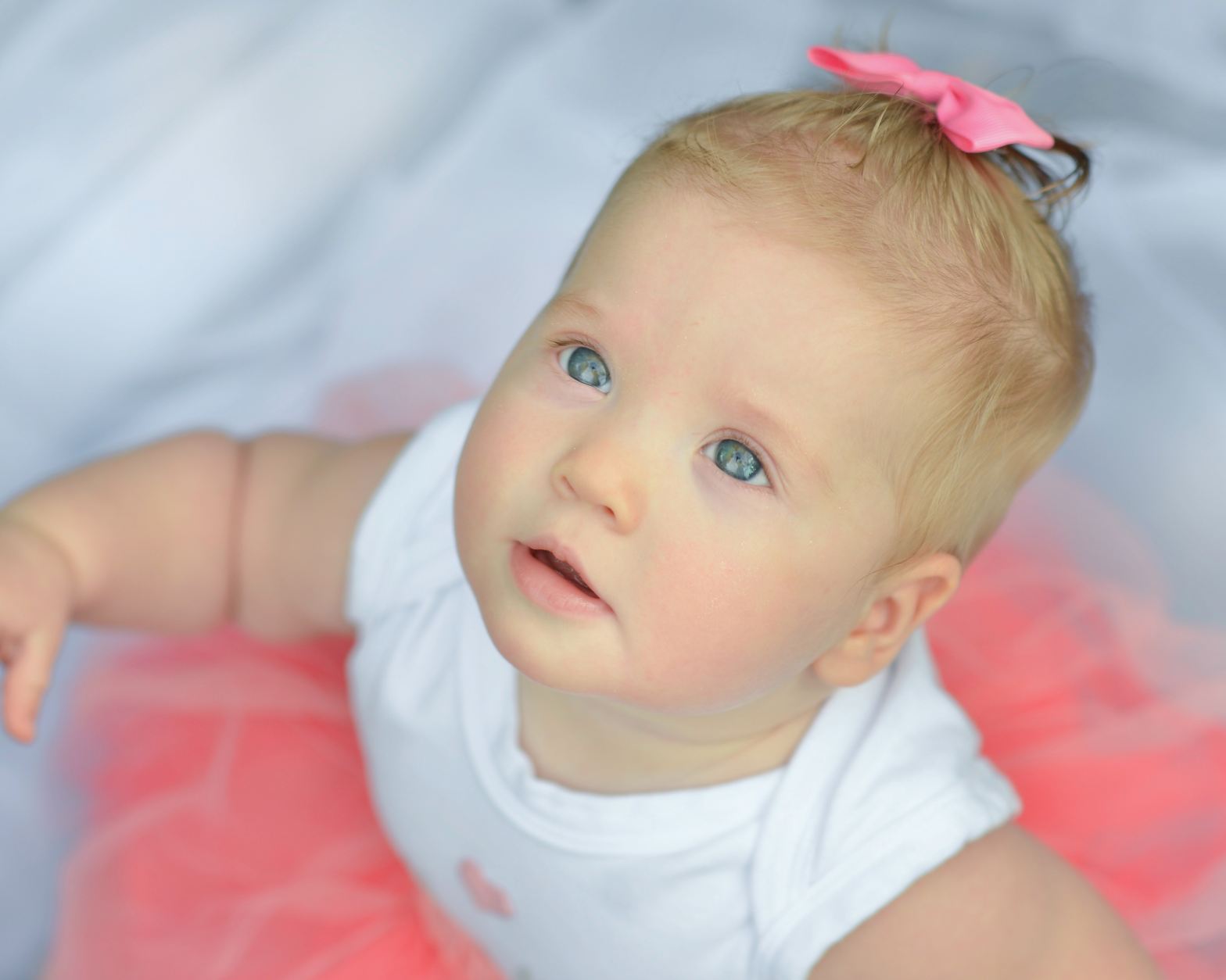
As a baby, Carol was a pretty little blonde girl with fine hair and features that mirrored her mother’s: a long forehead, an awfully straight nose, and a smile that created dimples in her cheeks.

Carol loved, loved, loved music.

She enjoyed old-fashioned country music by the likes of Hank Williams who wrote “Hey Good Lookin,” which she heard when Mom and Dad played the radio.

When Carol still lived with us, Beverly, Carol’s oldest siter and another musician in the family, sang songs to her, such as “Do, Re, Mi” from the musical Mary Poppins and “My Favorite Things” and “Edelweiss” from The Sound of Music. Carol smiled, laughed enthusiastically, and sometimes rocked to the beat.

Just before Carol died, Ron and I visited her in the hospital. She was anxious, and the only noises in the room were the beeping of the medical monitors. We turned on some music by the Russian composer Sergei Rachmaninoff. Immediately, Carol turned her head toward the music speaker and calmed down. Her eyes gleamed with joy.

We believe Carol would have been a great musician if she hadn’t suffered from Cerebral Palsy.

Carol possessed determination.

Even though she didn’t speak, Carol had ways of letting people know what she didn’t like. Whenever someone tried to brush her teeth or feed her sour fruit, she clenched her mouth closed to prevent anyone from getting anything past her teeth.

While she was in the hospital, Carol demonstrated determination as well. She didn’t like having oxygen tubes in her nose, so she moved her head from side to side until they fell out. One time, after I had inserted the tubes back in, Carol used her left hand to accurately bump the tubes out of her nose and above her head. A look of satisfaction spread across her face as she became free of them. I laughed out loud realizing that her spirit was still strong and impressive.

Carol was sometimes mischievous and annoyed.

One time when Margaret visited Carol while she was living in transitional housing, she found a caretaker feeding her.

Margaret knew that Carol had been attending school to learn how to eat on her own, so Margaret said to Carol, “Carol, you know how to feed yourself.”

Carol swallowed, looked up at Margaret, and laughed heartily.

Apparently, she was hungry, and, if she had to feed herself, it would take much longer. She knew what she was doing.

When Carol was annoyed, she set her mouth in a tight straight line to let us know. Her expression was so like the countenance of Mom’s face when she was irritated that we recognized it easily.

Carol enjoyed the support of a loving family throughout her life.

Our parents’ greatest gift was a strong family bond, and Carol was an integral part of our family unit.

Carol lived with our family for nine years. When she was a little girl, I lifted her onto the swing and pushed her. She raised her face to the sky to feel the breeze. I also took her by the hand and walked her around the back yard so she could see the animals. Her eyes followed the ducks and chickens as they strutted around for food.

When we flew to England to live for almost four years, I sat next to Carol on the plane. I thought I was luckier than my two older sisters because they had to take care of more siblings than me. As long as I took good care of Carol, Mom was happy. I danced stuffed animals in front of her, fed her the airplane food, of which she didn’t complain, and sang her to sleep.

After we returned from England, my parents decided to arrange for Carol to live in an assisted living home. One of her homes was in Santa Clara. At the time, I worked in Santa Clara, so, once a week, I visited Carol and fed her dinner. Sometimes, I was able to take her outside to enjoy the warm sun and soft breezes by the Bay. We sat on the expansive lawn under the shade of an oak tree, and I told her stories about the people in our family while her hazel eyes stared at my face.

Margaret and Liz also visited Carol in Santa Clara. First, they went to Great America for a day of fun, then called Carol’s facility to see if they could visit. Since they were arriving after visiting hours, they knocked on the back door. Once admitted, they sat next to Carol in the sitting room and told her about their day at the amusement park. Since Margaret and Liz love roller-coaster rides, they described the thrill of bouncing up and down and all around, and Carol stared at them, probably day-dreaming about a calmer choice such as “It’s a Small World.”

Finally, my parents arranged for Carol to move to Sacramento so she could live closer to them.

Once, while visiting, Margaret took Carol to Starbucks and ordered her a Strawberry Créme Frappuccino. She wheeled Carol outside since it was summer and she wanted Carol to enjoy the good weather. Margaret held the Frappuccino up to Carol’s mouth and told her not to drink it too fast or she would get a brain freeze. Carol eagerly sucked quickly through the straw for a few seconds, then let the straw go, wrinkled up her nose, and squeezed her eyes shut. Oops, she got a brain freeze.

When Carol moved to a home in Penryn, she was extremely popular with her roommates. She had more visitors than anyone, and her roommates thought she was Miss Congeniality. When we visited her, not only did we talk to Carol, we spent time with her friends. The joy on all the faces was rewarding. We felt popular, too. 

Mom and Dad supported Carol throughout their lives, making sure she was well-cared for wherever she lived. Often, they brought her home for holidays such as Christmas so everyone could see her. Carol even showed up at Mom and Dad’s 50th wedding anniversary at St. Mel’s Church, accompanied by her caregiver.

Later, after Dad passed away, Mom visited Carol as often as she could even after she moved into an assisted living facility herself when she was 89. Whenever Carol saw Mom, she didn’t have eyes for anyone else. She gazed into her face with a tender look of love, often accompanied by a smile.  

Mom was a dedicated mother; she called Carol’s home every Sunday afternoon to check up on her. Our parents also purchased a burial plot for Carol next to their own so she could rest beside them.

Closing

We will miss Carol. Like any sibling, she was our friend, our companion, our entertainment, and most of all our teacher. She inspired us to slow down our racing lives to enjoy basic joys and connection with her. She showed us the value of unconditional love and how to practice it. She taught us that family bonds go beyond childhood and are maintained by commitment.

Our lives were and still are enriched by hers, and we are grateful to God that she was our sister.

Cousin Love

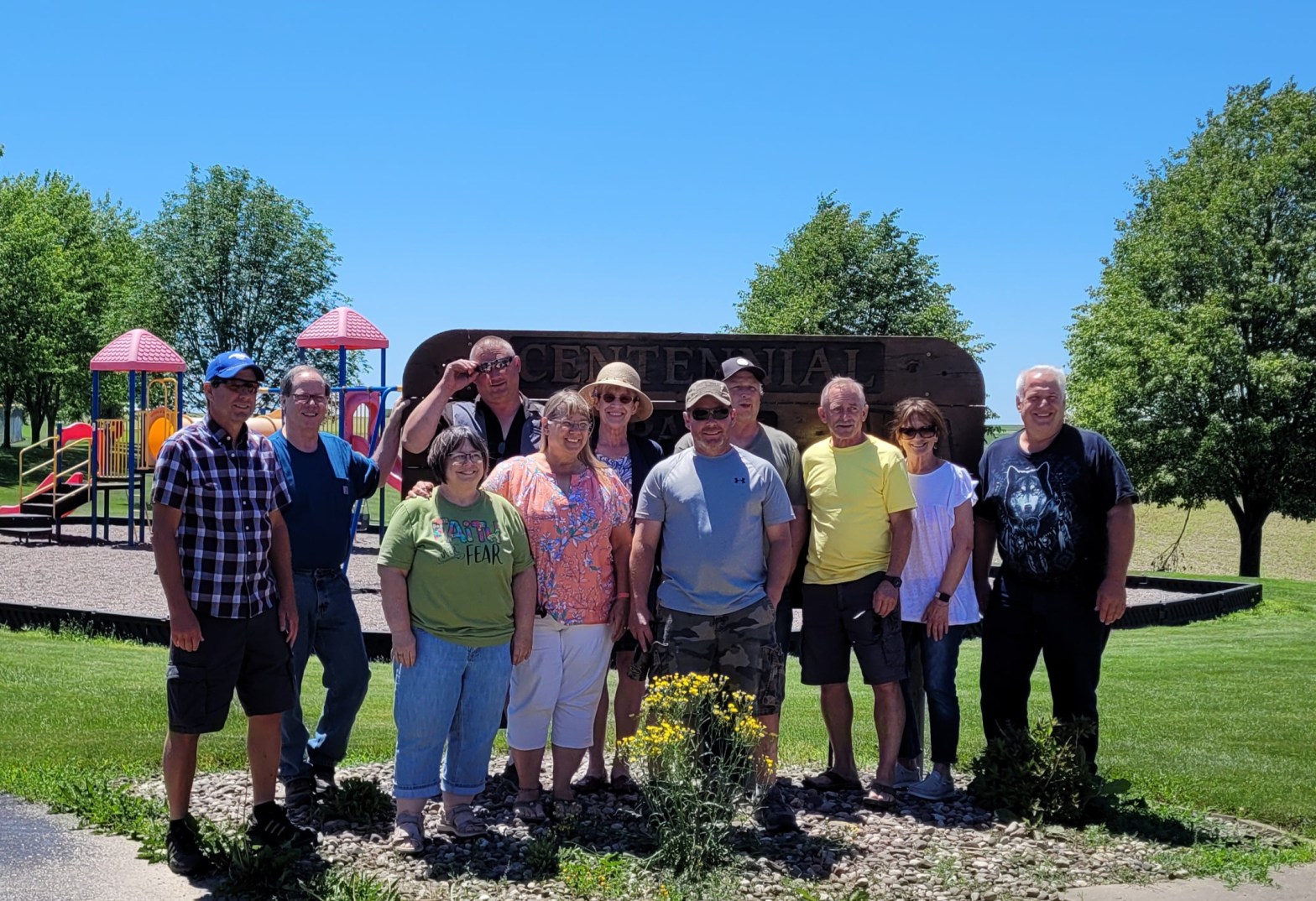
No one ever talks about their cousins, except my family. I have 44 first cousins that live all over the United States and beyond. I have friended many of them on Facebook. Many receive Christmas cards from me, and I visited many in Wisconsin and Minnesota this last year. I feel as close to my cousins as I do my own siblings.

My parents assured us that we would enjoy being from a large family since we’d always have friends. They were right. Even though I don’t see my cousins on a daily basis, they bring me so much joy and satisfaction.

My cousin Tim lives in Montana. He recently retired as the Superintendent of a tiny school district. Since I was a college professor, our careers were focused on helping students and improving education. We also comforted each other when we went through our divorces by sitting in a car in San Diego in the middle of the night and sharing stories after his brother’s wedding.

My cousin Roslyn is a high-school history teacher in Michigan. We both believe that students are better off when they learn history from more than one perspective and understand the difference between equity and equality since we worked with those concepts in the classroom. Roslyn is my philosophical partner in our extended family.

Carolyn lives in Winona, Minnesota. She raised her son as a happy single parent and now has two grandchildren. Yesterday, she posted a picture of her front yard packed with snow where she had painted flowers on the three-foot snow walls beside the path to her front door. What a creative spirit!

Cousin Dan lives in Japan with his wife and two pretty daughters. He works for the United States Navy and leaves his family for months at a time while stationed on the U.S.S. Reagan. I love his mustache and fun-loving family, who spend their afternoons searching for pottery on the beaches and artistic manhole covers in the towns.

My cousin Arlie is a handsome devil who has worn his once-dark-but-now-gray curly hair both long and short over the years. Once he drove a truck full of Wisconsin cheese to my parent’s house in California. We ate cheddar for weeks. Now, Arlie rides horses with his wife and works at an auto store. Even though we have little in common, at every reunion, we share heart-felt cousin hugs.

Patty lives in Boston and is married to Steve, who completely adores her. They go to baseball games and concerts on date nights, and inspire the rest of us not to give up on love. Patty sure knows how to pick a good partner.

Diane lives with her husband Matt in Minnesota. Now this is a fun girl. If you want to kayak in the Winona Lake, she’ll do it. She knows all the best restaurants in town and will even accompany you to the local spice and Polish museums for an afternoon. If you’re up for it after dinner, she’ll go with you to a bar for a beer and sit outside with the mosquitoes. One year, I watched on Facebook as she and Matt took their motorcycle on a cross-country trip through Minnesota, South Dakota, and Montana. Wow, what a woman!

Scott, a happy tall guy with a strong build, owns a dairy farm in Minnesota where he produces thousands of gallons of milk per day for American milk-drinking consumers. If you ask, he’ll take you on a tour of the farm and you’ll see where the calves are raised, cows are milked by machine, statistics are collected for each animal, and cow manure is recycled. Even a town-girl like me learns something every time I visit his farm.

I could go on talking about Lisa in Florida, Marilyn in Ohio, Marjorie in Minnesota, Randy in Minnesota, Karen in Wisconsin, Dewey, Joanne, Debbie, Denise, Renee, Kathy, Scott, Jim, and more, more, more, but you get the idea. I have interesting cousins in my life, and I interact with them frequently enough to maintain vibrant relationships.

Thank you, Mom and Dad, for maintaining such close family ties over the years. My cousins are an essential part of my happiness. I love them.