Character Study: Amelia

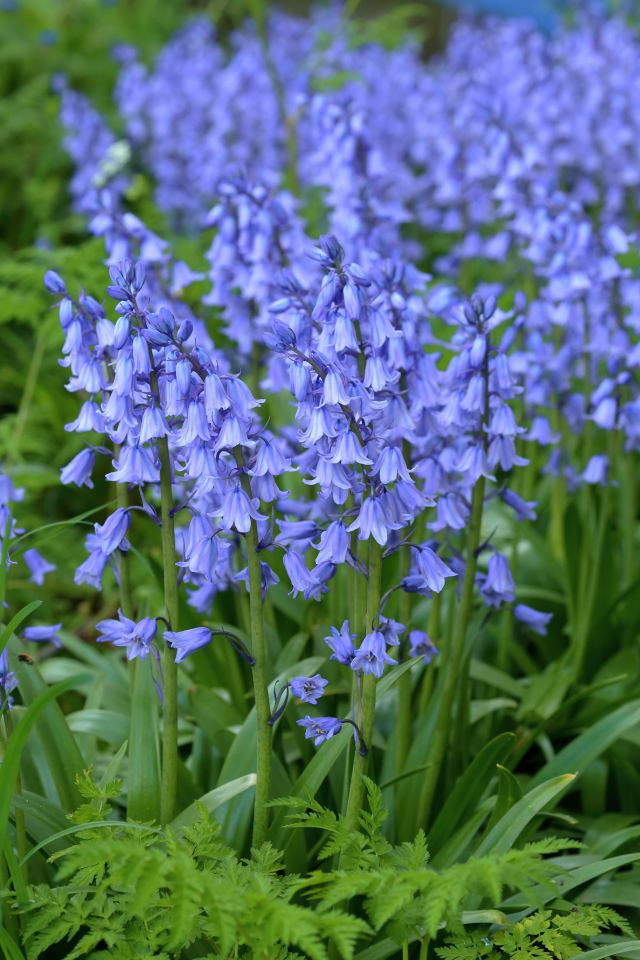
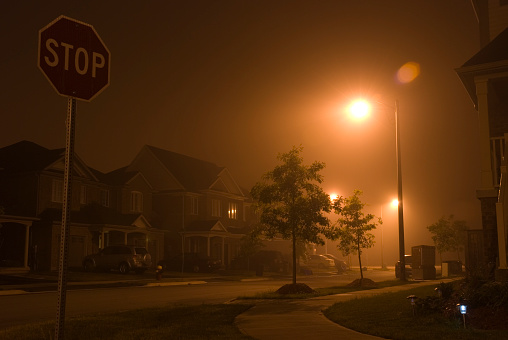
Photo by Molnár Bálint on Unsplash

It’s six-thirty. Time to get up if I want to take a walk before I lose interest.

I stretch my nightgown over my head and hang it on the hook on the wall inside the closet. I pull on leopard leggings and a black T-shirt, and drag on a pair of thick socks.

My dog, Tipper, is snoring on the other side of the bed. He won’t wake up until after I get back, then he’ll lie in bed on his side with his feet straight out and his eyes barely open while I turn on Spotify and make breakfast.

But right now, I’m going for a walk. I lace up my shoes, grab the key to my Russian Hill apartment and open the door as quietly as I can.

The red carpet starts just outside my place which is at the end of the hall and travels all the way down the three flights of stairs to the wooden floor lobby.

Nine silver mailboxes make a square on the wall opposite the door, the morning sun through the door’s glass windows striking them and glancing off like blades of lightening. I bend down to the bottom row, punch the code on mailbox #9. The door pops open revealing a single letter inside with a hand-written address. I pluck it out in surprise and turn it over slowly, wondering what it is, slip a nail under the flap and tear it open.

Inside is a single piece of note paper with nothing written on the back. A short letter. I unfold the paper and notice that it is vellum, a high-quality, smooth stationary used for special occasions. Who’s getting married?

Someone with fairly good handwriting has written to me.

Dear Amelia,

You don’t know me, but I believe that I’m your biological sister from your dad’s side. I was born in Vietnam, but, right after the war, an American couple adopted me and raised me in San Diego.

I’ve always known that my father was American and my mother was Vietnamese. My mother died in the war, but my adopted parents told me that my father was an American serviceman who was stationed in Vietnam when the war ended. He never knew my mother was pregnant.

I found you while doing genealogy research on Heritage.com. You showed up on a family tree that was apparently created by your mother twenty years ago.  

My adopted parents are still living in Escondido and I’m living in downtown San Diego, teaching biology at San Diego City College. I went to San Diego State to get my bachelor’s and master’s degrees. I’m 29.

I’d like to meet you and hope you’re willing to talk. Please write back to me. My address is on the back of this envelope.

Sincerely,

Mai Pericote

The room darkens all of a sudden and a knife digs into my heart. I fumble the mailbox door closed and twist the combination knob to erase the code.

The numbers on the knob are blurry.

The lines in the room are fuzzy.

Dad didn’t know? He had an affair in Vietnam while Mom was taking care of me and my sister in the Bay Area, waiting for him to come home every day?

I turn toward the door, the sun shining through the panes blinding me.

I stretch out my hand to find the door knob, grab it with my fingers, and turn.

Outside is Hyde Street and the San Francisco morning chill.

What Really Makes Me Tick (Happy)

Wouldn’t it be a better world if everyone knew what they needed to be happy? I’m retired, and I loved my teaching job; however, now that I don’t have to commute to work five days a week or grade college essays on the weekends, I just want to do things that make me happy. Here they are.

Admiring Flowers

Stopping to smell a rose may seem like an unimportant action, but, when I do it, it brings me joy. I have rose bushes in my front yard and back yard, and every morning, I wander outside to inspect every bush to see the new blooms. I sniff and stare and smile to my heart’s content.

I remember the flowers of my childhood, too. In January, crocuses poked out of the soil in the flower beds in the front yard. In February, the daffodils came. Tulips arrived in March, and Irises after them.  By the time Lent was over, Easter Lilies grew like sophisticated ladies in white hats in our back yard. And in May, the meadows were carpeted with Bluebells.

For four years of my childhood, I lived in England with my family, and I was impressed by the colorful blooms of summer that thrived in the temperate climate. Rambling roses climbed up cottage walls. Cosmos waved their rainbow heads in the breezes like pretty bonnets. Hydrangeas brightened shady nooks of gardens with their puffy burst of blue and pink. I was entranced by their beauty.

At Christmas, my mother bought at least one Poinsettia to decorate the house. She bought red poinsettias, white poinsettias, and ones with white flowers with red stripes. Sometimes, she had an amaryllis bulb growing in a pot. Every day, I’d inspect it to see whether it was blooming or not. I was in more of a hurry than it was.

Making a Stew or Pot of Soup

Whenever my dad cooked, he made “water” soup. He added pieces of beef and vegetables to a pot of water to create soup. Ugh. We kids would cringe when we saw him taking out a pot. His were the worst soups I’ve ever tasted.

Maybe that’s why I love making delicious soups.

I own an old Dutch oven that is the perfect size for making one-pot meals. Some mornings even before I change out of my pajamas, I scour the refrigerator and pantry for the ingredients for a minestrone—onions, celery, carrots, zucchini, chick peas, barley, chicken broth, chopped tomatoes, oregano, salt, and pepper. Sometimes I add cooked shredded chicken. Often, I don’t.

Or I find the fixings for chicken noodle soup for a recipe from a William’s Sonoma Soups book that I bought a long time ago. While I’m chopping the carrots and celery for this soup and simmering the chicken breasts in the broth, I think back when I made this for my two children who loved it. I see their little faces above their steaming bowls, their hands holding spoons, their mouths filled with savory egg noodles.

On one European trip, I bought cookbooks in the Czech Republic and Austria, so when I want to make goulash, I search for recipes from those books. My favorite goulash is a beef, onion, and smoked paprika concoction that is topped with cornmeal dumplings. I first ate cornmeal dumplings at the restaurant at the Belvedere Palace Museum in Vienna. I’m still practicing to make mine taste as good as those were.

Reading Inside When It’s Cold Outside

To me, the essence of decadence is waking up in the morning, seeing that it’s cold and rainy outside, then reaching for a novel and reading it in bed. To take all the time in the world to read a story, then stopping and thinking about it is heaven on earth.

Reading when its cold outside reminds me of when I read as a child. I had time to sit on the floor in a corner of the house with a treasured book of fairy tales and get lost in another world. When my mother took me to the open-air market, I found the bookstore, walked to the back shelves, pulled out a tome, and read it while sitting on the floor. I was always afraid that the shop owner would find me and kick me out, but he never did.

Decorating My Home

When I was a child, we never had an expensive home, but that didn’t keep us from making it beautiful. In the spring and summer, I picked flowers in the meadows, poked them into vases and brightened every table and dresser in the house. In the fall, I cut branches of colored leaves for the mantel in the living room. For winter, my mother and I found pine cones and spray-painted them silver and gold for Christmas. We added holly and pine branch garlands in-between them.

Today, when a new season comes, I still have the irresistible urge to celebrate it with seasonal décor. Right now, I have a collection of pumpkins on my front porch accompanied by a little witch. I also have put pumpkins on the table on the back patio so we can feel the season when we go outside in the afternoons. Every time I pass these decorations, I feel like celebrating.

Writing

I wrote my first poem when I was nine years old, and I’ve been writing ever since. Sometimes, I use writing to help me sort out a problem. Currently, I’m the chair of a scholarship committee for a charitable organization. When I’m planning the meeting agendas, I write them to organize my thoughts. When I’m thinking about how to improve my author’s platform, I write my thoughts down. I write down daily affirmations and New Year’s Eve resolutions. I write every day.

Even when I’m traveling, I have a journal that I use to take notes or write a spontaneous poem. I remember one vacation that I took by myself to Boston. After I toured Paul Revere’s tomb and all of Boston’s historic sites, I drove north up the Atlantic coast. I stopped in Salem and visited another graveyard where a huge oak tree that had gotten so big over the centuries that tombstones were poking out of its bark halfway up. There was so much to write about. Finally, I stopped the car at the edge of the road near a beach. As I sat in the sand and gazed over the surging navy-blue sea, I wrote a poem about the peace that I felt.  

When I visited Sorrento, Italy, I stayed in the Grand Hotel Excelsior Vittoria. Our room had a large terrace that overlooked the Sorrento Harbor. Across the Bay of Naples with its slate-blue ripples, we could see Mount Vesuvius. Every day, I sat at the patio table on this terrace with my journal to write about the gorgeous scenery or about my excursions into the town of Sorrento or its nearby attractions. I wrote how my husband had to scrunch down going into the Blue Grotto Cave in Capri. I described the ceramic factories that we toured in Almalfi. With words, I wondered what it was like to be a citizen of Pompeii in 79 AD when Mount Vesuvius spewed its lava all over the populated city.

Now that I think about it, I’ve been doing these happy things my whole life. Naturally. Now, though, I have more time to do them. What joy.

How I Evaluate Publishers

I finished my novel last month, and now I am submitting it to publishers. During the process of finding the right publishers, I’ve learned a lot, and I’m sharing it with you.

Use a Good Source of Publishers

I didn’t know where to find the names of publishers, so I asked a writer friend what to do and she gave me two links of independent publishers. She suggested that I choose six of them and present my manuscript to them. Here are the links:

Publishers Group West: https://www.pgw.com/distribution-services/publisher-list, and Consortium Book Sales and Distribution: https://www.cbsd.com/publishers/our-publishers/.

I started to go down the list of publishers from Publishers Group West. What I found was a lot of publishers that didn’t accept the type of novel that I wrote, which is a coming-of-age novel. Some wanted non-fiction. Others were looking for fantasy, crime thrillers, adventure, historical, or memoir tomes. I spent hours and hours looking at their websites without a viable candidate. What I needed was a list of publishers who focused on coming-of-age novels or literary genres.

Another write friend told me to buy the current Writer’s Market. What a brilliant suggestion. This book contains 183 names of publishers and pertinent details in alphabetical order. Better yet, on page 855, is a “Book Publishers Subject Index” where I found three columns of publishers interested in literary novels. I’ve been investigating the websites for the companies on this list and, already, I have identified six publishers that are appropriate for my novel.

Find a Publisher that Publishes Your Type of Novel

I already mentioned how I was looking for a publisher interested in coming-of-age or literary novels, but I want to explain this further.

I found out that publishers have mission statements that explain the purpose of their company. For example, one publisher I reviewed has a mission to publish the works of authors from the Midwest. I live in California, so the chances of them picking up my novel is unlikely. Another publisher aims to publish books written about queer subjects. My book doesn’t qualify for this either. I don’t want to waste my time sending my manuscript to someone who doesn’t want it.

Buy a Book from a Target Publisher and Read It

I found a publisher that wanted coming-of-age novels, so I ordered one of its previous publications. When the book arrived, I didn’t like its cover, binding, or even the style of writing by the author. I felt like I would be disappointed if my book looked similar, so I didn’t send my manuscript to this publisher.

I bought a book published by another publisher. Immediately, I liked the cover and the binding. I even noticed how the cover design demonstrated complementary colors since I once taught art in an elementary school.

I read the book from cover to cover, including the book flaps and the quotes from other authors on the back cover. I liked the story and noticed how it was the kind of story that I could write.

I also read the author’s “Acknowledgments” and found out that her story was similar to mine in another way. The author is Caucasian, writing about a story set in a Central American country. I am Caucasian and my story takes place in South America. The author thanked her publisher for agreeing to print her book even though she wasn’t native to Central America, and she argued that an author should not have to be a native to the setting of her story.

I had heard about the argument of cultural correctness, but, as this author pointed out, many novels would not exist today if men could only write about men, women about women, Hispanics about Hispanics, and so forth.

I sent my novel to this publisher with a comment in my query letter that asserted that writing about a setting into which I was not born was part of my inspiration for writing the novel in the first place. I also mentioned that I had read the other author’s “Acknowledgements” and agreed with her. I’m sure this editorial team will be impressed that I went to the trouble to carefully familiarize myself with one of their previous publications.

Read the Submission Guidelines

Unfortunately for busy writers, every publisher has different submission requirements. I searched each publisher’s website to find them. Sometimes, I had to find the submission link at the bottom of the publisher’s page.

Some of them use a program called Submittable that is built into their website. One publisher allowed me to attach my manuscript to this portal and fill in my name and previously published works in the blank fields. Another publisher who uses Submittable didn’t allow any attachments. Instead, I had to summarize my 300-page novel in 150 words, write out my “hook,” and list my previously published works.

Other publishers wanted me to submit via email. One wanted a query letter, a one-to-two-page synopsis, an annotated chapter outline, a market analysis including competitive research, at least two sample chapters, and my curriculum vitae.

I had to do some research for this. For the query letter, I modeled my letter after a sample query letter that I found on page 23 in Writer’s Market. I scoured the publisher’s website to find the name of the main editor and addressed my letter to her. After I wrote it, I had one of my writer friends review it. She thought my version was solid.

For the synopsis, I wrote a 700-word version and had it reviewed as well. My writer friend helped me improve it to add pertinent and alluring details.

My novel has 40 chapters in it, so writing the annotated chapter outline took several days. I listed each chapter and its title and then added a paragraph or two about its content. I must say that this exercise helped me take another look at my novel. Along the way, I made changes to my manuscript to make the plot stronger.

I searched the Internet to find out how to write a market and competitive analysis. I found some excellent articles by the Blue Ridge Mountain Christian Writers’ Conference that explained what this was.

My final market analysis identified my target market as college-educated women between the ages of 20 and 30 who were interested in travel, cooking, gardening, or hiking. I also identified my secondary market as women who were members of book clubs and who enjoyed discussing life events such as the death of a parent or breast cancer. I even described my tertiary market as high school teachers and college professors who require reading for writing assignments.

For the competitive analysis, I identified six books that were comparable to mine. I explained how each of these books were similar, how they were different, and how related the purpose of each story was to mine.

When it came to developing my curriculum vitae, I divided my publications into poetry, short stories, and academic publications. Since I haven’t previously published a novel, I didn’t include this category. I also listed that I have a Masters in English concentrating in Literature and Composition.

The work for this one publisher was so comprehensive that I have used portions of it for other submissions.

Keep Track of Your Submissions

I’m not sure how many publishers I will need to contact in order to get my book published, so I devised a way to keep track of them. On Microsoft Word, I made a four-column table with the headings—Publisher Name, Requirements, Date Sent, and Response Expected. Under the name of each publisher, I typed in either the email of the company or Submittable so I can remember how I sent my work.

I feel that my date columns are extremely important. The Date Sent column shows me when I submitted my work. The Response Expected column tells me when the publisher promises to get back to me. Some publishers do not contact writers if they are not interested, so this column will also tell me when to stop waiting for a response and reach out to another company.

My life’s dream is to get my fictional novel published by a traditional publisher, and so I’m going to do everything I can to make that happen.

Before Revising My Novel

I’ve written essays, newspaper articles, poems, short stories, and more, but never a novel. People who have written several novels impress me since I’m writing my first novel and learning so much in the process.

Since I retired as an English professor almost two years ago, I started a novel. Now, I have a first draft and it’s time for me to revise it. Here are the steps I’m taking before I proceed.

I Found a Good Critic

I asked a writer friend to read my novel and give me her criticism and suggestions. She was worried that our friendship would suffer if she gave me honest feedback, but I assured her that I was open to any constructive feedback. I’ll refer to her as Lila for this post.

The reason I chose Lila as a critic was because she has published numerous children’s books and one adult book. In other words, she has experience at doing what I want to do. She also taught high school Spanish, so her language skills are strong. Finally, Lila’s criticism is clear and she gives reasons for her comments.

Even though I reviewed and edited my novel before I gave it to Lila, I found that I didn’t catch all my errors and I needed a fresh brain to show me inconsistencies and mistakes. My mind was so overwhelmed at the daunting task of writing a whole book that I needed support to catch mistakes. Lila found places where I had changed my point of view, and she identified sentences that were unclear or out of place. She taught me that prose written in past tense must never include this; instead, I should use that. Lila even found a few spelling errors and typos.

Lila also gave me positive criticism. She identified the two most interesting sections of my novel. One was when my character goes to work in a winery and the other was when she hikes to Machu Picchu.

The most important advice she gave me, though, was a book about how to develop a plot. She recommended that I read Save the Cat! The Last Book on Screenwriting That You’ll Ever Need by Blake Snyder. This leads me to my next topic.

I Read a Good Book about How to Develop a Plot

I started reading Save the Cat! but then I found out that Jessica Brody had written another version of Save the Cat! titled Save the Cat! Writes A Novel: The Last Book on Novel Writing You’ll Ever Need.  I opened the paper version of Brody’s book and read it carefully. I learned about a plot planning tool called Beat Sheet and I confirmed that my novel belonged to the genre referred to as Rites of Passage. I also read about how to write attention-grabbing loglines and alluring synopses to pitch my novels to everyone, including people at the dinner table, agents, and prospective publishers.

Wow, I learned so much! The last chapter, however, that discussed common plotting problems was helpful all the way to the last word. Still, I wasn’t ready to begin revising my novel.

I Read Books in the Same Genre as my Own

I didn’t have enough courage to start revising my novel yet, so I decided to read books that had similar themes as my own to see how their authors developed their plots. Sarah Dessen wrote The Truth About Forever, a novel about Macy Queen whose father died while he was waiting for Macy to join him for a morning run. In my novel, my main character’s mother dies. As I read Dessen’s book, I tried to identify the 15 beats that Brody says every novel requires. For example, at the beginning of a novel, Brody insists that the opening scene must engage the reader. Dessen’s opening scene did get my attention. Brody also says that the themes of the novel must be included in the early chapters. Dessen’s theme of there are no accidents appears on page 27.

I Watched Movies to Practice Finding Save the Cat!’s 15 Beats

I love watching movies because they are stories, too. Since Brody’s book is actually based on a book about screenwriting, the 15 beats apply to movies as well. I watched Michael O. Sajbel’s The Ultimate Gift, a story about a spoiled adult grandson who must complete a series of tasks in order to earn his inheritance. I successfully identified one of the beats called the catalyst in the movie, which is when the grandfather dies and leaves his grandson specific instructions he must perform.

I’m still reading examples of my genre, but soon I’ll have to gather my courage, plot out my novel on a bulletin board, and start rewriting.

Whew. Wish me luck and stay tuned.

How I Wrote My First Novel

I’ve been a writer my whole life. In grade school and high school, I wrote poetry and essays. In college, I wrote my first short story. When I became an accountant, I wrote financial reports and audit recommendations. I also learned how to eliminate “fluffy” words and overly-embellished ideas. While I was raising my children, I wrote newspaper articles and more short stories. Finally, I became an English professor and I spent most of my busy career writing lesson plans and college letters of recommendations; yet, I hadn’t yet attained my ultimate dream of writing a novel. I either had writer’s block, low writer-esteem, or not enough time.

Then I retired a year and a half ago. Immediately, I decided that one of my activities would be to write a novel. This project, however, had no requirements—except one. I didn’t promise to finish it, publish it, or be tied to any kind of working schedule. The only requirement was for it to be fun.

People started to ask me numerous questions. When would it be finished or published? Was it a personal story? What percentage had I written so far? My answers were always the same: I have no requirements and no timetable.

Meanwhile, I started and wrote my novel. I posted a few chapters on this blog and received positive feedback. I discussed my ideas with my writing-oriented daughter who got excited about the story. I researched and researched and researched the setting and background of some of my characters’ activities. That was fun.

When I got stuck, I buried my nose into books that I thought could help me with my own novel. Books that had female characters and writers that used imaginative writing techniques to propel their plots forward. While reading, I stopped many times and thought about writing practices. Since reading is my favorite hobby, this was sheer joy.

I wrote when my husband played golf and on the weekends while he was watching football and basketball. I dreamed about my plot and got up in the middle of the night to write down notes so I wouldn’t forget my new ideas. I wrote outside in the garden when the sun was shining and my flowers kept me company. I wrote after my Pilates class and after hiking 4 miles in the open space. I wrote blog posts, and then I wrote my novel again. The thing was, since I had no requirements, I found a comfortable way to fit writing my novel into my life. I didn’t worry about ever getting rejected by a publisher or poorly reviewed by The New York Times.

My opinion was the only one that counted. And you know what? Because I didn’t care what anyone else thought, I developed courage to create scenes that I never would have written otherwise. I also broke grammar rules to emphasize settings or to create tone for important events in the story. I’ve never written with such creative abandon, and I’ve had the time of my life.

I finished my novel a few days ago–after starting twenty months ago. I wrote the story’s epilogue, typed a dedication, and printed out my manuscript. Now I’m getting my daughter and one of my writing friends to read it. Whoa. This is a little scary, but I keep reminding myself that I’m still having fun and don’t have to do anything that I don’t want to do. That includes listening to all their comments.

I’ll read their comments though, and use my creativity to incorporate those that I like into the draft. Then I’ll have to decide what to do next. Get an agent? Send it to a publisher? Put it on a shelf in my library?

All I can say for sure is that my heart is all aflutter. I feel fulfilled at last.

Why This Writer Reads Stories: Reasons 6 & 7

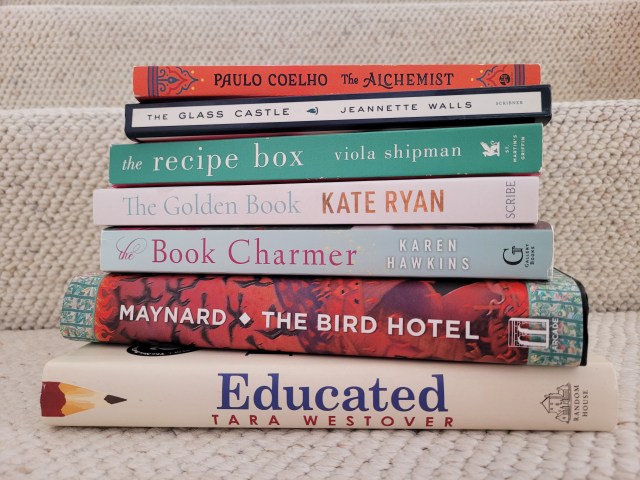
I became a better reader when I started teaching college-level English courses in writing, literature and critical thinking. Since I had to lead discussions relating to literature, I studied authors who were renowned for their literary prowess such as John Milton who wrote Paradise Lost and Paulo Coelho who wrote The Alchemist. I read books on how to develop plot, build characters, use a setting to strengthen a story, and employ figures of speech to heighten meaning.

Today, through reading, I’m still studying all of these topics in great detail. Here are two more specific writing techniques I’ve studied recently from reading other author’s stories.

Reason 6: How to develop characters with different speech patterns and thoughts

The best stories have memorable characters, and memorable characters are unique people who have a distinct voice, extraordinary thoughts, and notable physical characteristics.

In my novel, my main character, Leonie, is from San Francisco. Her companion on the hike to Machu Picchu, Luna, is a woman from Argentina. These two women meet many people on their journey—a winery owner, a young woman who seeks love, a tango instructor, a fortune teller, and tourists who are visiting South America from all over the world. Each of these characters must be distinctive in order to effectively contribute to the story.

In West with Giraffes, Lynda Rutledge does a fantastic job at creating likable characters that entice the reader to stay with the story until the final curtain. In this story, an old man has the task of transporting two giraffes from New York to the San Diego Zoo by truck. One giraffe is wounded, so he must take great care not to injure the giraffe further and to provide it with enough comfort to heal.

The old man is rather gruff with his first driver when the driver drinks too much and threatens the giraffes’ safety, but he is gentle with the giraffes, as gentle as a mother soothing a baby. Rutledge develops his personality by creating dialogue in which he shouts at the driver and threatens him. Immediately afterwards, she describes how the old man climbs up to the giraffes and speaks to them until they are calmed down. In other words, the author develops the old man’s character with careful dialogue and action to show that he can be impatient with people who are irresponsible, but also kind with creatures under his care. These are two techniques that I can use to develop the characters of my story.

Reason 7: How to connect the setting to the plot of the story

From real life, writers learn that setting is intricately linked to the plot of a story since characters’ choices are strongly influenced by where they live, travel, or wish to go.

In my novel, my two main characters decide to take a four-day hike to Machu Picchu in Peru. The hike is strenuous, risky, and uncomfortable. For example, some of the elevation on the trail is steep and the hikers must either do everything they can to endure it or choose to give up.  Some of the hike is at 12,000 feet elevation and some hikers are not conditioned for such altitudes. In addition, no showers are available at the camps until day 3, so the hikers must decide what to do for hygiene. All of these conditions greatly influence the choices that characters make.

In The Alchemist by Paulo Coelho, Santiago goes to Tangier, a dangerous port city, where he is robbed of all of his money. He had wanted to use that money to go to Egypt. Because he is now destitute, the boy takes a job in a glass shop where he learns patience, business skills, and a new language–skills he needs to travel to Egypt.  As he learns the skills, he also learns not to give up on his dream. The setting of the dangerous city shows the boy that he is naïve and must decide whether to give up or to persevere. The setting gives the author the opportunity to show that the boy is strong and determined to achieve his goal.

If the purpose of stories are to help humans learn how to navigate through their own lives, then stories must imitate life realistically enough to be instructive. Human lives are challenged by their environments on a daily basis—riches, poverty, war, traffic jams, noise, isolation, abuse, and advantage all impact what people can or can’t do.

A good author puts a character into a challenging setting and shows the reader what a strong character does with it.      

Why This Writer Reads Stories: Reasons 4 & 5

I read books even before I became a writer. Dr. Seuss stories, Dick and Jane readers, Aesop’s fables, Old English fairy tales like Jack & the Beanstalk, Perrault fairy tales such as Bluebeard, and Grimm stories like The Pied Piper of Hamelin. In high school I read J.R.R. Tolkien’s novels, all of Steinbeck’s stories, Mark Twain, Harper Lee and Shakespeare. When I earned my degree in English, I read and analyzed a new world of authors including Lady Mary Wroth, Phillis Wheatley, and Mary Shelley.

I’m so grateful for storytellers. David L. Ulin, a contributing writer to the Los Angeles Times Opinion writes that “countless studies have reinforced what many recognize from experience: Literature encourages compassion.” I agree. Through my reading, I’ve learned to empathize with people who are not even remotely similar to me, and I believe that this makes me a better writer.

Here are two more specific writing techniques I’ve studied recently from reading other author’s stories.

Reason 4: How to write about what a character is thinking

The best novels are ones in which the protagonist learns something profound. In order for a reader to witness the growth of a character, however, the reader must have access to what a character is thinking throughout the story.

In my current novel, a young woman graduates from college and decides to travel across South America for a year and a half to discover her purpose in life. She meets a variety of people who share their lives with her, but in order for my reader to see how these people affect her growth, I discovered that I needed to include her thoughts about these people and the ideas they inspire. My struggle was how to transition from dialogue with them to her thoughts about them.

I read Fellowship Point by Alice Elliott Dark, a story about two distinctly different elderly women who have known each other their whole lives. They experience lost love, death, and disappointment in the story, and Elliott Dark shows how each of them react to these experiences by revealing their personal thoughts.

One way the author accomplishes this is by including letters that Agnes writes to her deceased sister Elspeth. In these letters, Agnes describes her love for the little girl who lives next door and her horror at the girl’s accident. She also tells her sister about her daily writing goals and about philosophical predicaments she has: “It’s . . . hard after only writing fiction to tell the exact truth. I find myself embellishing [the past].” Through these letters, which will actually never be read, Agnes reveals her most intimate feelings, views, and perspectives. The reader gets a deep understanding of who Agnes is and how her past has shaped her personality.

The other main character, Polly, has three grown sons. The reader learns a lot about how she thinks when, in Chapter 32, she is having a conversation with her son James. In between the dialogue, Elliott Dark includes whole paragraphs about Polly’s reaction to James’s comments about his brother. The reader sees that Polly feels tense and that her impulse is to confess what she is thinking. Then, as the paragraph continues, the reader finds out that Polly has learned that she no longer has to reveal all her thoughts. She has devised a method of counting to three before answering her son’s question.

Without the exposure to these characters’ innermost thoughts, the reader couldn’t stay connected to the story.

Reason 5: How to use long sentences to inspire a reader

In English class, students learn about dependent and independent clauses, and simple, complex, and compound sentences. But in writing fiction, the best writers break formal grammar rules in order to help the reader focus on ideas or feelings instead of structure.

One of the writing techniques I’ve been practicing over the last few years is the long sentence, a sentence that can take the reader on a journey, reveal a character’s ambivalent thoughts, expose a character’s emotions, or share a uplifting moment. Long sentences can contain energy, propelling readers from the beginning to the end. In my current novel, when my main character and her hiking group climb a mountain and look down upon Machu Picchu, an Inca paradise high in the Andes Mountains, I want the reader to feel the hikers’ contemplative and emotional states.

To study how to write a long sentence that emphasized one idea with clarity, I searched my library to find some. Here’s one that I read in Stuart Little by E. B. B. White.

“In the loveliest town of all, where the houses were white and high and the elm trees were green and higher than the houses, where the front yards were wide and pleasant and the back yards were bushy and worth finding out about, where the streets sloped down to the stream and the stream flowed quietly under the bridge, where the lawns ended in orchards and the orchards ended in fields and the fields ended in pastures and the pastures climbed the hill and disappeared over the top toward the wonderful wide sky, in this loveliest of all towns Stuart stopped to get a drink of sarsaparilla.”

Wow. This single sentence gives a reader not only a panorama of the town, but also a feeling of both peace and intrigue, a great invitation to the story.

Now here’s the one I included in my novel: “The hikers sat in silence for a long while, thinking over the last four days, their pilgrimage to this place that would never leave them, their growth in learning that the pilgrimage was all important, every moment of it, every hour of hiking, every relic of human existence, every conversation between them, with their guide, in gratitude for their porters and cooks, every new realization about themselves, their lives, other people they knew, the places they’ve been, the people they loved and lost, the understanding about the mistakes they made in the past, the gaffs made on the pilgrimage, their insecurities, their overconfidence, their lack of confidence, their lack of empathy, their absorption of other people’s energies and what that felt like, their worries, their frustrations, their selfishness, their judgments about others, their changes of heart, their letting go of things they couldn’t change, their memories of pain, their attempts to forgive people who hurt them, their new concept of who they had become and where they sat now looking at a heaven made by people who lived long ago.” My sentence conveys that the hikers understand their journey to Machu Picchu is more important than the destination itself.

I hope to continue writing long sentences to make my readers relaxed, inspired or merely breathless.

The point is, however, that my reading is an essential component of my writing. I spend my days anticipating what I will learn when I sit down to read a novel, and then I practice that skill with enthusiasm. Ah, the writer’s life.

Why This Writer Reads Stories: Reasons 1, 2, & 3

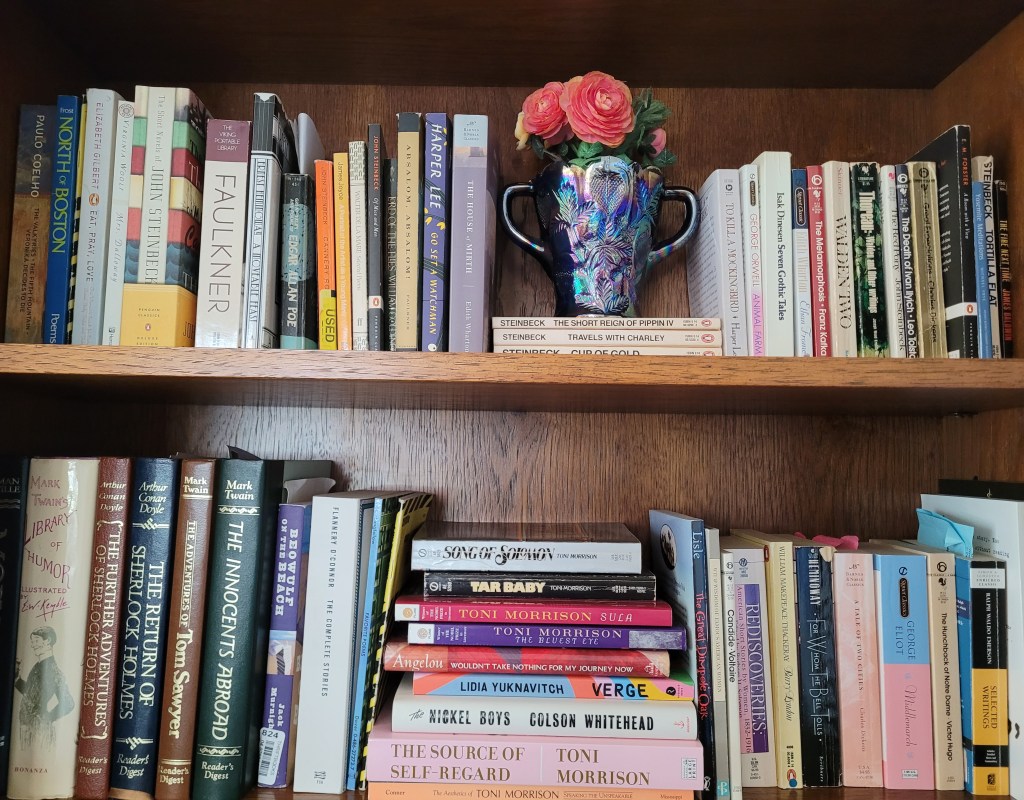
I have 257 novels marked “read” on my Kindle and I also read books on paper. My six-foot-tall bookcases in my home library contain over 300 books, plus I have some on the shelf underneath my television, on my coffee table, and inside drawers next to my bed. I read every day—in bed, on the couch, in the doctor’s office, at the hair salon, in the rocking chair in the back yard, and at the dining room table. Everywhere, whenever I can.

I became a writer when I was nine years old and wrote my first poem. Since then, I’ve written more poems, short stories, articles, websites, blogs, recipes and essays. Now, since I’m retired and have more free brain power, I’m writing a novel and loving my increased writing time. 

But I read more than I write. I devour stories like they’re chocolate sundaes, loving every bite of their plots, characters, settings, and figures of speech. I read voraciously because I’m a writer; I love language, the power it has to convey information, emotion, and empathy. In addition to loving other writer’s stories, I read to improve my writing.

Here are three specific writing techniques I’ve studied recently from reading other author’s stories.

Reason 1: How to indicate who is talking without using “he/she said”

Dialogue is a dynamic technique to use to create action in a story, but a writer must make it clear which character is speaking. I’ve read stories where authors use tags such as “he said” or “she said,” and sometimes these tags create wordiness and take impact away from the dialogue; therefore, one day I chose to study how an author can use effective dialogue between two characters without including these repetitive tags. By reading The Tobacco Wives by Adele Myers, I learned to identify the speaker of dialogue by describing what a character does right before she starts talking. Maybe she steps closer to the person to whom she is speaking and then she speaks. Another technique that Myers uses is to describe what a character thinks about the person with whom they’re talking right after she speaks; for example, she might imagine him playing a sport or eating spaghetti.

Reason 2: The effect of strong vocabulary on a reader

One thing I love about my Kindle is that I can underline a vocabulary word and get a definition for it immediately. I’m always looking up words, even familiar ones. I ponder about why the author might have chosen this word instead of its synonym. Is it a more accurate choice?

Or the word might be one I’ve never heard of before. This happens more often when I read authors who were educated in countries other than the United States. Recently, when I read Turn Right at Machu Picchu by Mark Adams, I learned another word for altitude sickness, soroche. Discovering a new word feels a little bit like having a new baby. It’s a treasure and an opening to a bigger world.

Reason 3: How to move characters from one geographic location to another

In my current novel, my two main characters are traveling in South America. I was struggling with how to move my story from one scene to another. Should I describe what they can see outside the train window? Should I create a scene about how they pass the time on the train? Maybe one of the characters could be lost in thought as she crosses the border between Argentina and Chile.

Luckily, I began to read West with Giraffes: A Novel by Lynda Rutledge, a story about a destitute young man from Texas and an old man who must transport two giraffes from New York to San Diego.

Rutledge uses many techniques to move her story across the United States. The young man first steals a motorcycle and follows the giraffes’ truck. He watches the old man and his first driver as they argue. He notices a woman in red pants following behind them. He listens to the noises the giraffes make, and finally, when his motorcycle runs out of gas, he convinces the old man that he can drive the truck for him after the other driver quits. By the time he starts driving the giraffe’s truck, he knows the old man’s routine. While he’s driving the giraffe’s truck, he watches what the giraffes are doing in his rear-view mirror, he feels how their movements destabilize the vehicle, he talks to the old man, and he thinks about his childhood.

After observing how other writers use specific techniques, I then experiment with the same methods to develop my own novel. I can’t think of a better way to learn the craft of writing than to study writers—one technique at a time.

I Was My Own Best Student

I worked as an English professor for sixteen years. My average class size was 30 students and I usually taught four classes per semester. If you add up those statistics, I taught approximately 3,840 students over my career.

I remember so many of them.

Wilma smelled like marijuana when she entered the classroom at 8:00 a.m. every morning, and when it was her turn to answer a question, she looked up at me with glassy eyes. Once, when she came into my office to get some help on an essay, she told me that she didn’t vote because she could never make a difference, even though she cared deeply about global warming. She took two of my classes—fall and spring.  By the time she finished the second semester, she had given up smoking marijuana and had registered to vote for the upcoming presidential election.

Andrew was a hard-working football player and a lackadaisical English student. One day at football practice, he broke his ankle so badly that his football career was ended. He couldn’t drive to school because his leg was in a cast. He couldn’t take the bus to school because he couldn’t walk to the bus, get on the bus, or walk from the bus to his classrooms. No one in his family could help him since they were so financially strapped that they all had to work. He dropped my class. I emailed him to find out why, and then I told him not to give up. Football wasn’t everything; he had a lot more options. The next fall, he came back to class, worked hard, and told me he was going to transfer to a four-year college in a year to major in business. I gave him hope, he said.

But even though I have so many stories like this in my memories, none of these students were my best. My best student, by far, was myself. I was so invested in teaching writing, literature, and critical thinking to these students, that I spent thousands of hours researching and preparing for my lessons, and then I taught them. My students asked me questions that I didn’t anticipate, and I found out the answers. They came to class unprepared in skills and homework, and I worked hard to fix this. Here’s some of what I—my best student—learned.

Learning Takes Nothing Less Than Commitment

A teacher can present the most wonderful lectures or plan the most engaging activities, but students who are not committed to learning, still will not learn. If students don’t understand the benefits of what they’re learning, they won’t exert the effort. They’ll skip the reading, write their essays at the last minute with no planning or revision, and ignore the details that produce strong thinking and writing skills. I began identifying the students who were not committed to learning and worked to get them engaged. I learned that there are many reasons that a student is not committed including homelessness, hunger, thirst, anxiety, depression, trauma, or pain. Getting them support to mitigate these problems can transform their lives.

Success in Anything Takes Several Steps

Some students came into the classroom wanting an “A,” but not wanting to do the work necessary to get an excellent grade. Somewhere along the way, they had been taught that grades were more important than actual learning, and they didn’t understand that learning was a process, not the result of talent. As the teacher of an essential college skill like writing, I had to figure out how to change this misconception. I used the analogy of a staircase, and told them that if they wanted to get to the top of the staircase, the best way was to take each step, one at a time; otherwise, they would either get injured if they leapt to the top and miss the lessons of each step. Now, I’m using every stair on my own staircase.

Reading, Writing, Speaking, Listening, and Thinking Are Intrinsically Connected

Early in my life, I had been a good reader, but I hadn’t understood the intimate connection between reading and writing. While I was teaching English-As-A-Second-Language students, I learned that the most successful students engaged in reading, writing, speaking, listening, and thinking in English. Later, I took this concept into my transfer-level writing and literature classes and taught it to my students. We analyzed readings for figures of speech, and then we practiced using them in writing. We scrutinized words for exact meanings in readings and then tried to use the best words in writing. We stood in front of the class and explained what poetry meant, and then used our speeches for essays. We learned that thinking is not the same as writing. Thoughts don’t come out of the brain in clear sentences, but they do provide incredible ideas for development.

Critical Thinking Can Be Learned and Understood

When I first was assigned to teach a critical thinking class, I had to try to define it for myself, but I didn’t truly understand what it was until I developed lessons for teaching it. Most students, I found out, didn’t understand it at all, and they had no idea why it was important. Finally, I developed a lesson which required students to evaluated websites based on criteria, and the students found out that not all websites were honest or credible. Their surprised faces showed their understanding of why a healthy skepticism was essential to navigating today’s unscrupulous society. Every time someone tries to scam me or sell me a product, I use this skill.

Writing Is a Slow Journey, not a Talent

Many of my students came into the classroom with a variety of writing skills, often deficient ones. My professorial pride would not let me pass students who wrote poorly, so I had to devise lessons to teach them strong writing practices. As I prepared and taught those lessons, I honed my own writing skills at the same time. I learned the importance of using consistent verb tense, active verbs, specific nouns, and focused verbs. To forgo adjectives for better nouns and adverbs for better verbs. To memorize the purpose of each part of speech and how their careful utilization strengthened my sentences. I learned how to deftly include quotations in my writing to improve my credibility, and, in class, my students and I practiced this until we were all much better. Oftentimes, students brought back stories of conversations at home where their parents noticed their improved vocabulary and speech.

Now I’m retired, and I’m writing a blog, short stories, and a novel. Fortunately, I was the best student in my classes for the last sixteen years and it’s paying off. I’m more productive in my writing than I ever have been, and I recently realized another lesson that I learned.

Happiness is a key ingredient to success. I’m certainly that.

Why I Like Old People

I recently came home from a vacation where I spent ten days touring Southern cities with twenty-four people over the age of sixty.  I had the time of my life with these people and the following reasons explain why.

1. They’ve Endured Hardships and Healed from Them

While sitting beside my new friends in a horse carriage or at several dinners, I learned about their lives.  One pretty, eighty-eight-year-old woman had raised two of her grandchildren after her daughter and son-in-law died.  When she smiled, her eyes lit up like stars.  Another woman, traveling alone, was married to a man who has suffered from Muscular Dystrophy for twenty years and is bedridden.   A tall, handsome mustached man experienced extreme pain one day when his gout acted up during a tour of a plantation when the tour required a lot of walking.  He was a sweet and endearing man, always kind to everyone.  A friendly woman walked with a cane, yet she was a fascinating conversationalist.  Despite having all of these trials in their lives, these individuals were traveling and living happy lives which indicates their strength of character and determination to be happy. 

2. They’ve Developed Long Careers

This group of travelers represented a broad range of careers.  One man, at seventy-seven-years old was still working as an ophthalmologist.  A blonde-haired woman, who was married to a former president of a silicone company, was a former cooking instructor.  Two women from Pennsylvania were realtors, and another was an English professor.  All of the travelers had decades of experience in working and lots of stories they could tell of their working years.  This made them interesting companions.

3. They Don’t Need to Impress You

No one had the need to impress anyone else.  No one was critical, either.  They accepted everyone, whether he or she used a cane, was shy, drank a little too much, or liked to be alone once in a while.  Perhaps, because they had lived through hardships and experienced numerous relationships with many different kinds of people, they didn’t feel they had to compete with anyone else’s achievements.  They had plenty of their own. 

4. They Love People and Relationships

This was an exceptionally friendly group of people, perhaps because they were old enough to understand that people and relationships bring the most joy into our lives.  The woman whose husband had Muscular Dystrophy made sure she dined with each and every person on the tour.  During every bus ride, we chatted together about our lives.  We took photographs of each other on beautiful, historic bridges.  We climbed to the rooftops of Revolutionary forts together.  We toasted glasses of wine, shared appetizers, discussed fish and steak, described our desserts.  So even though we were on a tour to visit the South, our emphasis was experiencing the country with new people and in developing new relationships.

5. They Can Relate to Your Experiences

After working for years in a profession, it certainly is rewarding for someone else to be able to identify with your years of working with students, clients, or patients.  If you spent years in human resources solving employee problems, it’s rewarding to tell someone else about your work and have them understand your accomplishments.  Since there were a few teachers on the tour, they easily appreciated the hard work of teaching.  The corporate attorneys and accountants could understand corporate work, and the medical professionals could share stories about special cases or patients.  People with different careers could appreciate each other since long careers all require hard work, problem-solving, and endurance. 

6. They Know How to Live in the Present

Old people know how short life is, and so they are better at focusing on the present moment instead of always thinking about the future.  Some mornings, my travelers took a walk on the beach at Hilton Head just to watch the sunrise over the bulging, grey Atlantic Ocean.  Sometimes, they put on their swimsuits and swam in the pool.  They sat in the hotel courtyard on warm afternoons to enjoy the balmy weather and blooming bougainvillea.  They lingered at dinner long after the dessert was served to talk with their new friends, and they asked each other to take pictures in the plantation gardens. 

Old people are a lot like good novels.  They have so much life to share.  After spending ten days with my over-sixty-year-old travelers, I’ve come home with much more than memories of places.  My life has been enriched with the strength, experience, confidence, humanity, empathy, and mindfulness of these incredible people. 

My Epiphany: I’m not Retired, I’m Now a Full-time Writer

Last year, I retired from my English professor job. Throughout the years, I had always claimed to be a writer. Heaven knows, I wrote countless essays, paragraphs, articles, and lesson plans for my courses, but I also wrote poetry, articles, and short stories whenever I found free time–in-between semesters or during the summer. What I never wrote was a novel. I’ve had ideas on the table for years. Scribblings in pretty journals. Scratchings in lined notebooks. Never a complete draft or a completely formed plot waiting to be expressed.

When I retired a year ago, I looked at my retirement as a time when I would fill my days with hobbies. I even developed a list of hobbies and stuck it on my little bulletin board next to my computer in my library. That’s where I write, and one of the hobbies on the list is writing. I also wrote gardening, cooking, learning Spanish, and, of course, writing. The list was for whenever I didn’t know what to do. I would just read the list, choose an activity and proceed.

I made such glorious dinners for my husband and me the first six months of my retirement: chicken and shrimp gumbo, mushroom risotto, marinated leg of lamb, and grilled flat iron steak. I created recipes for healthy versions of pumpkin bread and blueberry breakfast bars. I experimented with turmeric and cinnamon in oatmeal and developed personal breakfast egg sandwiches with tortillas and flat breads. I filled my recipe blog with over a hundred recipes and attracted followers from all over the globe. My culinary prowess was astounding until I decided that eating out looked like a lot less work.

By summer, my garden was cleaned of weeds, pruned, fertilized, swept, and raked. The flowers grew like happy children and the fruit trees hung heavy with lemons, blood oranges, and figs. My pots of herbs provided me with lush clippings of thyme, parsley, mint, chives, lavendar, oregano, and basil. By the time fall came, I had done such a remarkable job at sprucing up the front and back yards that there was little else to do except to sit outside and enjoy my beautiful environment.

I started studying Spanish, but in the summer, I started taking classes every Wednesday at a local adult education school. Now, after a whole year of practice, I’m conversing with my classmates in conversations that span paragraphs.

The most difficult activity that I started, however, was to write a novel. I now felt that I had an overall plot in mind. I didn’t have all the pieces, but I was just going to start and see what happens. To ward away writer’s block, I decided not to make any rules or promises. I would write a novel even if I never published it. I would write even when I didn’t know what to say. I would write even when the words came out stilted and awkward. Revision is so much easier than a first draft anyway.

What’s funny is that I’ve just had an epiphany after being retired for a year. Cooking is not that important to me. Gardening is fine, but my little yard will not require much of my time to keep up. Besides, Alfred comes once a week to cut the grass and clean up the leaves.

Spanish is so much fun, but I’ve found that writing is really where my passion lies.

The other day, Valarie from the Alamo Women’s Club called me to ask if I would run for an office for next year. I joined the club last year to help them raise money for scholarships for college students, and I’ve done that. But run for an office?

No. If I became an officer, I wouldn’t have enough time for writing.

I need time to stir up ideas, time to catch up on sleep when I’ve gotten up at 2:00 in the morning to write, time to outline scenes, and lots and lots of time to write.

Next time someone asks me what I do, I’m not going to say I’m retired. They’ll think I have time to fill.

My time is full–of writing.

My Selfish and Rewarding Writing Strategies

I’ve had writer’s block, and I always get over it. The way I do this is by acting like an extremely selfish writer. I follow the following writing strategies; all of them continually boost my writing self-esteem and fuel my passion to become the best writer than only I can be.

I Read What I Want to Write

I know, I know. You’ve heard this before, but let me explain how I read because my selfishness makes a difference.

Right now, I’m writing a novel about a young woman who has graduated from college and who decides to travel to find her life’s purpose. I want the story to move as she develops courage and clarity, so I search for stories of other young people who are on a similar quest. I also examine stories that are driven more by character than by plot to learn the techniques of character building. When I’m reading, I pause and think about the way authors incorporate the settings into their story and how the settings affect their character.

For example, in The Alchemist by Paulo Coelho, Santiago is a shepherd who has never traveled. His lust for seeing new places inspires him to leave his family home. He’s young and he makes mistakes, so when he’s in Tariq, a thief steals all of his money, and he has to work in order to continue on his dream.

I keep a little stack of books next to my writing desk; their paper-clipped pages have sticky notes inserted in them to mark passages that I want to emulate.

I Have Fun

The best writers obviously don’t sit at their desks all day because, if they did, they wouldn’t have enough life experience to fuel their writing. I’ve come to realize that my life is a canvas for my writing.

In my daily life, I engage in a variety of activities, including those that I’m not comfortable with at first: yoga, attending live basketball games, eating with new people at new places, taking Spanish classes, or hiking all day next to the Pacific Ocean where I can explore tidepools, meet people from all over the world, and hear sea lions bark.

Not only do my adventures keep me healthy, but they help me maintain a positive outlook, and all writer’s need that to overcome writer’s block, the struggle for clarity, and the never-ending learning curve.

I Maintain Friendships with Other Writers

To be a good dolphin, you need to swim with other dolphins. The same with writing. Being friends with writers is like taking a class in writing except it’s more fun. When I walk with my writing friends, they tell me about how they struggle with their editors. They also reveal where some of their writing ideas are generated, and they always come from the writer just living his or her life.

One of my longest writing friends is a children’s book writer, but she’s now writing a book for adults about relationships. For the last year, she’s shared how she has to collaborate with the other inexperienced writer of the book, careful not to bruise her ego but continually striving to maintain a style that will keep their readers engaged.

Some writers join groups where they take turns reading their stories. Other writer’s create roundtables through email. Others, still, have writer therapy sessions where they share and hash out their frustrations and receive advice.

I, on the other hand, just have a group of writing friends. I walk or go out to lunch with them. We have other interests besides our writing. Sometimes, I only email them once in a while, but I keep a connection. Others, I see when I pursue other interests like raising money for scholarships for college students.

I Study Writing Like I’m Hungry

I study writing like a hungry person would search for a bag of potato chips.

I stop in the middle of reading novels, newspaper articles, essays, emails, or blogs. I think about how writers say things. How they found out about World War II when they didn’t live during that time. How they researched about a character’s life when she lived a hundred years ago.

I also study the writing style of writers whose style makes me stop after particularly good phrases or sentences. I think about their use of vocabular and figures of speech, and I think about how the same techniques might improve my own writing.

Yesterday, in fact, I read a newspaper article about the Golden Stare Warrior’s basketball player Klay Thompson. The title of the article used a literary reference to Elizabeth Barrett Browning’s famous poem “How Do I Love Thee.” I was struck at how effective it was to associate such a poem to a current sport’s icon.

I Keep an Idea Journal

“Jot That Down” is embossed on the front of my gold writing idea journal. I have no rules when it comes to saving ideas. I wake up at one o’clock in the middle of the night and write down an idea that just popped into my head.

My journal is messy. Words are scratched out. Ideas are saved in phrases, outlines, paragraphs, or whatever I need to keep my idea safe until I can use it.

The journal is small enough to take anywhere–doctor’s offices, trips to National Parks, and weekends away with friends–because I never know when an idea will strike me, and if I don’t write it down, I forget it.

I Only Make Promises to Myself

I said that I was a selfish writer, and I’m extremely egotistic when it comes to writing promises. I may never publish another short story or poem, essay or article. When people find out that I’m writing a novel, they want to know when it will be published. Some people want to read it.

My answer is this. My novel’s going extremely well. I don’t know when I’ll be finished. I don’t know if I’ll ever publish it, but I’m having a fabulous time writing it right now.

It took me a lifetime to find the confidence to be this selfish. Halleluiah.

A Tule Fog Morning

When I walked outside to get the newspaper this morning, tule fog blanketed my world. The blades of grass chilled my slippered feet, and the air bathed my face in cold breath. The street lamps glowed like steaming, yellow jewels. Houses wore shrouds of gauze, and both ends of the street disappeared into a thick, milky blanket.

I grew up in Sacramento where tule fog covers the neighborhoods, hills, and American River from November to early March. When the humidity is high and the nights cool down fast, the condensation lifts from the ground like a thick mist, as white as a clean sheet.

I paused in the front of my house to enjoy the mystical sensation. I couldn’t see any details past about a hundred feet, and the whole morning was clothed in mystery. My heart skipped a couple beats at the excitement of remembering long bicycle rides in the tule fog, not knowing whether I’d be cycling head-on into a mailbox or a person walking on the street. I rode slowly, but deliberately, tempting the fog to clear just in time to save my life from a disaster.

While I was standing outside this morning, my almost bare feet chilling, my arms cupped around my torso, holding my robe together, I felt the thrill of the mystery of not knowing what the fog was hiding.

Mystery is an exciting part of life. We never know what will happen the next day, the next year, or the next decade, even if we plan conspicuously. Life has a way of retaining a sense of mystery.

I thought back to the day when I was nine-years-old, writing my first poem. When I was a teenager and I got up early in the morning to walk in the dew-filled yard just so I could write a poem about how it looked. About when I won the Cadbury’s Essay Contest before I ever knew that writing would become my major passion. Mystery.

I thought back to the times when my parents and nine brothers and sisters celebrated Thanksgiving, Christmas, and Easter, sitting around a plain, mahogany dining room table. Later, when some of us got married and had kids, the food would be set off to the buffet; we’d line up, say prayers, and then jostle for a seat. Lots of fried chicken, sliced ham, potato salad, broccoli salad, a tray of raw vegetables, ranch dip, fruit salad, pecan pie, trifle, and pop out of the can. Never would I have imagined that these family dinners would create an unbreakable bond between me and my siblings that is even more important now that both of our parents have passed. Mystery.

I thought back to my first college adventure when I majored in accounting. I planned to work in finance my whole career since it was a good field for women at the time. I admired my mother’s sharp ability to manage money, and thought that this major would give me the independence I sought. I did. What I didn’t know was that my love of writing would eventually win out, and I’d go to graduate school to become an English professor. The change was exciting, and I’m sure a lot of the excitement came from studying a completely different topic.

I saw myself in a silk wedding dress walking down the aisle of a church in Sonoma, California toward my first husband. The mystery of not knowing that the marriage would become a disaster allowed me to stay married for nineteen years, long enough to almost get my two beloved children raised and launched, and long enough for me to pick my crippled self off the floor and walk decidedly out the door to a healthier life.

So this morning when I stood in my robe in awe at the impenetrable tule fog, I became astutely aware that my life was still full of mystery, and I felt excited. Will I ever truly become fluent in Spanish? Will I ever get the chance to fly to Argentina to visit my son-in-law’s mother and be able to chat with her?

Will I finish writing my novel? If I finish it, will I publish it? If it’s published, will I visit bookstores to read and sign it?

Will I live to be sixty-five, seventy, eighty, or ninety? If I do, will I be able to write until the very end, or will my health limit my ability to follow my passion.

That’s the thing about mystery and the future. We just don’t know what’s going to happen until it happens. This forces us to focus on the present and helps us do the best we can now so that our future has a chance of imitating our dreams.

The tule fog covered the ground for hours this morning, reminding me to make the best of my day. That’s as far as I really can see.