Sorrento and Capri: The Most Beautiful Places

Photo by Krystian Tambur on Unsplash

I love nature and architecture, so when I think of beauty, I think of these things.

In 2022, I toured Italy with my husband Bob. The first stop was Sorrento where we stayed at Excelsior Vittoria Sorrento, a gorgeous hotel on the Bay of Naples.

I don’t remember what the room looked like, but I remember the large veranda that overlooked a patio of the hotel and the crystal blue water. The patio had lounge chairs and a table and chairs. On each pillar around the edge were pots of red geraniums. Across the water, Mount Vesuvius rose to the sky and the Atlantic Ocean stretched out to the west.

I sat at the little table with my diary and wrote descriptions of the view. It was a magical setting.

One morning we woke up early to take a tour of the Blue Grotto, a cave in the cliffs that was nearby in Capri. When the bus dropped us off at the edge of the cliffs, we climbed down some rickety iron stairs and crawled into little touring boats that were being rowed by husky Italian saliors.

The tide was high that day, so we had to lie down in the boat as we entered the cave’s entrance. Once inside, however, we were surrounded by the most beautiful cobalt blue water, clear and luminous in the light from the cave’s doorway.

The saliors rowed the boats around the interior of the cave and sang to us. Their voices echoed through the halls of the cavern.

Learning a Language for a Better Life in Retirement

Photo by Jon Tyson on Unsplash

I’ve been retired for two and a half years, and a month after I retired, I started taking Spanish lessons. I previously took French in high school and college and two years of Spanish in graduate school, but I hadn’t used either language much at all. Now, my goal is to be fluent in Spanish one day.

It turns out that taking Spanish during retirement is a great idea. It’s great for health and also enhances my social life. Here’s how.

Learning a Language Sharpens Memory

Because studying a new language involves absorbing new information and practice, it is good for retaining the brain’s memory capability. According to Carly Spence at Cambridge.org, “[language] students learn new words and grammatical constructs and spend time reviewing and building on their previous knowledge as part of the learning process. This . . . is . . . an effective brain workout and protects older learners against dementia and other degenerative neurological conditions.” My memory is just as sharp as it was thirty years ago, and I want to keep it that way, so I guess I’ll be studying Spanish for years to come.

Learning a Language Boosts Cognition

Learning a language can also make a person smarter or help her stay sharp as she ages. In The Sydney Morning Herald, Evelyn Lewin explained the positive effects of studying a new language as determined by a 2019 Italian study. The study “looked at the effects in adults aged between 59 and 79 and found that, after just four months, people learning a second language scored significantly better on two research-backed measures of brain health and acuity: global cognition (such as thinking, understanding and problem-solving) and functional connectivity.” Many elderly people take it for granted that they will lose their ability to think clearly or maintain their intelligence, but this isn’t true for people who continue to use the high-level functions of their brains such as in studying another language.

Learning a Language Makes Travel More Fun

I just traveled to France for almost a month, and everywhere I went, I had opportunities to speak French. A French friend suggested that I always greet a French person by saying Bonjour first as a polite gesture. This small habit helped me engage in many lovely conversations in which I learned about the area I was visiting and the wonderful people I was meeting. As I continued my trip, French phrases popped up in my brain from my old French classes so that I could extend my conversations in French more and more. I felt proud of my capability and had much more fun.

Learning a Language Improves Creativity

Studying a language promotes a student’s creative abilities. According to Carly Spence at Cambridge.org, “This could be the result of the thought processes involved in language learning. These include translation, language switching and disciplined study, along with a willingness to learn and adapt.” Learning a language takes courage and humility, which are two characteristics of a creative person as well. A language learner believes that it is possible to learn to speak and understand a new language, and a creative person believes in new thought processes or ideas, so learning Spanish and being creative are truly close companions.

One of my goals is to do something creative every day since creating makes me happy. I’m a writer, but I also cook, garden, and decorate my home and yard. When I retired, I started to write a novel, and now that novel is almost ready for publication. I’ve been amazed at my creative power during the last two-and-a-half years. I believe my study of Spanish has enhanced my ability to create in other areas.

Learning a Language Leads to New Friendships

I’ve been taking Spanish classes for two-and-a-half years now, and this fall, I’ll be in Spanish 4. Each of my classes has consisted of over twenty students, most of them being retired. Often, the teacher arranges students into small groups to practice verb tenses or other tasks. When students work in groups, conversations become more trusting and students learn about what they have in common with their classmates.

I’ve made two new good friends in my classes. One is a former chemist who is married to an Indian man and has adopted two Indian children. The other woman is a former physician assistant whose husband is also studying Spanish. In-between classes, I meet with these friends at a coffee shop or for lunch to practice conversational Spanish. We share favorite restaurants, talk about our vacations, and reminisce about our childhoods.

Studying a language is not only educational and fun; it makes retirement a happier and healthier time of life.

How French Chickens Saved My Roses

A few months ago, I was touring through the gardens of Chateau Chenonceau in the Loire Valley in France with my husband. A guide had told us that the chateau used organic gardening methods for all the plants. As I walked past the gorgeous rose bushes, I wondered how the gardeners made them so healthy and beautiful. They had no black spot disease, no pests, and their blooms were vibrant and vigorous. What was their secret?

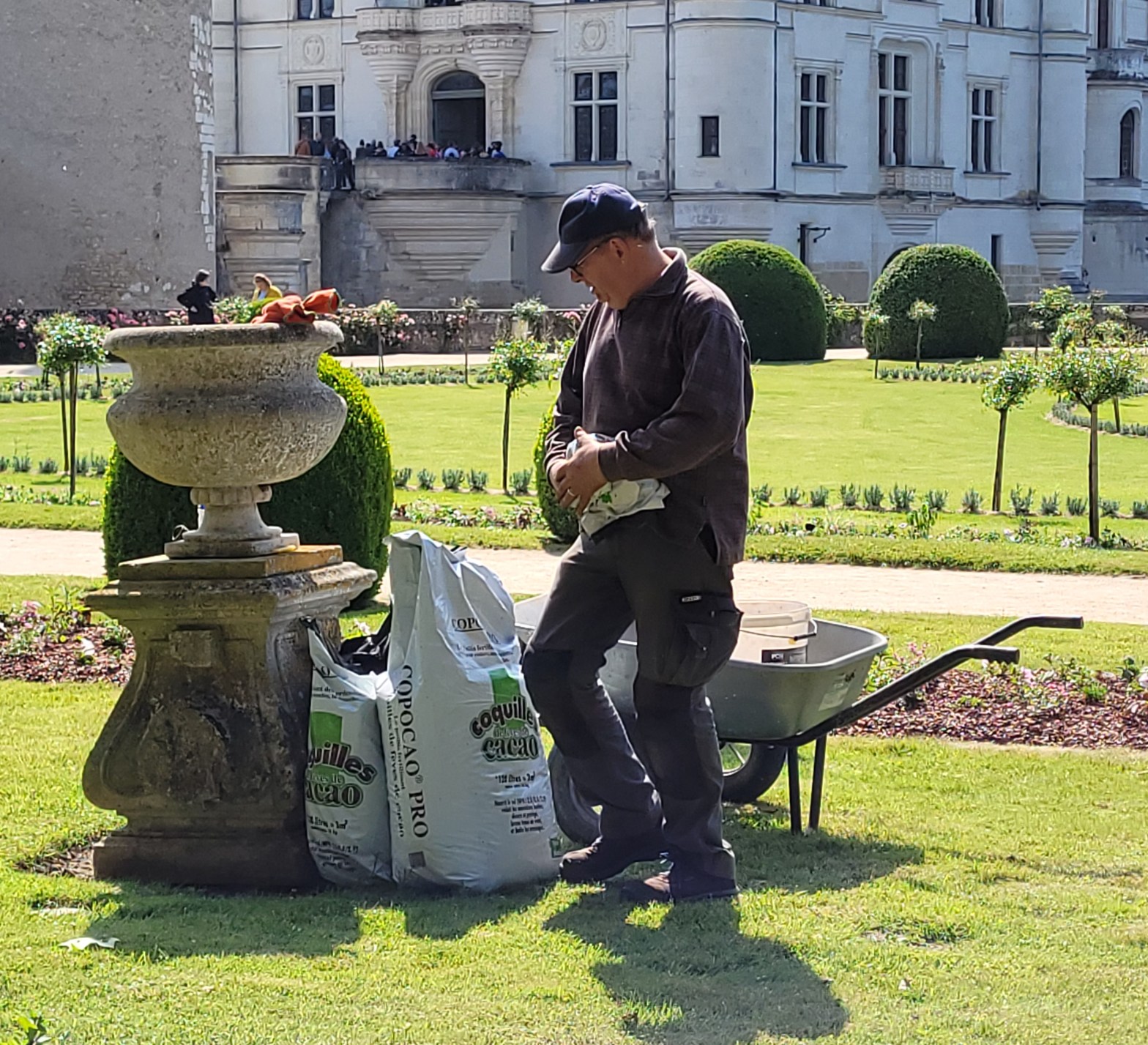
As I was about to leave the gardens, I saw a man leaning over a rose bush while sprinkling something brown around its base. Nearby, leaning up against an ancient stone urn next to his wheelbarrow, were two bags of coquilles caocao. I have had enough French training to know that the bags were full of chicken manure, and he was fertilizing the roses with them. This momentary experience transformed me from a chemical rose grower to an organic rose gardener with much better results. Here’s how I care for my roses now, and they have never been more beautiful.

Chicken Manure

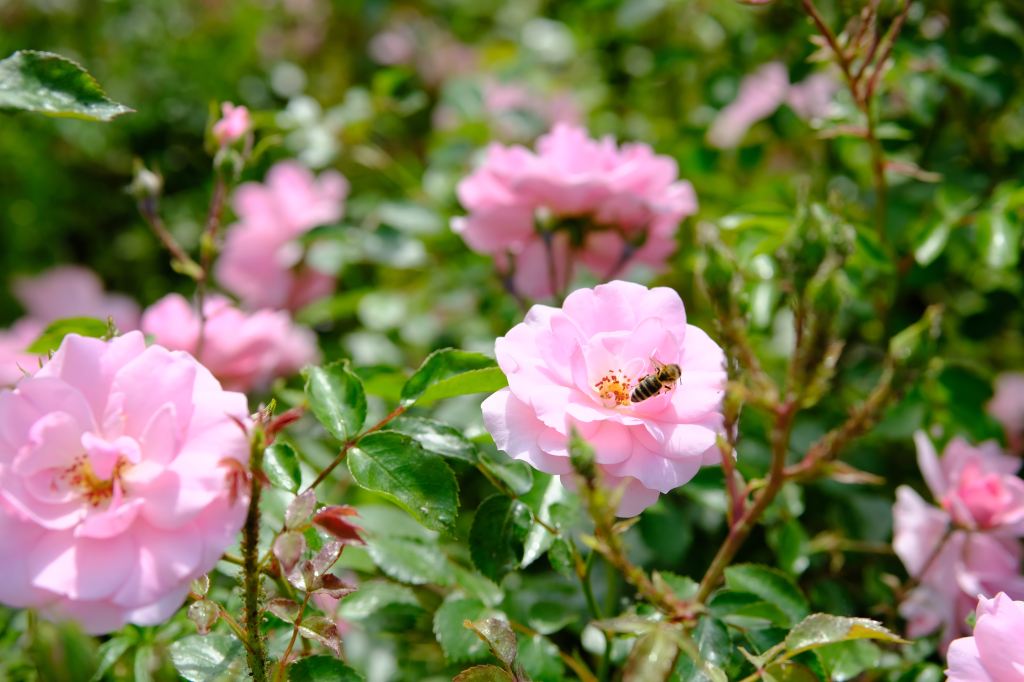
I have roses under the window in my front yard, on my side yard, all along the lawn in the back, and a raised bed of my prized tea roses on the other side of the house. I’ve fertilized them, sprayed them, clipped them and I’ve always had problems. As soon as I got home from France, I bought six bags of chicken manure and spread it at the base of every rose bush. I was smelly. The mosquitoes seemed to like it, too, and they bit both me and my husband. I drank wine in my lawn chair with the smell in my nostrils. But it was worth it. Slowly, day by day, the rose bushes became stronger and their diseases cleared up. I didn’t use the fertilizer or disease control liquid at all. The chicken manure, which contains large amounts of nitrogen, phosphorus, and potassium, revitalized my roses all by themselves. And that smell, it’s gone now.

Vinegar Water

It took several days to almost two weeks for the chicken manure nutrients to be absorbed by the rose bushes, and while that was happening, some of the rose bushes had mildew. I did some research and found another organic solution to this problem. In an empty spray bottle, I combined a quarter of a cup of apple cider vinegar and one quart of water and sprayed it on the mildewed leaves of stems. I kept this container of solution near my tea roses so it was easy to use whenever I found problems. It worked. Now, two months after first applying the chicken manure and spraying the mildewed stalks and leaves, my roses are as healthy as the roses at Chateau Chenonceau.

Bone Meal Fertilizer

I was on a roll, and I kept reading about organic gardening for roses. What I found out next is that bone meal is good for promoting blooms. Its phosphorus and calcium strengthen the plant and promote bloom growth. I applied the bone meal, and low and behold, my roses staring producing more roses that ever before. I also gave some bone meal to my African irises, and they gave me the most beautiful white, yellow and purple irises I had ever seen. I only have to apply bone meal every four months since it releases its nutrients over time.

Clipping Old Blooms

I have known that a good rose gardener should clip off the old roses in order to preserve the rose plants energy for the new blooms, but when my plants were diseased and ugly, I had little incentive to do this. In the last two months, however, I’m excited to take a pair of sharp clippers and to snip off the spent flowers, making sure that I cut the stalk just above a five-pattern of leaves. While I’m clipping the old blooms, I also clip the vibrant flowers to take into the house to enjoy in a vase on the table.

I never expected that my life would be changed by walking through an ancient garden in France. Even though my roses didn’t go to France with me, I brought them back something better than a souvenir: healthier lives.

Photo by Yuliia Dementsova on Unsplash

Fabulous Fred

Some people are more memorable than others. They pop up in your mind. You visualize their wicked grin, beguiling smile, or musical voice as you recall old travels or past meetings. Recently, when I toured France with Insight Tours, I met such a man, and his name was Fred.

My fist exposure to Fred was an email he sent me before the trip started. The note contained clear details about where to meet in the hotel and what I had to do to label my luggage as part of the tour. Fred’s words were business-like and direct. He signed his name Frederique, but suggested that we call him Fred.

Fred dressed in a well-ironed red-and-purple-checked button-down shirt over a gray pair of casual trousers. His head was bald and he had a salt and pepper mustache and closely-cropped beard. It didn’t take long for this trim, conservative and snappy dresser to impress me. These are the qualities that he possessed to make him the best tour director I’ve ever had.

Clear with Directions

I came to appreciate Fred’s detailed directions, especially when he let us wander in the middle of ancient French villages and described how we could find the bus at the assigned time. He made use of landmarks such as the gothic church or the town hall. He used his arms to indicate left and right and repeated the directions as many times as we asked him. He seemed to understand that many people didn’t listen well until they realized they had to rely on themselves to find their way.

Timely

Whenever it was time to meet, Fred arrived first. He finished breakfast before us and waited for us in the lobby. He was at the bus at all the designated times, and he made sure that our luggage was picked up from our rooms and loaded into the bus timely.  How? He helped the hotel bellhops gather it and transfer it outside so as not to delay our departure.

Personable

Fred turned out to be a friendly and approachable human being. Every morning, when the bus started moving toward the next destination, Fred wished us Bonjour. After we responded, he continued with Avez-vous bien dormi? Did you sleep well? When we responded negatively, as many travelers might, he taught us a more positive way to answer that question. Say oui first, and then indicate how you might sleep better next time, coached friendly Fred.

He joked about his baldness and described how he once had a mop of hair in his twenties. On Day 2, he sprained one of his fingers moving our luggage and, most unfortunately, a pigeon defecated on his head in the middle of a town square. Neither of these incidents ruined his sunny demeanor. He allowed two tour members to clean the pigeon poop off his head and shirt and continued the tour with humor. 

Later in the tour, he was comfortable enough to describe his recent bout with cancer, showing that he was just another human being with human problems. Since many of the travelers were seniors, I’m sure they felt more at ease with him since many of them had suffered from medical problems themselves.

Caring and Attentive

Fred demonstrated sensitivity to all of us in many ways. He stood at the bottom of the bus steps and helped us climb safely to the ground. He also instructed the bus driver to stand at the other door and do the same.  When we stepped down, he smiled at each one of us as if we were the most important person on the bus.

One of the single tour members appeared to have a memory problem and Fred always made sure she was back on the bus and physically safe. He never complained that she was forgetful or not walking as fast as the rest of us. He simply took care of her kindly.

Interesting and Informative

The tour covered the country roads of France, which means, sometimes, our bus driver would drive us over remote mountain passes, into narrow tunnels, or over roads that circled country vineyards and farmland.

We were never bored while touring these far-flung French trails since Fred provided us with detailed and stimulating lectures that described what we were seeing and what the history of the area was. For example, when we were approaching Arles, where Vincent Van Gogh lived for many years, Fred revealed that the artist painted over 300 painting in Arles, but sold only two. While we drove through the walnut groves of the Dordogne Region, Fred explained that every part of the walnut tree was valuable to the French farmer. The nuts are sold for food, the shells are used as fertilizer, and the wood is used to make furniture. After listening to Fred’s lectures, I felt a little smarter and a little more French-savvy.

Resourceful

Several times throughout our trip, Fred informed us that he and our bus driver had poured over the map and found new country roads to explore that day. He assured us that the driver was an expert driver so we were sure to enjoy the new adventure.

Another way that Fred proved his resourcefulness was when we stopped in various places and he went out of his way to improve his understanding of the area. For example, when we visited Pont du Gard, a three-storied Roman aqueduct in the Languedoc Roussillon Province, Fred climbed up the trail beside the structure to view the third level, something he had never done before.

Helpful to French Travelers

In my past visits to France, I have had negative experiences with French people. Waiters ignored me. People on the street merely walked away when I asked them a question.

Fantastic Fred provided us with a remedy for situations like this. He explained that French people learn English in school, but when tourists come up to them and ask them a question in English, they freeze, once again experiencing those dreaded English classes.

Fred recommended that we approach French people with a polite Bonjour and allow them a moment to warm up to us before launching into our English question.

I put this method into action. Whenever I entered a shop, I said Bonjour to the shop clerk. Each time, I was rewarded with warm eyes and a smile. If I wanted to use a restroom in a restaurant where I wasn’t eating, I said Bonjour to a waiter, then asked to use the restroom, and the waiter never turned me away. Fred’s method seemed to be foolproof.

Funny

Who doesn’t like a comic? On the first day of the bus tour, Fred demonstrated that he had a repertoire of jokes in his tour director cache. The first joke he told us was a parody of the French people according to the Germans.

The joke went like this. When God made France, he created the dazzling Alps to the East, the stunning and bountiful Atlantic Ocean to the West, the beautiful Mediterranean to the South, fertile farmland, prolific vineyards, and bountiful orchards, ample rain, and plentiful sunny days. No other country had been blessed with such advantages.

The Germans were upset, and they asked God why he gave France so many wonderful characteristics. They insisted that it just wasn’t fair.

Upon hearing the Germans, God became contemplative. He thought and thought and thought. Finally, to balance everything out, God made the French people.

When we heard the punchline, the bus erupted in raucous laughter. You would think that we were laughing at the French people, but Fred was quintessentially French, so his joke helped us appreciate their humanness instead of thinking poorly of them.

Here’s another joke by Fred that had to be told in English to be funny. What do you call someone who jumps into the Seine River?

Answer. In Seine.

It takes a certain personality to tell a joke well. Fred could do it because he wasn’t afraid to be self-deprecating and he was naturally good-natured.

I will remember Fred every time I travel on a tour. I’ll unconsciously look for his snappy ensemble in every hotel lobby and wistfully hope that he comes walking through the door to lead us on another well-organized, comfortable, informative, and fun adventure.

My Aussie Lesson

Photo by James Wainscoat on Unsplash

I know this post may reveal my ignorance about a major country of the world, but let’s face it. Australia is far away from most places. I’m not used to thinking about this down-under country unless their government does something incredible like it did in 1996: banning assault weapons within two weeks of a mass shooting in Port Arthur, Tasmania.

I, however, recently spent over three weeks in France with about twenty Australians, who dominated the atmosphere of our bus rides and dinner conversations with their jolly personalities and proud Australian heritage. Here is what they taught me about their country and themselves.

The Aussie Name for the U.S.

My new friends consistently referred to the United States as America. Australia is on the other side of everywhere, so maybe they had never heard of Canada, Mexico or any of the countries of Central or South America. They pronounced America with wistfulness and admiration, while, at the same time blinking their eyes, then looking briefly toward the horizon as the shadow of a smile lit up their lips. My heart swelled with pride and warmth knowing that my home still generated such positive vibes.

States

As the United States adopted the names of its 50 states, it chose both creative and unique names such as California, which originated from a Spanish romance novel, named after an island located close to Paradise.

Australia has six states with less original names. Whoever came up with the names Western Australia and South Australia either lacked imagination or ran out of time. The states Queensland, New South Wales, and Victoria, regrettably, represent a devotion to England more than they do Australia. Only the state’s name Tasmania, an island southeast of the country shows any modicum of ingenuity, named after the Dutch explorer, Abel Tasmin, who first sited the island in 1642.  

Apparently, both Tasmin and Christopher Columbus thought 1642 was an excellent year for finding new lands.

Australia’s National Dessert

Apple pie? Pumpkin pie? Ice cream? I did a little research, but I couldn’t find any conclusive evidence that the United States has a national dessert. In contrast, my new Australian friends were adamant about the existence of a national Australian dessert called pavlova. This round dessert consists of a crispy meringue outside, a soft interior, and fresh fruit and whipped cream on top. The Australians eat it all summer and for special occasions.

What’s so funny about this dessert is that it was named in honor of a Russian ballerina who visited the country in the 1920’s, Anna Pavlova. I guess if you’re going to name a state after a queen of England, you can name your national dessert after a Russian ballerina.

An Aussie Kind of Domestic Terrorist

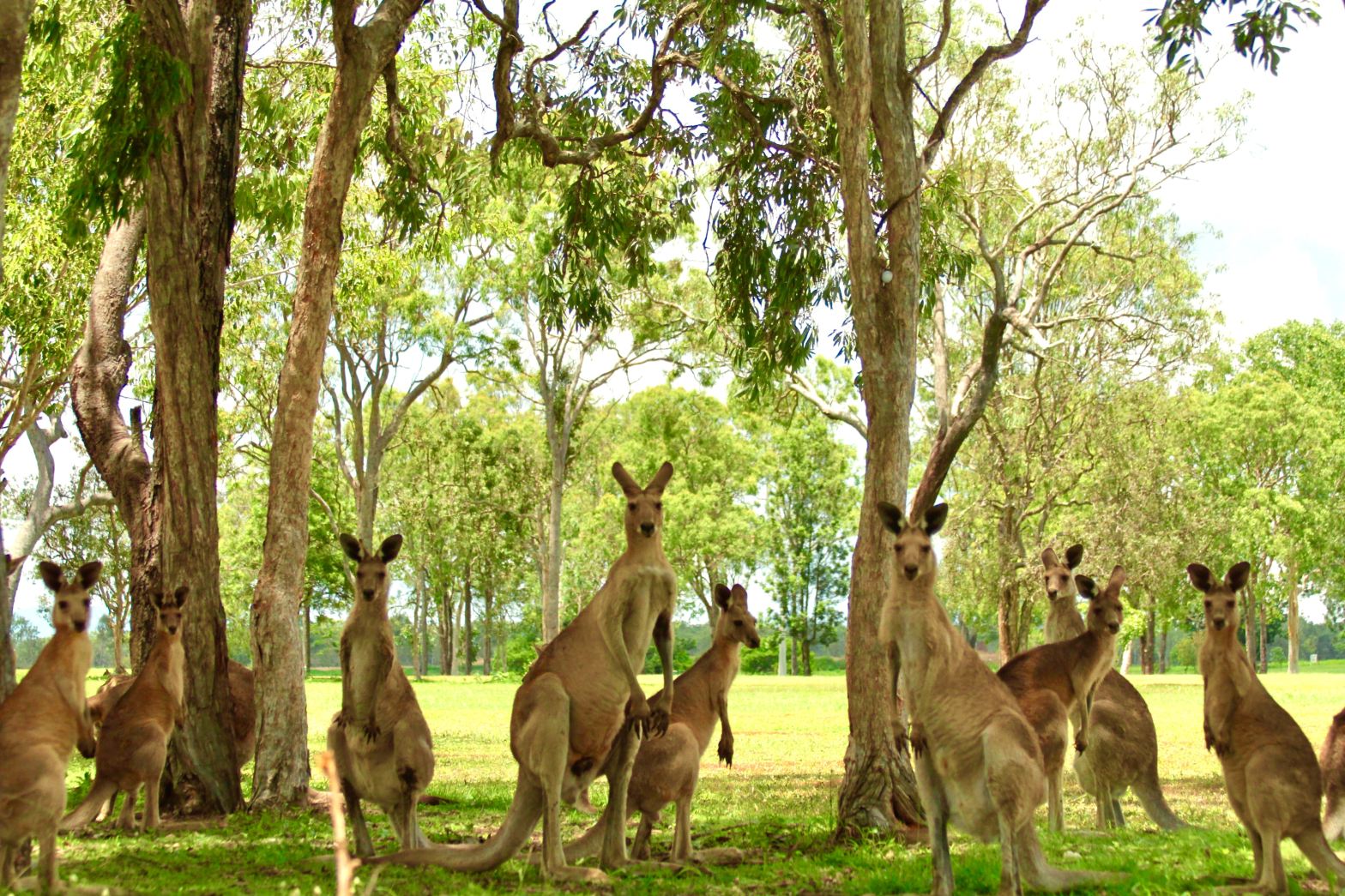
In Northern California, deer sometimes jump fences to chew off the roses on bushes, but what kind of fence could keep a hungry kangaroo out of your garden? My Aussie friends have a kangaroo problem.  In their neighborhoods, kangaroos break through fences, trample flower beds, gnaw on trees, savor all kinds of fruit, and feast on flowers and shrubbery. 

My image of a friendly kangaroo mommy with her baby poking out of her pocket has been shattered.

Upside-down Seasons

Because Australia is located in the Southern Hemisphere, the country’s seasons are reversed from those up north. Australia’s fall is at the same time as the northern spring. Their winter is our summer. Their spring is our fall, and their summer happens when we’re celebrating Christmas and Hannukah.

Honestly, I knew this, but I’m so surprised at how much confusion this difference caused during conversations about weather and holidays. I found myself tilting my head to the side, as if I was preparing to do a cartwheel, and blinking my eyes as I attempted to clarify the vision of Santa Claus wearing shorts and sunglasses while sliding down a cold, unused chimney.

Outgoing Personalities

All the Aussies on our tour were bold, outgoing, and confident. Not only did they make up the majority of our group in number, but they made most of the noise. I’ve never considered myself shy, but my assertiveness could not compete with these extroverted dispositions.

One 4’11” woman made up for her short stature with her bellowing voice and bravado mannerisms. According to her, marriage was a lifetime commitment, a fifth Covid vaccine had been approved, and Perth was a friendlier city than Sidney. I didn’t dare disagree with any of her opinions because her balled-up fists seemed serious.

One of the funny men who was married to, according to him, the best researcher on the bus, took a big liking to me and my husband. As we rotated seats around the bus during the tour, they were either sitting directly in front of us or directly behind us, which meant we had lots of opportunities for conversation. His name was Roger, but he referred to himself by his nickname, Candy Evergreen, given to him by a neighbor. Candy Evergreen claimed my husband as his bestie and told me to leave men business alone. I wasn’t insulted by Candy Evergreen’s kidnapping of my guy since both seemed to thoroughly enjoy this juvenile male-bonding experience.  

The more I learned about Australians during my days in France, the more I appreciated the brash and fulsome Australian character, and the more I empathized with them. They were opinionated, but in the next moment, they were buying your lunch. They were loud, but they were good-natured. They were corny, but funny.

After all, when you live at the end of the planet, you’ve got to shout louder to get noticed.

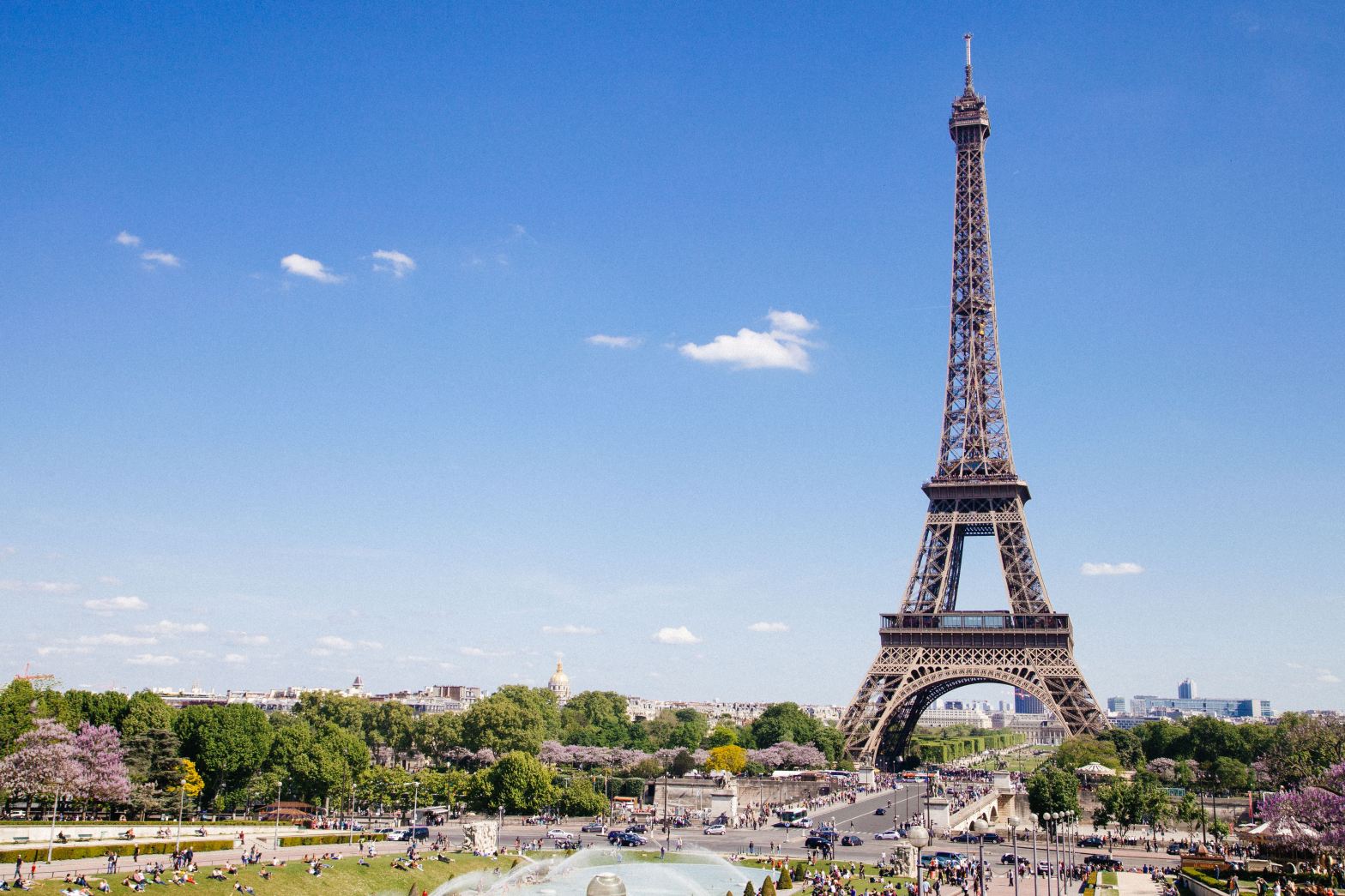
4th Time to Paris

(Photo by Anthony Delanoix on Unsplash)

Next month, I’m going to Paris for the fourth time.

The first time I visited Paris was with six other college students. We were there on Bastille Day, July 14th, which commemorated the beginning of the French Revolution when the Parisians stormed the Bastille Prison. My friends and I were in the midst of a throng of human beings on the Champs Elysees since everybody celebrates the day by gathering in the streets. Two young men set off fireworks, and the police swept in and arrested them. To disperse the crowd, they launched tear gas grenades into the mass of bodies blocking their way. Suddenly, my throat was filled with knife-sharp chemicals and I croaked like an old frog. The crowd, a mass of forms heaving as a single unit, dragged me and my friend Nancy away from our friends. We never found them until hours later.

The second time I flew to Paris was for work. I stayed at a hotel where, every night, I watched the Eiffel Tower light up at dusk and twinkle over the city until 1:00 a.m. in the morning. I met Olivier at the office who became my French friend until he married and his wife ended our friendship. Olivier took me to a small Franc concert in a beautiful Gothic church and out for a crepe lunch where I enjoyed both savory and sweet crepes—the most delicious pancakes in my life.

The third time, my 17-year-old daughter came with me to Paris. One night, while we were sitting outside the pyramid beside the Louvre, we watched the sun set over the most beautiful skyline in the world. At 8:30, we decided to rush into the Louvre before it closed at 9 p.m. It was a free admission day, so we walked right in. We passed the headless Winged Victory of Samothrace as we climbed the grand staircase up to the gallery where the Mona Lisa was displayed behind bullet-proof glass. No one was there. No one. This gave us the unusual opportunity to gaze at Leonardo’s mystery woman from several vantage points and to watch her eyes follow us from side to side.

My daughter and I also toured the French Catacombs which contain the bones of over 6 million people who were once buried in the cemeteries of Paris above ground. We walked for miles within the old limestone tunnels underneath Paris, discovering piles of skulls, femurs, hips, and other bones stacked in piles along the shaft walls. I don’t want to ever visit those unfortunate disassembled people again.

Now, I’m going to Paris for my fourth time with my husband who has never been. We’re boating down the Seine, visiting the Louvre, inspecting the Impressionists at the Musee D’Orsay, witnessing Napoleon’s Tomb, and touring the Pantheon; however, I want to make sure we make it to Pere Lachaise Cemetery this time. This cemetery is above ground and within walking distance of the Louvre. Although people of all faiths are now buried there, the cemetery takes its name from a Jesuit priest, Francois Le Chaise, the confessor of King Louis XIV, who lived in a Jesuit house on the original site.  Hundreds of famous writers, artists, and musicians are buried there including Oscar Wilde, Honor de Balzac, Chopin, Gertrude Stein, and Jim Morrison. I’m trying not to think about why I’m so fascinated with cemetery tourist sites.

Well, I need to get started with my packing. I also have some projects to finish before I go, including completing the homework for my Spanish class. I know it’s ironic that I’m going to France while studying Spanish, but c’est mon vie.

Too Many Goulash Gourmets

About 40 minutes by bus from Budapest, Hungary is a colorful town named Szentendre. Situated right on the Danube River, this village is laid out over cobblestone streets where brightly painted storefronts and houses offer tourists charm and entertainment.

While we were visiting Szentendre, our tour took us to the Szabadtéri Néprajzi Muzeum (The Hungary Open Air Museum), established in 1967, to illustrate the typical country life of Hungarian folk.

When our group of about 30 people arrived, the museum’s guide gathered us around long wooden tables, arranged under a wooden pavilion outside. A tiny fire was burning in a pit near the front of the pavillion, and, on the flame, rested an old dented black cast iron pot.

A guide, dressed in old jeans and a button-down shirt with holes in the elbows, sauntered up in front of the group with his hands deep in his pockets. “My name is Taksony. I’m going to supervise you in cooking a pot of the national Hungarian dish known as goulash.” He took his hands out of his pockets, grabbed a thick gray potholder, lifted the cast iron pot off the fire, and set it on the dirt in front of him.

I hadn’t washed my hands when I got off the bus. No one had, and we were going to cook something? I wrinkled my nose.

“The word goulash,” he said, “comes from the ancient Hungarian word gulyás, which means herdsmen or cowboys. People out in the country made goulash from whatever beef, vegetables, and spices they had on hand. Since paprika is widely grown in Hungary, it became the favored spice for the dish.”

Each person had a knife on the table in front of them. Mine was a small paring knife with a worn wooden handle and dull blade. I thought about the sharp knives I had at home to slice, chop, mince, and quarter my vegetables. This frail little blade didn’t look too promising. I looked over at the knife in front of my husband. His was longer than mine, but so skinny that it didn’t seem to be useful either.

Girls in gathered skirts wandered around the long wooden tables and gave each of us a vegetable to chop. I was given a tomato and my husband was given a pepper, the likes of which I’d never seen at home. Our vegetables sat right on top of the wooden table tops, which contained knife marks from hundreds of lessons in making goulash. Was this sanitary?

By the time we all got our vegetables—onions, tomatoes, potatoes, or peppers—the guide was cutting off a piece of lard into the cast iron pot.

“I’m going to brown the beef first.” He put the pot back on top of the fire and the lard sizzled as it heated up.

“Who wants to be an assistant?” Taksony asked, and he pointed to a man from our group who was over six-feet tall and wore a grin that lit up his face. “What’s your name, sir?” Taksony asked him.

“Richard,” said the man with the bright grin.

“I need you to dump these cubes of beef in the lard and stir them until they get brown. Don’t let them burn!”

Taksony gave Richard a long-handled wooden spoon and the bowl of beef. We watched Richard dump the beef into the pot and jump back as the lard hissed and sputtered. He began to stir.

“What’s your name, miss?” Taksony asked a sixty-year-old woman in a yellow sun dress. He waved her up to the front next to Richard.

“Carol,” she said, biting her lip. Her hands were tightly clenched in front of her.

“Carol, here’s the garlic and paprika. Please count out six cloves of garlic and put them in the pot. Take the paprika and spoon in 4 heaping tablespoons.”

Carol bent over the bowl of garlic that Taksony was holding and counted. She tossed six heads into the pot. He handed her the canister of paprika and a measuring spoon. She pried off the lid, gave it to Taksony, then heaped the dark red powder onto the spoon four times and tipped it into the mixture.

“The meat is burning, Richard! Here, take it off the fire with this.” Taksony gave Richard the pot holder. Richard lifted the pot by its handle and placed it on the ground.

Taksony bent over the pot and whistled. “Saved it. Now keep stirring,” he said to Richard. “Carol, you can go back to your table.”

The guide looked out at all of us. “O.K. Cut your vegetables into slices.

I took my old paring knife into my right hand, the tomato in my left hand, and attempted to slice it. The blade barely made a mark in the tomato’s skin, it was so dull, but I persevered. Finally, after using the point of the knife to poke holes into the skin, I managed to create slices, the juice of the tomato oozing into the wood of the table top.

My right-handed husband was holding his knife in his left hand and staring at his four-inch yellow pepper as if it were a venomous snake. His giant basket-ball-sized hands floated in the air in front of his chest.

“Cut it,” I said.

“I don’t know how,” he said. “A deep furrow appeared between his eyebrows. “This is a knife. I only know how to use a microwave.”

“You can do it,” I replied as sweetly as I could manage while thinking what a complete idiot he was.

His hands kept floating in front of his chest like he was swimming the dog-paddle.

“No. You do it for me, honey. You’re so good at cooking.” He gave me his knife and rolled the pepper towards my tomato slices.

“Fine,” I said, looking quickly around to see what all the other men in our group were doing. I didn’t see anyone else handing his knife over to his wife. They were all bent over their tomatoes, onions, potatoes, and peppers and diligently stabbing their food with worn-out knives. Geez.

I admired the four-inch little pepper before attempting to cut it, and then used my husband’s skinny little knife to slice the pepper into several rounds. I didn’t remove the seeds since no one had mentioned anything about that. When I was done, I used the knife to push the pepper slices back over in front of my husband. Nobody seemed to notice that we cheated.

The girls in long, gathered skirts came to each of us and scraped our vegetables off the top of the wooden tables into large bowls. They took them over to Taksony who ladled them into the cast iron pot and placed it over the fire again. 

“Richard, keep stirring.” Richard bent his tall frame over the smoking fire and stirred the vegetables into the meat mixture. I could smell the toasty aroma of the paprika as he stirred while I thought about all the germs swirling around the spoon.

“This is going to take awhile to cook,” said Taksony, so you guys can go wander around the open-air museum to see what a country village in Hungary once looked like. Come back in forty-five minutes to eat lunch.” He waved his hands to shoo us out of the pavilion.

Wiping our hands with the little sanitary wipes we were given, we wandered out into the dirt roads to view the church, the mill, the knitting house, the store, the bakery, and the cottages where villagers lived. Since we were all hungry, however, in forty-five minutes, we were back in the pavilion ready to eat.

Taksony showed us into a room filled with newer wooden tables with benches. We sat down side by side and poured lemonade into our glasses from pitchers on the table. The girls in the swishing skirts brought baskets of coarse bread and placed them in the center of the long tables, one basket at about every two feet. Then they carried steaming bowls of goulash in flat bowls and placed them in front of each person. My mouth watered as I hoped that all the germs in the pot had evaporated in the heat. I squeezed my eyes shut.

Heat did kill germs, didn’t they? I hoped so. Nevertheless, I thought I’d ask a question.

Taksony was standing at the front of the room watching the girls bring out the bowls of goulash. I raised my hand. He nodded at me to indicate I had his attention.

“Are we eating the goulash that we made out in the pavilion?” I asked, trying not to wrinkle my nose. I glanced down at my bowl, trying to reassure myself that the cooking process had surely eliminated any dangerous microorganisms.

“Oh, no!” said Taksony, chuckling. “We gave that pot to the pigs.”

“Thank goodness,” I said, dipping my spoon into the delicious-smelling concoction in front of me. I immediately imagined the pigs eagerly scarfing up the national dish of Hungary. I bet they liked it.

Friendly Italians

A whole country full of friendly people. That’s Italy. Besides the beauty of the countryside and beaches, the outstanding history, the scrumptious food, the satisfying wine, the awe-inspiring architecture and art, the people of Italy are incredibly welcoming, social, hospitable, approachable, and responsive. I visited Italy last August and I can remember so many encounters with friendly Italians.

The Limoncello Merchant

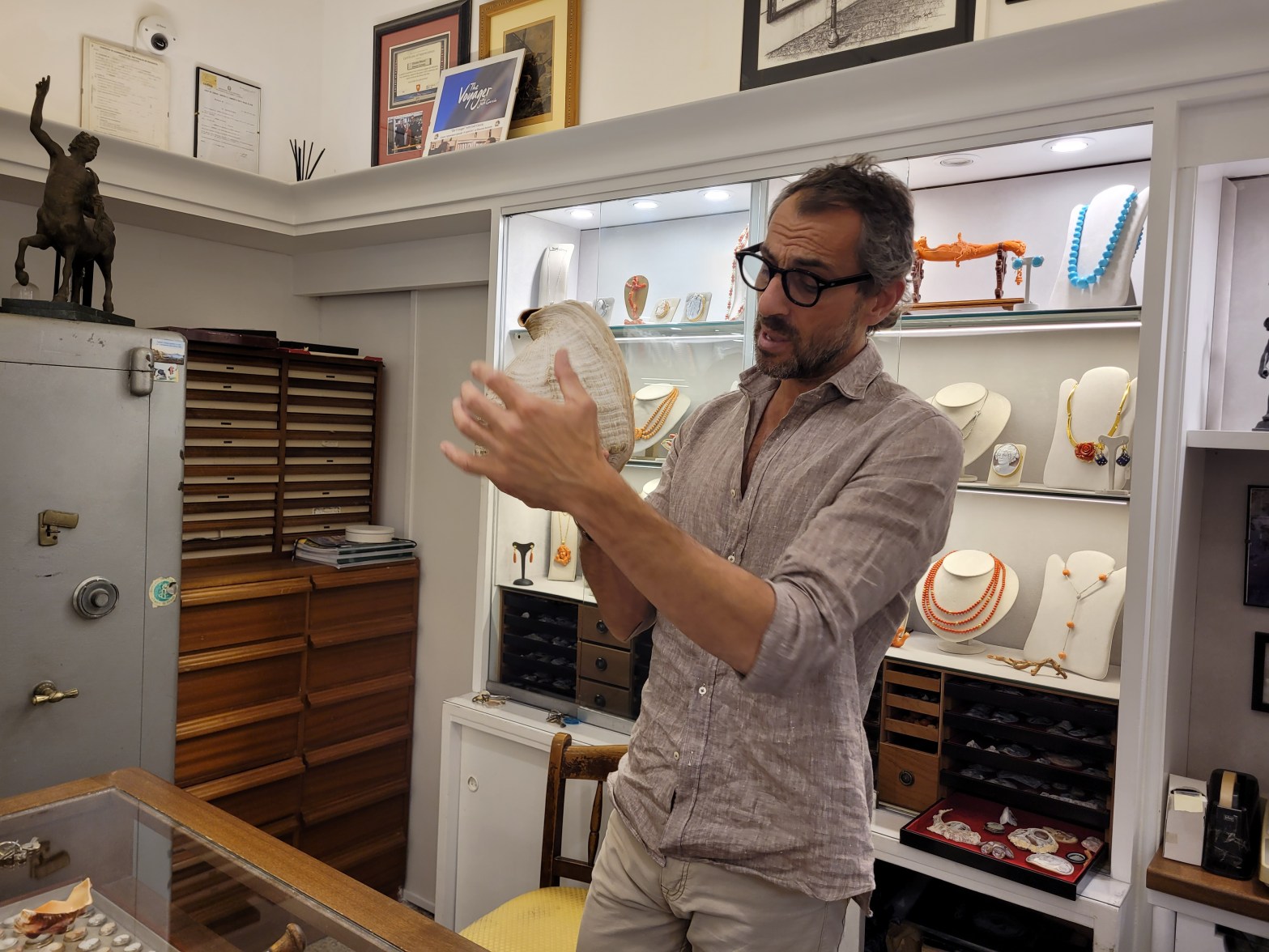
First, there was the shop-owner in Sorrento, Gino, who sold limoncello and other liquors. He started a conversation with me as soon as I entered his shop. I learned that he had a family in Naples and he rode a scooter to work every day, even in the rain. He thought it might be time to buy a car.

As I wandered around his miniature shop, I enjoyed the brightly-colored bottles of limoncello, meloncello, and other treats. He kindly pointed out the advantages of each size of bottle. Some were small enough to tuck into carry-on luggage so they wouldn’t break. Some were sold in sets with one bottle of three different flavors. As we chatted about the liquors, I told him I was from San Francisco, and he said that he visited there with his family a few years back. They also went to Yosemite and loved the hiking. We talked about the different trails and the gorgeous views in the City.

Finally, I chose some bottles of cello, and he wrapped them up for me in brown paper to protect them. We smiled at each other when he was done, and then he reached out around my shoulders and gave me a hug.

“I can tell what a nice person you are,” he said. “I will never forget you.”

I know that I will never forget Gino.

The Florentine Woman with Beautiful Hair

Then there was the day in Florence when I got lost in the warren of cobblestone streets. I had started out from The Basilica of Santa Croce where I had visited the tombs of Michelangelo and Galileo, and walked north on Borgo Allegri, knowing that I’d have to turn left on a street in order to find the Mercato Centrale. I turned left onto Via Sant’Egigio and walked and walked until it turned into Via del Pucci. Unfortunately, Via del Pucci ended at Basilica de San Lorenzo, and I was lost. I couldn’t even tell the direction of the Arno River which would help me get back to my hotel. I walked, and turned, and walked, and turned, and finally stopped an elderly Italian woman to ask for directions.

This olive-skinned beauty with graying but lustrous hair wore a black pencil skirt, a maroon cardigan, and a white blouse. I was worried that she would be bothered by my question, but she smiled at me right away.

“The river is that way,” she pointed. “You’re not too far. Just keep following this street and you’ll see it in a few blocks.”

“Grazie, grazie,” I repeated to her, and her smile became even warmer. Her eyes twinkled in the shadow of the narrow street, and I felt so much better. We gave each other a lasting smile and she waved to me as I walked away, following her directions.

The Venetian Painter

I met a painter in Venice in front of my hotel, the Danieli, which was situated on the waterfront of the Canale di San Marco, right across from the island of San Giorgio Maggiore and a few steps away from the Doge’s Palace and Piazza San Marco.  His miniature pop-up stand stood in a row with the stands of two other painters, their paintings hung on every side of their stands’ frames and propped up on the sidewalk.

The old painter, with white hair, a scruffy T-shirt, and paint-splattered trousers, welcomed me when I stopped to look at one of his paintings—an impressionistic portrait of a café with colorful tablecloths and umbrellas that sat on an island between two canals. I loved the flashes of paint that let my imagination wonder about the details that were elusive to the eye. 

The old man gave me a tour of all his paintings. He described where they had been painted by pointing in all directions of Venice. Most of the paintings were realistic, and these took more time to finish, he said. The impressionistic one, the only one in his collection, took less time since the detail was left up to the viewer’s imagination. 

My eyes kept trailing back to the impressionist café, and I paid for it, but this painter wasn’t done with me. He held out the painting and made suggestions as to how to frame it, how to make the picture look like it continued beyond the canvas. We stood in the hot, September sun and discussed color and materials, technique and effect. Finally, the old painter rolled up my canvas, slid it into a thick, cardboard cube, and handed it to me with a bow. I walked away feeling that I had purchased not only a painting but a cherished memory.

Oh those Italian gente (people). They clearly believe that happiness is found in relationships most of all. I believe, they’re right. When I think back on my Italian trip, I remember the people I met more than anything else.

Dreaming of Wine Windows

I love wine and live in California where it is delicious and abundant, so when I visited Italy a month ago, I was eager to enjoy Italian vintages. I drank Pino Grigio while eating pizza garnished with creamy mozzarella and sweet anchovies, Soave with pasta tossed in freshly-made pesto, and Chianti with salami and cheese.

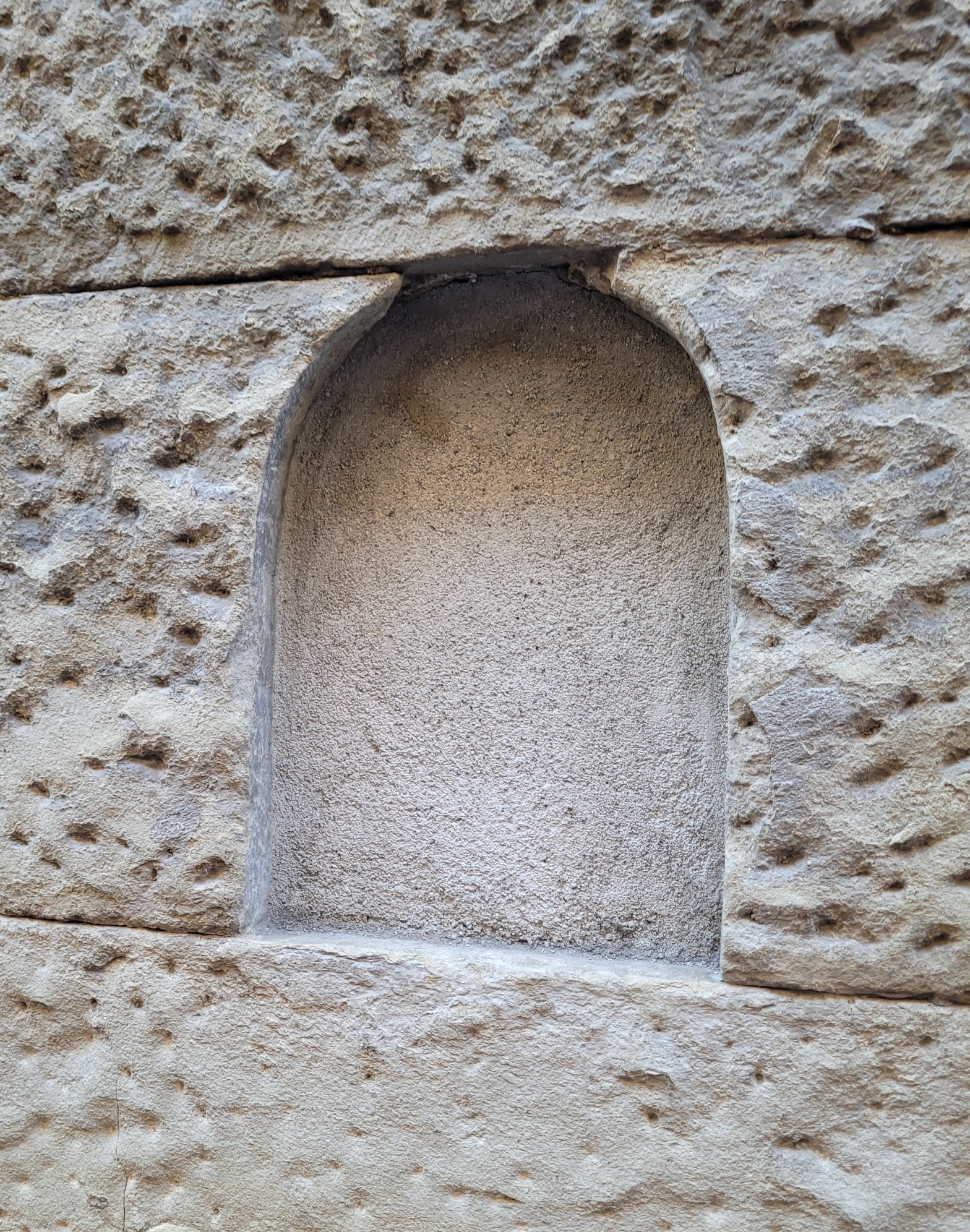
What I didn’t expect was that Italian architecture had been influenced by the wine culture of Italy. One day, while we were walking to the Uffizi Gallery in Florence, I came across a tiny, filled-in window on the side of a grand palace. The Italian friend who was walking with us told us that it was a wine window from the late medieval times.

Families, such as the Strozzi, Albizi, Pazzi, Ricasoli, and Antinori, who owned vineyards in the country often built palaces in Florence and other towns. Most of the wine grown in Italy in the late medieval times and early Renaissance era was sold to local customers. The wine families installed the tiny windows into the sides of their palaces so they could sell wine to customers without allowing the public into their homes or without coming into contact with them. For a reasonable price, customers could purchase a wicker wine bottle or glass of wine and maybe some ham to go with it. These tiny portals, once referred to as wine tabernacles were popular in Florence from the 15th Century to the early 20th Century.

The Italian word for this architectural feature is buchette. Each one is about 15 inches high and most are little arched doors carved into the stone wall of the noble palaces. This shape has also been used to hang street lanterns, and these are referred to as false buchette. Another type of false buchette is an arched, stone border used to frame a sacred image made out of fresco, terra cotta, or porcelain. These religious images were placed higher up on the wall of a building and served as protector for the inhabitants.

The Association Buchette del Vino has counted 179 buchette windows in Florence and about 280 in the Tuscany Region. I couldn’t find any indication of buchette that were still functioning as wine windows; now, most are filled in with stone, but some serve other purposes today. The portal of the Palazzo Landi on Borgo degli Albizi 17 is now a mailbox. Two others serve as doorbells and some others have been filled in with sacred pictures of Christ or the Virgin Mary.

Last night, I dreamed that I was standing on the outside of a buchette ordering a glass of Pino Grigio. It was a blistering, hot day—the sun beat on my head like a furnace. I ordered a Pino Grigio with a small bowl of olives. Mmm. Nothing tastes better than a Pino Grigio when the heat parches your throat.

I hope the buchette tradition catches on in California like the Little Free Libraries. When I go walking in my neighborhood, I walk past three of these tiny libraries and have so much fun perusing through the titles. I think a glass of wine would be wonderful to accompany my reading.  

Sources:

Cornsini, Diletta and Lucrezia Giordano. Wine Windows in Florence and Tuscany. 2021.

Gheesling, Robbin. Wine Doors of Florence. 2021

“Le Buchette del Vino, Florence’s Little Wine Tabernacles.” L’Italo Americano. August 31, 2017. litaloamerican.org/buchette-vino/.

Postcards from Italy

You know that feeling you get when you’re incredibly happy? Like you have butterfly wings and have flown so high that the clouds kiss your face. Your chest is so open that you can blow a star across the sky. Your arms are so wide that you can wrap them around the moon.

That’s how I felt this last August when I was visiting Italy. When I opened the sliding door to the balcony in my Sorrento hotel room and looked down at the rows of boats in the harbor, the blue-green water of the Bay of Naples, and the rising cone of Mount Vesuvius across the Bay.

Italy makes everyone happy. It’s incredibly beautiful. I wish you could have been with me and my husband as we boarded a little row boat at the bottom of a cliff off Capri Island so we could duck into the opening of the Blue Grotto and experience the most heavenly crystal-blue water. My heart was filled with elation as I watched my husband gaze at the water, the boats, and the walls of the cave. My heart quickened as I listened to the deep masculine voice of a sailor who sang an opera in baritone that echoed off the cave walls.

The people of Italy believe in making beautiful objects. In Amalfi, the streets were lined with shops that sold brightly painted ceramic pots, plates, plaques, and wall sconces. The blue, red, green, and yellow fruits and leaves on the pottery enthralled me so much that I couldn’t pass a shop without walking inside.

The architects and artists of Italy have been so prolific over the centuries that not one town in Italy lacks a beautiful church or fountain. When we toured St. Peter’s in Rome, I fell in love with the numerous doves holding olive branches in their beaks that decorate the walls of this catholic cathedral. The face of Mary on Michelangelo’s Pieta is such a beautiful example of a mother’s love for her child that my heart expanded as I stared at it for twenty minutes.

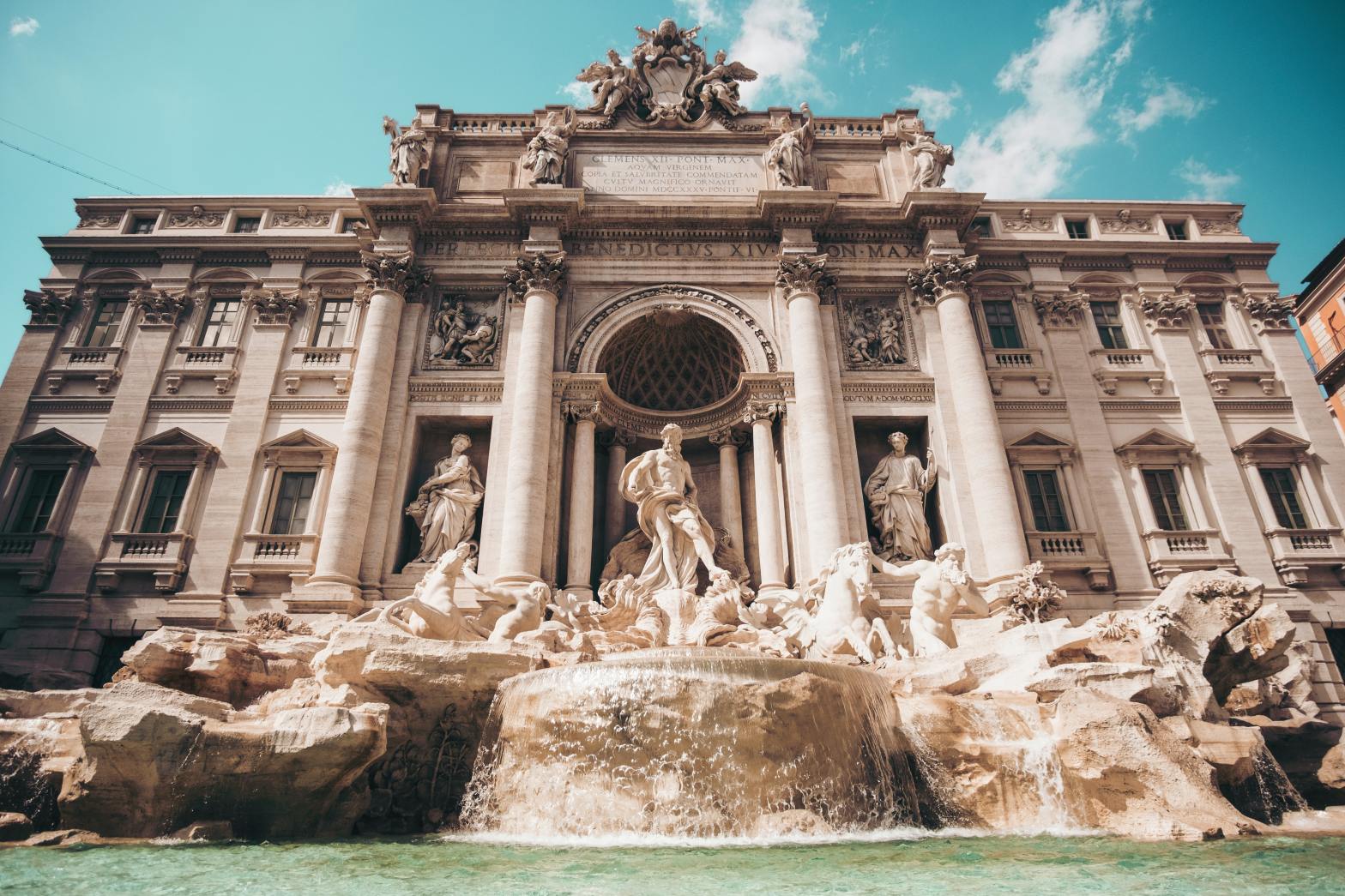
My husband had never been to Rome before, so when we visited the Trevi Fountain, I showed him how to toss his penny over his left shoulder so he would be sure to return. I took a photo of him in front of the colossal Baroque fountain, mostly made of travertine marble on the back of Palazzo Poli, with two-story Corinthian pilasters and a scene that conveys the taming of the waters. Through my camera lens, I could see Oceanus framed by a massive arch, with the goddess Abundance on one side and Salubrity, representing health, on the other. Below these immense statues, gigantic statues of titans guided a shell chariot, taming the sea-horse hippocamp. Above all of this marbleized action, I spied the story of the Roman aqueducts carved in bas relief. Tears filled my eyes before I had clicked the camera.

At one dinner during our tour, Theresa, our tour guide, gave me two post cards that she promised to mail for me after I filled them out. I wrote love letters to each of my children, addressed them, and gave the cards back to Theresa. After that, I promptly forgot about them since Italy had effectively mesmerized me.

When we weren’t gawking at architecture and charming alleys, we were eating. One day in Rome, I ordered a Napoli pizza with mozzarella and anchovies. The cheese was so light and creamy and the anchovies so fresh and sweet that I closed my eyes as I chewed—heaven on the lightest dough I’ve ever eaten. I sipped a bright Pino Grigio as I ate and my mouth had never been more fulfilled.

I’d never been to Umbria before, and so when we visited Orvietto, I was charmed by the quaint alleyways and stone staircases that led up to homes and shops. I was attracted by the beautiful mosaic cathedral dedicated to the Virgin Mary. When the sun hit the façade, the mosaics, gold, stain-glass windows, and bronze doors glowed like the entrance of paradise.

In Italy, charm is everywhere. We climbed countless steps in the town of Assisi, sailed along the coast from La Spezia to Cinque Terre, observed the Carrara marble quarries used by Michelangelo, and walked miles and miles on the cobblestone streets of Florence. We were enchanted by Ponte Vecchio in Florence which was lined with little huts last time I had visited. Now, it is filled with shops of glass windows to safely display the silver, gold, and gem jewelry for sale. One day, while walking to the Uffizi Gallery to see the colossal statue of David, we found an ancient window that had been used to sell cups of wine during medieval times.

Our last Italian stop was Venice, another place that my husband had never been. I dragged him across the city from our hotel, over one cobblestone bridge after another. Coming back, we found a piazza where an orchestra was playing music for tables outside. We sat down, ordered wine and listened to Gershwin and Beethoven for an hour, watching the sun change the shadows on the stones of the buildings as it trailed across the sky.

Italy filled me up with happiness. When I got home, I rushed out to visit my son at his studio a few miles away. When he let me inside, I noticed that he had tacked up the postcard I sent him from Italy on his refrigerator. My next stop was my daughter’s apartment. On her refrigerator, she had her postcard attached to her refrigerator too.

You know that feeling you get when you’re extremely happy? When you have wings and you fly high enough that the clouds can kiss you, you can blow the stars, and hug the moon with your arms? When I saw those postcards on my son’s and daughter’s refrigerators, I felt just like that.

The Kashubian Warriors of Winona

Even the sweetest human being contains a little bit of wickedness, and the most awful person possesses at least a little goodness.  This is because each person is made from a complex collection of DNA that has been blended over and over again, generation after countless generation; furthermore, these durable genes have survived a variety of political systems, religions, geographic locations, war, peace, cruelty, and kindness—all of the experiences of their ancestors. 

One day, when I visited the Polish Museum in Winona, Minnesota, I saw a photograph of one of my ancestors, Lawrence Bronk.  I thought I was looking at a photograph of my father—a man of fine build, blonde hair, and handsome face; however, Lawrence was the brother of my Great-great-grandfather Ignatius, and he immigrated to Winona, not from Poland, but from Kashubia, a place that bordered the Baltic Sea. This man inspired me to find out just who these Kashubians were and what made them Kashubian instead of Polish.

Not only did I research the immigration of the Kashubians to North America, but I also investigated how the Kashubians settled in Kashubia.  What I found out was that I was related to people who had lived complex lives of peace, aggression, oppression, and chaos throughout the centuries.  This is their story.

After the Roman Empire dissolved in the 6th Century, Slavic tribes from the East, mainly from the Ukraine area, migrated north into Russia, west into what is now known as Germany and Poland and the Czech Republic, and south into the Adriatic Region.  These were distinct from the Germanic tribes that had migrated from Scandinavia into the Roman Empire starting in the 4th Century.

The Kashubians were a Slavic tribe that settled in Eastern Europe on the coast of the Baltic Sea at that time.  Specifically, they claimed a region of land that was south of Sweden, north of Poland, east of the German homeland, and west of Lithuania.   Their ancient territory stretches from the Kashubian capital city of Gdansk to as far as the German Capital of Berlin. It lies between the Odra River to the west and the Vistula River to the east. The whole north side borders the Baltic Sea.

During the migration, the Slavs became a nuisance to the Byzantine Empire, which was really the eastern part of the Roman Empire that lasted for a thousand years after the fall of the western Roman Empire.  Since Slavs were an adaptable species, they learned how to use the weapons of those they conquered and attacked cities instead of trade routes. 

These pillaging Slavs believed in nature, and they had adopted a mythology consisting of a pantheon of gods.  Their shamans were known for telling great tales about their gods, and the Slavs traditions and way of life were developed from these tales.  

The Byzantine rulers wished to calm these robust terrorists, so they ordered two scholars and brothers, Cyril and Methodius, to educate the Slavs in the Glagolitic alphabet, which was closely connected to the teachings of Christianity.  This is how Kashubians and other Slavs became Roman Catholics. 

When the Byzantine Empire ended, the Slavs created Slavic kingdoms across Eastern Europe, effectively squelching the influence of the Mongol tribes who wished to spread their Muslim religion. 

The Kashubs were also called Pomeranians, which translates to “the people by the sea”. When they settled by the Baltic Sea, they spent many years isolated from other Slavs and peoples.  This allowed them to develop their unique Kashubian dialect and create their own traditions, folklore, music, dance and cuisine. Their access to land induced them to become an agricultural people, farmers who worked the land to provide for their families.  They organized their smallest community structure into Catholic parishes, and their lives centered around their religion. 

Eventually, the German Empire encroached upon the independence of the Kashubian people, and Kashubia became part of Prussia.  Their German rulers forced priests to say Mass in German instead of the native Kashubian language, and the Kashubians strongly resented this.  Farmers had large families so that children could help work the land, but when these broods of children grew into adulthood, there wasn’t enough farmland for them to farm; therefore, the German government offered Kashubians free or cheap travel to North America where homesteads and land were abundant.

On May 14, 1859, three sailing ships left Hamburg, Germany for Quebec, Canada, carrying a host of Kashubian families.  The names of the ships were the Laura, Donau, and Elbe.  The river that connects Hamburg to the Baltic Sea is the Elbe, so the ship named Elba was likely named after this river, a common German practice for naming ships.

On board the Elbe were families with the surnames of von Bronk, Galewski, Kistowski, Konkel, Libera, Piekarski, Platowna, Rzenszewicz (Runsavage), Walinski, who knew each other in their homeland.  The records of the ship were posted in German using Prussia as the land of origin; however, Kashubians never did consider themselves German. 

My ancestors on the Elbe consisted of the Joseph and Francisca von Bronk family, including their five sons—Johann, Ignatz, Vincent, Lorenz, and Jacob.  Von is a German preposition meaning “from,” so this label indicates they came from a place called “Bronk.”  In the Kashubian region, there is a forest known as “Bronki” so they may have originated from that specific place.  All of the passengers listed on this ship were classified as “Landsmann,” indicating that they were farmers. 

Joseph von Bronk is my Great-great-great grandfather.  His son Ignatz, who changed the spelling of his name to Ignatius, is my Great-great grandfather mentioned above.  The family left Quebec and traveled south, eventually arriving in the Winona area before the end of 1859.  Many of the families who traveled across the Atlantic with them also settled in the Winona area.  Others stayed in Canada and founded another Kashubian town known as Wilno. 

The Winona area was a lot like their home in Kashubia where there were plentiful forests, abundant water and fishing, and land for farming.  At first, the Kashubians settled on the east side of what is now known as Winona where they established a Kashubian village.  In 1886 after his second wife died, Ignatius bought land in Pine Creek, Wisconsin.  This property is owned by my Uncle David and Aunt Linda today. 

Artifacts in the Polish Museum in Winona revealed that the Kashubians were a literary and creative people.  Many of their descendants have continued the strong story-telling and writing traditions of the culture, including me, for instance.  Their colorful embroidery and distinctive pottery are world-renowned, and their flag and national symbols are celebrated today, not only in Kashubia, but now in the Kashubian communities all over North America. 

Today, in Winona and in the surrounding farms, the Kashubian descendants live in harmony with Polish, German, and Swedish peoples.  They work in each other’s businesses, attend each other’s weddings and baptisms, and share the same merry-go-rounds. 

This is the Kashubian story.  Now this is my advice.  If you have a Kashubian neighbor, laugh at their jokes, never insult them, keep the peace.  A Kashubian is a warrior.  Behind that friendly gleam in his eye, behind her engaging smile is a constitution of ferocity.  Those DNA have migrated over mountains, through valleys, into war, across water, and have survived. 

References:

  1. Larry Reski.  Poland to Pine Creek, Wisconsinhttps://polandpinecreek.blogspot.com/2014/02/elbe-departing-from-hamburg-14-may-1859.html.
  2. Haden Chakra.  The Great Migration and Early Slavic Historyhttps://about-history.com/the-great-migration-and-early-slavic-history/.
  3. Welcome to Wilno. Wilno.com.

A Story about Straw Pile Hill

Between Stockton Valley and the west side of the Mississippi near Winona, Minnesota is a ridge covered with white pine trees.  Once upon a time, my great grandfather, Leon Ambrose Bronk Sr., bought land on this ridge to grow alfalfa and corn.  Throughout the years, he bought more adjoining farms until his land holdings reached 761 acres. 

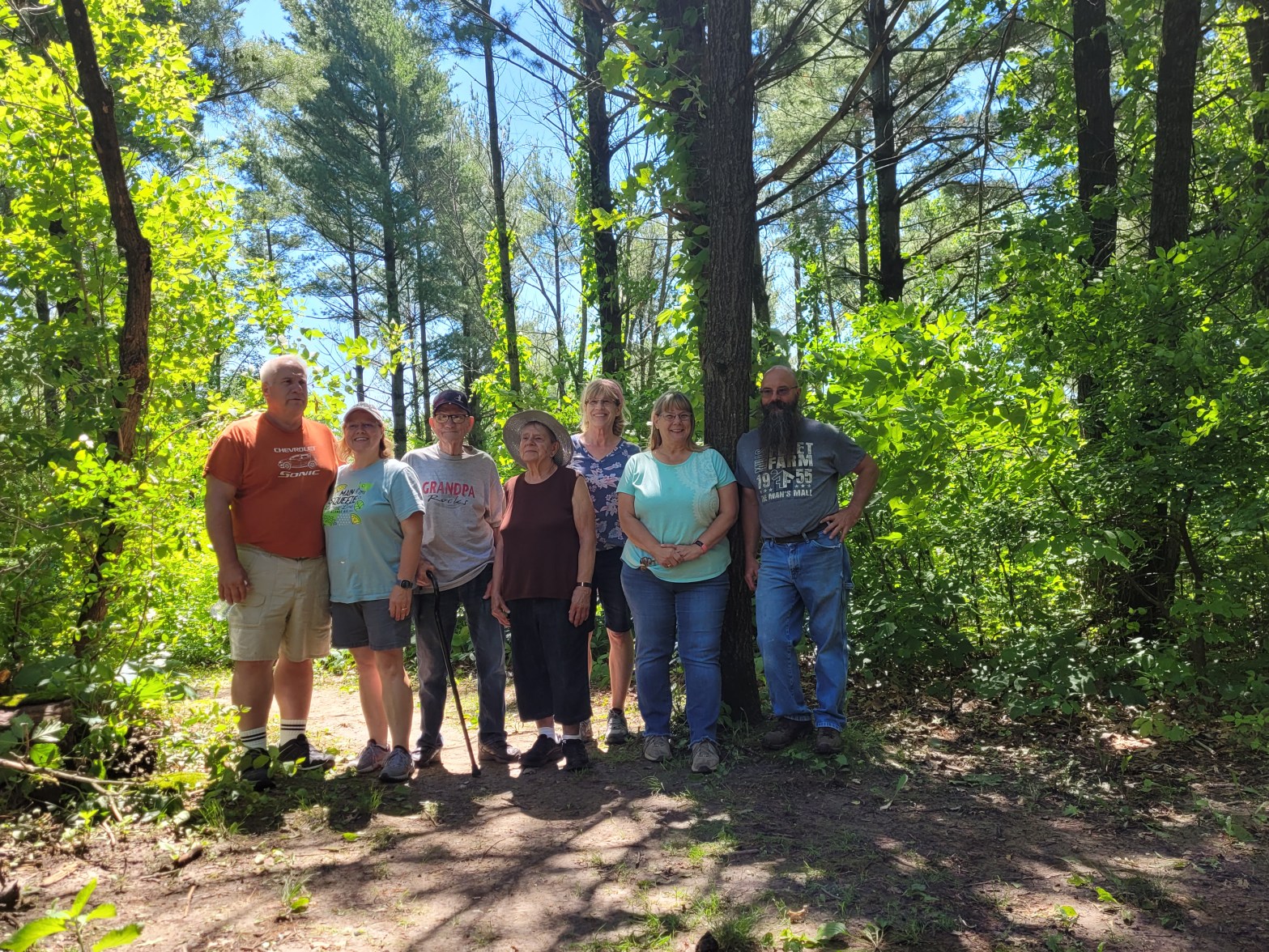
On June 16, 2022, when I was visiting, two of my cousins arranged for a group of family members to ride up into the park in 4-wheel drive trucks so that my 92-year-old uncle could see the land where he spent the first 14 years of his childhood. 

Great-grandfather Leon bought this property in the 1920’s and lived in a white wooden house at the bottom of the ridge where he planted a family garden and built a barn for cattle and horses.  Twenty years ago, I remember walking through the ruins of that house.  When he bought some farms at the top of the ridge, Leon Sr. let his oldest son Leon Jr. and his family live in one of the farm houses up there.  Leon Jr.’s first son, Paul—my father, was born in 1929 and his second son, David, was born in 1931.  David is the father of ten of my closest cousins.  Twenty years ago, we found a rusted sled that Paul and David used to travel down the snowy slopes of the ridge when they were little. 

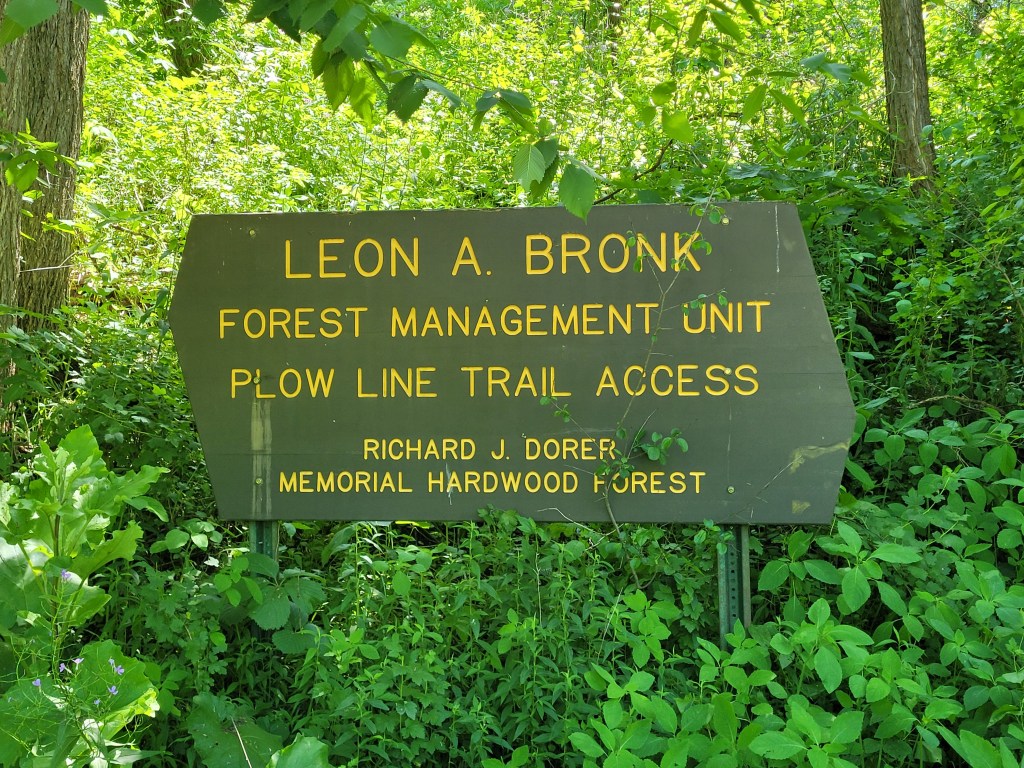
In 1969 when he was 81-years-old, Leon Sr. sold the land to the State of Minnesota, and it became part of the Richard J. Dorer Memorial Hardwood State Forest.  Since much of the property rises 500 feet above the surrounding valleys, it provides hikers and bikers tremendous scenic views of the land and water below.  The State of Minnesota planted thousands of white pine trees in rows, a forest that now covers up any evidence of houses, gardens, and alfalfa fields.

On this day, cousins Diane and Bill drove the trucks into the park and up the ridge under the supervision of a park volunteer named Mark.  Mark is an avid off-road bicyclist, and he started to maintain the 6.5 miles of hiking trails in this park by using his electric weed-whacker to cut the weeds. One day when he was working, he met a state park ranger, and he explained how he biked up the ridge with his whacking machine to keep the trails open.  He also wished that the gate was open so he could use his four-wheeler jeep to bring his mower up; because the weeks grew so fast, the mower would do a better job in a shorter amount of time.  The ranger gave Mark a key to the gate and unlimited access to the park.

When my cousin Diane wanted to arrange a family drive, she called Mark to get the State’s permission to drive trucks through the gate and up to the top of the ridge.  He helped her out because he wanted to meet the oldest living Bronk relative, my Uncle David, who had actually once lived on the property.

Mark was excited to hear stories about the property’s history.  The park is named the Bronk Unit Plowline Trail referring to the line where the Bronks stopped plowing their fields.  Uncle David revealed that one ridge is known as Cherry Hill, probably due to the cherry trees growing there.  Another ridge is known as Straw Pile Hill.  That’s where, when he was a mere boy, David dumped the hay that he harvested from the fields, and Paul would pick it up and haul it off to be sold.  David had to plow the fields and collect the hay with a horse-drawn contraption.  Paul got to drive the tractor since he was older. 

My dad used to say that “You can take a man away from the farm, but you can’t take the farm out of the man.”  All his life, my father was an excellent farmer.  When I was born, my family rented a two-acre farm in Fair Oaks, California.  I was allergic to cow’s milk, so my parents bought a goat and gave me its milk.  We had chickens, bunnies, and geese.  My mother made butter and ice cream by hand. 

Later, when we moved to a smaller property, my dad raised sheep.  One sheep was our favorite, and we named him Jerimiah.  One day when we got home from school, we couldn’t find him.  At dinner, we asked my parents where he was.  “He’s on your plate!” said my dad with a grin. 

David, too, farmed his whole life.  He bought a farm that had been owned by my Great-Great Grandpa Ignatius Bronk, who immigrated to the area from Gostomie, Poland and bought this farm in 1886.  When Ignatius died in 1896, his son Theodore took over the farm; Theodore was the older brother of my Great-Grandfather Leon Sr.  Today, David lives on the farm with his wife Linda and a herd of cows that his son, Bill, manages for him.  While I was visiting, about twenty-five of us cousins, first-cousins-once-removed, second cousins, and Uncle David and Aunt Linda had a picnic on a hot and humid 100-degree day. To stay cool, we sat under the spreading branches of a white oak tree and slapped the gnats that buzzed around our faces.

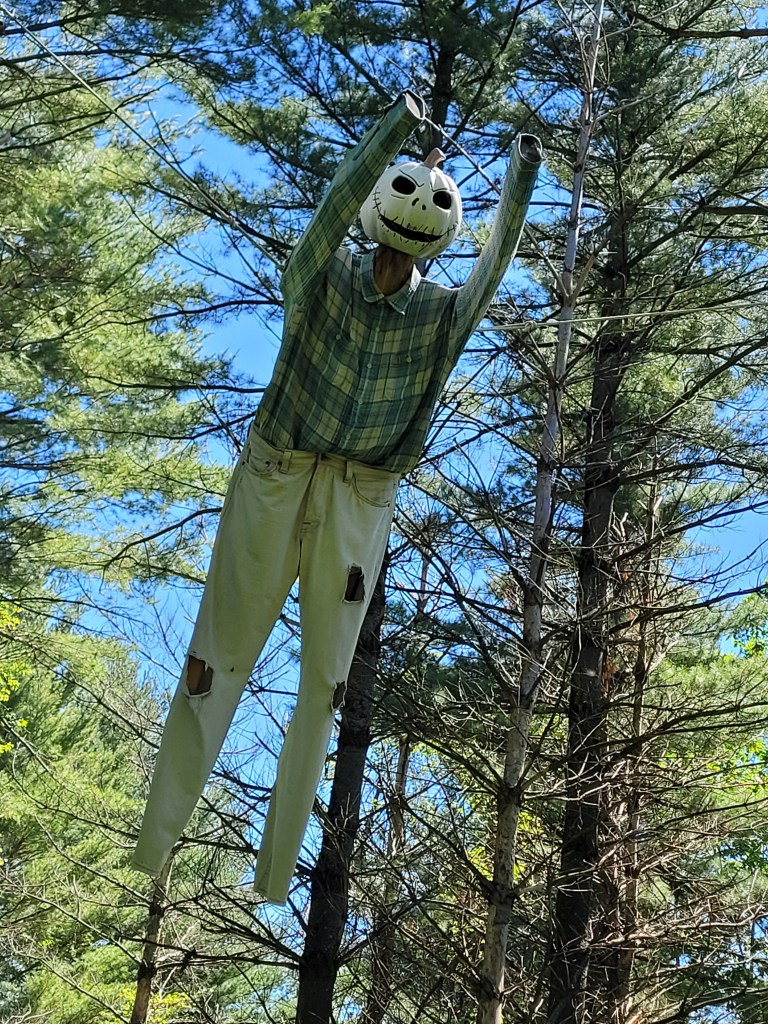
While we walked around the top of the ridge on Great-Grandpa’s property, we found wild carrots and asparagus—souvenirs from the gardens that once fed the Bronk families.  Hanging high above a hiking trail, we found a scarecrow with a Jack-o-lantern head, plaid shirt, and farmer pants.  Mark told us that a solar light made the head light up at night, creating an unexpected scary encounter.  We watched big, Eastern Tiger Swallowtail butterflies settle on wild flowers and examined tiny pine cones that fell from the white pine trees.  The floor of the forest was covered in a thick matting of dead pine needles, hiding the remnants of our relatives’ lives. 

What occurred to me that day was that all of the farmers who worked on my great-grandfather’s land had been removed from it: my great-grandfather, my grandfather, my father, and my uncle.  Yet, there was evidence all around the area and in places far away, like California, that these people and their descendants were still farming.  David’s son Bill will one day take over David’s historic farm.  My brother, Donald, can grow any vegetable or flower in his patch of garden in California.  I have a green thumb when it comes to growing flowers. Apparently, you can’t take the farm out of a farming family. 

Why I Like Old People

I recently came home from a vacation where I spent ten days touring Southern cities with twenty-four people over the age of sixty.  I had the time of my life with these people and the following reasons explain why.

1. They’ve Endured Hardships and Healed from Them

While sitting beside my new friends in a horse carriage or at several dinners, I learned about their lives.  One pretty, eighty-eight-year-old woman had raised two of her grandchildren after her daughter and son-in-law died.  When she smiled, her eyes lit up like stars.  Another woman, traveling alone, was married to a man who has suffered from Muscular Dystrophy for twenty years and is bedridden.   A tall, handsome mustached man experienced extreme pain one day when his gout acted up during a tour of a plantation when the tour required a lot of walking.  He was a sweet and endearing man, always kind to everyone.  A friendly woman walked with a cane, yet she was a fascinating conversationalist.  Despite having all of these trials in their lives, these individuals were traveling and living happy lives which indicates their strength of character and determination to be happy. 

2. They’ve Developed Long Careers

This group of travelers represented a broad range of careers.  One man, at seventy-seven-years old was still working as an ophthalmologist.  A blonde-haired woman, who was married to a former president of a silicone company, was a former cooking instructor.  Two women from Pennsylvania were realtors, and another was an English professor.  All of the travelers had decades of experience in working and lots of stories they could tell of their working years.  This made them interesting companions.

3. They Don’t Need to Impress You

No one had the need to impress anyone else.  No one was critical, either.  They accepted everyone, whether he or she used a cane, was shy, drank a little too much, or liked to be alone once in a while.  Perhaps, because they had lived through hardships and experienced numerous relationships with many different kinds of people, they didn’t feel they had to compete with anyone else’s achievements.  They had plenty of their own. 

4. They Love People and Relationships

This was an exceptionally friendly group of people, perhaps because they were old enough to understand that people and relationships bring the most joy into our lives.  The woman whose husband had Muscular Dystrophy made sure she dined with each and every person on the tour.  During every bus ride, we chatted together about our lives.  We took photographs of each other on beautiful, historic bridges.  We climbed to the rooftops of Revolutionary forts together.  We toasted glasses of wine, shared appetizers, discussed fish and steak, described our desserts.  So even though we were on a tour to visit the South, our emphasis was experiencing the country with new people and in developing new relationships.

5. They Can Relate to Your Experiences

After working for years in a profession, it certainly is rewarding for someone else to be able to identify with your years of working with students, clients, or patients.  If you spent years in human resources solving employee problems, it’s rewarding to tell someone else about your work and have them understand your accomplishments.  Since there were a few teachers on the tour, they easily appreciated the hard work of teaching.  The corporate attorneys and accountants could understand corporate work, and the medical professionals could share stories about special cases or patients.  People with different careers could appreciate each other since long careers all require hard work, problem-solving, and endurance. 

6. They Know How to Live in the Present

Old people know how short life is, and so they are better at focusing on the present moment instead of always thinking about the future.  Some mornings, my travelers took a walk on the beach at Hilton Head just to watch the sunrise over the bulging, grey Atlantic Ocean.  Sometimes, they put on their swimsuits and swam in the pool.  They sat in the hotel courtyard on warm afternoons to enjoy the balmy weather and blooming bougainvillea.  They lingered at dinner long after the dessert was served to talk with their new friends, and they asked each other to take pictures in the plantation gardens. 

Old people are a lot like good novels.  They have so much life to share.  After spending ten days with my over-sixty-year-old travelers, I’ve come home with much more than memories of places.  My life has been enriched with the strength, experience, confidence, humanity, empathy, and mindfulness of these incredible people. 

The Yellow Rose

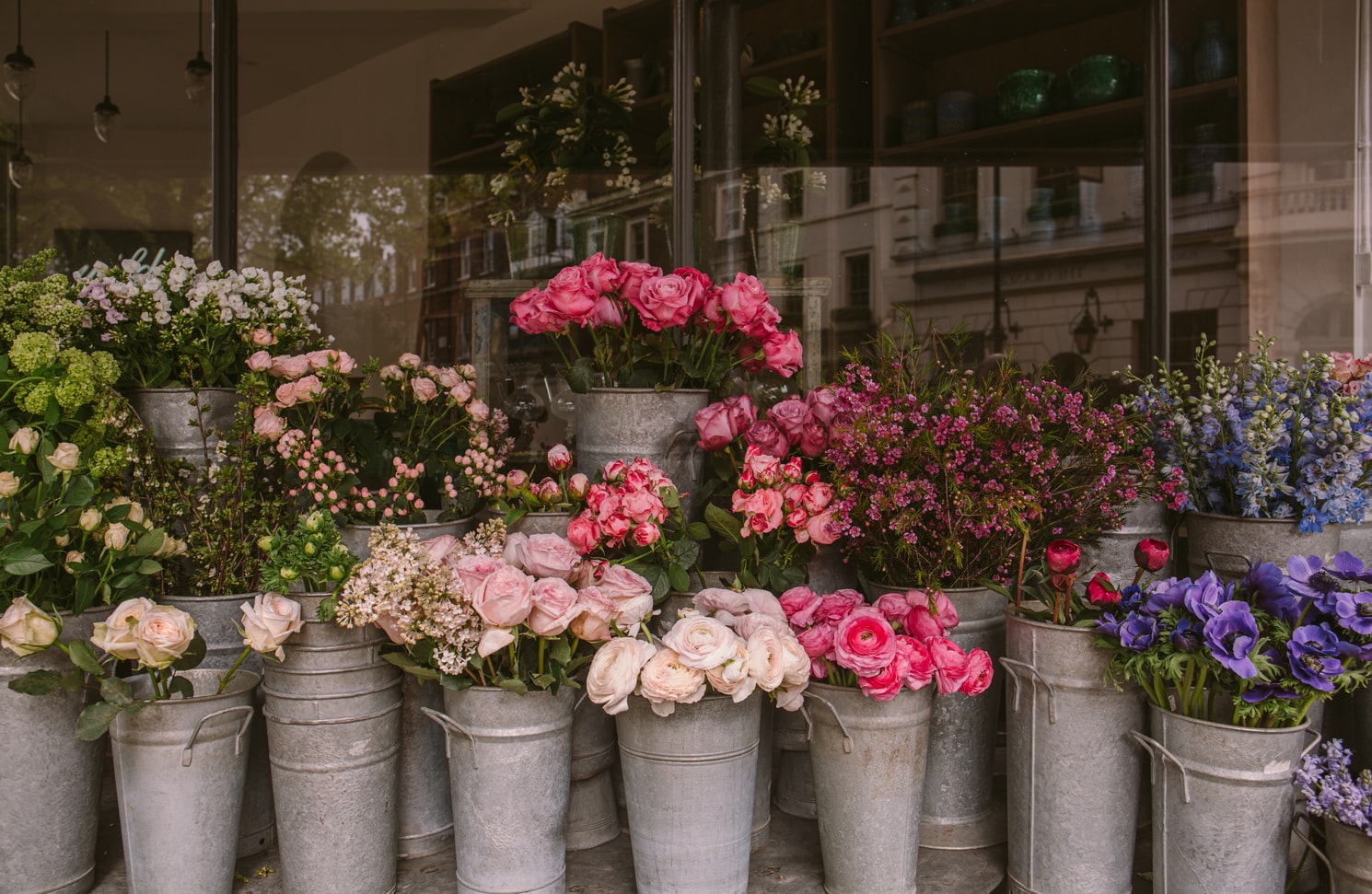
Friday was the last day of class, and Profesora Casti lead her students to Almagro, the part of Buenos Aires known for its flower vendors.  First, the group wandered among the flower stalls on Acuňa de Figueroa where baskets of roses filled the air with intense fragrances.  Leonie bent over the bunches to breathe in their perfume, and she took turns saying their names out loud with her classmates.  They chatted with the vendors who told them where they grew their flowers and how they worked from early in the morning until late at night planting seeds, hand-watering, and pruning in order to produce the most beautiful blooms. 

The vendors chatted about Mother’s Day, weddings, and baptisms for which they sold the most flowers.  Some stayed open 24 hours a day.  The best time to buy flowers, they said, was late at night or early in the morning.  These really were the most romantic times of the day anyway. 

The class meandered to Calle Sarmiento where even more vendors had their shops.  One shop, filled with tuberose and jasmine, perfumed the air outside its door with heady floral fragrances.  Inside, the vendor was wrapping flower bouquets in cellophane paper for a woman and her two daughters. 

Leonie wandered away from the group to admire the lilies of another vendor.  While she was reaching out to touch a petal, a woman dressed in a green apron came out to greet her. 

“Your lilies are gorgeous,” exclaimed Leonie.

“Thank you.  My grandfather used to sell flowers on the streets of Buenos Aires.  My father sold flowers in the old market in stall 8, and, now, I rent this shop here to continue our family tradition.”

Leonie moved under the shade of the willow tree that grew right in front of the storefront.  “I love flowers,” she said.

“I love flowers, too,” replied the vendor.  “I’ll sell them until I’m old and frail.”

Leonie paused in thought, running the woman’s response through her mind.  Forever was a long time to do just one thing.  Leonie didn’t know that she would ever find something that she wanted to do for so long.  The woman in the green apron smiled at her, her face flushed with the essence of intense happiness, her eyes like shining opals. 

“So,” Leonie asked, “You don’t ever wish that you could do anything else?”

The woman smoothed down the front of her green apron with hands crusted with dirt, chapped from years of digging and planting.  “No, never. I never wish to do anything else. Each day in my flower shop I get to express my creativity, and that gives me intense joy.  Besides, I know that I like to be around beautiful things, and what could be more beautiful than a shop full of flowers.”

“You seem so content.”

“You see this willow tree that’s giving you shade?  A willow tree symbolizes fulfilling wishes of the heart.  It also symbolizes inner vision.  I’m lucky to know what fulfills my life.  That knowledge is my inner wisdom.”

The vendor showed Leonie around her tiny shop, identifying the names of all the flowers and inviting her to smell their fragrances.  Leonie told the vendor that she was about to take a trip to search for her life’s purpose.  As the woman listened to her story, her eyes glistened and a whisper of a smile set upon her lips.

Before Leonie left, the woman held out a yellow rose.  “This rose symbolizes our new friendship,” she said.  “Friends are one of the most precious treasures of your life.  From now one, you and I are lifelong friends.  I wish you success on your trip and hope that you find your version of life fulfillment. 

That night, just before Leonie went to bed, she sat at her desk to write in her journal.  I know what fulfills me, she wrote.  After setting down her pen, she felt anxious.  But I don’t know what fulfills me, she worried.  I don’t know what I want to do with the rest of my life.  I don’t know what makes me happy day after day after day. 

Leonie looked at the yellow rose that the flower vendor had given her.  Its yellow petals brightened up the shadows of her room.  She remembered how gently the woman had picked up each flower and described its characteristics, moving among her flowers with grace, touching each blossom with respect and admiration; her movements were filled with love. 

Now Leonie knew.  The woman had been a messenger from her own soul to teach her how to find her own purpose.  Love was an integral part of finding fulfillment.  When she found out what she loved, she would find her contentment. 

Leonie touched the yellow rose, and her heart filled with joy when she remembered that the woman promised that they would be friends for life.  Friendship, she thought.  I have love already. 

Wisdom of the Trees: Chapter 4

Chapter 4 – Willow

Friday was the last day of class, and Profesora Casti lead her students to Almagro, the part of the city known for its flower vendors.  First, the group wandered among the flower stalls on Acuňa de Figueroa where baskets of roses filled the air with intense fragrances.  Leonie bent over the bunches to breathe in their perfume, and she took turns saying their names out loud with her classmates.  They chatted with the vendors who told them where they grew their flowers and how they worked from early in the morning until late at night planting seeds, hand-watering, and pruning in order to produce the most beautiful flowers. 

The vendors smiled when they talked about Mother’s Day, weddings, and baptisms for which they sold the most flowers.  Some vendors stayed open 24 hours a day.  The best time to buy flowers—late at night or early in the morning.

Then, the class meandered to Calle Sarmiento where even more vendors had their shops.  One shop was filled with tuberose and jasmine, which filled the shop and the air outside its door with heady perfume.  Inside, the vendor was busy wrapping flower bouquets in cellophane paper for a woman and her two daughters. 

Leonie wandered away from the group to admire the lilies of another vendor.  While she was reaching out to touch a petal, a woman dressed in a green apron came out to greet her. 

“Your lilies are gorgeous,” exclaimed Leonie.

“Thank you.  My grandfather used to sell flowers on the streets of Buenos Aires.  My father sold flowers in the old market in stall 8, and, now, I rent this shop here to continue our family tradition.”

Leonie moved under the shade of the willow tree that grew right in front of the storefront.  “I love flowers,” she said.

“I love flowers, too,” replied the vendor.  “I’m sure I’ll sell flowers until I’m old and frail.”

Leonie paused in thought, running the woman’s response through her mind.  Forever was a long time to do just one thing.  Leonie didn’t know that she would ever find something that she wanted to do for so long.

“So,” Leonie asked, “You don’t ever wish that you could do anything else?”

The woman smoothed down the front of her green apron with hands that were crusted with dirt and chapped from years of working with plants.  “No, I never wish to do anything else,” she finally said.  “I feel that each day in my flower shop is another day where I get to express my creativity, and doing that gives me intense joy.  Besides, I know that I like to be around beautiful things, and what could be more beautiful than a shop full of flowers.”

“You seem so contented,” said Leonie.

“You see this willow tree that’s giving you shade?  A willow tree symbolizes fulfilling wishes of the heart.  It also symbolizes inner vision.  I’m lucky to know what fulfills my life.  That knowledge is my inner wisdom.”

The vendor showed Leonie around her tiny shop, identifying the names of all the flowers and inviting her to smell their fragrances.  Leonie told the vendor that she was about to take a trip to search for her life’s purpose.  As the woman listened to her story, her eyes glistened and a whisper of a smile set upon her lips.

Before Leonie left, she held out a yellow rose.  “This rose symbolizes our new friendship,” she said.  “Friends are one of the most precious treasures of your life.  From now one, you and I are lifelong friends.  I wish you success on your trip and hope that you find your version of life fulfillment. 

That night, just before Leonie went to bed, she sat at her desk to write in her journal.  I know what fulfills me, she wrote.  After setting down her pen, she felt anxious.  But I don’t know what fulfills me, she worried.  I don’t know what I want to do with the rest of my life.  I don’t know what makes me happy day after day after day. 

As she sat, she thought about the vendor in the green apron and how she had found fulfillment.  She remembered how gently the woman had picked up each flower and described its characteristics.  She had moved among her flowers with grace, touching each blossom with respect and admiration; her movements were filled with love. 

Now Leonie knew.  The woman had been a messenger from her own soul to teach her how to find her own purpose.  Love was an integral part of finding fulfillment.  When she found out what she loved, she would find her contentment. 

Wisdom of the Trees: Chapter 2/3

Chapter 2 – Birch

During the last week of class, Profesora Casti took the class on field trips so the international students could experience the culture of Buenos Aires.

On Monday, the class walked to the Manzana de Las Luces.  Profesora Casti explained that this was the Block of Enlightenment and contained some of the oldest buildings in Buenos Aires, including the Baroque church of San Ignacio, a church built by the Jesuits between 1686 and 1722. 

The students listened as their instructor explained how the Jesuits also built a school, museum, and pharmacy on the site, and operated all of them until the Spanish came and suppressed the Jesuits.  Since then, the site has been transformed into a university, cathedral, and Argentina’s first medical college.  Later, the Spanish opened Buenos Aires’ first printing press and orphanage on the site, extending its colorful and diverse history. 

What most fascinated Leonie was the warren of tunnels underneath the street, once used to store ammunition during Argentina’s fight for independence.  The students followed each other single file through the narrow, brick tunnels, stooping their heads low under the arched ceilings.  Here and there, the tunnels stopped, the entryways blocked by dirt and rocks from centuries of neglect. Utility lights lit up the corridors, and the lights created shadows on the walls that walked with them. 

When they came outside again, the sunlight blinded Leonie, and she shielded her eyes with her arm, squinting and squeezing her eyes shut until they became adjusted to the brightness.  The students sat down on stone walls in the courtyard to rest.

Leonie sat next to an older woman who was wearing a straw hat and drinking out of a metal flask.   Beside the woman leaned a walking stick, hewn out of white wood marled with yellow scars.  Leonie had never seen a walking stick so beautiful and unusual.

“Are you wondering about my stick?” the woman asked suddenly.

Leonie looked down at the ground quickly, fluttering her eyelids.  “Yes, I am,” responded Leonie.  “It’s so unusual.  What kind of wood is that?”  She slowly raised her eyes to look at the stick and then noticed the woman’s smile.

“I carved this out of birch wood when I was about your age, a wood that signifies new beginnings.  I can see that you are about to start a long journey, one that will give you a new beginning and help you find out your life’s purpose.”

Leonie opened her eyes wide and stared into the woman’s face.  “How did you know that I was going on a journey?  How did you know I was searching for my purpose in life?”

“I am an old soul, and old souls can read energy.  From your energy, I can see that you have suffered a great loss, but this loss will help you gain wisdom and strength, and, in the end, the loss will become your constant companion.”

“My mother died, and I miss her terribly.”  Leonie sank onto the rock perch, remembering the last time she saw her mother’s face.  Her mother had been beautiful, even when she suffered from the cancer.  Her face always glowed with an even sunny complexion, and her smile lit up her eyes like emeralds under a jeweler’s lamp light. 

“The first thing you need to do is to write down your affirmations,” said the old woman, rustling her wide skirts as she turned more to face Leonie.  “Whatever you wish to have, write it down like your already have it.”

“I don’t know what you mean.”  Leonie scratched the back of her head.

“An affirmation is a positive assertion that claims something is true.  When you put forth a personal affirmation, all of creation conspires to help you attain it.” 

“That sounds very interesting,” said Leonie, “but my father wants me to go home right after I finish this Spanish class.  I keep thinking I should stay here longer so I can find out what to do with the rest of my life.”

“You must learn how to believe in yourself and not to rely on the opinions of anyone else.  Your father cares for you, but your life is not his.  You must follow your own heart, or you will feel like you are not living.”  The woman stuck one of her tanned hands into the folds of her skirt and took out a small book, about the size of Leonie’s cell phone. 

“This is a gift from me.  Inside this journal are blank pages.  Today, start writing down your affirmations, and then your life and fulfillment will begin.”  The woman smiled at Leonie just as the sun poked through the branches of an oak tree.  Leonie had to close her eyes it was so bright, and when she opened them, the woman with the birch walking stick was gone.

That night, Leonie sat up in bed, the journal opened before her, a pen in her hand.  She wrote—I want to make a difference.  No, that wasn’t right.  The old woman had told her to write as if what she wanted was already true.  She put a line through the sentence and tried again—I am making a difference, she wrote.

Pressing the journal to her chest, she leaned back to see if she felt better.  No.  She still felt like she hadn’t a clue of what to do or how she could contribute to the world. 

Contribute—a good word, she thought.  She wrote another sentence underneath the first one—I am contributing something positive to the world.  Now she felt a little better.  The way she would make a difference would be by contributing something positive.  She didn’t know what that was yet, but she was determined to find out. 

Leonie placed the journal and pen on her nightstand, turned out the lamp, laid her head on her pillow, and fell asleep with a feint smile on her face.

Chapter 3 – Myrtle

On Wednesday, Profesora Casti took the class to Iglesia de Santa Felicitas on Calle Isabel la Catolica in the Barracas District.  The students learned that this church was built in the early nineteenth century in honor of Felicia Antonia Guadalupe Guerrero, considered to be the most beautiful woman in Buenos Aires.  Her husband died from yellow fever, leaving her a widow.  Later, she was killed by her rejected suitor, Enrique Ocampo. 

Leonie walked through the eclectic gothic interior of the church, gazing into the faces of the marble statues of Felicitas and her son and husband.   Around the perimeter of the church, she paused in front of the stained-glass windows, looking into the faces of the saints and admiring the colors of the roses.  She was so intrigued by how the natural light lit up the panes of glass that she didn’t see the young girl until she bumped into her.

“I’m sorry, said Leonie.  I didn’t see you there.  I was so interested in these beautiful windows.”

The girl didn’t respond.  She seemed lost in thought and sad.

“Are you o.k.?” asked Leonie.  She gently touched the girl on her wrist, which she noticed was tied with a long, red ribbon.

The girl was about the same age as Leonie.  She had long brown hair, big brown eyes, full lashes, and a mouth that was wide and voluptuous.  Leonie thought she was beautiful. 

The girl looked at her.  “Oh, I was lost in thought.”  Her eyelashes scanned Leonie from head to toe, and then she smiled.  “Are you a student at the university?”

“Yes, I am.  I’m on a field trip with my Spanish professor.  This is the last week of classes, and we’re touring around Buenos Aires to learn more about the Argentine culture.  May I ask you why you are here?”

“I’m looking for love,” said the girl, waving her wrist in front of her. 

“I don’t understand,” responded Leonie.

“We have a tradition.  If a girl wants love, she comes to the cathedral and ties a ribbon on a branch of the myrtle tree in the garden, which symbolizes romantic and devoted love.  Soon, she will find a love that will be true and lasting.”

“What a nice tradition.”  Leonie smiled at the girl.

“Did your professor tell you that this church is haunted by its namesake?”

“No. What do you mean?”

“The woman for whom this church was built, Felicia, was murdered.  She was shot in the back by her suitor and died on January 30.  People say that on that day, a woman with a pale face and dark hair, dressed all in white, walks from the garden, opens the door to the church, proceeds down the aisle to the main altar and leaves a trail of tears behind her. 

“That’s such a sad story.”

“Now, Felicia brings love to all the women who request it by tying their ribbons on the myrtle tree.  She has turned her tragedy into positive deeds—bringing love to all women of her beloved city.”

“So, you are going to tie your ribbon on the gate?”

“Yes, to find my love.”

“May I help you?”

“I’d like that. Let’s go.”

The two girls walked out of the church together, smiling and chatting as they went.  Once they reached outside, they walked through the roses in the garden until they reached the myrtle tree.  The brown-eyed girl untied the ribbon from her wrist and, with Leonie’s help, tied it around one of the tree’s branches. 

“Thank you for helping me,” said the girl.  “I believe I will find my love even faster because of your kindness.”

“I was honored to share your dream,” said Leonie. 

“Let’s tie a ribbon on the tree so you can find your love.”

“Oh, I’m not ready for love,” said Leonie.

“That doesn’t matter.  Your love will arrive when you are ready.  Here, I have another ribbon.”  The girl pulled another red ribbon out of her pocket and handed it to Leonie.

Leonie raised her chin back and laughed which sounded like the rise and fall of a musical scale.  “I guess it won’t hurt.”  She chose another branch close to the girl’s ribbon and tied hers around it in a bow.

“I’m happy that you will find love too,” said the girl.  The girl smiled at Leonie, placed her hands on her shoulders, and kissed her lightly on each cheek.  Her eyes shone like topaz.

“I will never forget you,” said the girl, and she walked away, her skirts swishing gently from side to side. 

That night, before Leonie fell asleep, she wrote in her book of affirmations.  She wrote—I provide love to the world.  She looked at the words that she had written and thought about the girl with the full lashes who wanted to find love. 

I must first find out what I want, Leonie thought.  Until I know who I am and what my purpose is, I won’t attract the right kind of love. 

One thing I know.  I know I can provide love to others.  I’ll do this first and then, when the time is right, I’ll let someone love me. 

She turned out the light and dreamt about the myrtle tree and its red ribbons.

Wisdom of the Trees: Chapter 1

Photo by DARIAN PRO on Unsplash

From ancient times, trees have symbolized physical and spiritual nourishment, transformation and liberation.

Chapter 1 – Oak

One more week and she was done.  Graduated with a double major.  College over.  More educated than most of the people on earth. 

And you know what?  She wasn’t going back home, even when this class was over.  Her father had paid for a round trip ticket to Buenos Aires, but she was going to cash it in and stay.

This was her chance to really be independent, to find out what her values were without her father’s advice about this job or that apartment, this guy or that outfit. 

She missed her mother though, but her mother wasn’t at home anyway.  When Leonie was supposed to be having the time of her life in college, her mother had contracted breast cancer.  After three surgeries, six months of chemotherapy that sapped her effervescent energy, and twelve weeks of radiation that burned her skin red, the cancer came back. 

Just before she passed away, Leonie and her mother had sat under the oak tree in the back yard, the shadows of its branches spreading like arms across the grass. 

“I can’t lose you, Mom.”  She had wept beside her mom, the shade of the giant tree darkening her tears like black pearls.

“You won’t feel the same, but you’ll never lose me.  You’ll just have to learn how to live with me differently.” 

Leonie had felt so confused.  She stared at her mother’s face so that she could remember it—her gray-blue eyes, silky skin, a mouth that always held the hint of a smile.  She stared deep into her eyes, holding on, wishing for more time.

“I’ll be with you,” said her mother.  “I’ll guide you from a new place, a place you cannot see, but that is nevertheless powerful.  You’ll feel me.”

Leonie clutched her mother’s hand.

“I want you to find your inner strength.  Emulate this oak tree.  Every time you feel weak or lost, visualize yourself as an oak tree, rising strong, spreading wide, enduring challenge and finding the sun.  You won’t be alone because I’ll be beside you, breathing my love into your heart.”

“But I won’t see you.  You’re my inspiration.  I’ll be lost without you.”

“My love will remain here.  When you can no longer physically see me, you can find other women to inspire you.  Choose many, in fact.  One to follow for leadership skills, another to learn the art of love, and another to learn how to live with joy.  She may be one of your professors, a co-worker, a girl friend, a friend’s mother, or a woman you meet only one time in your life. Whatever you wish to be, you can find a woman to inspire you.”

“How can you be so strong?  You’re dying!”

“I’m content because I know that I will continue my life in another form.  My spirit is not dying.  My soul will continue, and I’ll grow from its future experiences.  I have many things to look forward to.”

Leonie remembered this conversation as she held her mother’s ashes six months later, secured in a pearlescent urn shaped like a heart.  Leonie kissed the top of the urn before placing it in the niche at the cemetery.   “Enjoy your journey, Mom,” she whispered.

Later, as she sat in the back yard next to her mother’s chair, Leonie thought she heard her mother’s voice.  No, maybe it was the breeze rustling the limbs of the oak tree instead. 

“My journey will be right alongside you,” said the breeze.

Staying focused on her studies was impossible after her mother’s death, but her girl friends had helped, and then Leonie decided to go overseas for a change of scenery—a much needed distraction that she needed to survive.

So now, she was in Buenos Aires and hungry.  She lived in a shabby dorm room in the basement of the university and tutored students in English to make money, but it wasn’t enough. 

Leonie searched through her backpack for something to eat: an empty plastic juice bottle, a paper envelope from the bocadillo she had for lunch.  She poked her fingers deeper.  Something waxy.  She grabbed at it and pulled out an apple, a little bruised, but it was food.

The next morning, Leonie woke up with a growling stomach and the sound of traffic.  Engines racing, horns blaring, and brakes squealing invaded her tiny room through the high window that wasn’t even big enough for her to crawl through.  Leonie grabbed her shampoo and towel, opened the door, and paced to the single shower room. 

Whew!  It was empty.  The water felt refreshing on her wet head, rinsing off the humidity and sweat of her body from the sweltering night.

Today, she was going to meet a friend that she had met in her Spanish class.  Clarissa was a native Argentinian and Leonie wanted to ask her about traveling throughout the country. 

Upstairs in the dormitory lobby, a canister of coffee stood on a table next to a large blue box of sweet pastries.  Leonie poured the thick, viscous liquid into her own mug, stuck a pastry between her teeth, and whisked out the door.

Clarissa was sitting at a table in the corner of the café with her laptop open when she arrived.  A cup of mate steamed to the right of her computer, Clarissa wildly typing on the keyboard.

“Hey, how’s it going?” asked Leonie, grabbing the back of the chair opposite her, scraping it across the floor, flinging her backpack over a post, and sitting down.

“Hey,” murmured Clarissa, finishing a sentence.

“You know, this Spanish class is my last college class, and I’ve got to figure out what to do with the rest of my life.  I feel lost without my mother, and I don’t want to go home without a plan.  I don’t even know if I want to live there anymore.”

Clarissa picked up her mate, sipped it, and looked up at Leonie. “I suggest that you travel and meet as many people as possible.  They’ll give you new ideas, and you’ll learn that you have endless options,” said Clarissa.

“That does sound good,” said Leonie.  “How should I start?”

“Just go,” said Clarissa. “Don’t think too much.  Don’t plan too much, but be ready to make your trip work each step of the way.  I’m emailing my sister.  She works at the Belmond Hotel, a few miles from Iguazu Falls.  Maybe she can get you a free room.  Iguazu Falls is one place you should go!”

“Oh, I’m so nervous about traveling by myself.  Maybe I’ll just stay here,” responded Leonie.

“Oh, no you won’t,” said Clarissa. “You’re going, and that’s that.”

“We’ll see,” said Leonie.  I have a whole week of classes left.”

“Yes, a whole week to build up your courage and begin your new life.”