What I Learned about My Dad’s Vietnam Deployment from Reading The Women by Kristin Hannah

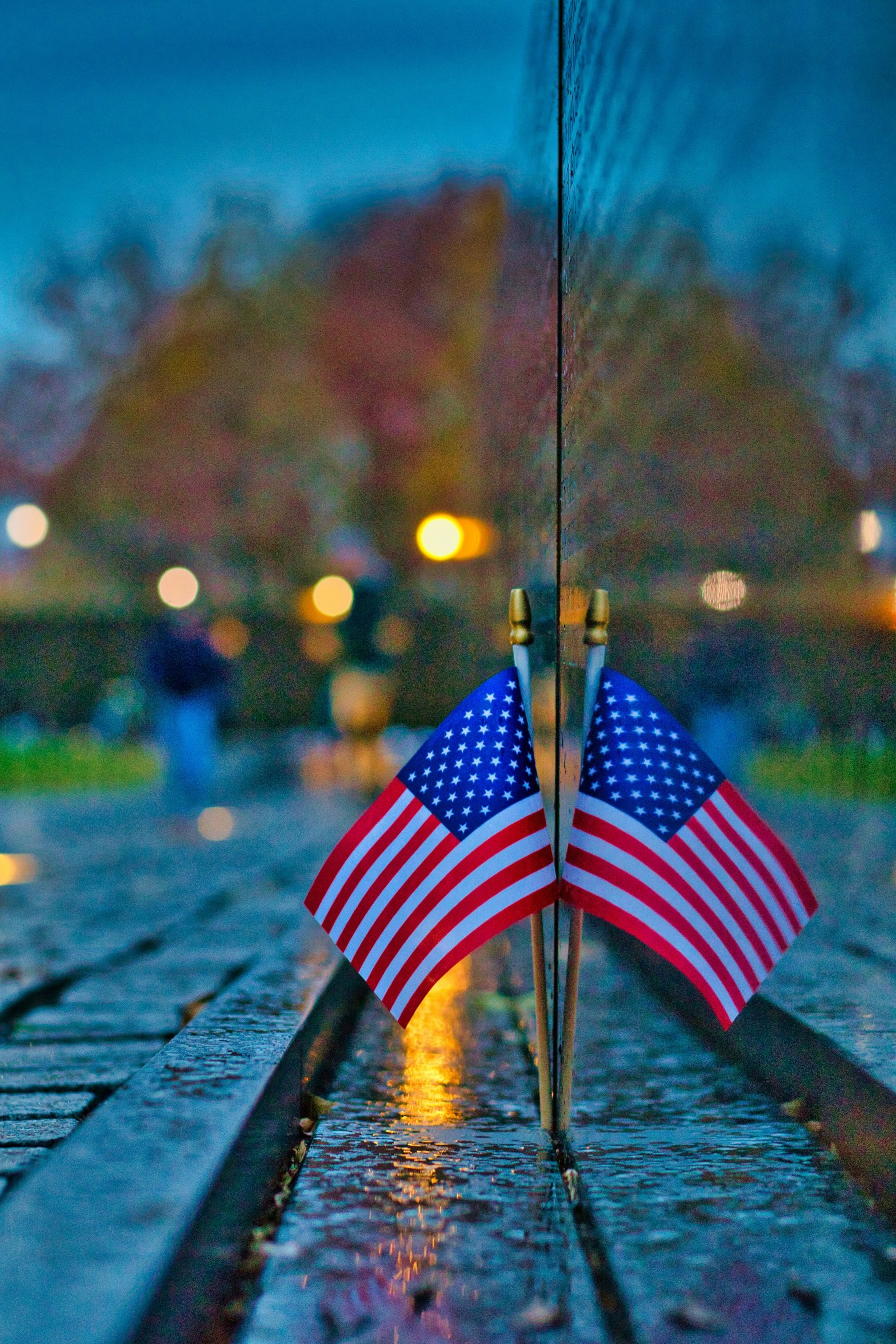
Photo by Kirt Morris on Unsplash

I was fifteen years old when my father went to war in Vietnam, not old enough to understand the news or to pay attention to adult worries. But I remember my dad standing at the front door with my mother hanging onto him, tears streaming down her face.

When my dad came home, we expected that he’d sit in his big armchair set in a corner of the living room, gather his children around his feet, and tell stories about what he saw. But he didn’t. He sat in his armchair, staring at the blank television with furrows in his brow for hours each night after work and during the long afternoons on the weekend. We crept past his chair silently afraid of his morose temperament.

When I discovered The Women by Kristin Hannah, I thought it would be an opportunity for me to learn about my father’s Vietnam experience that he never shared with us. The book tells the story of a young woman, Frances Grace McGrath, who becomes a nurse and signs up to serve in the army in Vietnam in 1965. She joins the Army Nurse Corps since the Air Force and Navy require her to have more clinical experience than she has.

Frances, known as Frankie, is inspired to sign up for service because her father has a wall in his study of the family’s military heroes, and she wants to be on that wall. The only woman on the wall is her mother in a wedding picture. Just before her brother leaves for the war, one of his friends tells her that women can be heroes, too.

My father, on the other hand, tried to avoid going to Vietnam. By 1965, he had been in the Air Force for twelve years and was a senior flight mechanic, a valuable skill for a war being fought with helicopters and airplanes. 1965 was the year that President Johnson increased troop deployment to Vietnam and began direct combat operations to shore up the South Vietnamese defense against the communist Viet Cong and North Vietnamese forces. My father petitioned not to be sent, so he was deployed instead to Mildenhall, a U.S. Air Force base in the United Kingdom. I was only nine years old. The bad news was that he had to leave his circle of friends in California to serve there for almost four years. The good news was that his family could join him, his wife and all nine kids. We came back to California in 1969. But this alternate deployment did not protect him from being shipped off to Vietnam.

In 1972, when the war was raging and tempers were flaring at home about it, I still didn’t know much about the war even though I had seen pictures of U. C. Berkeley students protesting it on television.

In April 1972, my dad closed the front door on his family and flew to serve at Cam Ranh Bay, an air base Vietnam used for the offloading of supplies, military equipment, and as a major Naval base. My father was assigned to serve as the senior flight mechanic on a huge transport plane known as a C-5B, a plane that can transport a fully equipped combat unit with oversized cargo. He wrote numerous letters home. In one, he writes about how he sprained his ankle in the shower. In another, he describes how a bomb went off outside the plane, the noise ringing in his ears.

I know my father took soldiers to the front lines and brought home dead men in body bags. He didn’t tell us that, but when I read about the use of C5-B planes, that’s what I learned. I know also that the planes were used to rescue Vietnamese women and children and bring them to the United States. Once, my father described how they had to shut the cargo door to keep out the hordes of civilians trying to board the plane.

After my father died and I was helping my mother with his estate, I came across some paperwork relating to a lawsuit about Agent Orange. Apparently, my father had been exposed to it in Vietnam. I had heard of it and thought that it was some kind of chemical used in a war. In The Women, I learned that it was a deadly herbicide used to kill jungle foliage to prevent the Viet Cong from hiding. Exposure to it causes cancer, birth defects, and other illnesses. My father died when he was 76 years old from heart trouble. His grandfather had lived to the age of 98 years old. Could he have lived longer if he hadn’t been exposed to Agent Orange?

Dad only stayed in Vietnam for eight months. He came home early since President Nixon had decided to withdraw U.S. troops by January 1973. Dad flew into Beale Air Force Base and my mother rushed to see him as soon as he landed.

By 1972 in the book, Frankie is home, experiencing nightmares and guilt for being part of a war that Americans didn’t want. She had seen soldiers without limbs, chest wounds, and mangled heads. They haunted her in her dreams, and when loud noises went off around her, she ducked for cover.

I don’t know if my father had nightmares like Frankie. I don’t know how the war protesters made him feel. Unlike Frankie, whose military service was ignored by her family and country, I think my father had emotional support waiting for him at home. My parents had a large community of friends in their church, who rallied around him when he returned. Finally, after months of grim silence, he got out of his armchair and settled into life again. A few years later, he retired from the Air Force and went back to school to get his contractor’s license. His last job was building candy stores for See’s Candies.  

Frankie’s story taught me how the women who served in Vietnam received little or no credit for their valor even from their own families. As a woman, I’ve experienced a lot of inequality, so the story affected me deeply. But as the child of a soldier in Vietnam whose life was profoundly affected by a parent’s suffering,  I’m thankful that it uncovered some of the mystery of my father’s Vietnam deployment.
Glitter, Gloss & Human Dignity

Last Saturday, I attended the San Francisco Gay Men’s Holiday Spectacular at the Sydney Goldstein Theater in San Francisco for the first time. Oh! What a night!

When my daughter and I arrived, a quiet but eager crowd was gathered around the theater’s entrance. We donned our required Covid masks and presented our tickets to a friendly usher who pointed to the stairs. Above, another smiling usher led us to our excellent seats and we sat down—only two in a theater filled with Christmas sweaters and holiday cheer. Excited voices murmured throughout the cavernous room.

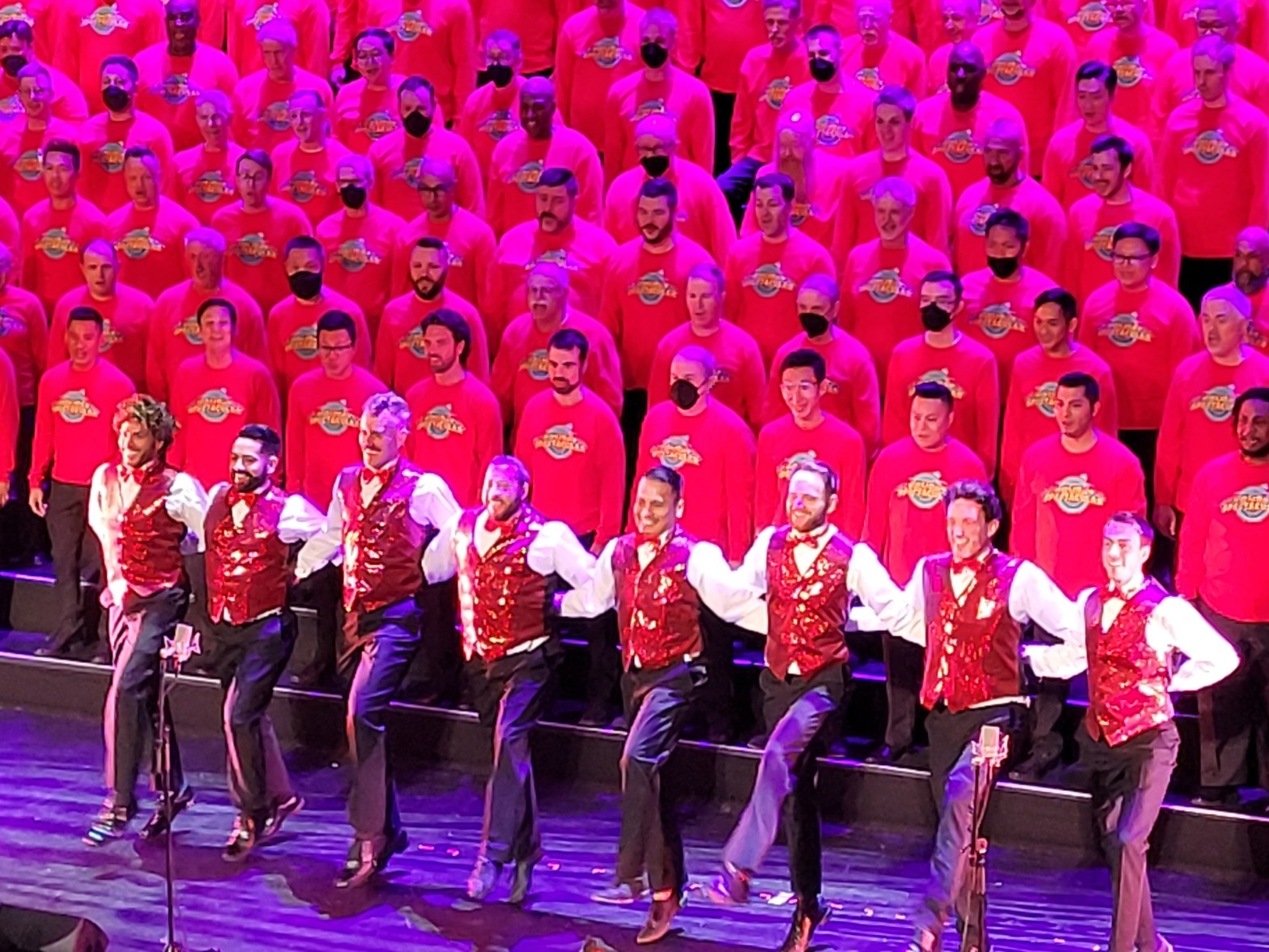
The stage curtain was lit up with the title of the chorus in capitalized red letters, and, a few minutes later, the curtain opened to reveal the silhouette of risers brimming with over 200 singers. The lights came on, and the audience suddenly saw ten rows of men dressed in long-sleeved red T-shirts and black bottoms on a staircase of risers. The orchestra began, the conductor raised his arms, and the men began to sing.

Young men, gray-haired men, bald men, men with beards, men wearing skirts, men with canes, and men sitting on stools all crowded the risers and faced the music conductor with professionalism and purpose. No one read lyrics from a song sheet. All of them sang by memory.

The chorus sang “On this Shining Night” by Morten Lauredsen, a song I had sung with the Blackhawk Chorus a few years ago. The men’s voices were rich, on tune, piano and forte. I fell in love with their sound.

After each song, several chorus members quietly exited from the risers and went back stage. As the next song began, these members came back on stage as dancers in various costumes to complement the chorus. Some stood at microphones at the front of the stage to sing solos.

In the middle of the performance, the chorus sang a long rendition of “Jingle Bells” that got the audience toe-tapping and clapping. They sang many verses in a variety of styles that became more exuberant all the way to the song’s finale.

The song that sent shivers up my spine was “Huddled Masses” by Shaina Taub, a song about the plight of immigrants and our moral duty to support them. The conductor explained to the audience that, although this wasn’t a Christmas song, it promoted the spirit of Christmas, which is love.

On the right side of the stage, in front of a glowing Christmas tree, was a sign-language interpreter who signed the words of each song. His hands gracefully moved as the singers slowed their tempo and stretched the lyrics over a series of beats.

One of the last songs was “Silent Night.” The orchestra began the introduction and then the chorus, instead of singing, signed the first verse silently. When it was time for the second verse, the orchestra stopped, and the chorus continued to sign the verse as the audience watched in silent wonder. In the quiet of the moment, my heart filled with so much gratitude to the chorus for expressing what a deaf person hears and how silence can evoke wonder and awe.

Later in the program, the chorus held a moment of silence for the five LGBTQ persons recently gunned down in Colorado Springs. For two hours, without an intermission, and with energy and vitality, the chorus recited lyrics of peace and promoted love in both prose and lyrics. This was a night filled with joy despite life’s hardships and disappointments.

I left the theater with happiness in my heart—contentment that I live near San Francisco, a city filled with respect and love for the LGBTQ community—because I know, that a culture that treats all persons with dignity is the cheeriest place on earth.

Feeling Better about America after Visiting the South

I just completed a trip to Savannah, Hilton Head, and Charleston and, now, I feel better about the United States. 

During the last six years, the news has plagued viewers with stories about racism, some of which were unfortunately true and others which were sensationalized.  George Floyd was murdered by a police officer who knelt on his neck.  In two different instances, a police officer in my own town killed two men who had mental health problems.  There are numerous examples like this.  Hearing that my country is full of arrogant white supremists who belittle, offend, and abuse minorities does not make me a proud American.  

I wanted to tour these historic areas of the United States because I want to understand the history of this country, not just the white-washed stories that many books divulge, but the complete histories of even the disadvantaged human beings who lived here before the Puritans and the African Americans who were brought here to be slaves on plantations. 

My trip taught me about a different side of Americans.  I met numerous Whites and African Americans who extended great hospitality toward me and my co-travelers.  They helped me make hotel arrangements, dinner reservations, and late-night taxi calls.  One 6-foot, 6 inch African American man, who was dressed in a blue-and-white-striped seersucker suit and a colorful bowtie, drove me to an appointment one day.  On the way, he told me how he met his Russian wife years ago, and, how, they were now best of friends.  I’ll never forget his funny story of how he didn’t even like his wife when he first met her and how his eyes lit up like candles as he told me.

An elderly White woman led a group of us around the city of Charleston, showing us how the mansions had slave quarters attached in back.  She described the opulent lives of the mansion owners, some of whom were plantation owners who came into the city in order to avoid the mosquito-infested plantations during the summer.  She also explained how the slaves had to cook and clean outside in the back yards even during the sweltering summer months.  Her mission, she said, was to tell the history of Charleston so that the mistakes of the past were never repeated.

When we visited the Gullah Geechee Museum in Pin Point, Georgia, a Gullah woman taught us how to sing a Geechee song by stamping our feet, clapping our hands, and singing.  She also shared details about how her ancestors worked as slaves before the Emancipation and then lived and worked at Pin Point in oyster and crab processing plants.  She was confident in her story-telling and proud to share her culture with us.

When we visited the Magnolia Plantation where we viewed slave quarters and a magnificent plantation home, the White tour guide told us that she tells the story of the plantation and its slavery so our country can heal from its lurid past.  At another storied place, the Middleton Plantation, we saw how the family of the owners ate from silver platters while the slaves lived in unheated wooden shacks. 

Every Southerner we met had a story—a personal one or one that had been created from the South’s history—and they all told their stories with clarity and friendliness.  Every community we visited exuded harmony and graciousness.  Most notably, Whites were respectful of African Americans; African Americans were respectful of Whites. 

When people experience harmony and hospitality, their moods improve and they feel better.  I feel better now that I’ve experienced the warmth and kindness of the South. 

A Place for All of Us

Last week, I saw Steven Spielberg’s remake of West Side Story with Rachel Zegler as Maria and Ansel Elgort as Tony.  Rita Moreno, who played Anita in the 1961 version, played Valentina, the wife of Doc, who was the original owner of Valentina’s drugstore. 

This fabulous musical—which whips emotions into a frenzy with enthusiastic dancing and impassioned characters—was relevant back in 1961, a time when racism was high in the United States.  For goodness sakes, the Civil Rights Act wasn’t even passed until 1964, three years after this original musical. 

The Civil Rights Act outlawed discrimination based on race, color, religion, sex, national origin, and later sexual orientation and gender identity.  This act sought to establish equality for voter registrations, prohibited racial segregation in schools and public places, and outlawed discrimination in employment.

West Side Story, first written in 1957 by Jerome Robbins was inspired by Shakespeare’s Romeo and Juliet.  Remember, Romeo and Juliet came from two different feuding families in Verona.  Robbins wanted his lovers to come from two different religions in America—Maria was to be a Jewish girl and Tony was supposed to be from a Catholic family.

But when Laurents and Leonard Bernstein started collaborating on the musical, they drew inspiration from the Chicano riots in Los Angeles.  By the time the musical was complete, the setting had been moved to New York and the opposing gangs were represented by the Puerto Ricans and poor white communities of the city’s West Side.

The 2021 version is spectacular, and as relevant as ever.  The two opposing factions could be any community in America: men verses women, Whites verses Blacks, heterosexuals verses gays, Christians verses Muslims.  Even though the 1964 Civil Rights Act was supposed to establish equality for every person in the United States, it didn’t.   

People aren’t equal here, and diversity still seems to threaten our various cultures.  Women have not achieved equal pay for equal work, and, even when they work, they experience inequality at home when they are expected to bear most of the responsibility for raising children and doing housework. 

African American men are viewed as dangerous and irresponsible and too often become the targets of police officers or white vigilantes. Furthermore, African Americans are dehumanized for their dark skin and course and curly hair.   

Muslims are labeled as terrorists just because they share the same religion with terrorists on the other side of the world. 

When gay couples want to have children, they are criticized and ostracized.  Transgender individuals are the victims of rape and ridicule. 

American society is still a white supremist society, and most white people don’t understand how pervasive this damaging attitude is to the non-white cultures of our country.  So when two people from different cultures fall in love, their ability to sustain that love is fraught with hatred from their respective communities. 

In Steven Spielberg’s version of West Side Story, Rita Moreno sings the song that begins with “There’s a place for us, some where a place for us.”  She sings about a place with peace, quiet, and open air.  She sings about a time for togetherness, time for recreation, time for learning and caring. 

The poor and discriminated in the United States don’t live in places of peace and quiet.  They live in places filled with pollution, noise, and stress.  They don’t enjoy togetherness when families break down due to financial hardship and lack of opportunity.  They don’t have time to play.  Stress takes up their opportunities to learn, and they don’t feel like anyone cares. 

I cried in the dark theater as Rita Moreno sang this song. 

When will women ever feel as equal as men in American society?  When will their assertiveness and leadership be valued as much?  When will African Americans overcome the cavernous damages that slavery imposed upon them?  When will religions ever learn to respect every individual no matter their gender, sexual orientation, or creed? 

Rita Moreno sang about how, if we hold hands, we can be “halfway there.”  Holding hands requires empathy for one another.  We’re not practicing empathy too well these days.

Let’s really get into each other shoes.  Choose the people who are the most unlike you, and ask yourself, “How would I like to be treated?”  Maybe then, we can start holding hands and finding a place for all of us. 

Jumping Four Eyes

Ginger swung her jump rope over her head, under her feet, and tripped on it.

“What a dunce!” said Natasha who was skipping by. “You’re just a four-eyed freak.” Natasha’s chestnut braids fell over her shoulders as she glared at Ginger. Her hair was almost the same color as Ginger’s, not carrot red, not brown–a shade in-between. Ginger thought it shone like the cedar chest in Grandma’s hallway after it was polished.

“That’s not a nice thing to say, Natasha,” said Ginger as she poked her glasses behind her ears and back up her nose.

“Well, it’s true.” Natasha grinned, flicked back her braids, and skipped away.

“She is so pretty and smart, thought Ginger. I wish she liked me.

The next day, Kimmie, who also wore glasses, walked up to Ginger holding a jump rope. “Do you want to jump together?” she asked.

“Sure,” said Ginger. “Can you do this?” Ginger swung her rope over her head, crossed her arms in front of her and jumped through the rope.

“I’ll try,” said Kimmie. “Let’s do it together.”

The two girls jumped. Just as they crossed their arms, Natasha walked by. Ginger tripped on her rope, and Kimmie’s left foot got caught up in hers.

“Now I see two four-eyed freaks,” said Natasha.

“There’s nothing wrong with wearing glasses,” said Ginger.

“Except you can’t see anything,” answered Natasha. “You can’t see even as far as your own feet.”

“We can see just fine,” said Ginger. “Come one, Kimmie, let’s go somewhere else.

That night while Ginger lay in bed, she thought about Natasha. Why did she tease her about her glasses? She was just as fun to play with, just as talented and smart. Last week, she and Natasha both got one-hundred percent on their math tests.

If I’m teased about my glasses, thought Ginger, other kids might be, too, so she decided to do something about it.

The next morning, Ginger searched through her bookcase to find her book about jump rope rhymes. At recess, she asked Mrs. Humphrey if she could borrow a long jump rope from the P.E. equipment. With the rope in her hands, she invited Kimmie and her friend Austin to jump with her.

“If we practice, we’ll be the jump rope experts on the playground,” said Ginger. We can use my rhyme book, but we must agree to some rules first. When anyone makes a mistake, the rest of us can only say something kind, like “Good try.”

“Great idea,” said Austin, adjusting his glasses.

Kimmie and Austin took the rope handles and beat out a rhythm on the asphalt.

“I’ll start out jumping and see how far I can go,” said Ginger. She jumped into the swinging rope. At the count of seven, she tripped on her shoelace.

“Hey, four-eyes, I knew you couldn’t see as far as your feet,” yelled Natasha from the monkey bars. Ginger sighed, then squatted down to tie her shoelace.

“Good start,” said Kimmie. “Natasha doesn’t know what she’s talking about.” Kimmie chose a rhyme and started to jump:

Candy, candy in a dish
How many pieces do you wish?
One, two, three, four, five . . . 

Kimmie jumped to twenty. As she counted through the twenties and thirties, dozens of kids gathered around to count with her. They counted to fifty. They continued to sixty and seventy, clapping in rhythm with the rope. “Seventy-six, sevety-seven, seventy-EIGHT!” breathed Kimmie, dropping to the ground holding her side.

“Wow!” exclaimed Ginger. “You did great , Kimmie. Austin, you’re next.”

“I plan to get a little fancy,” said Austin. “Just watch.”

Benjamin Franklin went to France
To teach the ladies how to dance.
First the heel, then the toe,
Spin around and out you go.

As he sang, Austin placed his heel on the ground, then jumped. He pointed his toe. On the last line, he twisted himself around in the air, skipped over the rope, and ran out to the side. Squeals of delight erupted from the crowd. Everyone cheered and clapped.

Day after day in the playground, Ginger, Kimmie, and Austin sang rhymes from Ginger’s book. More kids joined them. Austin jumped as the girls raised the rope higher and higher.

Ginger practiced after school. She tied one end of the rope to a ladder rung on the swing set in her back yard and asked her brother Ron to turn the other end. Finally, one day while Natasha watched from the bars, Austin sang a rhyme from the book about the face of a clock. Two new jumpers, Holly and Henry turned the rope ends, Kimmie skipped in the middle of the rope while Ginger skipped all around her. She didn’t trip even once.

Boys and girls clapped in rhythm with them, laughed when they heard their rhymes, and complimented them on what good jumpers they were.

The next Monday, while Ginger was jumping to a tune about the Mississippi, she missed a beat. The rope hit her in the nose and her glasses fell off. Tears filled her eyes and trailed down her sweaty cheeks. She pressed her nose with her fingers to stop the pain.

“Good try, Ginger,” said Kimmie as she picked up her glasses and patted her on the back.

Ginger checked to make sure her glasses weren’t broken, then put them on. She noticed Natasha walking up to her, so she turned around and walked away. She didn’t feel like being insulted, again.

Someone lightly tapped Ginger on the shoulder. She stopped, wiped her face, and turned around. Natasha was staring at her only two feet away. “I’m sorry you got hurt,” she said, taking in a deep breath. “You guys are really good. Could I jump with you?”

Ginger stared at Natasha’s braids for a minute. Each one was tied with a bright, yellow ribbon. “I thought you didn’t want to play with people who wore glasses.”

“I was wrong,” said Natasha. “It doesn’t matter if someone wears glasses or not. You guys are having so much fun. I really want to play with you.”

“I want to play with you, too,” said Ginger, grinning. She started running back to Kimmie, Austin, and the others. “Come on, you’ve got a lot to learn about jumping!”

Five Features of a Perfect Democracy

Ever since the pilgrims landed on the North American Continent, Americans have struggled with freedom. 

On January 7, 2021, Darren Walker, President of the Ford Foundation made this statement in the Foundation’s Equals Change Blog: “Our founding aspirations were just that: aspirations.”  What he means is that the freedom which we aspire to in the Declaration of Independence, the Constitution, and the Bill of Rights has not yet been achieved.  In fact, Walker admits that these aspirations were a “founding contradiction.”  When white settlers took control and settled across what is now the United States, they took away the rights of the natives who had previously lived on the land.  As white plantation owners built tobacco, rice, and cotton empires, they enslaved human beings from Africa to serve like cattle in the muddy fields under sweltering sun.

On January 6, 2021, a mob of white supremists stormed the capital, our citadel of democracy.  This event horrified most American citizens and made them realize how fragile our democracy really is. 

Yet, some good came from this insurrection toward our government.  It signifies that we have not achieved the freedom that we strive for; we have not reached the level of a true democratic government.  This violent, but sad act against our government makes the brokenness of our democracy blatantly clear, and that is what is good.  We have clarity that we must act to improve our democratic dream.

In his blog post, Walker makes it clear that “inequality is the greatest threat to justice—and, the corollary, that white supremacy is the greatest threat to democracy.”  As long as people exist who do not seek equality for all peoples, our democracy is flawed. 

What is a true democratic freedom?  I mused over this question for days, and my mind constantly wandered back to Aristotle’s rhetorical philosophy practiced in the original democracy of Greece which solved community issues, not with force, but with respectful dialogue. 

I wondered about how a citizen should act or what a person should be in order to promote democratic freedom.  I’m not a specialist, but I do have aspirations to promote democratic freedom for every person in the United States.  As I mused about what qualities would promote freedom for all peoples, I came up with five overlapping features that must exist in the populace for a truly democratic community: openness, self-discipline, moral courage, empathy, and respect.

Openness

The United States is a diverse country, and, therefore, in order for us to achieve to true democracy, different types of people with dissimilar customs and cultures must live together without criticism or conflict.  This requires citizens to adopt an openness to customs and cultures that are diverse, even when those practices are against what citizens may choose for their own lives. 

To be open means to be imaginative, curious, and ready to learn about the lives of other people, no matter how unlike they are to oneself.  Being open means to be receptive to new ideas without feeling threatened.  It means to be attentive to all people no matter what their background is.  It means to be transparent in action, acknowledging what is new, but accepting it anyway. 

Here are some examples of openness.  A heterosexual couple willingly accepts the lifestyle of a homosexual couple who moves into the apartment next door to them.  They treat this couple as a respected neighbor and do not make judgments about them just because they are homosexual.  A pedestrian encounters a peaceful demonstration while he is walking down the street.  Instead of prejudging the participants, he reads their signs and engages in a conversation with one of them to hear their point of view.  A manager who is hiring a new employee does not discriminate when an applicant comes into an interview wearing a turban on his head. 

Self-discipline

Most humans work on improving their self-discipline throughout their whole lives.  In a truly-perfected democracy, self-discipline is important since one person must never infringe upon the freedom of another for any reason.  Whites cannot take away the freedom of Blacks or Hispanics.  The rich cannot take away the freedom of the poor.  City dwellers cannot erode the freedom of rural dwellers.

Self-discipline is the ability to control personal feelings and overcome personal weaknesses. It is the aptitude to pursue what is right despite temptations or any private fears.  Self-discipline involves acceptance, willpower, commitment, hard work, and persistence. 

Acceptance requires that people look at reality accurately and acknowledge it.  For example, the reality is that Whites have greater privileges in American society than other races; however, even today, many Whites don’t understand this.  They don’t understand what White privilege really is. 

The “willpower” part of self-discipline helps individuals set a course of action and start on it.  They set an objective, create a plan, and then execute their plan.  For example, I wanted to become a professor whose African American students succeeded in my classes.  That was my objective.  My plan was to use more African American authors in my course readings and more visuals of African Americans in my online course.  My plan also included in improving my own knowledge about African American history that was never taught in school; through study, I would better understand African American history and, through their history, my students’ current needs and feelings.  Then, I executed my plan, and my courses became more inclusive, I became more knowledgeable, and my students became more successful and happier.  Even I became happier in my growth and their success.

Commitment cannot be underestimated.  To be committed means putting in the time to whatever goal you have in order to achieve it.  For my goal of improving the success of my African students, I committed to reading numerous books on the African American experience even when reading those books took time away from more pleasurable activities.  I read every day.  When I finished one book, I started another right away.  If I wasn’t committed, I often would have chosen to read a light-hearted mystery or go outside to do some gardening in the sunny weather. 

Self-discipline also requires hard work.  I had to read challenging books even when I was tired after a long day teaching.  I had to look up new vocabulary words, reread certain paragraphs until I understood them, and take continuing education courses that complemented my newfound knowledge. 

Finally, nothing of value is accomplished without perseverance.  I started my quest to learn more about my African American students over five years ago, and now, I have accumulated a lot of understanding of the African American history.  This knowledge has allowed me a greater understanding of the current political issues today such as the George Floyd murder and the Black Lives Matter protests.  If I hadn’t persevered in my growth, I would never be able to comprehend the complicated issues America faces today.  And now, I’m at a new level of citizenship, ready to make new goals.

Moral Courage

Moral Courage is integrity.  People with moral courage are honest, true to their word, do the best they can, and own up to their shortcomings.  They do not make excuses or blame others for their actions or faults.  They do not try to cover up their mistakes.   They try to make others feel better, and they do the right thing even when it is difficult. 

Here are some examples.  Travis intervenes when Roger bullies Mario on the playground.  When Sarah goes for a walk, she takes a plastic bag so she can pick up litter on the street.  Ivan completes his chores without being reminded by his father.  Killian pays for the college tuition for his nephew without telling anyone.  Recently, Vice-President Pence refused to block the electoral vote in Congress even though it would have been easier to submit to President Trump’s aggressive demands. 

Practicing moral courage is hard, but our country needs citizens who possess it.  People can draw inspiration from people who have demonstrated great courage such as John Lewis, the former Georgia Congressman who helped Martin Luther King, Jr. demonstrate against prejudice and then worked in Congress for decades to continue King’s work. 

Another way to strengthen moral courage is to practice acts that require courage and to avoid actions that lack courage.  People can compliment those who treat them badly, and consciously can avoid gossiping.  They can think of new acts of courage on a daily basis so that acting with courage becomes a habit. 

Empathy

To help America attain a perfect democracy, people must possess an empathy for their fellow citizens.  The type of empathy required is a compassionate empathy where a person’s logic and emotion are balanced.  Compassionate empathy is a combination of logic and emotion—a concern that leads someone to act for the betterment of another. 

When someone intervenes for a bully victim, they feel compassion for the victim and they are able to stop the bullying from taking place because of their intervention.  When a professor feels compassion for a Hispanic student who lacks the technology necessary to pass her course, she uses her resources to provide technological resources to that student.  The effect of the action is to improve the lives of those for whom you feel compassion, thus enhancing their freedom—to live without fear, to attain an education, to secure decent housing, to acquire a job that pays adequate wages, or to be able to vote in an election.

Respect

 Of course, in a perfect democracy, citizens must respect each other.  We must treat each other with dignity, with regard for each other’s feelings, wishes, rights, traditions, and needs.  Citizens must treat each other with kindness and politeness, hold each other in high esteem, and exude a positive attitude toward one another.

Citizens show respect when they discuss mistakes with kindness instead of hatred or criticism, when they make decisions based on what is right rather than whom they like.  Respectful citizens listen and hear one another and honor physical boundaries.  They treat each other’s property with care and they never violate or intrude to cause physical or psychological harm. 

Respect means never making assumptions about people just because they are poor or transgenders, or because they live in Oakland, wear a turban, or attend a synagogue or a Catholic church every weekend. 

We have many blemished citizens in our country, and this is why our democracy is flawed.  Maybe we will never achieve the perfect democracy where every human being is treated with equality, but we can do better than we are doing today.

Walker has not lost hope.  He says, “while much remains to be done, and undone, I believe we can emerge—and are emerging—a more unified, more equal, more just, more American America.”

It’s time to start talking about the qualities that will help us fulfill our democratic dream again.  Now that we have been awakened by the riots in our capital, we can use our new awareness to upgrade ourselves, fight against privilege that demeans others, and make plans to spread freedom to more people and to grow closer to a perfect democracy.