
What Writing Letters Taught Me

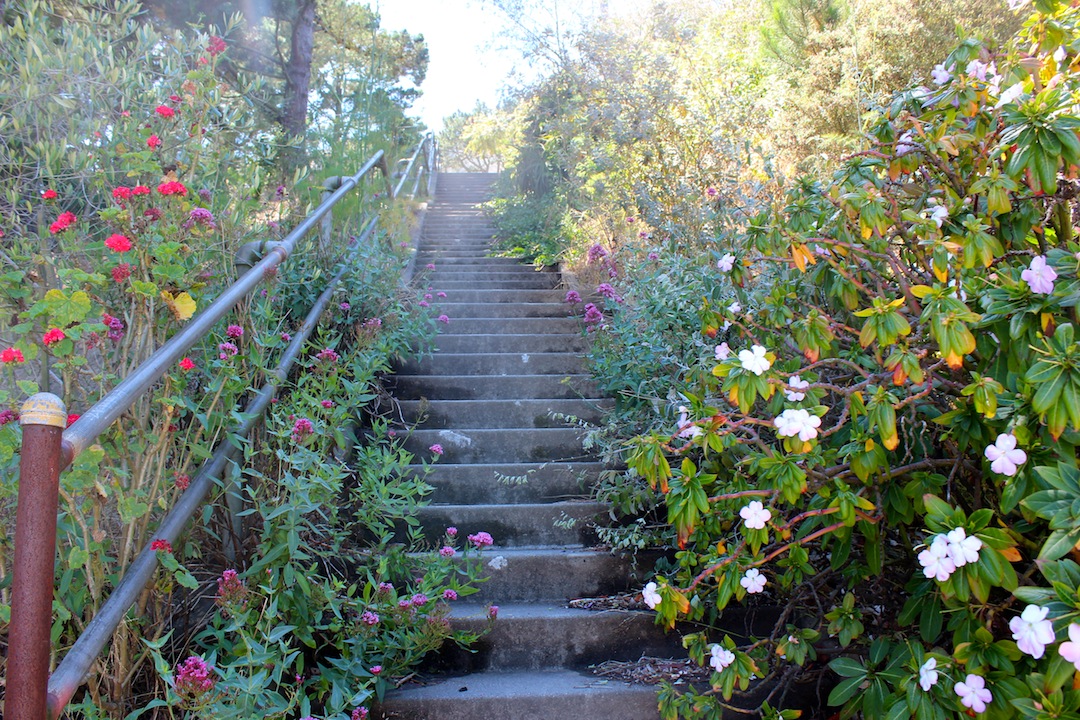
Photo by Hans Isaacson on Unsplash

My mother hated writing letters, but she had three sisters who loved to communicate with her via writing. Mom was. however, an excellent problem-solver; using her exceptional negotiation skills, she convinced me to write letters to her sisters on her behalf.

For someone who didn’t like to write, she was a pretty good writing coach. From her coaching, I developed a passion for writing. This is what she taught me.

Brainstorming is Useful

When Mom asked me to write a letter, I first said, “I don’t know what to write.” Mom asked me to make a list of things I could write about, and she gave me some ideas: the weather, the garden, church, school. After a while, I started coming up with some of my own ideas in addition to these. My list included making cookies, going to the snow, and having my friends over to spend the night.

I still make lists before I write. Sometimes, I get ideas for a blog, like this one, while I’m sleeping. I get out of bed, go to the other room where I keep an arm chair and a pad of paper, and write down the ideas before I forget them.

If I get a dose of writer’s block, I jot down impressions that I want to include in a blog or chapter. I list as much information as I can and then leave it alone for a day or two. The notes help me get into the mood to write, and soon my writing juices are flowing.

How to Warm Up

“I don’t know how to start the letter,” was another refrain I often used. Mom said to start with “How are you? I am fine,” and then move onto another topic.

Asking about someone’s health seemed to be such a gracious opening, and it made me feel like a polite niece. Believe it or not, this introduction helped me warm up for the next subject.

How do I warm up for writing today? I have several methods that I’ve created to get me into the mood.

The first one is to take a walk in my garden where I have dozens of rose bushes that I’ve planted. Sometimes, I prune, other times I fertilize, but I always at least enjoy how beautiful they are. In my garden, I express my creativity, and enjoying it stimulates my creativity for writing.

Another thing I do to warm up is to read one of the affirmations that I’ve posted on my bulletin board to the right of my desk. Currently, I have three affirmations typed on 8 ½ by 11-inch paper to inspire me.

The first one says, “I lead with grace and ease.” When I read this, I see my writing as a way to lead the world to a better place. Thinking about being a leader dispels fear and encourages me to stand tall and feel calm.

The second one says, “I possess perfect self-expression.” I developed this affirmation when I started writing my first novel three years ago. I didn’t want writer’s block to inhibit my progress, so I thought of how I wanted to feel when I sat down to write.

The third affirmation on my bulletin board is, “The Midas Touch.” A few months ago, I was discussing my writing with a friend, and she said, “You possess The Midas Touch.” What she meant was that I was a brilliant and prolific writer. This gave my confidence such a boost that I decided to make it another affirmation for daily motivation.

Sentence Clarity

The letters I wrote on behalf of my mother taught me how to write clear sentences. As any serious writer knows, practice is the key to improvement. My mother had faith in my ability, so I was writing letters to her sisters at least once a month, and I started when I was six years old. Due to my mother’s coaching, my writing career and my writing practice started early in life. I’m sure, by now, I’ve written at least as much as The Beatles sang during their band years.

Paragraphing

Even though mother didn’t like to write or read, she was organized; therefore, she coached me to start a new paragraph every time I started to write about a new topic.

For example, I started each letter with “How are you. I am fine.” If the next topic was the weather, I’d start a new paragraph, which often turned into an interesting slice of my life. Here’s an example:

Today, the weather was sunny. We played outside all afternoon, and the bees were buzzing around the plums that had dropped to the ground. Since I was barefoot, I stepped on three bees and got stung three times. Luckily, Mom took out the stingers and I was fine.

Revising is Okay

If I made mistakes on my letters, my mother coached me to cross them out and to write the corrections after them. If I made too many mistakes, she convinced me to reprint the whole letter.

Maybe I was going to be a writer anyway, but knowing that I could make mistakes and fix them took off the pressure of being perfect the first time. For me, this was an important process to learn since, deep down, I hate making mistakes.

I also learned about revising from the letters I received from my Aunt Mary Ann. Today, Aunt Mary Ann is over 90 years old and still writes letters. If she makes a mistake, she crosses it out and rewrites what she meant to say. She demonstrates the perfect example of the writing process.

The Courage to Write

The other day, I told my five-year-old granddaughter that she could be a writer. Using one of her books, I showed her where her name would appear on the title page. She smiled at that, but then said, “I can’t write a story.”

For many people, writing is a daunting task. I know this since I taught writing at the college level for fifteen years.

Fortunately for me, I had a mother who didn’t take “no” for an answer. She had confidence that I could write.

Even now, when writer’s block stops my creative flow, I write letters: to Aunt Maryann, Aunt Dorothy, my friend in New Mexico, my sister-in-law in Florida.

Where did I get the courage to write? From a non-writer who believed in me.

Character Study: Dani

Photo by Jamie Street on Unsplash

I sat down on the wooden bench in Sycamore Park and pulled Sadie’s leash toward me.

Sadie was an English Settler that I had rescued from the San Francisco Animal Rescue Foundation five years ago. The therapist said that she had been flown from Turkey where she lived on the street for several years. When I adopted her, she was only thirty pounds, so skinny that I could see her ribs.

Sadie turned away from the concrete path and sat down in the grass at my feet. She was always looking for a reason to sit down since she was getting old. After five years of good food and snacks, however, she had gained fifteen pounds and was in good shape for her age. Sadie arched her neck to look up at me, showing her crooked grin of contentment.

I sighed loudly, feeling my breath exiting through my teeth. It’s good I had a dog. Otherwise, I’d be completely alone.

Two years ago, I left my husband, Arsen, of five years. Really, I shouldn’t have married him. I was twenty-five and didn’t even know what my values were, much less his. I met him in Greece while I was living there for a year. He moved to San Francisco when we got married, but he brought his Greek values with him. We didn’t think about work the same way. He missed his family and forgot that I was his new family. What a mess we both made of it all. We were still waiting for the final divorce papers.

Since then, I’ve had two jobs. But now I’m unemployed. My boss said I did good work, but the company had to cut me anyway. I could hardly afford to pay my overpriced rent, much less have enough money for food. I thought my mom and dad would give me some money when they found out that I lost my job. But no. Seems like I was on my own.

I spent every day looking for a new job. Application after application. A few interviews and then . . . nothing. Even my friends were losing their jobs. Cali’s husband had just lost his job, and Cali was having a baby the next month. Whoa.

I looked down a Sadie who was now flat on her side with her legs sticking out. She looked comfortable.

My phone buzzed. It was Mom. I let it buzz on.

“Why does Mom keep calling me, Sadie? I don’t want to explain that I spend every single day trying to get a job.” Sadie tilted her head off the ground at the sound of my voice and looked into my eyes.

“She’ll tell me to budget better. I know that.” Sadie tipped her chin up and barked so slightly that it sounded like a cough. “Yeah, you agree with me. Good girl.”

I had met a lot of guys since I left Arsen. First, there was Colin, who was immature and acted like a clown. Then came Philip, a scientist, who soon moved to Boston for a new job. After Philip was Anders. He was smart, but oh-so-boring. And now I was dating Amir, who was born in San Diego, but whose parents immigrated to the United States from Iran.

My friends really liked Amir. They thought he was considerate and stable, something that Arsen never was. They invited him to all their parties and sought him out to talk to him. I was happy about that. They didn’t like Arsen that much.

But sometimes, Amir made me so angry. He was so jealous of Arsen, and never said anything good about him. Arsen always said nice things about Amir. I reached down and rubbed the side of Sadie’s belly. She groaned in appreciation.

“Does that mean that Amir isn’t a nice guy?” I asked Sadie, who closed her eyes as I continued to rub her belly.

I had once asked my mom if it was a mistake that I had left Arsen. She said, “No.” I told her that Arsen had always been excited about asking me about my life. Amir didn’t ask me those questions.

“That’s not what you said when you were married to him, Dani,” she said. “You complained that he wouldn’t eat dinner with you, and he didn’t want to hear about your job. Instead, he’d sit in front of the television until late at night, long after you went to bed.”

I just want life to be the way it was with Arsen when we had good times. I feel so alone.

What Really Makes Me Tick (Happy)

Wouldn’t it be a better world if everyone knew what they needed to be happy? I’m retired, and I loved my teaching job; however, now that I don’t have to commute to work five days a week or grade college essays on the weekends, I just want to do things that make me happy. Here they are.

Admiring Flowers

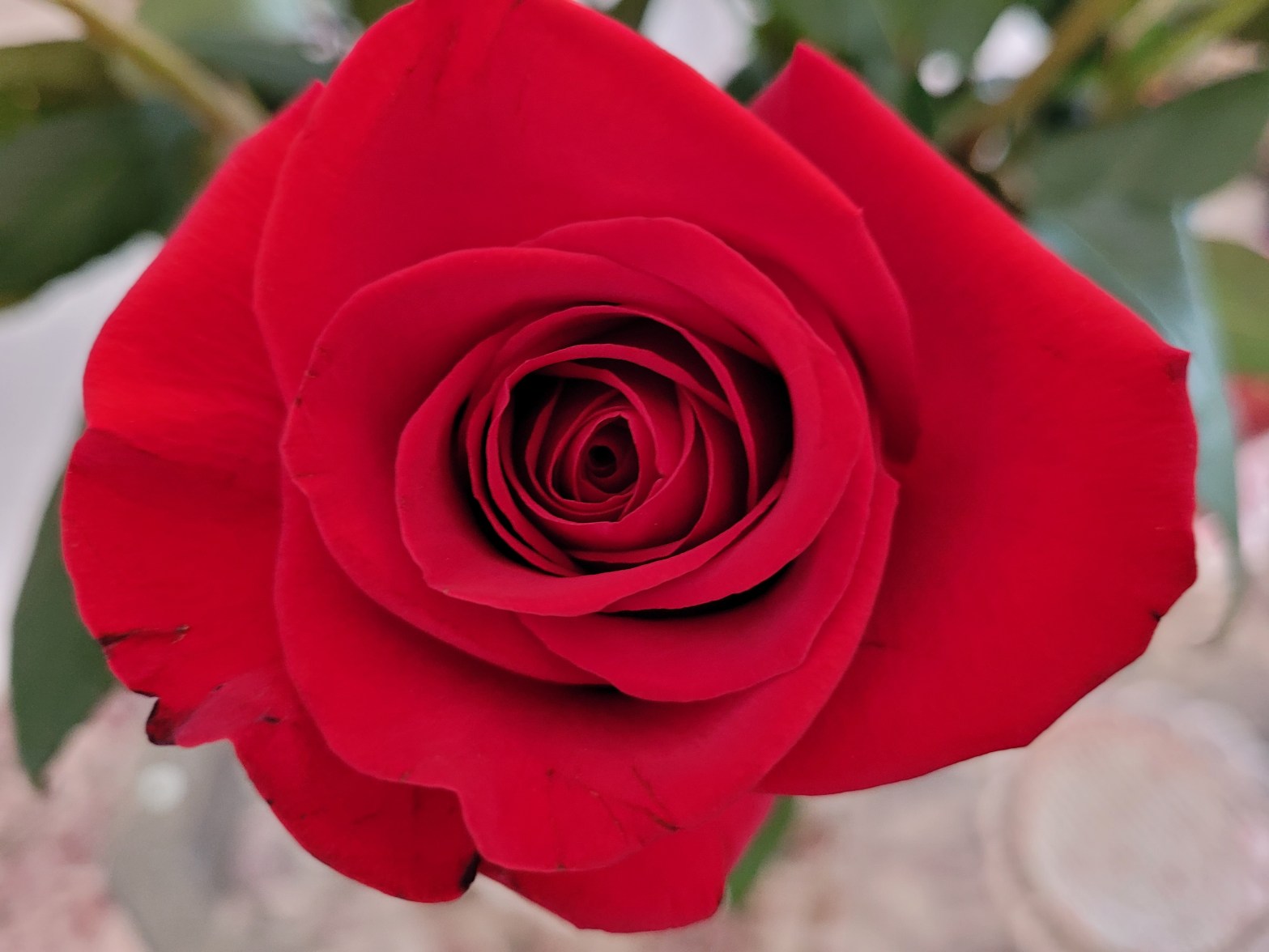
Stopping to smell a rose may seem like an unimportant action, but, when I do it, it brings me joy. I have rose bushes in my front yard and back yard, and every morning, I wander outside to inspect every bush to see the new blooms. I sniff and stare and smile to my heart’s content.

I remember the flowers of my childhood, too. In January, crocuses poked out of the soil in the flower beds in the front yard. In February, the daffodils came. Tulips arrived in March, and Irises after them.  By the time Lent was over, Easter Lilies grew like sophisticated ladies in white hats in our back yard. And in May, the meadows were carpeted with Bluebells.

For four years of my childhood, I lived in England with my family, and I was impressed by the colorful blooms of summer that thrived in the temperate climate. Rambling roses climbed up cottage walls. Cosmos waved their rainbow heads in the breezes like pretty bonnets. Hydrangeas brightened shady nooks of gardens with their puffy burst of blue and pink. I was entranced by their beauty.

At Christmas, my mother bought at least one Poinsettia to decorate the house. She bought red poinsettias, white poinsettias, and ones with white flowers with red stripes. Sometimes, she had an amaryllis bulb growing in a pot. Every day, I’d inspect it to see whether it was blooming or not. I was in more of a hurry than it was.

Making a Stew or Pot of Soup

Whenever my dad cooked, he made “water” soup. He added pieces of beef and vegetables to a pot of water to create soup. Ugh. We kids would cringe when we saw him taking out a pot. His were the worst soups I’ve ever tasted.

Maybe that’s why I love making delicious soups.

I own an old Dutch oven that is the perfect size for making one-pot meals. Some mornings even before I change out of my pajamas, I scour the refrigerator and pantry for the ingredients for a minestrone—onions, celery, carrots, zucchini, chick peas, barley, chicken broth, chopped tomatoes, oregano, salt, and pepper. Sometimes I add cooked shredded chicken. Often, I don’t.

Or I find the fixings for chicken noodle soup for a recipe from a William’s Sonoma Soups book that I bought a long time ago. While I’m chopping the carrots and celery for this soup and simmering the chicken breasts in the broth, I think back when I made this for my two children who loved it. I see their little faces above their steaming bowls, their hands holding spoons, their mouths filled with savory egg noodles.

On one European trip, I bought cookbooks in the Czech Republic and Austria, so when I want to make goulash, I search for recipes from those books. My favorite goulash is a beef, onion, and smoked paprika concoction that is topped with cornmeal dumplings. I first ate cornmeal dumplings at the restaurant at the Belvedere Palace Museum in Vienna. I’m still practicing to make mine taste as good as those were.

Reading Inside When It’s Cold Outside

To me, the essence of decadence is waking up in the morning, seeing that it’s cold and rainy outside, then reaching for a novel and reading it in bed. To take all the time in the world to read a story, then stopping and thinking about it is heaven on earth.

Reading when its cold outside reminds me of when I read as a child. I had time to sit on the floor in a corner of the house with a treasured book of fairy tales and get lost in another world. When my mother took me to the open-air market, I found the bookstore, walked to the back shelves, pulled out a tome, and read it while sitting on the floor. I was always afraid that the shop owner would find me and kick me out, but he never did.

Decorating My Home

When I was a child, we never had an expensive home, but that didn’t keep us from making it beautiful. In the spring and summer, I picked flowers in the meadows, poked them into vases and brightened every table and dresser in the house. In the fall, I cut branches of colored leaves for the mantel in the living room. For winter, my mother and I found pine cones and spray-painted them silver and gold for Christmas. We added holly and pine branch garlands in-between them.

Today, when a new season comes, I still have the irresistible urge to celebrate it with seasonal décor. Right now, I have a collection of pumpkins on my front porch accompanied by a little witch. I also have put pumpkins on the table on the back patio so we can feel the season when we go outside in the afternoons. Every time I pass these decorations, I feel like celebrating.

Writing

I wrote my first poem when I was nine years old, and I’ve been writing ever since. Sometimes, I use writing to help me sort out a problem. Currently, I’m the chair of a scholarship committee for a charitable organization. When I’m planning the meeting agendas, I write them to organize my thoughts. When I’m thinking about how to improve my author’s platform, I write my thoughts down. I write down daily affirmations and New Year’s Eve resolutions. I write every day.

Even when I’m traveling, I have a journal that I use to take notes or write a spontaneous poem. I remember one vacation that I took by myself to Boston. After I toured Paul Revere’s tomb and all of Boston’s historic sites, I drove north up the Atlantic coast. I stopped in Salem and visited another graveyard where a huge oak tree that had gotten so big over the centuries that tombstones were poking out of its bark halfway up. There was so much to write about. Finally, I stopped the car at the edge of the road near a beach. As I sat in the sand and gazed over the surging navy-blue sea, I wrote a poem about the peace that I felt.  

When I visited Sorrento, Italy, I stayed in the Grand Hotel Excelsior Vittoria. Our room had a large terrace that overlooked the Sorrento Harbor. Across the Bay of Naples with its slate-blue ripples, we could see Mount Vesuvius. Every day, I sat at the patio table on this terrace with my journal to write about the gorgeous scenery or about my excursions into the town of Sorrento or its nearby attractions. I wrote how my husband had to scrunch down going into the Blue Grotto Cave in Capri. I described the ceramic factories that we toured in Almalfi. With words, I wondered what it was like to be a citizen of Pompeii in 79 AD when Mount Vesuvius spewed its lava all over the populated city.

Now that I think about it, I’ve been doing these happy things my whole life. Naturally. Now, though, I have more time to do them. What joy.

My Passion for Flowers

My first recollection of flowers was when I was ten and my family lived in the countryside in England. Across the road from our house was a forest which, that spring, was carpeted in bluebells.

I took my family’s scrub bucket into those woods, squatted down in the middle of the bluebells, and picked them. Milky juice squirted out of their stalks and trailed down my arms, making me sticky from hand to shoulder. When the bucket was full, I took it back home into the kitchen, knelt down to find my mother’s vases, and cut the bluebells’ stems to fit into them. Soon all the vases were full, but I found some quart Mason jars and filled them, too. Then, I put a vase of flowers on every bookcase and dresser in the house. My mother smiled when she saw them.

I love flowers. Flowers in my garden. Flowers in vases. The floral department in the grocery store. Flower fabrics and clothes. Flower pillows and bedspreads. Flower photographs and paintings. I just can’t get enough of them. Let me describe how my fascination with flowers has made my world beautiful.

Flowers Connect Me to My Mother

My mother loved flowers, too. Her name was Rose Marie and her favorite flower was a rose. When she lived in an assistant living facility near the end of her life, I brought her a bouquet of roses every time I visited. After my visit was over and I went back home, she would call me to tell me how the flowers were doing, when she had watered them, and where she had placed them in her studio.

But my mother had demonstrated her love for flowers all through my childhood. While we lived in England, she planted tulip and daffodil bulbs in front of our living room window. In spring, those bulbs bloomed like happy children and made our simple home bright and cheery.

When we moved back to California, my parents planted flowers all over their property. They took out the front yard grass and planted daffodils under the trees. Some of the trees were orange trees, and the combination of the yellow daffodils and the oranges was striking.

Easter lilies were planted in the back yard so that they would bloom for the Easter season, which was important to my family. Azaleas were planted in the shade, and my parents planted camelia bushes all along the patio railing. They bloomed all winter like red, pink, and white Christmas ornaments hanging amongst the glossy leaves. My mother would often comment on the camelias during our phone calls. Their buds were out. They were just about to bloom. They were in full bloom. One bush was white and the next was red. The humming birds liked them. We could have a whole conversation about her flowers.

A Flower Library

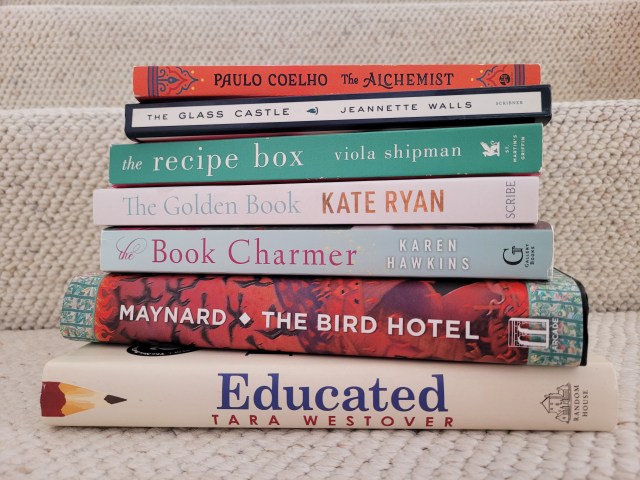
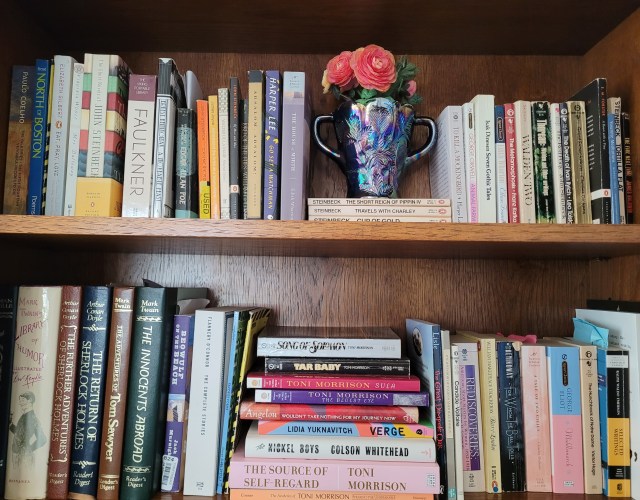
I’m an avid reader and have a library in my house. In my library, are books that I used during my teaching career such as the plays of William Shakespeare, The Norton Anthology of African American Literature, poems by Robert Frost, and the novels of more contemporary authors such as Toni Morrison and Tara Westover. But I’m retired now, and I’m starting a new collection of books based on the theme of flowers.

I was inspired to start a library about flowers when I read an article about Martha Stewart’s flower library. In the magazine, I found a picture of her bright book room with books stacked on mismatched tables around the perimeter and in the middle of the room. Every wall was filled with windows above the tables, making the room fabulous for reading. The books themselves were beautiful covered with photographs of roses, azaleas, and bouquets of every kind.

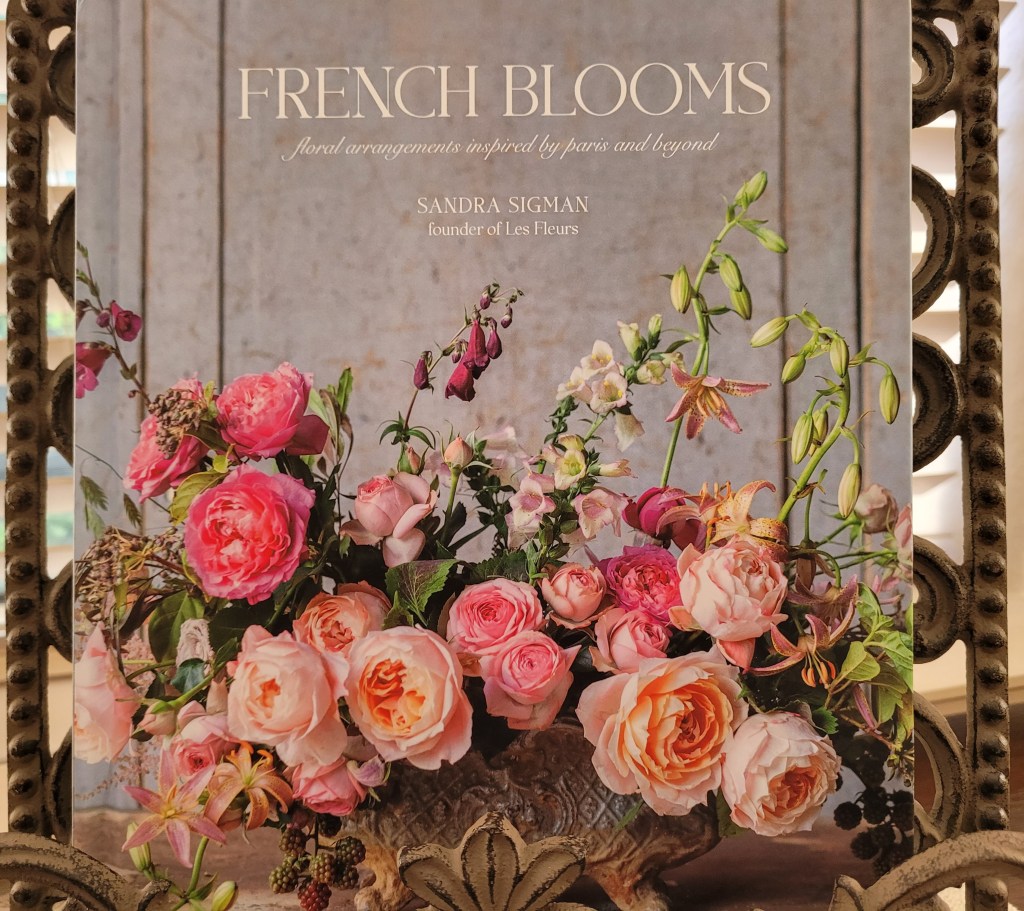
Now that I’m retired, I have more time for gardening, and, this summer, I’m in the middle of re-designing my front and back yards. To do this right, I bought a book about hydrangeas so I can do what I need to do so they grow healthy and vibrant. I also bought a book about 300 varieties of tea roses since I’m going to plant six new rose bushes along my new western fence. Oh yes, I also bought a book about French flower arrangements that I have displayed in my French décor living room.

Flowers, Flowers, Everywhere in the House

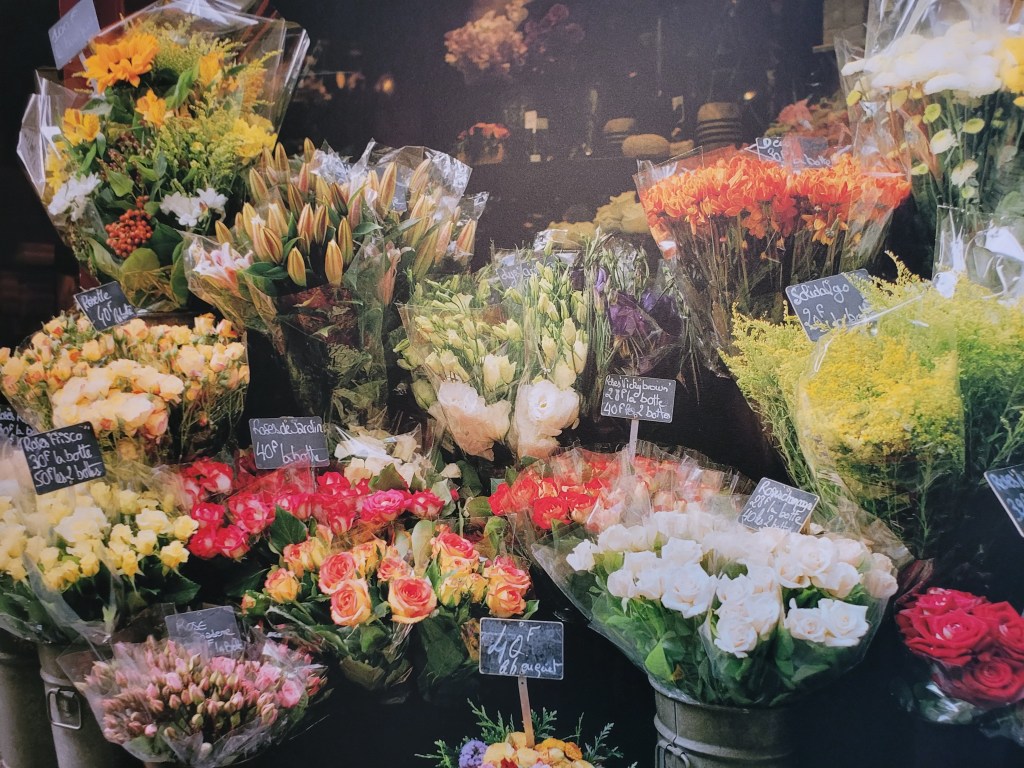
As soon as people step into my home, they learn how obsessed I am with flowers. In the living room, I am using three artificial flower arrangements to create a beautiful ambiance. Currently, I also have a vase filled with over a dozen red, yellow, and white roses from my own rose bushes in the back yard. I have bouquets of artificial flowers in each of the three bedrooms, flower urns in the library, and a real Christmas cactus in the family room. My bedroom walls all have pictures of flowers in them. The guest room, which also has a French theme, has a photograph of a flower vendor shop in Paris.

Flowers, Not Chocolate

Here’s a secret. I can be bribed, not with chocolates, but with flowers. When anyone gives me flowers, my heart melts like a warm candle. My husband gives me roses and sometimes other types of flowers on Christmas, my birthday, and Valentine’s Day. I love each and every bouquet as if it is the only bouquet I’ve ever received.

My daughter gives me flowers often because she loves flowers too. Her favorite flower is the Gerber Daisy. When I want to get her some blooms, I look first for those.

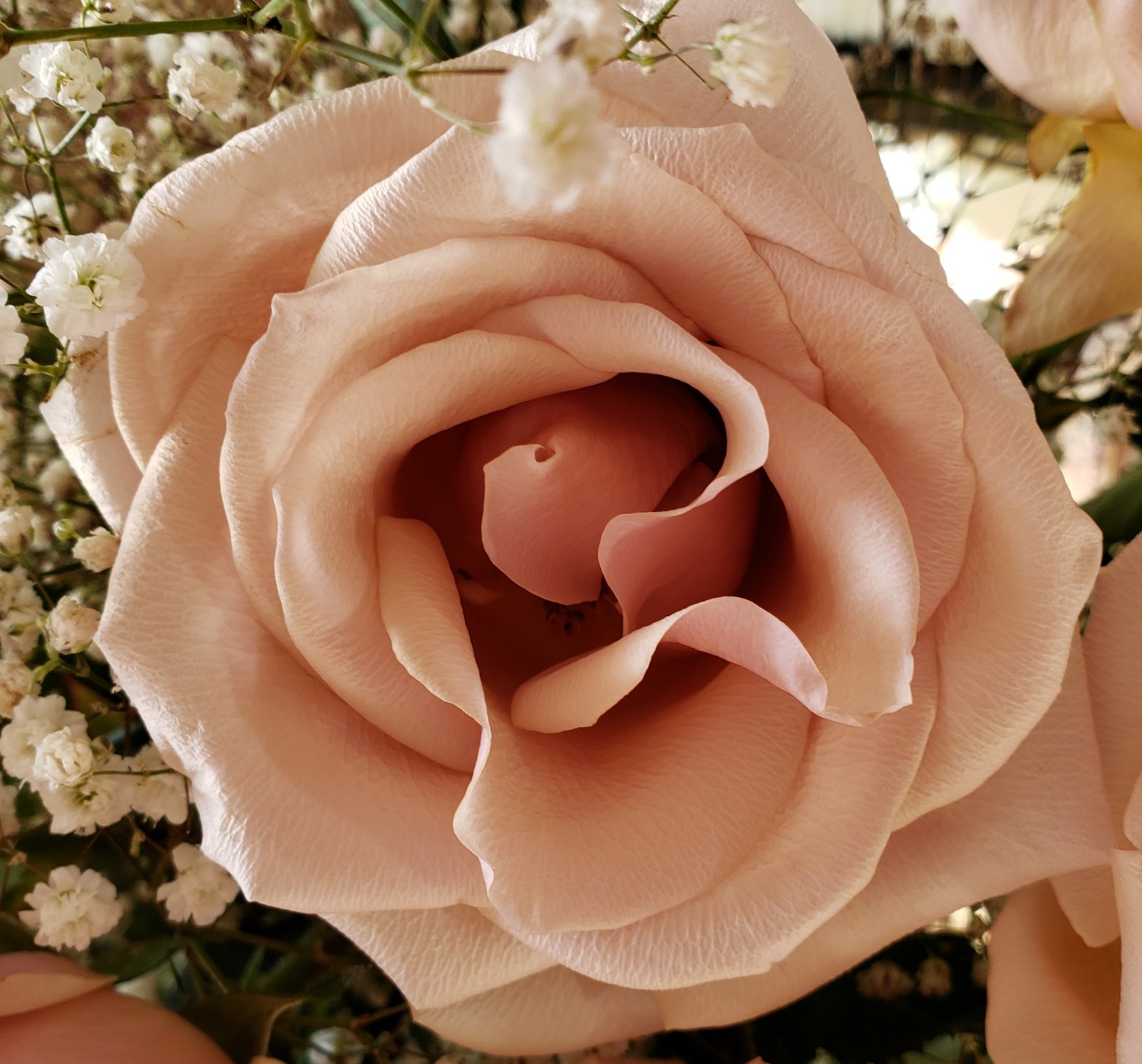
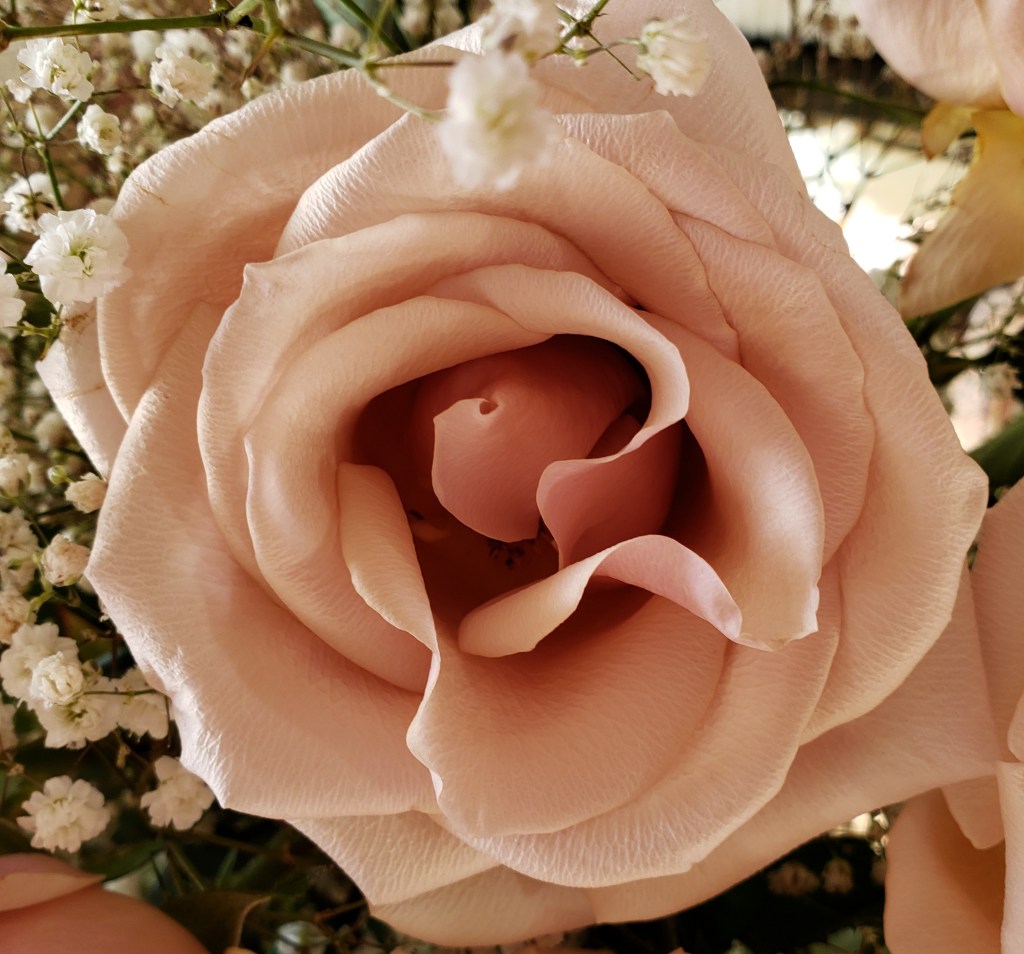
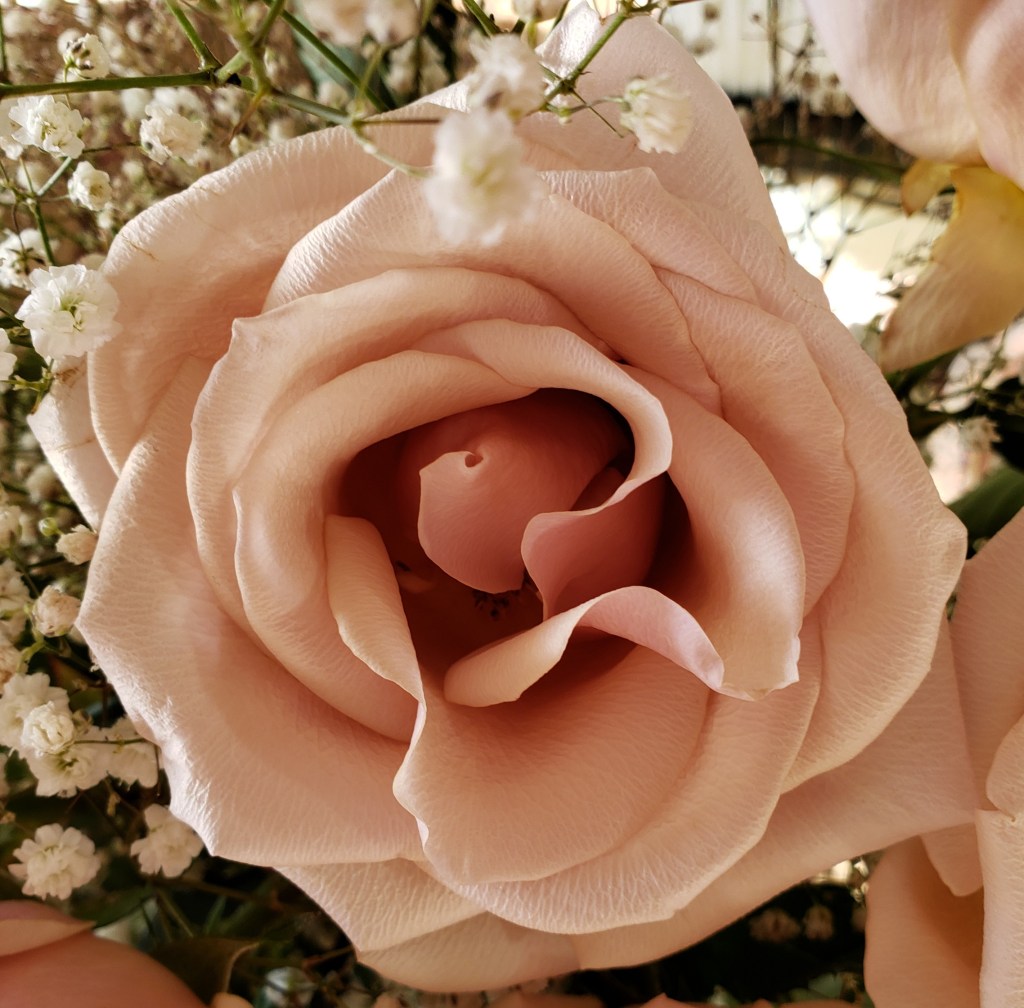
The most beautiful flowers I have ever received, however, were pink roses from my son. The pink was so delicate and the roses were incredible as buds and astonishing when they were fully bloomed. I took photo after photo of them, and, now, I have two photographs of these roses upstairs. My heart skips a beat whenever I see them.

I’m inspired by beauty and that’s why I love flowers. This afternoon, I plan to read more about how to perfect hydrangeas and how to promote more blooms on all my blossoming plants. You can find me sitting in my garden amongst my flowers. Where else?

Dying Words

Rose Marie could feel it. Life slipping away.

For years, the Macular Degeneration in her eyes had slowly darkened her vision. The blindness had started in the middle of her eyes and took over more and more of her sight as it covered her vision like a dark blanket. At the lunch table, her friend Ruth read the menu to her.

Last year, her doctor had diagnosed her with Alzheimer’s. She had called each of her ten children with the news. They didn’t know how to react, and she didn’t either. She didn’t think her memory was bad. She still knew her children’s and friends’ names and the address where she had lived for sixty years.  

Her apartment was on the second floor overlooking the front garden of the assisted-living facility. When she had moved in, she could see the roses blooming and the branches of the sycamore trees swaying in the breeze. Now, she knew the roses and trees were outside the window, but she had to turn her head to see them from the perimeter of her eyes. Sometimes, she didn’t bother. She just let the circle of light enter her mind without trying to focus on any details.

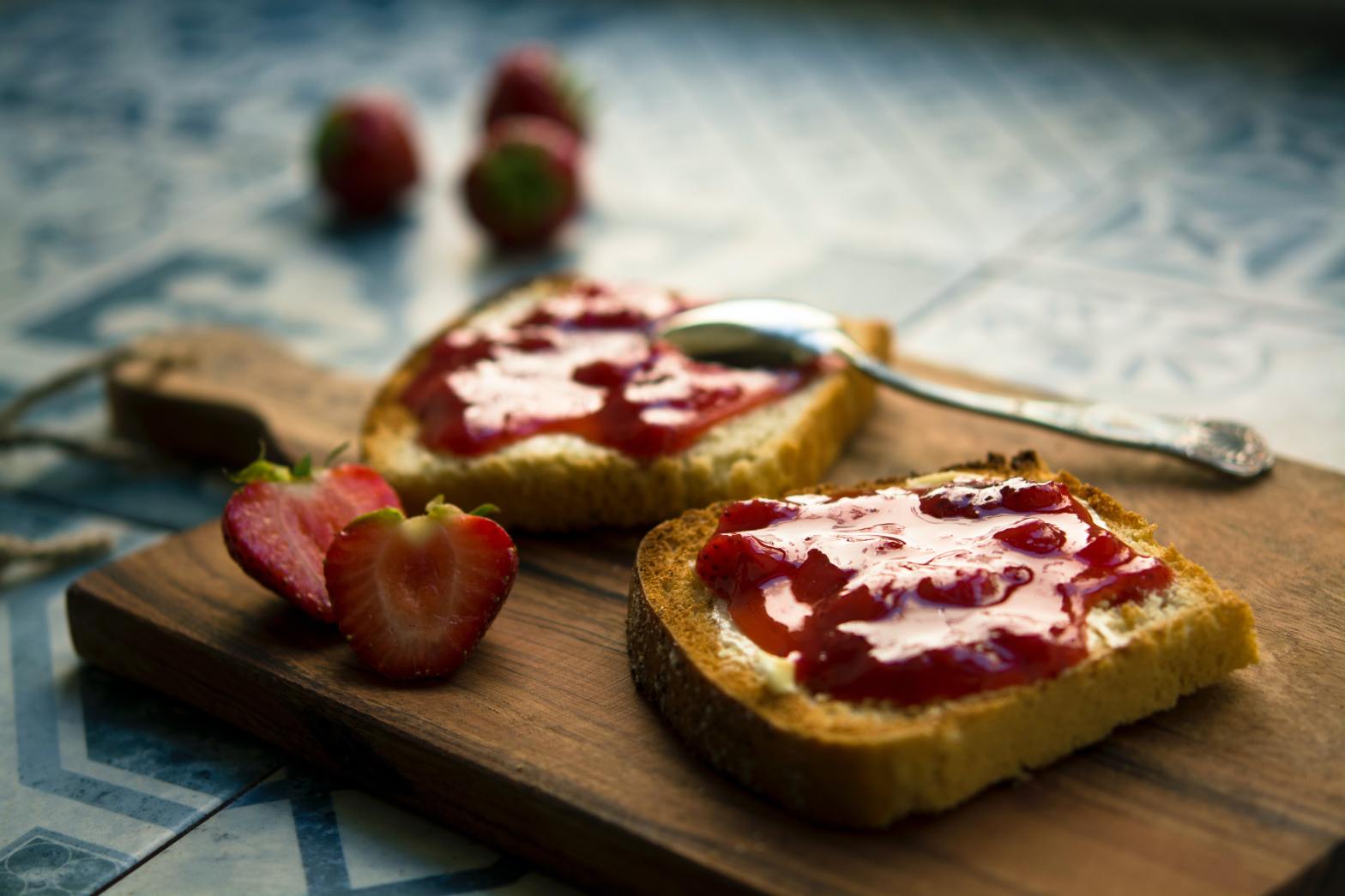
She had gone down to the dining room for breakfast. Ruth didn’t have to read the breakfast menu to her since the server knew that she ate the same thing every morning: a piece of bacon, toast with jam, and a full glass of milk. Sometimes, her daughter Margaret brought her some homemade jam that she stored in the refrigerator in her studio apartment. Strawberry-rhubarb was her favorite. She would carry the small jar of jam down to the dining room and ask the server to spread it on her toast.

She found her way around her studio by reaching out to touch the furniture as she walked to the bathroom, the bed, or her recliner. To get down to the dining room, she found the knob on her front door, twisted the door open, scooted her body around it, closed it behind her, took the apartment key that she hung on a lanyard around her neck, and locked the door by finding the keyhole with her left fingers.

Once she got outside of her studio into the second-floor hallway, she reached out to touch the armchairs, side tables, lamps that led her to the elevator. Since her studio was at the end of the hallway and the farthest from the elevator, she passed many other apartments along the way. She could discern from her perimeter vision that some had wreaths on the doors. She knew when she was passing Nellie’s door since she could hear her chihuahua barking.

Lately, she’d noticed that she had trouble talking to her friends at the dining room table. She knew what she wanted to say, but it seemed hard to get the actual words out. The same thing happened to her when she phoned her children. In fact, it was exhausting to talk for any amount of time.

“Wait a minute,” she would say as she struggled to express herself. They waited so patiently, much more patient than she had been as their mother. Then, slowly and deliberately, she would answer their question with a complete sentence.

Since she had moved into the assisted-living facility, two of her long-time friends had died. Jim had severe back pain for a week before her passed away. She and her husband had known him and his wife for sixty years. They attended the same church. Their kids went to the same schools.

Patty passed away in her sleep one night. When her daughter came to clean out her studio, Rose Marie asked if she could have Patty’s tiny cabinet desk. The handyman had moved it into her apartment, and she kept her calendar and pens in it now. When she opened it, the wood felt warm, like Patty’s arms.

Rose Marie had always told her children that death was part of life. This time, however, the death that was coming was her own. Throughout the day, more and more of her life was transitioning to a new place with which she was unfamiliar. She couldn’t play Solitaire anymore at her desk because she couldn’t see, so she sat in her recliner and let the window’s light stimulate her thinking.

She was afraid. What would happen to her children when she died? Would they still be a family? Who would her sons talk to when they had problems to discuss? Who would need her when they got a divorce or lost a baby?

When she had first moved into the facility, her friend Morgan had picked her up every Sunday and drove her to Mass. She didn’t come anymore since Rose Marie no longer felt safe enough to walk around a place where she hadn’t memorized the placement of the furniture. Now on Sundays, she went down to the chapel when the priest came to bring Communion for the Catholics.

“I don’t know how to die,” she said one day. She could see him put his hands in his lap before he answered her. “I’m fully aware that I will die soon, but what should I be doing right now, before it happens.”

Father Moyer took a deep breath through his nose, and let the air out like a sigh before responding. “Well,” he said. “You don’t need to worry about dying. Just spend your days loving your family and friends. That’s all that matters.”

“So simple,” she said. She heard Father take another calm breath. When he exhaled, she was reminded of the ocean. She thought his answer would have involved praying, repenting, forgiving, or philosophical discussions. “I’m afraid of what will happen to my children when I’m gone. I’m the matriarch of the family. I keep them together. Shouldn’t I talk to them about these things?”

“No. They won’t remember anything like that, but they’ll remember how you love them.” He breathed in and out like the ocean again. It sounded so beautiful and relaxing to her.

Later, when Rose Marie went back to her apartment, she sat down in her recliner and picked up her cell phone. She pushed “1” which would dial her oldest daughter’s phone number automatically.

They only talked for two minutes. It was so hard to get out the words she wished to say. At the end of the phone call, Rose Marie said, “I love you.”

“I love you, too, Mom,” Celia said. “So much.” Rose Marie hung up.

Then she pushed “2” so she could talk to her second child. Then “3,” then “4,” then “5.” Her fifth child Ron didn’t answer. She’d have to call him later. By the time she had talked to the rest of her children, she could tell that the sun was setting between the branches of the sycamore trees outside her window. Soon, she’d have to walk down for dinner. She dialed “5” again, and Ronald picked up.

“I just wanted to say I love you,” she told him. She took a long slow breath and exhaled. The ocean flowed through her lungs.

Cousin Love

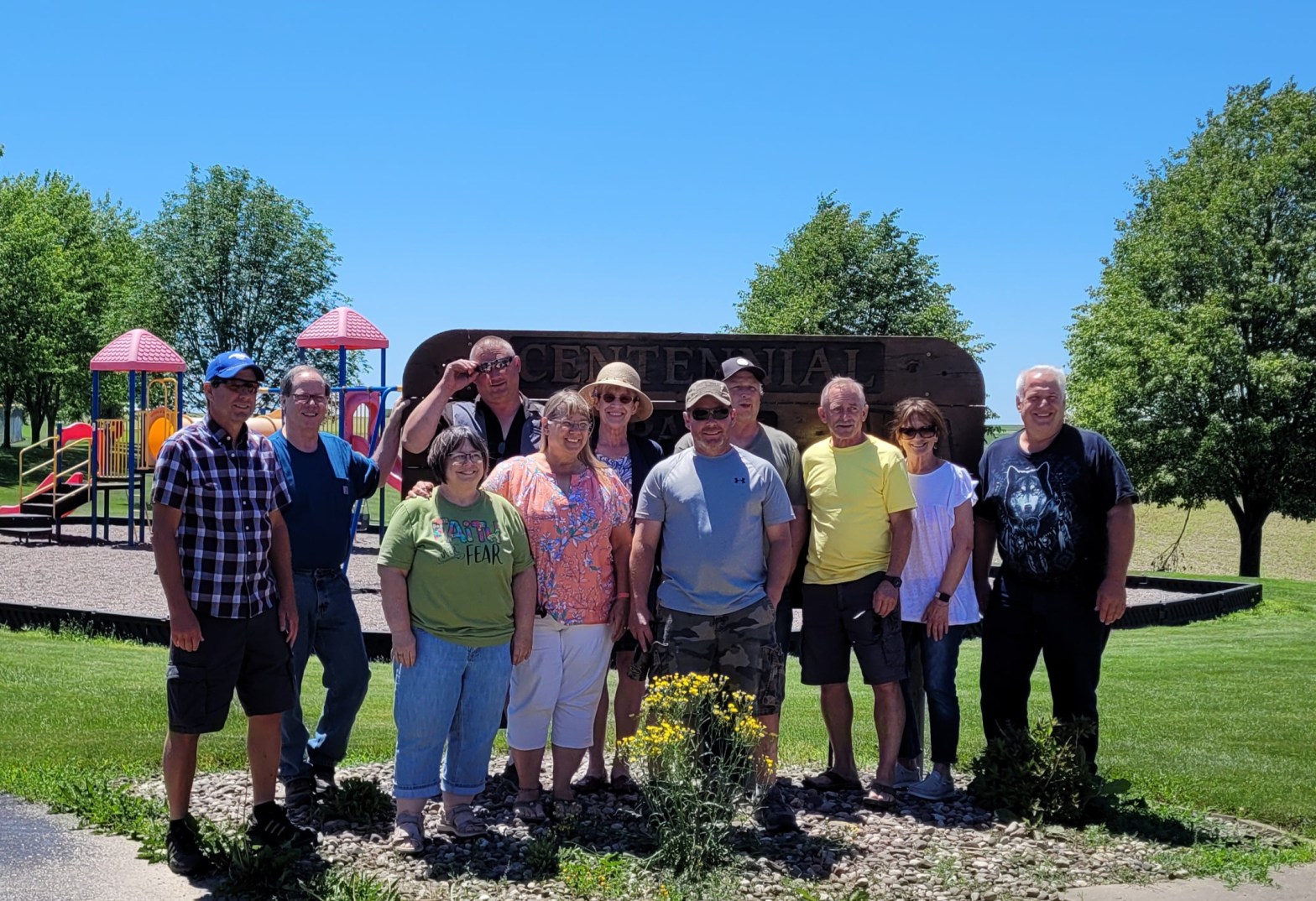
No one ever talks about their cousins, except my family. I have 44 first cousins that live all over the United States and beyond. I have friended many of them on Facebook. Many receive Christmas cards from me, and I visited many in Wisconsin and Minnesota this last year. I feel as close to my cousins as I do my own siblings.

My parents assured us that we would enjoy being from a large family since we’d always have friends. They were right. Even though I don’t see my cousins on a daily basis, they bring me so much joy and satisfaction.

My cousin Tim lives in Montana. He recently retired as the Superintendent of a tiny school district. Since I was a college professor, our careers were focused on helping students and improving education. We also comforted each other when we went through our divorces by sitting in a car in San Diego in the middle of the night and sharing stories after his brother’s wedding.

My cousin Roslyn is a high-school history teacher in Michigan. We both believe that students are better off when they learn history from more than one perspective and understand the difference between equity and equality since we worked with those concepts in the classroom. Roslyn is my philosophical partner in our extended family.

Carolyn lives in Winona, Minnesota. She raised her son as a happy single parent and now has two grandchildren. Yesterday, she posted a picture of her front yard packed with snow where she had painted flowers on the three-foot snow walls beside the path to her front door. What a creative spirit!

Cousin Dan lives in Japan with his wife and two pretty daughters. He works for the United States Navy and leaves his family for months at a time while stationed on the U.S.S. Reagan. I love his mustache and fun-loving family, who spend their afternoons searching for pottery on the beaches and artistic manhole covers in the towns.

My cousin Arlie is a handsome devil who has worn his once-dark-but-now-gray curly hair both long and short over the years. Once he drove a truck full of Wisconsin cheese to my parent’s house in California. We ate cheddar for weeks. Now, Arlie rides horses with his wife and works at an auto store. Even though we have little in common, at every reunion, we share heart-felt cousin hugs.

Patty lives in Boston and is married to Steve, who completely adores her. They go to baseball games and concerts on date nights, and inspire the rest of us not to give up on love. Patty sure knows how to pick a good partner.

Diane lives with her husband Matt in Minnesota. Now this is a fun girl. If you want to kayak in the Winona Lake, she’ll do it. She knows all the best restaurants in town and will even accompany you to the local spice and Polish museums for an afternoon. If you’re up for it after dinner, she’ll go with you to a bar for a beer and sit outside with the mosquitoes. One year, I watched on Facebook as she and Matt took their motorcycle on a cross-country trip through Minnesota, South Dakota, and Montana. Wow, what a woman!

Scott, a happy tall guy with a strong build, owns a dairy farm in Minnesota where he produces thousands of gallons of milk per day for American milk-drinking consumers. If you ask, he’ll take you on a tour of the farm and you’ll see where the calves are raised, cows are milked by machine, statistics are collected for each animal, and cow manure is recycled. Even a town-girl like me learns something every time I visit his farm.

I could go on talking about Lisa in Florida, Marilyn in Ohio, Marjorie in Minnesota, Randy in Minnesota, Karen in Wisconsin, Dewey, Joanne, Debbie, Denise, Renee, Kathy, Scott, Jim, and more, more, more, but you get the idea. I have interesting cousins in my life, and I interact with them frequently enough to maintain vibrant relationships.

Thank you, Mom and Dad, for maintaining such close family ties over the years. My cousins are an essential part of my happiness. I love them.

Chemotherapy Christmas

The room was large, windowless, and sterile. Blinding florescent lights. Beige linoleum floors. Twelve green reclining chairs placed with their backs against the walls around the room. Each chair accompanied by a metal stand hung with bags of fluid and tubes.

The woman sitting in one of the chairs wore a scarf around her head. I looked for wisps of hair, but couldn’t see any. Her body filled up the chair like of sack of potatoes, lumps everywhere. She wasn’t smiling like the nurse who stood next to her, hooking up a tube to a port embedded in her upper chest.

A man whose body disappeared within his baggy shirt and trousers sat in a recliner in a corner. His scrawny hands hung over the chair’s arms like shriveled leaves caught on the edge of a forgotten lawn chair in the fall. His bald head shone in the florescent lights like a bare bulb. His face was gaunt, lined, and dry, and his eyes were closed. A young woman sat in a chair in front of him reading the Bible.

I watched the room’s activity with a lump in my throat as I stood behind my mother and brother by the door. A woman with a cane was led to another recliner in the room. The male nurse helped her sit into the chair, gently pushed her back, and lifted the foot rest. The nurse lifted a matching green blanket from a small chair nearby and laid it over the woman’s body, tucking the edges around her snugly. Then he efficiently began hanging the bags of chemicals on a metal stand and hooking up the bags with the tubes.

This was my mother’s chemotherapy room. Mom’s last chemotherapy session was scheduled for December 24, Christmas Eve. She had asked my brother Zach and me to accompany her to the appointment. My brother had flown home from college in Southern California for Christmas, and I was home from college too. The only thing my mother wanted for Christmas was to finish chemotherapy with her children around her.

A female nurse wearing an ugly, plain, blue smock and pants led my mother to a chair on the emptier side of the room. Zach helped Mom take off her coat and climb into the chair. She looked small, dressed in her pink cotton beanie, pink V-neck sweater, and jeans. How pale her pretty face was. Mom nodded when the nurse asked if she wanted a blanket, and Zach took it from the nurse and covered her gently like he was placing a precious jewel into a new setting.

This was not how I wanted to spend my Christmas. Wasn’t college supposed to be one of the happiest times of my life? I was too young to worry about my mother dying or even being too sick to visit me at school.

The nurse pulled two straight-back chairs close to my mother’s recliner, and invited us to sit down. I took the chair farther away and leaned back as if my mother was contagious. My brother pulled his chair closer to Mom and took hold of her left hand. When she smiled at him, her eyes watered like green pearls.

Before long, Mom was hooked up to the tubes that would feed chemicals into her body. I could tell that she was putting on a brave face because, underneath her smile, she looked tired and weak.

I didn’t want to think about her being that way. Instead, I wanted her to jump out of her chair, hug me tight around the waist, and ask me about college. I wanted to tell her about Jasmine’s new boyfriend, Sara’s job offers, and David’s article in the college newspaper.

Her smile withered away as the chemicals dripped into her veins. She gave up trying to hold a conversation with my brother, who was bent towards her in his chair, his chocolate eyes full of concern. She looked at me several times, but I retreated away from her with a grimace on my face.  I didn’t want to be here.

Once in a while, Mom opened her eyes and looked up at the bag hanging beside her as if gaging how long she had to endure the procedure, but, for the most part, she kept her eyes closed, and we sat in front of her fidgeting in our chairs, biting our lips, and staring at each other with worried eyes.

Three hours later, the nurse in the blue smock and pants pulled the catheter out of my mother’s port, gathered up the tubes, and rolled away the metal stand with the empty bags.

A young woman with brunette hair and rosy cheeks pushed a wheel chair up to our station.  She asked my brother to move his chair, then maneuvered the wheel chair as close to my mother’s chair as she could.

“I’ll help you,” she said kindly. She took ahold of my mother’s upper arm and guided her from the recliner into the wheel chair.

My mother let out a whimper as she moved. Zach helped her put on her coat as she sat in the wheel chair, wrapped her pink scarf around her neck, and gave her a wool cap to pull over her pink beanie. Still, she shivered when the nurse wheeled her outside to the car.

Zach drove us home, and the next day was Christmas.

Green Beans & Marshmallows

My relationship with food started with a tummy ache.

 When I was born, my parents soon learned I was allergic to cow’s milk. My mother had grown up on a farm in Wisconsin where her father milked his cows to provide milk on the table. My father loved cow’s milk so much that he scooped the cream off the top of pasteurized milk with a spoon and put it in his mouth, right over the bottle. So my allergy to milk was unusual for them. To solve the problem, they bought a goat, milked it, and put the goat’s milk into my bottle.

Our family was large—two parents and ten children to feed. This meant that the preparation of food required a major effort, not just by my mother but the whole family. Since my father grew up on a farm, our first home was a rented farmhouse on top of a barn on a two-acre property in Fair Oaks, California. My dad’s day job was in the military, but before he went to work and after he got home, he milked the goat and cow, fed the chickens and ducks, collected their eggs, gave lettuce to the rabbits, sheered the sheep, picked fruit from the fruit trees, and planted, weeded, and harvested the vegetable garden.

When I was three, my parents bought a house right down the street on a half-acre lot, and it was the most prolific half-acre I’ve ever known. We didn’t keep a cow there, but we still had sheep, ducks, chickens, fruit trees, and a year-round vegetable garden. Radishes, carrots, lettuce, and green onions in the spring. Zucchini, cucumbers, tomatoes, and peppers in the summer. Pumpkins and acorn squash in autumn, and potatoes in the winter.  I remember running bare-foot under the plum trees over fallen, ripe plums that were magnets for the honey bees. Before I went to Kindergarten, I had been stung dozens and dozens of times each summer.

We weren’t legally allowed to work when we were kids, except as harvesters in my father’s garden. Under the blazing summer sun, I stooped between the rows of tomato plants and picked tomatoes until my arms itched with rashes. When I complained, I was switched over to the rows of green beans where the purple dragon flies terrified me as they flitted among the bean plants’ twirling tendrils.  I hated the hot sun, the rashes, the dragon flies, and the repetition of picking.

One day at the dinner table, I came up with the incredible idea that I didn’t like green beans, and, if I didn’t like them, I wouldn’t have to pick them anymore.  With this inventive scheme in mind, I looked down at the green beans on my plate and said out loud, “I don’t like green beans.” As fast as lightening, my brother stuck his fork in my green beans and lifted them over to his plate. All I had left were fish sticks and mashed potatoes, and the serving dishes on the table were all empty. Nevertheless, I spent my whole childhood hating green beans.  It wasn’t until I was around thirty that I tried them again and discovered they were delicious. 

Cow’s milk and green beans weren’t the only foods that traumatized me. My mother was a decent cook, but she often lost track of the vegetables cooking on the stove. By the time she remembered to turn off the zucchini, it had turned into a gelatinous mass of green sludge, and she made us eat it anyway. 

My mother employed her daughters as helpers in the kitchen as soon as we could reach over the counter. When we had French fries for dinner, I had to peel ten pounds of russet potatoes and slice them into French fry fingers. Then, Mom deep-fried them in oil and we cooled them on racks placed over cookie sheets. 

I never complained about not liking French fries. I loved them as much as everyone did. In fact, if I didn’t protect the fries on my plate, one of my siblings would snitch them when I wasn’t looking. The best course of action was to eat the French fries on your plate first, get another helping, then eat the rest of your food. To this day, I don’t dip my French fries in catsup while I’m eating them. When I was a kid, I didn’t have time.

Some of my food trauma also stems from the creative ways that my father punished us when he caught us committing food crimes. I think my dad could have earned a PhD in psychology if he had the notion to get more than a two-year college degree. He was thoughtful, and, because his sentences were so inventive, they were effective.  One time after dinner, he caught me popping a large marshmallow into my mouth. “You still hungry?” he asked. “Next time you eat when you’re at the dinner table.” He made me sit at the table and finish eating the leftover pork and beans. That was a “tooty” experience that I never forgot. Today I don’t even like marshmallows.

Rain

Photo by Ahmed Zayad on Unsplash

When Don woke up, it was raining.  The water that he ran in the tub sounded like rain chortling out of a storm pipe.  The water that streamed from the kitchen faucet for his tea beat into the kettle like rain on a wheelbarrow left out in the yard.  Rain. Rain. Rain.  It had rained for months.

Don’s mother had died at 10:05 a.m. on the same morning that Don worked his last day.  He was looking forward to retirement, and one thing he would do more was spend time with his mother—playing Scrabble, going out for hamburgers for lunch, driving her past her old house where prolific flowers signaled the change of seasons. 

At 10:06 on the day she died, the rain started.  He had kissed her on the forehead as she lay quiet in her hospital bed, checked to see if she was safe, and slipped out of the room to live the rest of his life without her. 

Claire had managed the funeral and service arrangements which were beautiful.  On the day Mom was buried, the sun came out for a couple hours—just enough time for Mom’s ten children to say their prayers and lay red roses on her casket.  When the casket was lowed into the ground and the earth filled in her vacancy, the grounds men laid the large spray of red roses over the dirt.

Then the rain began again.  It rained while they cleaned out Mom’s room at the assisted living home.  Maddy took all their mother’s clothes home in garbage bags.  A few weeks later, she knocked on Don’s door and handed him a teddy bear.  The bear was blue and green and peach and red, made from pieces of Mom’s shirts, pants, and dresses.  It looked both happy and sad as Don sat it on the couch in his living room.

Soon, the group texts began.  Don shared memories of his mother with his nine siblings every day.  Old memories.  Vague memories.  Disputed memories.  Sunny memories.  Rainy memories. 

Some people in the text posted pictures of what they made for breakfast.  Don posted pictures of his new seedlings and old pumpkins.  He talked about his clocks inherited from Mom and Dad.  Claire posted perfect plates of salmon dinners.  Rita identified the birds that Maddy found in her garden by looking them up in her bird bible.  Beatrice posted old photos of Mom from her twenties when she was thin, before she had ten children. 

The siblings discovered each other again.  Most of them had moved out of town since their childhood, and their communication had been through Mom for the most part.  Through their texts, they found out that Don had the best green thumb, Claire grew flowers but not vegetables, Rita was a bird and owl watcher, Maddie loved wine and dessert most of all, Beatrice was just starting a walking routine, Minnie continuously created new jam recipes, Jim was the handyman at his job, Carol had learned how to play guitar, Ron still told the best jokes, and Geo wrote poetry in his spare time. 

The texts started usually around 7 a.m. in the morning and lasted until the last sibling drifted off to bed.  Good mornings.  Breakfast recipes. Descriptions of walks.  Flower postings.  Loaves of bread.  Jars of jam.  Bowls of soup.  Directions to parks.  Comments on the news.  Revelations about hobbies.  Progress on quilts, puzzles, and charity projects.  Movie recommendations and dinner plans.  All these subjects and pictures streamed between the ten children that Mom left behind.

A few months later, the rain stopped.  The sun came out like a herald of good news, and Don woke up to the birds chirping outside his bedroom window. 

When he wandered out into his living room, he saw his colorful teddy bear leaning over on its side and bent down to sit it upright, and, as he did, the sun blazed through the window and lit up the bear in a shaft of light.

“Let’s go visit Mom, today,” Don said to his bear.  “The sun is out and I know she’ll be happy to see us.”

Half an hour later, after an oatmeal breakfast and coffee with chocolate, Don put the bear in the passenger seat of his blue truck, and drove to the cemetery.

When he got there, the sun streamed like yellow curtains through the oak trees whose branches spread over the graves like kind arms.  The green grass, which covered the shallow hills and valleys, glistened with diamonds of left-over rain. 

Don drove his truck onto the center road and stopped it in front of his parents’ graves.  There they were—lying side by side like happy campers in sleeping bags.  Their gravestone rose from the top of their plots like a crown, and Don noticed that one of his siblings had stuck some colorful plastic flowers into the metal vase in front of the headstone. 

Don knelt down in the middle of his two parent’s plots, reached out, and placed his teddy bear on his mother’s side of the stone near the flowers.

He paused for a few minutes, furrowed his brow, then recited the Hail Mary prayer, and his words wafted through the cemetery like a low whisper.  When he finished praying, he looked up at his teddy sitting quietly.

“You can’t stay here,” he said.  “We’re just visiting.  You and I have to go home and live some more.”

Don looked at the words of his mother’s name on the head stone and the dates of her birth and death.  92 years long.  Somehow, not long enough.

“Thank you for giving me life, Mom,” Don said, placing his hand on his heart gently. 

He reached over, lifted his teddy bear from the ledge beside the plastic flowers, and held the bear against his bent frame.

“I’m always here, Mom, for you, just as you were always here for me.”  Then Don slowly stood up from the ground, brushed the wet grass off his jeans, and walked back to his truck.

When he got into his seat, he checked his phone to see if any of his siblings had posted another message.  A few rain drops fell onto the windshield as he drove away. 

A Town Girl on a Dairy Farm

I’m from a town—a suburbia in the San Francisco Bay Area–a place that is less densely populated than a city and bigger than a village.  My town has clean streets lined with sycamore and crepe myrtle trees, houses with front and back yards, barbecues, swimming pools, cabanas, patio sets, and walking mail carriers.  People walk their poodles and Labrador retrievers on neighborhood hiking paths and buy popsicles from the singing ice cream truck that meanders the streets on summer days. 

I own a tidy little home in my town.  Yards with manicured hedges, carefully pruned flower beds, edged lawns.  Clean and tidy. I sweep under my garbage cans each week when I take them out for collection.  My children are grown and have homes of their own, so my house is immaculate too.  I spray my shower down after each use.  I wipe the stove after each meal, and I own five vacuum cleaners, one for each type of vacuuming task.  You get the picture.  I’m a clean freak. 

I decided to visit my relatives in the country this last month.  They live on farms all around the city of Winona, Minnesota, in both Minnesota and Wisconsin. I also am lactose intolerant, and, when I was born, my parents bought a goat to feed me.  My mother grew up in Wisconsin, a state popular for milk and cheese.  Her whole life, she drank three tall glasses of cow’s milk a day, one at every meal.

I wasn’t one of those town kids that thought milk originated in the refrigerator case at the grocery store.  My mother told me where it came from.   After all, she grew up on a farm.  I’m smart enough to know that most milk at the grocery store comes from cows, not goats, almonds, coconut, or oats.  Sorry vegans.

When I visited my relatives in Minnesota and Wisconsin this month, my cousin Scott–a handsome man with a ready smile, who owns a 600-cow dairy farm near Altura, Minnesota, invited a bunch of us to visit his farm.  I didn’t mention to him that I was lactose intolerant since I didn’t want to feel ostracized.  I was confident, however, that his cows would like me just fine.  Really appreciate me, in fact. 

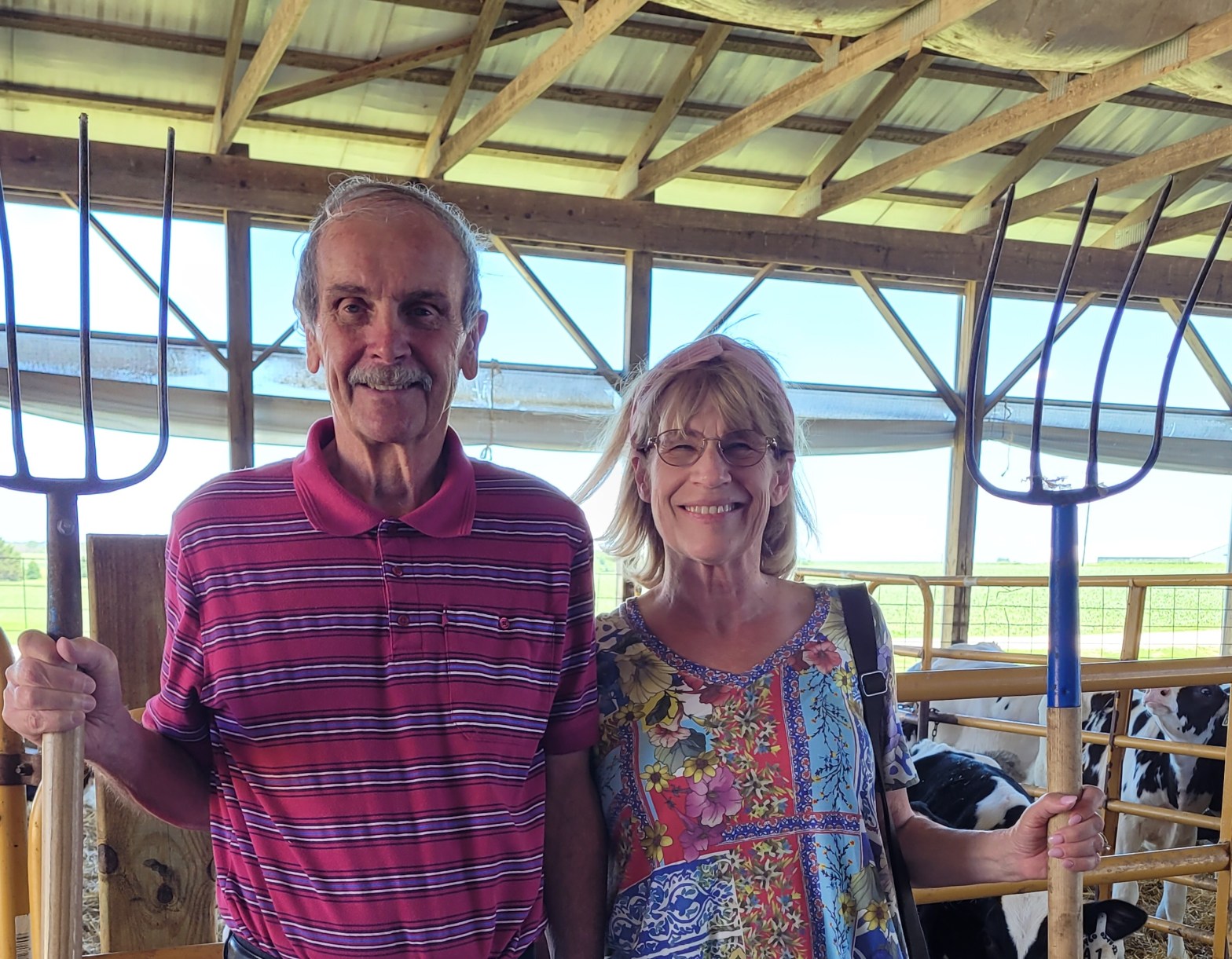
We got to the farm before Scott did, and his workers told us to wait outside.  As we walked through a barn full of teenage cows—some with the cutest faces, we found some pitchforks and posed for a picture like Grant Wood’s 1930 American Gothic painting, except both my husband Bob and I held a pitchfork since we believe in equality.  In Grant’s painting, the farmer’s daughter didn’t have a pitchfork in her hand.  I hate to think what Scott’s pitchforks were actually used for and what debris was on the handles that I touched, but I wasn’t going to pass up a great opportunity for a memorable photograph.

I was wearing a clean T-shirt and skort and a pair of running shoes, knowing that we’d be traipsing around in cow emissions of all kinds.  When Scott arrived, I gave him a cousin hug.  He recoiled away from me, and when I let go, I noticed that his Tshirt was full of dirt stains.  He didn’t want to get me all dirty, apparently.  He had already been at work on the farm the whole morning, and had had meetings with lots of females (cows) who never put on a suit or blouse.  That was a town-girl blunder.  I surreptitiously looked down at my T-shirt and skort to see if I was still presentable. 

I’m not at all a dumb person, but, living in a town, I spend more time thinking about the best hiking trails and restaurants than I do about the biology of animals.  This visit brought my knowledge of cows out of the back room of my brain into my frontal cortex.  I appreciated, too, that Scott was as informative as an agricultural professor at the University of California, Davis where they offer classes in dairy farming. 

The first thing people must understand about milking cows is that a cow has to have a baby before it produces milk; therefore, the process of milking cows takes patience and great skill.  Because the cows have to be impregnated, go through about a 280-day pregnancy, give birth, and then produce milk, a dairy farm is comprised of a fertilization lab, pregnancy dorm, maternity ward, nursery, elementary school, high school, milking station, and milk refrigeration tank. 

There’s a lot to learn about a cow’s life.  About half of the calves that are born are female and the rest are male.  I know this seems obvious, but Scott doesn’t need all those males so this statistic is unfortunate; he keeps a few males for breeding but sells off the rest to beef processing facilities.  What happens there is for another blog post, likely not written by me. 

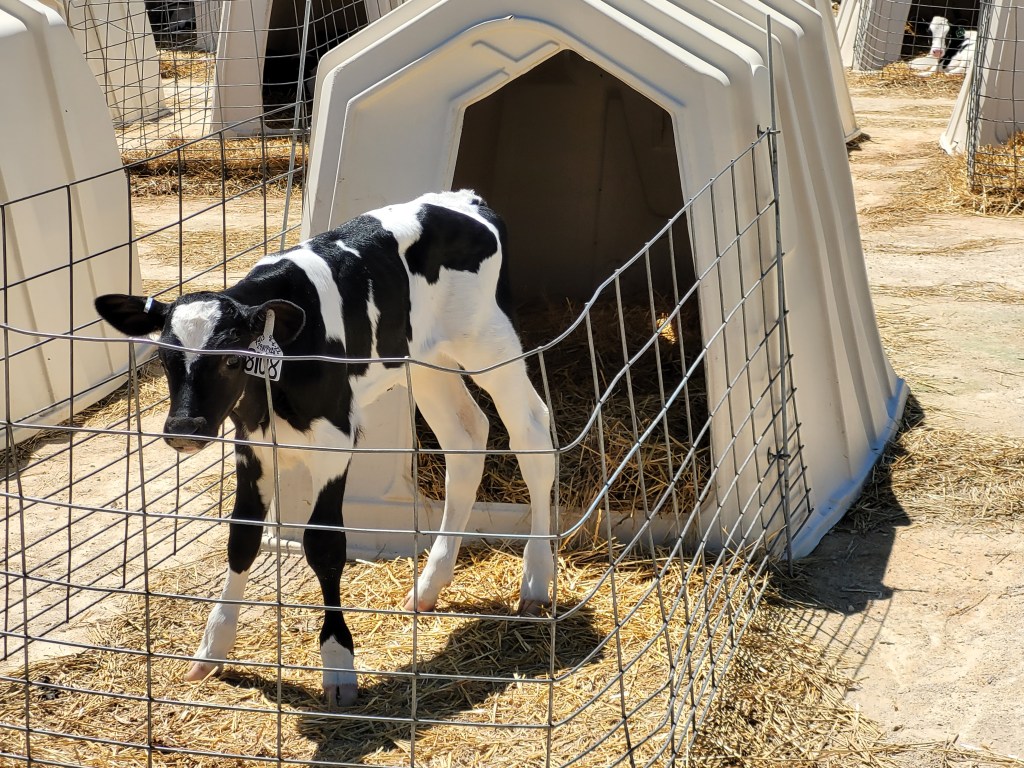
At the back of his property, Scott raises his calves in individual pens, each one living in a domed shelter with food and water.  When the calves get bigger, they live in a barn—organized like a college dormitory—which has an insulated roof and fans that blow constant breezes through the building to keep the cows cool.  The cows are encouraged to spend as much time in the field as they want. I was intrigued that they actually had a choice in this matter; Scott talked about them like they were his valued students.  Their rooms were also much cleaner than most college dorm rooms I’ve visited. 

Pregnant cows also live in a barn dormitory.  A long building that holds several dozens of cows, organized into three rows that run the length of the barn, each row is divided into individual pens filled with a soft bed of sand.  The two outside rows are where the cows stay when they’re inside.  They can either stand up or lay down in the soft sand.  They face out, having access to fresh water and hay.  Their backsides face into the center row through which a stream of water flows, sweeping up the cow manure and any sand that is soiled and discarded by the cow’s movement. 

The dirty water, filled with excrement and sand is processed through a filtering system near some manure holding reservoirs.  The clean water gets recycled back into the barn stream, and the excrements are deposited into the holding reservoir where it is treated and used for fertilizer to grow alfalfa or corn.  A well-thought-out system that truly impressed this town-girl.

So many problems can occur with milking cows.  They can get sick, dehydrated, infected, or overheated—all of these situations affecting their ability to produce high-quality milk.  We saw calves that had spikes put through their noses to prevent them from milking on other cows.  We learned that new babies were removed from their mothers so they wouldn’t milk, and they were given milk that was tested to ensure good health.   We witnessed testing tools, pages of testing data and production statistics.

In the milking shed, the cows are milked twice a day.  They are led into the stalls and encouraged to turn around so that the workers have access to their relevant body parts–teats.  Some milking sheds, Scott informed us, have turnstiles that turn the cows into the right position.  Scott doesn’t have those.  His milk hands push the cows into the correct position, clean each cow’s teats and attach the milking tubes which automatically milk the cows for an average of 20 minutes.  When the milk hand punches the cow’s serial number into the machine on her stall, the machine measures her milk output and adds it to the farm’s data system.  See why math classes are so important.  Everyone uses math. 

Cows are insanely fruitful.  One cow produces about 60 pounds of milk a day—that’s 90 glasses a day for people like my mother.  The milk travels through pipes into a stainless-steel cooling tank that looks a lot like the stainless-steel wine tanks in Napa, California that hold sauvignon blanc or chardonnay.  These dairy tanks are expensive—one can cost from $100,000-$140,000.  What struck me was that the purpose of the tank was not just to store the milk, but to also cool it.  The milk is warm when it comes out of the cow.  Again, I might have figured this out on my own, but, secretly, I was surprised to hear about it. 

I asked Scott whether his farm was considered a small, medium, or large dairy.  “It depends on who you ask,” he replied. “I’m only one of three dairy farms left in the immediate area.  Smaller farms are disappearing due to the rising costs of operation.”

Scott now has a female manager at his dairy.  I can’t remember her name, but let’s call her Laci.  “Laci likes to be in charge,” said Scott. “She also fell in love with my one-in-a-million cow hand, married him and now has a child.”  Scott’s calls this cow hand one-in-a-million because of his excellent work ethic.  Apparently, One-in-a-million is also supremely savvy; he married his boss.

By the time we had toured the whole process, my T-shirt and skort reeked of cow sweat, dust, and hay and the treads on my running shoes were caked with a smelly, nefarious, brown sludge.  I found myself holding my arms away from my body in a desperate attempt to feel cleaner.

Scott invited us into his office where his hound was waiting.  When we sat down, the dog plunked his muddy paws onto my lap and slobbered my skort with drool. First, I looked down in horror, but, then, I quickly composed myself and left the drool alone, trying very hard to adapt my cleanliness obsession into an acceptance of the natural dairy farm environment.

Scott opened his little refrigerator and offered us frozen chocolate treats and push-up ice cream popsicles.  They were certainly welcome after a hot tour of his cow quarters.  I hadn’t had a push-up popsicle for ages, and I tried hard not to drive the whole piece of ice cream out of the tube and onto the floor as I struggled with it. 

Turns out, Scott gave the last part of his popsicle to the hound who licked it up joyfully on the floor.  This helped me relax a little, and when I had just a little of my popsicle left, I shared the rest with Scott’s hound too.  This was a remarkable development, you see, because a town-girl would have never put her popsicle down on the floor for a dog to roll around and lick up. 

That day, on Scott’s dairy farm, I proved that even town-girls can leave the town behind and have a little fun in the country.

Cousins in Every Direction

Way back in the 1860’s, my great-great-grandfather Ignatius immigrated to Wisconsin with his four brothers.  They all had families.  My great-grandfather Leon had seven siblings.  Most of them had families.  My grandfather Leon had six siblings; all of them, except for his brother Phillip who became a priest, had families.  His brother Ed had fourteen children.  His brother George had nine offspring.  Many farmers had large families so they could use their children to provide free labor on the family farm. 

My father had four siblings, and they had children.  My father had ten children.  His brother David had ten children.  And between his siblings Gerald, Mary and Daniel, there were eleven more descendants.  Now those descendants have children and so do their offspring. 

Then, there is the maternal side of my family.  Two families dominate this line of my heritage: the Konkels and the Jereczeks, families who immigrated to the Pine Creek area of Wisconsin in the 1800’s as well.  I’m still working out the threads of my great-great-grandparents, but I’m clear about the progeny of my Great-grandpa John Jereczek and his wife Pelagia Konkel.  They had eight farm laborers—excuse me, eight children.  One of them was my grandfather August.  He married Florence Gibbons, a woman from a large Irish family that immigrated to the area during the Irish Potato Famine.  Everyone in every generation had large families. 

Truly a cousin conundrum.  I have first cousins, second cousins, thirds, fourths, cousins-removed in a lot of different ways, over-the-hill-cousins, and near-and-far cousins. Between the farming community of Altura, Minnesota—throughout Winona—and into the farming communities of Dodge and Pine Creek, Wisconsin, I am in danger of running into one of my cousins at any time in any place—as the owner of a dairy farm, at church, in a restaurant, at a grocery store, or on a hike in the state park which used to belong to my great-grand-father Leon. If you count the relatives who live outside of this area—in Minneapolis, Florida, Massachusetts, Michigan, Ohio, Colorado, Montana, Idaho, and California, my cousin count is exponential.

What really is a cousin? I did a little research and found a definition.  The website Who Are You Made Of? defines a cousin as “anyone who shares a common ancestor with you and is not a direct descendant of you or your siblings, a direct ancestor, or a sibling of a direct ancestor.”  This definition certainly proves that I have hundreds of cousins, most of whom I probably will never know since I can’t even keep the names of my great aunts and uncles straight. 

I recently visited the Wisconsin/Minnesota area where my ancestors first landed in America, and I had such a fabulous time with my relatives—mostly cousins—that I became inspired to better understand this voluminous family of mine.  I do understand who my first cousins are.  They are the children of my aunts and uncles.  I have 44 first cousins—the children of my father’s and mother’s siblings.  When I visited a few days ago, I was able to see about 25 of them.  What a fun group they are—laughing, joking, telling stories, recalling memories, and thinking of the next fun social opportunity. 

My children’s names are Alex and Rachael.  Since I have nine brothers and sisters who have produced a total of eighteen children amongst them, my children have eighteen first cousins just from my side of the family, two from their dad’s side. 

The thing is, my first cousins now have children, like I do.  With a little more research, I found out that my cousins’ children are my first cousins-once removed.  They are also the second cousins of my children.  This means that all of the children of my 44 first cousins—I can’t even begin to tabulate this number—are Alex and Rachael’s second cousins. 

One day on my visit, I went to the Bronk Nursery which is owned by the son of my Great-uncle Ed—one of Ed’s fourteen children–Donald.  Later that night, Donald had a beer with me and some of my first cousins at Wellington’s Pub and Grill in Winona.  We sat outside while the sun set, and when the darkness descended, the mosquitoes started to feed on us with a relentless enthusiasm.  Since Donald is my father’s first cousin, I believe he is my first-cousin-once-removed. 

My brother Ron and sister Margaret were on this visit with me.  On Sunday, they went to church in Lewiston, Minnesota to meet Greg, the son of our Great-uncle George.  Since Greg is my father’s first cousin, Greg is also our first-cousin-once-removed.  Oh boy.

Another time when I visited Winona, I went to a restaurant with some of my first cousins, and the waitress turned out to be the daughter of my Great-aunt Agnes, who preferred to be called Florence.  The waitress’s name was Paula Doerr.  She was also my father’s first cousin, which also made her my first-cousin-once-removed. 

This visit, I was looking for a restaurant for another dinner and I found a bar owned by the Gibbons family.  This name shows up in my mother’s heritage line. I don’t know whether these bar owners are first-cousins-once-removed or even worse.  After visiting several cemeteries where I was related to an incredible number of inhabitants, I was becoming overwhelmed by all the relationship possibilities. 

Think about all the tombstones connected to me.  In the Sacred Heart Cemetery in Pine Creek, there are 27 Jereczeks and at least 7 Bronk headstones.  There are dozens of Konkels, Gibbons and Broms, too, and they are all related to me.  My Great-grandfather Leon and more Bronks and Broms are buried in St. Mary’s Cemetery which turned out to be only half a mile from my hotel.  My Grandfather Leon and Grandmother Lillian are buried in Fremont Cemetery–a pastoral place in the country with their son Daniel who died when he was only 29.  I even have a great-great-great grandmother who is buried under Mankato Avenue in Winona, Minnesota.  When they laid out the streets for the City of Winona, they never moved her body. Her husband is likely buried nearby since we don’t know where he is.

I didn’t meet any of my second, third, or fourth cousins that I know of, but I know they’re walking around the Minnesota and Wisconsin dells somewhere.  My research revealed that I share DNA with all of these cousins, and that anyone beyond a third cousin is considered a distant cousin. 

I’m married, but if I was single, I could marry my third cousin.  Queen Elizabeth II married Price Phillip who was her third cousin, both descendants of Queen Victoria. 

It’s comforting to know that I come from such an ample family.  I am close to many of my first cousins, and even if I don’t see them on a day-to-day basis, when we do see each other, we take up just where we left off the last time we spoke.  We support each other through both happy and sad family occasions: weddings, births, graduations, and deaths.  My life would feel so much lonelier without them.  Luckily, cousin love doesn’t have any DNA restrictions. 

An Old Rose

She was worried about her mother who seemed to struggle to stay present, something pulling her focus away or inward.  Some days she sat in the arm chair by the window, staring straight ahead, her gray-blue eyes lost in deep thoughts. 

When Sestina tried to talk to her, her mother struggled to respond.  “Wait a minute,” she would say, then, with a determined set to her mouth, she’d squeeze her eyes shut for a brief moment, open them wide, and glare at Sestina while she slowly made a lucid response. 

Her mother woke up early every morning, took a spit-bath at the sink in her bathroom, put on her clothes, and combed her golden white curls until she looked neat and ready for an outing.  After breakfast—not a big one mind you—just a piece of bacon and half a piece of toast with butter and strawberry jam—she sat down in the chair by the window and disappeared into her private thoughts.  Her breathing was labored, and she raised her shoulders every time she inhaled, her chest rising slowly, and she exhaled by opening her mouth and releasing a small burst of air.

On Wednesday, while her mother was sitting in her arm chair, Sestina went out to prune the old roses off the rose bushes.  She knew her mother not only loved flowers, but she loved roses most of all, and Sestina wanted the roses to look perfect when her mother looked out the window.   Eight tea rose bushes grew in the redwood planter, a raised bed so that the roses bloomed at the same height as the window.  The planter was about six feet from the window so when her mother looked out, she could see the stems wave gently in the breeze and glow in the sun. 

The yellow rose bush was the heartiest with big blossoms that bloomed like cabbages.  One bush grew lavender roses, medium in size with delicate petals and a hue that took Sestina’s breath away.  Four of the bushes bloomed with various versions of red flowers, each a unique shade of red and shaped petals.  The two white bushes bloomed with the most flowers, always producing plenty of blossoms so that Sestina could cut some and bring them in the house.

Sestina held the kitchen shears in her right hand and pulled back a single stem from a rose bush, looking for the perfect compound leaf of five leaflets so she could prune the dead rose at just the right angle and place to encourage more growth. 

As she made the cut, the daylight intensified into a blaze of light all around her.  Insects’ voices grew loud into a hum like a Gregorian chant, and she heard the wind rush under the wings of a swallowtail butterfly who hovered over a rosebush nearby.  The butterfly glided toward her, waved its wings close to her nose, and she thought that she heard it whisper, it’s time for her, time for her.   Its black face smiled, and its eyes looked deep into hers, speaking wordlessly of love.  She heard the breath of the breeze travel through the petals of each rose, and the scissors snapped the rose’s stem like a clap of thunder.  She heard the leaves of the lemon tree give birth to new cells and buds of fruit.  Then, suddenly, the breaths of the insects and flying creatures, echoes of the growing plants, and pneuma of the wind were silent, and the garden was still.

When Sestina got back to the cottage, she found that her mother had died.   Her face was turned toward the open window and her hands were folded over each other like a final prayer.

Child of Light

That child of mine. 

She was like the black sheep of the family, but that didn’t mean there was anything wrong with her.  On the contrary.  Ever since she was a little girl, she walked like she was floating on air—her feet swishing out from beneath her, her body gliding like a spirit, her head held up and her eyes cast high like she was watching a movie in the sky. 

Little Beth had a heart-shaped face, her blue eyes spaced perfectly apart and framed with blonde eyebrows, her pale rosy cheeks glowing like pink pearls, her plump cherub mouth, and soft chin.  But she was a shy creature and shunned the limelight, so most people didn’t notice her as she peeked into the room around a wall, hid in a corner on a stool, or swung on the swing outside, alone, when the rest of the kids were in the house. 

After Beth turned seven and received her Holy Communion, I walked up behind her to Communion at one Sunday Mass.  When Beth reached the priest, his eyes opened wide as he looked into her face, his hand paused with the wafer above the chalice.  After a frozen moment in time, he said, “The face of God.”

What did he mean?

My daughter stood there with her hands joined together, her fingers pointing to the ceiling like dove wings.  Finally, the priest fluttered his eyes, seeming to compose himself and said, “The body of Christ.”

“Amen,” said Beth, her voice rising like a musical whisper.  She stuck out her tongue and the priest placed the wafer there, then she circled around so I could see her. 

And then I knew.  A spotlight from the ceiling lit up her face, and I saw a glow in her eyes like the sun breaking through the clouds after a rain, radiant globes of love.  A warmth filled my body as she passed me, and I knew from then on that I was extraordinarily blessed to have her in my life. 

The priest’s eyes followed her as she left, and, because he was preoccupied, I also turned around and watched her glide down the aisle like a sail on the breeze.   Quickly, I faced the altar again, but still had to wait for him to recover and remember that more people waited in line for Holy Communion. 

***

My husband and I asked Beth to be the executor of our will.  We asked her because she studied finances in college and we thought she’d be qualified to deal with the mechanics of disbursing our assets. 

Peter died young so he wasn’t around when I started to go blind and I couldn’t write checks, cook on the stove, or drive my car anymore.

Beth told me that it was time that she took care of me.  She helped me move into an assisted living place where three of my friends already lived.  She helped me sort through the sixty years of belongings in my house, found charities to pick up unwanted furniture, hired a gardener to keep the lawn cut until the house could be sold, worked with my realtor, accepted a great offer on the house, and filled my bank account with the money. 

“You have enough money to live for 35 more years,” she told me.  “You saved and scrimped, and now, I’m going to make sure you are treated like a queen.”

I couldn’t see very well, but Beth knew that I could still smell the roses, so every time she came to visit, she brought a dozen roses, a chrysanthemum plant, Easter lilies, Gerber daisies, or an African violet to put on my windowsill. 

I died on a December morning instead of a January afternoon because Beth was beside me in the hospital, making sure that the medical professionals didn’t exceed their zeal in pointlessly extending my life with hoses down my throat, catheters in my neck, and countless blood transfusions. 

She ordered a giant spray of red roses to cover my coffin at the viewing and to decorate my grave after I was buried.  Red roses signify eternal love. 

That child of light of mine. 

Rosie’s Resistance

Photo by Repent of Your Sins & Seek Lord Jesus on Unsplash

“Who gave you the right to run my life?’

Rosie was leaning on the dining room table in her house, sitting with her daughter Claire.  As she asked this question, she leaned her elbow on the table and rested her hand under one cheek.

“Mom, you did,” responded Claire.  Rosie thought Claire looked sad, but determined.  “You and Dad asked me to take care of your trust, and, now, you need someone to take care of you.”

“I’m fine,” Rosie insisted.

“Every day you ask one of your children to come over here to help you with something.  You drop your pills and can’t see to pick them up.  This is a big house.  You need someone to dust, wash floors, vacuum, and even cook for you.  You can’t live here alone anymore.  It’s too dangerous.”

“They can help me.  That’s O.K.”

“Mom, they all have families to take care of.  You said that you didn’t want to be a burden to your children.”

Rosie didn’t answer.  She looked down at the table silently.

“Asking them to come over every day is too much.  This house is big.  Your yard is huge.”

“It doesn’t hurt them to help out,” Rosie responded.

“Mom, now you’re being selfish.  You can move into Sunrise Assisted Living just a mile away.  Three of your good friends live there.”

“I don’t want to.”

“It’s time, Mom.  Think about it and when you want to move.”  Claire wiped her cheek as she turned away, then pursed her mouth into a smile as she turned to look back at her mother.


One year later, Rosie was sitting at the dining room table again, this time with her grand-daughter Leonie.

“I’m sure your apartment will be nice, Grandma.  Don’t worry.”

Claire and her sister were packing clothes into boxes.  Her brothers—Joe, Don, and Ron—were carrying furniture out the door and into the back of Ron’s truck: a double bed, the new red recliner, a dresser, a tiny desk, the T.V. and its stand. 

A few months before, Claire and Rosie had gone to Sunrise Assisted Living and filled out a lease for Rosie’s apartment.  They had lunch, too, and Claire thought it was good.

Today, Claire and her siblings left Rosie at home with Leonie while they set up Rosie’s new apartment.  Minnie was busy arranging Rosie’s clothes in the closet.  Claire made the bed once it was moved in.  Ron hung pictures.  Joe unpacked dishes and put them into the two cupboards in the tiny kitchen.  Don hung up shelves and arranged Rosie’s collection of egg cups on them.  Nobody was smiling.  Everyone had a furrowed forehead and looked as if they were going to cry.

“I’ve got a joke,” said Ron, all of a sudden.

“No jokes today, Ron.  I’m not in the mood,” Claire said.

“No, seriously, you’ll appreciate it.”

“No, we won’t,” said Minnie.

“Come on, I know you will.  It’ll be O.K.”

“Go ahead, Ron, but don’t be surprised if we don’t laugh,” said Claire leaning over a corner of the double bed which she had just covered with a flowered bedspread. 

“I found this on the Internet.  One day, a famous man went to a nursing home to see all of his friends again and see how they were doing. When he got there EVERYBODY greeted him [because, of course, everybody knew him]. One man he noticed didn’t come up to him or say anything to him, so, later, he walked up to the man and asked him ‘Do you know who I am?’ and the old man replied “No, but you can go to the front desk and they’ll tell you.’”

Claire was sitting on the floor next to the bed.  She rolled over and held her stomach as her laughter erupted.  Minnie stopped sorting the clothes in the closet, turned to look at Ron, and made a loud, long musical chuckle.  Joe stopped unpacking dishes and guffawed.  Don stopped arranging egg cups, smirked, and exploded into a happy groan. 

But Ron laughed most of all.  His big frame started jiggling first.  He opened his mouth wide, showing his perfect white teeth, and a deep, cascading huh-huh-huh-huh-huh sprang into the room, reverberating off the four walls and enveloping his sibling audience. 

Everyone expelled their laughter like a long exhale, then grew silent and looked at each other.

“O.K. That was funny,” said Claire.  “You’re so good at bringing out the humor, Ron.”

They worked for three hours, setting up picture frames on the wide window sill, arranging a bouquet of flowers on the dresser, placing the T.V. remote next to the tiny side table beside the recliner.  They plugged the beside lamps into the outlets, set the digital clock with the huge numbers, hung the towels in the bathroom, and arranged the soap and lotion on the bathroom counter. 

Soon the studio was perfectly arranged in its décor of pinks and greens.  The blinds of the window let in the afternoon sunshine, and the window was open to allow the autumn breeze to filter into the room.

Claire and Minnie drove back to Rosie’s house to pick her up.  When they got there, Leonie and Rosie were still sitting at the dining room table.  Rosie fidgeted with her hands and Leonie looked up with worry in her eyes.

“Your beautiful studio is ready, Mom,” said Minnie, putting on a smile.

The three girls drove Rosie to Sunrise.  They guided her through the front lounge.  On one side, other residents watched T.V. in a common room.  The lounge had an autumn wreath over the front arch.  They pushed the button on the elevator while talking to the assistant at the front desk.  They took her arm and guided her down the hall to her studio, and then opened the door.

Rosie stepped into the room.   She walked through the tiny kitchen, past the bathroom, and into the conjoined bedroom and living area.  Her head swiveled from side to side, surveying the bed and its bedspread, the digital clock, the lamps, the recliner, the window sill with all its pictures, the dresser with the vase of chrysanthemums, the T.V. stand, and the tiny desk with its statue of Mary and cup of pens.  Then her head swiveled up and back to inspect the egg cup shelves, the collection of spoons, the large family picture of her and her children, the trees through the window, her wedding photo, and the metal picture of The Last Supper.   Finally, a small, almost imperceptible sound escaped from her lips—a cross between approval and satisfaction.

Her children and grand-daughter guided her to the recliner and helped her sit down Claire sat down on the floor to her left. Minnie knelt down right in front of her. Ron sat on the bed and stretched his tree trunk legs out in front of him. Leonie sat next to her mother Claire, and Joe and Don sat on the floor on Rosie’s right and leaned their backs against the wall under the window. Rosie looked down at them all and her eyes shone as blue as a California sky.

The Imagination Grandpa Story 3: The Multiplication Staircase

 Grandpa walked into Rosie’s hospital room with a handful of daisies.

“I brought you some flowers today, Rosie,” he said.  He grabbed one of Rosie’s tall water cups from her side table and put the flowers right into the water left in the cup.

Rosie smiled.  She was so happy to talk to someone who wasn’t a nurse or a doctor. 

“I used my imagination this morning to make up a new story for you,” said Grandpa.

“I’m ready to hear it!” replied Rosie.

So Grandpa began.


The Multiplication Staircase

Rosie lived in a house that was older than her grandmother.  Her family’s Berkeley home was a cottage really, a tiny home with a brick staircase leading up from the street.  On both sides of the stairs, hydrangeas grew in the spring and summer under the shade of the ancient redwood trees that stood like giant sentinels on each side of the steps. 

Every front yard on Rosie’s street had one or two coastal redwood trees, natives that had been planted when the houses were built in the early 1900’s.  None of the houses matched, but each of them looked cozy with their open front porches; low-pitched gable roofs; and earth-tone sidings of wood, stone, or brick.   The street was a tidy three-block stretch of narrow sidewalks, and, on the east side, a 43-step stone staircase descended to Euclid Street where, her mother told her, a street car once stopped to take passengers to San Francisco.    

Rosie was born on this street–Hawthorne Terrace, and had spent her eight years of life walking around all the winding streets and staircases with her mother.  Now, she was in third grade, and every day when she walked from school to home, she paused on Buena Vista Way, a hilly street, where she could see a staggering view of the San Francisco Bay—Oakland, the Bay Bridge, San Francisco’s ever-changing skyline, the small and big islands in the Bay, and the Golden Gate Bridge. 

But today, when she reached the section of Buena Vista where she could get the best view, she was lost in thought.  Today, Rosie had failed her math test.

Failed. 

She just couldn’t memorize her multiplication tables.  The numbers got all jumbled up inside her head, and when she sat at her desk staring at the test, the numbers filled her mind with fear and confusion. 

Rosie turned right on Euclid while a tear dropped onto her cheek.  She wiped it off quickly with her fingers and took a sharp left to ascend the 43 steps to Hawthorne Terrace.  Rosie grabbed the black wrought-iron bannister and pulled each foot up the cement stairs, one by one.  Usually, she counted the stairs to make the trek easier, but, today, she thought about how she had to tell her mother that she had failed her test. 

Rosie slipped on one of the stairs, her body twisting around the arm that held onto the bannister, like a flag being whipped by a cruel wind around a flag pole.  She rammed into the bannister as she fell, hitting her hip hard on the vertical bars.  She let go of the bannister and plopped onto a cement stair, her legs crossed beneath her. 

How did Mom climb these stairs without falling when she walked to the store or caught the bus on Euclid Way?  Every day that Rosie had to climb them, she ran out of breath before she reached the top and, often, she fell and scraped a knee or grazed her hands. 

Mom was snipping the hydrangeas in the front yard when Rosie finally reached home.  “Hey, buddy, how ya doin’?” Mom said, standing up from her garden stool, her hands clutching her shears.  A pail of old blossoms stood next to her stool.  The hydrangea bushes were bursting with vibrant pink blossoms behind her—each flower bursting like a ballerina’s dancing tutu on a crowded stage of dancers. 

Rosie looked down at her shoes, one of which was untied and dragging behind her.

“What’s up?” Mom laid her shears on the stool, stepped over to the stairs where Rosie was standing, and put her arms around her.  “Did something happen at school today?” she asked, lines furrowing her brow.

“Well, you’re going to be disappointed,” Rosie said, staring but not seeing anything.

“You must tell me anyway,” Mom said.  “Otherwise, I can’t help you.”

Finally, Rosie sat down on the brick steps next to Mom and told her about the test.  “I just can’t remember them,” she said, wringing her hands in her lap.  “Not only that, when I was climbing the stairs today, I fell and hurt my hip, bloodied my leg, and scratched my arm.”  Rosie rubbed her hip and showed her mother her injuries.

“Hmm,” said her mother.  “We’ll have to think about how to solve your problem, and I believe I have an idea.  Let’s first have a snack and rest, then, we’ll figure this out.”

Rosie and her mom ate slices of apples and cheese while they sat on the front porch watching the bees flitting among the hydrangeas.  Rosie told Mom about how she had painted a pink hydrangea with dots of watercolor paint during art time.   “I can’t wait until you see it, Mom,” Rosie said, her face lighting up as she spoke.  “I think it’s really good.  After I used pink dots to make the flower, I used a leaf coated with bright green paint as a press to make the flower’s leaves.” 

Her mom put her arm around her.  “I can’t wait to see it.  Maybe we’ll have to frame it when you bring it home.  Well, it’s time for your math lesson,” she said.  “Let’s take a walk.”

“What?” Rosie looked up at her mother with a question on her face. 

Rosie’s mom stood up and reached for Rosie’s hand.  She pulled Rosie to her feet and they walked down the brick stairs together. 

“Where are we going, and what does a walk have to do with math?”

“You’ll see,” said Rosie’s mother.  When they reached the narrow street sidewalk, they turned left and walked north where another set of stairs on the street rose up to Scenic Avenue.  This staircase was made out of thick eight-foot wide old railroad tie planks, each dark step set into the hill and secured with large, iron bolts.  The bannister was built out of redwood posts with a diagonal lattice in-between.

Rosie’s mother sat down on the bottom step and gestured for Rosie to sit down next to her.

“Aren’t we going to climb the stairs?” Rosie asked, rubbing her forehead with the back of her right hand.

“We will,” said her mother.  “When you’re ready.” 

Rosie sat down.

“Multiplication tables are like addition which repeats itself,” said Rosie’s mom.  “We’re going to practice the two-times-table while sitting on this step.”

Rosie looked up at her mother out of the corner of one eye.  “Hmmp!” she said.

“Two times one is just a single two.  Two times two is two 2s.  If I hold up two 2s with my fingers and count them—one, two, three, four, I find out that I’m just adding two—two times.”

“That makes sense,” said Rosie.  She nodded her head and counted her mother’s fingers.

“If I add another two, then I have four plus six,” said her mother.

“And another two is eight.  Another two is ten.  Six twos is twelve!  This is easy,” said Rosie. 

Rosie and her mother sat on the bottom step while Rosie figured out how to multiply two from one to twelve.  Her mother tested her several times and soon, she wasn’t making any mistakes. 

“Time to move,” said Rosie’s mother.  She inched herself up to the next big step.  While Rosie and her mother sat on the second step, Rosie practiced the three times table.  She used her fingers at the beginning, but pretty soon she was seeing the number three multiply in her head and she soon memorized all the threes up to twelve.

“Let’s go up,” said Mom, scooting up one more stair.

Rosie memorized the four times table in less time than she had memorized the three times table.  The breeze felt good on her face and the velvety, seashell-shaped gardenias blooming on the bushes nearby filled the air with a heavy perfume.

“One more up,” said Mom, lifting herself with her arms to the next step.

First, Rosie’s mom counted in fives, “5, 10, 15, 20, 25, 30, 35, 40, 45. Can you do that?” She asked Rosie.

“I don’t know,” said Rosie, but she tried anyway.  “5, 10, 15,” counted Rosie all the way up to 60.

“You just gave me the answers to all the five-time tables,” said Rosie’s mom. 

Rosie’s eyes opened wide.  She started with five times two and the rest were easy.  Before her mom could even move, Rosie rolled herself up to the next step. 

Rosie worked hard memorizing the six-, seven-, eight-, nine-, and ten-times tables.  Each time she completely memorized a number’s multiplication table, Rosie and her mom moved up another step.  After ten, they practiced the elevens.  After the hard elevens, they practiced the twelves. 

By the time Rosie had memorized from the twos to the twelves, Rosie’s stomach was growling.  It was almost dinner time.

“The final challenge,” said Rosie’s mom, rising to the next step.  Rosie followed her. 

On each step, Rosie’s mom tested her with a time table from two to twelve.  Each time Rosie got the right answer, until, just before the top of the stairs, she got the answer wrong for 11 times 11. 

Rosie’s mom wasn’t worried at all.  She just worked with Rosie on the same step while Rosie reviewed all the answers for the 11 times table.   Then, Rosie’s mom tested her again, “What’s 11 times 11?” she asked.

“121!” shouted Rosie, clapping her hands together and raising them above her head like a champion.

“Up to the last stair!” said her mom.  “You’ve won the championship of the Staircase Multiplication Tables!” she said, clapping wildly. 

Rosie shook her head in disbelief.  Just a few hours ago, she had been crying about failing her math test, and, now, she knew she’d never fail a multiplication test again.

“How’d I do that, Mom?” 

“You just climbed one step at a time until you were ready for the next one,” said Rosie’s mom.

Rosie looked up at the cloudless, azure blue sky that rose upward into forever and ever.  She imagined all kinds of staircases up there: wooden, cement, tile, and marble stairs; ascending and descending stairs; stairs with flowers growing through their cracks; stairs in the rain; stairs with tears of joy and sadness; and stairs full of families and friends.

Rosie wrinkled her brow and stared down the stairs for a minute, reaching out for her mother’s hand.  She knew that she would always have to climb staircases, but, now she knew how—one step at a time.


“Wow,” said Rosie, looking up from her bed at Grandpa who was now sitting in a chair beside her bed.  “I need to learn my multiplication tables, too.”

“You won’t have any trouble at all,” said Grandpa.  My imagination just showed you the best way to learn them.”

Grandpa put on his beret, stood up from his seat, and bent over to kiss Rosie on her forehead.

“Your imagination is a genius!” said Rosie, her eyes glistening like diamonds. 

Rosie’s Blooms

My mother’s name was Rose Marie—most appropriate for when she attended church, sitting at the end of the third row, her mouth pursed into a straight line and her eyes staring obediently at the altar.  Yet, one of her male friends called her “Rosie,” which, most of the time, suited her better.  She was feisty, knew how to get you to do what she wanted, and a woman with the most interesting hobbies.  One of her favorite hobbies was her appreciation of flowers. 

It’s not surprising, then, that I’ve loved flowers since I was a little girl.  When I was four years old, playing house with my younger brother, my mother grew calla lilies in a corner of the back yard.  I admired heir smooth, white bell-shaped flowers and bright, yellow pistils, and my mother called them “resurrection” flowers because they bloomed around Easter time when Jesus rises from the dead. 

My mother cut the lilies and took them indoors to decorate our dining room table.  I loved their intoxicating scent–a comforting aroma of clover mixed with a lemony fragrance.  Their creamy-textured petals exuded luxury, and they lasted longer than most other cut flowers.

When we lived in Air Force base housing for four years in England, my mother planted bulbs in the rectangular planting beds under the windows in the front yard.  After the snow melted in late January, daffodils poked their green shoots out of the brown soil.  Day by day, I watched them grow bigger and taller.  The flower knobs soon formed, and, slowly, pastel yellow flowers peeked out from the green stalks until one day they brightened our simple front yard with happy yellow fringed trumpets. 

After the daffodils lost their blaze, the tulips came up behind them like copycats—rising like slender dolls out of the earth until, in a few weeks, their red cups of petals swayed in the light breezes of March.  My mother told me to never pick a tulip because they represented perfect love, and she wanted them to bloom for as long as possible to bring good luck to our home. The variety of tulips that she grew were just right—not too showy, not too dramatic, not overly romantic.  When they were blooming, our front yard felt comfortable and stable.

Across the street from this house on Shepherd’s Way was a forest where bluebells bloomed in mass profusion every April and May.  English bluebells are associated with fairies, those miniature creatures that cause mischief for humans.  I had a wistful imagination, and I spent hours walking amongst these bluebells with their sticky stems, watching for fairies and feeling grateful for the experience of being lost in a sea of blossoms. 

My mother let me take a bucket out to the forest and fill it full of bluebells.  I brought them home and arranged them in as many vases I could find, and when the vases were full, I used Mason jars for the rest of the flowers.  I placed vases and jars full of the humble bluebells on bookcases, tables, dressers, and night stands, and my mother’s blue eyes lit up when she saw them.

My high school years were dominated by carnations.  Homecomings, proms, dances, and balls called for corsages, and corsages always came as carnations.  After the dances, I saved each corsage by sticking its stem into a tiny vase of water.   Later, I dried it out on a saucer on my dresser, and, often, lifted it to my nose to inhale its floral and peppery scent. My mother didn’t like them because their scent reminded her of funerals and sadness.

When I was seventeen, my mother and I visited The Berkeley Rose Garden, a colorful display built into the hills of Berkeley comprised of hundreds of varieties of roses and thousands of individual rose bushes.  The rose beds were terraced on the hills into the shape of an amphitheater and separated by flagstone paths. 

My mother taught me the differences between polyantha roses, floribunda roses, and tea roses, and she explained how new roses were developed by cross-breeding every year.  I liked the polyantha buses for their smaller heights and tightly packed blooms.  I liked the floribunda bushes for their profusion of blossoms on branching stems, especially the varieties that produced variegated blooms like “purple tiger”—roses with streaks of purple, lavender, and white in each flower.  These showy bushes had other dramatic names, too, like Celestial Night, Scentimental, Sweet Madame Blue, and Forever Amber. 

Most of all, I adored the tea roses—their thick stems punctuated by large thorns and leaves that grew in patterns of five, with the stems ending in large graceful blooms of circling petals.   The names for these sophisticated blooms were grandiose—Double Delight, Mister Lincoln, Chantilly Cream, Love Song, and Oympiad.

Arbors held the climbing roses like the orange Top of the World, the pink Pearly Gates, and the lavender Long Song varieties.  Shrub roses and tree roses filled in every nook and cranny so that the whole garden produced a cacophony of colors for our eyes.

Together, we read the names of as many varieties as we could, pausing at the ones that were the most fragrant or dazzling.  I nestled my nose into the blooms as deep as I dared, trying to memorize the smells forever.  Never before had I been in the midst of such splendor, unrivaled beauty, and mesmerizing fragrances.

According to Mother, each color of rose had its own meaning and the number of roses given has a significance as well.  Yellow roses are for friendship and red roses show love.  Six roses means a growing affection and a dozen roses demonstrates complete love. 

The Berkeley Rose Garden also possessed an incomparable backdrop for our mother-daughter conversation.  As we walked together between the rows, we wondered at the vast view of the San Francisco Bay where the Golden Gate Bridge spread across the Bay’s exit like the arms of a graceful goddess.  The water changed from denim to indigo to periwinkle to cerulean to navy to slate depending on how the surrounding hills cast their shadows, the currents massaged its surface, and the sun penetrated into the prisms of the ocean’s molecules. 

Back at home, around the perimeter of my mother’s Sacramento patio grew dozens of camellia bushes under the shade of a giant mulberry tree.  From November to April, these glossy green overgrown bushes produced hundreds of curly, pink blossoms.  Mother told her children that camellias mean “young sons and daughters,” which seemed so fitting for my mother’s house since she had ten children who were easily outnumbered by the profusions of camellias in her garden.

When my mother moved into an assisted living apartment, she made sure that she had a vase in her cupboard for flowers.  This vase was about 8 inches high and made out of white milk glass; any type of flower would look beautiful in it.   

She had developed macular degeneration in both eyes, so she couldn’t read or, sometimes, even find the food on her dinner plate; she could, however, always sense when you held a bouquet of flowers in your hands to give her.  A smile that matched the petals of a pink rose would light up her face as she took them from you. 

She asked you to put them in her vase or find a place for them on her desk or window sill.  Every few days, she called and told you how they looked or smelled, or how many blooms were still perky or drooping, until one day, she called and told you that she was cleaning out the vase.  I gave her lilies at Easter, red roses during the summer, chrysanthemums during the fall, and a poinsettia at Christmastime.  Her favorite were always the roses because, after all, she was named after them.

I ordered the flowers for my mother’s casket when she died.  The funeral representative recommended a spray of red roses and red carnations, but I knew better.  Never would I allow carnations to come near my dear mom.  I ordered the largest spray of red roses I could because I knew that nothing less would make her happier.

The officiate at the gravesite told us that red roses were such an appropriate choice.  “Red roses symbolize eternal love,” he said.  We placed our spray of eternal love over her gravesite after the service, and their blooms thrived for weeks in the chilly California air of December and January. 

Two months later, my husband bought me a dozen deep red roses for Valentine’s Day.  I carefully extracted them, one by one, from the brown wrapping paper, snipped each stem with a pair of sharp pruning scissors by about one inch, and arranged them in a tall, clear crystal vase filled with fresh water and rose food.  Then, I ceremoniously placed the vase of love on the coffee table in the living room—a place visible from most places in our house during the day. 

One day, as he sat in an arm chair in front of these red roses, he told me how wonderful he felt looking at their beauty.  “I’ve never thought about how beautiful flowers looked before,” he said, with joy filling his eyes.  “I want to sit here forever.”

I realized then, that my mother’s appreciation of flowers was so strong that its influence had passed from her to me, and through me, to my husband.  My love for flowers also positively influences my son, my daughter, my friends, and even people I don’t know with the optimistic power of beauty. 

My mother—my Rosie knew that the delicate blooms of flowers—so ethereal in their form and beauty—are most extraordinary at communicating the powerful, yet intangible nature of love.

Taunting Mr. Kingsley

On Saturday, I went with my mother to Cornhill Market. We waited at the wooden bus stop for the red double-decker bus which arrived tardily after 8 a.m. Side by side, we sat for the forty minute ride to town, propping empty market baskets on our laps.

Up ahead in the old seats, I noticed a hat that looked familiar–a collard-green hat with a tuck on the top and a medium brim all the way around. The man wearing it wore a heavy wool coat. HIs big neck was lined with sagging skin and his hair was pewter gray. Mr. Kingsley, it was. I swallowed hard.

Mr. Kingsley was the man who monitored the children on the school bus. He was old, and when it was cold outside, he stomped his heavy, brown shoes on the metal floor in rhythm with the turning of the wheels on the bus. Every day, he wore a full length wool coat and beat his covered hands crossways against his chest to keep warm. Like a teapot, each blow on his chest released a burst of steam from his mouth.

As our market bus followed the rolling hills of farms and meadows, I watched the collard-green hat nod over the old man’s chest. Once in a while, I gazed out the window at the squares of empty fields covered in frost.

The children on the bus feared Mr. Kingsley. “Keep away from that door, you ragamuffins!” he yelled at the boys who wandered out of their seats.

We created stories about him. We told each other how he lived in a dark castle, dined alone at a long, wooden table, and ate the legs and arms of poor children for dinner. After dinner, he sat in a huge arm chair in front of a blazing fire, reading the gospel of Satan and blowing smoke rings with his pipe.

Soon, the frosty fields outside my window dissolved into the red brick factories and churches of the town Bury St. Edmunds. The bus would soon leave us off at the bus station near Cornhill Market.

I had never provoked Mr. Kingsley, but had laughed heartily at the boys who did. Some boys, those with a higher dose of daring, knocked off his hat when his back was turned, baring his baldness as if it were a hole in his armor. Kingsley would swirl around and swat at them while they tossed the dull hat from one seat to another.

Once, when his hat fell into my lap, Kingsley snapped it up and scowled into my face, “You’re naughty children, you are. Some day you’ll pay for this. Just you wait.”

The bus rolled into the station at the corner of Cornhill Market. In my haste to get off before Kinsley saw me, I dropped my basket in the aisle. I bent down, grabbed the basket’s handle, reached for my mittens which had fallen out, and hurried behind my mother to the exit.

“Meet me here at 11:30,” my mother said as she set out with both baskets towards the food stalls which filled the market. The stalls were covered in a kaleidoscope of colorful awnings which shaded slanted displays of farm vegetables, baskets of berries of all kinds, fish on ice, and jars of mincemeat, currant jellies, lemon curd, and pickles. I waved to my mother and rushed away before Mr. Kingsley appeared behind her.

First, I walked briskly to the shops surrounding the open market. In the chemist shop, I climbed the stairs to the second floor to smell the scents of the bath cubes lined up like tiny gifts. I closed my eyes and imagined gardens full of blooming flowers: violets, roses, sweet peas, and jasmine.

When I opened my eyes, I saw Mr. Kingsley coming up the stairs and heading my way. I dropped the bath cube I was holding and heard it crumble inside its wrapper. Some customers blocked his way, and I circled around several perfume aisles until I reached the stairs, skipped down the steps and out of the store.

My breath made puffs of smoke in the cold air. I must have left my scarf in my basket, so I swaddled my collar around my neck and looked for an escape. Curry’s Book Store was just around the corner of the market, so I decided to go there to hide and keep warm.

“Could you direct me to the young adult section, Sir?” I asked the man behind the counter.

“Yes, darlin’. It’s in the very back behind the dictionaries.”

I passed through the rows of best sellers with the big signs until I reached the very back of the store. Scanning the shelves, my eyes lit upon a section full of fairy tale volumes. Stooping down, I read the titles and slipped one out titled Old English Folk Tales. At the end of the bookcases was an empty space in the corner. I squatted up to it with my back and scrunched my body into its opening until I was hidden and began to read, raising the book to cover my face.

Every few minutes, I leaned out to see if Mr. Kingsley had followed me, but I seemed to have lost him. I read “Herne the Hunter,” a scary story about a ghost who haunts Windsor Park with a pack of hounds.

Suddenly, I heard Mr. Kingsley talking to the man at the front of the store. Soon, I heard his heavy shoes pacing toward the back, so I jumped up. Holding my breath and clenching my hands inside my pockets, I poked my head out, scooted, slipped behind the shelves of dictionaries, and crept along the rows at the edge of the store until I reached the door and escaped.

What would he do if he caught me? I imagined being stuffed into a black laundry bag, hurled over his shoulder, and carried on his back across open fields all the way to his black castle.

The market clock pointed to 10:30. Running into the stalls, I searched for my mother’s coat and ocean blue scarf. At every vendor, ladies in navy coats were selecting potatoes and turnips, tasting berries, and talking over codfish.

I dashed in a zigzag across the square to Moyses Hall, the town museum. Kingsley wouldn’t guess I was in there. Children never went to museums by themselves.

Moyses Hall, a massive flint and stone house, was the largest building surrounding the square. It was shaped like two huge but simple houses, connected by a thick stone pillar. At the base of the pillar was a smooth stone with the year 1180 carved into it. I had been inside during a school field trip and learned that it was once housed a Jewish family, and built as strong as a fortress. An air of mystery hid in its shadows as if the ghosts of the family were still there, witnessing the visitors who wandered in and around their former hearth.

I ran inside and caught my breath against the cold stone wall beside a life-sized suit of armor. After a few minutes, I wandered around the glass cases filled with cracked cups and bowls, fat statues of gnomes and dwarfs, hand shovels, coins, torture chains and screws. I read all the display descriptions waiting for the next hour to pass until I would meet my mother at Purdy’s, next to the bus station.

At 11:30, my mother was waiting. Two fat baskets leaned together on the ground next to her feet. I ran, anxious to hear the security of her voice. “Hi, Mom! Can we get some sausage rolls?”

“Claire, I already bought them from Purdy’s. Let’s hurry or we’ll miss the bus.” I didn’t tell her about Mr. Kingsley following me. She didn’t know how the children taunted him, and she wouldn’t like it. We boarded the bus and perched the heavy baskets on our laps.

Heavy shoes stomped up the back stairs. They sounded like Mr. Kingsley stamping his feet on the metal floor of the old school bus. I hunched my shoulders and bent my head down behind the basket on my lap.

A gruff voice bellowed right behind us: “At last, I’ve caught up with you.” Mr. Kingsley towered over me in the aisle. His eyebrow hairs stuck out like bent stickpins. Looking up, I saw the yellowness of his teeth and the gray hairs inside his nostrils, and I shivered as a chill swirled at the base of my neck and crept down the back of my coat.

“Mr. Kingsley?” my mother said with her eyes opening wide.

Mr. Kingsley thrust his gnarled hand into his oversized pocket. I squeezed my eyes shut. Seconds filled with silence. Cautiously opening my eyes, I saw that Mr. Kingsley was holding my red plaid scarf out to me. “Claire, I saw you leave the bus this morning. You dropped your scarf on your way out,” he said, a smile spreading beneath his salt and pepper mustache.

My mouth dropped open. I reached out a hand, took the scarf, and twisted it self-consciously around my hands. “Thank you.”

“Well, I have more shopping to do before I go home. I’d better get off this bus before it takes off. See you Monday, Claire.”

“Goodbye Mr. Kingsley. Stay warm,” said my mother.

The picture of Mr. Kingsley’s twinkling eyes lingered in my thoughts as I rolled the scarf around my neck.

“What a nice man Mr. Kingsley is,” my mother said. “and I’m glad he found your scarf. Get warm now.” My mother smiled and looked out the window.

The bus jerked into motion. Maybe Mr. Kingsley didn’t live in a black castle and eat children for dinner. Maybe he liked children instead and that was why he took care of us on the school bus.

The next time I saw him, I would smile and wish him a “Good morning.” Maybe those boys would get to like him, too.

A Belly of Snow

Where I live it never snows.  Hardly ever rains.  Winter starts and finishes with fog huddling close to the ground like a damp layer of dust coating a glass tabletop.  The one day it did snow, I was stuck inside.

“You have to stay in the house, Carlota,” said Mama, tucking the blanket around me in my wheelchair.  She was always so careful with me.  “The ramp to the yard is icy and dangerous.” 

Usually I liked Mama’s special attention, but sometimes it got in the way.  Like now.  I wanted to feel that snow, ball it up in my hands to see if it stuck.  It would be fun to make a snowman.  I thought about how I’d carve the cheekbones and eyebrows on the head.  Javier, my little brother, would help find bark and sticks for the eyes, nose, and happy mouth.  I’d wrap my red scarf around its neck.

I pressed my face against the window, the glass feeling like a jar of chilis just taken from the refrigerator.   The yard was all white, the trees draped with snow lace doilies.  I watched Arnoldo, my older brother, Maria, my sister, and Javier playing in the yard.  They were lying back in the snow, swooshing their arms up and down to make angels.

Mama carried baby Jessie to his bedroom.  As soon as she was down the hall, I wheeled myself over to the door, opened it, and rolled out onto the patio.   The air gripped me like the draft from the freezer, chilling and exciting. 

“Carlota, what are you doing out here?” Maria asked.  “Mama told you to stay inside.”

“I’m just coming out for a little while, to see what it’s like. Mama won’t mind.”  I turned to the ramp and stopped at the top.   The cement looked slick and glossy like a mirror, reflecting the snaking branches of the mulberry tree.

With my hands gripping the rims of the wheels, I inched down the ramp, braking, almost going nowhere.

“Careful, Carlota. It’s really slippery there,” Arnoldo said.  He dropped a fistful of snow.  Javier gawked at me.  Maria’s mouth opened.  I couldn’t tell if their faces showed fear or admiration.

The chair twisted on the ice, and I lost hold of the other wheel.  The chair slid across the glassy surface, crashing into the rail, thrusting my chest and head over the side like I a floppy, rag doll.  My rib muscles throbbed. 

Maria, screeching, ran to me, grabbed my collar, and folded me back into the chair.  Arnoldo gripped the wheelchair’s handles, braced himself against the opposite rail, and pushed me back up to the patio.

“Are you all right?” Maria asked, hunching down and peering into my face.

“My chest hurts .  .  .  where I hit the rail,” I said, breathing hard.  I rubbed where the wood had stopped me, feeling to see if my ribs were broken.  “I’m O.K.”

“You almost killed yourself, you fool!” Maria said.  “Does Mama know you’re out here?”

I didn’t answer.  I looked down at my legs and noticed that my shoes were jammed behind the footpads.  Javier lifted my feet and placed them on the pads.

“Let’s cart you back in there before Mama finds out what you did,” Maria said.       Javier held open the screen door as Arnoldo drove me back into the house.  Long before Mama came out of baby Jessie’s bedroom, I was back, looking out the window.

I leaned my arms on the sill and breathed mouthfuls of fog onto the glass.  Arnoldo was shaking his head as Maria squawked at him and flapped her arms. 

After a while when she calmed down, Maria walked out into the yard under the naked walnut trees with Arnoldo and Javier following behind.  As I looked at the sky through the craggy branches of those trees, a tear drizzled down my cheek onto my lips.

Stupid wheelchair!   I wanted to be outside.   I wanted to play in the snow with everyone else.   It wasn’t fun being cooped up in here with nothing to do.

I was surprised Maria didn’t tell Mama what I’d done.  Instead, she told Arnoldo to get the red wagon from the patio and pull it out under the trees where the snow was smooth and thick.      

My brothers and sister filled the wagon with a mountain of snow.  I watched as they packed it in, patting it with the palms of their mittens, building it higher than even the wooden slats on the wagon’s sides.  Arnoldo dragged the wagon up the yard to the side of the house out of my view, everyone trailing behind him.

I sighed, turned my chair away from the window, and rolled over to the desk where I laid my head on my folded arms.  I had nothing to do, and, now,  couldn’t even watch Maria and the others playing.   Was Maria still mad at me for scaring her?   Is that why they went to play where I couldn’t see them?

“Carlota, go to the garage. Maria is asking for you,” Mama said from the kitchen.  I could hear the chopping of her knife on the cutting board. 

As I turned my chair around towards the garage door, I felt a flutter in my chest, a lump in my throat.  Would Maria tell Mama what I had done?

I opened the door and rolled down the ramp.  Maria, Arnoldo, and Javier stood in the middle of the garage floor, next to the snow-filled wagon.  They were all smiling with big, toothy grins.  Arnoldo patted the snow like it was a big belly.  Javier laughed so big that I could see the spaces where his two teeth were missing.

I squeezed my eyes shut.  Something good was about to happen.  Something warm and comfortable and happy just the way I liked it.  Like when I woke up in the morning and smelled fresh tortillas.  Like when Mama gave me her ribbons and sewing kit to decorate my doll clothes, or when Daddy wrote poems to me on the back of my birthday cards.  This something would be like that. 

“Now you can have snow, too,” Maria said. 

I wheeled over and braked abruptly in front of the wagon. “Help me build a snowman!” I shouted as I dug a hand into the cold, white mound.

Outside the garage window, sunshine peeked through a gray cloud.  The snow would be melting soon.  Daffodils would poke their heads through the dirt liked it hadn’t been cold at all.

It never snows where I live. It hardly ever even rains.  

Where the Spirit Is

Photo by nine koepfer on Unsplash

Ten years ago, the twenty-two-year-old son of a dear friend of mine died.  He was a junior at U.C. Davis and had just attended dance lessons the night before he died.  Alex also was intelligent, kind, and thoughtful, and full of an essence that made his face glow.

Six years ago, I went to a memorial for the twenty-five-year-old son some other dear friends of mine.  Max died while he was teaching English in Cambodia.  He was a spiritual, thoughtful, charitable, and intelligent young man.  On his last day, he had helped some friends rebuild their house after a storm.

What sense can be found in these losses?  How can such young people die before they have lived long enough to have children of their own?  How can parents endure the loss of a child?  It seems impossible to figure out the meaning of life when some lives end so early and abruptly.

At church one day, the priest told the congregation that the Hebrew word for spirit “ruach” also means “breath.”  When I heard this, I first thought that it meant that the spirit was alive as long as a person was breathing.  When the breath stopped, the spirit ceased.

But I kept thinking about this.  I know people that have died.  My dad died nine years ago and he is still alive in my life.  I breath thoughts about him or like him or with him at least once a week.  My friend Leona died even longer ago, and I still laugh every time I get lost because she and I got lost all the time.  We never worried because it was so much fun and we were too busy laughing.

My friend Henry died ten years ago.  Henry had lung cancer but he had also a heart attack while walking down the street.  When they put him on life support in the hospital, he registered as brain dead, and eventually died from organ failure.  As I sat next to him in the hospital for three weeks, I slowly realized that it was his time to go and nothing was going to stop him.

DSC06056

Now Henry lives for me in the pearly gold sunshine that bathes the granite face of Half Dome in Yosemite.  On spring afternoons, he walks with me up the mountain path behind my house where the wild flowers meet the even blue sky.  He fills my eyes with memories as I plant new flowers in my back yard.

My mother died last month. I remember her reading to me when I was a tiny, little girl. We sat on the edge of my bed, and her voice brought words to my life for the first time. She bought me pastries when I took the bus with her to the market on Saturdays. I still feel the greasy warmth of these pastries in my hands, and I think of those moments whenever I eat pastries today. During the last year before she died, she called me at least once a week to tell me she loved both me and my husband, Bob. I wondered, at the time, if she had experienced a spiritual enlightenment that instructed her to end her legacy of motherhood with the three most important words a mother could ever say to a child. In fact, the last three words she said to me were “I love you.”

These days, my mother doesn’t appear to me like a bird or a butterfly. I just feel the brush of her arm alongside mine as I go about my daily tasks and find out how to live a life without her pillar in the background. I turn to my phone to call her, and, then, I remember that her new phone number is “unlisted.”

So, what about these young people?  Will they live on like my dad, mom, Leona, and Henry, but come back in a different form?  Has their spirit been transformed from “breath” into something else?

I think these souls have something new to do.  I suspect that they were more evolved than I am and they had already achieved all they needed on this level of existence.  And if this is true, then I am happy that they got promoted.  Nothing is worse than being stuck in a dead-end job where you can already perform every task both forwards and backwards, and you’re yearning for a new experience.

Maybe the meaning of life is that life does have meaning.  Maybe it’s not important that we know where the spirit goes after life, but that we think about where the spirit is while we’re here, while we can sense the “ruach” through every breath.

Surely, the breath is tangible evidence and a good enough reminder that our spirit is alive and well.  I’m grateful for this because I often get caught up in less important details that don’t matter to anyone or anything, except to me for a brief, particular moment.  I need a reminder, like the habitual ticking of a clock or the consistent in and out of my breath to keep me balanced and focused.

But the souls that have stopped breathing don’t need the practice of yoga or any other rituals.  They don’t need the same constant reminders to stay focused on the essential essence of their purpose.  Now, I bet they’re working with a higher form of contemplation.

They make me a little jealous, and a lot inspired.

What should I do? Just what I now am doing. Focus on my “ruach” and make sure that my life has meaning. I’m not alone, after all. I have all of my beloved spirits brushing my arm.

Kindergarten Sandwich

I fall asleep when it’s dark outside the half-open blinds, when the twilight is burned by the golden street lamps.  First, I search for the oversized moon, whose light beams through the slats, and then close my eyes.

When I fall asleep, my dreams are fears about my mother.  I tell her that she needs to move to an assisted living facility so someone can help her shower.  She says she’s fine.  My brothers and sisters can take turns helping her shower, cleaning her house, and cutting the lawn.  She’ll pay them $10 an hour.

In the next scene, I’m sitting at my desk, looking at the application for Sunrise Assisted Living and Memory Care.  I see one of her doctor’s bills and remember that she needs a TB shot to move into assisted living.  I call Mom and ask her to tell her doctor to give her the shot.  “I don’t want it,” she says.

I turn over on my other side in bed, and, as I do, I feel my shoulders tense up.  My jaw tightens, too, and I fall back asleep.

In the next dream, Mom is sitting in her recliner with the massage pad that she uses to alleviate the pain running down her right leg.  I ask her what she wants for lunch.  “I’m not hungry,” she says.

“I’m having a peanut butter and jelly sandwich,” I say.  I toast two pieces of the whole grain bread that I have brought her, spread one piece with peanut butter and the other one with strawberry jelly.

“Cut me a quarter,” she says.  I cut the sandwich into four pieces like she did for me when I got home from Kindergarten.  When I was five, it took me half an hour to eat those little four pieces, and my mother prompted me over and over again until they were gone.

Mom takes the little quarter sandwich that I hand her and nibbles on it in her chair.  Nibbles.  By the time I have eaten my part of the sandwich, a banana, and a bottle of water, she has finished her single quarter and is licking her fingers.

I flip over onto my other side.  The pillow that I have bunched up beside me on this side is a little firmer and feels better between my knees. 

My mother says, “I need to take my pills.”

“You just took them ten minutes ago,” I reply, wondering what happens when I am not watching her.  The pill bottles cluster like condiments in the middle of her round dining room table.

Dawn peeks through the blinds, and I think about my mother as the light grows brighter over the distant mountains.  I know she’s scared to go to sleep in her empty house.  She won’t use the stove because she can’t read the numbers on the dials anymore; instead, she buys packaged meals high in sodium and low in nutrients to warm up in the microwave.  Or, she doesn’t eat because she says it’s not fun to eat alone.

My brother Joe cuts her lawn every week on his day off.  Don blows the millions of leaves into piles and puts them into the two big garbage cans on Saturdays.  Margaret sorts her pills into daily am and pm doses on Sundays after she has graded papers for her second-grade class.  And somebody has to scrub the floors, clean the bathrooms, put the washed sheets back on her bed, make sure she has groceries in the house.  I live two hours away.

Twenty years ago, she asked me to take over if she couldn’t make decisions.  Now, she asks, “Who gave you the right to run my life?”

I swallow hard, looking around for the back door. “You did, Mom.  Look, you took good care of your children for years, and now it’s my turn to take care of you.”

“I don’t want to leave my house and be cooped up in a home.”

“I get that, Mom.  But, if you live at Sunrise, you can still go to church, go shopping, see your friends, do anything you want.  You won’t have to cook or worry about when to take your pills.  Also, three of your friends live there.  You can see them every day.”  How do I get my mother from living alone in her big house to feeling safe and happy at a place where someone can take care of her? 

Back in bed, I swing my legs off the side, grab my robe, and scour my memory.  What did my mother say to get me to eat that Kindergarten sandwich, one small quarter at a time?