Coffee with Felicity

Felicity died three years ago, and Paul buried her next to her parents in the beautiful old Sacramento Cemetery.  Next to her, an empty plot waited for him because he belonged nowhere else more than with her.

Paul remembered Felicity sitting at the kitchen table after she had been diagnosed with cancer.

“I love you dearly, Paul.  After I’m gone, don’t be afraid to love again.”  In front of her, Paul had bowed his head and cried.

“You ready for a second cup?” the waitress asked, one hand on her hip.  Paul looked up from his paper into the woman’s brown eyes, the color of dark honey.  As always when he looked at her, a quiver entered his chest and buried itself deep in his center.  Gena was beautiful, a beauty that emanated from the calmness of her eyes and her relaxed smile.

“I’m ready,” he said, his mouth turning up on one side, his face flushing.

Paul was perched at the counter of the Owl Café, where he came every morning after he walked around the lake for his daily constitution.  He had woken up at the first beep of the 7 o’clock alarm on his cell phone that was plugged in on the counter right outside his bedroom door.  He had stretched out his arms and legs into familiar yoga positions and pulled on his sweats.  Looking into the mirror, he’d combed his steel-gray hair back with his fingers. 

Sixty-six years old, and he still had a full head while all his golf buddies were carefully combing their strands of white across a bald center. 

Paul had begun his walk toward the lake with a strong stride and covered the three-mile circumference in forty-five minutes.  Not bad for an old geezer.  Then he had joined the Tai-chi performers in the block-sized park, stretching his arms up and around in a circle, breathing new life into his chest and separating the vertebra in his back.  At the end, he’d inhaled and exhaled widely and deeply. 

Afterwards, he had walked briskly to the Owl Café.

Gena’s coffee reminded him of relaxed breakfasts overlooking the garden where he had lived with Felicity.  He thought of the spring mornings when he had planted inpatients under the mulberry trees in the back yard.  Felicity had brought such richness to his life with her strength and vibrancy. 

He read his paper contently as if she was sitting right beside him. 

Only Gena reminded him that Felicity wasn’t there.

“I’m retiring,” Gena said.  “You wouldn’t believe it, but I’m now a senior citizen and eligible for Social Security.”  She winked a brown eye and sparkles appeared in her irises. 

All of a sudden, Paul’s chest tightened.  His heart pumped so hard that he thought everyone would see his chest moving, so he covered it with his open newspaper.  His face felt warm.  He raked his fingers through his hair to compose himself. 

“What will you do?” he asked.

“I have a little cottage in East Oakland.  Have lived there for thirty years, when my husband was alive up to now.  Mortgage is paid off.  I’m going to spend mornings pruning flowers in my garden, afternoons reading on the porch.  Since I started working here eight years ago, I haven’t done much gardening or reading.”

He would miss Gena when she left.  All of a sudden, he realized that he came to the cafe every day just to see her.  To smell her coffee.  To feel her calmness. 

Now, she was turning the wheel of her life in a new direction, one that he didn’t share.  A lump formed in his throat.  He swallowed and asked, “Will you travel?”

“Maybe I’ll visit my daughter Maria in Colleyville, Texas.  I haven’t been there for eight years either.”  Gena walked away when the bell from the kitchen rang.

Paul mused.  Gena’s complexion looked as smooth as an unwrapped toffee.  Felicity had had a beautiful completion, too.  He still remembered how he felt on their first date over forty years ago.  He was sweating when he arrived at her front door.

“Are you O.K.?” Felicity had asked.

“I’m so nervous.”

“Whatever for?”

“Being on a date with such a beautiful woman,” he had told her.

She had laughed at him and looked even more beautiful; when she laughed, her face lit up like a lit candle.  He had loved her from that moment on.

They had made love on the lawn in the backyard of Felicity’s rented duplex on beach towels laid over the spent needles of the pine trees.  He remembered the curves of her breasts, the way they swelled over her taut ribcage—the tightness of her buttocks.  When they made love, he felt like he was wrapped up in a warm blanket, snug and comforted.

Gena was serving big plates of bacon, eggs, and hash browns to the people at the counter next to him.  She laughed at something he didn’t hear, and her laugh tinkled through the café like notes hammered out quickly on a xylophone. 

Was this her last day at work? His hands felt clammy and his chest tightened, again.  He raised the newspaper to hide his flushed face.

“Are you going to sit there all morning?”

He lowered the paper so just his eyes could see her.  He had been sitting there for over an hour, dawdling with the newspaper, eating his breakfast in stages, and now wondering how to find out when her last day was.  His hash browns were cold. 

He felt a sharp pang of loss envelope him again.  Thinking of Felicity.  Wanting Felicity to be sitting next to him so Gena didn’t matter.  Imagining Felicity’s breath on his arm, her arms around his shoulders as he read.  Slowly he lowered his newspaper to the counter.

That smile.  One of Gena’s hands was poised on her hip, while she held the coffee pot in the other.  “Well, how long do you plan to bother me about this coffee?” she asked.

“I’d like to invite you out to dinner,” he whispered more than spoke, crushing the edges of the newspaper in his hands. 

A flicker of light appeared in Gena’s eyes.  Her smiled brightened.  “I’d like that,” she whispered back to him, leaning so close that he could smell her perfume.  Honeysuckle in a breeze.

Silently, Paul spoke to Felicity.  He repeated her last sentence as they had sat together at that kitchen table.  “Don’t be afraid to love again.”

Raising only his eyes to look up at Gena, Paul smiled and asked, “How about tonight?”

A Belly of Snow

Where I live it never snows.  Hardly ever rains.  Winter starts and finishes with fog huddling close to the ground like a damp layer of dust coating a glass tabletop.  The one day it did snow, I was stuck inside.

“You have to stay in the house, Carlota,” said Mama, tucking the blanket around me in my wheelchair.  She was always so careful with me.  “The ramp to the yard is icy and dangerous.” 

Usually I liked Mama’s special attention, but sometimes it got in the way.  Like now.  I wanted to feel that snow, ball it up in my hands to see if it stuck.  It would be fun to make a snowman.  I thought about how I’d carve the cheekbones and eyebrows on the head.  Javier, my little brother, would help find bark and sticks for the eyes, nose, and happy mouth.  I’d wrap my red scarf around its neck.

I pressed my face against the window, the glass feeling like a jar of chilis just taken from the refrigerator.   The yard was all white, the trees draped with snow lace doilies.  I watched Arnoldo, my older brother, Maria, my sister, and Javier playing in the yard.  They were lying back in the snow, swooshing their arms up and down to make angels.

Mama carried baby Jessie to his bedroom.  As soon as she was down the hall, I wheeled myself over to the door, opened it, and rolled out onto the patio.   The air gripped me like the draft from the freezer, chilling and exciting. 

“Carlota, what are you doing out here?” Maria asked.  “Mama told you to stay inside.”

“I’m just coming out for a little while, to see what it’s like. Mama won’t mind.”  I turned to the ramp and stopped at the top.   The cement looked slick and glossy like a mirror, reflecting the snaking branches of the mulberry tree.

With my hands gripping the rims of the wheels, I inched down the ramp, braking, almost going nowhere.

“Careful, Carlota. It’s really slippery there,” Arnoldo said.  He dropped a fistful of snow.  Javier gawked at me.  Maria’s mouth opened.  I couldn’t tell if their faces showed fear or admiration.

The chair twisted on the ice, and I lost hold of the other wheel.  The chair slid across the glassy surface, crashing into the rail, thrusting my chest and head over the side like I a floppy, rag doll.  My rib muscles throbbed. 

Maria, screeching, ran to me, grabbed my collar, and folded me back into the chair.  Arnoldo gripped the wheelchair’s handles, braced himself against the opposite rail, and pushed me back up to the patio.

“Are you all right?” Maria asked, hunching down and peering into my face.

“My chest hurts .  .  .  where I hit the rail,” I said, breathing hard.  I rubbed where the wood had stopped me, feeling to see if my ribs were broken.  “I’m O.K.”

“You almost killed yourself, you fool!” Maria said.  “Does Mama know you’re out here?”

I didn’t answer.  I looked down at my legs and noticed that my shoes were jammed behind the footpads.  Javier lifted my feet and placed them on the pads.

“Let’s cart you back in there before Mama finds out what you did,” Maria said.       Javier held open the screen door as Arnoldo drove me back into the house.  Long before Mama came out of baby Jessie’s bedroom, I was back, looking out the window.

I leaned my arms on the sill and breathed mouthfuls of fog onto the glass.  Arnoldo was shaking his head as Maria squawked at him and flapped her arms. 

After a while when she calmed down, Maria walked out into the yard under the naked walnut trees with Arnoldo and Javier following behind.  As I looked at the sky through the craggy branches of those trees, a tear drizzled down my cheek onto my lips.

Stupid wheelchair!   I wanted to be outside.   I wanted to play in the snow with everyone else.   It wasn’t fun being cooped up in here with nothing to do.

I was surprised Maria didn’t tell Mama what I’d done.  Instead, she told Arnoldo to get the red wagon from the patio and pull it out under the trees where the snow was smooth and thick.      

My brothers and sister filled the wagon with a mountain of snow.  I watched as they packed it in, patting it with the palms of their mittens, building it higher than even the wooden slats on the wagon’s sides.  Arnoldo dragged the wagon up the yard to the side of the house out of my view, everyone trailing behind him.

I sighed, turned my chair away from the window, and rolled over to the desk where I laid my head on my folded arms.  I had nothing to do, and, now,  couldn’t even watch Maria and the others playing.   Was Maria still mad at me for scaring her?   Is that why they went to play where I couldn’t see them?

“Carlota, go to the garage. Maria is asking for you,” Mama said from the kitchen.  I could hear the chopping of her knife on the cutting board. 

As I turned my chair around towards the garage door, I felt a flutter in my chest, a lump in my throat.  Would Maria tell Mama what I had done?

I opened the door and rolled down the ramp.  Maria, Arnoldo, and Javier stood in the middle of the garage floor, next to the snow-filled wagon.  They were all smiling with big, toothy grins.  Arnoldo patted the snow like it was a big belly.  Javier laughed so big that I could see the spaces where his two teeth were missing.

I squeezed my eyes shut.  Something good was about to happen.  Something warm and comfortable and happy just the way I liked it.  Like when I woke up in the morning and smelled fresh tortillas.  Like when Mama gave me her ribbons and sewing kit to decorate my doll clothes, or when Daddy wrote poems to me on the back of my birthday cards.  This something would be like that. 

“Now you can have snow, too,” Maria said. 

I wheeled over and braked abruptly in front of the wagon. “Help me build a snowman!” I shouted as I dug a hand into the cold, white mound.

Outside the garage window, sunshine peeked through a gray cloud.  The snow would be melting soon.  Daffodils would poke their heads through the dirt liked it hadn’t been cold at all.

It never snows where I live. It hardly ever even rains.  

Graffiti and Staircases

Today, I drove to Oakland.  On an overpass, across the highway, graffiti was sprawled across the cement. “Resist authority,” it said.

People in the suburbs don’t understand graffiti, but it’s been around for centuries—since Egyptian, Greece, and Roman times.  Graffiti is a word or a picture that is scribbled, scratched, or painted, usually illegally, in a public place.  Most often, the words express social or political views that defy authority or criticize the status quo.  These words are powerful expressions; they often infuriate conservatives into passions of criticism and revulsion.

DSC00112

In 1964 in his song “Sounds of Silence,” Paul Simon wrote, “’The words of the prophets are written on the subway walls and tenement halls.’”

I think Simon was telling society to pay attention.  We shouldn’t ignore graffiti; it foreshadows the protests of people who exert great effort to be heard.  Energy is pent up behind graffiti’s words, and until that power is spent, it continues to build until it can no longer be contained in the paint on a wall, across a bridge, or around a garbage can.  It represents the howl of people who don’t have a legitimized voice.

I listen to graffit.  I want to sit down with the graffiti artists to hear their whole story, not just the few words that are sprayed on a wall.  Why?  Because graffiti artists, although not formally voted into office, are the true representatives of their community.  They empathize with the story of their neighbors, and they have the courage to paint the pain of their friends over the arch of a highway.  They have nerve.  Audacity. In another word, courage.

Whenever I want to feel more understood and relevant, I tell my stories to somebody.  I cry that my mother died a few days before Christmas and that Christmas will never be the same again.  I talk about the ache from a break-up that has lasted for twenty years.  And I repeat my worries about money and love and job security and children and my dead aunt over and over again, until one day, I have talked enough, and I stop crying.

Every community consists of staircases.  In San Francisco, on Filbert Street, over two hundred stairs climb the hill to Coit Tower.  In Berkeley, 125 Oakridge steps ascend to a stunning view of San Francisco Bay and the City.  In Oakland, the Grand Lake and Trestle Glen neighborhood staircases guide residents away from the sidewalks among the blooms of spring and summer.

I’ve been climbing the staircases of these cities for years now.  I started right after I underwent chemotherapy.  I don’t mean to stir up any sympathy; I just want to demonstrate that I had a good reason for not being able to climb very far or very fast in the beginning.  I’d stare up at the wild ascent from the bottom like I was a finless salmon at the foot of a river.  The incline was daunting, and I panicked that I would never feel the heady rush of reaching the top.  I was afraid of being doomed to crawl back and forth on the first few stairs, feeling weak and powerless, without hope or optimism.

Then one day, I climbed past the first flight of stairs.  I rested on the landing like a panting dog, my torso leaning against the railing for support.  I scrambled up the second flight and sloughed across the next landing, gripping the rail with clenched claws, too winded to speak.

I scaled and mounted the steps like they were enemies.  I heaved and sighed, trudged and tripped.  I counted and lost count.  I ascended the steps while dots danced across my eyes and pins jabbed the center of my chest.  Then, when I was too weary to go any farther, a stranger grabbed me around the waist and pushed me up.  We climbed like one unit, in a slow march for a common purpose.   And I found the top of the stairs, my head in a fog, deficient of breath and oxygen, with a new friend beside me.

Not every stair can be climbed alone if you don’t have shoes, can’t afford a cane, or just don’t have the stamina.

DSC00113

This is why I want to listen to the graffiti.  Graffiti is the story of people who want to climb the stairs, but who are trapped at the bottom.  I want to listen to their stories and walk a few stairs with them until they can see their way to the top.  Along the way, I will make new friends.  I could use more.  While I listen to their stories and help them mount the stairs, I realize that I’ll be climbing higher, too.

Where the Spirit Is

Photo by nine koepfer on Unsplash

Ten years ago, the twenty-two-year-old son of a dear friend of mine died.  He was a junior at U.C. Davis and had just attended dance lessons the night before he died.  Alex also was intelligent, kind, and thoughtful, and full of an essence that made his face glow.

Six years ago, I went to a memorial for the twenty-five-year-old son some other dear friends of mine.  Max died while he was teaching English in Cambodia.  He was a spiritual, thoughtful, charitable, and intelligent young man.  On his last day, he had helped some friends rebuild their house after a storm.

What sense can be found in these losses?  How can such young people die before they have lived long enough to have children of their own?  How can parents endure the loss of a child?  It seems impossible to figure out the meaning of life when some lives end so early and abruptly.

At church one day, the priest told the congregation that the Hebrew word for spirit “ruach” also means “breath.”  When I heard this, I first thought that it meant that the spirit was alive as long as a person was breathing.  When the breath stopped, the spirit ceased.

But I kept thinking about this.  I know people that have died.  My dad died nine years ago and he is still alive in my life.  I breath thoughts about him or like him or with him at least once a week.  My friend Leona died even longer ago, and I still laugh every time I get lost because she and I got lost all the time.  We never worried because it was so much fun and we were too busy laughing.

My friend Henry died ten years ago.  Henry had lung cancer but he had also a heart attack while walking down the street.  When they put him on life support in the hospital, he registered as brain dead, and eventually died from organ failure.  As I sat next to him in the hospital for three weeks, I slowly realized that it was his time to go and nothing was going to stop him.

DSC06056

Now Henry lives for me in the pearly gold sunshine that bathes the granite face of Half Dome in Yosemite.  On spring afternoons, he walks with me up the mountain path behind my house where the wild flowers meet the even blue sky.  He fills my eyes with memories as I plant new flowers in my back yard.

My mother died last month. I remember her reading to me when I was a tiny, little girl. We sat on the edge of my bed, and her voice brought words to my life for the first time. She bought me pastries when I took the bus with her to the market on Saturdays. I still feel the greasy warmth of these pastries in my hands, and I think of those moments whenever I eat pastries today. During the last year before she died, she called me at least once a week to tell me she loved both me and my husband, Bob. I wondered, at the time, if she had experienced a spiritual enlightenment that instructed her to end her legacy of motherhood with the three most important words a mother could ever say to a child. In fact, the last three words she said to me were “I love you.”

These days, my mother doesn’t appear to me like a bird or a butterfly. I just feel the brush of her arm alongside mine as I go about my daily tasks and find out how to live a life without her pillar in the background. I turn to my phone to call her, and, then, I remember that her new phone number is “unlisted.”

So, what about these young people?  Will they live on like my dad, mom, Leona, and Henry, but come back in a different form?  Has their spirit been transformed from “breath” into something else?

I think these souls have something new to do.  I suspect that they were more evolved than I am and they had already achieved all they needed on this level of existence.  And if this is true, then I am happy that they got promoted.  Nothing is worse than being stuck in a dead-end job where you can already perform every task both forwards and backwards, and you’re yearning for a new experience.

Maybe the meaning of life is that life does have meaning.  Maybe it’s not important that we know where the spirit goes after life, but that we think about where the spirit is while we’re here, while we can sense the “ruach” through every breath.

Surely, the breath is tangible evidence and a good enough reminder that our spirit is alive and well.  I’m grateful for this because I often get caught up in less important details that don’t matter to anyone or anything, except to me for a brief, particular moment.  I need a reminder, like the habitual ticking of a clock or the consistent in and out of my breath to keep me balanced and focused.

But the souls that have stopped breathing don’t need the practice of yoga or any other rituals.  They don’t need the same constant reminders to stay focused on the essential essence of their purpose.  Now, I bet they’re working with a higher form of contemplation.

They make me a little jealous, and a lot inspired.

What should I do? Just what I now am doing. Focus on my “ruach” and make sure that my life has meaning. I’m not alone, after all. I have all of my beloved spirits brushing my arm.

Kindergarten Sandwich

I fall asleep when it’s dark outside the half-open blinds, when the twilight is burned by the golden street lamps.  First, I search for the oversized moon, whose light beams through the slats, and then close my eyes.

When I fall asleep, my dreams are fears about my mother.  I tell her that she needs to move to an assisted living facility so someone can help her shower.  She says she’s fine.  My brothers and sisters can take turns helping her shower, cleaning her house, and cutting the lawn.  She’ll pay them $10 an hour.

In the next scene, I’m sitting at my desk, looking at the application for Sunrise Assisted Living and Memory Care.  I see one of her doctor’s bills and remember that she needs a TB shot to move into assisted living.  I call Mom and ask her to tell her doctor to give her the shot.  “I don’t want it,” she says.

I turn over on my other side in bed, and, as I do, I feel my shoulders tense up.  My jaw tightens, too, and I fall back asleep.

In the next dream, Mom is sitting in her recliner with the massage pad that she uses to alleviate the pain running down her right leg.  I ask her what she wants for lunch.  “I’m not hungry,” she says.

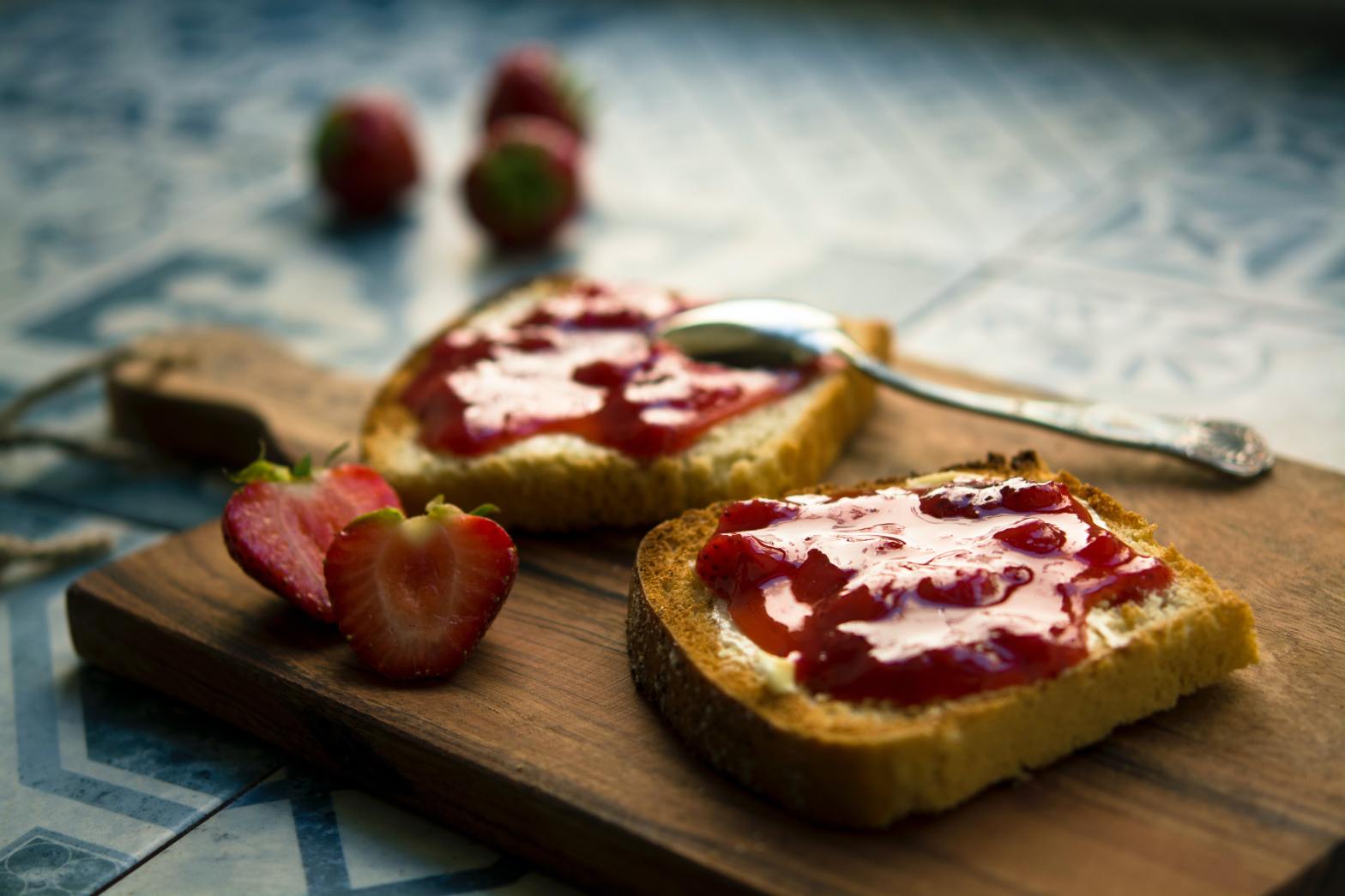
“I’m having a peanut butter and jelly sandwich,” I say.  I toast two pieces of the whole grain bread that I have brought her, spread one piece with peanut butter and the other one with strawberry jelly.

“Cut me a quarter,” she says.  I cut the sandwich into four pieces like she did for me when I got home from Kindergarten.  When I was five, it took me half an hour to eat those little four pieces, and my mother prompted me over and over again until they were gone.

Mom takes the little quarter sandwich that I hand her and nibbles on it in her chair.  Nibbles.  By the time I have eaten my part of the sandwich, a banana, and a bottle of water, she has finished her single quarter and is licking her fingers.

I flip over onto my other side.  The pillow that I have bunched up beside me on this side is a little firmer and feels better between my knees. 

My mother says, “I need to take my pills.”

“You just took them ten minutes ago,” I reply, wondering what happens when I am not watching her.  The pill bottles cluster like condiments in the middle of her round dining room table.

Dawn peeks through the blinds, and I think about my mother as the light grows brighter over the distant mountains.  I know she’s scared to go to sleep in her empty house.  She won’t use the stove because she can’t read the numbers on the dials anymore; instead, she buys packaged meals high in sodium and low in nutrients to warm up in the microwave.  Or, she doesn’t eat because she says it’s not fun to eat alone.

My brother Joe cuts her lawn every week on his day off.  Don blows the millions of leaves into piles and puts them into the two big garbage cans on Saturdays.  Margaret sorts her pills into daily am and pm doses on Sundays after she has graded papers for her second-grade class.  And somebody has to scrub the floors, clean the bathrooms, put the washed sheets back on her bed, make sure she has groceries in the house.  I live two hours away.

Twenty years ago, she asked me to take over if she couldn’t make decisions.  Now, she asks, “Who gave you the right to run my life?”

I swallow hard, looking around for the back door. “You did, Mom.  Look, you took good care of your children for years, and now it’s my turn to take care of you.”

“I don’t want to leave my house and be cooped up in a home.”

“I get that, Mom.  But, if you live at Sunrise, you can still go to church, go shopping, see your friends, do anything you want.  You won’t have to cook or worry about when to take your pills.  Also, three of your friends live there.  You can see them every day.”  How do I get my mother from living alone in her big house to feeling safe and happy at a place where someone can take care of her? 

Back in bed, I swing my legs off the side, grab my robe, and scour my memory.  What did my mother say to get me to eat that Kindergarten sandwich, one small quarter at a time?

Bluebells

            When my mother was rested and happy, her eyes were the color of bluebells.  During late March in England, bluebells carpeted the forest and unfarmed hillsides.  Each blossom was a bell, a delicate invested cup the color of a late summer sky, rolling over acres of mature cornfields.  A sky on a day after the rains have stopped, unadorned and simple in beauty.  Their petals are the color of periwinkle, like cold water lapping over a pool of shallow rocks beside a shore of snow.  The blue of smooth silk dresses and spring tablecloths.  In full bloom, these blue cups tilt toward the sky hiding the earth with a shimmer of sapphire sheen.

            When I was eleven, I stood at the edge of the bluebell meadows, feasting on their color.  Running back to the house, I grabbed the bucket used for scrubbing to carry the bluebells that I wanted to take home. 

            My mother’s home was lacking in softness; beauty took a back seat to the basic necessities involved in caring for her ten children.

            Then, in my mother’s life, the day included no time for picking and arranging flowers.  She woke up children, fried bacon and eggs, supervised the wearing of school uniforms, matching socks, coats, and hats.  In the mornings, she gathered piles of laundry, washed it, ironed shirts, smoothed tablecloths, swept floors, and made beds.  Dinner was such a tremendous feat to accomplish that its beginnings were initiated right after breakfast.  My mother’s daily crowning achievement was sending her children to school with clean hands and clothes and feeding them a hearty dinner each night. 

            The bluebells started at the edge of the trees.  As I entered the woods, my legs became tangled in the cluster of their stalks.  Crouching into the sea of blue, I found the base of each flower, gently bent its stalk, and twisted it loose.  Milky nectar oozed over my fingers and down my forearms like pancake syrup, sticky and viscous. I held the flowers close to my face to inspect the little bells as they shook in the breeze like bells around the necks of cows walking through a pasture.  Then, carefully to prevent crushing them, I placed each long stem into the bucket so the blossoms poked out of the top. 

            On the way to a full bucket, I examined the hairy moss on the barks of trees and the other gifts that the woods offered.  In-between picking the bluebells, I cradled fallen chestnuts from under the greening trees, cracking their hulls and rubbing the shiny boot-brown nut underneath with my sticky hands.  In the hollows between the trees, I found walls built with old dead tree branches, scattered rocks, and other debris from the forest floor.

            Eventually, the bucket was full, and I skipped home with it swinging from my arm like the milk maids that I read about in fairy tales who carried pails full of milk from the barn to the house every morning. 

            I took out my mother’s two empty vases and filled them with flowers for the dining room table and the bookcase in the living room.  After these were arranged, I stooped down to the cupboard where my mother kept empty jars, jars used for everything from leftover dinner vegetables to fish bowls for the brown fish we caught in the pond on the other side of the woods.   I picked fat jars with large openings.  When I tucked the bluebells inside them, they were transformed into wide-mouthed jars of crystal.  The stalks showed straight and strong through the sides of the jars, and the bursts of bell blossoms sprayed over the ridges, bursting with profusions of blue so intense that, as I admired them, I felt like my feet rose off the floor and my heart fluttered like the wings of a hummingbird. 

            Once the bucket was emptied, every room in the house was accented by a bouquet of bluebells . . . on a dresser here, table there, or a windowsill. 

            My mother passed me as I stood back to appreciate their beauty.  Her eyes creased into jewels, and, at that moment, her irises were the same hue as the petals of the bluebells, even though she wasn’t rested and had a whole list of things to do that day.

Chocolate Mama

Some women have a favorite perfume brand, like Chanel.  Other women have a favorite fashion designer, like Gucci.  My mother Rose Marie, though, has a favorite brand of chocolate, See’s Candies. 

I remember the days when my parents would buy a variety of chocolates—Cadbury, Lindt, Godiva, Ferrero Rocher, and See’s; they covered their wooden coffee table with boxes filled with little paper cups of assorted chocolates.  One by one, they sampled chocolates from each box, evaluating each one for the best texture, sweetness, richness, creaminess, and chocolate quality.  The winner, hands down and every time, was See’s Candies. 

My mother was born on September 1, in 1928 on a farm in Pine Creek, a little hamlet in Southern Wisconsin.  Her mother was Florence Jereczek, a tiny woman with big opinions.  Her father was August Jereczek, a not-too-tall man, lean and truly in love with his wife.  After Florence died, he used to reminisce about how her hair was fluffy, kinda like a Brillo Pad.  Then he’d smile and look up at the clouds.

My mom had three sisters with whom she clucked like hens whenever they got together and over the phone on a regular basis.  She had one brother who sported red hair and an Irish temper, but they were close anyway.

Mom graduated from high school with a practical attitude.  She didn’t think she was smart enough to be a nurse, and she loved to count and think about money, so she became a bookkeeper.  She met my father, Paul, at a dance in the nearest town across the state line, Winona, and they dated for seven years before getting married.  You see, he was a farmhand for his grandfather, and my mother didn’t want to marry a farmer.  Finally, my dad joined the Air Force in the spring, and they got married the coming September. 

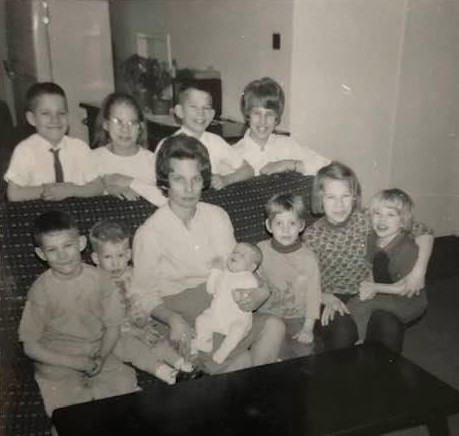
Paul’s dream was to have nine kids, like one of his uncles.  From Alabama to Minnesota to California to England, they pumped out babies one by one until they reached ten.

* * *

Now that my mother is 92 and I am a senior citizen myself, I am reflecting more than ever on how much I appreciate her.  I am grateful for so many things:

  • My mother visited me when I was two and in the hospital for an eye operation.  When she left, she kissed me on the cheek and told me she loved me.  I thought that was generous of her, considering that she still had more kids at home to love;
  • My mother felt sad when President Kennedy and Elvis Presley died;
  • My mom danced the polka like a top with my lanky father around a dance hall;
  • She introduced me to my dozens and dozens of aunts, uncles, and cousins who mostly look like a different version of me;
  • She bought a goat to milk when I was born because I was lactose intolerant;
  • She showed me how to make butter and ice cream by hand, and how to skim the cream off the top of pasteurized milk and eat it from the same spoon;
  • My mother taught me the names of numerous flowers and home-gown fruits and vegetables;
  • She allowed me to decorate every room in the house with Mason jars filled with wild flowers;
  • She worked on the school board of my high school;
  • My mom convinced me that I was a good clothes folder and ironer so I could stay in the laundry room folding mountains of clothes and getting some alone time. (I’m still good at folding and ironing. Hire me;
  • My mother at first resisted, but finally smiled when my dad sang “Smile a little smile for me, Rose Marie:”
  • She demonstrated to me what commitment and loyalty mean;
  • She gave me her fur coat so I can pretend that I’m as pretty as she is;
  • My mom loved my two children as much as she loved her children;
  • She treated motherhood like the greatest profession that ever was or will ever exist because raising children is building a community;
  • She illustrated how to develop both male and female friendships;
  • She showed me that forgiveness may be hard, but it can also lead to future love and happiness;
  • She loved money and slot machines even though my father hated gambling;
  • She loved each and every one of her children even though we are as different as color crayons stuck in the same box;
  • She can talk to my husband Bob about golf even though she’s never played it herself;
  • Her white hair is as pretty as cotton candy and her skin as lovely as fresh bread from the oven;
  • She didn’t try to understand the Bible too well because “that’s what priests are for.”

My mother didn’t think she was smart, but, in her view, average intelligence provided more options.  She didn’t think she was beautiful, but in my eyes, she was a lovelier Polish version of Sophia Loren.  She wasn’t a great cook, but she canned enough tomatoes and pickles to feed an army.  She filled enough jelly jars to supply every church bazaar and Catholic summer camp.  My mother wasn’t extravagant, but she played slot machines like they were on the endangered list. 

What my mother was is sweet—the See’s Candy kind of sweet—rich in flavor, a little funny with not too much sugar.  She didn’t require special treatment like refrigeration.  You could put my mother on a dark shelf and, in no time at all, her shelf would become your favorite place to find comfort and unconditional love.

Consideration and Other Covid-19 Behaviors

Way before the age of the internet, the Civil Rights Movement of 1965, the birth of Millennials and the X and Z generations, Emily Post (1872-1960) was promoting cultural humility through her advice about good etiquette. 

The practice of cultural humility promotes the putting aside of rigid personal perspectives and becoming open to the viewpoints of others.  When I engage in cultural humility, I become humble in the promotion of my own understandings and, in my newly-created humility, make room for comprehending the culture of others, especially those cultures that differ greatly from my own.  In this process, I contribute to making my community a positive place for all inhabitants to live and thrive. 

Post said that “consideration for the rights and feelings of others is not merely a rule for behavior in public but the very foundation upon which social life is built.” 

What she meant was that consideration for others or the lack of it establishes the foundation of social life.  In places where people show great thoughtfulness for others, social life is positive and fruitful.  When people lack consideration for one another, their social life is injured, broken, and painful. 

But what did Post mean by consideration?  It turns out that she interpreted the meaning of consideration the same as the meaning of cultural humility.  To Post, consideration benefits all of people involved in a decision, encourages a positive outcome, a better community. 

In promoting good etiquette, Post described other qualities that should exist along with consideration.

Respect is shown through actions and words.  When I talk about another individual, I honor and value them regardless of their race, creed, gender, or any other possible classification.  I treat them as equal to me and 100 percent worthy of esteem.  This even includes the treatment of people that I may easily consider morally less than me, such as a prisoner in jail for robbing a bank or selling cocaine. 

In his book Just Mercy, for example, Brian Stevenson explains that, because of the inherent biases in our legal system, we should honor and act merciful toward all imprisoned people.  Some of them have been punished with harsh sentences for insignificant crimes, some are mentally impaired and lacked adequate defense during their trials, and some are even innocent. 

With great difficulty and effort, Stevenson, through his organization, Equal Justice Initiative, secured release and freedom for Walter McMillian, a young man sentenced to the Death Penalty for a murder he did not commit. 

Stevenson makes an even more profound point in his book.  He claims convincingly that “each of us is more than the worst thing we’ve ever done.”

How many of us have skeletons in our closets, secrets from our teenage years, or idiotic histories from our youth?  Maybe we stole a bottle of scotch from a liquor store when we were in high school just to see if we could do it.  Maybe we drove while intoxicated after a college party, but we never got stopped by the police.  Maybe we smoked marijuana before it was legal and even inhaled, or maybe we did something that is best left in our past because it would mar our current balanced, respected reputation.  When we think back over our own mistakes, we easily can agree with Stevenson that “each of us is more than the worst thing we’ve ever done.”

Another aspect of respect is self-respect.  When someone possesses self-respect, they are equipped to honor others.  Self-respect avoids pushiness or boastfulness from conversation and encourages self-confidence.  When someone is self-confident, they don’t worry about their physical appearance or abilities, but act with integrity and good character, qualities of lasting substance.

Post’s etiquette and the concept of cultural humility also involve “honesty.”  Honesty is knowing our characters and maturity are flawed, yet still trying to speak the truth in a positive way.  Honesty is using our understanding of truth, but recognizing that as we grow and learn, our truth will become a greater expression of love than we are able to express today.

Graciousness was also favored by Post, which she defined as the ability to make everyone feel welcome.  This, too, is the essential purpose of cultural humility.  We open our arms to everyone no matter if they are rich or poor, heterosexual or homosexual, Jewish or Muslim, African or African American, Chinese or Korean, or male or female.  In graciousness, we hug each and every human being and make them feel secure and comfortable in our society.

“I am so happy that you got such a big raise, my friend.”

“Your husband is always welcome at our dinners, Mark.”

“Would your rabbi let me join your Jewish history class.  I’m so fascinated.”

“Tell me about how your family observes Ramadan, Raul.  I want to learn about your religion.”

“When did you decide you wanted to become a doctor, Krystal? I think you’ll be a great one.”

All of these welcoming statements express graciousness.

Finally, Post promoted the practice of kindness as part of good etiquette; likewise, cultural humility cannot exist without the expression of kindness between two people of different backgrounds.  Kindness is warmth from the heart, a transfer of love from one person to another.  When I am practicing kindness, I’m unable to judge, discriminate, belittle, or condemn another human being.  I’m treating people as my equals. 

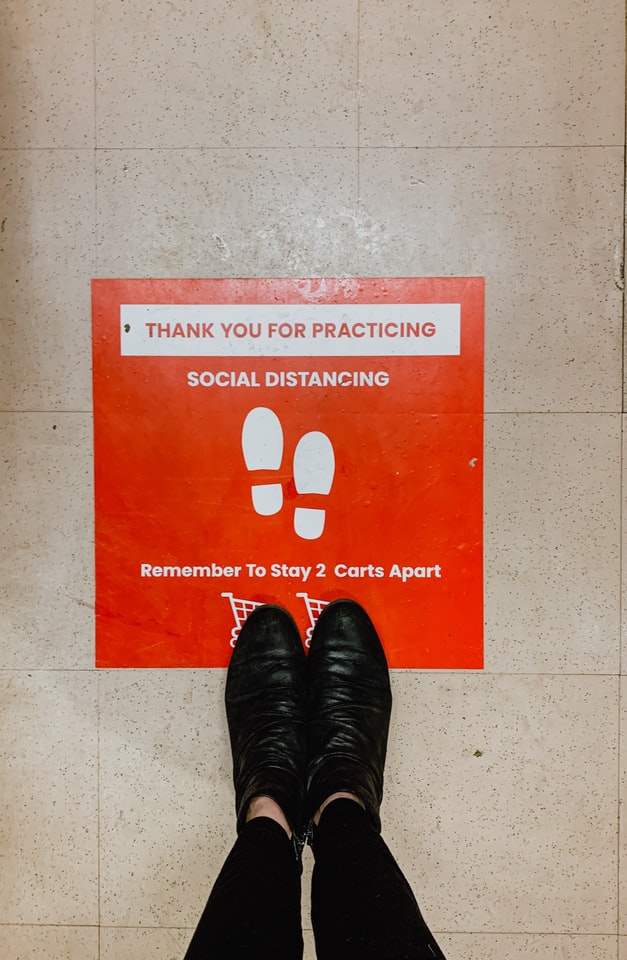
In this day of social distancing, etiquette and cultural humility, both, can help us navigate our new society, hopefully an environment which is temporary, but now reality.  We have been ordered to stay six feet apart, wear masks in public places, and cover our hands with gloves to protect us from the Corona Virus.

What should we do when we meet people who are not following these protocols and potentially endangering themselves and other people?

If we look to Emily Post’s advice and the practice of cultural humility, we must remember to respect, be honest, act graciously, and confer kindness in our interactions. 

Instead of yelling at someone to back up six feet so we don’t get their germs—“Back up, you bozo!”—instead, we could explain that we are concerned about their safety, so it would be better for them if they left more distance between us.

When witnessing potentially harmful activity such as a gathering in a park, etiquette and cultural humility encourage us to avoid jumping to criticism.  An alternative would be to say, “Isn’t it great to get outside!  Don’t forget to stay six feet apart while you’re having fun.”

If we run into a customer at Safeway who is not wearing a mask, we don’t have to shame her for her insensitive behavior, which only makes us insensitive.  We can nod to her in a friendly way and explain that we feel more comfortable following the mask rule so as to avoid getting infected.  Then, send her on her way with “Stay healthy, my friend.”

If we see our neighbor’s gardener drive up, good etiquette and cultural humility guides us to refrain from judging in case we misjudge instead.  Perhaps the worker is cleaning up the weeds in the back of our neighbor’s house, which qualifies as an essential service.  If the gardener is not doing essential business, but just mowing the lawn and trimming the hedges, we might think about the type of relationship we would like to foster with our neighbor in the long term.  Avoiding confrontation or criticism now can help us to maintain our good connections that promote a friendly and safer neighborhood for everyone involved. 

After this pandemic has passed and our lives get back to a more normal state, if we’ve practiced good etiquette and cultural humility, we’ll have developed good habits for the rest of our lives. 

In addition to fostering better relationships and communities, we’ll have grown into more caring, considerate, and loving human beings.  Our new etiquette-minded, culturally-humble perspective will make us more joyful and help us foster happier relationships. 

Corona Virus Integrity

Photo by Eduardo CG

Pope Francis claims that the Corona Virus Pandemic is presenting humans with an opportunity.

A few weeks ago, right after the San Francisco Bay Area was ordered to shelter-in-place, I signed up to receive his daily email messages as a way to continue my journey toward cultural humility. 

I’ve always respected this pope and believed that his spirituality reflected a mature connection with God.  He never judges.  He never criticizes.  He accepts responsibility for his mistakes and, since he is the Pope, he recognizes the mistakes of the Catholic Church and works to heal the pain caused by the Church in the past. 

He also understands the power of joy in life and the profound goodness it can achieve in helping someone develop a stronger spiritual life.  I watched the movie The Two Popes; at one point, Francis tries to teach Pope Benedict how to tango.  Pope Benedict never learns to dance well, but, while dancing, his face lights up with pleasure, a delight that he didn’t often feel before Francis arrived. 

I’m impressed.  I really am.  Pope Francis brings joy into the lives of many people; he behaves as a human being of integrity. 

Today, the day of Easter, his message is thoughtful and profound.  He advises his readers to become inventive, creative.  This makes sense.  Creativity is the origin of life, the basis of growth, and the source of expanded understanding. 

The Pope suggests that Christians use their creativity “in opening up new horizons, opening windows, opening transcendence toward God and people.”  In simple words, for humans to love one another. 

Before the sheltering-in-place order, many people attended Mass, and then, after leaving the church, they thought nothing of discriminating against other people.  Some disparaged the LBGTQ+ community by criticizing pictures of gay marriages on television.  Others labeled Muslim women as terrorists simply because they wore Hijab scarves while shopping at Safeway.  Others accused people of sinning just because they didn’t follow the same “rules.”  Some angrily rebuked people who had different political values.  This is hypocrisy, not love.

Pope Francis asserts that today’s crisis puts “a spotlight on hypocrisy … It’s a time for integrity.” 

To live a life of integrity is to love all human beings, and no one can fully love someone else unless they try to treat that person as they, themselves, would like to be treated. 

This is cultural humility.  A person cannot assume that they fully understand anyone.  They, instead, must open to learning more and more each day about people and their lives. 

Here’s an example.  A heterosexual cannot fully love a member of the LBGTQ+ community unless he or she treats that person with respect and kindness.  This does not include judging the behavior of that person; instead, the heterosexual can attempt to better understand the other person’s life without any prejudice at all. 

People who claim that they don’t condemn the person, just their behavior, are not loving.  They are living lives of hypocrisy since integrity does not include any type of judgment.

Pope Francis explains that the Corona Virus Pandemic does not discriminate against the rich or the poor; all humans are vulnerable to its deadly seed, and humanity can learn how to develop better spiritual lives if they strive to practice integrity—wholesomeness, oneness in action, unity. 

Pope Francis also shares an idea that he gleaned from reading the Aeneid; don’t “give up, but save yourself for better times.”  He asserts that humans should use this shelter-in-place time to become better, more trustworthy companions to their fellow sisters and brothers.  He says that we should be “coherent with our beliefs”—make sure that our actions imitate what we claim to believe. 

Amen to that!

If people are honest with themselves, they know when they are loving vs. prejudiced. 

I realize that I am in the midst of my own journey toward cultural humility, and I’m sure I’ll be on this path for the rest of my life.  Yet, I’ve learned how to achieve more cultural humility, another word for integrity, by practicing the following.

When I meet believers of Islam, I engage in a conversation with them.  I learn about their histories, their daily lives, how living in America might clash with some of their rituals, what their goals are, or how they have experienced prejudice from other Americans.  If they offer to share their foods with me, I accept them with eagerness and gratitude.

When members of the LBGQT+ community share their gender status with me, I welcome them into my life with open arms.  I accept their lifestyle as a natural condition, and never question why they have chosen that persuasion.  I also read about their lives and listen to their stories to reduce my ignorance.  Finally, I show them respect by including them in my life; for example, I listen to the San Francisco Gay Men’s Chorus to hear incredible singing. 

I befriend people of all races and treat them as valuable contributors to my life.  During this crisis, I have financially assisted some people so that they can maintain their small businesses.  I know that my concern for them strengthens our bond and friendship.  If I didn’t have the money for helping them, I would have helped establish a Go Fund Me page or found another way to provide some help.

I actively seek the beauty in members of races different from me.  For example, I love the braided hairstyles of African Americans that demonstrate their creativity and African culture.  Whenever I can, I compliment a man or woman on his or her hairstyle. 

Another attractive trait I’ve discovered are the traditional costumes of Indian citizens with yards and yards of glittering fabrics swirled around the female body.  When I meet a woman of Indian heritage on the street, I tell her she is lovely.

The Corona Virus has brought danger, but also opportunity—the chance to become a human of integrity.  I am not beautiful if I don’t see the inherent, non-judged loveliness in my sisters and brothers.  Only if I accept them completely will I ever achieve integrity—the pinnacle of spiritual life. 

Bridges of the Heart

I met an interesting guy in my doctor’s office this morning.

“I build bridges,”  said a sixty-year-old man, dressed in work pants and steel-toed shoes.

I thought he was being metaphorical.

“Really?  That’s so interesting.  Which bridge are you working right now?”

“I’m building a pedestrian bridge in Emeryville, right by Bay Street.  The bridge crosses the railroad track.”

“I love pedestrian bridges.  Usually, they’re artistic.”

“You want to see a bridge that’s artistic?  Pretty soon I’ll be building a bridge at the Facebook headquarters in Menlo Park, right on the San Francisco Bay.  You can look up the rendering of this bridge on Google—just type in “the least functional bridge in the world.”      

When I was alone again, I googled this prospective addition to Facebook’s campus.  The new structure will be a flat zig-zagged bridge that will follow the Bay for a while, then make a ninety-degree, right-angle into the Facebook property where it will meander into a few more forty-five degree turns on its way through the buildings.  Bikers will abhor the turns, which will make them contort their wheels into unfamiliar angles in order to avoid careening off the bridge.  Walkers will likely find entertainment in the cantilevering, yellow rails that line the sloping up and down pathway. 

This bridge was designed by Frank Gehry, one of the most famous architects in the world, and, despite its uniqueness, it will connect Facebook to the Bay, and invite the public to share Facebooks glorious Bay view. 

It won’t be dysfunctional. Bridges connect human beings to one another. 

The best part of a human community is where bridges exist—some are physical structures, but most bridges are invisible spans that connect human beings through their hearts.

The most successful humans understand the influence of bridges.  An oncologist’s medical knowledge has no worth if she cannot cultivate in her patient the will to live.  A judge’s sentence is not fair if she does not consider the accused’s state of mind when he committed the crime.  A government official’s actions are untrustworthy when he fails to consider the well-being and desires of his constituents. A teacher’s expertise in chemistry has no value if he fails to ignite in his students the motivation to learn. 

No amount of brainpower substitutes for a lack of social connection, empathy, and compassion.  The heart is the motivator for living.  The brain is but a vessel of information that the heart may use to either grow or die. 

Because I want to develop positive and nurturing connections to the people in my life, I pay attention to their stories, the ones they tell with their words and their actions.  I am a teacher; therefore, I must inspire students to use their hearts in addition to their brains, but I can’t teach them this skill until I understand where their hearts are. 

I have learned to be humble, but not better than anyone else.  I’m not better than anyone else, and I’m O.K. with that.  I focus on others in order to grow a beneficial relationship with them.  In order to grow into a better human being myself.

Books instruct us to understand other human beings.  Stories demonstrate how people act when they’re hurt, betrayed, abused, and supported.  Stories illustrate that human beings act according to the well-being or the insecurity of their hearts—their peace, nervousness, confidence, shame, or fear. 

One of the most riveting and profound books that I’ve read lately is Just Mercy: A Story of Justice and Redemption by Brian Stevenson. 

Stevenson graduated from Harvard Law School and started a non-profit organization in Alabama—the Equal Justice Initiative—to help people who’ve been wrongly convicted, end unfair sentences in criminal cases, and stop racial bias in the criminal justice system.  A intimidating objective, to be sure, but isn’t everything worth fighting for daunting?

What Stevenson reveals in his book is that African Americans have received the harshest sentences for the least crimes.  More than any other part of American society, Blacks are more often wrongly accused of crimes they did not commit, and, oftentimes, for these erroneous crimes, they receive death sentences. 

I learned a lot by reading about Stevenson’s clients, such as Walter who was wrongly accused of killing a white girl inside of a cleaner’s store.  I also learned the horrendous facts about the death penalty process—repentant faces, faulty electrical connections, jerking legs and arms, and burning human cells.

But what I learned more than anything else was how to be a better human being.  Stevenson writes, “There is no wholeness outside of our reciprocal humanity.”  What this means to me is that if I do not always treat other human beings as I would like to be treated, then I am not worthy of anyone’s respect.  

Sounds simple, right?  It is when I’m with people that are like me.  But, when I interact with someone who is not like me and whom I don’t understand, it’s not.  I am White, female, financially stable, employed, and supported by friends and family, but most of humanity is not like me.  This means that I must take the first step in being reciprocal to other races, genders of all kinds, the financially unstable, the unemployed, and those who lack supportive communities. 

I can’t claim that I am wholly human if I don’t exert the effort to understand another person’s position, especially when their lifestyle or life situation is unfamiliar to me.  Stevenson makes this message clear; some of his clients are guilty of crimes, but he still defends them in trying to secure fair sentences and views them with mercy while helping them back into society. 

My life provides me with a great opportunity to learn how to be a more expansive human being.  I don’t work in an office where everyone is female and White.  I don’t live in a community where everyone is white-collared.  I don’t limit my religious experiences to groups that sequester power to the few and judgment to the rest. 

Instead, I teach at a diversified community college and my charge is to educate students from all backgrounds and economic conditions.   For example, this semester, about 5 percent of my students are White and the majority are a mixture of Hispanic, Black, Middle Eastern, Eastern European, and South American.  About 75 percent of my students are heterosexual and the other 25 percent identify as LBGTQ+.   My classes include Catholics, Methodists, Jews, Islamic, and agnostic persons.  

I am blessed.  Being forced to work in an environment where I am challenged to understand differences every day forces me to be open-hearted.  Stevenson’s grandmother told him this: “’You can’t understand most of the important things from a distance, Bryan. You have to get close.’”

My job allows me to get close.  I learn by intimately interacting with people who are as different from me as a redwood is from an oak.  Here are a few of my close encounters.

Sota comes from Japan.  He plans to obtain a business degree in the United States and then go back to Japan to become a successful businessman.  Several times during this semester, Sota has visited me in my office to get advice on his essays.  He asks detailed questions and works hard to improve even though he struggles with the mechanics of English. 

Recently, Sota has been coming to my office to get advice about his application essays to U. C. Berkeley.  For at least four half hour sessions, I have read his essays, advised him on his content, critiqued his sentences, and praised his hard work.  He has learned a lot from me.

This is what I have learned from Sota.  I’ve learned that when someone is willing to work hard, my best compliment to him is supporting him with sound advice and generous time.  I have learned patience, awe, and humility when reading that Sota has endured failure, but has responded with self-examination, and come back to the table with wisdom and optimism.

Alona was born in Martinez, and her beloved father died suddenly last June.  Despite her grief, Alona has stood in front of the class and shared her opinions about adversity with her classmates.  She has shared how she and her sisters spend time together talking about their father’s life and how they miss him.  They cry and heal.  Sometimes, her voice has faltered, but I’ve seen her square her shoulders with the confidence that she is living for a higher purpose.  What I’ve learned from Alona is that using grief as the cornerstone of wisdom is beautiful; the lessons of grief are permanent and strong. 

Ariel comes from Oakland, and, when she entered the classroom, she wore an attitude of entitlement.  Instead of working hard to do her best work, Ariel complained to my Dean when I gave her a failing grade for poor work; she wanted credit for just showing up. 

When I found out about her complaint, I spent more time beside her, coaching her in her thinking and writing skills, turning her away from herself and, instead, toward the perspective of her audience.  Word by word, sentence by sentence, day by day, week by week, Ariel’s eyes slowly, slowly opened wider and her self-orientation transformed into confidence and openness.  What I learned from Ariel is that sometimes it takes a long time to learn how to grow into a more flexible human being, but the journey is still beneficial. First, we must understand what we don’t know. 

Katerine was in a car accident when she was young and sustained a brain injury.  She’s the sweetest, most kind-hearted soul, but her reading, speaking, and writing skills were so poor that she was unlikely to even achieve a two-year college degree.  When Katerine missed classes, I told her that I missed seeing her, and I gave her second chances to complete her missed assignments.  When she demonstrated the need for specific writing lessons, I developed lessons that would benefit her and the whole class, and I told her that she was my inspiration for striving to be a better English teacher.  We bonded.  She worked harder.  We spent time in my office talking about the issues she loved such as global warming.  I convinced her to register to vote.  She finally started earning C’s instead of F’s on her essays. 

What I learned from Katerine is that the most beautiful qualities of a human being center in the heart, not in the polished manuscript of an essay or the mathematical genius of a brain.  But, when the loving qualities of a heart are shared through speaking and writing, they spread like wildfire. 

My students help me build bridges every day.  The bridges that we build are sometimes traditional, sometimes avant-garde, sometimes eccentric, but they all are connections. 

This is what I know now.  Whenever I cross one of these bridges into the heart of another human being, I am designing more bridges of my own, and I am better with more bridges.

Shelter-in-Place Love Letters

Being in love requires true humility.  Loving someone means that you show your vulnerability and reveal your imperfections.  For someone like me that strives with great effort for perfection, admitting that I make mistakes only follows a very large and irritated sigh. 

Loving well also takes commitment, even when the other person has a perennial runny nose or forgets to put the toilet seat down.  Ugh.  Maybe commitment is even more important than romance because, when your beloved gently comments that you’ve overcooked the halibut, the romance flies out the open window.   He can’t even boil an egg.

I must be pretty humble because I truly am in love.  I’m in love with the man with whom I’m sheltering-in-place. 

Love Letter Box

I met Bob about seven years ago and fell in love with his picture on the dating website.  There he was, dressed in short-sleeve shirt and dress trousers, a security clearance badge draped around his neck. 

Oh, I’d met handsome guys—one, a tall sailor with a ruddy smile and thick, brown hair that rippled in the wind as we zig-zagged over the San Francisco Bay in his 32-foot sailboat.  A less-tall jeweler who dressed impeccably and wore a gold chain around his neck.  A dashing pilot who sensually danced the rumba.  None of these, however, wore a security clearance badge. 

What did that badge say to me?  Intelligent.  Trustworthy.  You don’t get issued a badge like that if you’re a dunce or irresponsible.  By standing in front of his assistant’s camera that day with his badge around his neck, this man passed Level 1 without me even meeting him.  Not just smart—intelligent.  Not just dependable—trustworthy.

He didn’t have much written on his profile, so I asked him to write about himself.  He said, “No, let’s just meet and see if we like each other.” 

Damn!  I liked conducting preliminary research before investing actual time.  Still, that badge shone like a golden ticket in his photo—beckoning me like a male siren. 

Bob called me one weekday from work, and I was teaching class, so I couldn’t answer my phone.  Later, I called him back.  “He’s at his 3:00 meeting,” his assistant said cheerily.  “May I tell him who is calling?”

“Tell him that Tess is returning his call,” I said, thinking that going to a meeting every day at 3:00 was ridiculous.  What if no one had anything to discuss?  What if the world was just perfect that day?  Absurd.

“Oooooh, Tess,” the assistant crooned, with emphasis and elation, her voice lilting up and down like an alto singing in a musical. 

Geez, they must gossip in his office.  She knows my name already, and I haven’t even met him.

A few days later, I drove up to Black Angus Steakhouse at 5:20 p.m.  I was early, so I sat in my car for nine minutes, smoothing out my polka-dot sleeveless blouse and navy tiered, knee-length skirt that swished as I walked.  My makeup was perfect.  My hair was brushed and shining.  I was ready for this.

When I walked in the door, Bob was sitting in the restaurant’s lobby, and he looked up expectantly.  Mm, I met his expectations apparently.

We sat in the small bar at the first high table.  I ordered Chardonnay, and Bob ordered a dry martini with a twist of lemon, up!  A hard liquor type, I thought.  Old-fashioned. 

I had memorized my first-date checklist, so I expertly chatted about some fluffy topics while weaving in my questions.  He seemed shy, but got more social after he had downed half of his martini. 

“Where do you live?”

“Pleasanton, a great town.”

“Where do you work?”

“Lawrence Livermore Lab.”  I had guessed that.  You see, I had dated another guy that had worked at the lab, years ago.  I also once had worked at Lockheed Martin and had proudly worn my own security clearance badge.  I knew Lawrence Livermore Lab was the only government facility in the lower East Bay. 

“Enchanted,” I said.


I finished my glass of wine over the next forty-five minutes, and was focusing on how to end the night, but also to ensure a call for future action.

“Would you like to have dinner?” Bob asked.

We both ordered the salmon that night and took that as a sign of compatibility, and we spent the next seven years cleaning out the baggage in his life and hiding mine pretty well.  At first, he didn’t know what baggage was, but once we agreed that our lives were knitted together permanently, he called up the “Got Junk” people and they took it all away.  All of it.  Wow. By that time, I had cleaned out my hidden baggage too, or at least sent its energy into outer space. 

Last April 6th, Bob and I married each other at Peace Lutheran Church, a small but beautiful dwelling set upon a wooded property.  Our family and friends came to celebrate our late-in-life blooming love. 

They recited prayers and rang the chimes as we exchanged our vows, and now we live together in my 1950 square-foot, two-story house in a charming neighborhood.  We take walks, go out to dinner, stroll nearby beaches, read books, learn Spanish, and watch movies—all together.

Life was going along swimmingly until recently.  After we got married, we took an Eastern European cruise on the Danube from Budapest to Prague, through Hungary, Slovakia, Austria, Germany, and Czechoslovakia.  This was Bob’s first trip to Europe (amazing) and my first trip to Eastern Europe.  I especially loved seeing Czechoslovakia since I am part Bohemian and proud of this wild heritage. 

In January, we just finished planning this summer’s trek to Italy and Slovenia.  Oops.  Poor timing for going to see Pope Francis who is holed up by his lonesome in St. Peter’s Square.  Even Slovenia has been hit by the Corona Virus, but Italy has been devastated. 

Now, our first anniversary is coming up on April 6th, and, according to the news reports, we still will be sheltering-in-place.  No going out to our favorite Bridges Restaurant.  No visiting our favorite beach town, Pacific Grove.  No wine tasting in Napa, Sonoma, Livermore, or Paso Robles.  Nada, but sheltering-in-place.

I suggested that we celebrate by having a ceremony at home.  Bob couldn’t imagine what kind of ceremony we could have without an official coming by. 

“We don’t need an official,” I said.  “Nobody helped us fall in love, so we don’t need anybody to help us celebrate our first anniversary.” 

He agreed pensively. Maybe he needed an official more than I thought–maybe he was thinking about that life coach that he had hired to teach him how to date. I hope he didn’t pay her too much.

“What to do?” I queried.  “I know, you could teach me how to dance,” I chirped.

“You could teach me,” he said.  “I’m no dancer.”

I laughed, but then got serious inside.  Why would I want Bob to change the way he dances?  When he puts his long, strong arms around me and shuffles around with a miniscule rhythm in his hips, I’m in heaven.  Any dance step that I would show him would require us to pull out of that pose of perfect bliss where I feel loved, cherished, and wanted. 

No dance lessons.  He’s a perfect dancer already.

Ever since before we were married, I’ve been asking Bob to write me a love letter.  I have a little ceramic box in my living room with an angel perched on its lid.  Inside the box is enough space to store a love letter, and it’s empty now. 

“I’m no writer,” Bob’s always declares.

I think it’s true that the more you advertise a product, the more likely you are to sell it.  Don’t just advertise your decorated rocks on Facebook one time–show them a hundred times, and someone will buy one. I must have done a good job of selling my idea about this love letter because this is what Bob said next.  “I’m not exactly a strong writer.”

“But, you’re the perfect love-letter writer for me,” I responded. I can be charming sometimes.

“Ok, I’ll try,” he said from his arm chair, his hands holding his coffee cup like it was a vanilla ice cream sandwich made with chocolate chip cookie wafers.  One side of his mouth turned up like a bad-boy grin underneath his neatly-trimmed gray and dark mustache.  Dervishly handsome he is.

So, we’ve agreed.  For our first anniversary, we are going to write each other love letters.  I’m a writer, but I know when I start writing mine, I’m going to feel vulnerable and shy. 

What I can do to build my confidence? 

I have the advantage that the object of my love, now retired, once was trusted enough to be issued a top security clearance badge.  If Lawrence Livermore Lab could trust Bob with its secrets, then I can trust him with my heart. 

I’ll take out that picture of Bob from the dating website and focus on the badge.