
Turning Ordinary Events into Writing

I used to think that my life was too ordinary for fostering ideas for writing. But finally, I realized that the best story-telling is about human nature itself. That’s when I started looking for writing ideas everywhere and every day.

In this blog post, I share five ordinary life events that I turned into stories or posts.

The Pancake Contest

When I was five years old, I competed against my brother Don in a pancake contest. The contest happened at home at breakfast time. My mother made as many pancakes as we could eat. My brother lost the contest and I won by one pancake.

Fifty years later, I turned this ordinary childhood event into a funny story with descriptions of my brother groaning in pain and of me raising my arms in victory.

A Picture of a Road Bike

One day at 5 p.m., my son sent me a picture of the handlebars of his new trail bike. By 6 p.m., it was dark outside, and I started to wonder if he was biking out in the hills in darkness. Luckily, he wasn’t.

I wondered what it would be like if a bicyclist did get caught in the middle of the hills in the dark. I wrote a story about a girl who starts her bike ride at dusk and gets distracted when she finds a tarantula. She ends up in a valley at nightfall and has to find her way back to the deserted parking lot while the night wildlife threatens her safety.

Taking a Stuffed Bear to a Cemetery

A week after my mother died, my brother texted me and my siblings to tell me that he took a stuffed bear with him to visit her grave. The bear was created from clothes that my mother once wore.

I invented a story about this visit, which I titled Rain. The story describes a man driving a truck to the cemetery to see his mother as it rains. When he arrives, the rain stops. He thinks about how his siblings have connected via text messages since his mother died. He puts the bear next to her tombstone and says a prayer. As he drives away, the rain starts again.

A Hike in San Francisco

A few years ago, I joined a Meetup group that hosted walks all over San Francisco. One walk started at the Embarcadero and crossed the city from east to west for seven miles until we reached Land’s End. Another hike circled the exclusive neighborhoods of Twin Peaks and climbed up to the Sutro Tower, one of the highest points in the city.

When I was writing my novel Whistle, I used these hiking experiences in one chapter to help my protagonist escape the sorrow of her home after her mother dies. She walks along the ocean to Golden Gate Park.

Filbert Street Steps and Graffiti

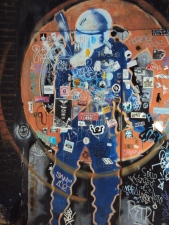
When my friend came to town, I met her in San Francisco to climb the Filbert Street Steps. This staircase covers three ascending blocks from Sansome Street to Coit Tower and includes well over two hundred steps. On my way to the city in Oakland, I saw some graffiti on an overpass that said “Resist Authority.”

I turned the staircase and graffiti experiences into a short commentary about how I like to read graffiti so I can hear what the needs of people are. This post received a lot of attention on my blog. It seems like many people identified with it.

Now, I have a fertile writing attitude. My whole life is a garden of ideas, waiting for my creativity to take them from a personal experience into the world.


How to Meet Stimulating People in Retirement

Photo by Dario Valenzuela on Unsplash

Retirement can be lonely.

People who are used to working with a diverse group of people may miss that dynamic social network. For example, I worked as a professor at a community college. Every day was filled with fascinating interactions with numerous college students full of young energy and ambition. After I retired, I missed my students’ vigor and spontaneity. I also missed the intellectual conversations I had with other professors whose goals were aligned with mine.

Individuals used to engaging with technological advances may miss those challenges. A software programmer I know felt bored when he retired from his technical job. He also developed anxiety that he would become out of date.

Medical workers such as doctors and nurses who strive to care for others often miss the opportunities to help their patients. When they retire, they may find it difficult to focus solely on their own needs instead of the needs of others.

Retirees often face loneliness due to the changes in their families. When they retire, they no longer have their parents or children available in their lives on a frequent basis. Their parents may have passed away, and their children may have become adults with busy careers and families of their own.

This blog post addresses how retirees can avoid loneliness and achieve a socially-satisfying retired life with stimulating friendships and meaningful activities.

Take a Class

One way to meet people with the same goals is to take a class on a subject that interests you.

I’ve always wanted to become fluent in another language, so when I retired, I found some adult education classes that taught Spanish. I started this activity during the pandemic, so the classes were held online. When the pandemic ended, the students, who are mostly retired, voted to keep the classes online.

I began taking Spanish 2 and now I’m taking Spanish 4 with many of the same students I’ve known for two-and-a-half years. During class, we were in groups a lot, so I’ve even more familiar with four of five people with whom I’ve worked. Besides helping each other learn Spanish, we share our hobbies, family news, backgrounds, and travel adventures as we converse. Sometimes, we have even helped each other with technical problems relating to the class. Furthermore, a few of us meet outside of class to strengthen our Spanish conversation skills while we enjoy a cup of coffee or have lunch together.

My community offers a variety of classes for seniors including courses about Medicare, computer skills, line dancing, and yoga. My town also organizes social outings for seniors such as trips to theaters, local public gardens, or historical monuments.

One of the most interesting classes I’ve taken is a class on movie directing. In the class, attendees watch movies by specific directors and then discuss the techniques used in the movies. I found this class not only relaxing, but intellectually stimulating.

Join a Philanthropy Organization

Individuals who love to contribute to their community can find many opportunities to do so by joining a philanthropy.

One of my retirement goals was to help financially disadvantaged students. I joined an organization which raises money for college and vocational scholarships. In fact, I’m now the chairperson of the scholarship committee which gives me many opportunities to interact with high school seniors and college students. I also manage the production of a scholarship luncheon at which we award our scholarships.

A woman with a degree in gerontology and psychology volunteers on a county committee that develops transportation options for senior citizens. She interacts with a variety of county agencies and uses her expertise to develop worthwhile programs.

A woman who retired as a buyer for Safeway now works at the county food bank, sorting food and organizing bags for distribution. She enjoys talking with the management about sources of food and how best to store them.

Hang Out in a Bookstore

One of the most stimulating places to hang is a local bookstore. The bookstore in my town always has its door open even when it rains. Its display tables and shelves are chock full of the latest books or books recommended by its staff.

When I looked up this bookstore’s website, I found out that it has a mailing list so that customers can stay abreast of the store’s activities. They invite authors into their store for readings, arrange readings at various schools, and …

The store also sponsors eight book clubs. One is for mystery readers. Another is for wine drinkers. On Wednesdays, a book group meets at 10:00 a.m. and goes for a 45-minute walk while discussing their book. Another meets at a local assisted-living home. Obviously, this book store aims to please all of its potential readers.

Find a Social Group

The goal of some retirees may be to socialize as much as they can after working hard in a career.

In my area, there are men’s groups known as Sons in Retirements (SIRS). This group is organized into various chapters. Each chapter caters to the interests of the men in that chapter. For example, the chapter to which my husband belongs offers a wine club, golf, book clubs, hiking, and bocce ball on a weekly basis. The group also sponsors monthly lunches with speakers, a spring lunch for spouses, and a Christmas Dinner Dance for couples. My husband had never played Bocce Ball before joining this group, and now he never misses a game.

My local town offers Mah Jong and Bridge socials. If you belong to a country club, they may also offer games such as poker or other card games.

In the San Francisco Bay Area, retirees have lots of options for hiking and walking. My philanthropy organization sponsors a hike once a month. I found a MeetUp group for seniors that hikes on various open-space trails. I even found a MeetUp walking group that focuses on interesting walks in Berkeley, Oakland, and San Francisco.

The best thing to do is to pursue activities that you enjoy. While you’re doing those things, you’ll meet like-minded people. Don’t be shy. Reach out and develop stimulating friendships.

My Selfish and Rewarding Writing Strategies

I’ve had writer’s block, and I always get over it. The way I do this is by acting like an extremely selfish writer. I follow the following writing strategies; all of them continually boost my writing self-esteem and fuel my passion to become the best writer than only I can be.

I Read What I Want to Write

I know, I know. You’ve heard this before, but let me explain how I read because my selfishness makes a difference.

Right now, I’m writing a novel about a young woman who has graduated from college and who decides to travel to find her life’s purpose. I want the story to move as she develops courage and clarity, so I search for stories of other young people who are on a similar quest. I also examine stories that are driven more by character than by plot to learn the techniques of character building. When I’m reading, I pause and think about the way authors incorporate the settings into their story and how the settings affect their character.

For example, in The Alchemist by Paulo Coelho, Santiago is a shepherd who has never traveled. His lust for seeing new places inspires him to leave his family home. He’s young and he makes mistakes, so when he’s in Tariq, a thief steals all of his money, and he has to work in order to continue on his dream.

I keep a little stack of books next to my writing desk; their paper-clipped pages have sticky notes inserted in them to mark passages that I want to emulate.

I Have Fun

The best writers obviously don’t sit at their desks all day because, if they did, they wouldn’t have enough life experience to fuel their writing. I’ve come to realize that my life is a canvas for my writing.

In my daily life, I engage in a variety of activities, including those that I’m not comfortable with at first: yoga, attending live basketball games, eating with new people at new places, taking Spanish classes, or hiking all day next to the Pacific Ocean where I can explore tidepools, meet people from all over the world, and hear sea lions bark.

Not only do my adventures keep me healthy, but they help me maintain a positive outlook, and all writer’s need that to overcome writer’s block, the struggle for clarity, and the never-ending learning curve.

I Maintain Friendships with Other Writers

To be a good dolphin, you need to swim with other dolphins. The same with writing. Being friends with writers is like taking a class in writing except it’s more fun. When I walk with my writing friends, they tell me about how they struggle with their editors. They also reveal where some of their writing ideas are generated, and they always come from the writer just living his or her life.

One of my longest writing friends is a children’s book writer, but she’s now writing a book for adults about relationships. For the last year, she’s shared how she has to collaborate with the other inexperienced writer of the book, careful not to bruise her ego but continually striving to maintain a style that will keep their readers engaged.

Some writers join groups where they take turns reading their stories. Other writer’s create roundtables through email. Others, still, have writer therapy sessions where they share and hash out their frustrations and receive advice.

I, on the other hand, just have a group of writing friends. I walk or go out to lunch with them. We have other interests besides our writing. Sometimes, I only email them once in a while, but I keep a connection. Others, I see when I pursue other interests like raising money for scholarships for college students.

I Study Writing Like I’m Hungry

I study writing like a hungry person would search for a bag of potato chips.

I stop in the middle of reading novels, newspaper articles, essays, emails, or blogs. I think about how writers say things. How they found out about World War II when they didn’t live during that time. How they researched about a character’s life when she lived a hundred years ago.

I also study the writing style of writers whose style makes me stop after particularly good phrases or sentences. I think about their use of vocabular and figures of speech, and I think about how the same techniques might improve my own writing.

Yesterday, in fact, I read a newspaper article about the Golden Stare Warrior’s basketball player Klay Thompson. The title of the article used a literary reference to Elizabeth Barrett Browning’s famous poem “How Do I Love Thee.” I was struck at how effective it was to associate such a poem to a current sport’s icon.

I Keep an Idea Journal

“Jot That Down” is embossed on the front of my gold writing idea journal. I have no rules when it comes to saving ideas. I wake up at one o’clock in the middle of the night and write down an idea that just popped into my head.

My journal is messy. Words are scratched out. Ideas are saved in phrases, outlines, paragraphs, or whatever I need to keep my idea safe until I can use it.

The journal is small enough to take anywhere–doctor’s offices, trips to National Parks, and weekends away with friends–because I never know when an idea will strike me, and if I don’t write it down, I forget it.

I Only Make Promises to Myself

I said that I was a selfish writer, and I’m extremely egotistic when it comes to writing promises. I may never publish another short story or poem, essay or article. When people find out that I’m writing a novel, they want to know when it will be published. Some people want to read it.

My answer is this. My novel’s going extremely well. I don’t know when I’ll be finished. I don’t know if I’ll ever publish it, but I’m having a fabulous time writing it right now.

It took me a lifetime to find the confidence to be this selfish. Halleluiah.

Graffiti and Staircases

Today, I drove to Oakland.  On an overpass, across the highway, graffiti was sprawled across the cement. “Resist authority,” it said.

People in the suburbs don’t understand graffiti, but it’s been around for centuries—since Egyptian, Greece, and Roman times.  Graffiti is a word or a picture that is scribbled, scratched, or painted, usually illegally, in a public place.  Most often, the words express social or political views that defy authority or criticize the status quo.  These words are powerful expressions; they often infuriate conservatives into passions of criticism and revulsion.

DSC00112

In 1964 in his song “Sounds of Silence,” Paul Simon wrote, “’The words of the prophets are written on the subway walls and tenement halls.’”

I think Simon was telling society to pay attention.  We shouldn’t ignore graffiti; it foreshadows the protests of people who exert great effort to be heard.  Energy is pent up behind graffiti’s words, and until that power is spent, it continues to build until it can no longer be contained in the paint on a wall, across a bridge, or around a garbage can.  It represents the howl of people who don’t have a legitimized voice.

I listen to graffit.  I want to sit down with the graffiti artists to hear their whole story, not just the few words that are sprayed on a wall.  Why?  Because graffiti artists, although not formally voted into office, are the true representatives of their community.  They empathize with the story of their neighbors, and they have the courage to paint the pain of their friends over the arch of a highway.  They have nerve.  Audacity. In another word, courage.

Whenever I want to feel more understood and relevant, I tell my stories to somebody.  I cry that my mother died a few days before Christmas and that Christmas will never be the same again.  I talk about the ache from a break-up that has lasted for twenty years.  And I repeat my worries about money and love and job security and children and my dead aunt over and over again, until one day, I have talked enough, and I stop crying.

Every community consists of staircases.  In San Francisco, on Filbert Street, over two hundred stairs climb the hill to Coit Tower.  In Berkeley, 125 Oakridge steps ascend to a stunning view of San Francisco Bay and the City.  In Oakland, the Grand Lake and Trestle Glen neighborhood staircases guide residents away from the sidewalks among the blooms of spring and summer.

I’ve been climbing the staircases of these cities for years now.  I started right after I underwent chemotherapy.  I don’t mean to stir up any sympathy; I just want to demonstrate that I had a good reason for not being able to climb very far or very fast in the beginning.  I’d stare up at the wild ascent from the bottom like I was a finless salmon at the foot of a river.  The incline was daunting, and I panicked that I would never feel the heady rush of reaching the top.  I was afraid of being doomed to crawl back and forth on the first few stairs, feeling weak and powerless, without hope or optimism.

Then one day, I climbed past the first flight of stairs.  I rested on the landing like a panting dog, my torso leaning against the railing for support.  I scrambled up the second flight and sloughed across the next landing, gripping the rail with clenched claws, too winded to speak.

I scaled and mounted the steps like they were enemies.  I heaved and sighed, trudged and tripped.  I counted and lost count.  I ascended the steps while dots danced across my eyes and pins jabbed the center of my chest.  Then, when I was too weary to go any farther, a stranger grabbed me around the waist and pushed me up.  We climbed like one unit, in a slow march for a common purpose.   And I found the top of the stairs, my head in a fog, deficient of breath and oxygen, with a new friend beside me.

Not every stair can be climbed alone if you don’t have shoes, can’t afford a cane, or just don’t have the stamina.

DSC00113

This is why I want to listen to the graffiti.  Graffiti is the story of people who want to climb the stairs, but who are trapped at the bottom.  I want to listen to their stories and walk a few stairs with them until they can see their way to the top.  Along the way, I will make new friends.  I could use more.  While I listen to their stories and help them mount the stairs, I realize that I’ll be climbing higher, too.

The Miracle of Perspective

When the air turns slightly crispy and the California sun dresses the land in a lustrous golden skirt, autumn comes to the ridges and folds of Mount Diablo.  The mountain looms over the East San Francisco Bay like an ancient mother who has seen oceans lap at her sides, Indians forage in her curves, and suburbs grab at her ankles.  She stands against a pale blue sky, adorned in antique oak trees and Manzanita brush.  I ache to climb her.

To get to the South Gate of Mount Diablo State Park, I have to drive through the roads of the old town of Diablo where oak trees cast shadows like huge canopies and stately homes hide behind mechanical iron gates.  The road winds slowly past rows of oleander hedges and stone columns until the mountain comes into view around the last suburban curve.  I feel like Dorothy opening the door to Oz.

Houses sink lower on my right and the mountain swells on the left—a pregnant belly planted with gold and dusty green children that dance in the breeze.  But no breezes break the tranquility and the stillness today.  Instead, big leaf maples poise on the landscape like jewels in red and green.   Poison oak gleams like branches of garnets in the sun.

The whole world holds its breath as I climb into the solitude, as I scan the view for recognizable landmarks, as I marvel at the preciousness of being alone to see a perspective that is not broken by company.

Several miles up, Rock City is like a neighborhood of boulders.   Teenagers have written graffiti on several, large stones but the squirrels and insects don’t seem to mind.  The critters climb in and out of the dark, small caves like hurried waitresses in a cavernous San Francisco restaurant carrying acorn shells, pine nuts, bits of leaves, and grains.

DSC01980

Nearby, a furry tarantula slowly crawls through the dirt on the way to find a mate.  He plods carefully like a rover scaling a planet, placing his legs down cautiously with each step as if feeling the earth for signs of life.  A few yards away, I spot a hole curtained off by tightly-woven, white, silk threads.  This is the door of a female tarantula’s nest and the poor bachelor, who is now only a few feet away, is out of luck.  This female has already mated and is now settling down in her new home.  But this he doesn’t know yet.  He is close to the ground and can’t enjoy the perspective I have until he reaches the silk door and finds it closed. 

For those close to the ground, life is like that.

DSC02028

Livermore Valley Overlook is only several yards up the road from Rock City.  From this lookout point, I can see for miles.  Brushy Peak out in Livermore sits on the valley like an upside-down cupcake.  The 580 freeway draws a blurry line on the earth and the campus of Lawrence Livermore Lab on Greenville Road lays out like a rectangle filled in with wooden blocks of different sizes.

As I search the Livermore landscape for wineries and vineyards, I feel empowered, like the tallest person in a crowd who can see over the heads of hundreds of people.  I can see the stage, clear and unobstructed.  I’m getting a lot for my money, and, because I can see more, my lungs fill up with air and every cell in my body grows stronger, healthier, and happier.

DSC01985

With fortitude, I climb the winding road ever higher until I reach 2,900 feet at an outlook on the other side of the mountain called the Diablo Valley Overlook.  The San Francisco Bay paints the view with a silky, light blue ink, and I seek out the numerous landmarks that poke up into the San Francisco skyline—the Oakland Port, Oakland Bay Bridge, Angel Island, and the Golden Gate Bridge.

This is a fourth dimensional view.  Not only have I see the valleys of the East Bay from the other side of the mountain, but I can see clearly for miles and miles beyond the corporate stairs of the City; over the artists’ loft studios; and even farther than where crab sailors deftly navigate the fierce currents of the Bay.  I recognize earth and water, good and bad energy.  The cells in my body grow more vibrant and vigor courses through my muscles and veins.  I am renewed, and even though I am alone, I feel connected to all the people filling the spaces in front of me

So I climb now with gusto, feeling like a bird that soars over the majestic oak and buckeye trees of the mountain’s grassy elevations.  I feel strong and joyful, playful and beautiful.   Finally, at 3,849 feet, I reach the summit, where even mere mortals can sometimes discover immortal perceptions.

DSC02010

To the southeast, Mount Hamilton rises like a brother.  To the south, Mount Loma Prieta marks the crest of the Santa Cruz range.  To the East, I follow the meandering arms of the San Joaquin and Sacramento Rivers as they twist into the watery mazes of the Delta.  To the north, I see the massive shoulders of Mount St. Helen and Mount Lassen.  And finally to the West, beyond the orange cables of the Golden Gate Bridge, the Farallon Islands lie like giant seals floating on the gray Pacific Ocean.  The view is clear and unambiguous like the perspective of the fifth dimension where every thought is bathed in light and love.

Perspective is everything.  At the bottom of the mountain I could only see as far as the wandering tarantula.  My perception was limited.  The higher I climb, the more I see.  The more I see, the better I understand my environment and my potential.  The better I understand, the more peace I feel.

While I stand at the balcony of this fifth dimensional perspective, I don’t feel the need to be anywhere else.  To do anything else.  To finish any tasks, solve any problems, acquire any more things.  All I clearly need is the miracle I can see.

DSC02019