Sausage Roll Saturdays

One of my favorite comfort foods is a sausage roll – a flaky pastry crust surrounding a warm filling of seasoned ground sausage. When I went shopping with my mother on Saturday at the outdoor market in Bury St. Edmunds, Suffolk, England, she bought each of us a sausage roll just before we got on the bus to go home. 

But a lot happened before that magical moment. When we arrived at about 9 a.m., my mother let me wander around by myself while she and her woven basket went grocery shopping. First, I crept into the 900-year-old Moyses Hall, the town museum built of stone. One of its twin-pointed roofs was topped by a steeple and weather-vane. A gigantic clock built into the stone kept time for the market-goers. Like a slueth, I inspected the manacles used for prisoners during Medieval times, gawked at paintings of local pastoral scenes, and read about superstitions and witchcraft.

Next, I hurried over to Boots, a pharmacy store that had two stories. On the second floor, the shelves were filled with fragrant soaps, lotions, and bath salts. I held my nose over the shelves, inhaling the scents one by one. Once in a while, when I had a little money, I’d buy a single rose or lavendar-scented bath salt square to keep in my dresser drawer. 

My final destination was the Waterstones Bookstore, a narrow retail space lined with wooden shelves from floor to ceiling, filled with more books than I had ever seen in my life. I found tomes of fairy tales stashed in the shelves in the back corner of the store. Since I had no money to buy one, I sat on the floor, cross-legged with a book in my lap, and read as long as I could, absorbing the words and stories into my brain so I could think about them long after I went home. 

But magical mornings never last long enough. Too soon, it was 11:45 and time to meet my mother at the bus stop. When I arrived, she held a greasy Purdy’s bakery bag in her hand with two sausage rolls. We ate them on the bus, licking the flakes of pastry off our fingers and wishing that the morning didn’t have to end.

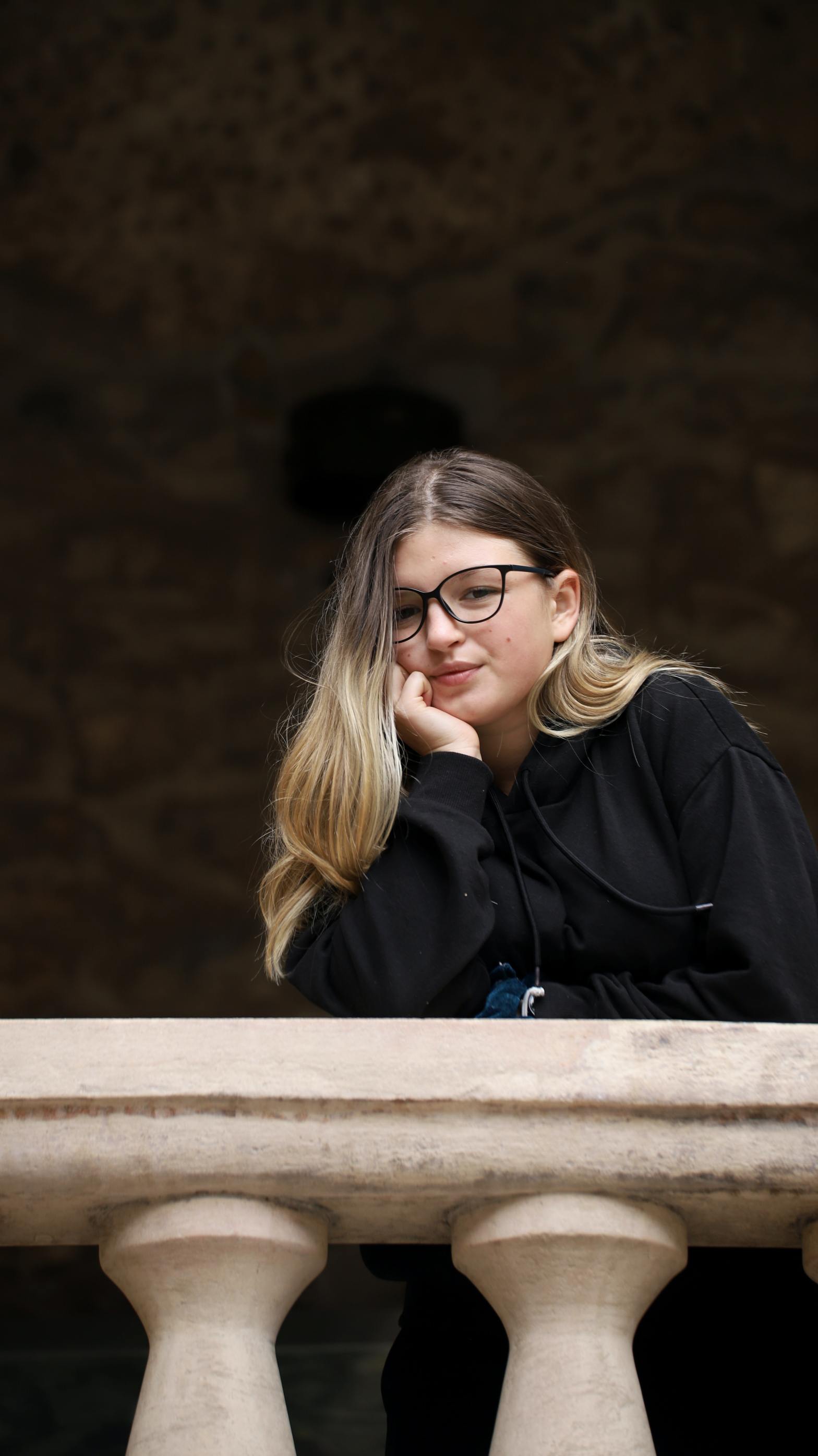
Character Study: Josette

Photo by Christopher Campbell on Unsplash

I’ve gone to church on Sunday for 18 years.

My parents were Catholic. They named each of their nine children after saints. I was named after St. Joseph, but, since I turned out to be a girl, they changed my name from Joseph to Josette.

I remember sitting in the back seat of our Chevy, four kids across the seat, each with a kid in their lap. Mom held the baby in the front passenger seat while Dad drove. When we got to church, we filed out of the car like sardines that had been packed tightly, but then loosened out of the can one at a time.

Our family always sat in the right third row from the front. Nobody was ever there before us because we got to church early. Early enough for boredom to set in before Mass even started.

I swung my Mary Jane shoes under the pew and out in front of me like a swing. I opened the back of the prayer book and read the words of the songs as if they were poems.

I inspected the architecture and décor of the interior: the brown confessional doors with red lights over them; the blue carpet trailing up the middle aisle like a wide strip of the sky; the podium where the readers stood; the steps to the altar also carpeted in blue; the altar covered with a starched white linen cloth; the silver candlesticks that held thick yellow candles. I even stared at the statues of Mary, Joseph, and Jesus that stood to the sides of the altar. Mary looked like a contented mother. Joseph seemed a little distracted as chubby Jesus gazed up to the ceiling.

On Good Friday, Sister Genevieve took our class to the church to participate in the Stations of the Cross. This was a pre-Easter ritual that involved the priest visiting 14 stations around the church while leading the congregation in a series of prayers. The stations were icons that depicted scenes from Jesus’ last day on earth.  

The whole process took about three hours. My feet ached as I stood on the hard linoleum floor in the pews with my classmates. I became light-headed while watching the priest slowly move from station to station, his figure gradually transforming into a hazy image in the semi-darkness. One time, I feinted backwards and slumped onto the wooden pew. Sister Genevieve scooted between the children on my left, folded me into a seated position and put my head between my knees. I was nauseous for the longest time. Finally, Sister Genevieve stood me up and half-carried me outside. I lay on the cement wall with my arms cushioning my head in the shade until the ritual was over.  

I remember promising myself that, once I was out of Catholic school, I would never attend the Stations of the Cross again.

Now, I am going to college in Los Angeles. There is a Catholic church two blocks from my apartment. In the front of the church is a spacious plaza, perfect for a gathering of friends after a celebration. I have walked past it several times on my way to campus, pedaling faster if people are streaming out the doors.  

Today, I’m going to conduct an experiment. Dad always said that if we didn’t go to church every Sunday, we’d be struck by lightning. I have decided to test this theory.

I open the door to my apartment, turn around and lock it. Then, I walk into the center courtyard of the building where the pool and spa are. My neighbor, Jason, is lying prone on a chaise lounge, mirror sunglasses shielding his eyes, sun tan lotion scenting the air around him. His already-tan skin shines like polished brass. His breathing is slow, so I tiptoe around him to the front hall.

The iron gate locks behind me and I turn right on Santiago Street. Leafy liquid amber trees buffer me from the sun as I stride past apartment complexes, gated communities of families interspersed with college students.

Santiago Street joins Junction Boulevard at a three-way stop. I swing my steps to the left to continue onto Junction. Now, neat, boxy front yards line the sidewalk. Two-story houses rise up behind them. Open windows. Curtains sailing out from inside second-story rooms. Front doors with lion-head knockers, single windows, and brass kick plates. Porch lights left on. Doormats askew.

Now I can see St. Angelo’s Catholic Church ahead on my side of the street. The curb is filled with parked cars. People get out and walk across the church’s front plaza to the wide-open double doors.

I’m in front of the church now. Inside, through the open doors, I see rows of wooden pews that remind me of my childhood. They are spaced like concentric circles around the altar. The church is round.

People are walking inside, dipping their fingers in a water font, and making the sign of the cross: their forehead, chest, shoulder and shoulder. Amen.

My chest tightens as I take a step toward the entrance. I struggle to breathe deeply. I pause in the middle of the plaza as the church bell rings the time. Time for Mass.

Now, several people are rushing past me to get a seat before Mass starts. I watch them, pretending they can’t see me there. No one knows I’m here.

Deliberately, I turn around and tread back to the sidewalk away from organ music that signals the Mass is beginning. Voices sing words like poetry.

I continue walking farther away. My ritual-heavy childhood.

The tree canopies are waving like sails, the sheer blue sky is splashed with sun.

Lightning wouldn’t dare strike me on such a beautiful day.

Character Study: Hazel

Photo by Hannah Olinger on Unsplash

“You shouldn’t go to college,” said Dad, looking down at us kids. “There’s riots and immoral behavior. You’ll get brainwashed for sure.” Dad sat in his brown recliner with the foot rest down, his hands fiddling with a cigarette and match. The four of us, my two older sisters, me, and my little brother, sat cross-legged on the worn-out carpet in front of his chair, even though we were teenagers. We should’ve been sitting in chairs like him.

The news was on television. Dad had just seen pictures of students rioting at U. C. Berkeley for women’s rights. He had turned down the sound and called us into the room from our bedrooms that were right down the hall. I had been doing my chemistry homework, and I still had to finish math.

A wood-framed picture of the Last Supper hung on the wall right above Dad’s chair. To the side of it on the mantel was a porcelain statue of the Virgin Mary that Dad had bought Mom when he flew an Air Force mission to Portugal. A pile of rosaries filled a basket next to the statue. They reminded me of earlier years when we were ordered to kneel on the scratchy carpet to say the Rosary for 45 minutes. Thank God, Dad didn’t make us do that anymore. I’d never get my homework finished.

“Hazel, give your dad his ice cream,” said Mom from the kitchen. She stood at the counter, a box of vanilla ice cream in front of her. Jars of caramel and chocolate, too. Cherries.

I got up from the floor, happy to escape the lecture that I knew was coming. Whenever Dad got on his soapbox, we were stuck for at least an hour. Backpacks open on the floor in our dark bedroom. Homework books splayed wide on our desks. Pencil case contents spilled over half-used binder paper.

Dad put his cigarette and matches down. I gave him his bowl of ice cream.

“I need a spoon,” he said in his booming voice. A scowl made two deep furrows between his eyes on his sun-tanned face.

I jumped, turned to the kitchen, found a spoon on the counter next to Mom, handed it to him, then sat down.

While Mom finished scooping the ice cream into bowls, Dad, in-between his own bites, talked about how college wasn’t good for kids.

“They preach against religion,” he said.

I had heard Dad defend his religion ever since I was a little girl. The thing was, he didn’t seem to be a happy person, even though he went to church every Sunday, prayed at every meal, and raised money for new church buildings.

What good was it doing him?

I didn’t like how the parish priests treated women and girls either. We were treated like appendages of our fathers. No authority. No voices. No purpose except for one day having babies.

Luckily, our high school was run by nuns who were great examples of what women could do when men didn’t oppress them. The principal was a nun who had been educated in London in both education and school administration. My chemistry teacher was a pretty blonde married woman who one day wanted her own children. Our choir teacher was a nun who had a college degree in music. She taught choir, violin, flute, and piano.

But I loved my English teacher most of all. She’s the one who introduced me to the English and American poets and Edgar Allen Poe. Poe wrote such delicious horror stories. Murder. Psychological torture. Manipulation. People buried alive. So incredibly creative.

In Sister Elena’s class, I wrote my own poetry. She entered our poems in contests. I won first place once. We also read Shakespeare plays and acted them on stage for the whole school. Someday, I’d like to write a sonnet as good as he did.

What these nuns taught me was that my father had a narrow viewpoint when it came to education and women. He sent us to our high school to learn religion. But these nuns had taught us their version of Catholicism, and it had nothing to do with oppressing women.

Dad was still lecturing. His loud voice filled the room, but it wasn’t filling my ears.

Nodding my head “yes” every so often, I was far away. I saw myself walking through a university campus, my arms filled with Shakespeare, Marlowe, Emily Dickenson, Jane Austen, and Elizabeth Barrett Browning.

I definitely was going to college.

My Passion for Flowers

My first recollection of flowers was when I was ten and my family lived in the countryside in England. Across the road from our house was a forest which, that spring, was carpeted in bluebells.

I took my family’s scrub bucket into those woods, squatted down in the middle of the bluebells, and picked them. Milky juice squirted out of their stalks and trailed down my arms, making me sticky from hand to shoulder. When the bucket was full, I took it back home into the kitchen, knelt down to find my mother’s vases, and cut the bluebells’ stems to fit into them. Soon all the vases were full, but I found some quart Mason jars and filled them, too. Then, I put a vase of flowers on every bookcase and dresser in the house. My mother smiled when she saw them.

I love flowers. Flowers in my garden. Flowers in vases. The floral department in the grocery store. Flower fabrics and clothes. Flower pillows and bedspreads. Flower photographs and paintings. I just can’t get enough of them. Let me describe how my fascination with flowers has made my world beautiful.

Flowers Connect Me to My Mother

My mother loved flowers, too. Her name was Rose Marie and her favorite flower was a rose. When she lived in an assistant living facility near the end of her life, I brought her a bouquet of roses every time I visited. After my visit was over and I went back home, she would call me to tell me how the flowers were doing, when she had watered them, and where she had placed them in her studio.

But my mother had demonstrated her love for flowers all through my childhood. While we lived in England, she planted tulip and daffodil bulbs in front of our living room window. In spring, those bulbs bloomed like happy children and made our simple home bright and cheery.

When we moved back to California, my parents planted flowers all over their property. They took out the front yard grass and planted daffodils under the trees. Some of the trees were orange trees, and the combination of the yellow daffodils and the oranges was striking.

Easter lilies were planted in the back yard so that they would bloom for the Easter season, which was important to my family. Azaleas were planted in the shade, and my parents planted camelia bushes all along the patio railing. They bloomed all winter like red, pink, and white Christmas ornaments hanging amongst the glossy leaves. My mother would often comment on the camelias during our phone calls. Their buds were out. They were just about to bloom. They were in full bloom. One bush was white and the next was red. The humming birds liked them. We could have a whole conversation about her flowers.

A Flower Library

I’m an avid reader and have a library in my house. In my library, are books that I used during my teaching career such as the plays of William Shakespeare, The Norton Anthology of African American Literature, poems by Robert Frost, and the novels of more contemporary authors such as Toni Morrison and Tara Westover. But I’m retired now, and I’m starting a new collection of books based on the theme of flowers.

I was inspired to start a library about flowers when I read an article about Martha Stewart’s flower library. In the magazine, I found a picture of her bright book room with books stacked on mismatched tables around the perimeter and in the middle of the room. Every wall was filled with windows above the tables, making the room fabulous for reading. The books themselves were beautiful covered with photographs of roses, azaleas, and bouquets of every kind.

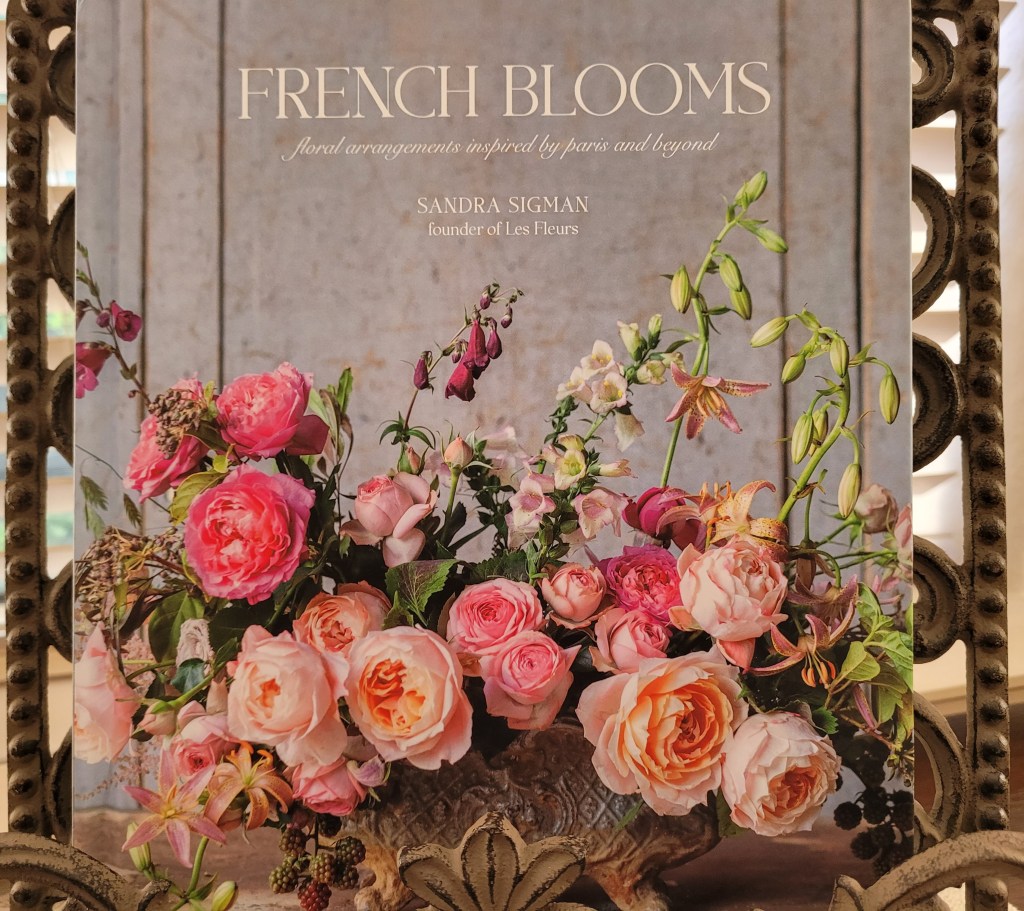
Now that I’m retired, I have more time for gardening, and, this summer, I’m in the middle of re-designing my front and back yards. To do this right, I bought a book about hydrangeas so I can do what I need to do so they grow healthy and vibrant. I also bought a book about 300 varieties of tea roses since I’m going to plant six new rose bushes along my new western fence. Oh yes, I also bought a book about French flower arrangements that I have displayed in my French décor living room.

Flowers, Flowers, Everywhere in the House

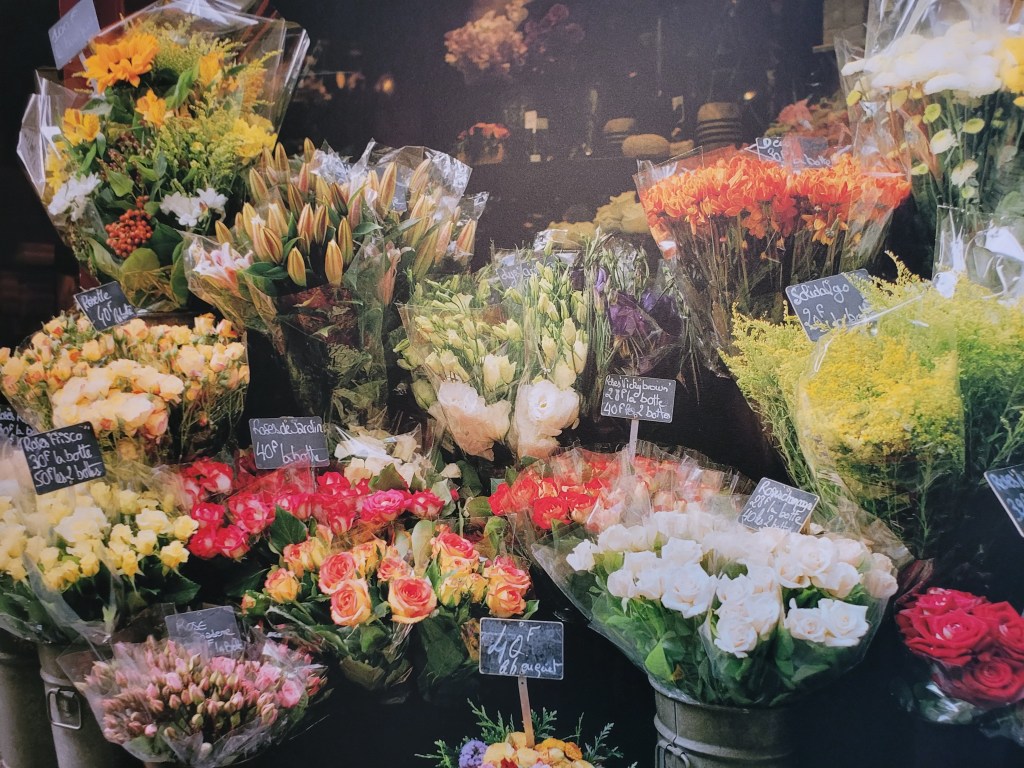
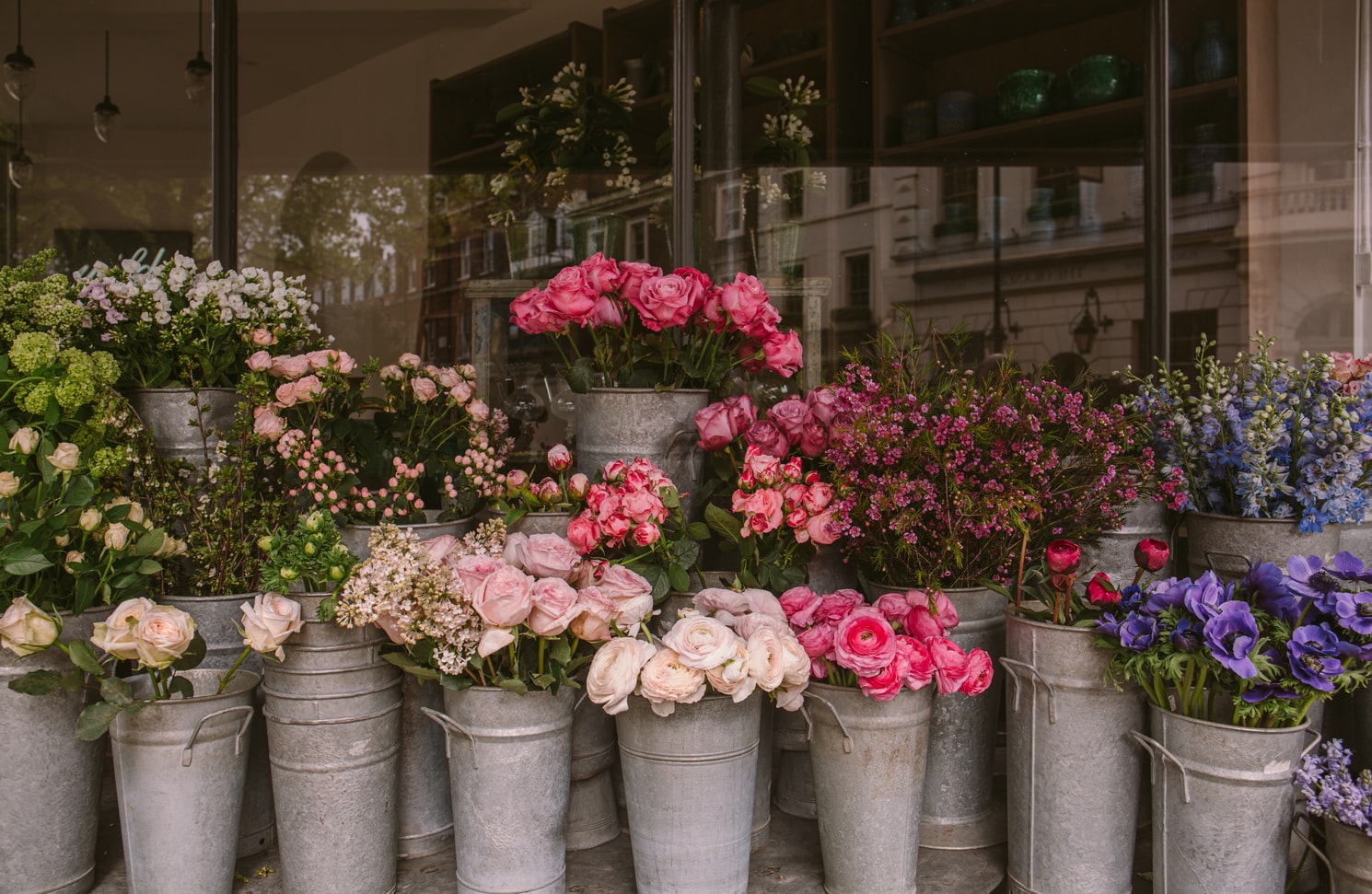
As soon as people step into my home, they learn how obsessed I am with flowers. In the living room, I am using three artificial flower arrangements to create a beautiful ambiance. Currently, I also have a vase filled with over a dozen red, yellow, and white roses from my own rose bushes in the back yard. I have bouquets of artificial flowers in each of the three bedrooms, flower urns in the library, and a real Christmas cactus in the family room. My bedroom walls all have pictures of flowers in them. The guest room, which also has a French theme, has a photograph of a flower vendor shop in Paris.

Flowers, Not Chocolate

Here’s a secret. I can be bribed, not with chocolates, but with flowers. When anyone gives me flowers, my heart melts like a warm candle. My husband gives me roses and sometimes other types of flowers on Christmas, my birthday, and Valentine’s Day. I love each and every bouquet as if it is the only bouquet I’ve ever received.

My daughter gives me flowers often because she loves flowers too. Her favorite flower is the Gerber Daisy. When I want to get her some blooms, I look first for those.

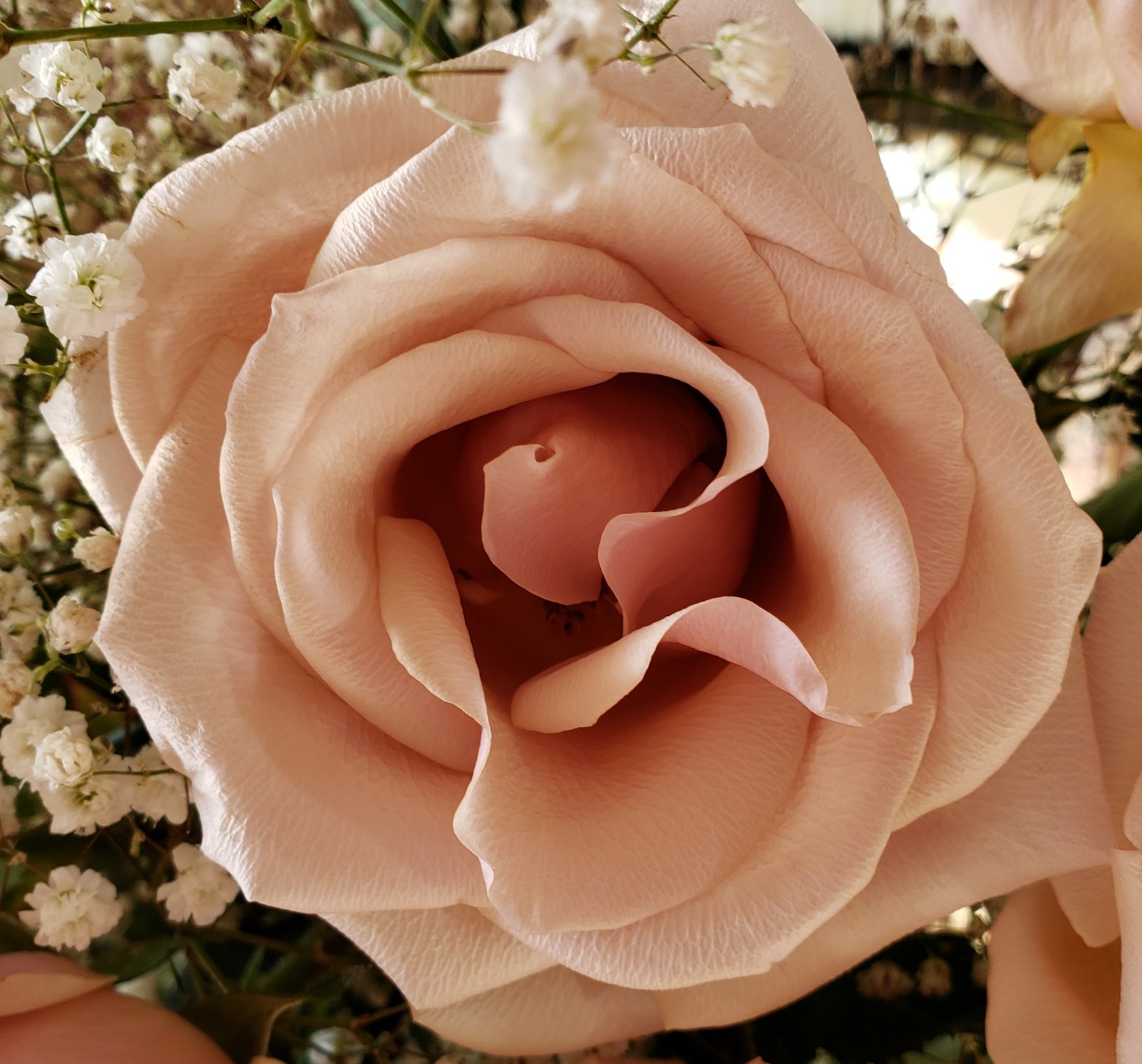
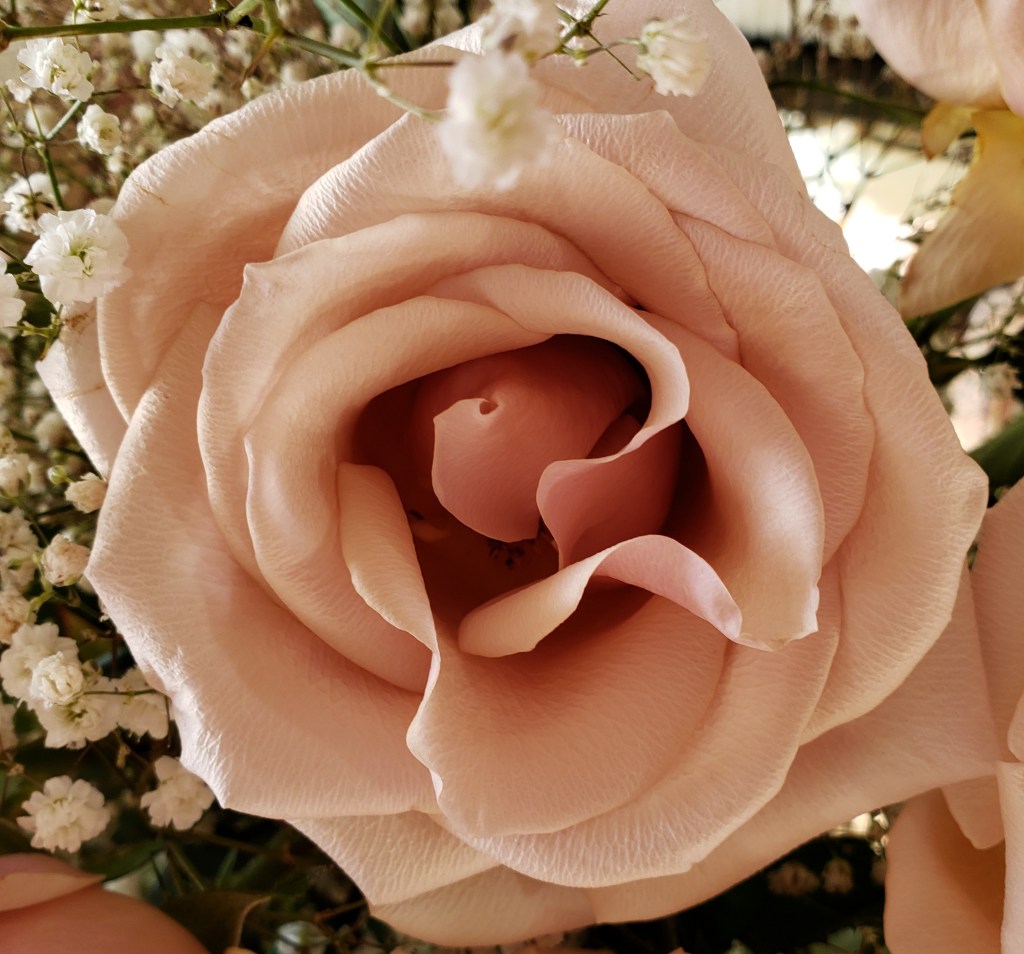
The most beautiful flowers I have ever received, however, were pink roses from my son. The pink was so delicate and the roses were incredible as buds and astonishing when they were fully bloomed. I took photo after photo of them, and, now, I have two photographs of these roses upstairs. My heart skips a beat whenever I see them.

I’m inspired by beauty and that’s why I love flowers. This afternoon, I plan to read more about how to perfect hydrangeas and how to promote more blooms on all my blossoming plants. You can find me sitting in my garden amongst my flowers. Where else?

The Sugar Cookie Grandma

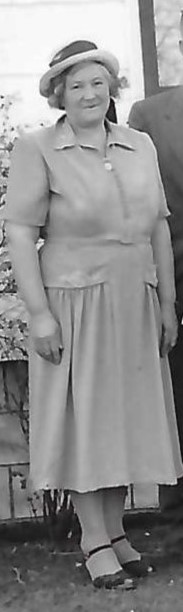
Grandma Lillian in her 40s

Back in my grandmother’s day, women didn’t get much notoriety, so I decided to write a blog about my Grandma Lillian. She’s not famous, but she deserves some long-overdue attention.

Grandma Lillian was born in Winona, Minnesota on November 9, 1903. Both of her parents’ families were originally from Trhove Swiny, South Bohemia, which is now part of the Czech Republic. This town dates back to the 1200s as part of an ancient trade route. In the 1400s, King Vladislaus II, who was then King of Bohemia, authorized the town to build a market. The town’s name comes from the Czech word trh which means market. The two most popular sites in Trhove Swiny are The Most Holy Trinity Church, which replaced a Catholic pilgrimage chapel, and an iron mill called Buškův hamr.

My Grandma Lillian, however, never visited the Czech Republic. In fact, she never traveled outside the United States except for Canada. She was a short woman, less than five feet tall, and a little plump. When she first married my grandfather Leon Jr., she lived in his father’s house on an 800-acre piece of property that is now a Minnesota State Park. Later, she and her husband bought their own house in Goodview, a town next to Winona. The house was painted white and sat on a flat parcel of land covered in shamrock green grass with a large vegetable garden in the back. Her brother Leo lived next door.

Grandma Lillian’s House in 2022

Grandma Lillian had five children, including my father who was the oldest. Then came David, Mary, Gerald, and Daniel. My father moved to California with the United States Air Force which stationed him at Mather Air Force Base. Once my parents came to California, they settled down to stay.

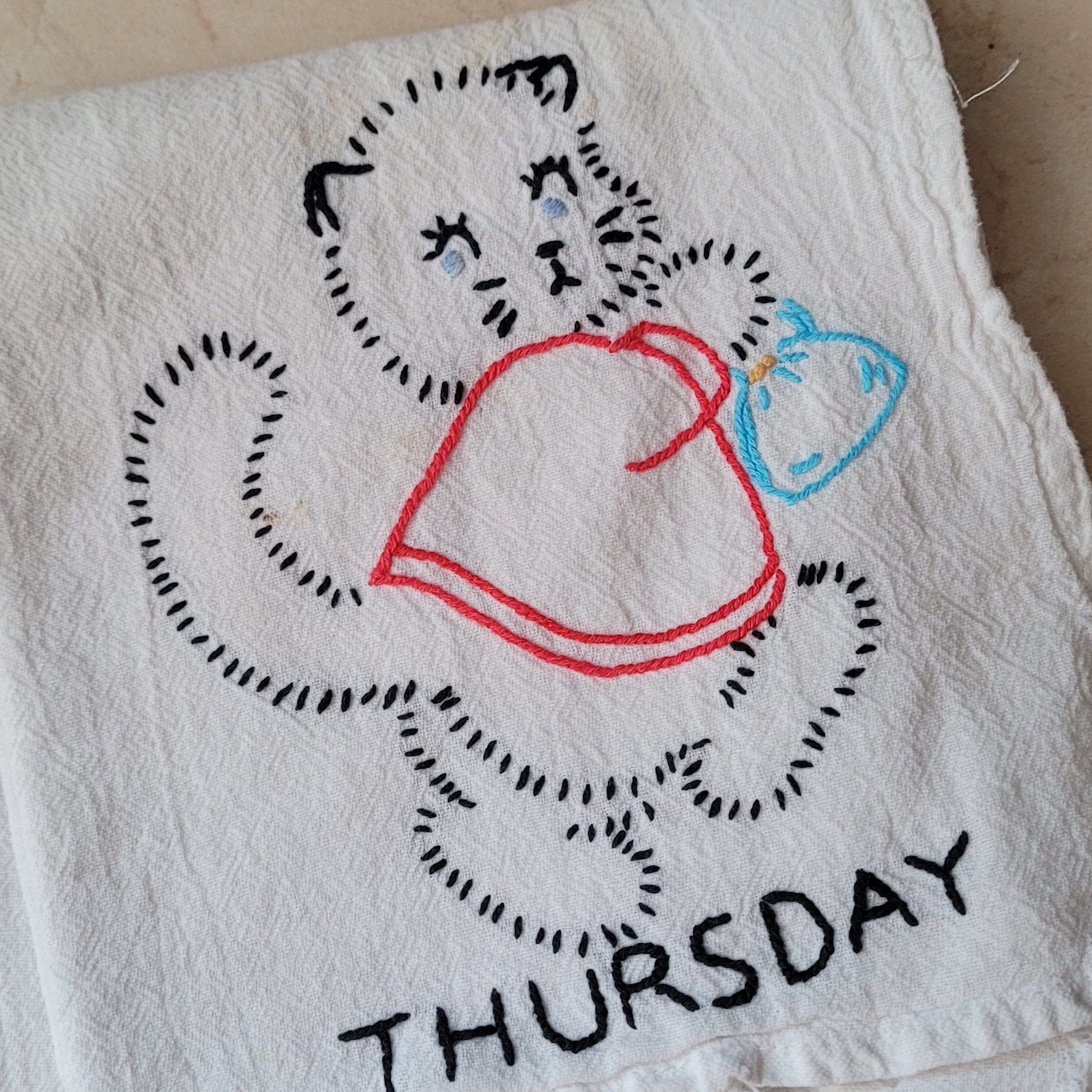
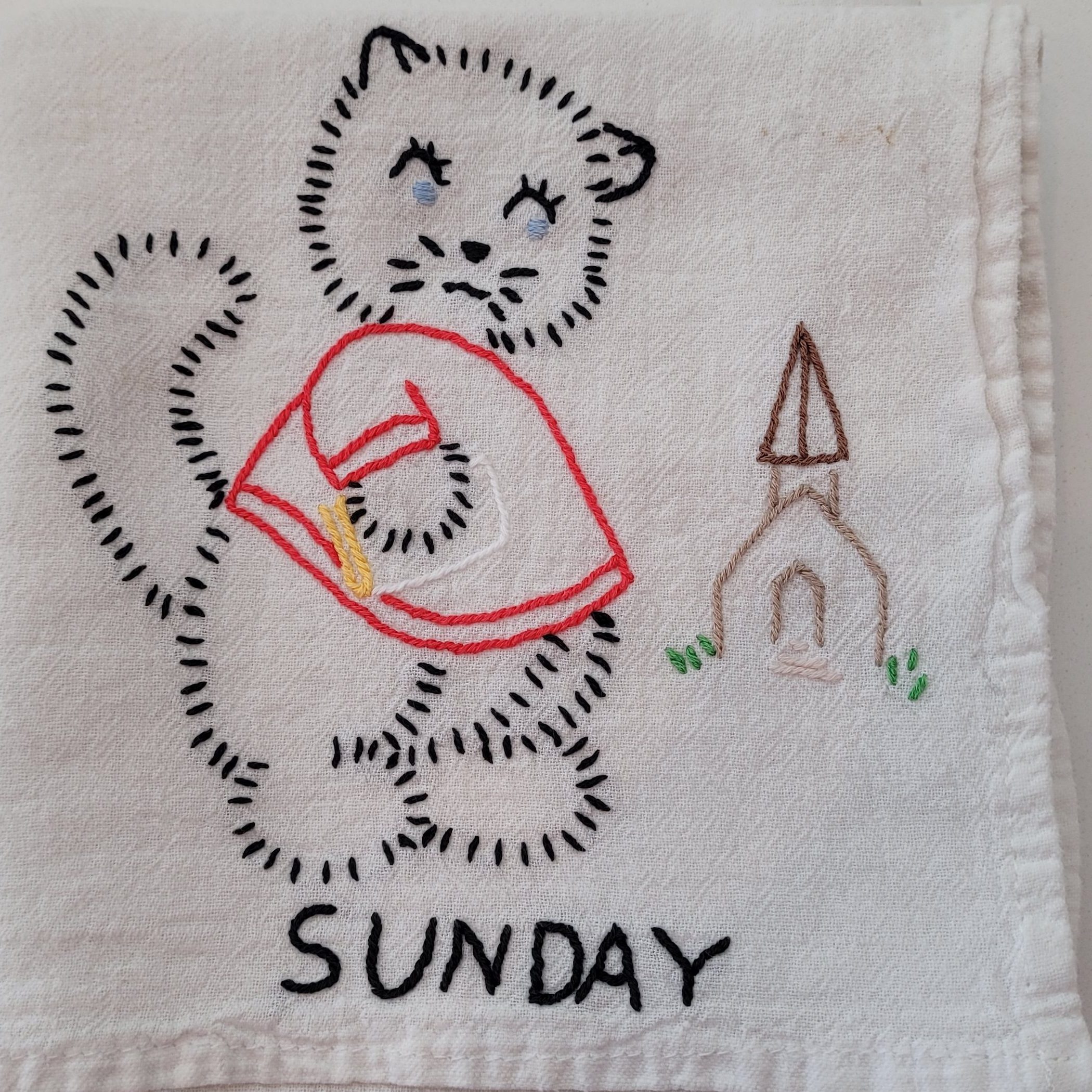
Grandma Lillian took the train to California several times to help my parents when my mother was in the hospital having another child. During these times, I learned about who she was as a person. I watched her embroider cotton tea towels, one for every day of the week. For each day, she embroidered a kitten performing a different kitchen task with one exception. For example, on Thursday’s towel, the kitten was carrying a tea kettle to the stove. On Sunday, the kitten was not doing kitchen work since she was going to church. She taught me how to embroider, but I was too impatient to make the stitches neat.

Even though Grandma Lillian didn’t ever travel to Bohemia, she used many recipes that came from the old country. She was famous for her Refrigerator Pickles. To make these, she combined seven cups of sliced cucumbers and one sliced yellow onion with a tablespoon of salt. She let the salt leach some of the water out of the cucumbers for about an hour. For the dressing, she combined one cup of vinegar, two cups of sugar, and one teaspoon of celery seed. She poured this over the cucumbers and stored the dish in the refrigerator to use as needed. By the time her recipe reached my family, we were eating the pickles as a side salad, all in one day.

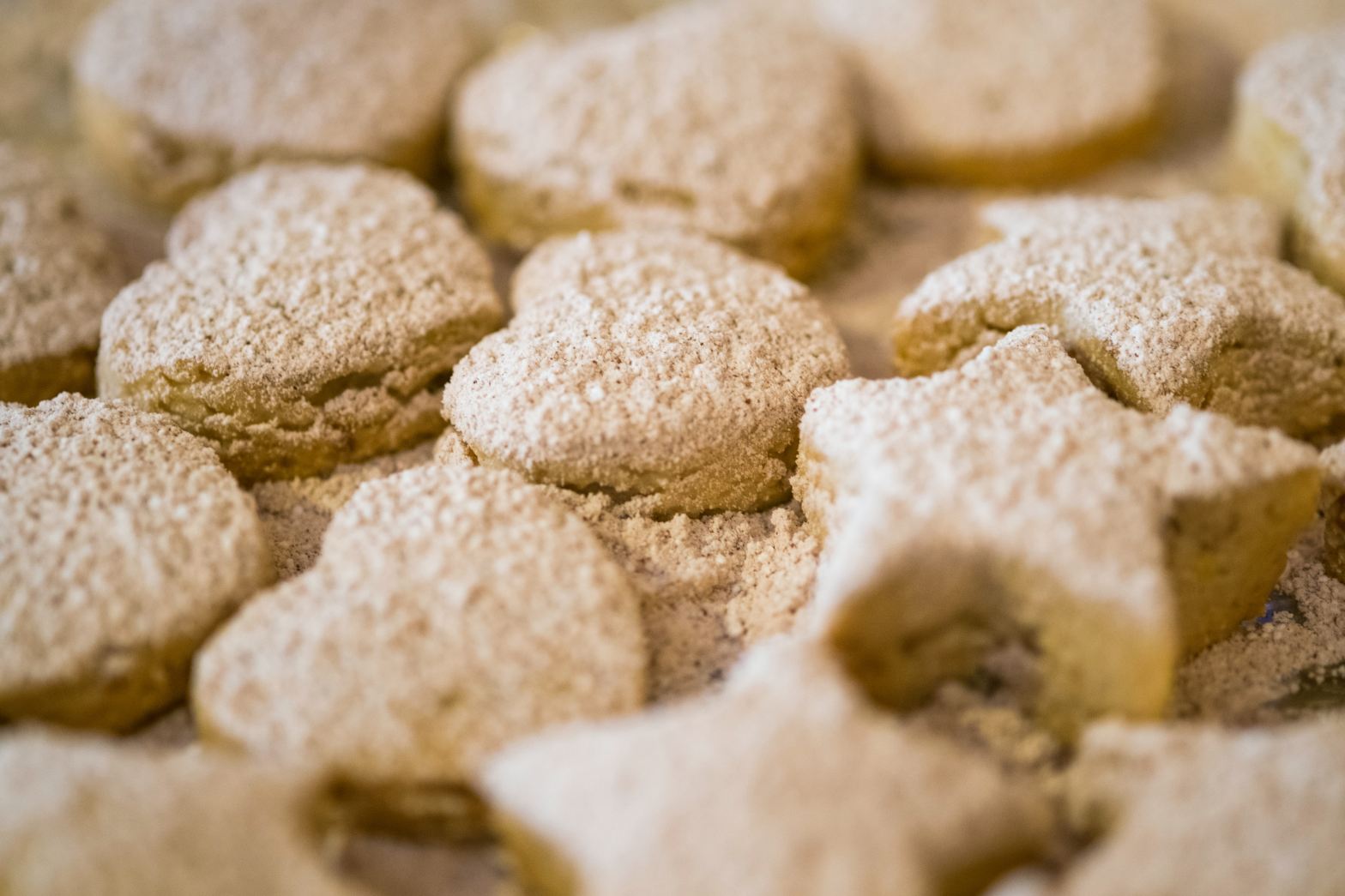
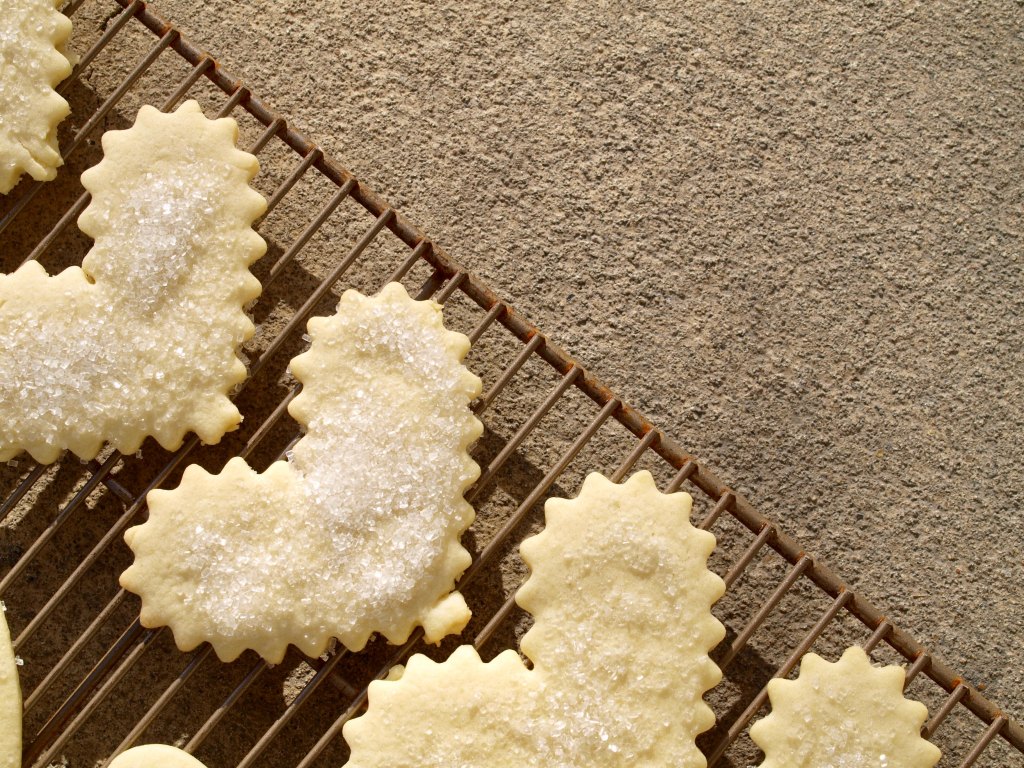
My favorite memory about Grandma Lillian was how she made sugar cookies. Maybe we didn’t have cookie cutters. Maybe we didn’t have the shapes of cookie cutters that Grandma wanted. I don’t recall, but I do remember how Grandma folded a piece of newspaper in half and used scissors to cut out a heart about the size of her hand. Then she placed the heart shape over the rolled-out cookie dough and cut the dough with a sharp knife to make heart-shaped cookies. She placed the hearts on a cookie sheet and decorated them with colorful sprinkles. When we ate them warm out of the oven, they were buttery sweet.

Grandma loved to garden both vegetables and flowers. Many days, she spent hours out in her garden weeding, pruning, harvesting and enjoying the ambiance. My father inherited her green thumb since he also cultivated a big garden every year to feed his family.

Grandma Lillian was in her garden when she died on July 16, 1991. The weather was over 100 degrees, and my cousin Karen found her late in the day. Now, she is buried next to her husband Leon and her youngest son Daniel in a country cemetery. She didn’t become a movie star, a Congress woman, a Supreme Court judge, or even a newscaster on television. Yet, she lives on in the lives of her thirty-one grandchildren and more than forty great-grandchildren. That’s an accomplishment of which I am proud.

Photo by Diane Helentjaris on Unsplash

Chemotherapy Christmas

The room was large, windowless, and sterile. Blinding florescent lights. Beige linoleum floors. Twelve green reclining chairs placed with their backs against the walls around the room. Each chair accompanied by a metal stand hung with bags of fluid and tubes.

The woman sitting in one of the chairs wore a scarf around her head. I looked for wisps of hair, but couldn’t see any. Her body filled up the chair like of sack of potatoes, lumps everywhere. She wasn’t smiling like the nurse who stood next to her, hooking up a tube to a port embedded in her upper chest.

A man whose body disappeared within his baggy shirt and trousers sat in a recliner in a corner. His scrawny hands hung over the chair’s arms like shriveled leaves caught on the edge of a forgotten lawn chair in the fall. His bald head shone in the florescent lights like a bare bulb. His face was gaunt, lined, and dry, and his eyes were closed. A young woman sat in a chair in front of him reading the Bible.

I watched the room’s activity with a lump in my throat as I stood behind my mother and brother by the door. A woman with a cane was led to another recliner in the room. The male nurse helped her sit into the chair, gently pushed her back, and lifted the foot rest. The nurse lifted a matching green blanket from a small chair nearby and laid it over the woman’s body, tucking the edges around her snugly. Then he efficiently began hanging the bags of chemicals on a metal stand and hooking up the bags with the tubes.

This was my mother’s chemotherapy room. Mom’s last chemotherapy session was scheduled for December 24, Christmas Eve. She had asked my brother Zach and me to accompany her to the appointment. My brother had flown home from college in Southern California for Christmas, and I was home from college too. The only thing my mother wanted for Christmas was to finish chemotherapy with her children around her.

A female nurse wearing an ugly, plain, blue smock and pants led my mother to a chair on the emptier side of the room. Zach helped Mom take off her coat and climb into the chair. She looked small, dressed in her pink cotton beanie, pink V-neck sweater, and jeans. How pale her pretty face was. Mom nodded when the nurse asked if she wanted a blanket, and Zach took it from the nurse and covered her gently like he was placing a precious jewel into a new setting.

This was not how I wanted to spend my Christmas. Wasn’t college supposed to be one of the happiest times of my life? I was too young to worry about my mother dying or even being too sick to visit me at school.

The nurse pulled two straight-back chairs close to my mother’s recliner, and invited us to sit down. I took the chair farther away and leaned back as if my mother was contagious. My brother pulled his chair closer to Mom and took hold of her left hand. When she smiled at him, her eyes watered like green pearls.

Before long, Mom was hooked up to the tubes that would feed chemicals into her body. I could tell that she was putting on a brave face because, underneath her smile, she looked tired and weak.

I didn’t want to think about her being that way. Instead, I wanted her to jump out of her chair, hug me tight around the waist, and ask me about college. I wanted to tell her about Jasmine’s new boyfriend, Sara’s job offers, and David’s article in the college newspaper.

Her smile withered away as the chemicals dripped into her veins. She gave up trying to hold a conversation with my brother, who was bent towards her in his chair, his chocolate eyes full of concern. She looked at me several times, but I retreated away from her with a grimace on my face.  I didn’t want to be here.

Once in a while, Mom opened her eyes and looked up at the bag hanging beside her as if gaging how long she had to endure the procedure, but, for the most part, she kept her eyes closed, and we sat in front of her fidgeting in our chairs, biting our lips, and staring at each other with worried eyes.

Three hours later, the nurse in the blue smock and pants pulled the catheter out of my mother’s port, gathered up the tubes, and rolled away the metal stand with the empty bags.

A young woman with brunette hair and rosy cheeks pushed a wheel chair up to our station.  She asked my brother to move his chair, then maneuvered the wheel chair as close to my mother’s chair as she could.

“I’ll help you,” she said kindly. She took ahold of my mother’s upper arm and guided her from the recliner into the wheel chair.

My mother let out a whimper as she moved. Zach helped her put on her coat as she sat in the wheel chair, wrapped her pink scarf around her neck, and gave her a wool cap to pull over her pink beanie. Still, she shivered when the nurse wheeled her outside to the car.

Zach drove us home, and the next day was Christmas.

Before Revising My Novel

I’ve written essays, newspaper articles, poems, short stories, and more, but never a novel. People who have written several novels impress me since I’m writing my first novel and learning so much in the process.

Since I retired as an English professor almost two years ago, I started a novel. Now, I have a first draft and it’s time for me to revise it. Here are the steps I’m taking before I proceed.

I Found a Good Critic

I asked a writer friend to read my novel and give me her criticism and suggestions. She was worried that our friendship would suffer if she gave me honest feedback, but I assured her that I was open to any constructive feedback. I’ll refer to her as Lila for this post.

The reason I chose Lila as a critic was because she has published numerous children’s books and one adult book. In other words, she has experience at doing what I want to do. She also taught high school Spanish, so her language skills are strong. Finally, Lila’s criticism is clear and she gives reasons for her comments.

Even though I reviewed and edited my novel before I gave it to Lila, I found that I didn’t catch all my errors and I needed a fresh brain to show me inconsistencies and mistakes. My mind was so overwhelmed at the daunting task of writing a whole book that I needed support to catch mistakes. Lila found places where I had changed my point of view, and she identified sentences that were unclear or out of place. She taught me that prose written in past tense must never include this; instead, I should use that. Lila even found a few spelling errors and typos.

Lila also gave me positive criticism. She identified the two most interesting sections of my novel. One was when my character goes to work in a winery and the other was when she hikes to Machu Picchu.

The most important advice she gave me, though, was a book about how to develop a plot. She recommended that I read Save the Cat! The Last Book on Screenwriting That You’ll Ever Need by Blake Snyder. This leads me to my next topic.

I Read a Good Book about How to Develop a Plot

I started reading Save the Cat! but then I found out that Jessica Brody had written another version of Save the Cat! titled Save the Cat! Writes A Novel: The Last Book on Novel Writing You’ll Ever Need.  I opened the paper version of Brody’s book and read it carefully. I learned about a plot planning tool called Beat Sheet and I confirmed that my novel belonged to the genre referred to as Rites of Passage. I also read about how to write attention-grabbing loglines and alluring synopses to pitch my novels to everyone, including people at the dinner table, agents, and prospective publishers.

Wow, I learned so much! The last chapter, however, that discussed common plotting problems was helpful all the way to the last word. Still, I wasn’t ready to begin revising my novel.

I Read Books in the Same Genre as my Own

I didn’t have enough courage to start revising my novel yet, so I decided to read books that had similar themes as my own to see how their authors developed their plots. Sarah Dessen wrote The Truth About Forever, a novel about Macy Queen whose father died while he was waiting for Macy to join him for a morning run. In my novel, my main character’s mother dies. As I read Dessen’s book, I tried to identify the 15 beats that Brody says every novel requires. For example, at the beginning of a novel, Brody insists that the opening scene must engage the reader. Dessen’s opening scene did get my attention. Brody also says that the themes of the novel must be included in the early chapters. Dessen’s theme of there are no accidents appears on page 27.

I Watched Movies to Practice Finding Save the Cat!’s 15 Beats

I love watching movies because they are stories, too. Since Brody’s book is actually based on a book about screenwriting, the 15 beats apply to movies as well. I watched Michael O. Sajbel’s The Ultimate Gift, a story about a spoiled adult grandson who must complete a series of tasks in order to earn his inheritance. I successfully identified one of the beats called the catalyst in the movie, which is when the grandfather dies and leaves his grandson specific instructions he must perform.

I’m still reading examples of my genre, but soon I’ll have to gather my courage, plot out my novel on a bulletin board, and start rewriting.

Whew. Wish me luck and stay tuned.

Why Queen Elizabeth II Matters to Me

In 1966 when I was nine, my family moved to England. My father was in the United States Air Force and he was stationed at Mildenhall Air Force Base in Suffolk County, about one hundred miles north of London. Queen Elizabeth II had already been queen of England for fourteen years.

My parents sent my siblings and me to an English Catholic school named St. Edmund’s in Bury St. Edmund’s. I started in Junior 2, and every day I had to dress in a blue uniform and tie a blue tie around the collar of my blouse.

By the time I entered Junior 3, I had developed some strong friendships with girls in my class. Elizabeth invited Ann and me to spend weekends at her historical English home in the countryside where we slept together in her late grandfather’s bed and heard the grandfather’s clock chime every fifteen minutes during the dark night.

Ann invited me to spend weekends at her house as well, where I learned the English custom of having tea each afternoon. We also walked for miles around the town of Bury St. Edmund’s exploring the 11th century, ancient ruins of the St. Edmundsbury Cathedral and the dark nave of St. Mary’s Church. We visited Moyses Hall and found ancient instruments of torture that had been used by former leaders of East Anglia. In Bury, I learned that history was a long story about the human race and its complicated nature. I learned about selfishness, arrogance, faith, power, tactics, and greatness.

In class, beside studying math and English, we memorized famous English poems and old songs that had enriched the English culture for years. In fact, the first tune that I ever played on the recorder was “Greensleeves,” an old English ballad first recorded in 1580 by Richard Jones. This unforgettable tune was mentioned in Shakespeare’s play The Merry Wives of Winsor, and also serves as a favorite Christmas hymn in England “What Child is This?” that I sang in church. Thinking about how I was exposed to ancient English ballads and Shakespeare at such a young age, it’s no wonder that I later became a college English professor who specialized in the Early Modern Literature of writers such as Shakespeare.

Since I attended English school during my elementary school years, I never learned American history until I went to college. Instead, I developed a deep interest in English history, all the way from the Anglos and Saxons who brought rudimentary English to the island, to William the Conqueror who established French as the language of English politics, to Henry VIII with his six wives, to Elizabeth I with her fierce independence which I admired, to Elizabeth II who I saw on television night after night shaking hands, breaking bottles on the hulls of ships, and opening parliament, dressed in regalia. I grew to know even more about her than John F. Kennedy who had been assassinated when I was in first grade.

Perhaps I was so attracted to Elizabeth II because she reminded me of my own mother, who was also calm and dignified. They both wore a fluffy, curled hairstyle, red lipstick, and pastel clothing. My mother liked to wear rings and she loved flowers and hats. If Queen Elizabeth needed a double, you could adorn my mother in her royal robes and priceless jewelry and put a scepter in her hand and no one would know the difference. 

But their real similarity was their endurance and generosity. I watched my mother give love to my father for over fifty years as a consistent and reliable spouse. I watched her endure the deaths of her friends and her sister with tenderness and strength. I admired the way she loved all of her ten children regardless of their talents, mistakes, and weaknesses. She lived until she was 92 years old, and the last year of her life, she called each of her children once a week and told them that she loved them. I couldn’t believe she could die.

I never believed Elizabeth would die either. I had felt her in my life like a steady light for so long. My parents loved her, and I loved her.

I don’t have any qualms about loving a monarch that represented a country once involved in colonialism. Elizabeth didn’t represent her country’s history. She represented its last 70 years, a time when Canada achieved full independence of Britain, a time when I grew up from an innocent, little girl to an independent woman who now possesses some of the characteristics of my mother. She ruled with grace at all times, during sadness, amidst anguish, and throughout the joyful times.

But most of all, Elizabeth represented a woman who accepted her role of service to her country. She served England with love and generosity; if everyone could lead with the commitment and humility that she demonstrated, our world would be a happier land.

Today, I’m English again, eagerly basking in her influence.

The Brother-Sister Dollar-Pancake Contest

Every kid in my family loved pancakes. Most of the time, we drenched our “cakes” in squares of butter and maple syrup.

My mother stood at the stove making the pancakes while us kids sat around the table eating them, so they were hot from the griddle. The butter was cold, but it melted into a golden pudding on top. My mother warmed the syrup bottle in a pan of water, and then she poured the syrup into a child-sized pitcher for the table. It smelled like an autumn hot toddy and dripped down the sides of the stacked pancakes like teeny waterfalls.

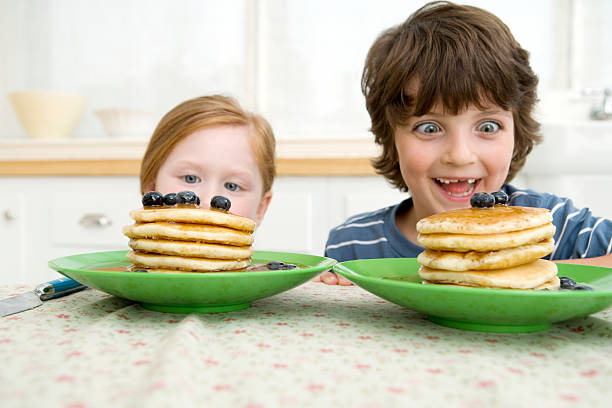
One morning, after the rest of our siblings had left the table, my brother Don and I were still cutting into helpings of pancakes with all their sticky toppings. As I chewed on my sweet breakfast, I said, “I bet I can eat more pancakes than you can.” I was five with a confident attitude, and my brother was four with a hollow stomach.

“No, you can’t. I’ll beat you,” Don said with a full mouth.

“Mom, Don and I are havin’ a pancake-eating-contest. Will you make us some more?”

My mother looked into the mixing bowl and found out that she still had batter left, so she agreed. “I’ll make dollar-sized ones for you.”

First of all, I have to tell you that my mother made pancakes using Betty Crocker’s Bisquick. Her pancakes were bready and fluffy with a flavor that you just can’t replicate without the secret Bisquick recipe. 

She had taught us what dollar-sized pancakes were.  Her regular pancakes were about 6 inches in diameter, and Don and I had already had about four of them that morning. Dollar-size pancakes, on the other hand, were about only 3 inches. They apparently were about the size of a silver dollar, but I’ve never seen a 3-inch silver dollar. 

We started counting from 1. My mother gave us each a small stack of three dollar-sized pancakes. I melted the butter and swirled the syrup on top, then cut the cakes down the middle and scarfed them down. Don ate his too.

The next helping came. More butter and syrup. More chowing down. Don had a smile on his face like the Cheshire Cat from Alice in Wonderland. He was feeling assured of his success, so I stuck out my tongue at him. Mom couldn’t see me because she was up the three stairs and behind the kitchen wall. 

The next helpings came. Don rubbed his stomach and groaned. I didn’t dare complain that I was full. Winning was important.

The next helping came. By this time we both had eaten 12 little pancakes, not to mention the 6-inch ones we had eaten before we started recounting. Syrup was dripping out of the sides of our mouths, and the butter plate was empty.

Mom used a spatula to set three more pancakes down on each of our plates. I scraped the butter plate for any leftover bits, and poured the syrup in between my pancakes so they were nice and moist all the way through. Easier to digest that way. Don was stooped over the table like an old man, looking down at his plate. I kept my back tall, and my Buddha belly rounded out in front of me like a balloon. We kept eating.

Both of us ate through the next helping slowly. The syrup failed to make the pancakes irresistible. I felt like throwing up.

Soon, another little stack of three was on my plate. Don poured the syrup, and cut into his stack like a drunken sailor. When he got half-way through, he pushed his plate away from him, put his head down on the table, and let out a deep moan. “Mom, I can’t do it,” he said.

There wasn’t enough syrup for me to pour it in between each pancake, so my stack of pancakes was a little dry. I used both my knife and fork to cut the stack, chewed the dry pancakes into a pulp, and swallowed the damp pulp of dough down my throat. Don was finished. All I had to do was get through this whole stack and I would be the winner.

I chewed and swallowed without tasting. The stack got smaller and smaller with each bite. I belched. I swallowed some more. Finally, I jabbed the last piece of pancake onto my fork, stuffed it into my mouth, chewed, swallowed, and put my fork back down.

I sat up straight, acting as if my stomach didn’t ache like an overblown balloon and raised my arms up into the air, my fists together like a champion. A full and painful stomach would pass. The feeling of retching would too. Winning was everything.

Green Beans & Marshmallows

My relationship with food started with a tummy ache.

 When I was born, my parents soon learned I was allergic to cow’s milk. My mother had grown up on a farm in Wisconsin where her father milked his cows to provide milk on the table. My father loved cow’s milk so much that he scooped the cream off the top of pasteurized milk with a spoon and put it in his mouth, right over the bottle. So my allergy to milk was unusual for them. To solve the problem, they bought a goat, milked it, and put the goat’s milk into my bottle.

Our family was large—two parents and ten children to feed. This meant that the preparation of food required a major effort, not just by my mother but the whole family. Since my father grew up on a farm, our first home was a rented farmhouse on top of a barn on a two-acre property in Fair Oaks, California. My dad’s day job was in the military, but before he went to work and after he got home, he milked the goat and cow, fed the chickens and ducks, collected their eggs, gave lettuce to the rabbits, sheered the sheep, picked fruit from the fruit trees, and planted, weeded, and harvested the vegetable garden.

When I was three, my parents bought a house right down the street on a half-acre lot, and it was the most prolific half-acre I’ve ever known. We didn’t keep a cow there, but we still had sheep, ducks, chickens, fruit trees, and a year-round vegetable garden. Radishes, carrots, lettuce, and green onions in the spring. Zucchini, cucumbers, tomatoes, and peppers in the summer. Pumpkins and acorn squash in autumn, and potatoes in the winter.  I remember running bare-foot under the plum trees over fallen, ripe plums that were magnets for the honey bees. Before I went to Kindergarten, I had been stung dozens and dozens of times each summer.

We weren’t legally allowed to work when we were kids, except as harvesters in my father’s garden. Under the blazing summer sun, I stooped between the rows of tomato plants and picked tomatoes until my arms itched with rashes. When I complained, I was switched over to the rows of green beans where the purple dragon flies terrified me as they flitted among the bean plants’ twirling tendrils.  I hated the hot sun, the rashes, the dragon flies, and the repetition of picking.

One day at the dinner table, I came up with the incredible idea that I didn’t like green beans, and, if I didn’t like them, I wouldn’t have to pick them anymore.  With this inventive scheme in mind, I looked down at the green beans on my plate and said out loud, “I don’t like green beans.” As fast as lightening, my brother stuck his fork in my green beans and lifted them over to his plate. All I had left were fish sticks and mashed potatoes, and the serving dishes on the table were all empty. Nevertheless, I spent my whole childhood hating green beans.  It wasn’t until I was around thirty that I tried them again and discovered they were delicious. 

Cow’s milk and green beans weren’t the only foods that traumatized me. My mother was a decent cook, but she often lost track of the vegetables cooking on the stove. By the time she remembered to turn off the zucchini, it had turned into a gelatinous mass of green sludge, and she made us eat it anyway. 

My mother employed her daughters as helpers in the kitchen as soon as we could reach over the counter. When we had French fries for dinner, I had to peel ten pounds of russet potatoes and slice them into French fry fingers. Then, Mom deep-fried them in oil and we cooled them on racks placed over cookie sheets. 

I never complained about not liking French fries. I loved them as much as everyone did. In fact, if I didn’t protect the fries on my plate, one of my siblings would snitch them when I wasn’t looking. The best course of action was to eat the French fries on your plate first, get another helping, then eat the rest of your food. To this day, I don’t dip my French fries in catsup while I’m eating them. When I was a kid, I didn’t have time.

Some of my food trauma also stems from the creative ways that my father punished us when he caught us committing food crimes. I think my dad could have earned a PhD in psychology if he had the notion to get more than a two-year college degree. He was thoughtful, and, because his sentences were so inventive, they were effective.  One time after dinner, he caught me popping a large marshmallow into my mouth. “You still hungry?” he asked. “Next time you eat when you’re at the dinner table.” He made me sit at the table and finish eating the leftover pork and beans. That was a “tooty” experience that I never forgot. Today I don’t even like marshmallows.

A Story about Straw Pile Hill

Between Stockton Valley and the west side of the Mississippi near Winona, Minnesota is a ridge covered with white pine trees.  Once upon a time, my great grandfather, Leon Ambrose Bronk Sr., bought land on this ridge to grow alfalfa and corn.  Throughout the years, he bought more adjoining farms until his land holdings reached 761 acres. 

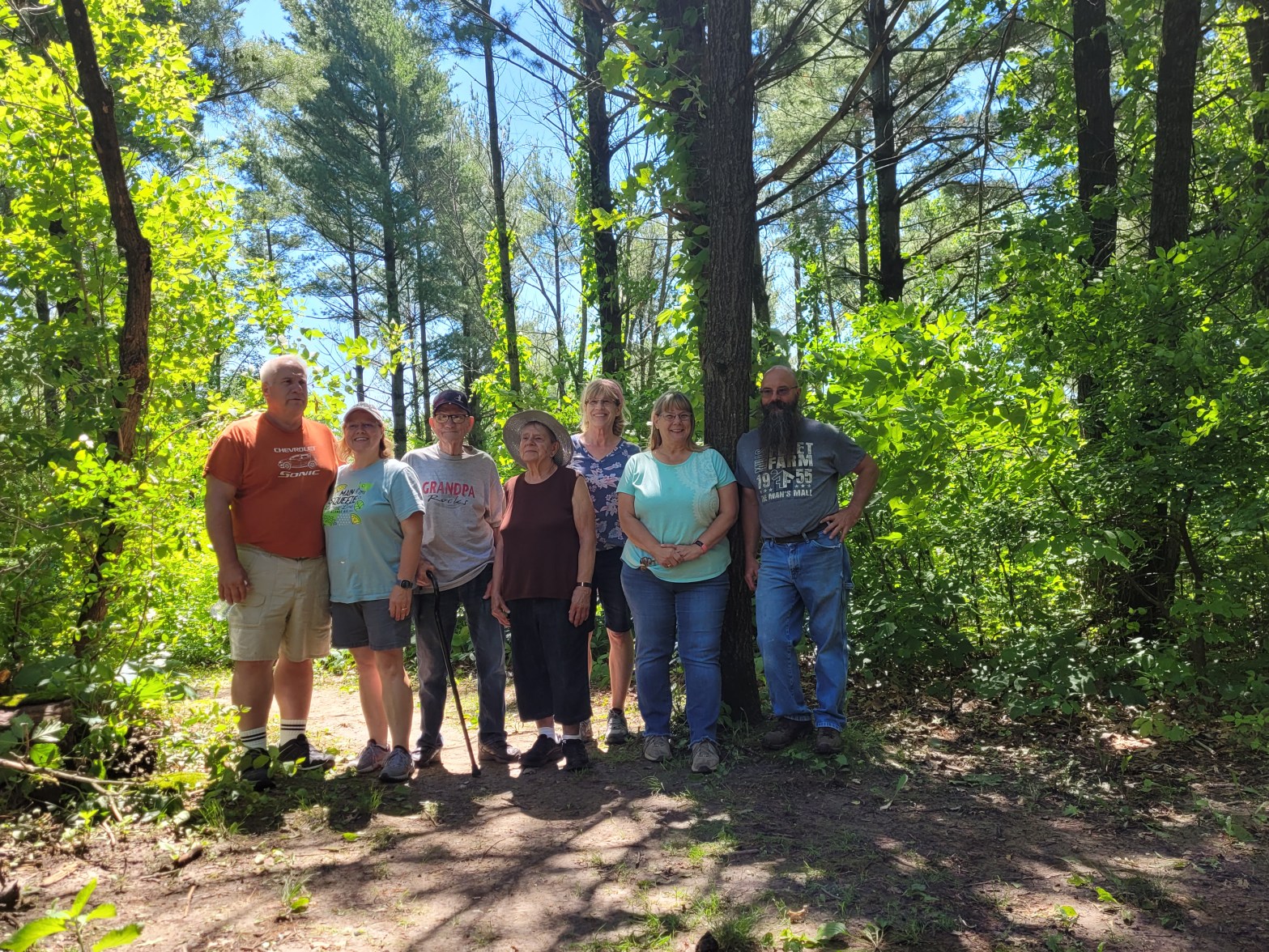
On June 16, 2022, when I was visiting, two of my cousins arranged for a group of family members to ride up into the park in 4-wheel drive trucks so that my 92-year-old uncle could see the land where he spent the first 14 years of his childhood. 

Great-grandfather Leon bought this property in the 1920’s and lived in a white wooden house at the bottom of the ridge where he planted a family garden and built a barn for cattle and horses.  Twenty years ago, I remember walking through the ruins of that house.  When he bought some farms at the top of the ridge, Leon Sr. let his oldest son Leon Jr. and his family live in one of the farm houses up there.  Leon Jr.’s first son, Paul—my father, was born in 1929 and his second son, David, was born in 1931.  David is the father of ten of my closest cousins.  Twenty years ago, we found a rusted sled that Paul and David used to travel down the snowy slopes of the ridge when they were little. 

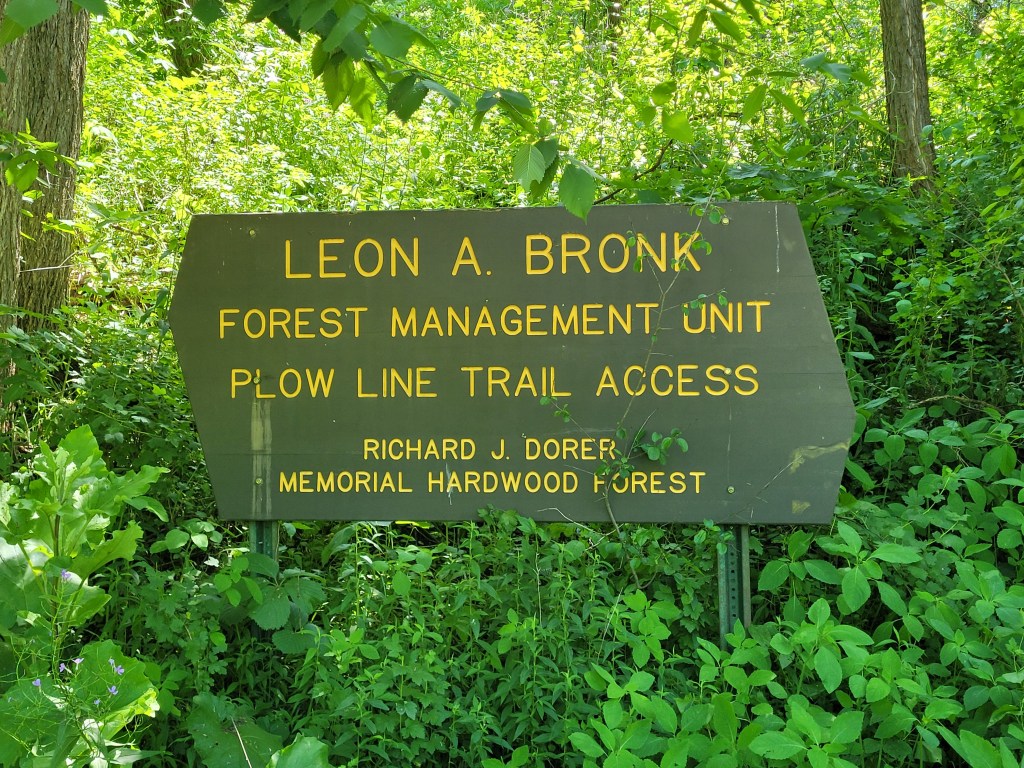
In 1969 when he was 81-years-old, Leon Sr. sold the land to the State of Minnesota, and it became part of the Richard J. Dorer Memorial Hardwood State Forest.  Since much of the property rises 500 feet above the surrounding valleys, it provides hikers and bikers tremendous scenic views of the land and water below.  The State of Minnesota planted thousands of white pine trees in rows, a forest that now covers up any evidence of houses, gardens, and alfalfa fields.

On this day, cousins Diane and Bill drove the trucks into the park and up the ridge under the supervision of a park volunteer named Mark.  Mark is an avid off-road bicyclist, and he started to maintain the 6.5 miles of hiking trails in this park by using his electric weed-whacker to cut the weeds. One day when he was working, he met a state park ranger, and he explained how he biked up the ridge with his whacking machine to keep the trails open.  He also wished that the gate was open so he could use his four-wheeler jeep to bring his mower up; because the weeks grew so fast, the mower would do a better job in a shorter amount of time.  The ranger gave Mark a key to the gate and unlimited access to the park.

When my cousin Diane wanted to arrange a family drive, she called Mark to get the State’s permission to drive trucks through the gate and up to the top of the ridge.  He helped her out because he wanted to meet the oldest living Bronk relative, my Uncle David, who had actually once lived on the property.

Mark was excited to hear stories about the property’s history.  The park is named the Bronk Unit Plowline Trail referring to the line where the Bronks stopped plowing their fields.  Uncle David revealed that one ridge is known as Cherry Hill, probably due to the cherry trees growing there.  Another ridge is known as Straw Pile Hill.  That’s where, when he was a mere boy, David dumped the hay that he harvested from the fields, and Paul would pick it up and haul it off to be sold.  David had to plow the fields and collect the hay with a horse-drawn contraption.  Paul got to drive the tractor since he was older. 

My dad used to say that “You can take a man away from the farm, but you can’t take the farm out of the man.”  All his life, my father was an excellent farmer.  When I was born, my family rented a two-acre farm in Fair Oaks, California.  I was allergic to cow’s milk, so my parents bought a goat and gave me its milk.  We had chickens, bunnies, and geese.  My mother made butter and ice cream by hand. 

Later, when we moved to a smaller property, my dad raised sheep.  One sheep was our favorite, and we named him Jerimiah.  One day when we got home from school, we couldn’t find him.  At dinner, we asked my parents where he was.  “He’s on your plate!” said my dad with a grin. 

David, too, farmed his whole life.  He bought a farm that had been owned by my Great-Great Grandpa Ignatius Bronk, who immigrated to the area from Gostomie, Poland and bought this farm in 1886.  When Ignatius died in 1896, his son Theodore took over the farm; Theodore was the older brother of my Great-Grandfather Leon Sr.  Today, David lives on the farm with his wife Linda and a herd of cows that his son, Bill, manages for him.  While I was visiting, about twenty-five of us cousins, first-cousins-once-removed, second cousins, and Uncle David and Aunt Linda had a picnic on a hot and humid 100-degree day. To stay cool, we sat under the spreading branches of a white oak tree and slapped the gnats that buzzed around our faces.

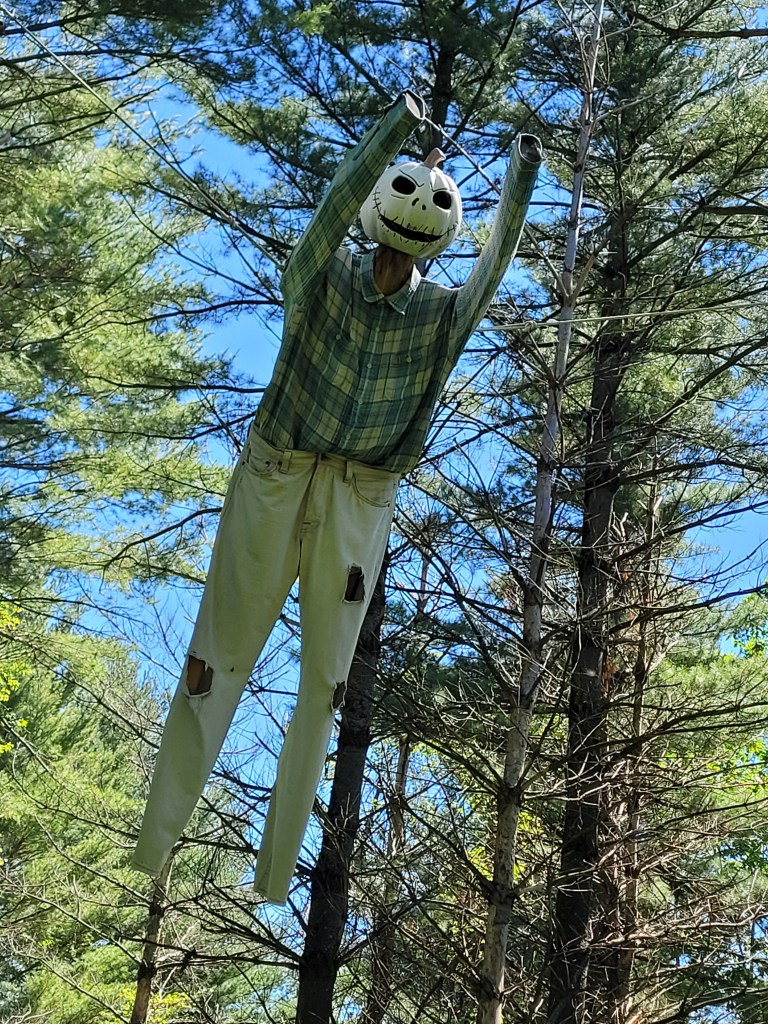
While we walked around the top of the ridge on Great-Grandpa’s property, we found wild carrots and asparagus—souvenirs from the gardens that once fed the Bronk families.  Hanging high above a hiking trail, we found a scarecrow with a Jack-o-lantern head, plaid shirt, and farmer pants.  Mark told us that a solar light made the head light up at night, creating an unexpected scary encounter.  We watched big, Eastern Tiger Swallowtail butterflies settle on wild flowers and examined tiny pine cones that fell from the white pine trees.  The floor of the forest was covered in a thick matting of dead pine needles, hiding the remnants of our relatives’ lives. 

What occurred to me that day was that all of the farmers who worked on my great-grandfather’s land had been removed from it: my great-grandfather, my grandfather, my father, and my uncle.  Yet, there was evidence all around the area and in places far away, like California, that these people and their descendants were still farming.  David’s son Bill will one day take over David’s historic farm.  My brother, Donald, can grow any vegetable or flower in his patch of garden in California.  I have a green thumb when it comes to growing flowers. Apparently, you can’t take the farm out of a farming family. 

The Yellow Rose

Friday was the last day of class, and Profesora Casti lead her students to Almagro, the part of Buenos Aires known for its flower vendors.  First, the group wandered among the flower stalls on Acuňa de Figueroa where baskets of roses filled the air with intense fragrances.  Leonie bent over the bunches to breathe in their perfume, and she took turns saying their names out loud with her classmates.  They chatted with the vendors who told them where they grew their flowers and how they worked from early in the morning until late at night planting seeds, hand-watering, and pruning in order to produce the most beautiful blooms. 

The vendors chatted about Mother’s Day, weddings, and baptisms for which they sold the most flowers.  Some stayed open 24 hours a day.  The best time to buy flowers, they said, was late at night or early in the morning.  These really were the most romantic times of the day anyway. 

The class meandered to Calle Sarmiento where even more vendors had their shops.  One shop, filled with tuberose and jasmine, perfumed the air outside its door with heady floral fragrances.  Inside, the vendor was wrapping flower bouquets in cellophane paper for a woman and her two daughters. 

Leonie wandered away from the group to admire the lilies of another vendor.  While she was reaching out to touch a petal, a woman dressed in a green apron came out to greet her. 

“Your lilies are gorgeous,” exclaimed Leonie.

“Thank you.  My grandfather used to sell flowers on the streets of Buenos Aires.  My father sold flowers in the old market in stall 8, and, now, I rent this shop here to continue our family tradition.”

Leonie moved under the shade of the willow tree that grew right in front of the storefront.  “I love flowers,” she said.

“I love flowers, too,” replied the vendor.  “I’ll sell them until I’m old and frail.”

Leonie paused in thought, running the woman’s response through her mind.  Forever was a long time to do just one thing.  Leonie didn’t know that she would ever find something that she wanted to do for so long.  The woman in the green apron smiled at her, her face flushed with the essence of intense happiness, her eyes like shining opals. 

“So,” Leonie asked, “You don’t ever wish that you could do anything else?”

The woman smoothed down the front of her green apron with hands crusted with dirt, chapped from years of digging and planting.  “No, never. I never wish to do anything else. Each day in my flower shop I get to express my creativity, and that gives me intense joy.  Besides, I know that I like to be around beautiful things, and what could be more beautiful than a shop full of flowers.”

“You seem so content.”

“You see this willow tree that’s giving you shade?  A willow tree symbolizes fulfilling wishes of the heart.  It also symbolizes inner vision.  I’m lucky to know what fulfills my life.  That knowledge is my inner wisdom.”

The vendor showed Leonie around her tiny shop, identifying the names of all the flowers and inviting her to smell their fragrances.  Leonie told the vendor that she was about to take a trip to search for her life’s purpose.  As the woman listened to her story, her eyes glistened and a whisper of a smile set upon her lips.

Before Leonie left, the woman held out a yellow rose.  “This rose symbolizes our new friendship,” she said.  “Friends are one of the most precious treasures of your life.  From now one, you and I are lifelong friends.  I wish you success on your trip and hope that you find your version of life fulfillment. 

That night, just before Leonie went to bed, she sat at her desk to write in her journal.  I know what fulfills me, she wrote.  After setting down her pen, she felt anxious.  But I don’t know what fulfills me, she worried.  I don’t know what I want to do with the rest of my life.  I don’t know what makes me happy day after day after day. 

Leonie looked at the yellow rose that the flower vendor had given her.  Its yellow petals brightened up the shadows of her room.  She remembered how gently the woman had picked up each flower and described its characteristics, moving among her flowers with grace, touching each blossom with respect and admiration; her movements were filled with love. 

Now Leonie knew.  The woman had been a messenger from her own soul to teach her how to find her own purpose.  Love was an integral part of finding fulfillment.  When she found out what she loved, she would find her contentment. 

Leonie touched the yellow rose, and her heart filled with joy when she remembered that the woman promised that they would be friends for life.  Friendship, she thought.  I have love already. 

A Tule Fog Morning

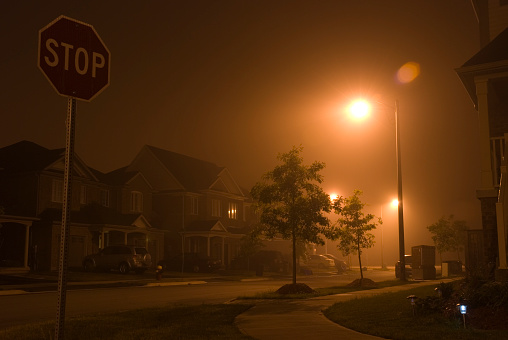
When I walked outside to get the newspaper this morning, tule fog blanketed my world. The blades of grass chilled my slippered feet, and the air bathed my face in cold breath. The street lamps glowed like steaming, yellow jewels. Houses wore shrouds of gauze, and both ends of the street disappeared into a thick, milky blanket.

I grew up in Sacramento where tule fog covers the neighborhoods, hills, and American River from November to early March. When the humidity is high and the nights cool down fast, the condensation lifts from the ground like a thick mist, as white as a clean sheet.

I paused in the front of my house to enjoy the mystical sensation. I couldn’t see any details past about a hundred feet, and the whole morning was clothed in mystery. My heart skipped a couple beats at the excitement of remembering long bicycle rides in the tule fog, not knowing whether I’d be cycling head-on into a mailbox or a person walking on the street. I rode slowly, but deliberately, tempting the fog to clear just in time to save my life from a disaster.

While I was standing outside this morning, my almost bare feet chilling, my arms cupped around my torso, holding my robe together, I felt the thrill of the mystery of not knowing what the fog was hiding.

Mystery is an exciting part of life. We never know what will happen the next day, the next year, or the next decade, even if we plan conspicuously. Life has a way of retaining a sense of mystery.

I thought back to the day when I was nine-years-old, writing my first poem. When I was a teenager and I got up early in the morning to walk in the dew-filled yard just so I could write a poem about how it looked. About when I won the Cadbury’s Essay Contest before I ever knew that writing would become my major passion. Mystery.

I thought back to the times when my parents and nine brothers and sisters celebrated Thanksgiving, Christmas, and Easter, sitting around a plain, mahogany dining room table. Later, when some of us got married and had kids, the food would be set off to the buffet; we’d line up, say prayers, and then jostle for a seat. Lots of fried chicken, sliced ham, potato salad, broccoli salad, a tray of raw vegetables, ranch dip, fruit salad, pecan pie, trifle, and pop out of the can. Never would I have imagined that these family dinners would create an unbreakable bond between me and my siblings that is even more important now that both of our parents have passed. Mystery.

I thought back to my first college adventure when I majored in accounting. I planned to work in finance my whole career since it was a good field for women at the time. I admired my mother’s sharp ability to manage money, and thought that this major would give me the independence I sought. I did. What I didn’t know was that my love of writing would eventually win out, and I’d go to graduate school to become an English professor. The change was exciting, and I’m sure a lot of the excitement came from studying a completely different topic.

I saw myself in a silk wedding dress walking down the aisle of a church in Sonoma, California toward my first husband. The mystery of not knowing that the marriage would become a disaster allowed me to stay married for nineteen years, long enough to almost get my two beloved children raised and launched, and long enough for me to pick my crippled self off the floor and walk decidedly out the door to a healthier life.

So this morning when I stood in my robe in awe at the impenetrable tule fog, I became astutely aware that my life was still full of mystery, and I felt excited. Will I ever truly become fluent in Spanish? Will I ever get the chance to fly to Argentina to visit my son-in-law’s mother and be able to chat with her?

Will I finish writing my novel? If I finish it, will I publish it? If it’s published, will I visit bookstores to read and sign it?

Will I live to be sixty-five, seventy, eighty, or ninety? If I do, will I be able to write until the very end, or will my health limit my ability to follow my passion.

That’s the thing about mystery and the future. We just don’t know what’s going to happen until it happens. This forces us to focus on the present and helps us do the best we can now so that our future has a chance of imitating our dreams.

The tule fog covered the ground for hours this morning, reminding me to make the best of my day. That’s as far as I really can see.

Wisdom of the Trees: Chapter 2/3

Chapter 2 – Birch

During the last week of class, Profesora Casti took the class on field trips so the international students could experience the culture of Buenos Aires.

On Monday, the class walked to the Manzana de Las Luces.  Profesora Casti explained that this was the Block of Enlightenment and contained some of the oldest buildings in Buenos Aires, including the Baroque church of San Ignacio, a church built by the Jesuits between 1686 and 1722. 

The students listened as their instructor explained how the Jesuits also built a school, museum, and pharmacy on the site, and operated all of them until the Spanish came and suppressed the Jesuits.  Since then, the site has been transformed into a university, cathedral, and Argentina’s first medical college.  Later, the Spanish opened Buenos Aires’ first printing press and orphanage on the site, extending its colorful and diverse history. 

What most fascinated Leonie was the warren of tunnels underneath the street, once used to store ammunition during Argentina’s fight for independence.  The students followed each other single file through the narrow, brick tunnels, stooping their heads low under the arched ceilings.  Here and there, the tunnels stopped, the entryways blocked by dirt and rocks from centuries of neglect. Utility lights lit up the corridors, and the lights created shadows on the walls that walked with them. 

When they came outside again, the sunlight blinded Leonie, and she shielded her eyes with her arm, squinting and squeezing her eyes shut until they became adjusted to the brightness.  The students sat down on stone walls in the courtyard to rest.

Leonie sat next to an older woman who was wearing a straw hat and drinking out of a metal flask.   Beside the woman leaned a walking stick, hewn out of white wood marled with yellow scars.  Leonie had never seen a walking stick so beautiful and unusual.

“Are you wondering about my stick?” the woman asked suddenly.

Leonie looked down at the ground quickly, fluttering her eyelids.  “Yes, I am,” responded Leonie.  “It’s so unusual.  What kind of wood is that?”  She slowly raised her eyes to look at the stick and then noticed the woman’s smile.

“I carved this out of birch wood when I was about your age, a wood that signifies new beginnings.  I can see that you are about to start a long journey, one that will give you a new beginning and help you find out your life’s purpose.”

Leonie opened her eyes wide and stared into the woman’s face.  “How did you know that I was going on a journey?  How did you know I was searching for my purpose in life?”

“I am an old soul, and old souls can read energy.  From your energy, I can see that you have suffered a great loss, but this loss will help you gain wisdom and strength, and, in the end, the loss will become your constant companion.”

“My mother died, and I miss her terribly.”  Leonie sank onto the rock perch, remembering the last time she saw her mother’s face.  Her mother had been beautiful, even when she suffered from the cancer.  Her face always glowed with an even sunny complexion, and her smile lit up her eyes like emeralds under a jeweler’s lamp light. 

“The first thing you need to do is to write down your affirmations,” said the old woman, rustling her wide skirts as she turned more to face Leonie.  “Whatever you wish to have, write it down like your already have it.”

“I don’t know what you mean.”  Leonie scratched the back of her head.

“An affirmation is a positive assertion that claims something is true.  When you put forth a personal affirmation, all of creation conspires to help you attain it.” 

“That sounds very interesting,” said Leonie, “but my father wants me to go home right after I finish this Spanish class.  I keep thinking I should stay here longer so I can find out what to do with the rest of my life.”

“You must learn how to believe in yourself and not to rely on the opinions of anyone else.  Your father cares for you, but your life is not his.  You must follow your own heart, or you will feel like you are not living.”  The woman stuck one of her tanned hands into the folds of her skirt and took out a small book, about the size of Leonie’s cell phone. 

“This is a gift from me.  Inside this journal are blank pages.  Today, start writing down your affirmations, and then your life and fulfillment will begin.”  The woman smiled at Leonie just as the sun poked through the branches of an oak tree.  Leonie had to close her eyes it was so bright, and when she opened them, the woman with the birch walking stick was gone.

That night, Leonie sat up in bed, the journal opened before her, a pen in her hand.  She wrote—I want to make a difference.  No, that wasn’t right.  The old woman had told her to write as if what she wanted was already true.  She put a line through the sentence and tried again—I am making a difference, she wrote.

Pressing the journal to her chest, she leaned back to see if she felt better.  No.  She still felt like she hadn’t a clue of what to do or how she could contribute to the world. 

Contribute—a good word, she thought.  She wrote another sentence underneath the first one—I am contributing something positive to the world.  Now she felt a little better.  The way she would make a difference would be by contributing something positive.  She didn’t know what that was yet, but she was determined to find out. 

Leonie placed the journal and pen on her nightstand, turned out the lamp, laid her head on her pillow, and fell asleep with a feint smile on her face.

Chapter 3 – Myrtle

On Wednesday, Profesora Casti took the class to Iglesia de Santa Felicitas on Calle Isabel la Catolica in the Barracas District.  The students learned that this church was built in the early nineteenth century in honor of Felicia Antonia Guadalupe Guerrero, considered to be the most beautiful woman in Buenos Aires.  Her husband died from yellow fever, leaving her a widow.  Later, she was killed by her rejected suitor, Enrique Ocampo. 

Leonie walked through the eclectic gothic interior of the church, gazing into the faces of the marble statues of Felicitas and her son and husband.   Around the perimeter of the church, she paused in front of the stained-glass windows, looking into the faces of the saints and admiring the colors of the roses.  She was so intrigued by how the natural light lit up the panes of glass that she didn’t see the young girl until she bumped into her.

“I’m sorry, said Leonie.  I didn’t see you there.  I was so interested in these beautiful windows.”

The girl didn’t respond.  She seemed lost in thought and sad.

“Are you o.k.?” asked Leonie.  She gently touched the girl on her wrist, which she noticed was tied with a long, red ribbon.

The girl was about the same age as Leonie.  She had long brown hair, big brown eyes, full lashes, and a mouth that was wide and voluptuous.  Leonie thought she was beautiful. 

The girl looked at her.  “Oh, I was lost in thought.”  Her eyelashes scanned Leonie from head to toe, and then she smiled.  “Are you a student at the university?”

“Yes, I am.  I’m on a field trip with my Spanish professor.  This is the last week of classes, and we’re touring around Buenos Aires to learn more about the Argentine culture.  May I ask you why you are here?”

“I’m looking for love,” said the girl, waving her wrist in front of her. 

“I don’t understand,” responded Leonie.

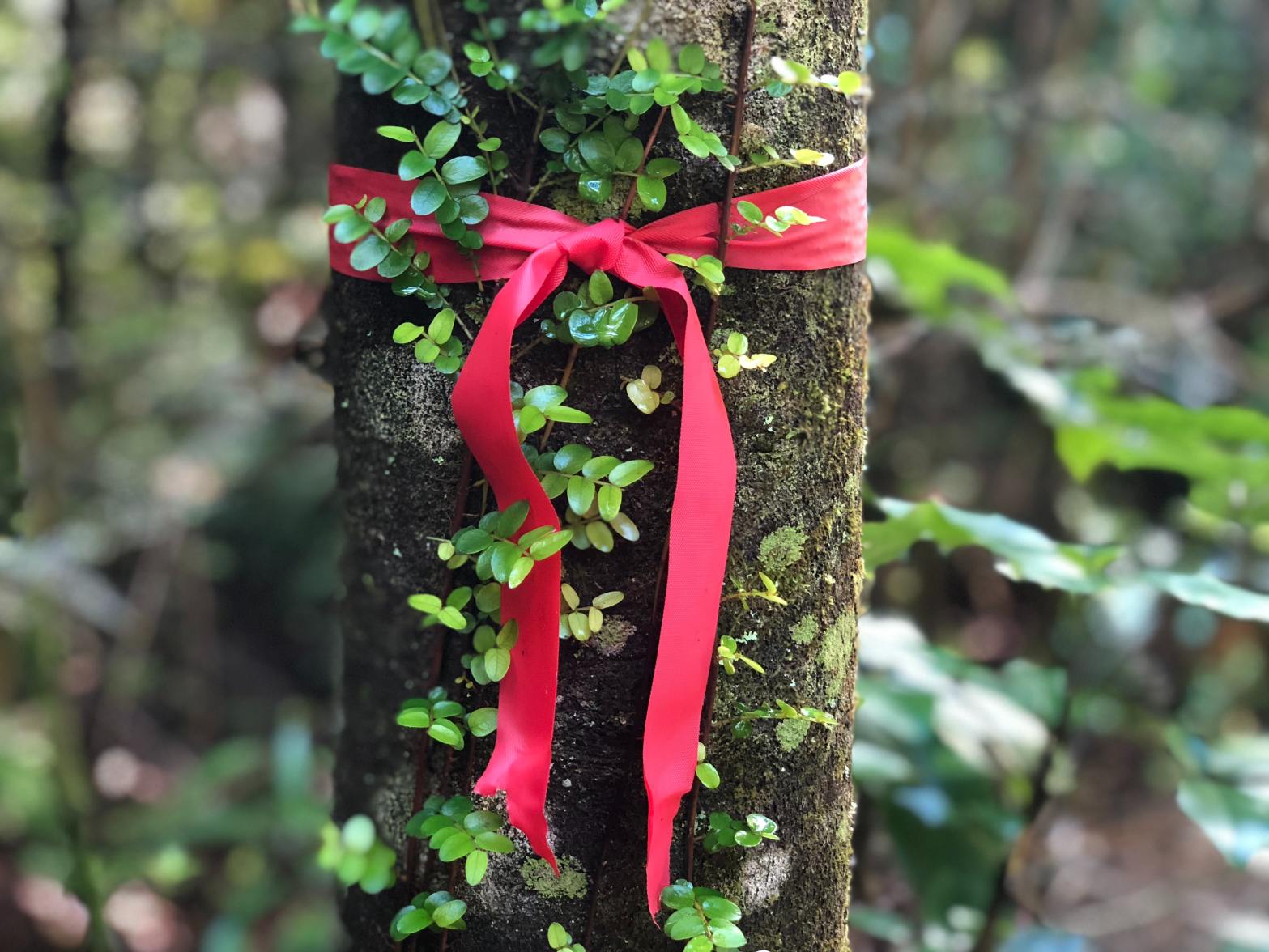
“We have a tradition.  If a girl wants love, she comes to the cathedral and ties a ribbon on a branch of the myrtle tree in the garden, which symbolizes romantic and devoted love.  Soon, she will find a love that will be true and lasting.”

“What a nice tradition.”  Leonie smiled at the girl.

“Did your professor tell you that this church is haunted by its namesake?”

“No. What do you mean?”

“The woman for whom this church was built, Felicia, was murdered.  She was shot in the back by her suitor and died on January 30.  People say that on that day, a woman with a pale face and dark hair, dressed all in white, walks from the garden, opens the door to the church, proceeds down the aisle to the main altar and leaves a trail of tears behind her. 

“That’s such a sad story.”

“Now, Felicia brings love to all the women who request it by tying their ribbons on the myrtle tree.  She has turned her tragedy into positive deeds—bringing love to all women of her beloved city.”

“So, you are going to tie your ribbon on the gate?”

“Yes, to find my love.”

“May I help you?”

“I’d like that. Let’s go.”

The two girls walked out of the church together, smiling and chatting as they went.  Once they reached outside, they walked through the roses in the garden until they reached the myrtle tree.  The brown-eyed girl untied the ribbon from her wrist and, with Leonie’s help, tied it around one of the tree’s branches. 

“Thank you for helping me,” said the girl.  “I believe I will find my love even faster because of your kindness.”

“I was honored to share your dream,” said Leonie. 

“Let’s tie a ribbon on the tree so you can find your love.”

“Oh, I’m not ready for love,” said Leonie.

“That doesn’t matter.  Your love will arrive when you are ready.  Here, I have another ribbon.”  The girl pulled another red ribbon out of her pocket and handed it to Leonie.

Leonie raised her chin back and laughed which sounded like the rise and fall of a musical scale.  “I guess it won’t hurt.”  She chose another branch close to the girl’s ribbon and tied hers around it in a bow.

“I’m happy that you will find love too,” said the girl.  The girl smiled at Leonie, placed her hands on her shoulders, and kissed her lightly on each cheek.  Her eyes shone like topaz.

“I will never forget you,” said the girl, and she walked away, her skirts swishing gently from side to side. 

That night, before Leonie fell asleep, she wrote in her book of affirmations.  She wrote—I provide love to the world.  She looked at the words that she had written and thought about the girl with the full lashes who wanted to find love. 

I must first find out what I want, Leonie thought.  Until I know who I am and what my purpose is, I won’t attract the right kind of love. 

One thing I know.  I know I can provide love to others.  I’ll do this first and then, when the time is right, I’ll let someone love me. 

She turned out the light and dreamt about the myrtle tree and its red ribbons.

Wisdom of the Trees: Chapter 1

Photo by DARIAN PRO on Unsplash

From ancient times, trees have symbolized physical and spiritual nourishment, transformation and liberation.

Chapter 1 – Oak

One more week and she was done.  Graduated with a double major.  College over.  More educated than most of the people on earth. 

And you know what?  She wasn’t going back home, even when this class was over.  Her father had paid for a round trip ticket to Buenos Aires, but she was going to cash it in and stay.

This was her chance to really be independent, to find out what her values were without her father’s advice about this job or that apartment, this guy or that outfit. 

She missed her mother though, but her mother wasn’t at home anyway.  When Leonie was supposed to be having the time of her life in college, her mother had contracted breast cancer.  After three surgeries, six months of chemotherapy that sapped her effervescent energy, and twelve weeks of radiation that burned her skin red, the cancer came back. 

Just before she passed away, Leonie and her mother had sat under the oak tree in the back yard, the shadows of its branches spreading like arms across the grass. 

“I can’t lose you, Mom.”  She had wept beside her mom, the shade of the giant tree darkening her tears like black pearls.

“You won’t feel the same, but you’ll never lose me.  You’ll just have to learn how to live with me differently.” 

Leonie had felt so confused.  She stared at her mother’s face so that she could remember it—her gray-blue eyes, silky skin, a mouth that always held the hint of a smile.  She stared deep into her eyes, holding on, wishing for more time.

“I’ll be with you,” said her mother.  “I’ll guide you from a new place, a place you cannot see, but that is nevertheless powerful.  You’ll feel me.”

Leonie clutched her mother’s hand.

“I want you to find your inner strength.  Emulate this oak tree.  Every time you feel weak or lost, visualize yourself as an oak tree, rising strong, spreading wide, enduring challenge and finding the sun.  You won’t be alone because I’ll be beside you, breathing my love into your heart.”

“But I won’t see you.  You’re my inspiration.  I’ll be lost without you.”

“My love will remain here.  When you can no longer physically see me, you can find other women to inspire you.  Choose many, in fact.  One to follow for leadership skills, another to learn the art of love, and another to learn how to live with joy.  She may be one of your professors, a co-worker, a girl friend, a friend’s mother, or a woman you meet only one time in your life. Whatever you wish to be, you can find a woman to inspire you.”

“How can you be so strong?  You’re dying!”

“I’m content because I know that I will continue my life in another form.  My spirit is not dying.  My soul will continue, and I’ll grow from its future experiences.  I have many things to look forward to.”

Leonie remembered this conversation as she held her mother’s ashes six months later, secured in a pearlescent urn shaped like a heart.  Leonie kissed the top of the urn before placing it in the niche at the cemetery.   “Enjoy your journey, Mom,” she whispered.

Later, as she sat in the back yard next to her mother’s chair, Leonie thought she heard her mother’s voice.  No, maybe it was the breeze rustling the limbs of the oak tree instead. 

“My journey will be right alongside you,” said the breeze.

Staying focused on her studies was impossible after her mother’s death, but her girl friends had helped, and then Leonie decided to go overseas for a change of scenery—a much needed distraction that she needed to survive.

So now, she was in Buenos Aires and hungry.  She lived in a shabby dorm room in the basement of the university and tutored students in English to make money, but it wasn’t enough. 

Leonie searched through her backpack for something to eat: an empty plastic juice bottle, a paper envelope from the bocadillo she had for lunch.  She poked her fingers deeper.  Something waxy.  She grabbed at it and pulled out an apple, a little bruised, but it was food.

The next morning, Leonie woke up with a growling stomach and the sound of traffic.  Engines racing, horns blaring, and brakes squealing invaded her tiny room through the high window that wasn’t even big enough for her to crawl through.  Leonie grabbed her shampoo and towel, opened the door, and paced to the single shower room. 

Whew!  It was empty.  The water felt refreshing on her wet head, rinsing off the humidity and sweat of her body from the sweltering night.

Today, she was going to meet a friend that she had met in her Spanish class.  Clarissa was a native Argentinian and Leonie wanted to ask her about traveling throughout the country. 

Upstairs in the dormitory lobby, a canister of coffee stood on a table next to a large blue box of sweet pastries.  Leonie poured the thick, viscous liquid into her own mug, stuck a pastry between her teeth, and whisked out the door.

Clarissa was sitting at a table in the corner of the café with her laptop open when she arrived.  A cup of mate steamed to the right of her computer, Clarissa wildly typing on the keyboard.

“Hey, how’s it going?” asked Leonie, grabbing the back of the chair opposite her, scraping it across the floor, flinging her backpack over a post, and sitting down.

“Hey,” murmured Clarissa, finishing a sentence.

“You know, this Spanish class is my last college class, and I’ve got to figure out what to do with the rest of my life.  I feel lost without my mother, and I don’t want to go home without a plan.  I don’t even know if I want to live there anymore.”

Clarissa picked up her mate, sipped it, and looked up at Leonie. “I suggest that you travel and meet as many people as possible.  They’ll give you new ideas, and you’ll learn that you have endless options,” said Clarissa.

“That does sound good,” said Leonie.  “How should I start?”

“Just go,” said Clarissa. “Don’t think too much.  Don’t plan too much, but be ready to make your trip work each step of the way.  I’m emailing my sister.  She works at the Belmond Hotel, a few miles from Iguazu Falls.  Maybe she can get you a free room.  Iguazu Falls is one place you should go!”

“Oh, I’m so nervous about traveling by myself.  Maybe I’ll just stay here,” responded Leonie.

“Oh, no you won’t,” said Clarissa. “You’re going, and that’s that.”

“We’ll see,” said Leonie.  I have a whole week of classes left.”

“Yes, a whole week to build up your courage and begin your new life.”