Making a Plan to Have Fun

This is not my idea. I got it from my daughter who is the most entertaining person in our family. She’s an adult—thirty-three-years-old—who loves to have fun. What she did is to make a list of things she wanted to do during Fall to make her life more enjoyable. She downloaded a free template from Canva and made one column for the activity and another for checking it off when she completed it.

What did she include in the columns? Well, for one, nothing cost a lot of money. One thing she wrote was to buy paper Halloween cups to enjoy when she had coffee. She has a dog, so she walks a lot, and a holiday coffee cup would be a super conversation starter for all the other dog walkers in her neighborhood.

Here are some things I would write:

  • To make lamb stew
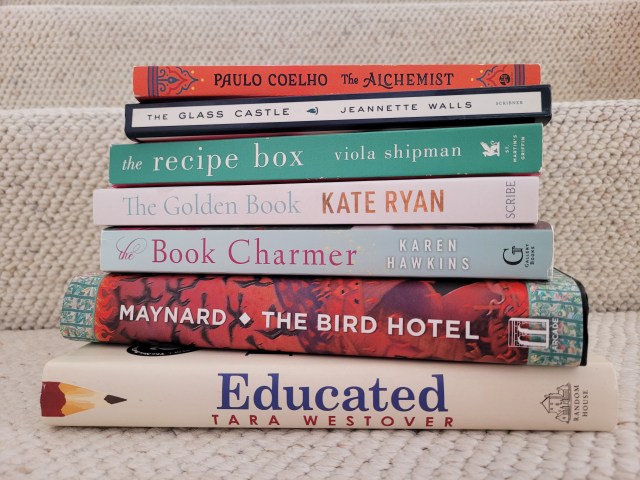
  • To read On Writing: A Memoir of the Craft by Stephen King
  • To watch a movie in a movie theater
  • To take flowers to a friend that needs cheering up
  • To go to a craft fair with a friend
  • To take a hike to a natural labyrinth near my house
  • To visit my local library
  • To wander around in a large nursery
  • To prune my roses
  • To send my daughter a card for no reason except to say “I love you.”

Six Steps Back to Confident

I hate feeling inadequate, unsuccessful, afraid of failure, or irrelevant. But that is exactly how I feel immediately after I read comments about my writing from my editor. Which I did yesterday, a Saturday.

My first reaction to her comments was why was she working on a Saturday and bothering me while I was having a wonderful mother/daughter day? As I read her email of criticism, my chest filled with anxiety and fear infiltrated my whole body. I couldn’t bring myself to open the attached manuscript which contained her specific comments—line by line. My state of mind was so low that I went to bed considering giving up getting published.

Yet, after I fell asleep, I dreamed about how I could revise the story to make it better. I’m a writer down to a cellular level. There’s no escaping it.

When I woke up this morning, I realized that the most important task was to get my confidence back. My writer’s soul needed immediate attention, so I gave up my four-mile walk and took these six steps back to confident.

Allocating Time for Self-Love

I realized a few years ago, that self-love is a crucial part of confidence. I don’t just “find” time for it, I “allocate” time for it. Sometimes, I spend an hour dedicated to self-love, and other times, I spend ten minutes. In any case, it is the first step I take to empower myself.

This morning, I decided to start my morning with self-love. I made a cup of tea and found a place to be.

Doing Something Joyful

Joy is also a part of confidence. When I experience joy, I know I’m valuable enough to deserve it. One writer I know goes for walks. Her joy comes from the breeze in her face and the smells of the flowers. Another friend bakes cookies or bread, filling her kitchen with happy warm and yeasty smells.

I found joy this morning by sitting in a rocking chair on my patio surrounded by my roses, hydrangeas, and gardenias. As I sat, drinking my tea infused with honey, I noticed that the patio tiles were littered with leaves and twigs from the neighbor’s tree. So, I got a broom, swept it, and put the debris in the trash. I also used the broom to clear cobwebs off the solar lanterns on the fence.

Swishing a broom across a floor reminds me of Cinderella and how, after putting her broom in the corner, she dressed up in her ball gown, met her prince, and lived a happier life. I store my broom in a corner of my patio. It represents “renewal.”

As I was sweeping, I saw flower bushes that needed deadheading, so I found clippers and pruned them. Then, once again, I sat in the rocking chair to admire my clean garden. I admired the various pink hues of the flowers and how they complimented the green grass and bushes. I lingered upon the gazing ball and watched how the sun turned it into a prism of rainbows. Bees and tiny orange butterflies flitted from flower to flower, and a hummingbird whizzed through the branches of the mock strawberry tree. The beautiful scene sank into the pores of my skin and filled my body with the love of nature.

Nourishing my Belly

I’m lactose intolerant, so if my belly isn’t comfortable, I’m out of service. Nourishing my digestive system affects my brain, my heart, and my writing soul.

One writer I know eats a carton of ice cream to feel better. Another writer friend eats chocolate. Me? This morning, I ate two pieces of seed bread with mashed avocados on top. It was filling and nourishing to my sensitive stomach. My stomach seems to be the foundation of my well-being.

Taking a Shower

When I look good, I am a better writer. After I found joy in my garden and nourished my belly, I took a warm shower. I didn’t just use water and soap to refresh my body. I used a loofa to scrub my skin soft and facial soap for cleaning my pores. After showering, I lathered my face and body with lotion until I felt renewed and adequately pampered.

Reading Positive Comments about Myself

When someone says I’m friendly, I feel great. If they point out a sentence of mine that they love, I feel fabulous and talented. So, what I did after my shower was to open my editor’s attachment that included her detailed comments. I skimmed over her recommendations and found places where she had complimented me on phrasing, wonderful word choice, or sensational sentences. As I read, the weight in my chest lifted and I no longer felt that she thought I was an inadequate writer. I couldn’t be if I could type out these incredible lines.

Writing Something that I Control

By this time, I was ready to tackle my editor’s criticism and start revising my novel. But I decided to do one more thing —write something that I could publish on my own; therefore, I wrote out this blog. I’m going to post it in just a few minutes, and after I do, I’m going to feel like I’ve accomplished something even before lunchtime.

My confidence is back.

White Elephant Appetites

The term “white elephant” originated in Southeast Asia. Monarchs possessed white elephants to convey that they ruled justly, and that their kingdoms enjoyed peace and prosperity.

The white elephant was considered sacred, so it couldn’t be used for labor; it was an animal that did not contribute to a household, but had to be fed and sheltered.

 Expensive for an elephant.

The gift of a white elephant from a monarch also was troublesome. On the one hand, a recipient had the monarch’s favor, but on the other hand, the elephant could not be given away and was costly to keep.

A white elephant is, accordingly, something whose value does not equal its cost to maintain. Today, a white elephant is a “used” item that’s no longer wanted by its owner.

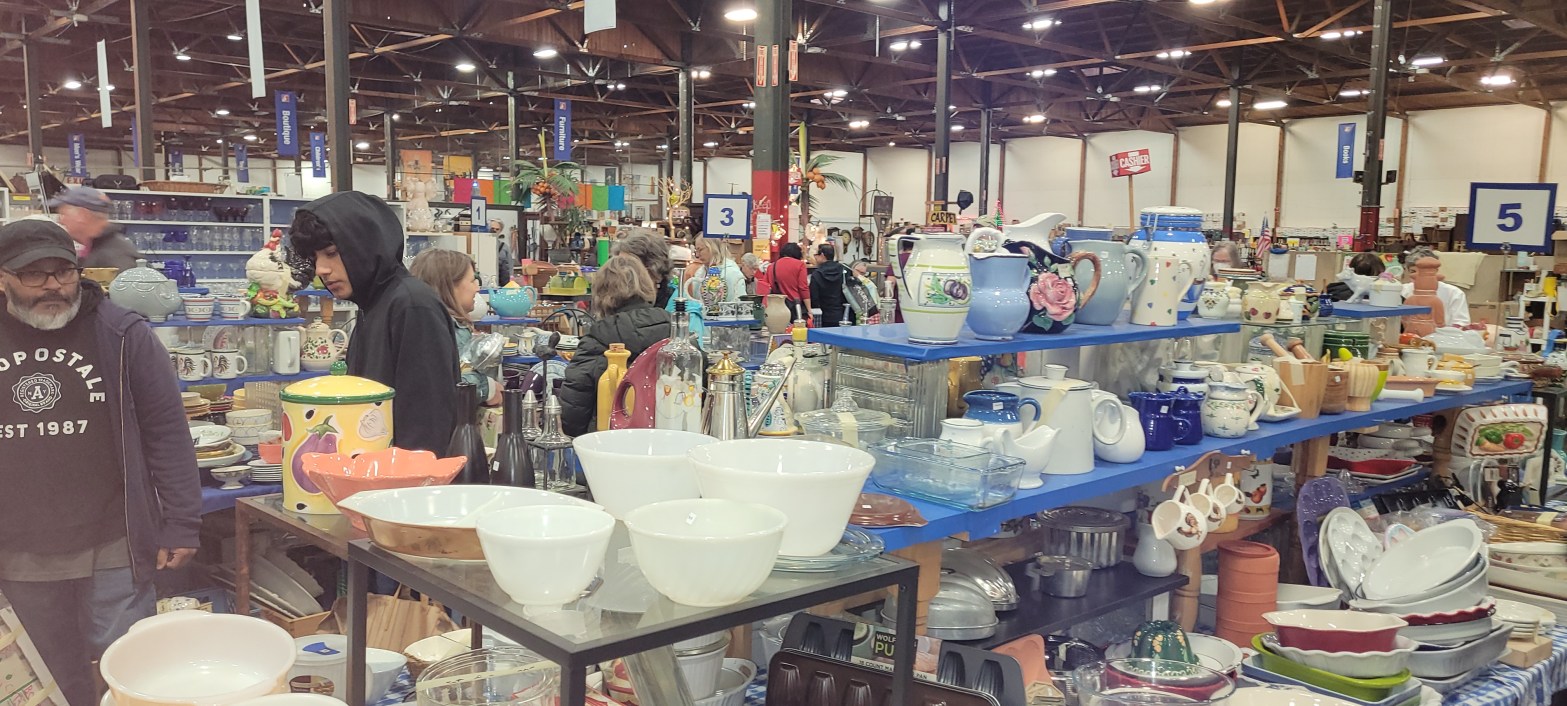
Two friends and I went to the Oakland Museum’s White Elephant Sale yesterday. Lily had purchased our $5 tickets at the beginning of January, and yesterday was the first $5 day for the sale. If we wanted to pay $40, we could’ve gone last Sunday. Our goal, however, was to get the best deal possible, so a $40 ticket didn’t qualify for that.

We wanted to find a white elephant that we could transform into a treasured object.

The Oakland Museum’s White Elephant Sale is sponsored by the Oakland Museum Women’s Board, an organization of just over 100 members. However, this group of women recruit thousands of volunteers who work all year long collecting used items for their annual White Elephant Sale which is held each January to March. This year, 2024, is the 65th anniversary of the event.

Why would these women work year-round to hold a rummage sale? Since they began holding this event, their organization has raised over $30 million for the Oakland Museum. That’s why.

We got to the White Elephant Sale Warehouse on Lancaster Street at approximately 9:30 a.m. The doors were going to open at 10:00, and the line of people waiting with tickets to get in was two blocks long. Everyone was dressed in coats, hats, and gloves for a chilly day in Oakland and a threat of rain. A woman who lived in a condo came outside to find out why hundreds of people were standing on the sidewalk outside her building. Her eyes were as big as saucers.

Volunteers scanned our tickets and wrapped bracelets around our wrists.

Friends asked each other which department they would visit first.

“Tools,” said one guy, standing next to his two fellow male rummage sale fans.

“Garden,” I said, imagining statues of angels, terra cotta pots of all sizes and shapes, and wrought iron tables and chairs.

“Art,” said a woman dressed in a pink jacket, her hood pulled over her wind-blown hair.

Finally, the doors opened, and the coat-shrouded shoppers in front of us filtered through the wide doors into the windowless interior. Portable toilets were set up outside at the bottom of the entrance stairs. We climbed the old steps to the metal porch, showed our bracelets, and walked inside.

Think of a football field, 100 yards long by 160 feet wide. The interior of the Oakland Museum’s White Elephant Warehouse is almost twice that size. The building is over 90,000 square feet. The organization organizes donations for sale into 17 huge departments: men’s clothing, women’s clothing, children’s clothing, sewing, linen, kitchen appliances, China, dishes and baking ware, tools, garden, art, bric-a-brac, toys, musical instruments and music, lamps, furniture, and accessories.

My heart fluttered like a hummingbird in flight as I entered the building.

We rushed like we were being followed by bears, turning right for the garden department. Lily immediately found two metal buckets and a watering can. She grabbed them and got in line to check out. Buyers must check out their treasures before leaving a department. The volunteers write up a receipt, wrap up the items, and take payment. Or, like we did, you can pay for everything at a cashier near the exit.

Becky found a trellis, clutched her fingers around it and got behind Lily. As I passed them, Lily pointed to two more watering cans and asked me to get them for her.

After the garden department, we separated, each of us following our personal whims. As I wandered in the dishes and baking ware department, I joined hordes of treasure-hunters in picking up items, inspecting them, and then either tucking them under their arms or putting them back on the shelf for someone else.

Teapots, mugs, bowls, plates, platters of all sizes and design, wine glasses, glasses, cast iron skillets, ladles, cutlery, and a hundred other kitchen items covered table after table, shelf after shelf. There was pewter, pottery, stainless steel, stoneware, glass, and copper.

I found sixteen 4-ounce canning jars with lids for my sister who loves to can. I also found a white mixing bowl for my daughter. I would’ve bought something for myself, but I knew my cupboards at home were full of treasures from past sales. I have a white oval platter that I bought last year and three glass serving bowls from other years.  

Becky went to the art department and bought a pastoral painting in an ornate wooden frame. She also bought dishes. Lily bought a 24-inch brown wooden bench to put near her front door.

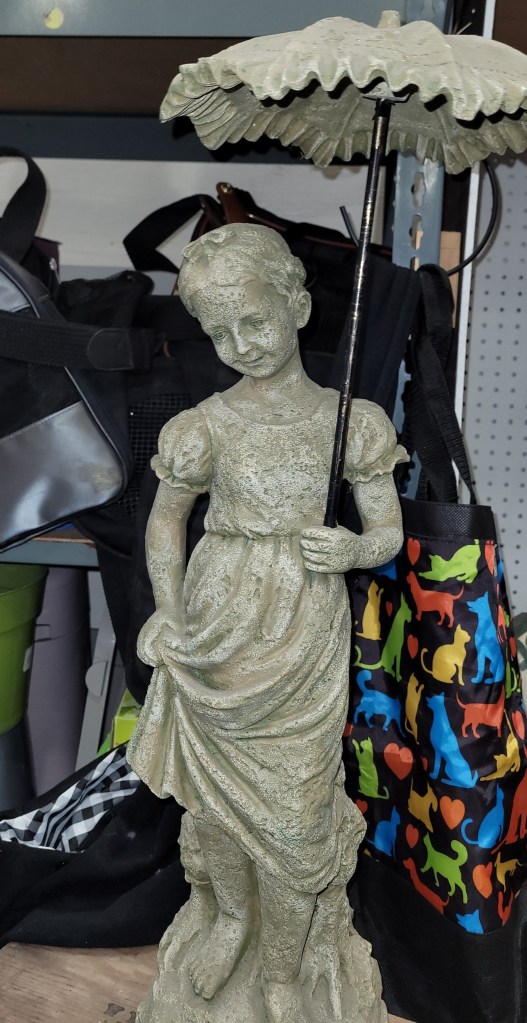
After much wandering from China to art to bric-a-brac to furniture to everywhere, I found a 30-inch garden statue of a young girl holding an umbrella. I hemmed. I hawed. I walked away and wandered some more. I watched a few other women touch the statue and look at it from several angles. I turned it around, placed it on a table, stood it on the floor. I considered its color—a shade of verdigris. After walking away several more times, I came back.

Finally, it was noon, and my friends would be about finished with their hunting, so I picked up the statue, tucked it under my arm, and got in line to check it out. It was heavy, so, while I waited, I put the statue on the floor and nudged it forward inch by inch.

Even if I didn’t like it, I was supporting the museum. And it was cheap.

We packed our treasures into the back of Lily’s car. In order to fit into the back seat, I had to push Becky’s trellis and painting over. I leaned them against the inside of Lily’s bench legs so they wouldn’t decapitate me if Lily stopped short in traffic.

Teasing drops of rain hit the windshield. Gusts of wind shook the car as Lily navigated out of Oakland and back into suburbia.

I got great deals. Becky came out with a few bags of bargains, and Lily, well she brought home several packages of treasures.

Thank goodness we bought treasures instead of white elephants. Our yards are too small for an elephant.

Character Study: Claire & Alice

Photo by Baptist Standaert on Unsplash

I drove up to Alice’s house in my GMC Terrain and parked the car near the curb. Alice’s home was next to a neighborhood open space. A gigantic hedge, over twelve feet high separated her front yard from the park.

I pushed my purse under the front seat, taking my car key with me. When I opened the door and got out, I tucked the key into my fanny pack where I had already put my cell phone. I put on my walking hat, which was pink and matched my hoodie. It also had a flap to protect my neck from the sun.

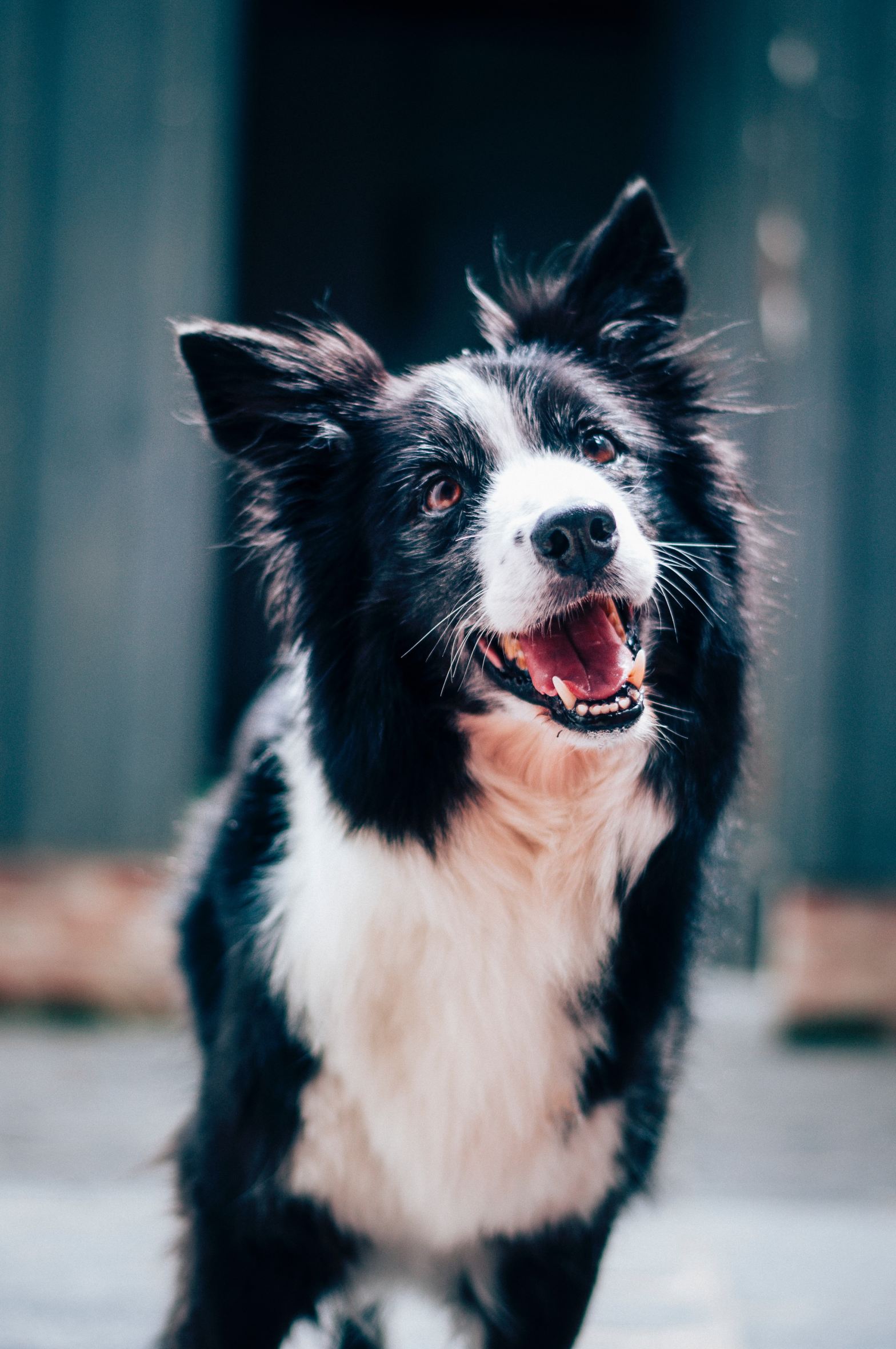
It was Tuesday, the day we always walked together. Alice walked her Border Collie while I stayed on her right. For some reason, the dog liked to pull the leash to the left onto the grass.

I’d known Alice since my son was in kindergarten; her son was my son’s best friend. We had met in the kindergarten playground after school while picking up our children. Later, we saw each other at another friend’s house for swimming, and even later when the boys were in middle and high school, they took turns hanging out at Alice’s and my house. In fact, when my son, Zach, graduated from high school at went to college, Alice had said that her grocery bill went down. Apparently, he liked her snacks and chocolate.

But now our sons were grown and working in Silicon Valley for high-tech companies, and we were both divorced from their dads. We were members of a single’s group named Rusty Bindings, which was a ski club for single people over 50. Alice and I were both in our sixties.

We looked pretty good for our age. Both of us had dyed our hair blonde since our thirties when the gray started to show. In addition, we both were avid exercisers, even though we didn’t ski. Alice did Zumba in her kitchen via Zoom and I attended Pilates classes four times a week. And we walked.

I ambled up Alice’s driveway over the flagstones. Her yard was a profusion of flowers and succulents of all kinds. Alice believed that lawns were ridiculous for yards in a state like California which was experiencing a drought, so she had ripped out all her grass and planted flowering bushes. Roses climbed up a metal arbor standing in the middle. African irises punctuated the landscape around the edges, and tea roses of pink, white, and yellow filled in the remainder of the middle.

Under the four-foot-wide eaves of the house, Alice had planted azaleas and gardenias in the shade that were now in full bloom. The gardenias gave off a strong vanilla scent as I walked up to the door.

On the porch, pots of all shapes and sizes held a variety of succulents: red, green, purple, curly, and pointed. The yard was a green thumb’s paradise.

As soon as I knocked on the door, a cacophony of barking began inside the house. Running paws pounded the floor and bodies thumped against the inside of the door. I jumped when the door shook since I had once been bitten by a German Shephard that was off its leash. I still had the scar just above my right ankle, an angry red curve.

After waiting two full minutes, I heard Alice come into the front hallway yelling at her dogs to let her through. The deadbolt clicked and then the door knob clunked as she unlocked the door. When she opened it, the Border Collie and Jack Russel dogs scooted through the narrow opening, jumped clear across the porch and pounced onto my chest with their front paws.

“Here Jack,” Alice called. “Come get your treat.” Jack jumped down, turned like a top, and ran back inside. As he did, Alice handed me the leash for the Border Collie, then she disappeared and closed the door.

I had gotten a little smarter over the years that we had been walking together, so I took a treat out of my pocket and threw it on the ground for Cali, the Collie. When she bent down to eat it, I clipped on her leash in a flash.

Alice came out of the door holding her hat and a flask of water. Her blonde hair was pulled back into a pony tail. She was dressed in blue jeans, a printed blouse, and a buttoned-up red cardigan sweater. She set the flask on the top of her car in the driveway while she put on her hat and I held onto Cali’s leash for life.

“I’m ready,” said Alice.

“Cali’s been ready,” I said.

Cali heard me and took off running with me holding onto the leash like a kite in the wind.

What Really Makes Me Tick (Happy)

Wouldn’t it be a better world if everyone knew what they needed to be happy? I’m retired, and I loved my teaching job; however, now that I don’t have to commute to work five days a week or grade college essays on the weekends, I just want to do things that make me happy. Here they are.

Admiring Flowers

Stopping to smell a rose may seem like an unimportant action, but, when I do it, it brings me joy. I have rose bushes in my front yard and back yard, and every morning, I wander outside to inspect every bush to see the new blooms. I sniff and stare and smile to my heart’s content.

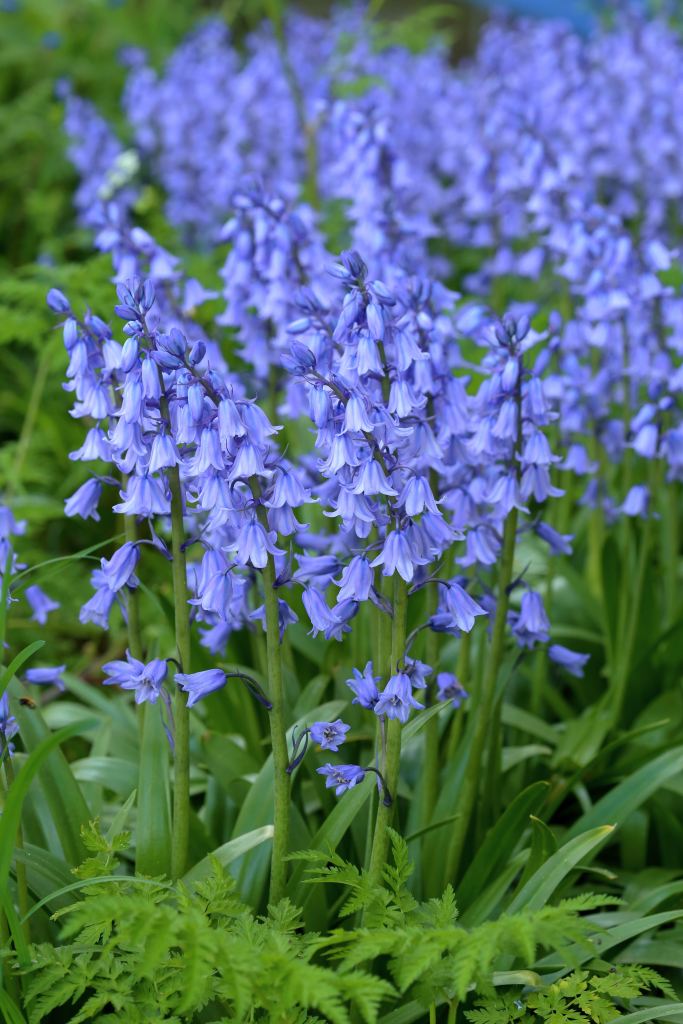
I remember the flowers of my childhood, too. In January, crocuses poked out of the soil in the flower beds in the front yard. In February, the daffodils came. Tulips arrived in March, and Irises after them.  By the time Lent was over, Easter Lilies grew like sophisticated ladies in white hats in our back yard. And in May, the meadows were carpeted with Bluebells.

For four years of my childhood, I lived in England with my family, and I was impressed by the colorful blooms of summer that thrived in the temperate climate. Rambling roses climbed up cottage walls. Cosmos waved their rainbow heads in the breezes like pretty bonnets. Hydrangeas brightened shady nooks of gardens with their puffy burst of blue and pink. I was entranced by their beauty.

At Christmas, my mother bought at least one Poinsettia to decorate the house. She bought red poinsettias, white poinsettias, and ones with white flowers with red stripes. Sometimes, she had an amaryllis bulb growing in a pot. Every day, I’d inspect it to see whether it was blooming or not. I was in more of a hurry than it was.

Making a Stew or Pot of Soup

Whenever my dad cooked, he made “water” soup. He added pieces of beef and vegetables to a pot of water to create soup. Ugh. We kids would cringe when we saw him taking out a pot. His were the worst soups I’ve ever tasted.

Maybe that’s why I love making delicious soups.

I own an old Dutch oven that is the perfect size for making one-pot meals. Some mornings even before I change out of my pajamas, I scour the refrigerator and pantry for the ingredients for a minestrone—onions, celery, carrots, zucchini, chick peas, barley, chicken broth, chopped tomatoes, oregano, salt, and pepper. Sometimes I add cooked shredded chicken. Often, I don’t.

Or I find the fixings for chicken noodle soup for a recipe from a William’s Sonoma Soups book that I bought a long time ago. While I’m chopping the carrots and celery for this soup and simmering the chicken breasts in the broth, I think back when I made this for my two children who loved it. I see their little faces above their steaming bowls, their hands holding spoons, their mouths filled with savory egg noodles.

On one European trip, I bought cookbooks in the Czech Republic and Austria, so when I want to make goulash, I search for recipes from those books. My favorite goulash is a beef, onion, and smoked paprika concoction that is topped with cornmeal dumplings. I first ate cornmeal dumplings at the restaurant at the Belvedere Palace Museum in Vienna. I’m still practicing to make mine taste as good as those were.

Reading Inside When It’s Cold Outside

To me, the essence of decadence is waking up in the morning, seeing that it’s cold and rainy outside, then reaching for a novel and reading it in bed. To take all the time in the world to read a story, then stopping and thinking about it is heaven on earth.

Reading when its cold outside reminds me of when I read as a child. I had time to sit on the floor in a corner of the house with a treasured book of fairy tales and get lost in another world. When my mother took me to the open-air market, I found the bookstore, walked to the back shelves, pulled out a tome, and read it while sitting on the floor. I was always afraid that the shop owner would find me and kick me out, but he never did.

Decorating My Home

When I was a child, we never had an expensive home, but that didn’t keep us from making it beautiful. In the spring and summer, I picked flowers in the meadows, poked them into vases and brightened every table and dresser in the house. In the fall, I cut branches of colored leaves for the mantel in the living room. For winter, my mother and I found pine cones and spray-painted them silver and gold for Christmas. We added holly and pine branch garlands in-between them.

Today, when a new season comes, I still have the irresistible urge to celebrate it with seasonal décor. Right now, I have a collection of pumpkins on my front porch accompanied by a little witch. I also have put pumpkins on the table on the back patio so we can feel the season when we go outside in the afternoons. Every time I pass these decorations, I feel like celebrating.

Writing

I wrote my first poem when I was nine years old, and I’ve been writing ever since. Sometimes, I use writing to help me sort out a problem. Currently, I’m the chair of a scholarship committee for a charitable organization. When I’m planning the meeting agendas, I write them to organize my thoughts. When I’m thinking about how to improve my author’s platform, I write my thoughts down. I write down daily affirmations and New Year’s Eve resolutions. I write every day.

Even when I’m traveling, I have a journal that I use to take notes or write a spontaneous poem. I remember one vacation that I took by myself to Boston. After I toured Paul Revere’s tomb and all of Boston’s historic sites, I drove north up the Atlantic coast. I stopped in Salem and visited another graveyard where a huge oak tree that had gotten so big over the centuries that tombstones were poking out of its bark halfway up. There was so much to write about. Finally, I stopped the car at the edge of the road near a beach. As I sat in the sand and gazed over the surging navy-blue sea, I wrote a poem about the peace that I felt.  

When I visited Sorrento, Italy, I stayed in the Grand Hotel Excelsior Vittoria. Our room had a large terrace that overlooked the Sorrento Harbor. Across the Bay of Naples with its slate-blue ripples, we could see Mount Vesuvius. Every day, I sat at the patio table on this terrace with my journal to write about the gorgeous scenery or about my excursions into the town of Sorrento or its nearby attractions. I wrote how my husband had to scrunch down going into the Blue Grotto Cave in Capri. I described the ceramic factories that we toured in Almalfi. With words, I wondered what it was like to be a citizen of Pompeii in 79 AD when Mount Vesuvius spewed its lava all over the populated city.

Now that I think about it, I’ve been doing these happy things my whole life. Naturally. Now, though, I have more time to do them. What joy.

My Passion for Flowers

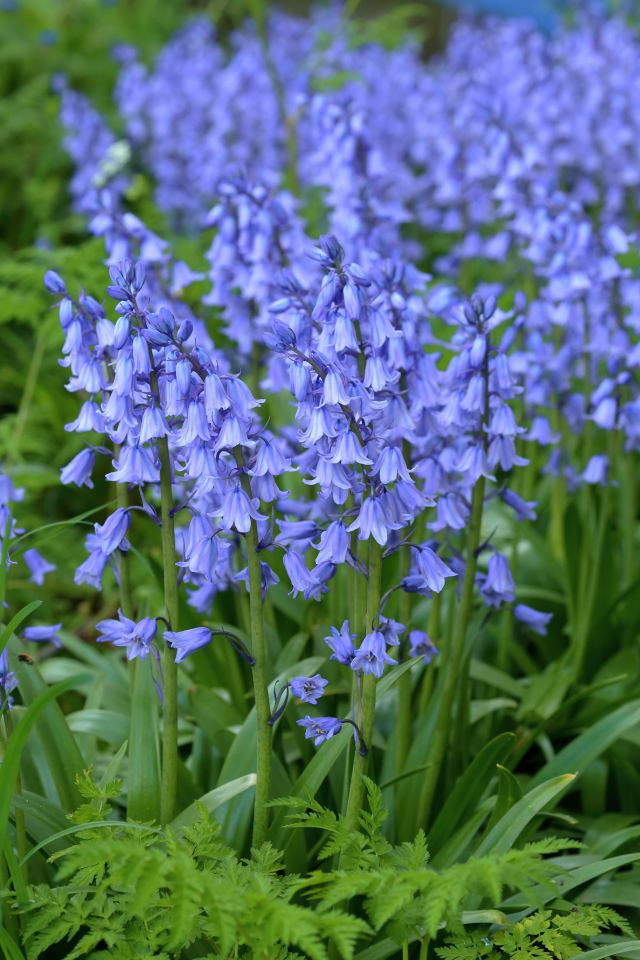
My first recollection of flowers was when I was ten and my family lived in the countryside in England. Across the road from our house was a forest which, that spring, was carpeted in bluebells.

I took my family’s scrub bucket into those woods, squatted down in the middle of the bluebells, and picked them. Milky juice squirted out of their stalks and trailed down my arms, making me sticky from hand to shoulder. When the bucket was full, I took it back home into the kitchen, knelt down to find my mother’s vases, and cut the bluebells’ stems to fit into them. Soon all the vases were full, but I found some quart Mason jars and filled them, too. Then, I put a vase of flowers on every bookcase and dresser in the house. My mother smiled when she saw them.

I love flowers. Flowers in my garden. Flowers in vases. The floral department in the grocery store. Flower fabrics and clothes. Flower pillows and bedspreads. Flower photographs and paintings. I just can’t get enough of them. Let me describe how my fascination with flowers has made my world beautiful.

Flowers Connect Me to My Mother

My mother loved flowers, too. Her name was Rose Marie and her favorite flower was a rose. When she lived in an assistant living facility near the end of her life, I brought her a bouquet of roses every time I visited. After my visit was over and I went back home, she would call me to tell me how the flowers were doing, when she had watered them, and where she had placed them in her studio.

But my mother had demonstrated her love for flowers all through my childhood. While we lived in England, she planted tulip and daffodil bulbs in front of our living room window. In spring, those bulbs bloomed like happy children and made our simple home bright and cheery.

When we moved back to California, my parents planted flowers all over their property. They took out the front yard grass and planted daffodils under the trees. Some of the trees were orange trees, and the combination of the yellow daffodils and the oranges was striking.

Easter lilies were planted in the back yard so that they would bloom for the Easter season, which was important to my family. Azaleas were planted in the shade, and my parents planted camelia bushes all along the patio railing. They bloomed all winter like red, pink, and white Christmas ornaments hanging amongst the glossy leaves. My mother would often comment on the camelias during our phone calls. Their buds were out. They were just about to bloom. They were in full bloom. One bush was white and the next was red. The humming birds liked them. We could have a whole conversation about her flowers.

A Flower Library

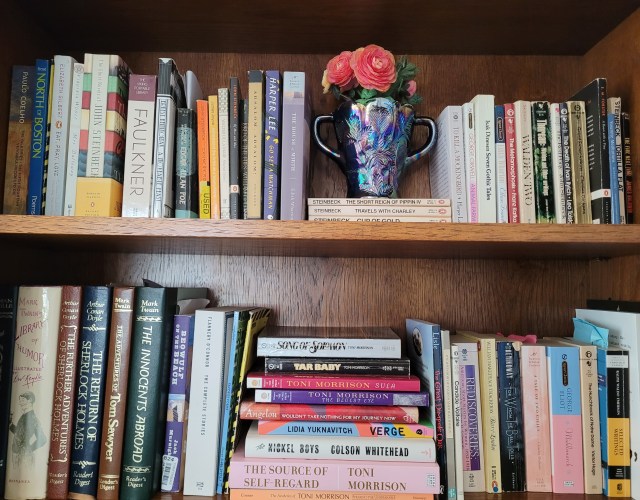
I’m an avid reader and have a library in my house. In my library, are books that I used during my teaching career such as the plays of William Shakespeare, The Norton Anthology of African American Literature, poems by Robert Frost, and the novels of more contemporary authors such as Toni Morrison and Tara Westover. But I’m retired now, and I’m starting a new collection of books based on the theme of flowers.

I was inspired to start a library about flowers when I read an article about Martha Stewart’s flower library. In the magazine, I found a picture of her bright book room with books stacked on mismatched tables around the perimeter and in the middle of the room. Every wall was filled with windows above the tables, making the room fabulous for reading. The books themselves were beautiful covered with photographs of roses, azaleas, and bouquets of every kind.

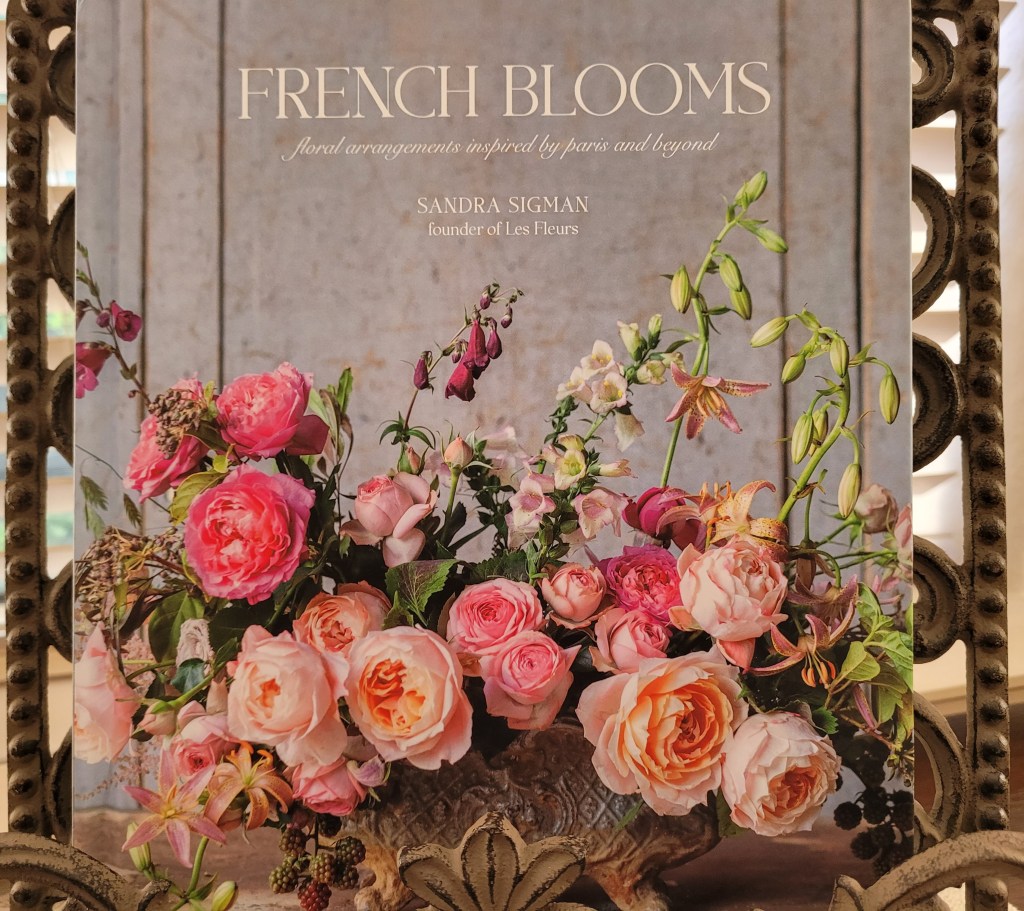
Now that I’m retired, I have more time for gardening, and, this summer, I’m in the middle of re-designing my front and back yards. To do this right, I bought a book about hydrangeas so I can do what I need to do so they grow healthy and vibrant. I also bought a book about 300 varieties of tea roses since I’m going to plant six new rose bushes along my new western fence. Oh yes, I also bought a book about French flower arrangements that I have displayed in my French décor living room.

Flowers, Flowers, Everywhere in the House

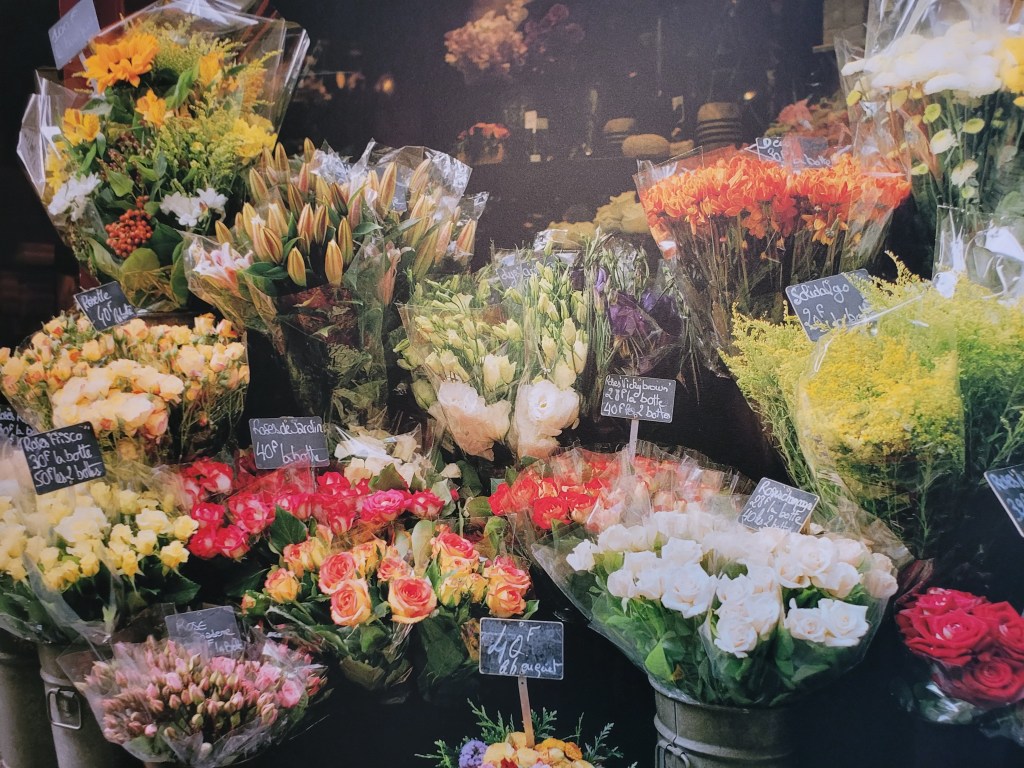
As soon as people step into my home, they learn how obsessed I am with flowers. In the living room, I am using three artificial flower arrangements to create a beautiful ambiance. Currently, I also have a vase filled with over a dozen red, yellow, and white roses from my own rose bushes in the back yard. I have bouquets of artificial flowers in each of the three bedrooms, flower urns in the library, and a real Christmas cactus in the family room. My bedroom walls all have pictures of flowers in them. The guest room, which also has a French theme, has a photograph of a flower vendor shop in Paris.

Flowers, Not Chocolate

Here’s a secret. I can be bribed, not with chocolates, but with flowers. When anyone gives me flowers, my heart melts like a warm candle. My husband gives me roses and sometimes other types of flowers on Christmas, my birthday, and Valentine’s Day. I love each and every bouquet as if it is the only bouquet I’ve ever received.

My daughter gives me flowers often because she loves flowers too. Her favorite flower is the Gerber Daisy. When I want to get her some blooms, I look first for those.

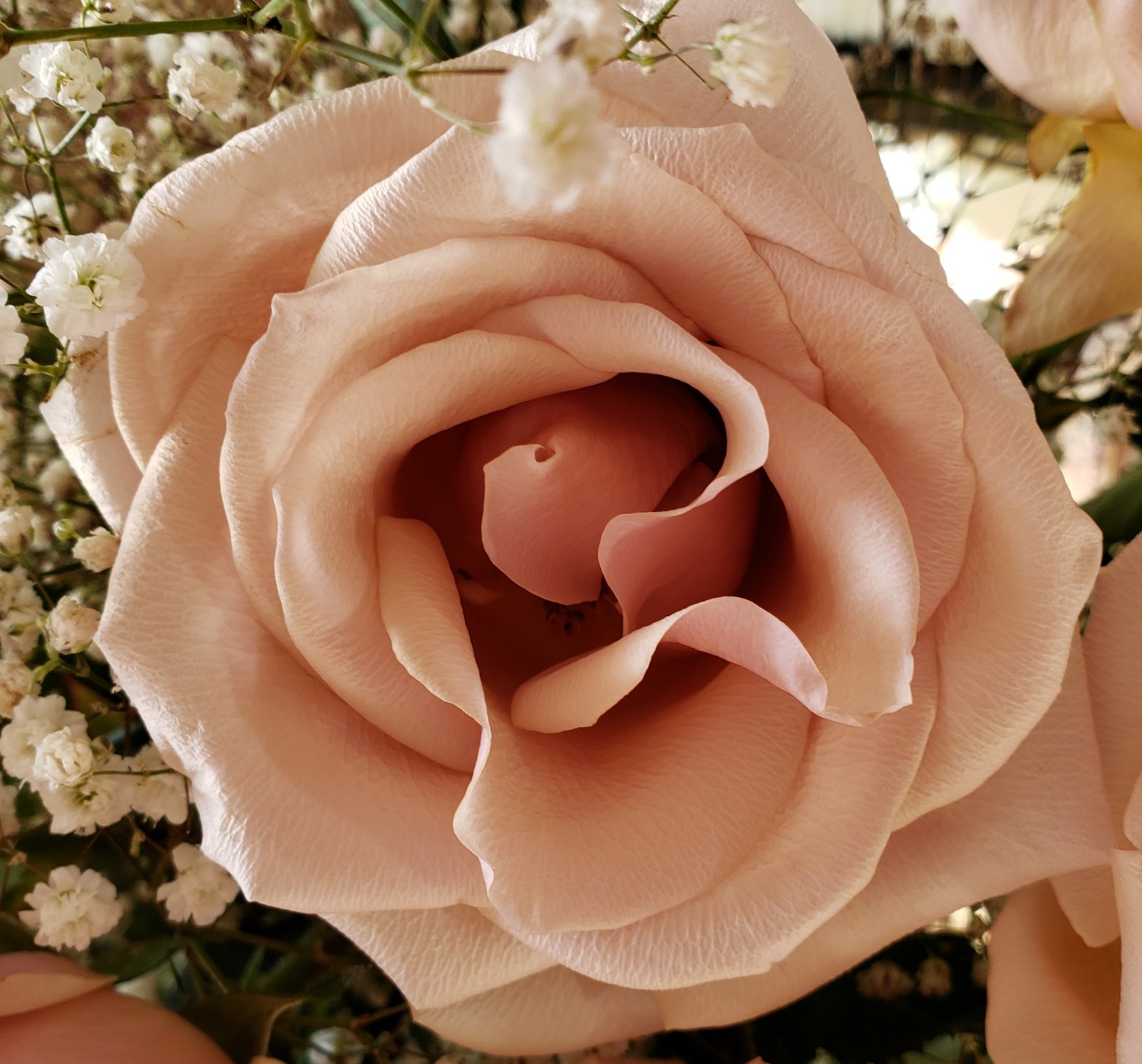
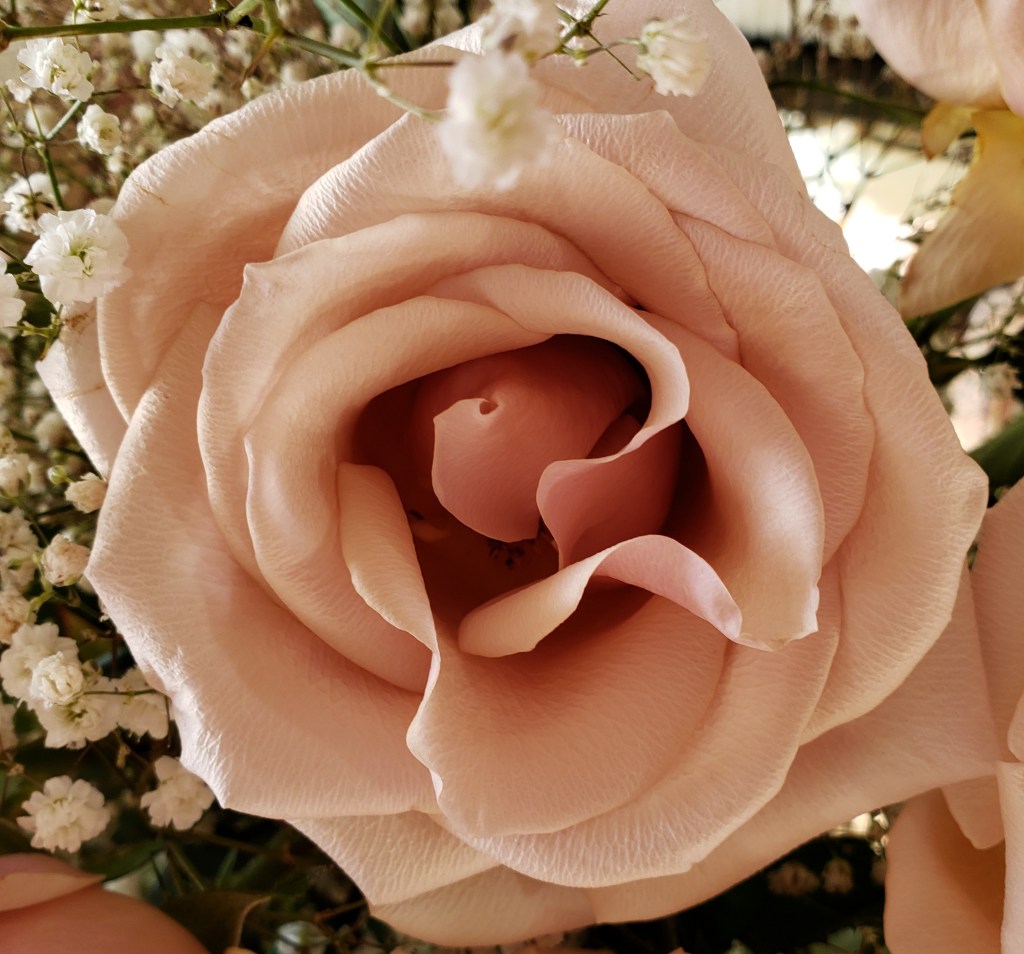
The most beautiful flowers I have ever received, however, were pink roses from my son. The pink was so delicate and the roses were incredible as buds and astonishing when they were fully bloomed. I took photo after photo of them, and, now, I have two photographs of these roses upstairs. My heart skips a beat whenever I see them.

I’m inspired by beauty and that’s why I love flowers. This afternoon, I plan to read more about how to perfect hydrangeas and how to promote more blooms on all my blossoming plants. You can find me sitting in my garden amongst my flowers. Where else?

The Sugar Cookie Grandma

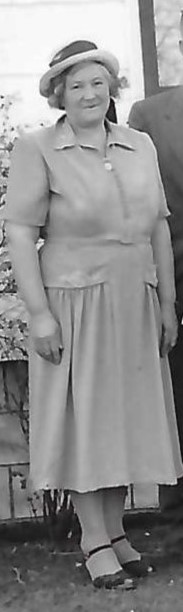
Grandma Lillian in her 40s

Back in my grandmother’s day, women didn’t get much notoriety, so I decided to write a blog about my Grandma Lillian. She’s not famous, but she deserves some long-overdue attention.

Grandma Lillian was born in Winona, Minnesota on November 9, 1903. Both of her parents’ families were originally from Trhove Swiny, South Bohemia, which is now part of the Czech Republic. This town dates back to the 1200s as part of an ancient trade route. In the 1400s, King Vladislaus II, who was then King of Bohemia, authorized the town to build a market. The town’s name comes from the Czech word trh which means market. The two most popular sites in Trhove Swiny are The Most Holy Trinity Church, which replaced a Catholic pilgrimage chapel, and an iron mill called Buškův hamr.

My Grandma Lillian, however, never visited the Czech Republic. In fact, she never traveled outside the United States except for Canada. She was a short woman, less than five feet tall, and a little plump. When she first married my grandfather Leon Jr., she lived in his father’s house on an 800-acre piece of property that is now a Minnesota State Park. Later, she and her husband bought their own house in Goodview, a town next to Winona. The house was painted white and sat on a flat parcel of land covered in shamrock green grass with a large vegetable garden in the back. Her brother Leo lived next door.

Grandma Lillian’s House in 2022

Grandma Lillian had five children, including my father who was the oldest. Then came David, Mary, Gerald, and Daniel. My father moved to California with the United States Air Force which stationed him at Mather Air Force Base. Once my parents came to California, they settled down to stay.

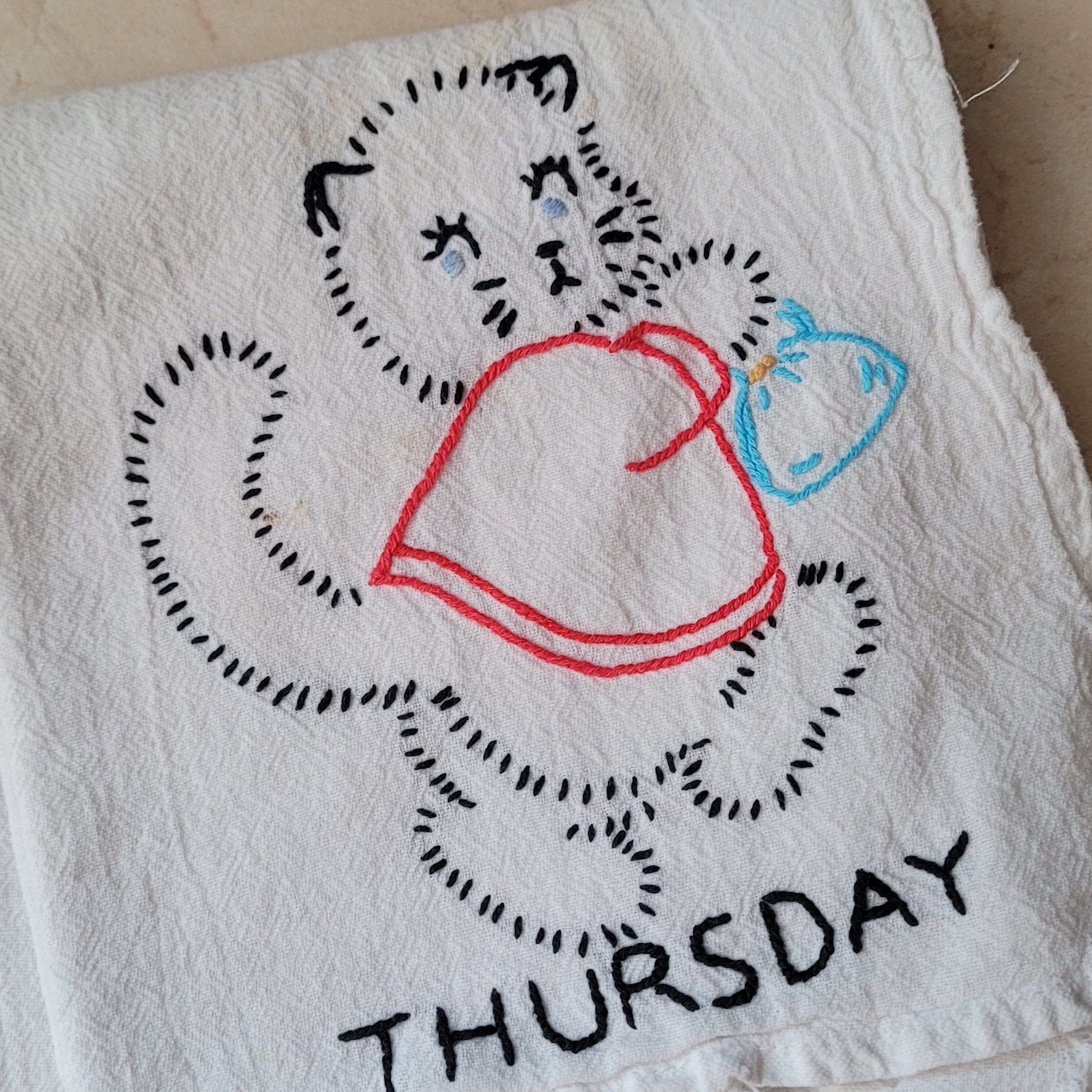
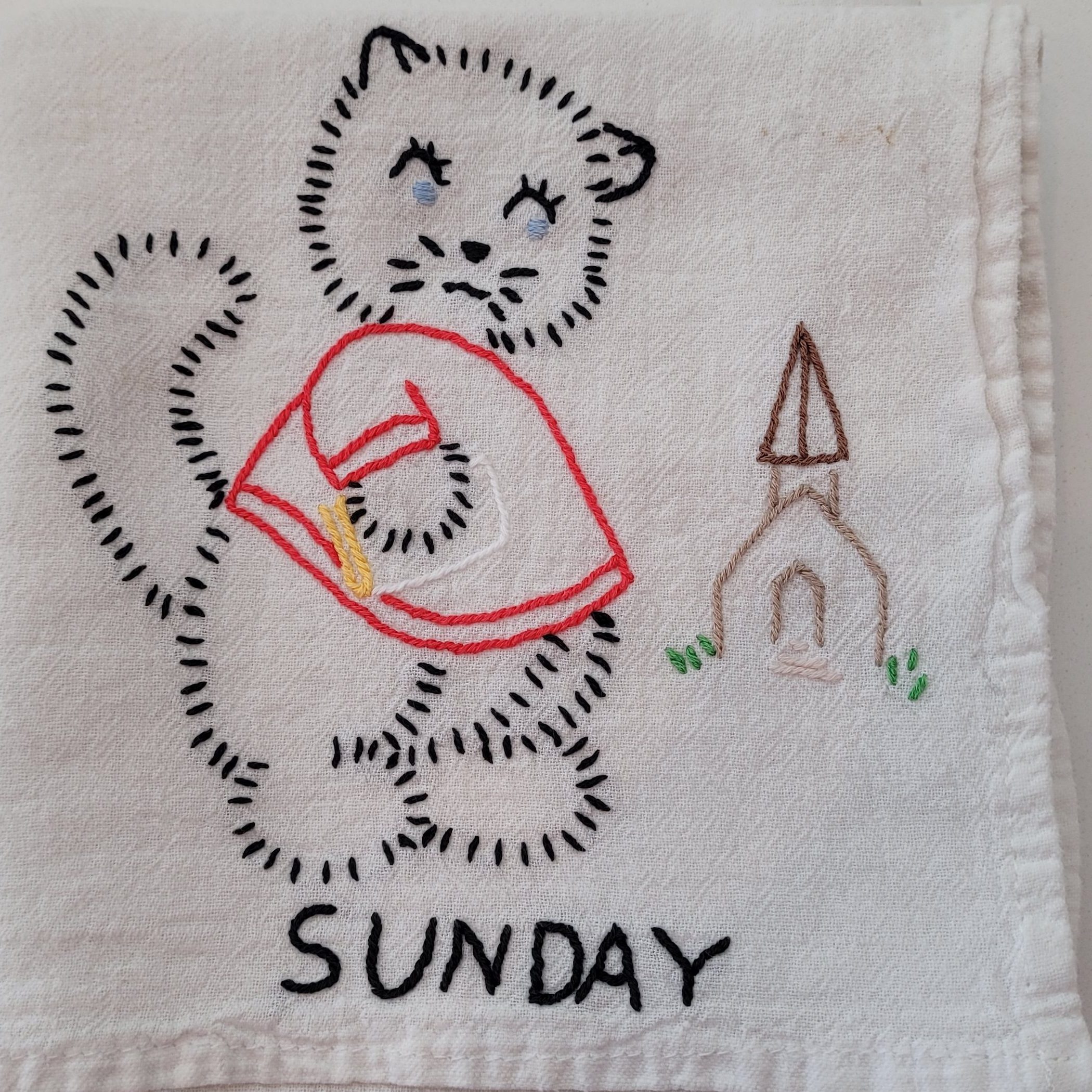
Grandma Lillian took the train to California several times to help my parents when my mother was in the hospital having another child. During these times, I learned about who she was as a person. I watched her embroider cotton tea towels, one for every day of the week. For each day, she embroidered a kitten performing a different kitchen task with one exception. For example, on Thursday’s towel, the kitten was carrying a tea kettle to the stove. On Sunday, the kitten was not doing kitchen work since she was going to church. She taught me how to embroider, but I was too impatient to make the stitches neat.

Even though Grandma Lillian didn’t ever travel to Bohemia, she used many recipes that came from the old country. She was famous for her Refrigerator Pickles. To make these, she combined seven cups of sliced cucumbers and one sliced yellow onion with a tablespoon of salt. She let the salt leach some of the water out of the cucumbers for about an hour. For the dressing, she combined one cup of vinegar, two cups of sugar, and one teaspoon of celery seed. She poured this over the cucumbers and stored the dish in the refrigerator to use as needed. By the time her recipe reached my family, we were eating the pickles as a side salad, all in one day.

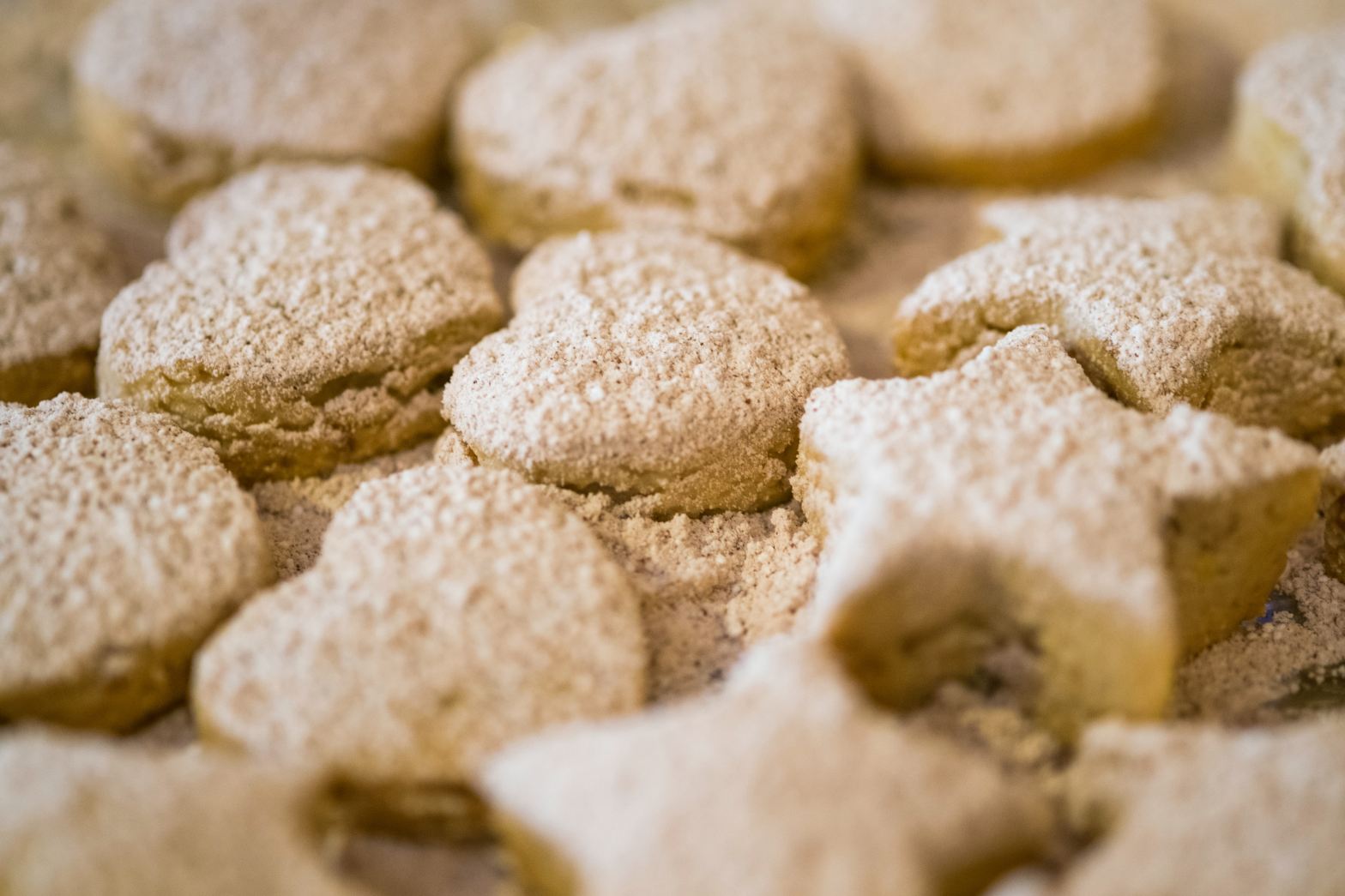
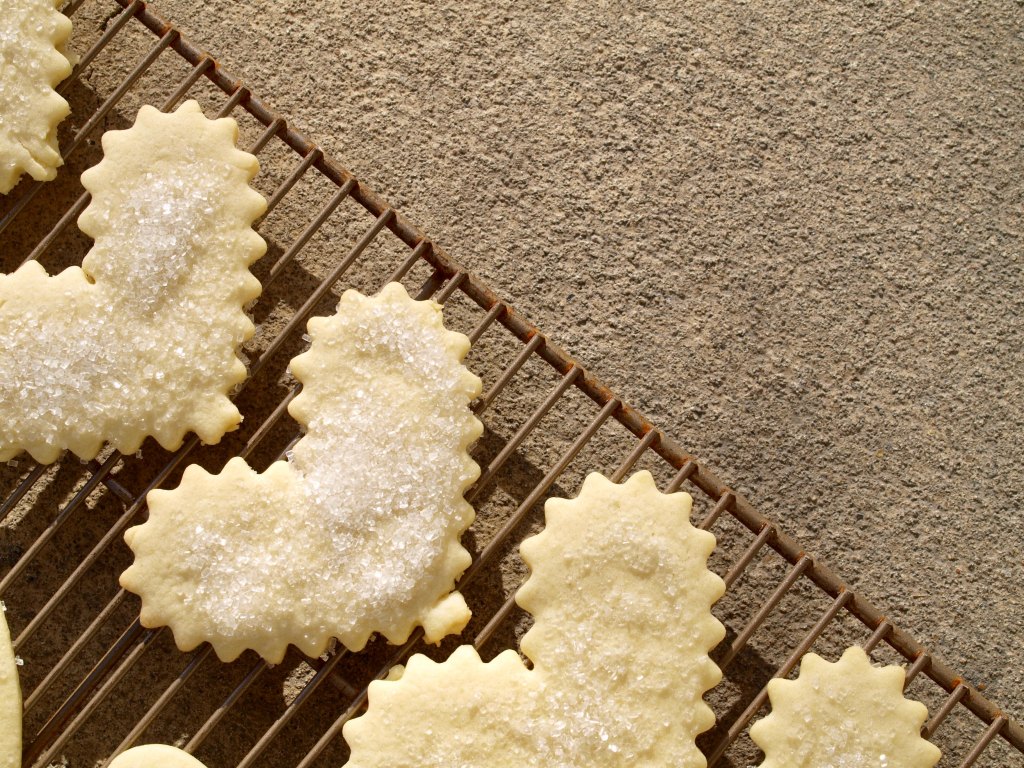
My favorite memory about Grandma Lillian was how she made sugar cookies. Maybe we didn’t have cookie cutters. Maybe we didn’t have the shapes of cookie cutters that Grandma wanted. I don’t recall, but I do remember how Grandma folded a piece of newspaper in half and used scissors to cut out a heart about the size of her hand. Then she placed the heart shape over the rolled-out cookie dough and cut the dough with a sharp knife to make heart-shaped cookies. She placed the hearts on a cookie sheet and decorated them with colorful sprinkles. When we ate them warm out of the oven, they were buttery sweet.

Grandma loved to garden both vegetables and flowers. Many days, she spent hours out in her garden weeding, pruning, harvesting and enjoying the ambiance. My father inherited her green thumb since he also cultivated a big garden every year to feed his family.

Grandma Lillian was in her garden when she died on July 16, 1991. The weather was over 100 degrees, and my cousin Karen found her late in the day. Now, she is buried next to her husband Leon and her youngest son Daniel in a country cemetery. She didn’t become a movie star, a Congress woman, a Supreme Court judge, or even a newscaster on television. Yet, she lives on in the lives of her thirty-one grandchildren and more than forty great-grandchildren. That’s an accomplishment of which I am proud.

Photo by Diane Helentjaris on Unsplash

How French Chickens Saved My Roses

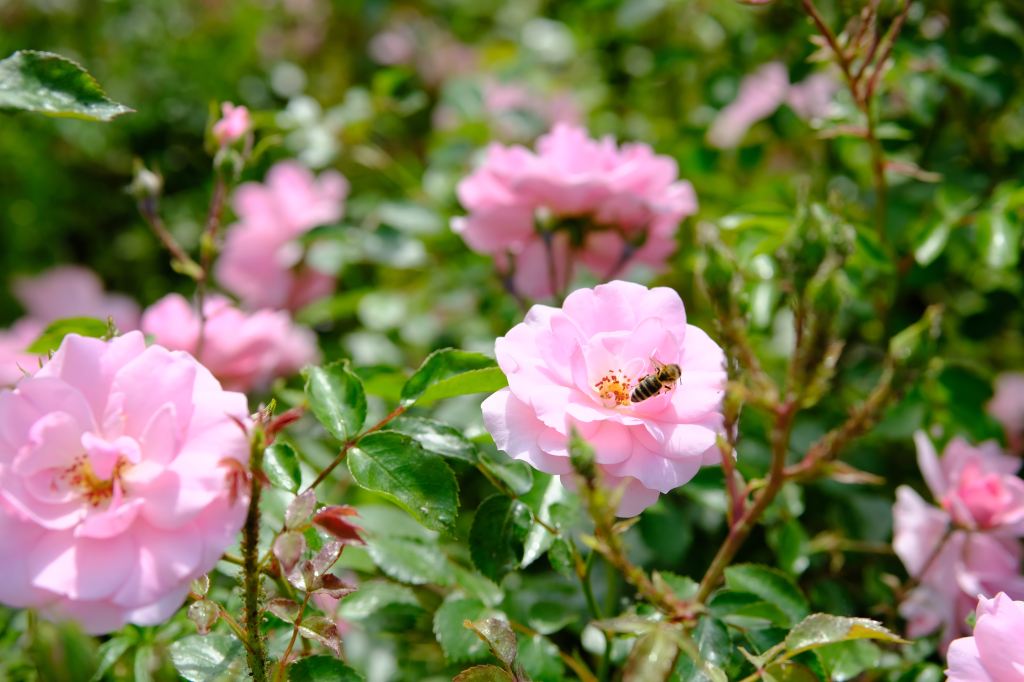
A few months ago, I was touring through the gardens of Chateau Chenonceau in the Loire Valley in France with my husband. A guide had told us that the chateau used organic gardening methods for all the plants. As I walked past the gorgeous rose bushes, I wondered how the gardeners made them so healthy and beautiful. They had no black spot disease, no pests, and their blooms were vibrant and vigorous. What was their secret?

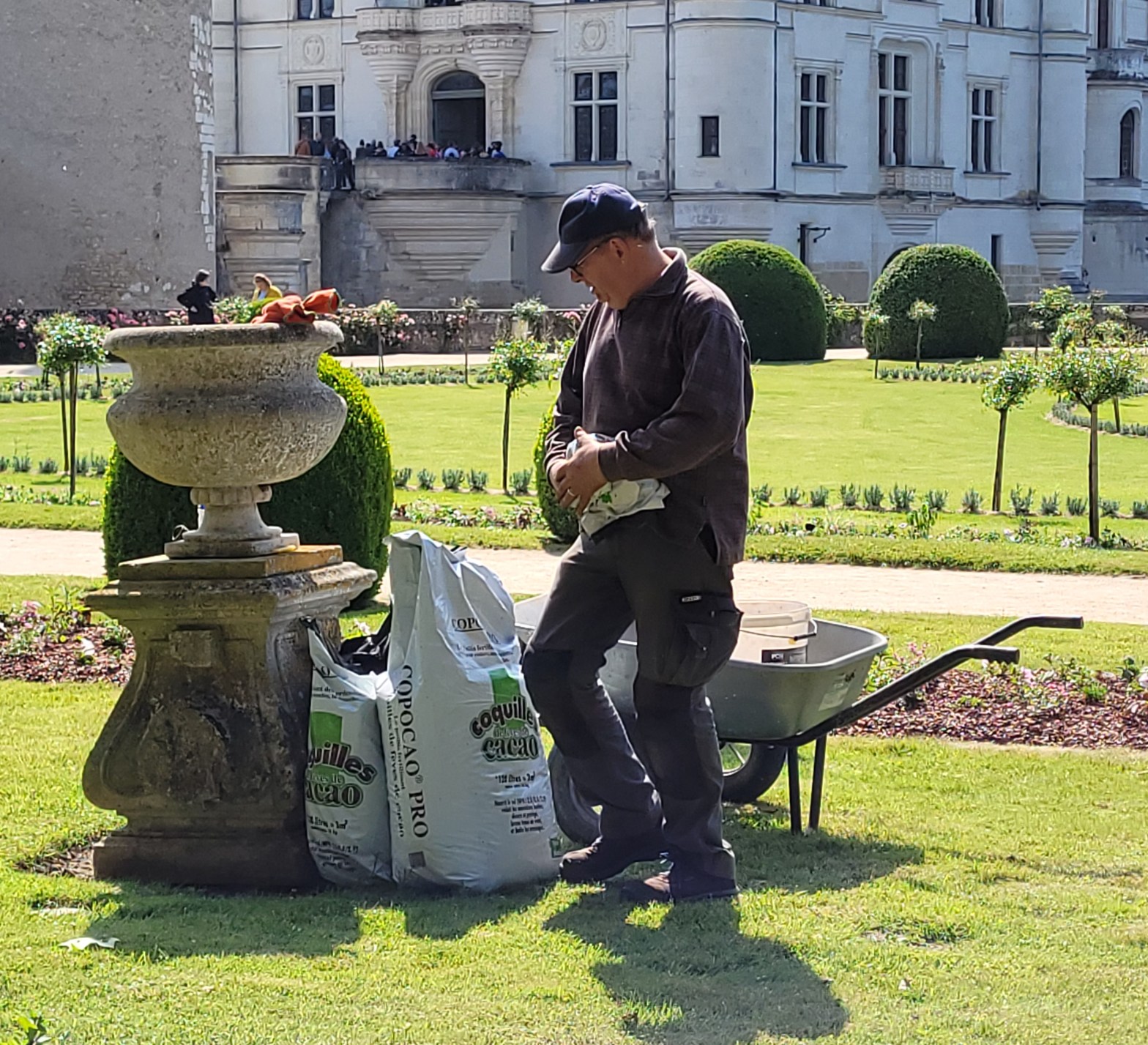
As I was about to leave the gardens, I saw a man leaning over a rose bush while sprinkling something brown around its base. Nearby, leaning up against an ancient stone urn next to his wheelbarrow, were two bags of coquilles caocao. I have had enough French training to know that the bags were full of chicken manure, and he was fertilizing the roses with them. This momentary experience transformed me from a chemical rose grower to an organic rose gardener with much better results. Here’s how I care for my roses now, and they have never been more beautiful.

Chicken Manure

I have roses under the window in my front yard, on my side yard, all along the lawn in the back, and a raised bed of my prized tea roses on the other side of the house. I’ve fertilized them, sprayed them, clipped them and I’ve always had problems. As soon as I got home from France, I bought six bags of chicken manure and spread it at the base of every rose bush. I was smelly. The mosquitoes seemed to like it, too, and they bit both me and my husband. I drank wine in my lawn chair with the smell in my nostrils. But it was worth it. Slowly, day by day, the rose bushes became stronger and their diseases cleared up. I didn’t use the fertilizer or disease control liquid at all. The chicken manure, which contains large amounts of nitrogen, phosphorus, and potassium, revitalized my roses all by themselves. And that smell, it’s gone now.

Vinegar Water

It took several days to almost two weeks for the chicken manure nutrients to be absorbed by the rose bushes, and while that was happening, some of the rose bushes had mildew. I did some research and found another organic solution to this problem. In an empty spray bottle, I combined a quarter of a cup of apple cider vinegar and one quart of water and sprayed it on the mildewed leaves of stems. I kept this container of solution near my tea roses so it was easy to use whenever I found problems. It worked. Now, two months after first applying the chicken manure and spraying the mildewed stalks and leaves, my roses are as healthy as the roses at Chateau Chenonceau.

Bone Meal Fertilizer

I was on a roll, and I kept reading about organic gardening for roses. What I found out next is that bone meal is good for promoting blooms. Its phosphorus and calcium strengthen the plant and promote bloom growth. I applied the bone meal, and low and behold, my roses staring producing more roses that ever before. I also gave some bone meal to my African irises, and they gave me the most beautiful white, yellow and purple irises I had ever seen. I only have to apply bone meal every four months since it releases its nutrients over time.

Clipping Old Blooms

I have known that a good rose gardener should clip off the old roses in order to preserve the rose plants energy for the new blooms, but when my plants were diseased and ugly, I had little incentive to do this. In the last two months, however, I’m excited to take a pair of sharp clippers and to snip off the spent flowers, making sure that I cut the stalk just above a five-pattern of leaves. While I’m clipping the old blooms, I also clip the vibrant flowers to take into the house to enjoy in a vase on the table.

I never expected that my life would be changed by walking through an ancient garden in France. Even though my roses didn’t go to France with me, I brought them back something better than a souvenir: healthier lives.

Photo by Yuliia Dementsova on Unsplash

A Story about Straw Pile Hill

Between Stockton Valley and the west side of the Mississippi near Winona, Minnesota is a ridge covered with white pine trees.  Once upon a time, my great grandfather, Leon Ambrose Bronk Sr., bought land on this ridge to grow alfalfa and corn.  Throughout the years, he bought more adjoining farms until his land holdings reached 761 acres. 

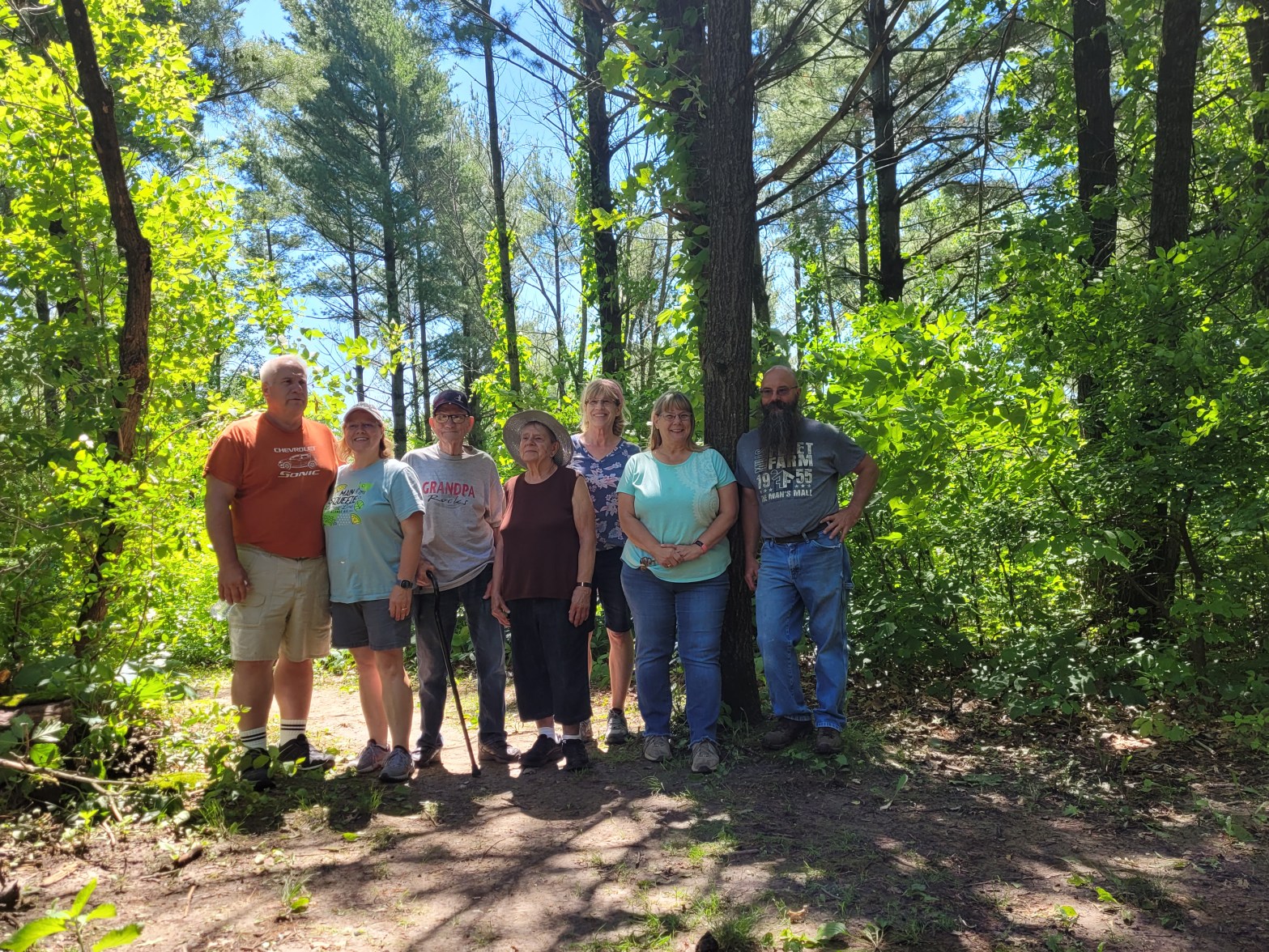
On June 16, 2022, when I was visiting, two of my cousins arranged for a group of family members to ride up into the park in 4-wheel drive trucks so that my 92-year-old uncle could see the land where he spent the first 14 years of his childhood. 

Great-grandfather Leon bought this property in the 1920’s and lived in a white wooden house at the bottom of the ridge where he planted a family garden and built a barn for cattle and horses.  Twenty years ago, I remember walking through the ruins of that house.  When he bought some farms at the top of the ridge, Leon Sr. let his oldest son Leon Jr. and his family live in one of the farm houses up there.  Leon Jr.’s first son, Paul—my father, was born in 1929 and his second son, David, was born in 1931.  David is the father of ten of my closest cousins.  Twenty years ago, we found a rusted sled that Paul and David used to travel down the snowy slopes of the ridge when they were little. 

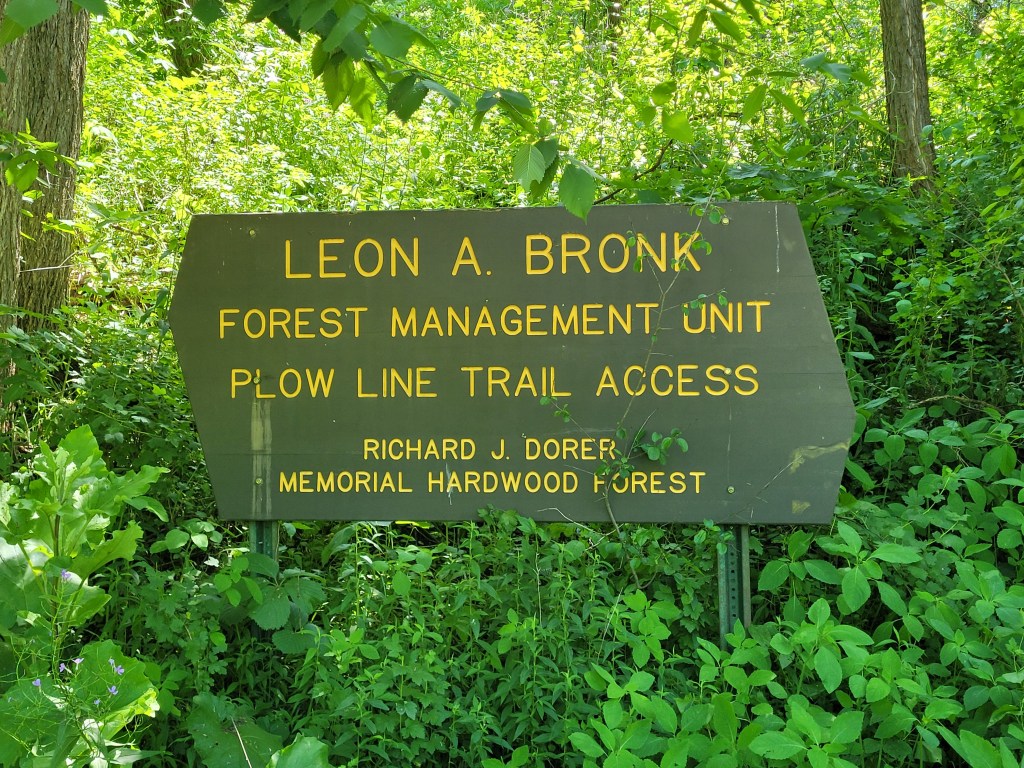
In 1969 when he was 81-years-old, Leon Sr. sold the land to the State of Minnesota, and it became part of the Richard J. Dorer Memorial Hardwood State Forest.  Since much of the property rises 500 feet above the surrounding valleys, it provides hikers and bikers tremendous scenic views of the land and water below.  The State of Minnesota planted thousands of white pine trees in rows, a forest that now covers up any evidence of houses, gardens, and alfalfa fields.

On this day, cousins Diane and Bill drove the trucks into the park and up the ridge under the supervision of a park volunteer named Mark.  Mark is an avid off-road bicyclist, and he started to maintain the 6.5 miles of hiking trails in this park by using his electric weed-whacker to cut the weeds. One day when he was working, he met a state park ranger, and he explained how he biked up the ridge with his whacking machine to keep the trails open.  He also wished that the gate was open so he could use his four-wheeler jeep to bring his mower up; because the weeks grew so fast, the mower would do a better job in a shorter amount of time.  The ranger gave Mark a key to the gate and unlimited access to the park.

When my cousin Diane wanted to arrange a family drive, she called Mark to get the State’s permission to drive trucks through the gate and up to the top of the ridge.  He helped her out because he wanted to meet the oldest living Bronk relative, my Uncle David, who had actually once lived on the property.

Mark was excited to hear stories about the property’s history.  The park is named the Bronk Unit Plowline Trail referring to the line where the Bronks stopped plowing their fields.  Uncle David revealed that one ridge is known as Cherry Hill, probably due to the cherry trees growing there.  Another ridge is known as Straw Pile Hill.  That’s where, when he was a mere boy, David dumped the hay that he harvested from the fields, and Paul would pick it up and haul it off to be sold.  David had to plow the fields and collect the hay with a horse-drawn contraption.  Paul got to drive the tractor since he was older. 

My dad used to say that “You can take a man away from the farm, but you can’t take the farm out of the man.”  All his life, my father was an excellent farmer.  When I was born, my family rented a two-acre farm in Fair Oaks, California.  I was allergic to cow’s milk, so my parents bought a goat and gave me its milk.  We had chickens, bunnies, and geese.  My mother made butter and ice cream by hand. 

Later, when we moved to a smaller property, my dad raised sheep.  One sheep was our favorite, and we named him Jerimiah.  One day when we got home from school, we couldn’t find him.  At dinner, we asked my parents where he was.  “He’s on your plate!” said my dad with a grin. 

David, too, farmed his whole life.  He bought a farm that had been owned by my Great-Great Grandpa Ignatius Bronk, who immigrated to the area from Gostomie, Poland and bought this farm in 1886.  When Ignatius died in 1896, his son Theodore took over the farm; Theodore was the older brother of my Great-Grandfather Leon Sr.  Today, David lives on the farm with his wife Linda and a herd of cows that his son, Bill, manages for him.  While I was visiting, about twenty-five of us cousins, first-cousins-once-removed, second cousins, and Uncle David and Aunt Linda had a picnic on a hot and humid 100-degree day. To stay cool, we sat under the spreading branches of a white oak tree and slapped the gnats that buzzed around our faces.

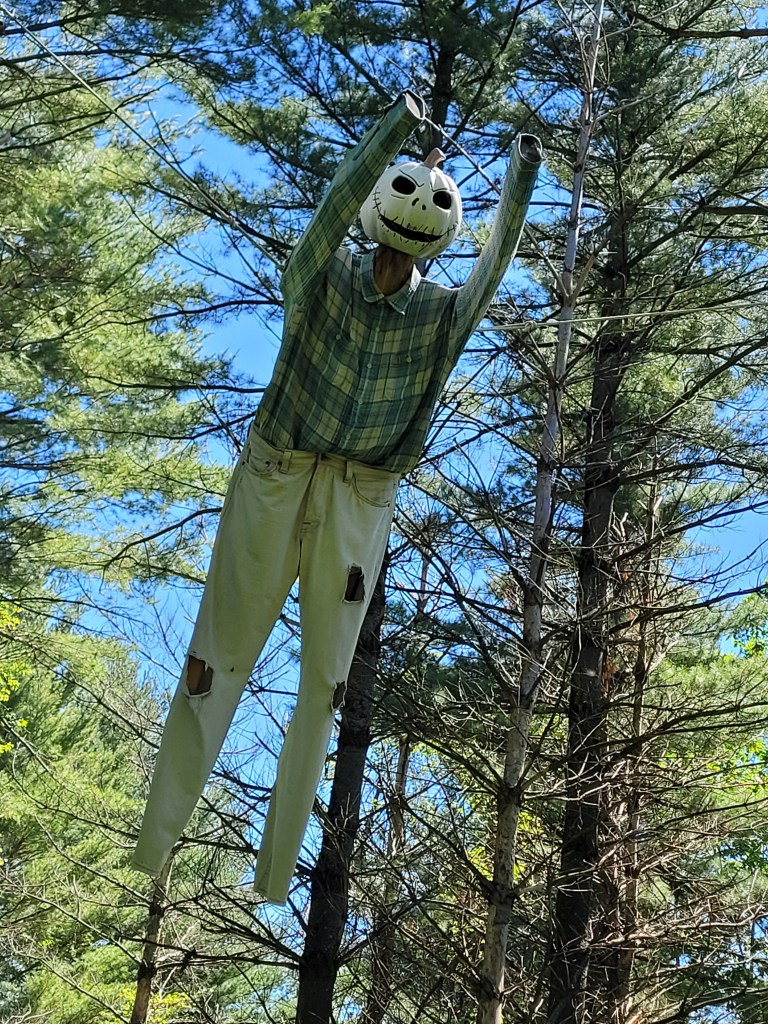
While we walked around the top of the ridge on Great-Grandpa’s property, we found wild carrots and asparagus—souvenirs from the gardens that once fed the Bronk families.  Hanging high above a hiking trail, we found a scarecrow with a Jack-o-lantern head, plaid shirt, and farmer pants.  Mark told us that a solar light made the head light up at night, creating an unexpected scary encounter.  We watched big, Eastern Tiger Swallowtail butterflies settle on wild flowers and examined tiny pine cones that fell from the white pine trees.  The floor of the forest was covered in a thick matting of dead pine needles, hiding the remnants of our relatives’ lives. 

What occurred to me that day was that all of the farmers who worked on my great-grandfather’s land had been removed from it: my great-grandfather, my grandfather, my father, and my uncle.  Yet, there was evidence all around the area and in places far away, like California, that these people and their descendants were still farming.  David’s son Bill will one day take over David’s historic farm.  My brother, Donald, can grow any vegetable or flower in his patch of garden in California.  I have a green thumb when it comes to growing flowers. Apparently, you can’t take the farm out of a farming family. 

My Epiphany: I’m not Retired, I’m Now a Full-time Writer

Last year, I retired from my English professor job. Throughout the years, I had always claimed to be a writer. Heaven knows, I wrote countless essays, paragraphs, articles, and lesson plans for my courses, but I also wrote poetry, articles, and short stories whenever I found free time–in-between semesters or during the summer. What I never wrote was a novel. I’ve had ideas on the table for years. Scribblings in pretty journals. Scratchings in lined notebooks. Never a complete draft or a completely formed plot waiting to be expressed.

When I retired a year ago, I looked at my retirement as a time when I would fill my days with hobbies. I even developed a list of hobbies and stuck it on my little bulletin board next to my computer in my library. That’s where I write, and one of the hobbies on the list is writing. I also wrote gardening, cooking, learning Spanish, and, of course, writing. The list was for whenever I didn’t know what to do. I would just read the list, choose an activity and proceed.

I made such glorious dinners for my husband and me the first six months of my retirement: chicken and shrimp gumbo, mushroom risotto, marinated leg of lamb, and grilled flat iron steak. I created recipes for healthy versions of pumpkin bread and blueberry breakfast bars. I experimented with turmeric and cinnamon in oatmeal and developed personal breakfast egg sandwiches with tortillas and flat breads. I filled my recipe blog with over a hundred recipes and attracted followers from all over the globe. My culinary prowess was astounding until I decided that eating out looked like a lot less work.

By summer, my garden was cleaned of weeds, pruned, fertilized, swept, and raked. The flowers grew like happy children and the fruit trees hung heavy with lemons, blood oranges, and figs. My pots of herbs provided me with lush clippings of thyme, parsley, mint, chives, lavendar, oregano, and basil. By the time fall came, I had done such a remarkable job at sprucing up the front and back yards that there was little else to do except to sit outside and enjoy my beautiful environment.

I started studying Spanish, but in the summer, I started taking classes every Wednesday at a local adult education school. Now, after a whole year of practice, I’m conversing with my classmates in conversations that span paragraphs.

The most difficult activity that I started, however, was to write a novel. I now felt that I had an overall plot in mind. I didn’t have all the pieces, but I was just going to start and see what happens. To ward away writer’s block, I decided not to make any rules or promises. I would write a novel even if I never published it. I would write even when I didn’t know what to say. I would write even when the words came out stilted and awkward. Revision is so much easier than a first draft anyway.

What’s funny is that I’ve just had an epiphany after being retired for a year. Cooking is not that important to me. Gardening is fine, but my little yard will not require much of my time to keep up. Besides, Alfred comes once a week to cut the grass and clean up the leaves.

Spanish is so much fun, but I’ve found that writing is really where my passion lies.

The other day, Valarie from the Alamo Women’s Club called me to ask if I would run for an office for next year. I joined the club last year to help them raise money for scholarships for college students, and I’ve done that. But run for an office?

No. If I became an officer, I wouldn’t have enough time for writing.

I need time to stir up ideas, time to catch up on sleep when I’ve gotten up at 2:00 in the morning to write, time to outline scenes, and lots and lots of time to write.

Next time someone asks me what I do, I’m not going to say I’m retired. They’ll think I have time to fill.

My time is full–of writing.

Seed Man

The Seed Man’s birthday came on February 11, and he walked out of his apartment, down the shaded path, past Martha’s porch, through the community garden area, in between the garden filled with camellias and hydrangeas, out to the row of mailboxes near the street. 

The Seed Man’s birthday came on February 11, and he walked out of his apartment, down the shaded path, past Martha’s porch, through the community garden area, in between the garden filled with camellias and hydrangeas, out to the row of mailboxes near the street. 

His mailbox was the one at the far end.  He flipped down the metal door and inside was a little stack of letters.  “Mmm,” the Seed Man said.  “More mail than usual.”

When he got back to his apartment, he sat down in his brown arm chair to open his letters.  “Lots of cards today,” he mumbled.  “Oh, yeah.  It’s my birthday.  I’m turning 64 today.  I’ve never been 64 before, so let’s see how it goes.”

One of the birthday cards was fat.  It was from his sister Claire, and the Seed Man opened it with a knife, slitting it across the top. 

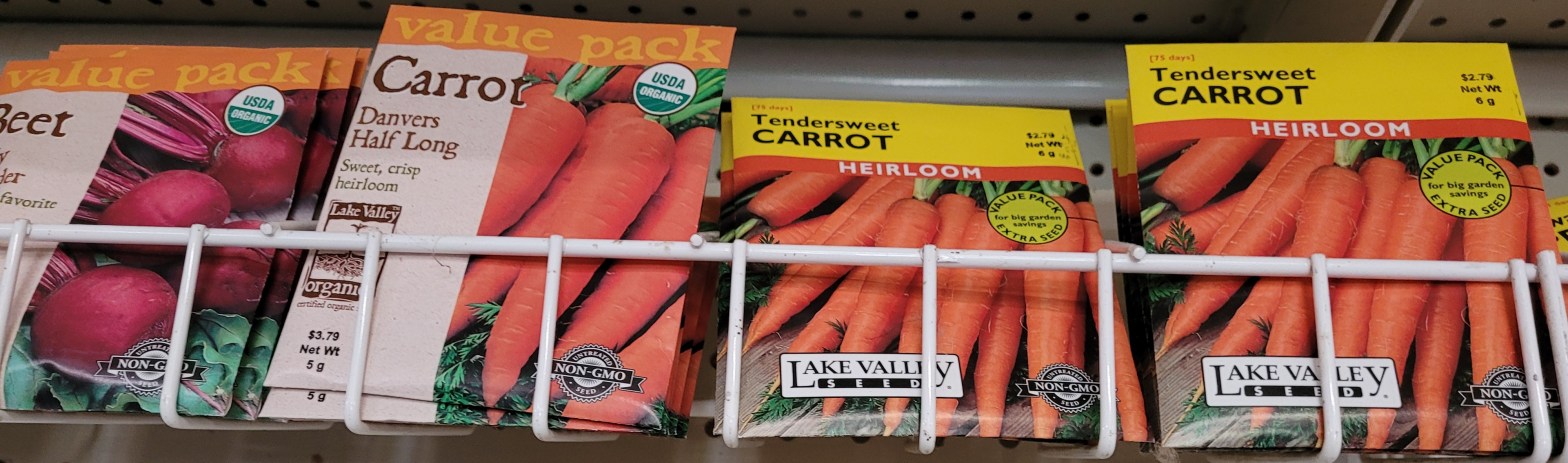
The card was sweet, but inside the card were four packages of seeds—2 carrots and 2 radishes. “Oh,” he said. “I love seeds.  What a perfect birthday present!”

The man set up all his birthday cards on the window sill by his dining room table.  He poked the seed packages into a shelf which was also near the table.  This was his special shelf—for his seeds.  He had vegetable seeds on the left—carrots, radishes, green onions, tomatoes, zucchini, and pumpkins.  The flower seeds filled the tiny slots on the right—poppies of all colors and varieties, sun flowers, alyssum, marigolds, Sweet Williams, geraniums, and several packets more. 

The Seed Man loved planting seeds.  He loved this so much that sometimes he planted seeds when it was too cold, and the seeds died. 

He learned how to plant from his father who had grown up on a farm when he was a kid.  Every spring, the Seed Man and his father planted rows and rows of seeds, they sprouted, drank water, grew some more, until when summer came, the rows were filled with bushes of green beans, zucchini, pumpkins, tomatoes, peas, peppers, carrots, and onions. 

The man wanted to plant his birthday seeds as soon as possible, so he walked out of his apartment, down the shaded path, past Martha’s porch, to the community garden. 

The garden consisted of six planter boxes of about six by eight feet filled with soil.  One of the boxes had shoots of lettuce poking through the soil.  Those were from seeds that he had planted a month ago, and he bent down to inspect them.  “I can’t wait to eat you,” he said, smiling down at the lettuce babies. 

None of the other boxes had any plants.  The seed man had cleaned up the boxes in the fall from last year’s planting season.  He had picked all the pumpkins and placed one on each doorstep of the apartments so that the little old ladies who lived there could each have a pumpkin for Halloween. He had ripped out old tomato bushes and pumpkin vines and turned and loosened the soil.

The Seed Man chose another planter box for his birthday seeds.  Using his big, brown hands, he mixed new soil with the dirt in an empty planting box.  He squatted over the box and made little furrows in the fresh dirt, and then carefully shook the seeds out of his seed packets into the furrows.  Finally, he covered his carrot and radish seeds with a light coating of earth and watered the rows with a sprinkling can. 

From his tool bag, he took out a sign which he placed in the garden box which said, “These rows belong to the Seed Man. Please be careful!”

The Seed Man knew that the seeds would take about thirteen to twenty-one days to germinate, but he visited them every day anyway.  When the Seed Man went to the mail box, he visited his seeds.  Before he drove out to get groceries, he visited his seeds.  As he came back from visiting his mother, he visited his seeds like a loyal friend checking to see if they were alright.

On day thirteen, tiny green shoots peeked out of the soil.  As the Seed Man watered the shoots, he talked to them about how the sun was warm and how they would be just fine.  He told them about his seed collection and how, one day, he would plant them, too, and they would grow in the rain and sun.  The baby plants grew taller and taller every day, turning  from a delicate light jade to a robust emerald green, and then, a few weeks later, he knew the carrots and radishes were ready to eat. 

He brought a metal pail out to the garden.  With two thick brown fingers, he tugged a single carrot out of the soil, washed it off, and took a bite.  “Mmm.  So good,” he said.  He tugged at a few more and noticed how all of the greens were strong and the carrots and radish tops were bursting out of the soil.  

“Oh, dear.  They’re all ready to be harvested,” said the Seed Man to himself, so he pulled and pulled and pulled and pulled them out of the dirt until he had a gorgeous mound of carrots and radishes in his pail.  

When he stood up, Martha was standing on the other side of the planter box watching him, her bent frame leaning over her polished wooden cane.  “Whatcha got there?” she asked the Seed Man.

“I just harvested some carrots and radishes.  They’re all ready at the same time.  I can’t eat them all.  You want some for a salad?”

“I’d love some fresh carrots and radishes!” said Martha.  “Do you have enough for me to give Ellen some, too, for her lunch today?”

“Sure, I do,” said the Seed Man.  “Take what you like.”

The Seed Man had to hold the pail up so that Martha could reach in and take what she wanted.  She chose six carrots and six radishes.

“Thanks so much,” said Martha.  “You’ll have to plant something else now since you’ve pulled out all the carrots and radishes.

“I’m going inside to look at my seed packets said the Seed Man.  It’s April now and warmer.  I can start planting the spring and summer vegetables now.

When the Seed Man went inside, he took a picture with his phone of all his carrots and radishes and sent it to his sister Claire to thank her for the birthday seeds.  Then, he made himself a salad for lunch, and he forgot to look at his seed packages. 

He had a lot to do that day.  Since he was the maintenance man at the apartment complex, he had to rake the leaves on the front lawn, empty all the trash bins, and clean out an empty apartment.  By the time the day was over, he was so tired that he spent the evening stretched out on his brown arm chair browsing through a seed catalogue. 

The next morning, the Seed Man was excited to check his garden, so he walked out of his apartment, down the shaded path, past Martha’s porch, to the community planter boxes.  He sauntered over to the box where he had planted the carrots and radishes and looked down to inspect them. 

They were gone!  Missing!  Someone had come and picked all of them overnight.  The Seed Man felt like his heart was breaking.  A sadness started growing in the middle of his chest and spread outward until even his eyes were filled with gloom.

Martha hobbled down the path with her wooden cane to the garden while the Seed Man squatted dejectedly beside the empty planter box. 

“Those carrots and radishes sure were delicious!” she yelled in a shrill but excited voice even before she reached him.

“What?” said the Seed Man, scratching his head.

“I cut up the carrots and radishes you gave me and put them in a salad for my lunch,” said Martha.  “They tasted like rain and sunshine.  Thank you very much for sharing them.”

All of a sudden, the Seed Man remembered that he had picked all the carrots and radishes the day before and given some to Martha.  The sadness filling his chest popped like a balloon and he felt happy again—the air, the sun, and Martha’s company making his spirit soar again like a bird.

“I forgot that I picked them all,” he said, laughing.  “You know Martha, I just turned 64 a few months ago.”

“Did you now?” she said back.

His mailbox was the one at the far end.  He flipped down the metal door and inside was a little stack of letters.  “Mmm,” the Seed Man said.  “More mail than usual.”

When he got back to his apartment, he sat down in his brown arm chair to open his letters.  “Lots of cards today,” he mumbled.  “Oh, yeah.  It’s my birthday.  I’m turning 64 today.  I’ve never been 64 before, so let’s see how it goes.”

One of the birthday cards was fat.  It was from his sister Claire, and the Seed Man opened it with a knife, slitting it across the top. 

The card was sweet, but inside the card were four packages of seeds—2 carrots and 2 radishes. “Oh,” he said. “I love seeds.  What a perfect birthday present!”

The man set up all his birthday cards on the window sill by his dining room table.  He poked the seed packages into a shelf which was also near the table.  This was his special shelf—for his seeds.  He had vegetable seeds on the left—carrots, radishes, green onions, tomatoes, zucchini, and pumpkins.  The flower seeds filled the tiny slots on the right—poppies of all colors and varieties, sun flowers, alyssum, marigolds, Sweet Williams, geraniums, and several packets more. 

The Seed Man loved planting seeds.  He loved this so much that sometimes he planted seeds when it was too cold, and the seeds died. 

He learned how to plant from his father who had grown up on a farm when he was a kid.  Every spring, the Seed Man and his father planted rows and rows of seeds, they sprouted, drank water, grew some more, until when summer came, the rows were filled with bushes of green beans, zucchini, pumpkins, tomatoes, peas, peppers, carrots, and onions. 

The man wanted to plant his birthday seeds as soon as possible, so he walked out of his apartment, down the shaded path, past Martha’s porch, to the community garden. 

The garden consisted of six planter boxes of about six by eight feet filled with soil.  One of the boxes had shoots of lettuce poking through the soil.  Those were from seeds that he had planted a month ago, and he bent down to inspect them.  “I can’t wait to eat you,” he said, smiling down at the lettuce babies. 

None of the other boxes had any plants.  The seed man had cleaned up the boxes in the fall from last year’s planting season.  He had picked all the pumpkins and placed one on each doorstep of the apartments so that the little old ladies who lived there could each have a pumpkin for Halloween. He had ripped out old tomato bushes and pumpkin vines and turned and loosened the soil.

The Seed Man chose another planter box for his birthday seeds.  Using his big, brown hands, he mixed new soil with the dirt in an empty planting box.  He squatted over the box and made little furrows in the fresh dirt, and then carefully shook the seeds out of his seed packets into the furrows.  Finally, he covered his carrot and radish seeds with a light coating of earth and watered the rows with a sprinkling can. 

From his tool bag, he took out a sign which he placed in the garden box which said, “These rows belong to the Seed Man. Please be careful!”

The Seed Man knew that the seeds would take about thirteen to twenty-one days to germinate, but he visited them every day anyway.  When the Seed Man went to the mail box, he visited his seeds.  Before he drove out to get groceries, he visited his seeds.  As he came back from visiting his mother, he visited his seeds like a loyal friend checking to see if they were alright.

On day thirteen, tiny green shoots peeked out of the soil.  As the Seed Man watered the shoots, he talked to them about how the sun was warm and how they would be just fine.  He told them about his seed collection and how, one day, he would plant them, too, and they would grow in the rain and sun.  The baby plants grew taller and taller every day, turning  from a delicate light jade to a robust emerald green, and then, a few weeks later, he knew the carrots and radishes were ready to eat. 

He brought a metal pail out to the garden.  With two thick brown fingers, he tugged a single carrot out of the soil, washed it off, and took a bite.  “Mmm.  So good,” he said.  He tugged at a few more and noticed how all of the greens were strong and the carrots and radish tops were bursting out of the soil.  

“Oh, dear.  They’re all ready to be harvested,” said the Seed Man to himself, so he pulled and pulled and pulled and pulled them out of the dirt until he had a gorgeous mound of carrots and radishes in his pail.  

When he stood up, Martha was standing on the other side of the planter box watching him, her bent frame leaning over her polished wooden cane.  “Whatcha got there?” she asked the Seed Man.

“I just harvested some carrots and radishes.  They’re all ready at the same time.  I can’t eat them all.  You want some for a salad?”

“I’d love some fresh carrots and radishes!” said Martha.  “Do you have enough for me to give Ellen some, too, for her lunch today?”

“Sure, I do,” said the Seed Man.  “Take what you like.”

The Seed Man had to hold the pail up so that Martha could reach in and take what she wanted.  She chose six carrots and six radishes.

“Thanks so much,” said Martha.  “You’ll have to plant something else now since you’ve pulled out all the carrots and radishes.

“I’m going inside to look at my seed packets said the Seed Man.  It’s April now and warmer.  I can start planting the spring and summer vegetables now.

When the Seed Man went inside, he took a picture with his phone of all his carrots and radishes and sent it to his sister Claire to thank her for the birthday seeds.  Then, he made himself a salad for lunch, and he forgot to look at his seed packages. 

He had a lot to do that day.  Since he was the maintenance man at the apartment complex, he had to rake the leaves on the front lawn, empty all the trash bins, and clean out an empty apartment.  By the time the day was over, he was so tired that he spent the evening stretched out on his brown arm chair browsing through a seed catalogue. 

The next morning, the Seed Man was excited to check his garden, so he walked out of his apartment, down the shaded path, past Martha’s porch, to the community planter boxes.  He sauntered over to the box where he had planted the carrots and radishes and looked down to inspect them. 

They were gone!  Missing!  Someone had come and picked all of them overnight.  The Seed Man felt like his heart was breaking.  A sadness started growing in the middle of his chest and spread outward until even his eyes were filled with gloom.

Martha hobbled down the path with her wooden cane to the garden while the Seed Man squatted dejectedly beside the empty planter box. 

“Those carrots and radishes sure were delicious!” she yelled in a shrill but excited voice even before she reached him.

“What?” said the Seed Man, scratching his head.

“I cut up the carrots and radishes you gave me and put them in a salad for my lunch,” said Martha.  “They tasted like rain and sunshine.  Thank you very much for sharing them.”

All of a sudden, the Seed Man remembered that he had picked all the carrots and radishes the day before and given some to Martha.  The sadness filling his chest popped like a balloon and he felt happy again—the air, the sun, and Martha’s company making his spirit soar again like a bird.

“I forgot that I picked them all,” he said, laughing.  “You know Martha, I just turned 64 a few months ago.”

“Did you now?” she said back.

“Yep, and I’m finding out how difficult being old can be.”