Learning a Language for a Better Life in Retirement

Photo by Jon Tyson on Unsplash

I’ve been retired for two and a half years, and a month after I retired, I started taking Spanish lessons. I previously took French in high school and college and two years of Spanish in graduate school, but I hadn’t used either language much at all. Now, my goal is to be fluent in Spanish one day.

It turns out that taking Spanish during retirement is a great idea. It’s great for health and also enhances my social life. Here’s how.

Learning a Language Sharpens Memory

Because studying a new language involves absorbing new information and practice, it is good for retaining the brain’s memory capability. According to Carly Spence at Cambridge.org, “[language] students learn new words and grammatical constructs and spend time reviewing and building on their previous knowledge as part of the learning process. This . . . is . . . an effective brain workout and protects older learners against dementia and other degenerative neurological conditions.” My memory is just as sharp as it was thirty years ago, and I want to keep it that way, so I guess I’ll be studying Spanish for years to come.

Learning a Language Boosts Cognition

Learning a language can also make a person smarter or help her stay sharp as she ages. In The Sydney Morning Herald, Evelyn Lewin explained the positive effects of studying a new language as determined by a 2019 Italian study. The study “looked at the effects in adults aged between 59 and 79 and found that, after just four months, people learning a second language scored significantly better on two research-backed measures of brain health and acuity: global cognition (such as thinking, understanding and problem-solving) and functional connectivity.” Many elderly people take it for granted that they will lose their ability to think clearly or maintain their intelligence, but this isn’t true for people who continue to use the high-level functions of their brains such as in studying another language.

Learning a Language Makes Travel More Fun

I just traveled to France for almost a month, and everywhere I went, I had opportunities to speak French. A French friend suggested that I always greet a French person by saying Bonjour first as a polite gesture. This small habit helped me engage in many lovely conversations in which I learned about the area I was visiting and the wonderful people I was meeting. As I continued my trip, French phrases popped up in my brain from my old French classes so that I could extend my conversations in French more and more. I felt proud of my capability and had much more fun.

Learning a Language Improves Creativity

Studying a language promotes a student’s creative abilities. According to Carly Spence at Cambridge.org, “This could be the result of the thought processes involved in language learning. These include translation, language switching and disciplined study, along with a willingness to learn and adapt.” Learning a language takes courage and humility, which are two characteristics of a creative person as well. A language learner believes that it is possible to learn to speak and understand a new language, and a creative person believes in new thought processes or ideas, so learning Spanish and being creative are truly close companions.

One of my goals is to do something creative every day since creating makes me happy. I’m a writer, but I also cook, garden, and decorate my home and yard. When I retired, I started to write a novel, and now that novel is almost ready for publication. I’ve been amazed at my creative power during the last two-and-a-half years. I believe my study of Spanish has enhanced my ability to create in other areas.

Learning a Language Leads to New Friendships

I’ve been taking Spanish classes for two-and-a-half years now, and this fall, I’ll be in Spanish 4. Each of my classes has consisted of over twenty students, most of them being retired. Often, the teacher arranges students into small groups to practice verb tenses or other tasks. When students work in groups, conversations become more trusting and students learn about what they have in common with their classmates.

I’ve made two new good friends in my classes. One is a former chemist who is married to an Indian man and has adopted two Indian children. The other woman is a former physician assistant whose husband is also studying Spanish. In-between classes, I meet with these friends at a coffee shop or for lunch to practice conversational Spanish. We share favorite restaurants, talk about our vacations, and reminisce about our childhoods.

Studying a language is not only educational and fun; it makes retirement a happier and healthier time of life.

My Epiphany: I’m not Retired, I’m Now a Full-time Writer

Last year, I retired from my English professor job. Throughout the years, I had always claimed to be a writer. Heaven knows, I wrote countless essays, paragraphs, articles, and lesson plans for my courses, but I also wrote poetry, articles, and short stories whenever I found free time–in-between semesters or during the summer. What I never wrote was a novel. I’ve had ideas on the table for years. Scribblings in pretty journals. Scratchings in lined notebooks. Never a complete draft or a completely formed plot waiting to be expressed.

When I retired a year ago, I looked at my retirement as a time when I would fill my days with hobbies. I even developed a list of hobbies and stuck it on my little bulletin board next to my computer in my library. That’s where I write, and one of the hobbies on the list is writing. I also wrote gardening, cooking, learning Spanish, and, of course, writing. The list was for whenever I didn’t know what to do. I would just read the list, choose an activity and proceed.

I made such glorious dinners for my husband and me the first six months of my retirement: chicken and shrimp gumbo, mushroom risotto, marinated leg of lamb, and grilled flat iron steak. I created recipes for healthy versions of pumpkin bread and blueberry breakfast bars. I experimented with turmeric and cinnamon in oatmeal and developed personal breakfast egg sandwiches with tortillas and flat breads. I filled my recipe blog with over a hundred recipes and attracted followers from all over the globe. My culinary prowess was astounding until I decided that eating out looked like a lot less work.

By summer, my garden was cleaned of weeds, pruned, fertilized, swept, and raked. The flowers grew like happy children and the fruit trees hung heavy with lemons, blood oranges, and figs. My pots of herbs provided me with lush clippings of thyme, parsley, mint, chives, lavendar, oregano, and basil. By the time fall came, I had done such a remarkable job at sprucing up the front and back yards that there was little else to do except to sit outside and enjoy my beautiful environment.

I started studying Spanish, but in the summer, I started taking classes every Wednesday at a local adult education school. Now, after a whole year of practice, I’m conversing with my classmates in conversations that span paragraphs.

The most difficult activity that I started, however, was to write a novel. I now felt that I had an overall plot in mind. I didn’t have all the pieces, but I was just going to start and see what happens. To ward away writer’s block, I decided not to make any rules or promises. I would write a novel even if I never published it. I would write even when I didn’t know what to say. I would write even when the words came out stilted and awkward. Revision is so much easier than a first draft anyway.

What’s funny is that I’ve just had an epiphany after being retired for a year. Cooking is not that important to me. Gardening is fine, but my little yard will not require much of my time to keep up. Besides, Alfred comes once a week to cut the grass and clean up the leaves.

Spanish is so much fun, but I’ve found that writing is really where my passion lies.

The other day, Valarie from the Alamo Women’s Club called me to ask if I would run for an office for next year. I joined the club last year to help them raise money for scholarships for college students, and I’ve done that. But run for an office?

No. If I became an officer, I wouldn’t have enough time for writing.

I need time to stir up ideas, time to catch up on sleep when I’ve gotten up at 2:00 in the morning to write, time to outline scenes, and lots and lots of time to write.

Next time someone asks me what I do, I’m not going to say I’m retired. They’ll think I have time to fill.

My time is full–of writing.

A Tule Fog Morning

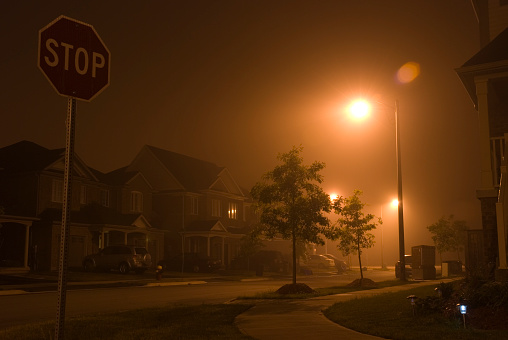
When I walked outside to get the newspaper this morning, tule fog blanketed my world. The blades of grass chilled my slippered feet, and the air bathed my face in cold breath. The street lamps glowed like steaming, yellow jewels. Houses wore shrouds of gauze, and both ends of the street disappeared into a thick, milky blanket.

I grew up in Sacramento where tule fog covers the neighborhoods, hills, and American River from November to early March. When the humidity is high and the nights cool down fast, the condensation lifts from the ground like a thick mist, as white as a clean sheet.

I paused in the front of my house to enjoy the mystical sensation. I couldn’t see any details past about a hundred feet, and the whole morning was clothed in mystery. My heart skipped a couple beats at the excitement of remembering long bicycle rides in the tule fog, not knowing whether I’d be cycling head-on into a mailbox or a person walking on the street. I rode slowly, but deliberately, tempting the fog to clear just in time to save my life from a disaster.

While I was standing outside this morning, my almost bare feet chilling, my arms cupped around my torso, holding my robe together, I felt the thrill of the mystery of not knowing what the fog was hiding.

Mystery is an exciting part of life. We never know what will happen the next day, the next year, or the next decade, even if we plan conspicuously. Life has a way of retaining a sense of mystery.

I thought back to the day when I was nine-years-old, writing my first poem. When I was a teenager and I got up early in the morning to walk in the dew-filled yard just so I could write a poem about how it looked. About when I won the Cadbury’s Essay Contest before I ever knew that writing would become my major passion. Mystery.

I thought back to the times when my parents and nine brothers and sisters celebrated Thanksgiving, Christmas, and Easter, sitting around a plain, mahogany dining room table. Later, when some of us got married and had kids, the food would be set off to the buffet; we’d line up, say prayers, and then jostle for a seat. Lots of fried chicken, sliced ham, potato salad, broccoli salad, a tray of raw vegetables, ranch dip, fruit salad, pecan pie, trifle, and pop out of the can. Never would I have imagined that these family dinners would create an unbreakable bond between me and my siblings that is even more important now that both of our parents have passed. Mystery.

I thought back to my first college adventure when I majored in accounting. I planned to work in finance my whole career since it was a good field for women at the time. I admired my mother’s sharp ability to manage money, and thought that this major would give me the independence I sought. I did. What I didn’t know was that my love of writing would eventually win out, and I’d go to graduate school to become an English professor. The change was exciting, and I’m sure a lot of the excitement came from studying a completely different topic.

I saw myself in a silk wedding dress walking down the aisle of a church in Sonoma, California toward my first husband. The mystery of not knowing that the marriage would become a disaster allowed me to stay married for nineteen years, long enough to almost get my two beloved children raised and launched, and long enough for me to pick my crippled self off the floor and walk decidedly out the door to a healthier life.

So this morning when I stood in my robe in awe at the impenetrable tule fog, I became astutely aware that my life was still full of mystery, and I felt excited. Will I ever truly become fluent in Spanish? Will I ever get the chance to fly to Argentina to visit my son-in-law’s mother and be able to chat with her?

Will I finish writing my novel? If I finish it, will I publish it? If it’s published, will I visit bookstores to read and sign it?

Will I live to be sixty-five, seventy, eighty, or ninety? If I do, will I be able to write until the very end, or will my health limit my ability to follow my passion.

That’s the thing about mystery and the future. We just don’t know what’s going to happen until it happens. This forces us to focus on the present and helps us do the best we can now so that our future has a chance of imitating our dreams.

The tule fog covered the ground for hours this morning, reminding me to make the best of my day. That’s as far as I really can see.

Retiring Is Hard to Do

I retired just over a year ago, and I’m just starting to figure out what “retirement” is all about.

I must admit, that before I gave my retirement notice, I didn’t spend a lot of time thinking about what I would do. I was, after all, still working as a college English professor, a job that seemed to require a 24-hour-a-day, 7-days-a-week commitment. I knew, however, that I wouldn’t be lying around on a beach chair in Hawaii; I wanted to continue to make a difference in people’s lives. I just didn’t know what that would look like.

I spent the first month of my new life walking around like a zombie. I cooked elaborate dinners, went on long hikes with my girl friends, and spent hours and hours pulling weeds in my garden and making tiny changes in my front yard landscape.

But I didn’t really feel like I knew what I was doing. I was “just keeping busy” enough to fool myself that I “was retired.”

Finally. about two months into this new endeavor, I made some critical decisions. Not that I was sure of them. Not that I was confident that I’d continue to do them forever. I just felt like I needed to make some decisions in order to be productive.

I continued to create new recipes and post them on my recipe blog. That was fun for about nine months, and then, all of a sudden, I decided that the pressure of posting recipes every day was a bit like working again. Since the beginning of 2022, I’ve only posted one new recipe. I feel fine about that. Instead, I’m enjoying watching my older sister post gorgeous photos of her cooking on FACEBOOK. I like to think that I’ve inspired her to display her own cooking talent with confidence and pride.

During the summer, I planted an herb garden that tickled me to my very core. I had basil, thyme, oregano, chives, parsley and mint growing lushly in pots just outside my kitchen window. I used the herbs in my new recipes, blended them into pestos and herb sauces, and dropped them into pitchers of water for cool summer evening thirst-quenchers. Along the way, I learned some incredible secrets about how to enrich the soil with calcium and when to plant cilantro, an herb that doesn’t grow well in summer.

I decided to take up Spanish again since I hadn’t been able to practice much while I was teaching English courses. I found my old Spanish books and got to work. Every day, I wrote sentences, used a flash card app to practice vocabulary, and even told my Argentine son-in-law what I was doing. That, I thought, was brave.

I also started writing a novel that had been simmering in my head for a couple of years. I told people I was doing this, but I also explained that I didn’t have any requirements except to write it. As soon as you tell people you are writing a novel, they ask questions like, “When will it come out on Amazon?” “What percentage of the book have you written so far?” “Can I read what you’ve written so far?” I decided that, since I was retired, I wanted to experience complete freedom in my writing: no deadlines, no demands, no rigid outlines, just the sheer joy of being creative and writing from my heart.

I also took a giant step. I joined a women’s club so that I could help raise money and award scholarships to students going to college. This was my jackpot activity, I thought. By working with this club, I would continue to make a difference for college students; however, what a commitment it might turn out to be.

At one of the women’s club meetings, one woman said, “Retirement is a time when you keep reinventing yourself.” After about six months, I knew that was true.

My Spanish practice was fine, but, whenever I tried to speak it aloud, I forgot all my vocabulary. My brain fogged up and my eyes got buggy as I dug around in my head for words, so I signed up to practice with a tutor online. Jessica was fabulous, but, I noticed that after twenty minutes into an hour lesson, I was watching the clock and getting frustrated. Finally, a friend told me about some weekly, online adult ed classes which would allow me to learn at a less strenuous pace. I signed up for a summer course and found the right fit. I’m now taking Spanish 2 for this year, and I can keep taking these classes up to level 5. After that, I’ll reinvent my Spanish learning.

The writing of my novel has proven to be more successful than I ever dreamed. My main character has traveled across Argentina and into Chile in pursuit of finding out what she wants to do with her life. She’s gutsy, intelligent, and courageous, and, most importantly, I like her. I’m still getting those annoying questions from people about deadlines, but I’m more confident about asserting that I have “no rules or expectations.” What they don’t know is that when I get to the end of my story, I’m going to start at the beginning and rewrite it. They must think that my writing is so good that my first draft drips with eloquence and comes complete with sophisticated figures of speech. I’m okay if they think that. I’m just enjoying the writing.

I’ve given myself a break when it comes to cooking, and my husband and I go out to eat more often. My herb garden is dormant for the winter, and my freezer is stocked with pestos and herb sauces. And you’ll never guess what happened just nine months after I retired and only six months after I joined the women’s club. I volunteered to be the Chair of the Scholarship Committee even though the other women on the committee all have at least ten more years of philanthropy experience than I do. I’ll try to act like a student of philanthropy and listen as I lead a group that is much wiser than I.

One day, I sat down in my living room to take a break from all my projects. My husband was sitting in a big arm chair. His Kindle was on the table beside him, and he was staring straight ahead of him, his eyes and mouth relaxed and content. “What are you doing?” I asked him.

“I’m relaxing,” he said. “I spent my whole life working hard. I’m going to spend my retirement relaxing and having fun.”

Oh, I thought. I don’t know how to do that.

Hmmm. It’s time to reinvent myself, again.