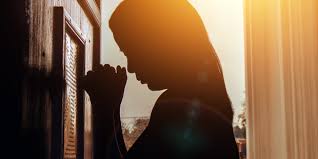

Character Study: Josette

Photo by Christopher Campbell on Unsplash

I’ve gone to church on Sunday for 18 years.

My parents were Catholic. They named each of their nine children after saints. I was named after St. Joseph, but, since I turned out to be a girl, they changed my name from Joseph to Josette.

I remember sitting in the back seat of our Chevy, four kids across the seat, each with a kid in their lap. Mom held the baby in the front passenger seat while Dad drove. When we got to church, we filed out of the car like sardines that had been packed tightly, but then loosened out of the can one at a time.

Our family always sat in the right third row from the front. Nobody was ever there before us because we got to church early. Early enough for boredom to set in before Mass even started.

I swung my Mary Jane shoes under the pew and out in front of me like a swing. I opened the back of the prayer book and read the words of the songs as if they were poems.

I inspected the architecture and décor of the interior: the brown confessional doors with red lights over them; the blue carpet trailing up the middle aisle like a wide strip of the sky; the podium where the readers stood; the steps to the altar also carpeted in blue; the altar covered with a starched white linen cloth; the silver candlesticks that held thick yellow candles. I even stared at the statues of Mary, Joseph, and Jesus that stood to the sides of the altar. Mary looked like a contented mother. Joseph seemed a little distracted as chubby Jesus gazed up to the ceiling.

On Good Friday, Sister Genevieve took our class to the church to participate in the Stations of the Cross. This was a pre-Easter ritual that involved the priest visiting 14 stations around the church while leading the congregation in a series of prayers. The stations were icons that depicted scenes from Jesus’ last day on earth.  

The whole process took about three hours. My feet ached as I stood on the hard linoleum floor in the pews with my classmates. I became light-headed while watching the priest slowly move from station to station, his figure gradually transforming into a hazy image in the semi-darkness. One time, I feinted backwards and slumped onto the wooden pew. Sister Genevieve scooted between the children on my left, folded me into a seated position and put my head between my knees. I was nauseous for the longest time. Finally, Sister Genevieve stood me up and half-carried me outside. I lay on the cement wall with my arms cushioning my head in the shade until the ritual was over.  

I remember promising myself that, once I was out of Catholic school, I would never attend the Stations of the Cross again.

Now, I am going to college in Los Angeles. There is a Catholic church two blocks from my apartment. In the front of the church is a spacious plaza, perfect for a gathering of friends after a celebration. I have walked past it several times on my way to campus, pedaling faster if people are streaming out the doors.  

Today, I’m going to conduct an experiment. Dad always said that if we didn’t go to church every Sunday, we’d be struck by lightning. I have decided to test this theory.

I open the door to my apartment, turn around and lock it. Then, I walk into the center courtyard of the building where the pool and spa are. My neighbor, Jason, is lying prone on a chaise lounge, mirror sunglasses shielding his eyes, sun tan lotion scenting the air around him. His already-tan skin shines like polished brass. His breathing is slow, so I tiptoe around him to the front hall.

The iron gate locks behind me and I turn right on Santiago Street. Leafy liquid amber trees buffer me from the sun as I stride past apartment complexes, gated communities of families interspersed with college students.

Santiago Street joins Junction Boulevard at a three-way stop. I swing my steps to the left to continue onto Junction. Now, neat, boxy front yards line the sidewalk. Two-story houses rise up behind them. Open windows. Curtains sailing out from inside second-story rooms. Front doors with lion-head knockers, single windows, and brass kick plates. Porch lights left on. Doormats askew.

Now I can see St. Angelo’s Catholic Church ahead on my side of the street. The curb is filled with parked cars. People get out and walk across the church’s front plaza to the wide-open double doors.

I’m in front of the church now. Inside, through the open doors, I see rows of wooden pews that remind me of my childhood. They are spaced like concentric circles around the altar. The church is round.

People are walking inside, dipping their fingers in a water font, and making the sign of the cross: their forehead, chest, shoulder and shoulder. Amen.

My chest tightens as I take a step toward the entrance. I struggle to breathe deeply. I pause in the middle of the plaza as the church bell rings the time. Time for Mass.

Now, several people are rushing past me to get a seat before Mass starts. I watch them, pretending they can’t see me there. No one knows I’m here.

Deliberately, I turn around and tread back to the sidewalk away from organ music that signals the Mass is beginning. Voices sing words like poetry.

I continue walking farther away. My ritual-heavy childhood.

The tree canopies are waving like sails, the sheer blue sky is splashed with sun.

Lightning wouldn’t dare strike me on such a beautiful day.

Character Study: Hazel

Photo by Hannah Olinger on Unsplash

“You shouldn’t go to college,” said Dad, looking down at us kids. “There’s riots and immoral behavior. You’ll get brainwashed for sure.” Dad sat in his brown recliner with the foot rest down, his hands fiddling with a cigarette and match. The four of us, my two older sisters, me, and my little brother, sat cross-legged on the worn-out carpet in front of his chair, even though we were teenagers. We should’ve been sitting in chairs like him.

The news was on television. Dad had just seen pictures of students rioting at U. C. Berkeley for women’s rights. He had turned down the sound and called us into the room from our bedrooms that were right down the hall. I had been doing my chemistry homework, and I still had to finish math.

A wood-framed picture of the Last Supper hung on the wall right above Dad’s chair. To the side of it on the mantel was a porcelain statue of the Virgin Mary that Dad had bought Mom when he flew an Air Force mission to Portugal. A pile of rosaries filled a basket next to the statue. They reminded me of earlier years when we were ordered to kneel on the scratchy carpet to say the Rosary for 45 minutes. Thank God, Dad didn’t make us do that anymore. I’d never get my homework finished.

“Hazel, give your dad his ice cream,” said Mom from the kitchen. She stood at the counter, a box of vanilla ice cream in front of her. Jars of caramel and chocolate, too. Cherries.

I got up from the floor, happy to escape the lecture that I knew was coming. Whenever Dad got on his soapbox, we were stuck for at least an hour. Backpacks open on the floor in our dark bedroom. Homework books splayed wide on our desks. Pencil case contents spilled over half-used binder paper.

Dad put his cigarette and matches down. I gave him his bowl of ice cream.

“I need a spoon,” he said in his booming voice. A scowl made two deep furrows between his eyes on his sun-tanned face.

I jumped, turned to the kitchen, found a spoon on the counter next to Mom, handed it to him, then sat down.

While Mom finished scooping the ice cream into bowls, Dad, in-between his own bites, talked about how college wasn’t good for kids.

“They preach against religion,” he said.

I had heard Dad defend his religion ever since I was a little girl. The thing was, he didn’t seem to be a happy person, even though he went to church every Sunday, prayed at every meal, and raised money for new church buildings.

What good was it doing him?

I didn’t like how the parish priests treated women and girls either. We were treated like appendages of our fathers. No authority. No voices. No purpose except for one day having babies.

Luckily, our high school was run by nuns who were great examples of what women could do when men didn’t oppress them. The principal was a nun who had been educated in London in both education and school administration. My chemistry teacher was a pretty blonde married woman who one day wanted her own children. Our choir teacher was a nun who had a college degree in music. She taught choir, violin, flute, and piano.

But I loved my English teacher most of all. She’s the one who introduced me to the English and American poets and Edgar Allen Poe. Poe wrote such delicious horror stories. Murder. Psychological torture. Manipulation. People buried alive. So incredibly creative.

In Sister Elena’s class, I wrote my own poetry. She entered our poems in contests. I won first place once. We also read Shakespeare plays and acted them on stage for the whole school. Someday, I’d like to write a sonnet as good as he did.

What these nuns taught me was that my father had a narrow viewpoint when it came to education and women. He sent us to our high school to learn religion. But these nuns had taught us their version of Catholicism, and it had nothing to do with oppressing women.

Dad was still lecturing. His loud voice filled the room, but it wasn’t filling my ears.

Nodding my head “yes” every so often, I was far away. I saw myself walking through a university campus, my arms filled with Shakespeare, Marlowe, Emily Dickenson, Jane Austen, and Elizabeth Barrett Browning.

I definitely was going to college.

Dark Confession

Audrey’s second grade class had been practicing their confession ritual for three months, and, finally, the day came for their first confession.  Audrey smoothed the pleats of her green and white plaid, wool skirt over her knees.  The fabric scratched her bare thighs.

Sister Magdalene was listening to Tommy.

“I don’t know,” Tommy said.

“You must know.  How many sins do you have to confess?  You’ll be going to confession today and you have to be ready.”

“I can’t think of any,” Tommy whined, cupping his already large hands at the sides of his dipped head. 

Sister Magdalene picked up the math book from her desk, raised it like a whip over a slave’s back, and banged it down on Tommy’s crew cut.

Tommy cowered over his desk, protecting his head with his hands laced over his skull and his elbows tucked in across his face.  A moan escaped from the cave of his elbows, a sound like a deer shot in the forest, trapped in the eye piece of a hunter’s gun.  Audrey winced when the book hit Tommy’s interlaced fingers again.

“You’re lazy, Tommy!  Tell that to the priest when you go to confession.”

Tommy’s desk was the first in Audrey’s row.  He had to sit in front because Sister Magdalene wanted to watch him.  He got hit over the head with lots of books: math, history, hardbacks, large paperbacks with big words on their covers, but he never got hit with the little paperback books from the top shelf behind Sister Magdalene’s desk.  Never.  And Audrey was glad that she sat close to the back row.

Jane’s turn.  “I hit my sister yesterday.”

Darlene tells Sister Magdalene that she stole two marshmallows from the cupboard when her mother wasn’t looking.  Colleen used Darlene’s bicycle without asking her.

Soon would be Audrey’s turn.  What was she going to say?  When mommy asked her to set the table, she did it.  When she told Audrey to fold the clothes, she folded them.  She didn’t talk back.  She knew better than to say no.  Instead, she knew that if she folded the clothes, she’d be alone in the laundry room where it was quiet.  The dryer warmed the room, and its tumbling sounded like distant drumming.

Sometimes, Audrey sang songs, pretending that the dryer was background music.  When the washer was on, she sang livelier songs.  She sang, yes, but she didn’t sin while she was folding the clothes.  The laundry room wasn’t a place for sinning; it was a place for peace.

What was she going to do?  If she didn’t come up with a sin, Sister Magdalene would hit her over the head with one of those books.  Colleen was only two seats ahead of her.

As Sister Magdalene asked each student, she stepped down the row, closer and closer to Audrey, like a huge bat in her black gown.  A white band on her forehead held in place a black veil that flowed down her back.  Her folded arms were pleated bat wings.  Closer and closer she inched until her shadow crossed over Audrey’s desk and engulfed her in gloom.  Audrey couldn’t see the sunlight shining through the windows anymore.

“Tell me your sins.”

Audrey squeezed her hands tightly in the crotch of her skirt.  She could feel her heart beating up a batter of a lie that was thick and sticky.  Maybe Sister would sense the lie. Then, Sister would hold a book over her head, and when it clunked down on Audrey’s headband, she would groan like Tommy.  Die like a beetle under a shoe.

“I lied, Sister.”

“Good.  You’re ready then.”  Sister Magdalene took a step behind Audrey and the sunlight from the window splashed over her face and shoulders like warm bathwater, the heat from toast, the breath from the dryer in the laundry room.  She was safe.  She had survived the inquisition and had something to tell the priest in confession.

After lunch, the class marched in two lines from the classroom to the church on the hill.  Audrey held hands with Maureen, who sat right behind her.  Sister Magdalene held Tommy’s hand, pulling him behind her like a walking doll whose battery was running down; his legs dragged on the sidewalk and he tripped on the stairs.

Inside the church, the class filed in twos down the center aisle and filled the two front pews, girls to the left, boys to the right. 

“Hands in your laps!”  Sister Magdalene whispered harshly with disdain and disapproval.  Audrey tucked her chin into her blouse and looked at Sister through furtive eyes, folding her hands over her plaid skirt and stretching her toes to reach the floor.  The tips of her shoes could barely reach the linoleum. 

One by one, her classmates disappeared into dark hallways on either side of the altar.  She waited on her square of the pew, tapping at the floor, trying to remember the words to the Act of Contrition prayer that she was supposed to say in the confessional: “Oh my God, I am heartily sorry for having offended thee, and I . . . “  What’s next?  Her head was filled with white, fluffy nothing, like those cotton balls mommy had in her bathroom.  No words to the prayer came to mind, only filling that blackened and furled into fear.  What will the priest say if I can’t remember?  Will he tell Sister Magdalene?  Audrey thought of the math book lying on the corner of Sister’s desk with its big, black letters.

Her turn.

She walked from the pew with her arms at her sides, and hastily clasped her hands together as she reached the dark hallway.  She couldn’t see the confessional.  The hall was so black and deep, she couldn’t see even the walls of the tunnel stretched before her.  Only a hollow shaft of light illuminated the floor for several feet ahead of her.

Beyond the shaft was blackness.  A black as deep as the space above her bed at night.  Dense, complete darkness.  Somewhere in that cave of blindness was the confessional, controlled by a priest in black clothes with a cross around his neck.  A priest who would judge her for her sins, even if they were fabricated at the last minute to avoid corporal punishment.

She stepped gingerly into the obscurity, holding her breath so tightly that pins jabbed at the cells in her chest like tiny swords.  Walking on her tiptoes, her arms lagging at her sides.  She clenched her jaw, ready to defend herself against the demons of the dimness, but not sure where or what they were.

Step by step, the walls appeared like the slabs of a tomb as her eyes adjusted.  The lines of the linoleum transported her gaze down the chamber to a kneeler set under a dark window.  Beside the window was a notice, stuck to the wood with a silver tack, pierced like the heart of Jesus.

She couldn’t read it.  Maybe it was a notice that the confessional was out of order.  For a flicker of a second, she breathed easier, absolved of the responsibility to implicate herself in a sacrificial crime.  Liberated from the punishment of a priest’s sentencing, free of the humiliation of having to lie to follow the rules.

No.  It wasn’t that.  She heard a shuffling behind the dark window.  Saw a silhouette wobbling behind the screen—the shadow of a fat head on the pedestal of rounded shoulders.  The priest was there, waiting for her, grinning at her guilt, anticipating the litany of her sins, prescribing her sentence.

Audrey knelt on the wool cushion, one knee and then the other.  Her knees itched.  She pressed her hands to each other, fingers pointing to the dark ceiling, and one thumb crossed over the other. 

In this cavity of shame, she read the words on the sign—The Act of Contrition.  Sucked the dank air into her lungs like filling a vacuum, and its clamminess wallowed around the tight walls of her organs like the squall of a storm.

“Bless me Father for I have sinned.  This is my first confession . . . I lied, Father.”