
Character Study: Hazel

Photo by Hannah Olinger on Unsplash

“You shouldn’t go to college,” said Dad, looking down at us kids. “There’s riots and immoral behavior. You’ll get brainwashed for sure.” Dad sat in his brown recliner with the foot rest down, his hands fiddling with a cigarette and match. The four of us, my two older sisters, me, and my little brother, sat cross-legged on the worn-out carpet in front of his chair, even though we were teenagers. We should’ve been sitting in chairs like him.

The news was on television. Dad had just seen pictures of students rioting at U. C. Berkeley for women’s rights. He had turned down the sound and called us into the room from our bedrooms that were right down the hall. I had been doing my chemistry homework, and I still had to finish math.

A wood-framed picture of the Last Supper hung on the wall right above Dad’s chair. To the side of it on the mantel was a porcelain statue of the Virgin Mary that Dad had bought Mom when he flew an Air Force mission to Portugal. A pile of rosaries filled a basket next to the statue. They reminded me of earlier years when we were ordered to kneel on the scratchy carpet to say the Rosary for 45 minutes. Thank God, Dad didn’t make us do that anymore. I’d never get my homework finished.

“Hazel, give your dad his ice cream,” said Mom from the kitchen. She stood at the counter, a box of vanilla ice cream in front of her. Jars of caramel and chocolate, too. Cherries.

I got up from the floor, happy to escape the lecture that I knew was coming. Whenever Dad got on his soapbox, we were stuck for at least an hour. Backpacks open on the floor in our dark bedroom. Homework books splayed wide on our desks. Pencil case contents spilled over half-used binder paper.

Dad put his cigarette and matches down. I gave him his bowl of ice cream.

“I need a spoon,” he said in his booming voice. A scowl made two deep furrows between his eyes on his sun-tanned face.

I jumped, turned to the kitchen, found a spoon on the counter next to Mom, handed it to him, then sat down.

While Mom finished scooping the ice cream into bowls, Dad, in-between his own bites, talked about how college wasn’t good for kids.

“They preach against religion,” he said.

I had heard Dad defend his religion ever since I was a little girl. The thing was, he didn’t seem to be a happy person, even though he went to church every Sunday, prayed at every meal, and raised money for new church buildings.

What good was it doing him?

I didn’t like how the parish priests treated women and girls either. We were treated like appendages of our fathers. No authority. No voices. No purpose except for one day having babies.

Luckily, our high school was run by nuns who were great examples of what women could do when men didn’t oppress them. The principal was a nun who had been educated in London in both education and school administration. My chemistry teacher was a pretty blonde married woman who one day wanted her own children. Our choir teacher was a nun who had a college degree in music. She taught choir, violin, flute, and piano.

But I loved my English teacher most of all. She’s the one who introduced me to the English and American poets and Edgar Allen Poe. Poe wrote such delicious horror stories. Murder. Psychological torture. Manipulation. People buried alive. So incredibly creative.

In Sister Elena’s class, I wrote my own poetry. She entered our poems in contests. I won first place once. We also read Shakespeare plays and acted them on stage for the whole school. Someday, I’d like to write a sonnet as good as he did.

What these nuns taught me was that my father had a narrow viewpoint when it came to education and women. He sent us to our high school to learn religion. But these nuns had taught us their version of Catholicism, and it had nothing to do with oppressing women.

Dad was still lecturing. His loud voice filled the room, but it wasn’t filling my ears.

Nodding my head “yes” every so often, I was far away. I saw myself walking through a university campus, my arms filled with Shakespeare, Marlowe, Emily Dickenson, Jane Austen, and Elizabeth Barrett Browning.

I definitely was going to college.
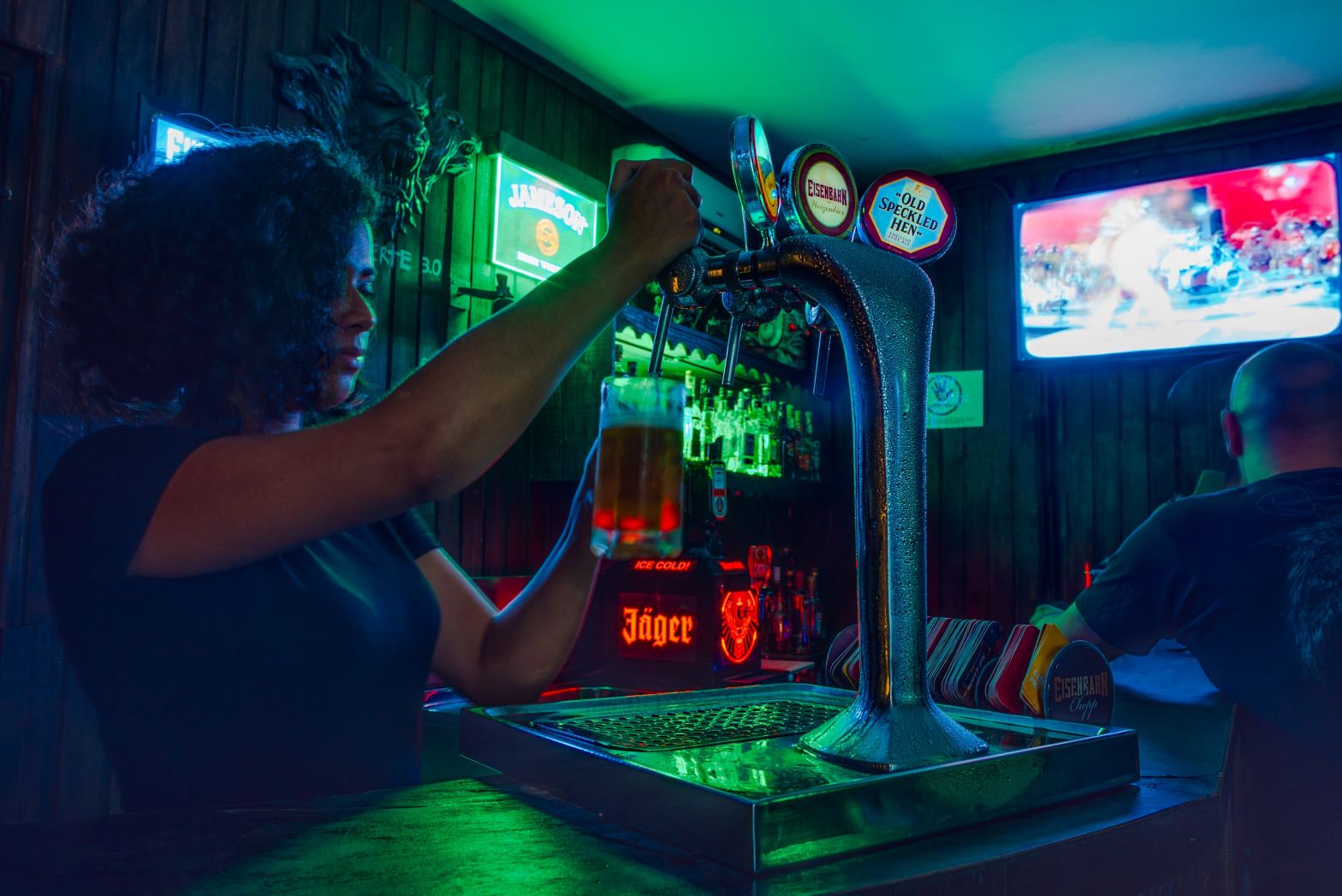
Character Study: Grace

Photo by Vinicius “amnx” Amano on Unsplash

Here I am cleaning the bar while they sit on their asses smoking cigarettes. I’m not the only employee here. Why doesn’t the boss yell at Juan and Carlos to clean up?

Juan grinned at me from his bar stool as he let smoke sail out of his pursed lips like the exhaust of an old car. He winked and I cringed. Using his thumb and index finger to put his cigarette back into his mouth, he turned away from me slowly to rejoin the conversation between the boss and Carlos.

They were chatting about one of the women who had come to the bar that night. I couldn’t hear what they were saying, but from the leering looks on their faces, it was derogatory.

The woman had come in alone, walking into the bar around 9 p.m. in a purple satin blouse, a black pencil skirt with a slit up to her panty line, and black stiletto heels. She flipped her dyed-blonde hair over her shoulder as she sat down at an empty table, the lace of her panties showing at the top of the slit in her skirt.

Quickly, both Juan and Carlos had rushed over like ants at a picnic. Together, they bought her a martini.

She stayed for awhile as I made drinks behind the bar and Juan and Carlos waited on tables. She sat alone for only a few minutes because a tall man in a suit asked if he could sit with her. She smiled at his question and waved him into a chair. For two hours, the dyed-blonde and well-dressed man chatted, their elbows on the table as they leaned toward each other.

Finally, they got up. She smoothed down her skirt and tucked in her blouse. He held out his hand. She put her hand in it. They walked across the dimly lit room and out the double door together.

It was 4:30 a.m. The bar had closed at 4 a.m. Since then, I had gathered the dirty glasses from the twenty-six tables in the room and put them in the dishwasher. I had collected the ashtrays, dumped the ashes into the trash, cleaned each of them in a pan of soapy water, and set them to dry in the drying tray.

While I was doing all this, Carlos and Juan had sat down with the boss at one of the high tables. The boss had pulled a bottle of whiskey from the bar and poured it into three glasses. They had been drinking their whiskey for half an hour while I did the cleanup all by myself.

How misogynistic. Juan and Carlos got paid for drinking whiskey with the boss while I played Cinderella?

I wiped down the top of the bar, rubbing it with a cloth until the granite gleamed in the low lighting. I threw the caps and empty bottles of liquor into the recycling trash, counted the remaining bottles of liquor, and wrote the numbers down on an inventory sheet.

Suddenly, I blew a gust of air out of my clenched mouth and banged my fists on the bar.  I turned toward the men drinking whiskey and waved my hands.

“Hey, when are you guys going to sweep and mop the floor and wash the tables?” I yelled over the music that was still blasting from the juke box.

The boss stopped what he was saying, put his glass up to his mouth as his eyes settled on me, and swallowed the last bit of whiskey in his glass. Carlos and Juan’s eyes turned toward me in silence.

“Hey, Grace, you do such a fine job. Why don’t you clean up everything tonight?” the boss said. He cocked his head toward Carlos and Juan ever so slightly as he spoke.

I took a deep breath, my chest expanding like a balloon while anger filled my eyes.

“Boss, the sweeping and mopping is not my job. I’m the bartender. The waiters are supposed to do those chores,” I said, trying to hide my fury.

The boss poured more whiskey into his glass as Carlos and Juan grinned down at their table. Carlos took his hands and pulled the ends of his bowtie to straighten it. Juan flipped one of his hands into the air like he was dismissing a servant.

This was ridiculous. Why would I want to work in a place with such a male-chauvinist crew? I had to show them that I wouldn’t put up with this. No woman should.

I untied the short white apron that was hitched around my jeans, scrunched it up into my right hand, and threw it across the room at the three men. It landed at their feet.

“Whoa, girl. Watch your temper,” the boss said. “Pick this up.” All three men stared at me, spectators watching fish in an aquarium.

Really? They don’t have a clue what I’m saying. I guess I’ll have to make myself crystal clear.

“I quit,” I said. “Pick it up yourself.” I took a pile of coasters from on top of the bar and threw them over the granite. They landed under the bar stools and across the linoleum. Then, I strode to the bar’s swinging door, pushed it open, and slammed it back so hard that it clunked on the cupboard behind me. I paced across the room toward the exit.

“I’ll pick up my last check tomorrow,” I said, twisting back toward them and winking before leaving the building.