
Way back in the 1860’s, my great-great-grandfather Ignatius immigrated to Wisconsin with his four brothers. They all had families. My great-grandfather Leon had seven siblings. Most of them had families. My grandfather Leon had six siblings; all of them, except for his brother Phillip who became a priest, had families. His brother Ed had fourteen children. His brother George had nine offspring. Many farmers had large families so they could use their children to provide free labor on the family farm.
My father had four siblings, and they had children. My father had ten children. His brother David had ten children. And between his siblings Gerald, Mary and Daniel, there were eleven more descendants. Now those descendants have children and so do their offspring.
Then, there is the maternal side of my family. Two families dominate this line of my heritage: the Konkels and the Jereczeks, families who immigrated to the Pine Creek area of Wisconsin in the 1800’s as well. I’m still working out the threads of my great-great-grandparents, but I’m clear about the progeny of my Great-grandpa John Jereczek and his wife Pelagia Konkel. They had eight farm laborers—excuse me, eight children. One of them was my grandfather August. He married Florence Gibbons, a woman from a large Irish family that immigrated to the area during the Irish Potato Famine. Everyone in every generation had large families.
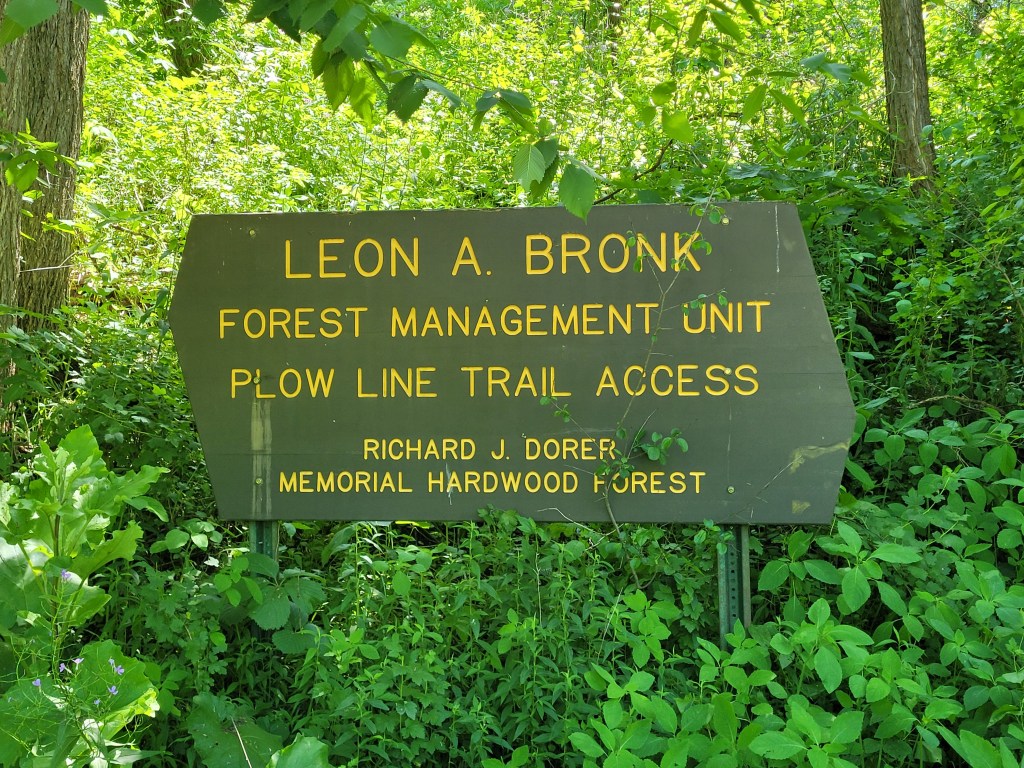
Truly a cousin conundrum. I have first cousins, second cousins, thirds, fourths, cousins-removed in a lot of different ways, over-the-hill-cousins, and near-and-far cousins. Between the farming community of Altura, Minnesota—throughout Winona—and into the farming communities of Dodge and Pine Creek, Wisconsin, I am in danger of running into one of my cousins at any time in any place—as the owner of a dairy farm, at church, in a restaurant, at a grocery store, or on a hike in the state park which used to belong to my great-grand-father Leon. If you count the relatives who live outside of this area—in Minneapolis, Florida, Massachusetts, Michigan, Ohio, Colorado, Montana, Idaho, and California, my cousin count is exponential.
What really is a cousin? I did a little research and found a definition. The website Who Are You Made Of? defines a cousin as “anyone who shares a common ancestor with you and is not a direct descendant of you or your siblings, a direct ancestor, or a sibling of a direct ancestor.” This definition certainly proves that I have hundreds of cousins, most of whom I probably will never know since I can’t even keep the names of my great aunts and uncles straight.
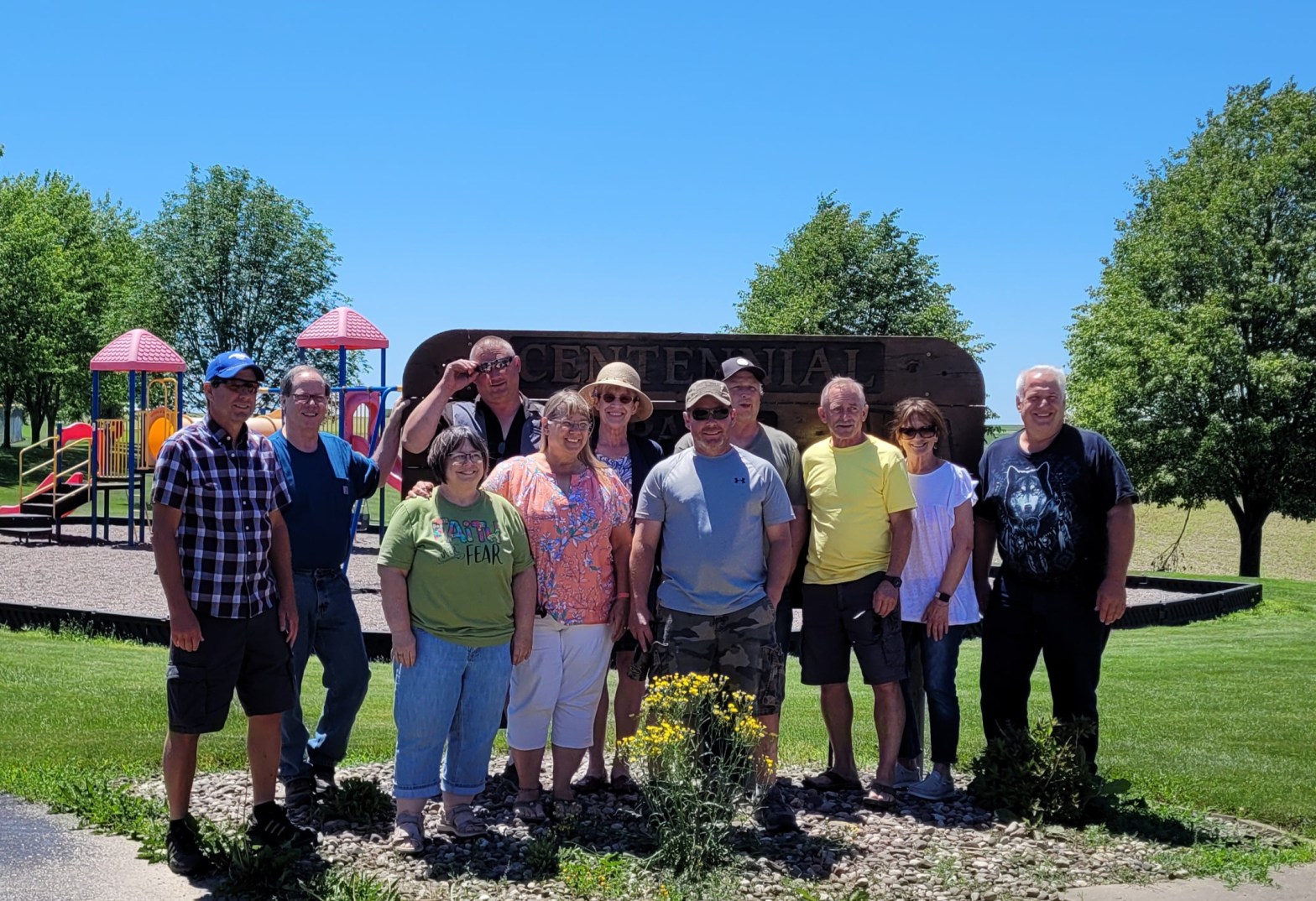
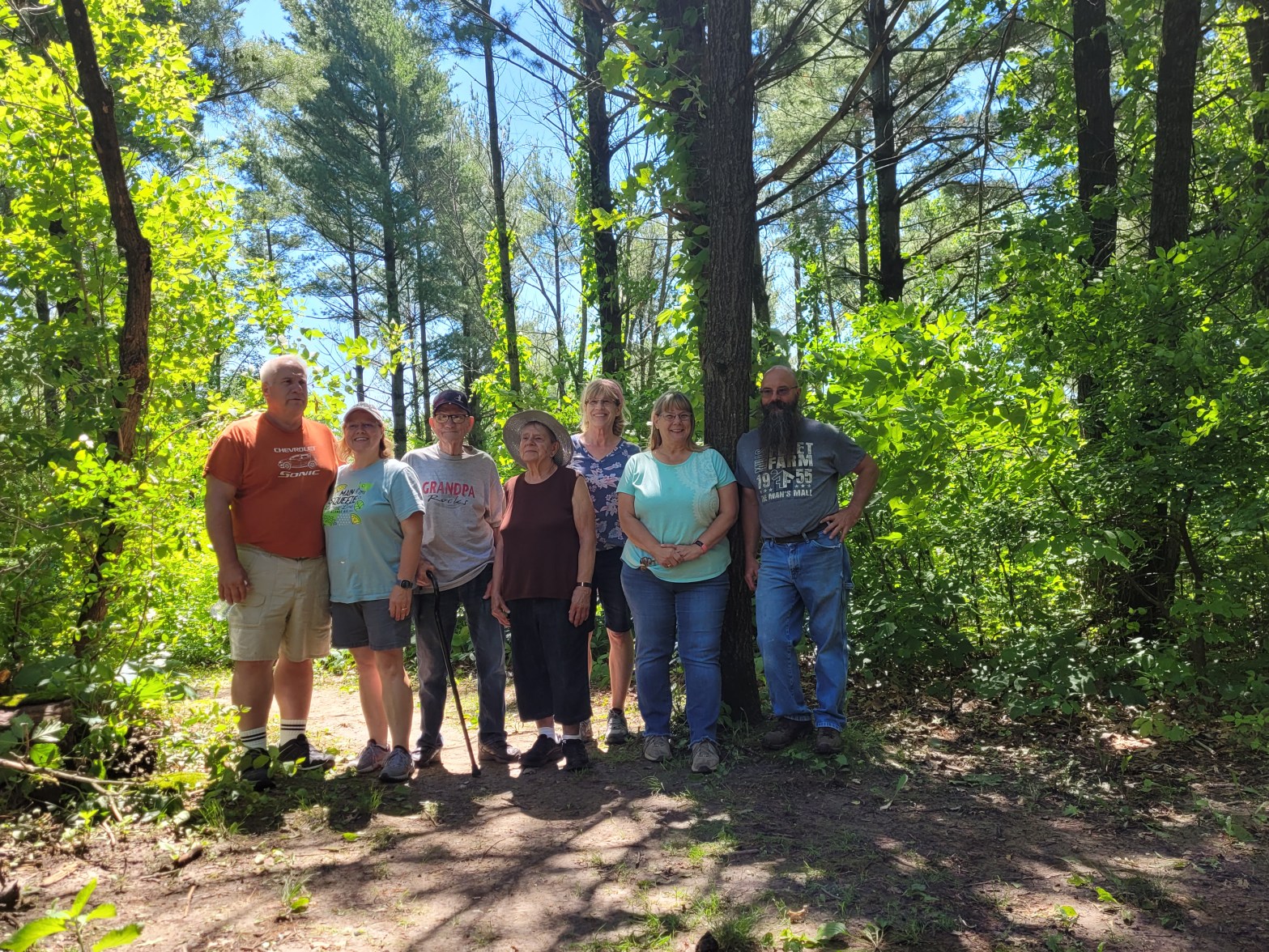
I recently visited the Wisconsin/Minnesota area where my ancestors first landed in America, and I had such a fabulous time with my relatives—mostly cousins—that I became inspired to better understand this voluminous family of mine. I do understand who my first cousins are. They are the children of my aunts and uncles. I have 44 first cousins—the children of my father’s and mother’s siblings. When I visited a few days ago, I was able to see about 25 of them. What a fun group they are—laughing, joking, telling stories, recalling memories, and thinking of the next fun social opportunity.
My children’s names are Alex and Rachael. Since I have nine brothers and sisters who have produced a total of eighteen children amongst them, my children have eighteen first cousins just from my side of the family, two from their dad’s side.
The thing is, my first cousins now have children, like I do. With a little more research, I found out that my cousins’ children are my first cousins-once removed. They are also the second cousins of my children. This means that all of the children of my 44 first cousins—I can’t even begin to tabulate this number—are Alex and Rachael’s second cousins.
One day on my visit, I went to the Bronk Nursery which is owned by the son of my Great-uncle Ed—one of Ed’s fourteen children–Donald. Later that night, Donald had a beer with me and some of my first cousins at Wellington’s Pub and Grill in Winona. We sat outside while the sun set, and when the darkness descended, the mosquitoes started to feed on us with a relentless enthusiasm. Since Donald is my father’s first cousin, I believe he is my first-cousin-once-removed.
My brother Ron and sister Margaret were on this visit with me. On Sunday, they went to church in Lewiston, Minnesota to meet Greg, the son of our Great-uncle George. Since Greg is my father’s first cousin, Greg is also our first-cousin-once-removed. Oh boy.
Another time when I visited Winona, I went to a restaurant with some of my first cousins, and the waitress turned out to be the daughter of my Great-aunt Agnes, who preferred to be called Florence. The waitress’s name was Paula Doerr. She was also my father’s first cousin, which also made her my first-cousin-once-removed.
This visit, I was looking for a restaurant for another dinner and I found a bar owned by the Gibbons family. This name shows up in my mother’s heritage line. I don’t know whether these bar owners are first-cousins-once-removed or even worse. After visiting several cemeteries where I was related to an incredible number of inhabitants, I was becoming overwhelmed by all the relationship possibilities.
Think about all the tombstones connected to me. In the Sacred Heart Cemetery in Pine Creek, there are 27 Jereczeks and at least 7 Bronk headstones. There are dozens of Konkels, Gibbons and Broms, too, and they are all related to me. My Great-grandfather Leon and more Bronks and Broms are buried in St. Mary’s Cemetery which turned out to be only half a mile from my hotel. My Grandfather Leon and Grandmother Lillian are buried in Fremont Cemetery–a pastoral place in the country with their son Daniel who died when he was only 29. I even have a great-great-great grandmother who is buried under Mankato Avenue in Winona, Minnesota. When they laid out the streets for the City of Winona, they never moved her body. Her husband is likely buried nearby since we don’t know where he is.
I didn’t meet any of my second, third, or fourth cousins that I know of, but I know they’re walking around the Minnesota and Wisconsin dells somewhere. My research revealed that I share DNA with all of these cousins, and that anyone beyond a third cousin is considered a distant cousin.
I’m married, but if I was single, I could marry my third cousin. Queen Elizabeth II married Price Phillip who was her third cousin, both descendants of Queen Victoria.
It’s comforting to know that I come from such an ample family. I am close to many of my first cousins, and even if I don’t see them on a day-to-day basis, when we do see each other, we take up just where we left off the last time we spoke. We support each other through both happy and sad family occasions: weddings, births, graduations, and deaths. My life would feel so much lonelier without them. Luckily, cousin love doesn’t have any DNA restrictions.
 Tess Perko's Blog