Rain

Photo by Ahmed Zayad on Unsplash

When Don woke up, it was raining.  The water that he ran in the tub sounded like rain chortling out of a storm pipe.  The water that streamed from the kitchen faucet for his tea beat into the kettle like rain on a wheelbarrow left out in the yard.  Rain. Rain. Rain.  It had rained for months.

Don’s mother had died at 10:05 a.m. on the same morning that Don worked his last day.  He was looking forward to retirement, and one thing he would do more was spend time with his mother—playing Scrabble, going out for hamburgers for lunch, driving her past her old house where prolific flowers signaled the change of seasons. 

At 10:06 on the day she died, the rain started.  He had kissed her on the forehead as she lay quiet in her hospital bed, checked to see if she was safe, and slipped out of the room to live the rest of his life without her. 

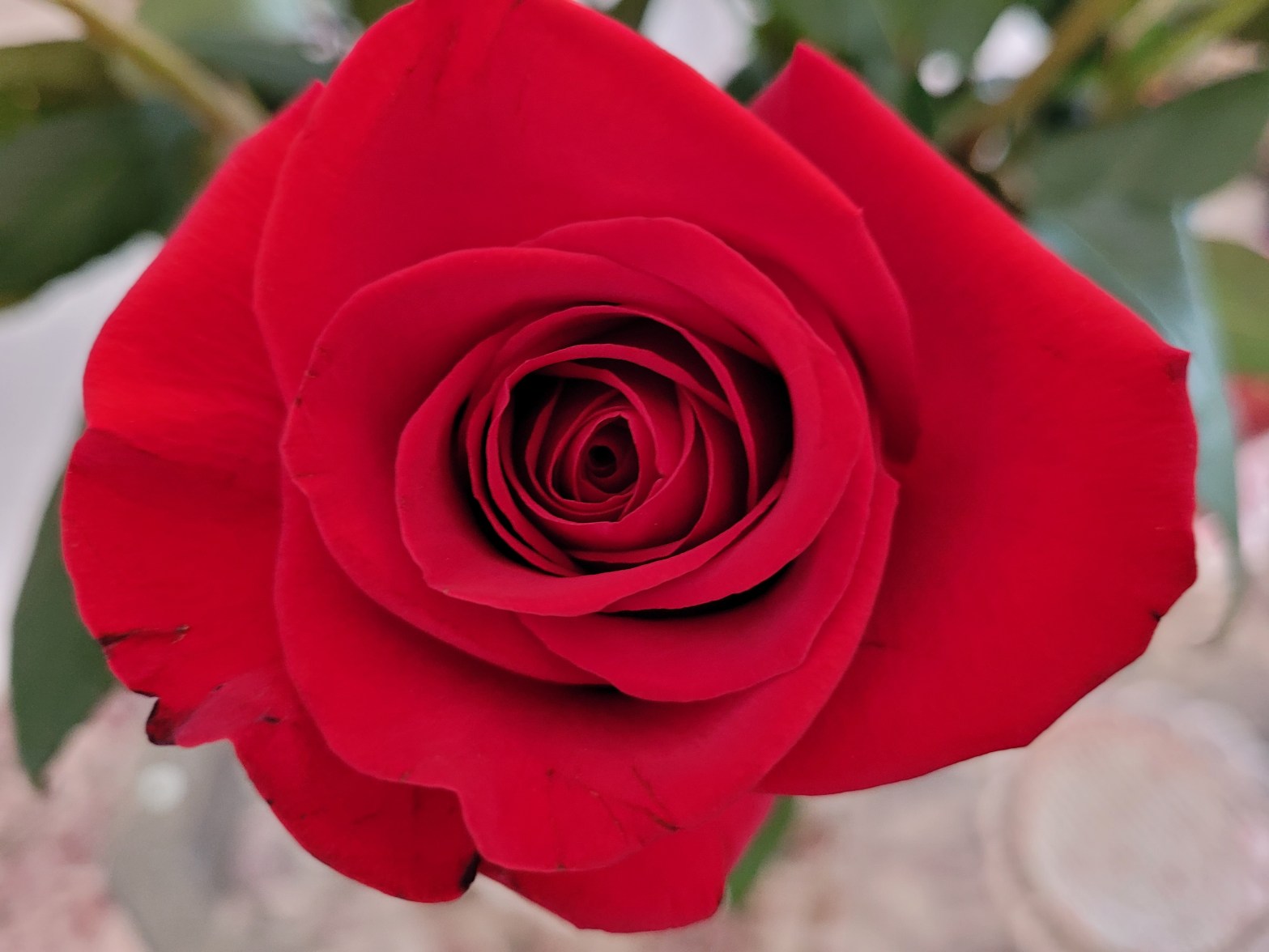
Claire had managed the funeral and service arrangements which were beautiful.  On the day Mom was buried, the sun came out for a couple hours—just enough time for Mom’s ten children to say their prayers and lay red roses on her casket.  When the casket was lowed into the ground and the earth filled in her vacancy, the grounds men laid the large spray of red roses over the dirt.

Then the rain began again.  It rained while they cleaned out Mom’s room at the assisted living home.  Maddy took all their mother’s clothes home in garbage bags.  A few weeks later, she knocked on Don’s door and handed him a teddy bear.  The bear was blue and green and peach and red, made from pieces of Mom’s shirts, pants, and dresses.  It looked both happy and sad as Don sat it on the couch in his living room.

Soon, the group texts began.  Don shared memories of his mother with his nine siblings every day.  Old memories.  Vague memories.  Disputed memories.  Sunny memories.  Rainy memories. 

Some people in the text posted pictures of what they made for breakfast.  Don posted pictures of his new seedlings and old pumpkins.  He talked about his clocks inherited from Mom and Dad.  Claire posted perfect plates of salmon dinners.  Rita identified the birds that Maddy found in her garden by looking them up in her bird bible.  Beatrice posted old photos of Mom from her twenties when she was thin, before she had ten children. 

The siblings discovered each other again.  Most of them had moved out of town since their childhood, and their communication had been through Mom for the most part.  Through their texts, they found out that Don had the best green thumb, Claire grew flowers but not vegetables, Rita was a bird and owl watcher, Maddie loved wine and dessert most of all, Beatrice was just starting a walking routine, Minnie continuously created new jam recipes, Jim was the handyman at his job, Carol had learned how to play guitar, Ron still told the best jokes, and Geo wrote poetry in his spare time. 

The texts started usually around 7 a.m. in the morning and lasted until the last sibling drifted off to bed.  Good mornings.  Breakfast recipes. Descriptions of walks.  Flower postings.  Loaves of bread.  Jars of jam.  Bowls of soup.  Directions to parks.  Comments on the news.  Revelations about hobbies.  Progress on quilts, puzzles, and charity projects.  Movie recommendations and dinner plans.  All these subjects and pictures streamed between the ten children that Mom left behind.

A few months later, the rain stopped.  The sun came out like a herald of good news, and Don woke up to the birds chirping outside his bedroom window. 

When he wandered out into his living room, he saw his colorful teddy bear leaning over on its side and bent down to sit it upright, and, as he did, the sun blazed through the window and lit up the bear in a shaft of light.

“Let’s go visit Mom, today,” Don said to his bear.  “The sun is out and I know she’ll be happy to see us.”

Half an hour later, after an oatmeal breakfast and coffee with chocolate, Don put the bear in the passenger seat of his blue truck, and drove to the cemetery.

When he got there, the sun streamed like yellow curtains through the oak trees whose branches spread over the graves like kind arms.  The green grass, which covered the shallow hills and valleys, glistened with diamonds of left-over rain. 

Don drove his truck onto the center road and stopped it in front of his parents’ graves.  There they were—lying side by side like happy campers in sleeping bags.  Their gravestone rose from the top of their plots like a crown, and Don noticed that one of his siblings had stuck some colorful plastic flowers into the metal vase in front of the headstone. 

Don knelt down in the middle of his two parent’s plots, reached out, and placed his teddy bear on his mother’s side of the stone near the flowers.

He paused for a few minutes, furrowed his brow, then recited the Hail Mary prayer, and his words wafted through the cemetery like a low whisper.  When he finished praying, he looked up at his teddy sitting quietly.

“You can’t stay here,” he said.  “We’re just visiting.  You and I have to go home and live some more.”

Don looked at the words of his mother’s name on the head stone and the dates of her birth and death.  92 years long.  Somehow, not long enough.

“Thank you for giving me life, Mom,” Don said, placing his hand on his heart gently. 

He reached over, lifted his teddy bear from the ledge beside the plastic flowers, and held the bear against his bent frame.

“I’m always here, Mom, for you, just as you were always here for me.”  Then Don slowly stood up from the ground, brushed the wet grass off his jeans, and walked back to his truck.

When he got into his seat, he checked his phone to see if any of his siblings had posted another message.  A few rain drops fell onto the windshield as he drove away. 
Wisdom of the Trees: Chapter 1

Photo by DARIAN PRO on Unsplash

From ancient times, trees have symbolized physical and spiritual nourishment, transformation and liberation.

Chapter 1 – Oak

One more week and she was done.  Graduated with a double major.  College over.  More educated than most of the people on earth. 

And you know what?  She wasn’t going back home, even when this class was over.  Her father had paid for a round trip ticket to Buenos Aires, but she was going to cash it in and stay.

This was her chance to really be independent, to find out what her values were without her father’s advice about this job or that apartment, this guy or that outfit. 

She missed her mother though, but her mother wasn’t at home anyway.  When Leonie was supposed to be having the time of her life in college, her mother had contracted breast cancer.  After three surgeries, six months of chemotherapy that sapped her effervescent energy, and twelve weeks of radiation that burned her skin red, the cancer came back. 

Just before she passed away, Leonie and her mother had sat under the oak tree in the back yard, the shadows of its branches spreading like arms across the grass. 

“I can’t lose you, Mom.”  She had wept beside her mom, the shade of the giant tree darkening her tears like black pearls.

“You won’t feel the same, but you’ll never lose me.  You’ll just have to learn how to live with me differently.” 

Leonie had felt so confused.  She stared at her mother’s face so that she could remember it—her gray-blue eyes, silky skin, a mouth that always held the hint of a smile.  She stared deep into her eyes, holding on, wishing for more time.

“I’ll be with you,” said her mother.  “I’ll guide you from a new place, a place you cannot see, but that is nevertheless powerful.  You’ll feel me.”

Leonie clutched her mother’s hand.

“I want you to find your inner strength.  Emulate this oak tree.  Every time you feel weak or lost, visualize yourself as an oak tree, rising strong, spreading wide, enduring challenge and finding the sun.  You won’t be alone because I’ll be beside you, breathing my love into your heart.”

“But I won’t see you.  You’re my inspiration.  I’ll be lost without you.”

“My love will remain here.  When you can no longer physically see me, you can find other women to inspire you.  Choose many, in fact.  One to follow for leadership skills, another to learn the art of love, and another to learn how to live with joy.  She may be one of your professors, a co-worker, a girl friend, a friend’s mother, or a woman you meet only one time in your life. Whatever you wish to be, you can find a woman to inspire you.”

“How can you be so strong?  You’re dying!”

“I’m content because I know that I will continue my life in another form.  My spirit is not dying.  My soul will continue, and I’ll grow from its future experiences.  I have many things to look forward to.”

Leonie remembered this conversation as she held her mother’s ashes six months later, secured in a pearlescent urn shaped like a heart.  Leonie kissed the top of the urn before placing it in the niche at the cemetery.   “Enjoy your journey, Mom,” she whispered.

Later, as she sat in the back yard next to her mother’s chair, Leonie thought she heard her mother’s voice.  No, maybe it was the breeze rustling the limbs of the oak tree instead. 

“My journey will be right alongside you,” said the breeze.

Staying focused on her studies was impossible after her mother’s death, but her girl friends had helped, and then Leonie decided to go overseas for a change of scenery—a much needed distraction that she needed to survive.

So now, she was in Buenos Aires and hungry.  She lived in a shabby dorm room in the basement of the university and tutored students in English to make money, but it wasn’t enough. 

Leonie searched through her backpack for something to eat: an empty plastic juice bottle, a paper envelope from the bocadillo she had for lunch.  She poked her fingers deeper.  Something waxy.  She grabbed at it and pulled out an apple, a little bruised, but it was food.

The next morning, Leonie woke up with a growling stomach and the sound of traffic.  Engines racing, horns blaring, and brakes squealing invaded her tiny room through the high window that wasn’t even big enough for her to crawl through.  Leonie grabbed her shampoo and towel, opened the door, and paced to the single shower room. 

Whew!  It was empty.  The water felt refreshing on her wet head, rinsing off the humidity and sweat of her body from the sweltering night.

Today, she was going to meet a friend that she had met in her Spanish class.  Clarissa was a native Argentinian and Leonie wanted to ask her about traveling throughout the country. 

Upstairs in the dormitory lobby, a canister of coffee stood on a table next to a large blue box of sweet pastries.  Leonie poured the thick, viscous liquid into her own mug, stuck a pastry between her teeth, and whisked out the door.

Clarissa was sitting at a table in the corner of the café with her laptop open when she arrived.  A cup of mate steamed to the right of her computer, Clarissa wildly typing on the keyboard.

“Hey, how’s it going?” asked Leonie, grabbing the back of the chair opposite her, scraping it across the floor, flinging her backpack over a post, and sitting down.

“Hey,” murmured Clarissa, finishing a sentence.

“You know, this Spanish class is my last college class, and I’ve got to figure out what to do with the rest of my life.  I feel lost without my mother, and I don’t want to go home without a plan.  I don’t even know if I want to live there anymore.”

Clarissa picked up her mate, sipped it, and looked up at Leonie. “I suggest that you travel and meet as many people as possible.  They’ll give you new ideas, and you’ll learn that you have endless options,” said Clarissa.

“That does sound good,” said Leonie.  “How should I start?”

“Just go,” said Clarissa. “Don’t think too much.  Don’t plan too much, but be ready to make your trip work each step of the way.  I’m emailing my sister.  She works at the Belmond Hotel, a few miles from Iguazu Falls.  Maybe she can get you a free room.  Iguazu Falls is one place you should go!”

“Oh, I’m so nervous about traveling by myself.  Maybe I’ll just stay here,” responded Leonie.

“Oh, no you won’t,” said Clarissa. “You’re going, and that’s that.”

“We’ll see,” said Leonie.  I have a whole week of classes left.”

“Yes, a whole week to build up your courage and begin your new life.”

An Old Rose

She was worried about her mother who seemed to struggle to stay present, something pulling her focus away or inward.  Some days she sat in the arm chair by the window, staring straight ahead, her gray-blue eyes lost in deep thoughts. 

When Sestina tried to talk to her, her mother struggled to respond.  “Wait a minute,” she would say, then, with a determined set to her mouth, she’d squeeze her eyes shut for a brief moment, open them wide, and glare at Sestina while she slowly made a lucid response. 

Her mother woke up early every morning, took a spit-bath at the sink in her bathroom, put on her clothes, and combed her golden white curls until she looked neat and ready for an outing.  After breakfast—not a big one mind you—just a piece of bacon and half a piece of toast with butter and strawberry jam—she sat down in the chair by the window and disappeared into her private thoughts.  Her breathing was labored, and she raised her shoulders every time she inhaled, her chest rising slowly, and she exhaled by opening her mouth and releasing a small burst of air.

On Wednesday, while her mother was sitting in her arm chair, Sestina went out to prune the old roses off the rose bushes.  She knew her mother not only loved flowers, but she loved roses most of all, and Sestina wanted the roses to look perfect when her mother looked out the window.   Eight tea rose bushes grew in the redwood planter, a raised bed so that the roses bloomed at the same height as the window.  The planter was about six feet from the window so when her mother looked out, she could see the stems wave gently in the breeze and glow in the sun. 

The yellow rose bush was the heartiest with big blossoms that bloomed like cabbages.  One bush grew lavender roses, medium in size with delicate petals and a hue that took Sestina’s breath away.  Four of the bushes bloomed with various versions of red flowers, each a unique shade of red and shaped petals.  The two white bushes bloomed with the most flowers, always producing plenty of blossoms so that Sestina could cut some and bring them in the house.

Sestina held the kitchen shears in her right hand and pulled back a single stem from a rose bush, looking for the perfect compound leaf of five leaflets so she could prune the dead rose at just the right angle and place to encourage more growth. 

As she made the cut, the daylight intensified into a blaze of light all around her.  Insects’ voices grew loud into a hum like a Gregorian chant, and she heard the wind rush under the wings of a swallowtail butterfly who hovered over a rosebush nearby.  The butterfly glided toward her, waved its wings close to her nose, and she thought that she heard it whisper, it’s time for her, time for her.   Its black face smiled, and its eyes looked deep into hers, speaking wordlessly of love.  She heard the breath of the breeze travel through the petals of each rose, and the scissors snapped the rose’s stem like a clap of thunder.  She heard the leaves of the lemon tree give birth to new cells and buds of fruit.  Then, suddenly, the breaths of the insects and flying creatures, echoes of the growing plants, and pneuma of the wind were silent, and the garden was still.

When Sestina got back to the cottage, she found that her mother had died.   Her face was turned toward the open window and her hands were folded over each other like a final prayer.