How French Chickens Saved My Roses

A few months ago, I was touring through the gardens of Chateau Chenonceau in the Loire Valley in France with my husband. A guide had told us that the chateau used organic gardening methods for all the plants. As I walked past the gorgeous rose bushes, I wondered how the gardeners made them so healthy and beautiful. They had no black spot disease, no pests, and their blooms were vibrant and vigorous. What was their secret?

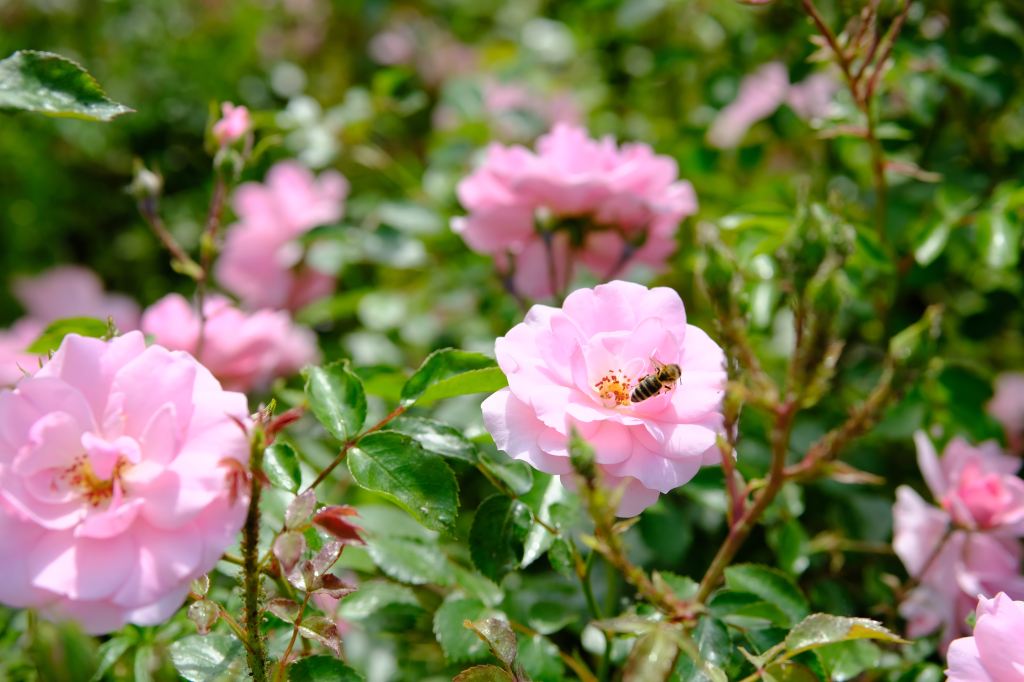
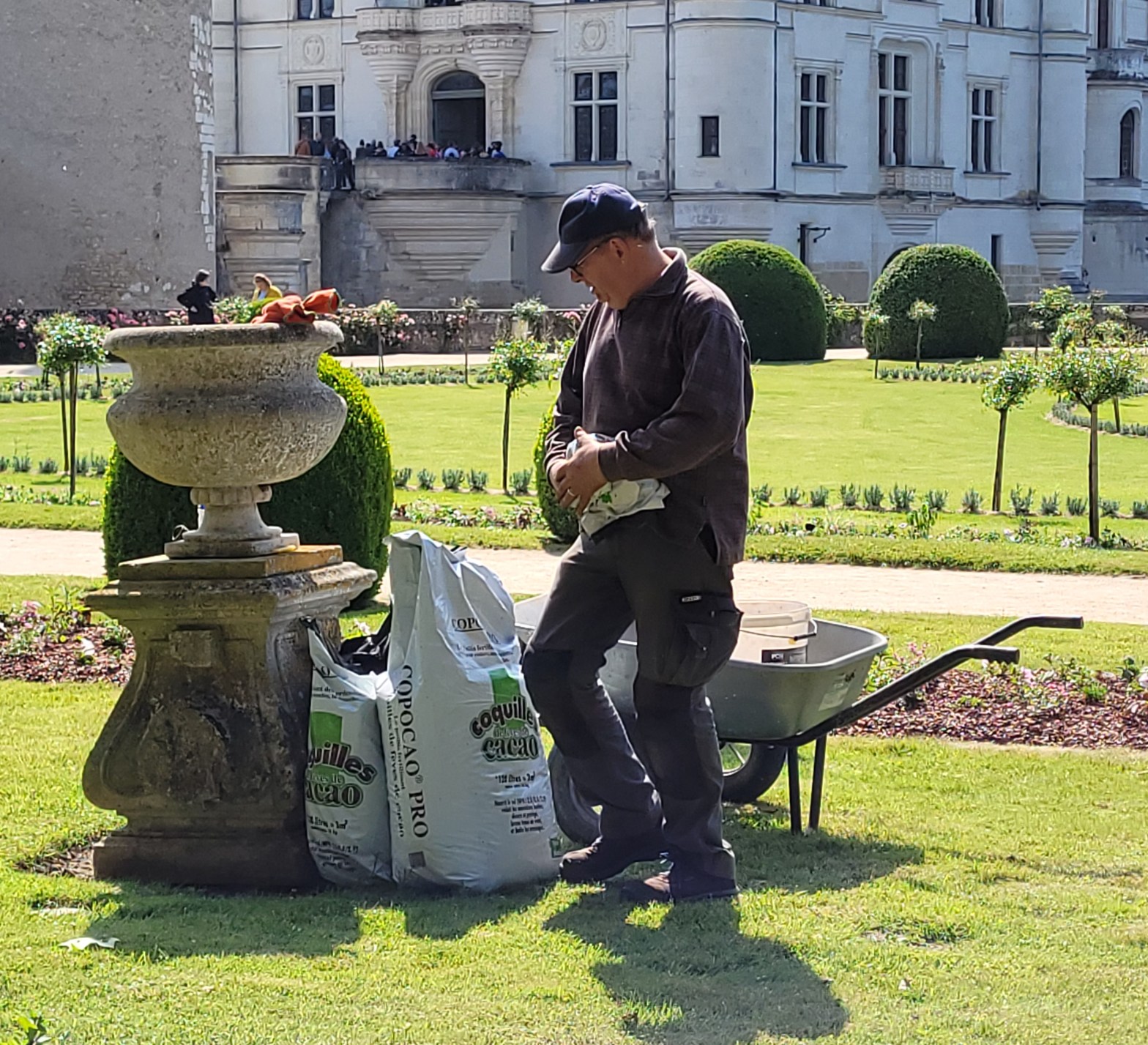
As I was about to leave the gardens, I saw a man leaning over a rose bush while sprinkling something brown around its base. Nearby, leaning up against an ancient stone urn next to his wheelbarrow, were two bags of coquilles caocao. I have had enough French training to know that the bags were full of chicken manure, and he was fertilizing the roses with them. This momentary experience transformed me from a chemical rose grower to an organic rose gardener with much better results. Here’s how I care for my roses now, and they have never been more beautiful.

Chicken Manure

I have roses under the window in my front yard, on my side yard, all along the lawn in the back, and a raised bed of my prized tea roses on the other side of the house. I’ve fertilized them, sprayed them, clipped them and I’ve always had problems. As soon as I got home from France, I bought six bags of chicken manure and spread it at the base of every rose bush. I was smelly. The mosquitoes seemed to like it, too, and they bit both me and my husband. I drank wine in my lawn chair with the smell in my nostrils. But it was worth it. Slowly, day by day, the rose bushes became stronger and their diseases cleared up. I didn’t use the fertilizer or disease control liquid at all. The chicken manure, which contains large amounts of nitrogen, phosphorus, and potassium, revitalized my roses all by themselves. And that smell, it’s gone now.

Vinegar Water

It took several days to almost two weeks for the chicken manure nutrients to be absorbed by the rose bushes, and while that was happening, some of the rose bushes had mildew. I did some research and found another organic solution to this problem. In an empty spray bottle, I combined a quarter of a cup of apple cider vinegar and one quart of water and sprayed it on the mildewed leaves of stems. I kept this container of solution near my tea roses so it was easy to use whenever I found problems. It worked. Now, two months after first applying the chicken manure and spraying the mildewed stalks and leaves, my roses are as healthy as the roses at Chateau Chenonceau.

Bone Meal Fertilizer

I was on a roll, and I kept reading about organic gardening for roses. What I found out next is that bone meal is good for promoting blooms. Its phosphorus and calcium strengthen the plant and promote bloom growth. I applied the bone meal, and low and behold, my roses staring producing more roses that ever before. I also gave some bone meal to my African irises, and they gave me the most beautiful white, yellow and purple irises I had ever seen. I only have to apply bone meal every four months since it releases its nutrients over time.

Clipping Old Blooms

I have known that a good rose gardener should clip off the old roses in order to preserve the rose plants energy for the new blooms, but when my plants were diseased and ugly, I had little incentive to do this. In the last two months, however, I’m excited to take a pair of sharp clippers and to snip off the spent flowers, making sure that I cut the stalk just above a five-pattern of leaves. While I’m clipping the old blooms, I also clip the vibrant flowers to take into the house to enjoy in a vase on the table.

I never expected that my life would be changed by walking through an ancient garden in France. Even though my roses didn’t go to France with me, I brought them back something better than a souvenir: healthier lives.

Photo by Yuliia Dementsova on Unsplash

Fabulous Fred

Some people are more memorable than others. They pop up in your mind. You visualize their wicked grin, beguiling smile, or musical voice as you recall old travels or past meetings. Recently, when I toured France with Insight Tours, I met such a man, and his name was Fred.

My fist exposure to Fred was an email he sent me before the trip started. The note contained clear details about where to meet in the hotel and what I had to do to label my luggage as part of the tour. Fred’s words were business-like and direct. He signed his name Frederique, but suggested that we call him Fred.

Fred dressed in a well-ironed red-and-purple-checked button-down shirt over a gray pair of casual trousers. His head was bald and he had a salt and pepper mustache and closely-cropped beard. It didn’t take long for this trim, conservative and snappy dresser to impress me. These are the qualities that he possessed to make him the best tour director I’ve ever had.

Clear with Directions

I came to appreciate Fred’s detailed directions, especially when he let us wander in the middle of ancient French villages and described how we could find the bus at the assigned time. He made use of landmarks such as the gothic church or the town hall. He used his arms to indicate left and right and repeated the directions as many times as we asked him. He seemed to understand that many people didn’t listen well until they realized they had to rely on themselves to find their way.

Timely

Whenever it was time to meet, Fred arrived first. He finished breakfast before us and waited for us in the lobby. He was at the bus at all the designated times, and he made sure that our luggage was picked up from our rooms and loaded into the bus timely.  How? He helped the hotel bellhops gather it and transfer it outside so as not to delay our departure.

Personable

Fred turned out to be a friendly and approachable human being. Every morning, when the bus started moving toward the next destination, Fred wished us Bonjour. After we responded, he continued with Avez-vous bien dormi? Did you sleep well? When we responded negatively, as many travelers might, he taught us a more positive way to answer that question. Say oui first, and then indicate how you might sleep better next time, coached friendly Fred.

He joked about his baldness and described how he once had a mop of hair in his twenties. On Day 2, he sprained one of his fingers moving our luggage and, most unfortunately, a pigeon defecated on his head in the middle of a town square. Neither of these incidents ruined his sunny demeanor. He allowed two tour members to clean the pigeon poop off his head and shirt and continued the tour with humor. 

Later in the tour, he was comfortable enough to describe his recent bout with cancer, showing that he was just another human being with human problems. Since many of the travelers were seniors, I’m sure they felt more at ease with him since many of them had suffered from medical problems themselves.

Caring and Attentive

Fred demonstrated sensitivity to all of us in many ways. He stood at the bottom of the bus steps and helped us climb safely to the ground. He also instructed the bus driver to stand at the other door and do the same.  When we stepped down, he smiled at each one of us as if we were the most important person on the bus.

One of the single tour members appeared to have a memory problem and Fred always made sure she was back on the bus and physically safe. He never complained that she was forgetful or not walking as fast as the rest of us. He simply took care of her kindly.

Interesting and Informative

The tour covered the country roads of France, which means, sometimes, our bus driver would drive us over remote mountain passes, into narrow tunnels, or over roads that circled country vineyards and farmland.

We were never bored while touring these far-flung French trails since Fred provided us with detailed and stimulating lectures that described what we were seeing and what the history of the area was. For example, when we were approaching Arles, where Vincent Van Gogh lived for many years, Fred revealed that the artist painted over 300 painting in Arles, but sold only two. While we drove through the walnut groves of the Dordogne Region, Fred explained that every part of the walnut tree was valuable to the French farmer. The nuts are sold for food, the shells are used as fertilizer, and the wood is used to make furniture. After listening to Fred’s lectures, I felt a little smarter and a little more French-savvy.

Resourceful

Several times throughout our trip, Fred informed us that he and our bus driver had poured over the map and found new country roads to explore that day. He assured us that the driver was an expert driver so we were sure to enjoy the new adventure.

Another way that Fred proved his resourcefulness was when we stopped in various places and he went out of his way to improve his understanding of the area. For example, when we visited Pont du Gard, a three-storied Roman aqueduct in the Languedoc Roussillon Province, Fred climbed up the trail beside the structure to view the third level, something he had never done before.

Helpful to French Travelers

In my past visits to France, I have had negative experiences with French people. Waiters ignored me. People on the street merely walked away when I asked them a question.

Fantastic Fred provided us with a remedy for situations like this. He explained that French people learn English in school, but when tourists come up to them and ask them a question in English, they freeze, once again experiencing those dreaded English classes.

Fred recommended that we approach French people with a polite Bonjour and allow them a moment to warm up to us before launching into our English question.

I put this method into action. Whenever I entered a shop, I said Bonjour to the shop clerk. Each time, I was rewarded with warm eyes and a smile. If I wanted to use a restroom in a restaurant where I wasn’t eating, I said Bonjour to a waiter, then asked to use the restroom, and the waiter never turned me away. Fred’s method seemed to be foolproof.

Funny

Who doesn’t like a comic? On the first day of the bus tour, Fred demonstrated that he had a repertoire of jokes in his tour director cache. The first joke he told us was a parody of the French people according to the Germans.

The joke went like this. When God made France, he created the dazzling Alps to the East, the stunning and bountiful Atlantic Ocean to the West, the beautiful Mediterranean to the South, fertile farmland, prolific vineyards, and bountiful orchards, ample rain, and plentiful sunny days. No other country had been blessed with such advantages.

The Germans were upset, and they asked God why he gave France so many wonderful characteristics. They insisted that it just wasn’t fair.

Upon hearing the Germans, God became contemplative. He thought and thought and thought. Finally, to balance everything out, God made the French people.

When we heard the punchline, the bus erupted in raucous laughter. You would think that we were laughing at the French people, but Fred was quintessentially French, so his joke helped us appreciate their humanness instead of thinking poorly of them.

Here’s another joke by Fred that had to be told in English to be funny. What do you call someone who jumps into the Seine River?

Answer. In Seine.

It takes a certain personality to tell a joke well. Fred could do it because he wasn’t afraid to be self-deprecating and he was naturally good-natured.

I will remember Fred every time I travel on a tour. I’ll unconsciously look for his snappy ensemble in every hotel lobby and wistfully hope that he comes walking through the door to lead us on another well-organized, comfortable, informative, and fun adventure.

My Aussie Lesson

Photo by James Wainscoat on Unsplash

I know this post may reveal my ignorance about a major country of the world, but let’s face it. Australia is far away from most places. I’m not used to thinking about this down-under country unless their government does something incredible like it did in 1996: banning assault weapons within two weeks of a mass shooting in Port Arthur, Tasmania.

I, however, recently spent over three weeks in France with about twenty Australians, who dominated the atmosphere of our bus rides and dinner conversations with their jolly personalities and proud Australian heritage. Here is what they taught me about their country and themselves.

The Aussie Name for the U.S.

My new friends consistently referred to the United States as America. Australia is on the other side of everywhere, so maybe they had never heard of Canada, Mexico or any of the countries of Central or South America. They pronounced America with wistfulness and admiration, while, at the same time blinking their eyes, then looking briefly toward the horizon as the shadow of a smile lit up their lips. My heart swelled with pride and warmth knowing that my home still generated such positive vibes.

States

As the United States adopted the names of its 50 states, it chose both creative and unique names such as California, which originated from a Spanish romance novel, named after an island located close to Paradise.

Australia has six states with less original names. Whoever came up with the names Western Australia and South Australia either lacked imagination or ran out of time. The states Queensland, New South Wales, and Victoria, regrettably, represent a devotion to England more than they do Australia. Only the state’s name Tasmania, an island southeast of the country shows any modicum of ingenuity, named after the Dutch explorer, Abel Tasmin, who first sited the island in 1642.  

Apparently, both Tasmin and Christopher Columbus thought 1642 was an excellent year for finding new lands.

Australia’s National Dessert

Apple pie? Pumpkin pie? Ice cream? I did a little research, but I couldn’t find any conclusive evidence that the United States has a national dessert. In contrast, my new Australian friends were adamant about the existence of a national Australian dessert called pavlova. This round dessert consists of a crispy meringue outside, a soft interior, and fresh fruit and whipped cream on top. The Australians eat it all summer and for special occasions.

What’s so funny about this dessert is that it was named in honor of a Russian ballerina who visited the country in the 1920’s, Anna Pavlova. I guess if you’re going to name a state after a queen of England, you can name your national dessert after a Russian ballerina.

An Aussie Kind of Domestic Terrorist

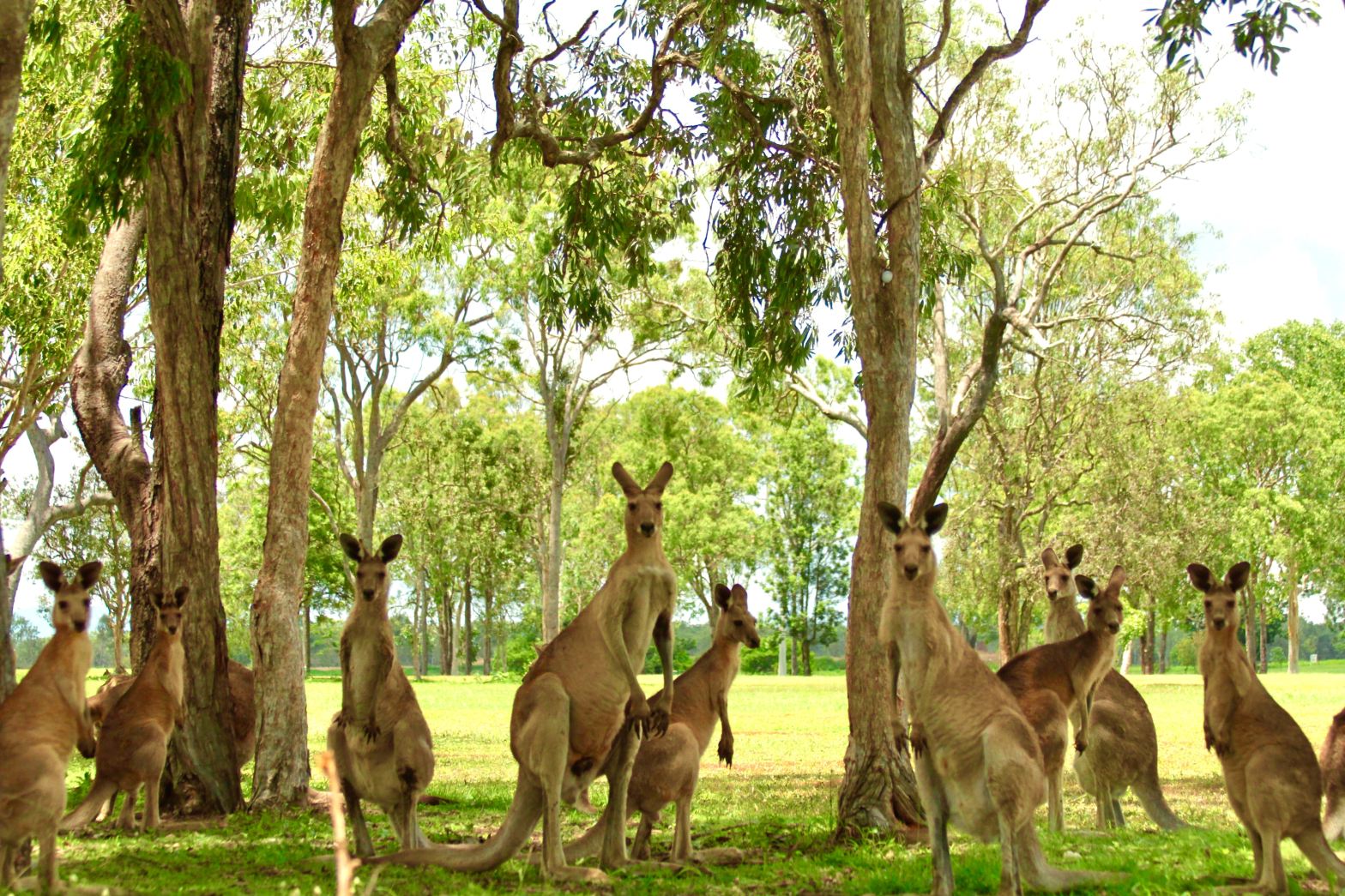
In Northern California, deer sometimes jump fences to chew off the roses on bushes, but what kind of fence could keep a hungry kangaroo out of your garden? My Aussie friends have a kangaroo problem.  In their neighborhoods, kangaroos break through fences, trample flower beds, gnaw on trees, savor all kinds of fruit, and feast on flowers and shrubbery. 

My image of a friendly kangaroo mommy with her baby poking out of her pocket has been shattered.

Upside-down Seasons

Because Australia is located in the Southern Hemisphere, the country’s seasons are reversed from those up north. Australia’s fall is at the same time as the northern spring. Their winter is our summer. Their spring is our fall, and their summer happens when we’re celebrating Christmas and Hannukah.

Honestly, I knew this, but I’m so surprised at how much confusion this difference caused during conversations about weather and holidays. I found myself tilting my head to the side, as if I was preparing to do a cartwheel, and blinking my eyes as I attempted to clarify the vision of Santa Claus wearing shorts and sunglasses while sliding down a cold, unused chimney.

Outgoing Personalities

All the Aussies on our tour were bold, outgoing, and confident. Not only did they make up the majority of our group in number, but they made most of the noise. I’ve never considered myself shy, but my assertiveness could not compete with these extroverted dispositions.

One 4’11” woman made up for her short stature with her bellowing voice and bravado mannerisms. According to her, marriage was a lifetime commitment, a fifth Covid vaccine had been approved, and Perth was a friendlier city than Sidney. I didn’t dare disagree with any of her opinions because her balled-up fists seemed serious.

One of the funny men who was married to, according to him, the best researcher on the bus, took a big liking to me and my husband. As we rotated seats around the bus during the tour, they were either sitting directly in front of us or directly behind us, which meant we had lots of opportunities for conversation. His name was Roger, but he referred to himself by his nickname, Candy Evergreen, given to him by a neighbor. Candy Evergreen claimed my husband as his bestie and told me to leave men business alone. I wasn’t insulted by Candy Evergreen’s kidnapping of my guy since both seemed to thoroughly enjoy this juvenile male-bonding experience.  

The more I learned about Australians during my days in France, the more I appreciated the brash and fulsome Australian character, and the more I empathized with them. They were opinionated, but in the next moment, they were buying your lunch. They were loud, but they were good-natured. They were corny, but funny.

After all, when you live at the end of the planet, you’ve got to shout louder to get noticed.