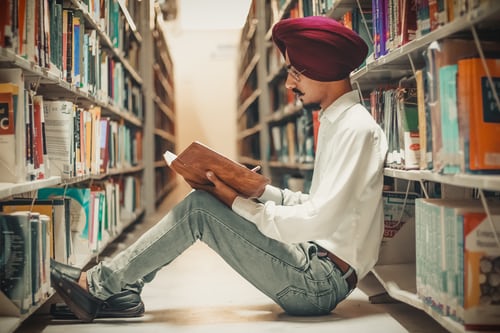
“There is no faster way to change your circumstance than to open a great book,” writes Lisa Wingate in her book The Book of Lost Friends.
I agree. People who read stories can transform their lives. When they read fiction filled with complex characters, they develop empathy; they learn that people have vastly different emotions and needs and how to interact successfully with people who are different from themselves.
In my journey for cultural humility, I’ve been reading books by Black authors, Middle Eastern writers, gay historians, and other writers whose histories are vastly different from my own. Through my reading, I have learned that I lack a complete understanding of other people and hope to reduce my ignorance, step by step. The more I read, the more I recognize how much I have to learn.
Scientific studies prove that reading stories is powerful. David Comer Kidd of Harvard University and Emanuel Castano, a sociologist, have studied the effects of reading fiction. What they found is that reading about multifaceted characters is a social process. As she reads, a reader analyzes, understands, and interacts with the characters, developing her own ability to engage in complex social relationships.
Sadly, many contemporary Americans hardly read at all. Instead of reading books, people chat, text, browse, emoji, and tweet about all kinds of topics, but not about the in-depth feelings and emotions of each other.
Nothing substitutes for the benefits of novels where men and women, Blacks and Whites, rich and poor, parents and children, bosses and employees interact, develop bonds, rob, murder, and love each other. Through books, reader learn how humans feel and act with each other.
What can readers learn specifically? They can learn that the history they thought they knew is incomplete. Viewing history from only the perspective of people in power is inadequate since the perspective of the oppressed or disempowered is what leads to future events such as revolutions, laws, protests, violence, and, hopefully, an eventually-improved society. In the past, history was only told from the perspective of the privileged in society, and this view is biased and flawed.
Stories set in America before the Civil War can help readers understand the suffering of the slaves and how they exhibited extraordinary courage under horrific physical and psychological conditions. This, in turn, can evolve into empathy for contemporary African Americans who live without knowledge of their African heritage, but, instead, descend from a group who lacked equality or respect in the American society. If White people have no patience for the condition of African Americans, they can put themselves into the African Americans’ shoes and experience how the struggle for respect and dignity feels. Toni Morrison and Colson Whitehead both write vivid stories about the African American’s quest for equity in America.
Readers can become better spouses, parents, brothers, and sisters because reading helps people to recognize that other people are not the same. Not everybody has the same ability or aptitude, even when they come from the same family. Some people understand math innately while others are natural healers. Some people have low self-esteem which they exhibit in their behavior toward others, and other individuals have poor boundaries and lose their identity in romantic relationships. Humans are complex, contradictory, ordinary, and extraordinary.
The U. S. Constitution promotes equality, but we have never achieved equality in America—ever. Our major weakness is that a majority of Americans do not possess empathy for their fellow community members or value the contribution that each individual brings to our diversified society. White males hate Muslims and Blacks. Voters distrust candidates who wear Hijab scarves. Blacks and Hispanics are repulsed by Whites. Women fear men. Men are afraid of losing their power privilege, and Christians feel entitled over Jews. The list of empathy-deficit attitudes is long and painful. Many people live in fear of other Americans, and fear inhibits their ability to grow and nurture their community.
Reading can help people let go of their misunderstood fears of people who are different by enabling them to see that, even when people are vastly different, they are humans with the need for validation and love.
As we shelter-in-place during this Corona Virus Pandemic, we have an opportunity to take the time to become better members of our society. We can read novels.
Amazon is not shipping packages, but it is delivering e-books. Costco is still open and has a whole aisle of well-priced books. People who want to borrow paper books can ask their neighbors about the location of a book-share library, a tiny cubbyhole that people install in front of their house where they freely exchange books with others. People can check their cupboards for books hidden and forgotten. They can ask friends to trade books with them and set up Zoom meetings to discuss them.
Social distancing is an opportunity to become socially familiar. Novels are stories about humans. Mexican immigrants who struggle to cross the border to find work to provide for their families. Philanthropists, such as Melinda Gates, who travel the world to alleviate poverty, improve education, and fight disease. Blacks who live in poverty but strive to attain a college education. Muslims who come to America, attain citizenship, and then run for office in gratitude for their freedom. Gays, who sometimes marry women, have children, but struggle with their gender until they discover and accept their true calling as homosexuals.
The wonderful, incredible character of America is diversity; however, because we have been blessed with a society that is so complex and varied, Americans have a responsibility to become better citizens—nonjudgmental, empathetic, open, and accepting of all people with whom we live.
Let’s read stories and grow together. A better nation reads.
 Tess Perko's Blog