Five Things I Love about Living in the San Francisco Bay Area

It’s expensive to live here. Probably the most expensive place in the United States. I, however, bought my home years ago, and I’m not planning on moving. There’s so much to love about the San Francisco Bay Area, why would I? Here are five things I appreciate about this place.

Outdoor Life

Tess and Bob in the San Jose Rose Garden

I’m a flower person, so I need to live where flowers are prolific. In the Bay Area, flowers bloom all year because of the mild temperatures: for example, camellias in the winter; daffodils, irises, and tulips in the spring; roses all summer; and chrysanthemums during the fall.

All year, Bay Arians can play outside in the thousands of parks and trails.  Golden Gate Park, over 1,000 acres, is the first urban park I ever visited. My dad took us to the Japanese Tea Garden; we ordered tea and cookies to eat while surrounded by lush foliage and quiet streams.

The Iron Horse Trail in the East Bay follows the former Southern Pacific Railroad right-of-way from Concord to Pleasanton for 32 miles. I use this trail for easy biking or flat walking. It also meanders near some towns, so I can stop in Danville for a latte or in Alamo for breakfast with my friends.

One of my favorite places to hike is on Mount Diablo. The whole mountain is covered with trails, lakes, and wildlife. One October, I hiked with a group to find tarantulas. From June to October, the males migrate to find a female to mate with. We found several. I even let one crawl across my hand.

Incredible Food

I don’t know of anywhere else in the world where I can enjoy fresh food used in cuisines from every continent.

San Francisco is next door to the vast California farm belt so our stores are filled year-round with seasonal fruits and vegetables. We also enjoy local fish such as oysters from Tomales Bay and Dungeness crab from the Pacific. And for people who like steak, California grows that, too.

In the Bay Area, I can eat foods from many continents and stay home. Tony’s Pizza Napoletana on Stockton Street in San Francisco has won awards for its memorable Italian and Sicilian pizza. My favorite is the Gigante Sicilian style pizza that features salami, linguica, pepperoni, and a host of veggies.

I love Mexican food, and the Bay Area is home to thousands of Mexican taquerias and restaurants. I order mahi mahi burritos at Taqueria Azteca in Dublin which is merely a kitchen with a few tables inside a linoleum-lined dining room. But the food is SOOO delicious.   

The Nix Company on Unsplash

Diversity

Many cities in the United States have diverse populations these days, but I think that the Bay Area has the best integrated diverse population. For example, last month, San Francisco hosted the Gay Pride Parade. My daughter and I walked through the parade festival on our way to a theater. On television, Bay Area channels feature advertisements with heterosexual AND gay couples. Our news programs have Caucasian, Hispanic, Asian, and Black newscasters.

And diversity isn’t only about race. I love my home because we have people from all walks of life—electricians, high tech workers, waitresses, students—and all ages—from babies to seniors.
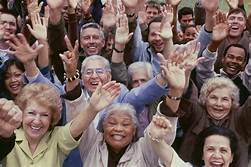
I never feel weird interacting with a different culture from mine or a different age group. I believe that is unique.

Weather

We have a saying in the Bay Area: if you don’t like the weather, drive ten miles. Yes, San Francisco Bay Area has micro-climates. One day, it can be 60 degrees in San Francisco, 80 degrees in Mountain View, and 90 degrees in Walnut Creek.

But the point is, the weather is almost always great. We rarely wear down jackets here because it just doesn’t get that cold. What I wear most days is a T-shirt and a sweater, if I need it. Wearing light clothes and flip flops makes me feel “free.”
Golden Gate Bridge

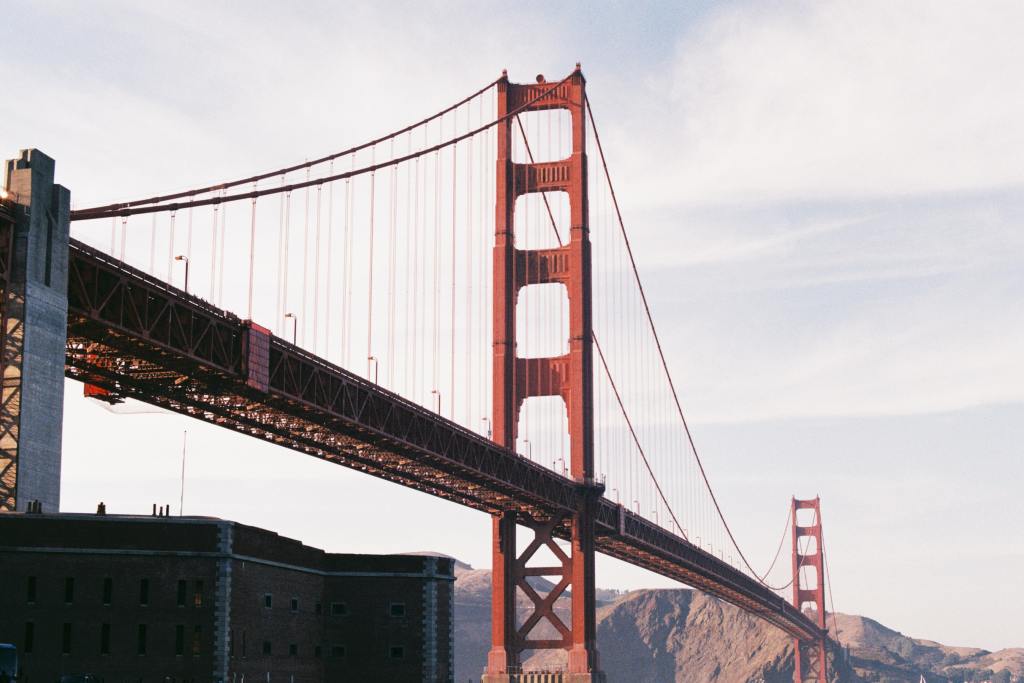
One thing I never get tired of seeing is the Golden Gate Bridge which spans from San Francisco to the Marin headlands at the mouth of the San Francisco Bay. It’s not really “golden,” but its vermillion paint, named “International Orange,” contrasts so beautifully with the green and gold landscape and the mineral blue water of the Bay that the effect is stunning.

I’ve walked across the bridge several times, and, one time—long before I was married, someone proposed to me in the middle of the span.

Recently, at the Presidio Park, my daughter and I sat in Adirondack chairs to gaze at the bridge under a cloudless blue sky. It was heaven on the Bay.
A Novel Approach to a Better America

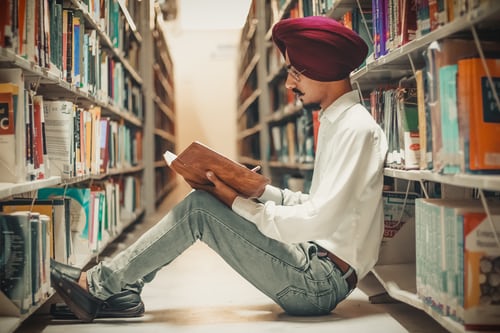
“There is no faster way to change your circumstance than to open a great book,” writes Lisa Wingate in her book The Book of Lost Friends

I agree.  People who read stories can transform their lives.  When they read fiction filled with complex characters, they develop empathy; they learn that people have vastly different emotions and needs and how to interact successfully with people who are different from themselves. 

In my journey for cultural humility, I’ve been reading books by Black authors, Middle Eastern writers, gay historians, and other writers whose histories are vastly different from my own.  Through my reading, I have learned that I lack a complete understanding of other people and hope to reduce my ignorance, step by step.  The more I read, the more I recognize how much I have to learn.

Scientific studies prove that reading stories is powerful.  David Comer Kidd of Harvard University and Emanuel Castano, a sociologist, have studied the effects of reading fiction.  What they found is that reading about multifaceted characters is a social process.  As she reads, a reader analyzes, understands, and interacts with the characters, developing her own ability to engage in complex social relationships. 

Sadly, many contemporary Americans hardly read at all.  Instead of reading books, people chat, text, browse, emoji, and tweet about all kinds of topics, but not about the in-depth feelings and emotions of each other. 

Nothing substitutes for the benefits of novels where men and women, Blacks and Whites, rich and poor, parents and children, bosses and employees interact, develop bonds, rob, murder, and love each other.  Through books, reader learn how humans feel and act with each other. 

What can readers learn specifically?  They can learn that the history they thought they knew is incomplete.  Viewing history from only the perspective of people in power is inadequate since the perspective of the oppressed or disempowered is what leads to future events such as revolutions, laws, protests, violence, and, hopefully, an eventually-improved society.  In the past, history was only told from the perspective of the privileged in society, and this view is biased and flawed. 

Stories set in America before the Civil War can help readers understand the suffering of the slaves and how they exhibited extraordinary courage under horrific physical and psychological conditions.  This, in turn, can evolve into empathy for contemporary African Americans who live without knowledge of their African heritage, but, instead, descend from a group who lacked equality or respect in the American society.  If White people have no patience for the condition of African Americans, they can put themselves into the African Americans’ shoes and experience how the struggle for respect and dignity feels.  Toni Morrison and Colson Whitehead both write vivid stories about the African American’s quest for equity in America.

Readers can become better spouses, parents, brothers, and sisters because reading helps people to recognize that other people are not the same.  Not everybody has the same ability or aptitude, even when they come from the same family.  Some people understand math innately while others are natural healers.  Some people have low self-esteem which they exhibit in their behavior toward others, and other individuals have poor boundaries and lose their identity in romantic relationships. Humans are complex, contradictory, ordinary, and extraordinary.    

The U. S. Constitution promotes equality, but we have never achieved equality in America—ever.  Our major weakness is that a majority of Americans do not possess empathy for their fellow community members or value the contribution that each individual brings to our diversified society.  White males hate Muslims and Blacks.  Voters distrust candidates who wear Hijab scarves.  Blacks and Hispanics are repulsed by Whites.  Women fear men.  Men are afraid of losing their power privilege, and Christians feel entitled over Jews.  The list of empathy-deficit attitudes is long and painful.  Many people live in fear of other Americans, and fear inhibits their ability to grow and nurture their community. 

Reading can help people let go of their misunderstood fears of people who are different by enabling them to see that, even when people are vastly different, they are humans with the need for validation and love. 

As we shelter-in-place during this Corona Virus Pandemic, we have an opportunity to take the time to become better members of our society.  We can read novels. 

Amazon is not shipping packages, but it is delivering e-books.  Costco is still open and has a whole aisle of well-priced books. People who want to borrow paper books can ask their neighbors about the location of a book-share library, a tiny cubbyhole that people install in front of their house where they freely exchange books with others.  People can check their cupboards for books hidden and forgotten.  They can ask friends to trade books with them and set up Zoom meetings to discuss them. 

Social distancing is an opportunity to become socially familiar.  Novels are stories about humans.  Mexican immigrants who struggle to cross the border to find work to provide for their families.  Philanthropists, such as Melinda Gates, who travel the world to alleviate poverty, improve education, and fight disease.  Blacks who live in poverty but strive to attain a college education.  Muslims who come to America, attain citizenship, and then run for office in gratitude for their freedom.  Gays, who sometimes marry women, have children, but struggle with their gender until they discover and accept their true calling as homosexuals. 

The wonderful, incredible character of America is diversity; however, because we have been blessed with a society that is so complex and varied, Americans have a responsibility to become better citizens—nonjudgmental, empathetic, open, and accepting of all people with whom we live. 

Let’s read stories and grow together.  A better nation reads.