Between Stockton Valley and the west side of the Mississippi near Winona, Minnesota is a ridge covered with white pine trees. Once upon a time, my great grandfather, Leon Ambrose Bronk Sr., bought land on this ridge to grow alfalfa and corn. Throughout the years, he bought more adjoining farms until his land holdings reached 761 acres.
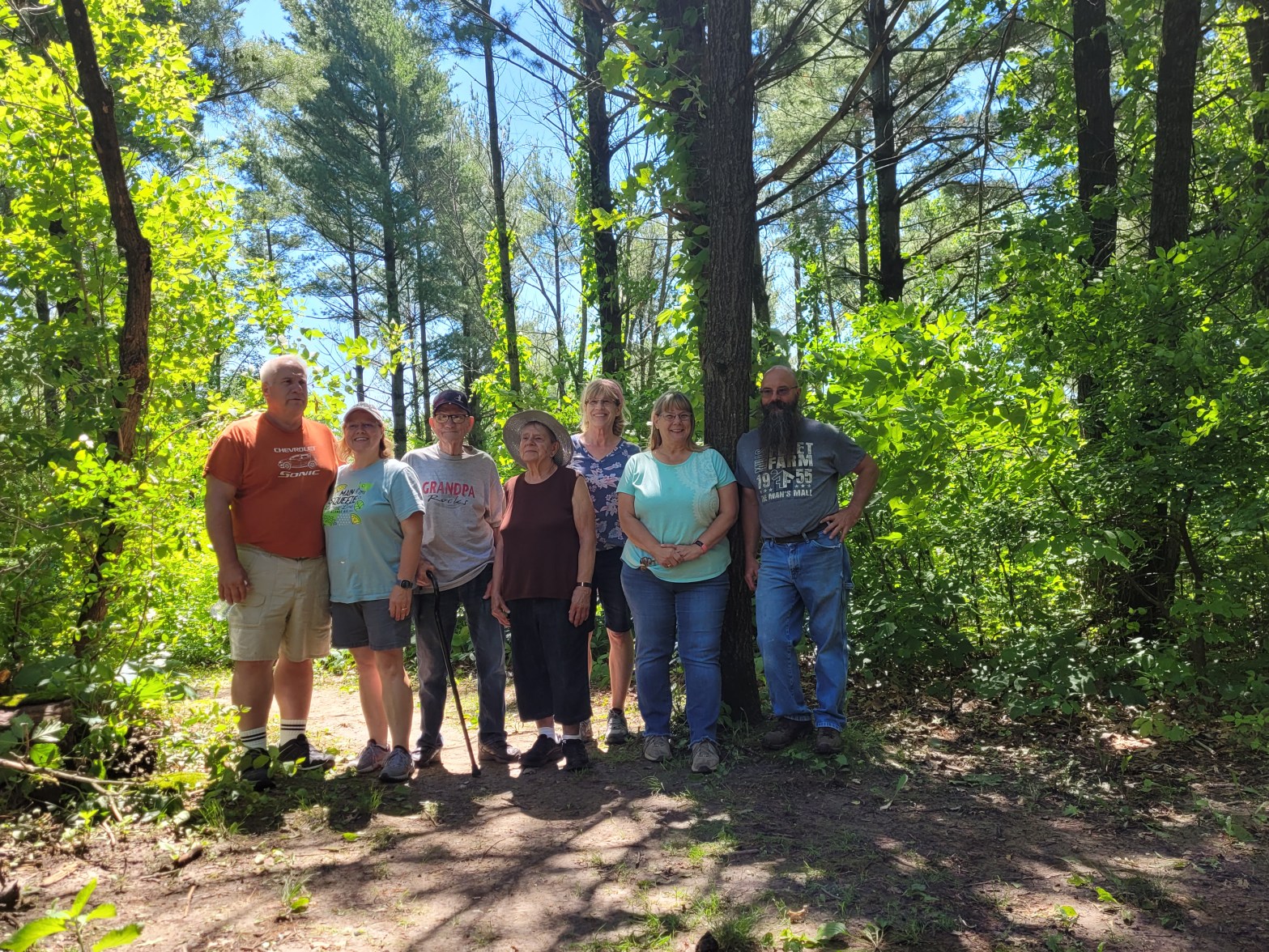
On June 16, 2022, when I was visiting, two of my cousins arranged for a group of family members to ride up into the park in 4-wheel drive trucks so that my 92-year-old uncle could see the land where he spent the first 14 years of his childhood.
Great-grandfather Leon bought this property in the 1920’s and lived in a white wooden house at the bottom of the ridge where he planted a family garden and built a barn for cattle and horses. Twenty years ago, I remember walking through the ruins of that house. When he bought some farms at the top of the ridge, Leon Sr. let his oldest son Leon Jr. and his family live in one of the farm houses up there. Leon Jr.’s first son, Paul—my father, was born in 1929 and his second son, David, was born in 1931. David is the father of ten of my closest cousins. Twenty years ago, we found a rusted sled that Paul and David used to travel down the snowy slopes of the ridge when they were little.
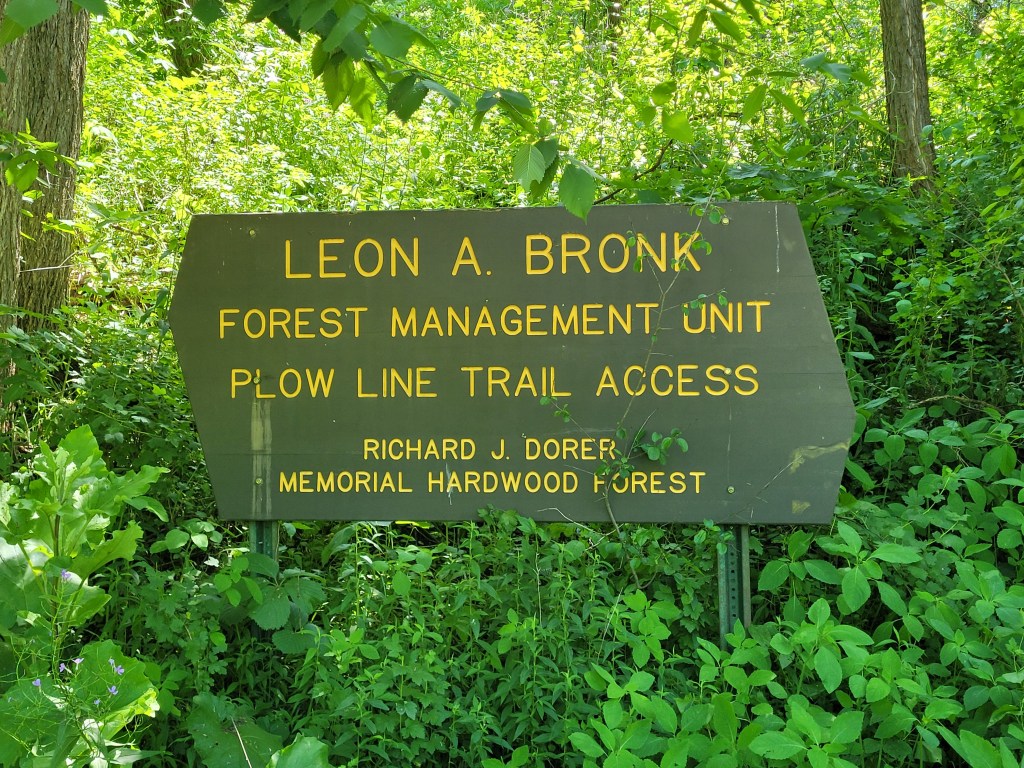
In 1969 when he was 81-years-old, Leon Sr. sold the land to the State of Minnesota, and it became part of the Richard J. Dorer Memorial Hardwood State Forest. Since much of the property rises 500 feet above the surrounding valleys, it provides hikers and bikers tremendous scenic views of the land and water below. The State of Minnesota planted thousands of white pine trees in rows, a forest that now covers up any evidence of houses, gardens, and alfalfa fields.
On this day, cousins Diane and Bill drove the trucks into the park and up the ridge under the supervision of a park volunteer named Mark. Mark is an avid off-road bicyclist, and he started to maintain the 6.5 miles of hiking trails in this park by using his electric weed-whacker to cut the weeds. One day when he was working, he met a state park ranger, and he explained how he biked up the ridge with his whacking machine to keep the trails open. He also wished that the gate was open so he could use his four-wheeler jeep to bring his mower up; because the weeks grew so fast, the mower would do a better job in a shorter amount of time. The ranger gave Mark a key to the gate and unlimited access to the park.
When my cousin Diane wanted to arrange a family drive, she called Mark to get the State’s permission to drive trucks through the gate and up to the top of the ridge. He helped her out because he wanted to meet the oldest living Bronk relative, my Uncle David, who had actually once lived on the property.
Mark was excited to hear stories about the property’s history. The park is named the Bronk Unit Plowline Trail referring to the line where the Bronks stopped plowing their fields. Uncle David revealed that one ridge is known as Cherry Hill, probably due to the cherry trees growing there. Another ridge is known as Straw Pile Hill. That’s where, when he was a mere boy, David dumped the hay that he harvested from the fields, and Paul would pick it up and haul it off to be sold. David had to plow the fields and collect the hay with a horse-drawn contraption. Paul got to drive the tractor since he was older.
My dad used to say that “You can take a man away from the farm, but you can’t take the farm out of the man.” All his life, my father was an excellent farmer. When I was born, my family rented a two-acre farm in Fair Oaks, California. I was allergic to cow’s milk, so my parents bought a goat and gave me its milk. We had chickens, bunnies, and geese. My mother made butter and ice cream by hand.
Later, when we moved to a smaller property, my dad raised sheep. One sheep was our favorite, and we named him Jerimiah. One day when we got home from school, we couldn’t find him. At dinner, we asked my parents where he was. “He’s on your plate!” said my dad with a grin.
David, too, farmed his whole life. He bought a farm that had been owned by my Great-Great Grandpa Ignatius Bronk, who immigrated to the area from Gostomie, Poland and bought this farm in 1886. When Ignatius died in 1896, his son Theodore took over the farm; Theodore was the older brother of my Great-Grandfather Leon Sr. Today, David lives on the farm with his wife Linda and a herd of cows that his son, Bill, manages for him. While I was visiting, about twenty-five of us cousins, first-cousins-once-removed, second cousins, and Uncle David and Aunt Linda had a picnic on a hot and humid 100-degree day. To stay cool, we sat under the spreading branches of a white oak tree and slapped the gnats that buzzed around our faces.
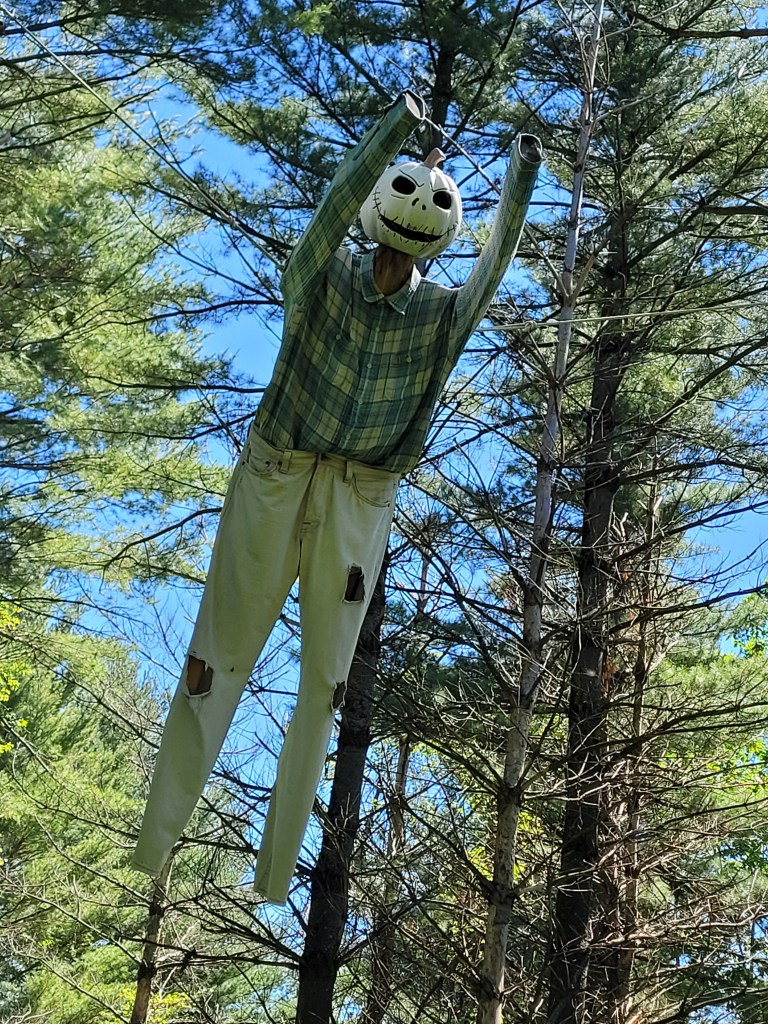
While we walked around the top of the ridge on Great-Grandpa’s property, we found wild carrots and asparagus—souvenirs from the gardens that once fed the Bronk families. Hanging high above a hiking trail, we found a scarecrow with a Jack-o-lantern head, plaid shirt, and farmer pants. Mark told us that a solar light made the head light up at night, creating an unexpected scary encounter. We watched big, Eastern Tiger Swallowtail butterflies settle on wild flowers and examined tiny pine cones that fell from the white pine trees. The floor of the forest was covered in a thick matting of dead pine needles, hiding the remnants of our relatives’ lives.
What occurred to me that day was that all of the farmers who worked on my great-grandfather’s land had been removed from it: my great-grandfather, my grandfather, my father, and my uncle. Yet, there was evidence all around the area and in places far away, like California, that these people and their descendants were still farming. David’s son Bill will one day take over David’s historic farm. My brother, Donald, can grow any vegetable or flower in his patch of garden in California. I have a green thumb when it comes to growing flowers. Apparently, you can’t take the farm out of a farming family.
 Tess Perko's Blog