
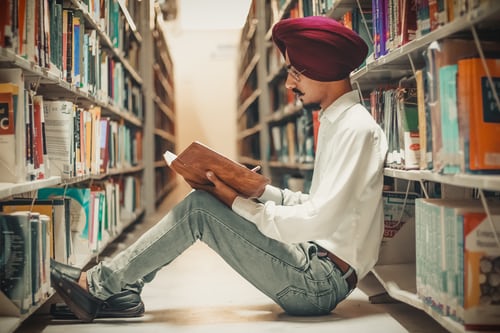
A Novel Approach to a Better America

“There is no faster way to change your circumstance than to open a great book,” writes Lisa Wingate in her book The Book of Lost Friends

I agree.  People who read stories can transform their lives.  When they read fiction filled with complex characters, they develop empathy; they learn that people have vastly different emotions and needs and how to interact successfully with people who are different from themselves. 

In my journey for cultural humility, I’ve been reading books by Black authors, Middle Eastern writers, gay historians, and other writers whose histories are vastly different from my own.  Through my reading, I have learned that I lack a complete understanding of other people and hope to reduce my ignorance, step by step.  The more I read, the more I recognize how much I have to learn.

Scientific studies prove that reading stories is powerful.  David Comer Kidd of Harvard University and Emanuel Castano, a sociologist, have studied the effects of reading fiction.  What they found is that reading about multifaceted characters is a social process.  As she reads, a reader analyzes, understands, and interacts with the characters, developing her own ability to engage in complex social relationships. 

Sadly, many contemporary Americans hardly read at all.  Instead of reading books, people chat, text, browse, emoji, and tweet about all kinds of topics, but not about the in-depth feelings and emotions of each other. 

Nothing substitutes for the benefits of novels where men and women, Blacks and Whites, rich and poor, parents and children, bosses and employees interact, develop bonds, rob, murder, and love each other.  Through books, reader learn how humans feel and act with each other. 

What can readers learn specifically?  They can learn that the history they thought they knew is incomplete.  Viewing history from only the perspective of people in power is inadequate since the perspective of the oppressed or disempowered is what leads to future events such as revolutions, laws, protests, violence, and, hopefully, an eventually-improved society.  In the past, history was only told from the perspective of the privileged in society, and this view is biased and flawed. 

Stories set in America before the Civil War can help readers understand the suffering of the slaves and how they exhibited extraordinary courage under horrific physical and psychological conditions.  This, in turn, can evolve into empathy for contemporary African Americans who live without knowledge of their African heritage, but, instead, descend from a group who lacked equality or respect in the American society.  If White people have no patience for the condition of African Americans, they can put themselves into the African Americans’ shoes and experience how the struggle for respect and dignity feels.  Toni Morrison and Colson Whitehead both write vivid stories about the African American’s quest for equity in America.

Readers can become better spouses, parents, brothers, and sisters because reading helps people to recognize that other people are not the same.  Not everybody has the same ability or aptitude, even when they come from the same family.  Some people understand math innately while others are natural healers.  Some people have low self-esteem which they exhibit in their behavior toward others, and other individuals have poor boundaries and lose their identity in romantic relationships. Humans are complex, contradictory, ordinary, and extraordinary.    

The U. S. Constitution promotes equality, but we have never achieved equality in America—ever.  Our major weakness is that a majority of Americans do not possess empathy for their fellow community members or value the contribution that each individual brings to our diversified society.  White males hate Muslims and Blacks.  Voters distrust candidates who wear Hijab scarves.  Blacks and Hispanics are repulsed by Whites.  Women fear men.  Men are afraid of losing their power privilege, and Christians feel entitled over Jews.  The list of empathy-deficit attitudes is long and painful.  Many people live in fear of other Americans, and fear inhibits their ability to grow and nurture their community. 

Reading can help people let go of their misunderstood fears of people who are different by enabling them to see that, even when people are vastly different, they are humans with the need for validation and love. 

As we shelter-in-place during this Corona Virus Pandemic, we have an opportunity to take the time to become better members of our society.  We can read novels. 

Amazon is not shipping packages, but it is delivering e-books.  Costco is still open and has a whole aisle of well-priced books. People who want to borrow paper books can ask their neighbors about the location of a book-share library, a tiny cubbyhole that people install in front of their house where they freely exchange books with others.  People can check their cupboards for books hidden and forgotten.  They can ask friends to trade books with them and set up Zoom meetings to discuss them. 

Social distancing is an opportunity to become socially familiar.  Novels are stories about humans.  Mexican immigrants who struggle to cross the border to find work to provide for their families.  Philanthropists, such as Melinda Gates, who travel the world to alleviate poverty, improve education, and fight disease.  Blacks who live in poverty but strive to attain a college education.  Muslims who come to America, attain citizenship, and then run for office in gratitude for their freedom.  Gays, who sometimes marry women, have children, but struggle with their gender until they discover and accept their true calling as homosexuals. 

The wonderful, incredible character of America is diversity; however, because we have been blessed with a society that is so complex and varied, Americans have a responsibility to become better citizens—nonjudgmental, empathetic, open, and accepting of all people with whom we live. 

Let’s read stories and grow together.  A better nation reads. 

Corona Virus Integrity

Photo by Eduardo CG

Pope Francis claims that the Corona Virus Pandemic is presenting humans with an opportunity.

A few weeks ago, right after the San Francisco Bay Area was ordered to shelter-in-place, I signed up to receive his daily email messages as a way to continue my journey toward cultural humility. 

I’ve always respected this pope and believed that his spirituality reflected a mature connection with God.  He never judges.  He never criticizes.  He accepts responsibility for his mistakes and, since he is the Pope, he recognizes the mistakes of the Catholic Church and works to heal the pain caused by the Church in the past. 

He also understands the power of joy in life and the profound goodness it can achieve in helping someone develop a stronger spiritual life.  I watched the movie The Two Popes; at one point, Francis tries to teach Pope Benedict how to tango.  Pope Benedict never learns to dance well, but, while dancing, his face lights up with pleasure, a delight that he didn’t often feel before Francis arrived. 

I’m impressed.  I really am.  Pope Francis brings joy into the lives of many people; he behaves as a human being of integrity. 

Today, the day of Easter, his message is thoughtful and profound.  He advises his readers to become inventive, creative.  This makes sense.  Creativity is the origin of life, the basis of growth, and the source of expanded understanding. 

The Pope suggests that Christians use their creativity “in opening up new horizons, opening windows, opening transcendence toward God and people.”  In simple words, for humans to love one another. 

Before the sheltering-in-place order, many people attended Mass, and then, after leaving the church, they thought nothing of discriminating against other people.  Some disparaged the LBGTQ+ community by criticizing pictures of gay marriages on television.  Others labeled Muslim women as terrorists simply because they wore Hijab scarves while shopping at Safeway.  Others accused people of sinning just because they didn’t follow the same “rules.”  Some angrily rebuked people who had different political values.  This is hypocrisy, not love.

Pope Francis asserts that today’s crisis puts “a spotlight on hypocrisy … It’s a time for integrity.” 

To live a life of integrity is to love all human beings, and no one can fully love someone else unless they try to treat that person as they, themselves, would like to be treated. 

This is cultural humility.  A person cannot assume that they fully understand anyone.  They, instead, must open to learning more and more each day about people and their lives. 

Here’s an example.  A heterosexual cannot fully love a member of the LBGTQ+ community unless he or she treats that person with respect and kindness.  This does not include judging the behavior of that person; instead, the heterosexual can attempt to better understand the other person’s life without any prejudice at all. 

People who claim that they don’t condemn the person, just their behavior, are not loving.  They are living lives of hypocrisy since integrity does not include any type of judgment.

Pope Francis explains that the Corona Virus Pandemic does not discriminate against the rich or the poor; all humans are vulnerable to its deadly seed, and humanity can learn how to develop better spiritual lives if they strive to practice integrity—wholesomeness, oneness in action, unity. 

Pope Francis also shares an idea that he gleaned from reading the Aeneid; don’t “give up, but save yourself for better times.”  He asserts that humans should use this shelter-in-place time to become better, more trustworthy companions to their fellow sisters and brothers.  He says that we should be “coherent with our beliefs”—make sure that our actions imitate what we claim to believe. 

Amen to that!

If people are honest with themselves, they know when they are loving vs. prejudiced. 

I realize that I am in the midst of my own journey toward cultural humility, and I’m sure I’ll be on this path for the rest of my life.  Yet, I’ve learned how to achieve more cultural humility, another word for integrity, by practicing the following.

When I meet believers of Islam, I engage in a conversation with them.  I learn about their histories, their daily lives, how living in America might clash with some of their rituals, what their goals are, or how they have experienced prejudice from other Americans.  If they offer to share their foods with me, I accept them with eagerness and gratitude.

When members of the LBGQT+ community share their gender status with me, I welcome them into my life with open arms.  I accept their lifestyle as a natural condition, and never question why they have chosen that persuasion.  I also read about their lives and listen to their stories to reduce my ignorance.  Finally, I show them respect by including them in my life; for example, I listen to the San Francisco Gay Men’s Chorus to hear incredible singing. 

I befriend people of all races and treat them as valuable contributors to my life.  During this crisis, I have financially assisted some people so that they can maintain their small businesses.  I know that my concern for them strengthens our bond and friendship.  If I didn’t have the money for helping them, I would have helped establish a Go Fund Me page or found another way to provide some help.

I actively seek the beauty in members of races different from me.  For example, I love the braided hairstyles of African Americans that demonstrate their creativity and African culture.  Whenever I can, I compliment a man or woman on his or her hairstyle. 

Another attractive trait I’ve discovered are the traditional costumes of Indian citizens with yards and yards of glittering fabrics swirled around the female body.  When I meet a woman of Indian heritage on the street, I tell her she is lovely.

The Corona Virus has brought danger, but also opportunity—the chance to become a human of integrity.  I am not beautiful if I don’t see the inherent, non-judged loveliness in my sisters and brothers.  Only if I accept them completely will I ever achieve integrity—the pinnacle of spiritual life. 

Shelter-in-Place Love Letters

Being in love requires true humility.  Loving someone means that you show your vulnerability and reveal your imperfections.  For someone like me that strives with great effort for perfection, admitting that I make mistakes only follows a very large and irritated sigh. 

Loving well also takes commitment, even when the other person has a perennial runny nose or forgets to put the toilet seat down.  Ugh.  Maybe commitment is even more important than romance because, when your beloved gently comments that you’ve overcooked the halibut, the romance flies out the open window.   He can’t even boil an egg.

I must be pretty humble because I truly am in love.  I’m in love with the man with whom I’m sheltering-in-place. 

Love Letter Box

I met Bob about seven years ago and fell in love with his picture on the dating website.  There he was, dressed in short-sleeve shirt and dress trousers, a security clearance badge draped around his neck. 

Oh, I’d met handsome guys—one, a tall sailor with a ruddy smile and thick, brown hair that rippled in the wind as we zig-zagged over the San Francisco Bay in his 32-foot sailboat.  A less-tall jeweler who dressed impeccably and wore a gold chain around his neck.  A dashing pilot who sensually danced the rumba.  None of these, however, wore a security clearance badge. 

What did that badge say to me?  Intelligent.  Trustworthy.  You don’t get issued a badge like that if you’re a dunce or irresponsible.  By standing in front of his assistant’s camera that day with his badge around his neck, this man passed Level 1 without me even meeting him.  Not just smart—intelligent.  Not just dependable—trustworthy.

He didn’t have much written on his profile, so I asked him to write about himself.  He said, “No, let’s just meet and see if we like each other.” 

Damn!  I liked conducting preliminary research before investing actual time.  Still, that badge shone like a golden ticket in his photo—beckoning me like a male siren. 

Bob called me one weekday from work, and I was teaching class, so I couldn’t answer my phone.  Later, I called him back.  “He’s at his 3:00 meeting,” his assistant said cheerily.  “May I tell him who is calling?”

“Tell him that Tess is returning his call,” I said, thinking that going to a meeting every day at 3:00 was ridiculous.  What if no one had anything to discuss?  What if the world was just perfect that day?  Absurd.

“Oooooh, Tess,” the assistant crooned, with emphasis and elation, her voice lilting up and down like an alto singing in a musical. 

Geez, they must gossip in his office.  She knows my name already, and I haven’t even met him.

A few days later, I drove up to Black Angus Steakhouse at 5:20 p.m.  I was early, so I sat in my car for nine minutes, smoothing out my polka-dot sleeveless blouse and navy tiered, knee-length skirt that swished as I walked.  My makeup was perfect.  My hair was brushed and shining.  I was ready for this.

When I walked in the door, Bob was sitting in the restaurant’s lobby, and he looked up expectantly.  Mm, I met his expectations apparently.

We sat in the small bar at the first high table.  I ordered Chardonnay, and Bob ordered a dry martini with a twist of lemon, up!  A hard liquor type, I thought.  Old-fashioned. 

I had memorized my first-date checklist, so I expertly chatted about some fluffy topics while weaving in my questions.  He seemed shy, but got more social after he had downed half of his martini. 

“Where do you live?”

“Pleasanton, a great town.”

“Where do you work?”

“Lawrence Livermore Lab.”  I had guessed that.  You see, I had dated another guy that had worked at the lab, years ago.  I also once had worked at Lockheed Martin and had proudly worn my own security clearance badge.  I knew Lawrence Livermore Lab was the only government facility in the lower East Bay. 

“Enchanted,” I said.


I finished my glass of wine over the next forty-five minutes, and was focusing on how to end the night, but also to ensure a call for future action.

“Would you like to have dinner?” Bob asked.

We both ordered the salmon that night and took that as a sign of compatibility, and we spent the next seven years cleaning out the baggage in his life and hiding mine pretty well.  At first, he didn’t know what baggage was, but once we agreed that our lives were knitted together permanently, he called up the “Got Junk” people and they took it all away.  All of it.  Wow. By that time, I had cleaned out my hidden baggage too, or at least sent its energy into outer space. 

Last April 6th, Bob and I married each other at Peace Lutheran Church, a small but beautiful dwelling set upon a wooded property.  Our family and friends came to celebrate our late-in-life blooming love. 

They recited prayers and rang the chimes as we exchanged our vows, and now we live together in my 1950 square-foot, two-story house in a charming neighborhood.  We take walks, go out to dinner, stroll nearby beaches, read books, learn Spanish, and watch movies—all together.

Life was going along swimmingly until recently.  After we got married, we took an Eastern European cruise on the Danube from Budapest to Prague, through Hungary, Slovakia, Austria, Germany, and Czechoslovakia.  This was Bob’s first trip to Europe (amazing) and my first trip to Eastern Europe.  I especially loved seeing Czechoslovakia since I am part Bohemian and proud of this wild heritage. 

In January, we just finished planning this summer’s trek to Italy and Slovenia.  Oops.  Poor timing for going to see Pope Francis who is holed up by his lonesome in St. Peter’s Square.  Even Slovenia has been hit by the Corona Virus, but Italy has been devastated. 

Now, our first anniversary is coming up on April 6th, and, according to the news reports, we still will be sheltering-in-place.  No going out to our favorite Bridges Restaurant.  No visiting our favorite beach town, Pacific Grove.  No wine tasting in Napa, Sonoma, Livermore, or Paso Robles.  Nada, but sheltering-in-place.

I suggested that we celebrate by having a ceremony at home.  Bob couldn’t imagine what kind of ceremony we could have without an official coming by. 

“We don’t need an official,” I said.  “Nobody helped us fall in love, so we don’t need anybody to help us celebrate our first anniversary.” 

He agreed pensively. Maybe he needed an official more than I thought–maybe he was thinking about that life coach that he had hired to teach him how to date. I hope he didn’t pay her too much.

“What to do?” I queried.  “I know, you could teach me how to dance,” I chirped.

“You could teach me,” he said.  “I’m no dancer.”

I laughed, but then got serious inside.  Why would I want Bob to change the way he dances?  When he puts his long, strong arms around me and shuffles around with a miniscule rhythm in his hips, I’m in heaven.  Any dance step that I would show him would require us to pull out of that pose of perfect bliss where I feel loved, cherished, and wanted. 

No dance lessons.  He’s a perfect dancer already.

Ever since before we were married, I’ve been asking Bob to write me a love letter.  I have a little ceramic box in my living room with an angel perched on its lid.  Inside the box is enough space to store a love letter, and it’s empty now. 

“I’m no writer,” Bob’s always declares.

I think it’s true that the more you advertise a product, the more likely you are to sell it.  Don’t just advertise your decorated rocks on Facebook one time–show them a hundred times, and someone will buy one. I must have done a good job of selling my idea about this love letter because this is what Bob said next.  “I’m not exactly a strong writer.”

“But, you’re the perfect love-letter writer for me,” I responded. I can be charming sometimes.

“Ok, I’ll try,” he said from his arm chair, his hands holding his coffee cup like it was a vanilla ice cream sandwich made with chocolate chip cookie wafers.  One side of his mouth turned up like a bad-boy grin underneath his neatly-trimmed gray and dark mustache.  Dervishly handsome he is.

So, we’ve agreed.  For our first anniversary, we are going to write each other love letters.  I’m a writer, but I know when I start writing mine, I’m going to feel vulnerable and shy. 

What I can do to build my confidence? 

I have the advantage that the object of my love, now retired, once was trusted enough to be issued a top security clearance badge.  If Lawrence Livermore Lab could trust Bob with its secrets, then I can trust him with my heart. 

I’ll take out that picture of Bob from the dating website and focus on the badge. 

Reducing My Social Distancing Even While Sheltering in Place

Photo by Naassom Azevedo

I’m traveling right now even if I have to shelter in place, going to places where I can gain lots of new friends and learn how to be a better friend myself. 

About five years ago, I decided to be more proactive in helping my African American college students stay in class and pass college English.  Many of them were registering for class, but somewhere in the middle of the semester, most, almost all of them, were dropping out or just never showing up again. 

I knew that almost all of our literary canon was white male-based literature, so, for one summer class, I decided to use readings that were all written by African Americans. 

Sure, every American student has read Martin Luther King Jr., but I didn’t just want a typical super star; I wanted my students to read other authors who wrote about other African American experiences.

When you look for it, there is lots of literature written by African Americans, just not generally chosen for the classroom.  Besides Martin Luther King Jr., I picked works by ZZ Packer, Langston Hughes, Melvin Tolson, and Lorraine Hansberry, to name a few. 

To be honest, I was afraid.  I wondered about the young, white men feeling ostracized and getting angry.  I wondered about whether I would even have any African American students in my class who would appreciate my effort.  I feared that I may incur a backlash of negative feedback for my assertive plan, but made the decision, figuring I would never know whether it was a good idea unless I tried. 

This was a summer class at a large community college, which means that my class consisted of not only community college students, but also students from four year colleges who were home for the summer, living with Mom and Dad, and taking some extra classes which are hard to get at their home school.  One white male was a student from U. C. Davis who was majoring in biology so he could go to medical school after Davis.  Two young females, one Asian and one White, were psychology majors home from U. C. L. A.  

Another student came from Oakland; his mother was Filipino and his father was Black.  I didn’t know how he would identify.  Sometimes, this student, let’s call him Moses, didn’t show up.  The class was full, however, and, along with his peers, Moses finally established a rhythm and got to class regularly.

My prediction about the white males feeling insecure was accurate, so our discussions included an analysis of what the suppression of one part of the population reveals about the dominant culture.  Along with learning that a dominant culture usually maintains power with cruelty and self promotion, we discussed what “privilege” was and why it does not promote a just society.

Instead of lecturing in a classroom that is teaching critical thinking, the teacher helps students come up with answers to issues themselves.  I ask open-ended questions; students volunteer answers, build on each other’s words, and finally hash out a thorough analysis. 

So my students figured out what “privilege” was and how it harms society.  They determined that it is when one group is favored over other groups because that group’s “culture” is favored. 

For example, if students in college only study literature written by white-male authors, they will come to think that white males are the only talented members of society.  The white-male authors will be “privileged.” 

Or if an English-speaking and a Spanish-speaking person both need medical care, but only the English patient is able to communicate with the medical professionals, the English-speaking patients will be “privileged” over the Spanish speaking patients; therefore, the Spanish-speaking patients will not have equal access to health care. 

In America, we value equality, but we don’t achieve it when we allow privilege to rule our society.

I’ll come back to this summer class in a while, but I want explain what my next steps were that fall. 

I signed up to participate in a special program called the “Equity Project.”  As part of the program, I had to take a three-hour class each semester to learn about “equity” and then offer 17 hours of additional office hours to help my students achieve more success.

The first thing I learned as part of this program was the difference between “equality” and “equity.”

The word “equality” is always on the tip of the American tongue.  Yet, I now know that I didn’t really understand that the old version of “equality” is just not enough in a country as diversified as ours. 

Equality assumes that everyone is the same, everyone has the same physical capabilities, mental capacities, and economic opportunities, amongst other characteristics.  Americans, however, are not homogeneous.  We are a spectrum of races, a rainbow of genders, a hierarchy of economically endowed peoples, and a collection of internationally-originated cultures.  We are the most diverse assemblage of humans on the planet, and I, for one, love our variety.

If we treat each person as equal, however, they will not be equal.  For example, if we make everyone sit in the exact same type of large wooden chair at a restaurant, children would not be able to reach their plates.  Grandma, who is confined to a wheelchair won’t even be able to sit at the table.  These unfortunate individuals will have to stay at home and not participate in family celebrations held in restaurants. 

I have a another example of this.  Last semester, my freshman English class included a large, bulky, strong, tall African American college football player.  I found out that–let’s call him Noah–Noah was an extremely talented football player who had won some coveted football scholarships, but he still had to keep up with his school work to stay on the team.

Noah, however, wasn’t turning in his writing assignments.  I asked him to come to my office so that I could find out what was going on.  What I found out was that he didn’t have a computer at home or wifi, two requirements that he needed to type his essays and post them to our course’s electronic site. 

If I hadn’t intervened and worked with his coach to loan him a computer and find him a wifi hotspot, this student would have failed.  I didn’t do this for any other students; they didn’t need it.  For Noah, I used “differential intervention” to help this economically disadvantaged student get what he needed to succeed. 

What I was practicing is “equity.”   I was getting Noah what he needed to create fairness for him.  Another word to substitute for fairness is “justice.” 

As I continued to participate in the Equity Project, I signed up for my three hour classes every semester.  Finally, last fall, the instructor of my equity course was a professor from Foothill Community College in Cupertino, California.  I remember she sported a ready smile; coifed her hair in short, tight black curls; wore frayed jeans and an attractive black blouse; and once worked in Human Resources for the giant, nearby Livermore Lab as an intern.  Let’s call her Sandra.

Sandra taught me about “cultural humility.”  When I heard the word, I stopped taking notes and just looked up at her–she put into words what I had been searching for my whole life.

Sandra explained that “cultural humility” is a social attitude that is other-oriented.  In order to engage in cultural humility, I have to look at the world from the other person’s perspective—and what could be more loving than that?

Cultural humility is the antithesis of “privilege.”  Instead of promoting the status or beliefs of myself, I take a humble stance and stay open to the possibility that other people’s opinions, needs, ethics, and perspectives are as valuable as my own.

I can engage in cultural humility for the rest of my life because to understand the perspectives of everyone else will take forever. 

My journey to cultural humility is not only good for the others in the world, but also for me.  While I am learning about the morals and viewpoints of others, I will reflect on my own values and how I formed them and how I can change them to become a better person.  Through my participation in this quest, I can grow and develop beneficial relationships and release judgmental attitudes that only cause privilege and injustice. 

Now back to that summer class.  Moses wasn’t my best student.  The biology student from U. C. Davis probably was.  Yet, when the class was over and all the students walked and skipped out of the classroom, Moses was standing in front of me. 

“Thank you for teaching my culture,” he said.  “That has never happened to me before.  Because you chose those readings, I got intrigued, stuck around, and now I’ve passed the class.  I got a “C,” but it’s the best class I’ve ever taken.  I’ll never forget this summer.”

Wow.  Long before I even knew the term for cultural humility, I was on the right path. 

Now that I have to shelter in place, I have even more time to reduce my social distance from others, and when this persistent Corona Virus has waned, my passion for achieving cultural humility will have kept my hope for equitable living alive and vibrant.   

Clearly Bothered

I felt like a target, sitting in a dark theater with a hundred college students and only one other professor.

Movie Theater
I felt like a target, sitting in a dark theater with a hundred college students and only one other professor . . .

One night after I teaching my courses at Diablo Valley College, I attended the showing of a movie—Sorry to Bother You—written and directed by Boots Riley, who will be coming to campus in March as part of Black History Events. 

The movie is an artistic commentary about the negative characteristics of capitalism.  The main character Cassius Green, who is Black, gets a job as a telemarketer and finds out that he is successful only when he uses his “white voice,” a nasally, high-pitched tenor with overtones of lassitude and a lack of interest. 

Just as the poorly-paid telemarketers unify to demand a union and better pay, Green is promoted to the “Power Telemarketer” floor where he enjoys the luxury of a modern office and sells labor for a company named Worry-Free.

While Green is enjoying the parties, alcohol, and access to the CEO of Worry-Free, he learns that the company transforms humans into horse-like creatures who can work harder and stronger than the average human, creating even more profits for capitalistic, greedy companies.  Green’s girlfriend informs him that all labor is slave labor when capitalism controls the corporate culture.  The employees work at the mercy of those in power, thus having no rights or voices. 

Finally, in the end, Green quits his job, gets back his pure-of-heart girlfriend, and retains his morality. 

I walked into the theater right at 4 p.m., thinking the movie would be starting on time.  The room: a theater with about three hundred seats that stepped down to a big screen, where a podium stood to the side with a laptop set up to show the movie.  An IT woman, that occasionally comes to my classroom to fix technical problems, stood behind the podium. 

I looked around before choosing a seat.  Feeling a little overwhelmed, I sat in a seat on the right aisle about six rows from the door. 

Scattered in the rest of the seats were students who did not reflect the diverse nature of the college.  About half were Black, sitting in twos and threes, sprinkled throughout the room.  Several Asian students, sitting by themselves, also filled the seats.  Three white students sat together.  Where were the Hispanics, Middle Easterners, Indians, and Native Americans?  I saw no professors—the people in the room were all in their teens and twenties. 

Waiting for my English colleague who was bringing her class to the showing, I changed my seat to an aisle seat in the middle section of the room.  Definitely felt like I needed some physical support in this room that did not reflect either my age group or my status.  Finally, I’ll call her Carol, Carol walked in with her class—an assortment that more reflected our college’s diversity, and I adjusted more comfortably into my seat. 

At about 4:15 p.m. a Black man strode down to the podium and turned to face the audience.  He wore his hair in a wide, black afro and dressed in casual clothes, not helping me decide whether he was a fellow student or professor.  In any case, when he started talking, his sophisticated vocabulary and well-practiced speaking voice let me know that he was used to speaking in front of groups about issues that he supported.  He introduced himself.  Let’s call him Brian Miller.

Miller explained the focus of the movie.  He discussed how students have to use their “white voice” when they speak with their professors. 

At this, I squirmed in my seat.  I spend lots of time in my English classroom teaching students how to speak and write in Standard English.  I explain that they will have to use formal language in the workplace, and that they will be more successful when they attain a command of it.  I preach that the acquirement of this language is empowerment. 

I also inform them that, once they learn the mechanics of formal English, they will be able to purposefully adapt the language to suit different writing and speaking purposes.  While speaking, they can employ a short sentence to give listeners time to think.  When writing fiction, they can utilize fragments to create emotions or visual impressions.

But here, this person was inferring that the formal language I teach is not only “white,” but also oppressive.  That what I teach in my classroom is a form of domination that subjugates people to conform to those in power, and those in power are the “whites.”  I wasn’t sure I belonged in this room, being an English professor and white, but I wasn’t willing to miss learning about how an African American film director was going to portray the white culture.  I wanted to know and try to understand, so  I stayed deep in my chair.

One scene in the movie showed the CEO of Worry-Free Company surrounded by scantily clad women who fawned all over him.  Another scene showed naked women having sex with naked men at a company party.  I was certainly offended at the misogyny of the scenes, and commented about it to Carol.  My first thought is that people are more concerned about equality amongst the races than they are amongst the genders.  Troublesome.  A uniquely American issue that continues to plague our whole society. 

At the end of the film, Miller asked the audience to rate the film from 1 to 5, with 5 being the best.  Most people rated it as a 3 or 4 as Carol did.  I didn’t even raise my hand.  The film was such an in-my-face opinion about the culture that I represented that I couldn’t even decide what to think. 

What could I learn from this Avant Garde criticism of America set in Oakland, California?  As I drove home from campus, dodging the headlights of dozens of cars whirling around me, my heart fluttered like a moth burned by the heat of a lightbulb. 

Why would this director claim that capitalism was “white” culture?  Because the white Europeans colonized the Africans in order to rob them of their land’s natural resources such as rubber and diamonds.  Because the English aristocrats, who profited from the Caribbean plantations, left the sin of slavery behind when they went back to England to live in their mansions and estates.   Because American plantation owners treated the slaves like they were savages and erased their African roots by converting them into Christians and partial human beings.  Because African Americans have never felt like the benefactors of the capitalist system.  They have slaved before and after the Emancipation without profit and, for hundreds of years now, have been robbed of their human dignity. 

When I got home, two new volumes of African American literature were waiting for me on my doorstep.  I recently had ordered them from Norton.  As I sat at the kitchen table in the hallowed light of the room, I read the Table of Contents of each volume. 

The first volume starts with the words of spirituals—religious songs sung by African Americans since the earliest days of slavery.  As I followed the long list of songs, I recognized the name Brer Fox, but most of the words were not familiar.  In the latter lists, I spotted Phillis Wheatley, a slave who was taught to read and write by her mistress, and W.E.B. Du Bois, and the Harlem Rennaissance poet Langston Hughes.  Volume 11 covers literature up to the 2000 years, and I knew of Melvin Tolson, Gwendolyn Brooks, James Baldwin, and Martin Luther King, Jr. 

But the lists of people I had never read was longer.  The editors of the volumes are two African American professors from elite Eastern universities.  Obviously, they have used their long literary careers studying the works of African American authors of all forms and styles.  I never even heard of many like Bob Kaufman who wrote Jail Poems or Adrienne Kennedy who is still living and wrote Funnyhouse of a Negro.

I’m not surprised I don’t fully understand the perspective of Boots Riley and other African American writers like him; I have two disadvantages.  For one, even though I have experienced discrimination and prejudice for being a woman, I have never worn the dress of an African American.   Second, I have much, much more reading to do and more empathy to cultivate until I understand why Blacks distance themselves from me, from someone who wants to be their fellow citizen, but, first, who needs to qualify.