

Jumping Four Eyes

Ginger swung her jump rope over her head, under her feet, and tripped on it.

“What a dunce!” said Natasha who was skipping by. “You’re just a four-eyed freak.” Natasha’s chestnut braids fell over her shoulders as she glared at Ginger. Her hair was almost the same color as Ginger’s, not carrot red, not brown–a shade in-between. Ginger thought it shone like the cedar chest in Grandma’s hallway after it was polished.

“That’s not a nice thing to say, Natasha,” said Ginger as she poked her glasses behind her ears and back up her nose.

“Well, it’s true.” Natasha grinned, flicked back her braids, and skipped away.

“She is so pretty and smart, thought Ginger. I wish she liked me.

The next day, Kimmie, who also wore glasses, walked up to Ginger holding a jump rope. “Do you want to jump together?” she asked.

“Sure,” said Ginger. “Can you do this?” Ginger swung her rope over her head, crossed her arms in front of her and jumped through the rope.

“I’ll try,” said Kimmie. “Let’s do it together.”

The two girls jumped. Just as they crossed their arms, Natasha walked by. Ginger tripped on her rope, and Kimmie’s left foot got caught up in hers.

“Now I see two four-eyed freaks,” said Natasha.

“There’s nothing wrong with wearing glasses,” said Ginger.

“Except you can’t see anything,” answered Natasha. “You can’t see even as far as your own feet.”

“We can see just fine,” said Ginger. “Come one, Kimmie, let’s go somewhere else.

That night while Ginger lay in bed, she thought about Natasha. Why did she tease her about her glasses? She was just as fun to play with, just as talented and smart. Last week, she and Natasha both got one-hundred percent on their math tests.

If I’m teased about my glasses, thought Ginger, other kids might be, too, so she decided to do something about it.

The next morning, Ginger searched through her bookcase to find her book about jump rope rhymes. At recess, she asked Mrs. Humphrey if she could borrow a long jump rope from the P.E. equipment. With the rope in her hands, she invited Kimmie and her friend Austin to jump with her.

“If we practice, we’ll be the jump rope experts on the playground,” said Ginger. We can use my rhyme book, but we must agree to some rules first. When anyone makes a mistake, the rest of us can only say something kind, like “Good try.”

“Great idea,” said Austin, adjusting his glasses.

Kimmie and Austin took the rope handles and beat out a rhythm on the asphalt.

“I’ll start out jumping and see how far I can go,” said Ginger. She jumped into the swinging rope. At the count of seven, she tripped on her shoelace.

“Hey, four-eyes, I knew you couldn’t see as far as your feet,” yelled Natasha from the monkey bars. Ginger sighed, then squatted down to tie her shoelace.

“Good start,” said Kimmie. “Natasha doesn’t know what she’s talking about.” Kimmie chose a rhyme and started to jump:

Candy, candy in a dish
How many pieces do you wish?
One, two, three, four, five . . . 

Kimmie jumped to twenty. As she counted through the twenties and thirties, dozens of kids gathered around to count with her. They counted to fifty. They continued to sixty and seventy, clapping in rhythm with the rope. “Seventy-six, sevety-seven, seventy-EIGHT!” breathed Kimmie, dropping to the ground holding her side.

“Wow!” exclaimed Ginger. “You did great , Kimmie. Austin, you’re next.”

“I plan to get a little fancy,” said Austin. “Just watch.”

Benjamin Franklin went to France
To teach the ladies how to dance.
First the heel, then the toe,
Spin around and out you go.

As he sang, Austin placed his heel on the ground, then jumped. He pointed his toe. On the last line, he twisted himself around in the air, skipped over the rope, and ran out to the side. Squeals of delight erupted from the crowd. Everyone cheered and clapped.

Day after day in the playground, Ginger, Kimmie, and Austin sang rhymes from Ginger’s book. More kids joined them. Austin jumped as the girls raised the rope higher and higher.

Ginger practiced after school. She tied one end of the rope to a ladder rung on the swing set in her back yard and asked her brother Ron to turn the other end. Finally, one day while Natasha watched from the bars, Austin sang a rhyme from the book about the face of a clock. Two new jumpers, Holly and Henry turned the rope ends, Kimmie skipped in the middle of the rope while Ginger skipped all around her. She didn’t trip even once.

Boys and girls clapped in rhythm with them, laughed when they heard their rhymes, and complimented them on what good jumpers they were.

The next Monday, while Ginger was jumping to a tune about the Mississippi, she missed a beat. The rope hit her in the nose and her glasses fell off. Tears filled her eyes and trailed down her sweaty cheeks. She pressed her nose with her fingers to stop the pain.

“Good try, Ginger,” said Kimmie as she picked up her glasses and patted her on the back.

Ginger checked to make sure her glasses weren’t broken, then put them on. She noticed Natasha walking up to her, so she turned around and walked away. She didn’t feel like being insulted, again.

Someone lightly tapped Ginger on the shoulder. She stopped, wiped her face, and turned around. Natasha was staring at her only two feet away. “I’m sorry you got hurt,” she said, taking in a deep breath. “You guys are really good. Could I jump with you?”

Ginger stared at Natasha’s braids for a minute. Each one was tied with a bright, yellow ribbon. “I thought you didn’t want to play with people who wore glasses.”

“I was wrong,” said Natasha. “It doesn’t matter if someone wears glasses or not. You guys are having so much fun. I really want to play with you.”

“I want to play with you, too,” said Ginger, grinning. She started running back to Kimmie, Austin, and the others. “Come on, you’ve got a lot to learn about jumping!”
Consideration and Other Covid-19 Behaviors

Way before the age of the internet, the Civil Rights Movement of 1965, the birth of Millennials and the X and Z generations, Emily Post (1872-1960) was promoting cultural humility through her advice about good etiquette. 

The practice of cultural humility promotes the putting aside of rigid personal perspectives and becoming open to the viewpoints of others.  When I engage in cultural humility, I become humble in the promotion of my own understandings and, in my newly-created humility, make room for comprehending the culture of others, especially those cultures that differ greatly from my own.  In this process, I contribute to making my community a positive place for all inhabitants to live and thrive. 

Post said that “consideration for the rights and feelings of others is not merely a rule for behavior in public but the very foundation upon which social life is built.” 

What she meant was that consideration for others or the lack of it establishes the foundation of social life.  In places where people show great thoughtfulness for others, social life is positive and fruitful.  When people lack consideration for one another, their social life is injured, broken, and painful. 

But what did Post mean by consideration?  It turns out that she interpreted the meaning of consideration the same as the meaning of cultural humility.  To Post, consideration benefits all of people involved in a decision, encourages a positive outcome, a better community. 

In promoting good etiquette, Post described other qualities that should exist along with consideration.

Respect is shown through actions and words.  When I talk about another individual, I honor and value them regardless of their race, creed, gender, or any other possible classification.  I treat them as equal to me and 100 percent worthy of esteem.  This even includes the treatment of people that I may easily consider morally less than me, such as a prisoner in jail for robbing a bank or selling cocaine. 

In his book Just Mercy, for example, Brian Stevenson explains that, because of the inherent biases in our legal system, we should honor and act merciful toward all imprisoned people.  Some of them have been punished with harsh sentences for insignificant crimes, some are mentally impaired and lacked adequate defense during their trials, and some are even innocent. 

With great difficulty and effort, Stevenson, through his organization, Equal Justice Initiative, secured release and freedom for Walter McMillian, a young man sentenced to the Death Penalty for a murder he did not commit. 

Stevenson makes an even more profound point in his book.  He claims convincingly that “each of us is more than the worst thing we’ve ever done.”

How many of us have skeletons in our closets, secrets from our teenage years, or idiotic histories from our youth?  Maybe we stole a bottle of scotch from a liquor store when we were in high school just to see if we could do it.  Maybe we drove while intoxicated after a college party, but we never got stopped by the police.  Maybe we smoked marijuana before it was legal and even inhaled, or maybe we did something that is best left in our past because it would mar our current balanced, respected reputation.  When we think back over our own mistakes, we easily can agree with Stevenson that “each of us is more than the worst thing we’ve ever done.”

Another aspect of respect is self-respect.  When someone possesses self-respect, they are equipped to honor others.  Self-respect avoids pushiness or boastfulness from conversation and encourages self-confidence.  When someone is self-confident, they don’t worry about their physical appearance or abilities, but act with integrity and good character, qualities of lasting substance.

Post’s etiquette and the concept of cultural humility also involve “honesty.”  Honesty is knowing our characters and maturity are flawed, yet still trying to speak the truth in a positive way.  Honesty is using our understanding of truth, but recognizing that as we grow and learn, our truth will become a greater expression of love than we are able to express today.

Graciousness was also favored by Post, which she defined as the ability to make everyone feel welcome.  This, too, is the essential purpose of cultural humility.  We open our arms to everyone no matter if they are rich or poor, heterosexual or homosexual, Jewish or Muslim, African or African American, Chinese or Korean, or male or female.  In graciousness, we hug each and every human being and make them feel secure and comfortable in our society.

“I am so happy that you got such a big raise, my friend.”

“Your husband is always welcome at our dinners, Mark.”

“Would your rabbi let me join your Jewish history class.  I’m so fascinated.”

“Tell me about how your family observes Ramadan, Raul.  I want to learn about your religion.”

“When did you decide you wanted to become a doctor, Krystal? I think you’ll be a great one.”

All of these welcoming statements express graciousness.

Finally, Post promoted the practice of kindness as part of good etiquette; likewise, cultural humility cannot exist without the expression of kindness between two people of different backgrounds.  Kindness is warmth from the heart, a transfer of love from one person to another.  When I am practicing kindness, I’m unable to judge, discriminate, belittle, or condemn another human being.  I’m treating people as my equals. 

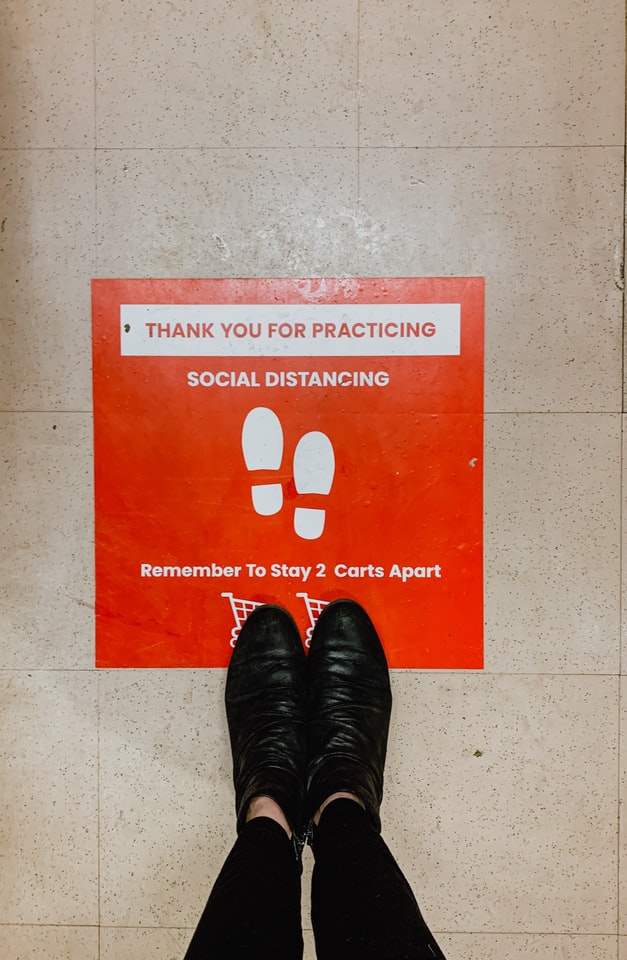
In this day of social distancing, etiquette and cultural humility, both, can help us navigate our new society, hopefully an environment which is temporary, but now reality.  We have been ordered to stay six feet apart, wear masks in public places, and cover our hands with gloves to protect us from the Corona Virus.

What should we do when we meet people who are not following these protocols and potentially endangering themselves and other people?

If we look to Emily Post’s advice and the practice of cultural humility, we must remember to respect, be honest, act graciously, and confer kindness in our interactions. 

Instead of yelling at someone to back up six feet so we don’t get their germs—“Back up, you bozo!”—instead, we could explain that we are concerned about their safety, so it would be better for them if they left more distance between us.

When witnessing potentially harmful activity such as a gathering in a park, etiquette and cultural humility encourage us to avoid jumping to criticism.  An alternative would be to say, “Isn’t it great to get outside!  Don’t forget to stay six feet apart while you’re having fun.”

If we run into a customer at Safeway who is not wearing a mask, we don’t have to shame her for her insensitive behavior, which only makes us insensitive.  We can nod to her in a friendly way and explain that we feel more comfortable following the mask rule so as to avoid getting infected.  Then, send her on her way with “Stay healthy, my friend.”

If we see our neighbor’s gardener drive up, good etiquette and cultural humility guides us to refrain from judging in case we misjudge instead.  Perhaps the worker is cleaning up the weeds in the back of our neighbor’s house, which qualifies as an essential service.  If the gardener is not doing essential business, but just mowing the lawn and trimming the hedges, we might think about the type of relationship we would like to foster with our neighbor in the long term.  Avoiding confrontation or criticism now can help us to maintain our good connections that promote a friendly and safer neighborhood for everyone involved. 

After this pandemic has passed and our lives get back to a more normal state, if we’ve practiced good etiquette and cultural humility, we’ll have developed good habits for the rest of our lives. 

In addition to fostering better relationships and communities, we’ll have grown into more caring, considerate, and loving human beings.  Our new etiquette-minded, culturally-humble perspective will make us more joyful and help us foster happier relationships.