My Passion for Flowers

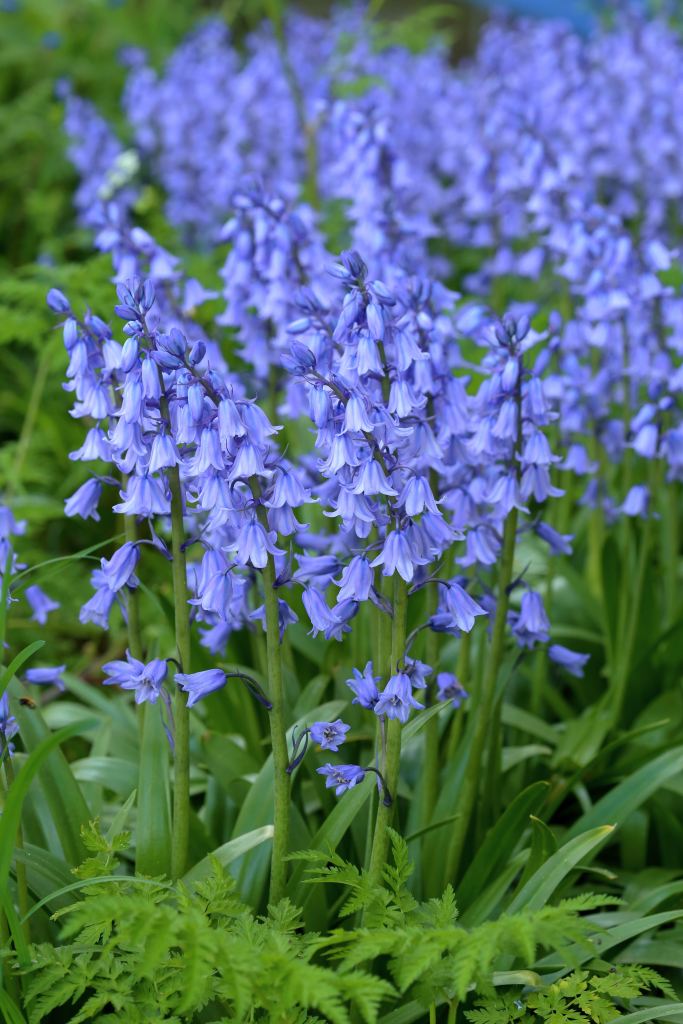
My first recollection of flowers was when I was ten and my family lived in the countryside in England. Across the road from our house was a forest which, that spring, was carpeted in bluebells.

I took my family’s scrub bucket into those woods, squatted down in the middle of the bluebells, and picked them. Milky juice squirted out of their stalks and trailed down my arms, making me sticky from hand to shoulder. When the bucket was full, I took it back home into the kitchen, knelt down to find my mother’s vases, and cut the bluebells’ stems to fit into them. Soon all the vases were full, but I found some quart Mason jars and filled them, too. Then, I put a vase of flowers on every bookcase and dresser in the house. My mother smiled when she saw them.
I love flowers. Flowers in my garden. Flowers in vases. The floral department in the grocery store. Flower fabrics and clothes. Flower pillows and bedspreads. Flower photographs and paintings. I just can’t get enough of them. Let me describe how my fascination with flowers has made my world beautiful.

Flowers Connect Me to My Mother

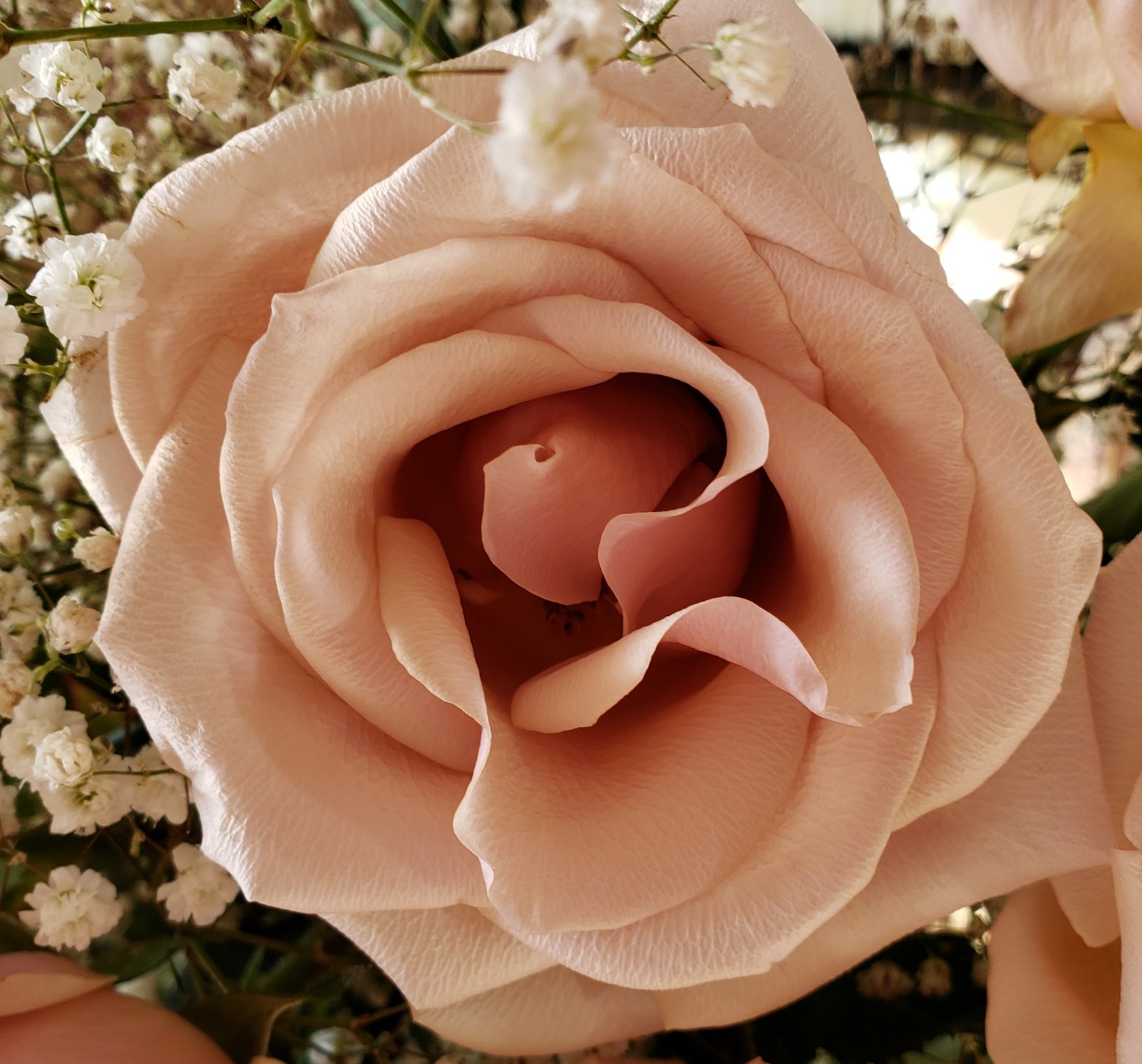
My mother loved flowers, too. Her name was Rose Marie and her favorite flower was a rose. When she lived in an assistant living facility near the end of her life, I brought her a bouquet of roses every time I visited. After my visit was over and I went back home, she would call me to tell me how the flowers were doing, when she had watered them, and where she had placed them in her studio.

But my mother had demonstrated her love for flowers all through my childhood. While we lived in England, she planted tulip and daffodil bulbs in front of our living room window. In spring, those bulbs bloomed like happy children and made our simple home bright and cheery.

When we moved back to California, my parents planted flowers all over their property. They took out the front yard grass and planted daffodils under the trees. Some of the trees were orange trees, and the combination of the yellow daffodils and the oranges was striking.

Easter lilies were planted in the back yard so that they would bloom for the Easter season, which was important to my family. Azaleas were planted in the shade, and my parents planted camelia bushes all along the patio railing. They bloomed all winter like red, pink, and white Christmas ornaments hanging amongst the glossy leaves. My mother would often comment on the camelias during our phone calls. Their buds were out. They were just about to bloom. They were in full bloom. One bush was white and the next was red. The humming birds liked them. We could have a whole conversation about her flowers.

A Flower Library

I’m an avid reader and have a library in my house. In my library, are books that I used during my teaching career such as the plays of William Shakespeare, The Norton Anthology of African American Literature, poems by Robert Frost, and the novels of more contemporary authors such as Toni Morrison and Tara Westover. But I’m retired now, and I’m starting a new collection of books based on the theme of flowers.

I was inspired to start a library about flowers when I read an article about Martha Stewart’s flower library. In the magazine, I found a picture of her bright book room with books stacked on mismatched tables around the perimeter and in the middle of the room. Every wall was filled with windows above the tables, making the room fabulous for reading. The books themselves were beautiful covered with photographs of roses, azaleas, and bouquets of every kind.

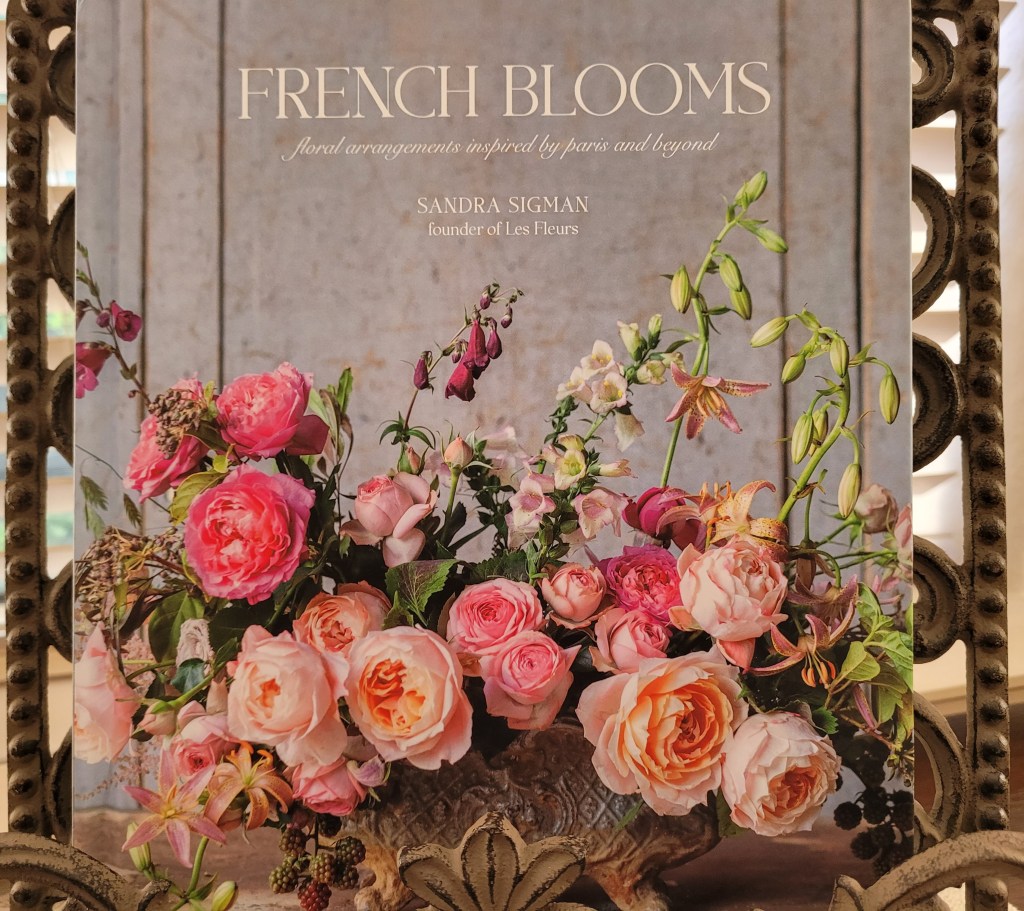
Now that I’m retired, I have more time for gardening, and, this summer, I’m in the middle of re-designing my front and back yards. To do this right, I bought a book about hydrangeas so I can do what I need to do so they grow healthy and vibrant. I also bought a book about 300 varieties of tea roses since I’m going to plant six new rose bushes along my new western fence. Oh yes, I also bought a book about French flower arrangements that I have displayed in my French décor living room.
Flowers, Flowers, Everywhere in the House

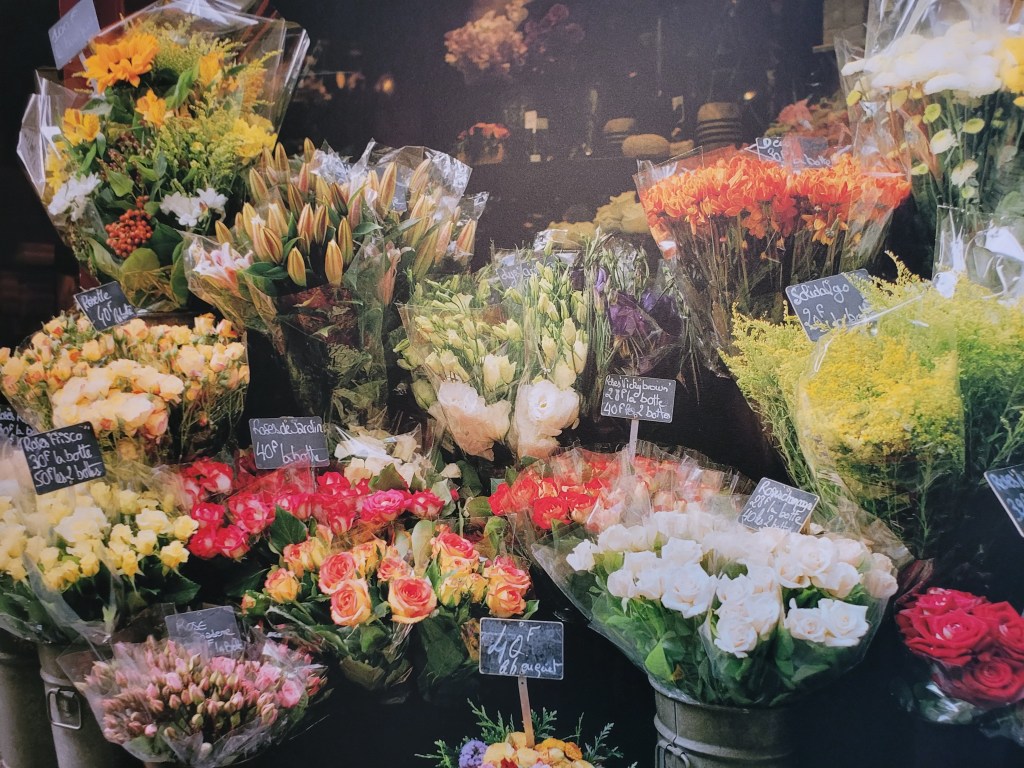
As soon as people step into my home, they learn how obsessed I am with flowers. In the living room, I am using three artificial flower arrangements to create a beautiful ambiance. Currently, I also have a vase filled with over a dozen red, yellow, and white roses from my own rose bushes in the back yard. I have bouquets of artificial flowers in each of the three bedrooms, flower urns in the library, and a real Christmas cactus in the family room. My bedroom walls all have pictures of flowers in them. The guest room, which also has a French theme, has a photograph of a flower vendor shop in Paris.
Flowers, Not Chocolate

Here’s a secret. I can be bribed, not with chocolates, but with flowers. When anyone gives me flowers, my heart melts like a warm candle. My husband gives me roses and sometimes other types of flowers on Christmas, my birthday, and Valentine’s Day. I love each and every bouquet as if it is the only bouquet I’ve ever received.

My daughter gives me flowers often because she loves flowers too. Her favorite flower is the Gerber Daisy. When I want to get her some blooms, I look first for those.

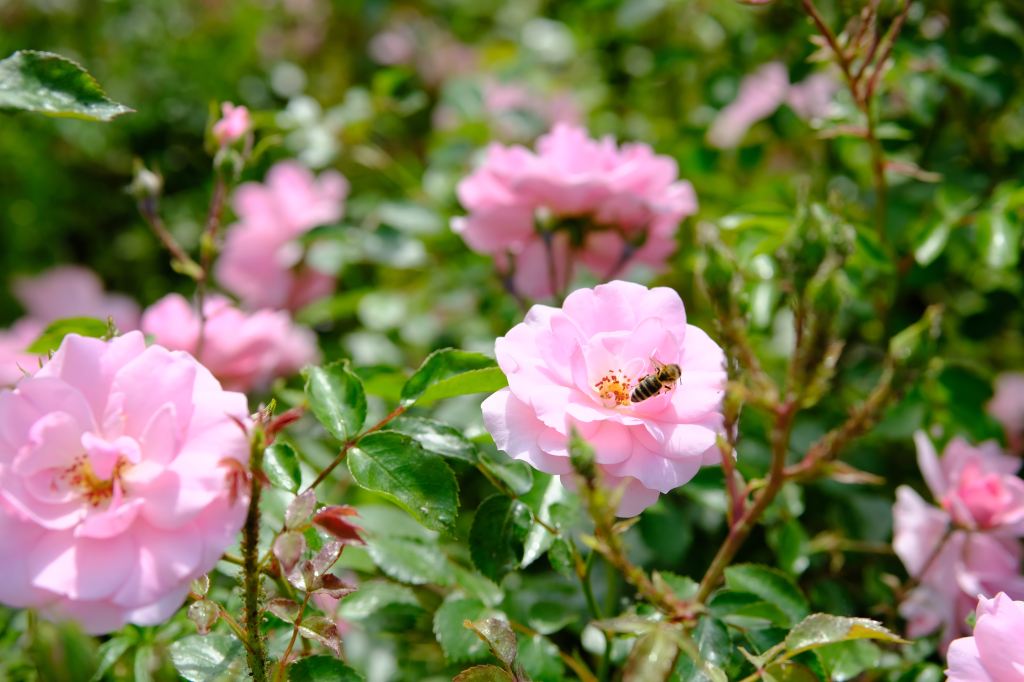
The most beautiful flowers I have ever received, however, were pink roses from my son. The pink was so delicate and the roses were incredible as buds and astonishing when they were fully bloomed. I took photo after photo of them, and, now, I have two photographs of these roses upstairs. My heart skips a beat whenever I see them.
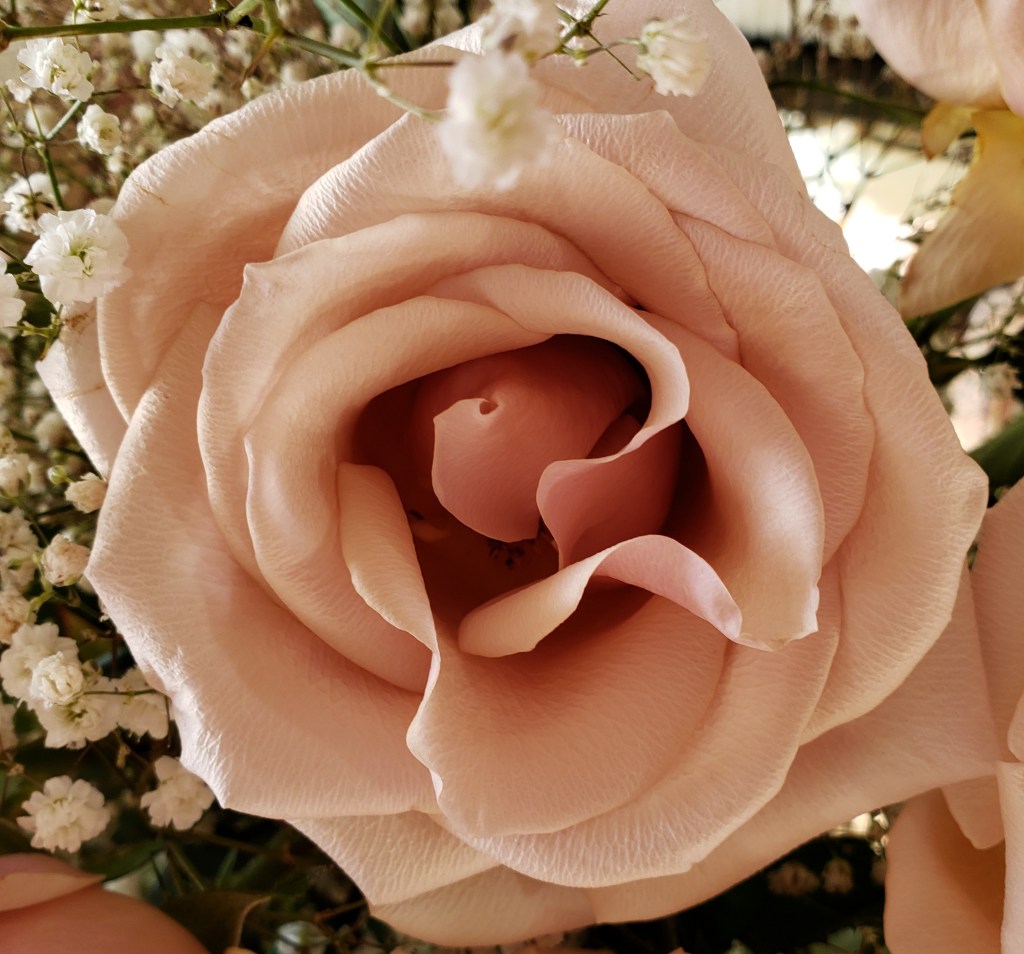
I’m inspired by beauty and that’s why I love flowers. This afternoon, I plan to read more about how to perfect hydrangeas and how to promote more blooms on all my blossoming plants. You can find me sitting in my garden amongst my flowers. Where else?

Learning a Language for a Better Life in Retirement

Photo by Jon Tyson on Unsplash

I’ve been retired for two and a half years, and a month after I retired, I started taking Spanish lessons. I previously took French in high school and college and two years of Spanish in graduate school, but I hadn’t used either language much at all. Now, my goal is to be fluent in Spanish one day.

It turns out that taking Spanish during retirement is a great idea. It’s great for health and also enhances my social life. Here’s how.

Learning a Language Sharpens Memory

Because studying a new language involves absorbing new information and practice, it is good for retaining the brain’s memory capability. According to Carly Spence at Cambridge.org, “[language] students learn new words and grammatical constructs and spend time reviewing and building on their previous knowledge as part of the learning process. This . . . is . . . an effective brain workout and protects older learners against dementia and other degenerative neurological conditions.” My memory is just as sharp as it was thirty years ago, and I want to keep it that way, so I guess I’ll be studying Spanish for years to come.

Learning a Language Boosts Cognition

Learning a language can also make a person smarter or help her stay sharp as she ages. In The Sydney Morning Herald, Evelyn Lewin explained the positive effects of studying a new language as determined by a 2019 Italian study. The study “looked at the effects in adults aged between 59 and 79 and found that, after just four months, people learning a second language scored significantly better on two research-backed measures of brain health and acuity: global cognition (such as thinking, understanding and problem-solving) and functional connectivity.” Many elderly people take it for granted that they will lose their ability to think clearly or maintain their intelligence, but this isn’t true for people who continue to use the high-level functions of their brains such as in studying another language.

Learning a Language Makes Travel More Fun

I just traveled to France for almost a month, and everywhere I went, I had opportunities to speak French. A French friend suggested that I always greet a French person by saying Bonjour first as a polite gesture. This small habit helped me engage in many lovely conversations in which I learned about the area I was visiting and the wonderful people I was meeting. As I continued my trip, French phrases popped up in my brain from my old French classes so that I could extend my conversations in French more and more. I felt proud of my capability and had much more fun.

Learning a Language Improves Creativity

Studying a language promotes a student’s creative abilities. According to Carly Spence at Cambridge.org, “This could be the result of the thought processes involved in language learning. These include translation, language switching and disciplined study, along with a willingness to learn and adapt.” Learning a language takes courage and humility, which are two characteristics of a creative person as well. A language learner believes that it is possible to learn to speak and understand a new language, and a creative person believes in new thought processes or ideas, so learning Spanish and being creative are truly close companions.

One of my goals is to do something creative every day since creating makes me happy. I’m a writer, but I also cook, garden, and decorate my home and yard. When I retired, I started to write a novel, and now that novel is almost ready for publication. I’ve been amazed at my creative power during the last two-and-a-half years. I believe my study of Spanish has enhanced my ability to create in other areas.

Learning a Language Leads to New Friendships

I’ve been taking Spanish classes for two-and-a-half years now, and this fall, I’ll be in Spanish 4. Each of my classes has consisted of over twenty students, most of them being retired. Often, the teacher arranges students into small groups to practice verb tenses or other tasks. When students work in groups, conversations become more trusting and students learn about what they have in common with their classmates.

I’ve made two new good friends in my classes. One is a former chemist who is married to an Indian man and has adopted two Indian children. The other woman is a former physician assistant whose husband is also studying Spanish. In-between classes, I meet with these friends at a coffee shop or for lunch to practice conversational Spanish. We share favorite restaurants, talk about our vacations, and reminisce about our childhoods.

Studying a language is not only educational and fun; it makes retirement a happier and healthier time of life.

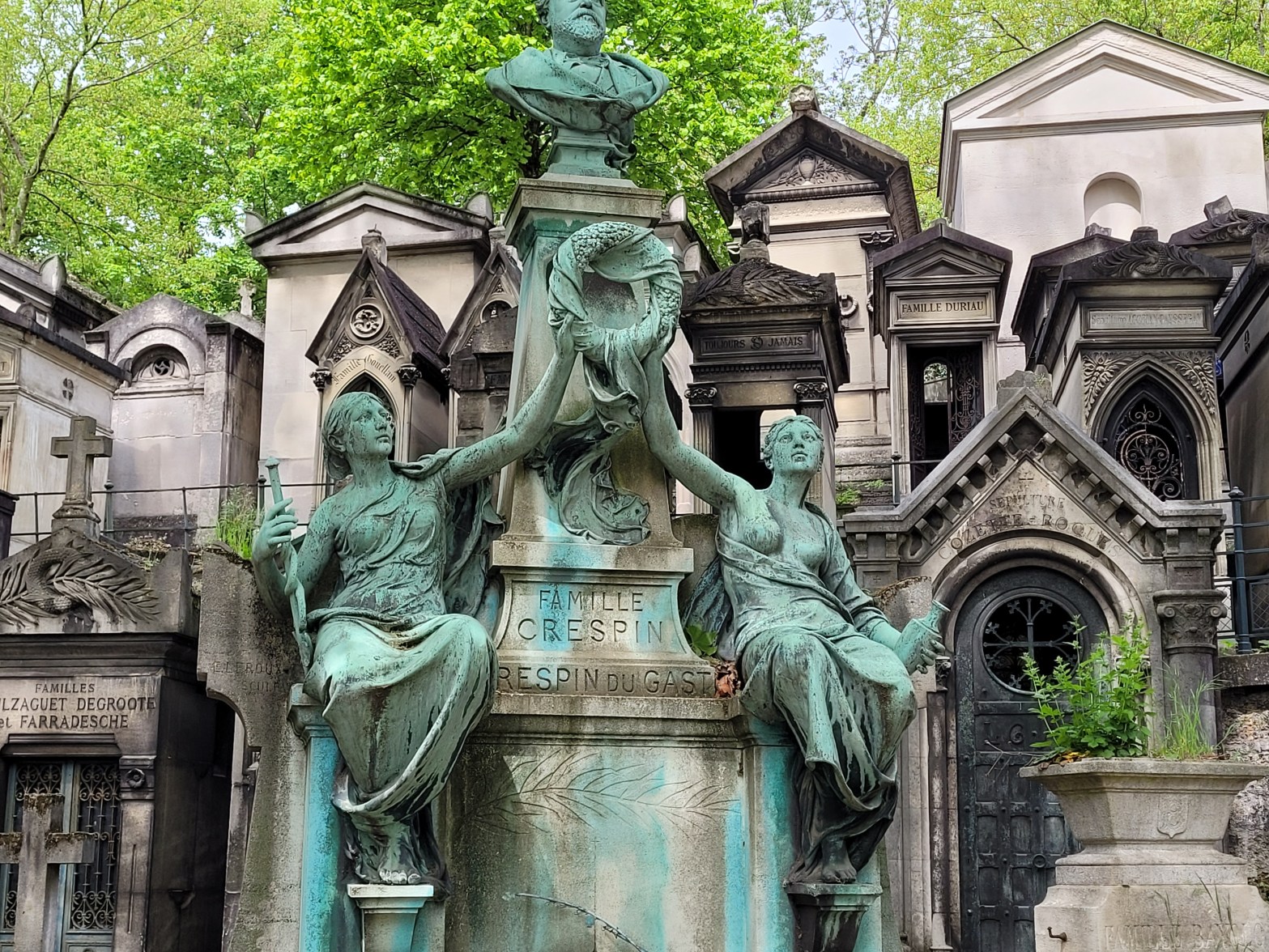
Getting Ghosted at the Paris Cemetery

My husband and I got to Paris three days before our tour of France was to begin. Our goal was for both of us to overcome jetlag before the tour started and to see parts of Paris not on the tour.

I had been to the Paris catacombs the last time I visited Paris with my daughter. These are underground alleys beneath the city to where thousands of bodies were transferred from cemeteries above ground as Paris expanded. For miles under the city, tourists can walk past bones piled up against the walls in neat displays. Hip bones are in one place, skulls in another.

One place I had never been before, though, was the Pere-Lachaise Cemetery, known for the graves of dozens of famous people from all over the globe. We took a taxi ride to the cemetery’s entrance at 16 Rue de Repos in the 20th Arrondissement, about a half hour ride from our hotel in Bercy.

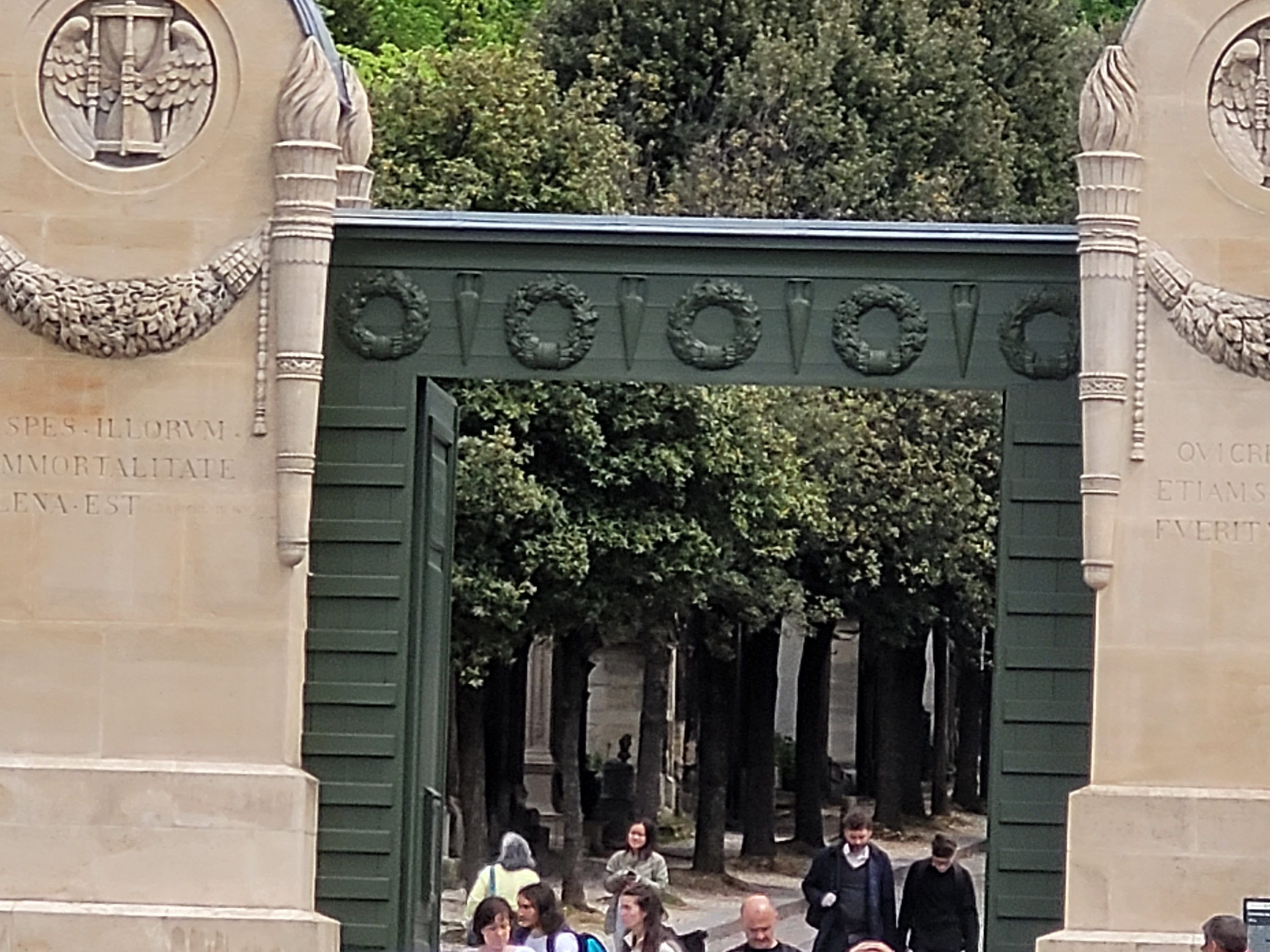
The entrance was a massive olive-green set of doors framed by wreaths. On both sides, the doors were flanked by two white granite columns topped with the carving of an hour glass circled by angel wings. The doors were open and, inside, we could see several erect tall tree trunks with leafy branches. In-between the trees, blackened marble mausoleums and statues beckoned to us.

I had a map of the cemetery from my Frommer’s Easy Guide to Paris, so I felt well-prepared to find many famous graves including Frédéric Chopin, the renowned Polish composer and virtuoso pianist of the Romantic period who lived half his life in Paris, and Oscar Wilde, the provocative Irish poet and playwright. But since we entered through the main gate, I decided we would start by finding the grave of Camille Pissarro, who was known for his Impressionist and Neo-impressionist paintings.

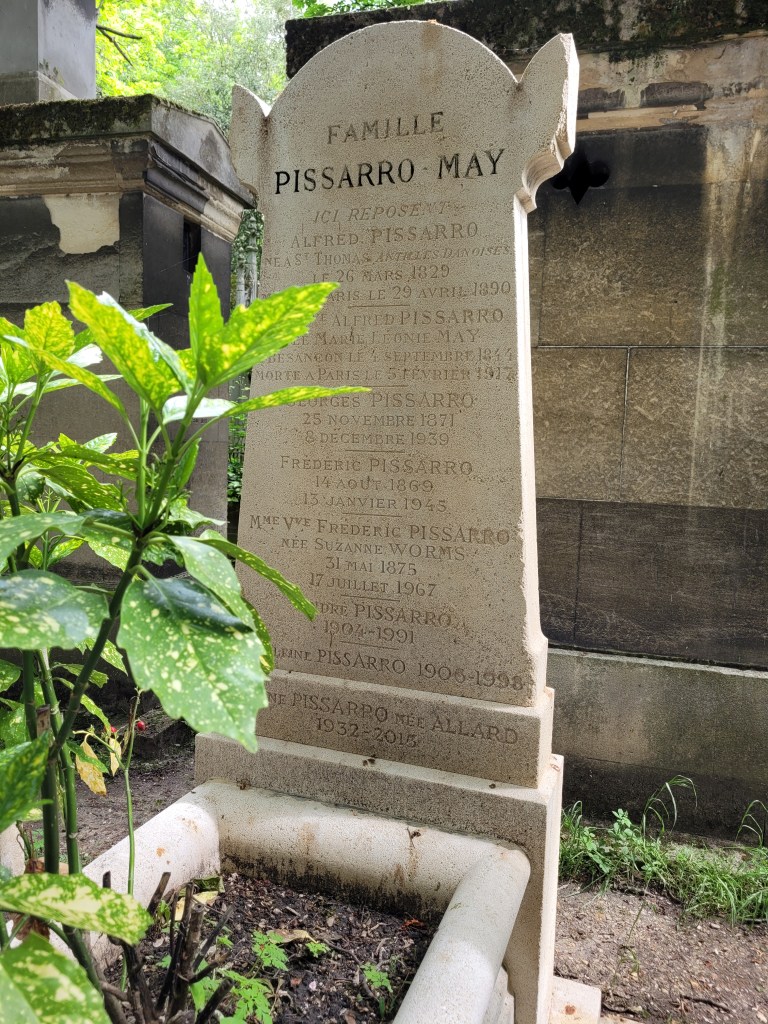
The cemetery has a few paved paths and dozens of tiny dirt paths that take visitors past the graves. To find Pissarro, we took a right just inside the gate to walk along the west perimeter of the cemetery’s wall. After several steps, sure enough, we found Pissarro’s crypt where at least eight family members were buried. The names were listed on a grand rounded slab of white marble with two angel wings sticking out at the top.

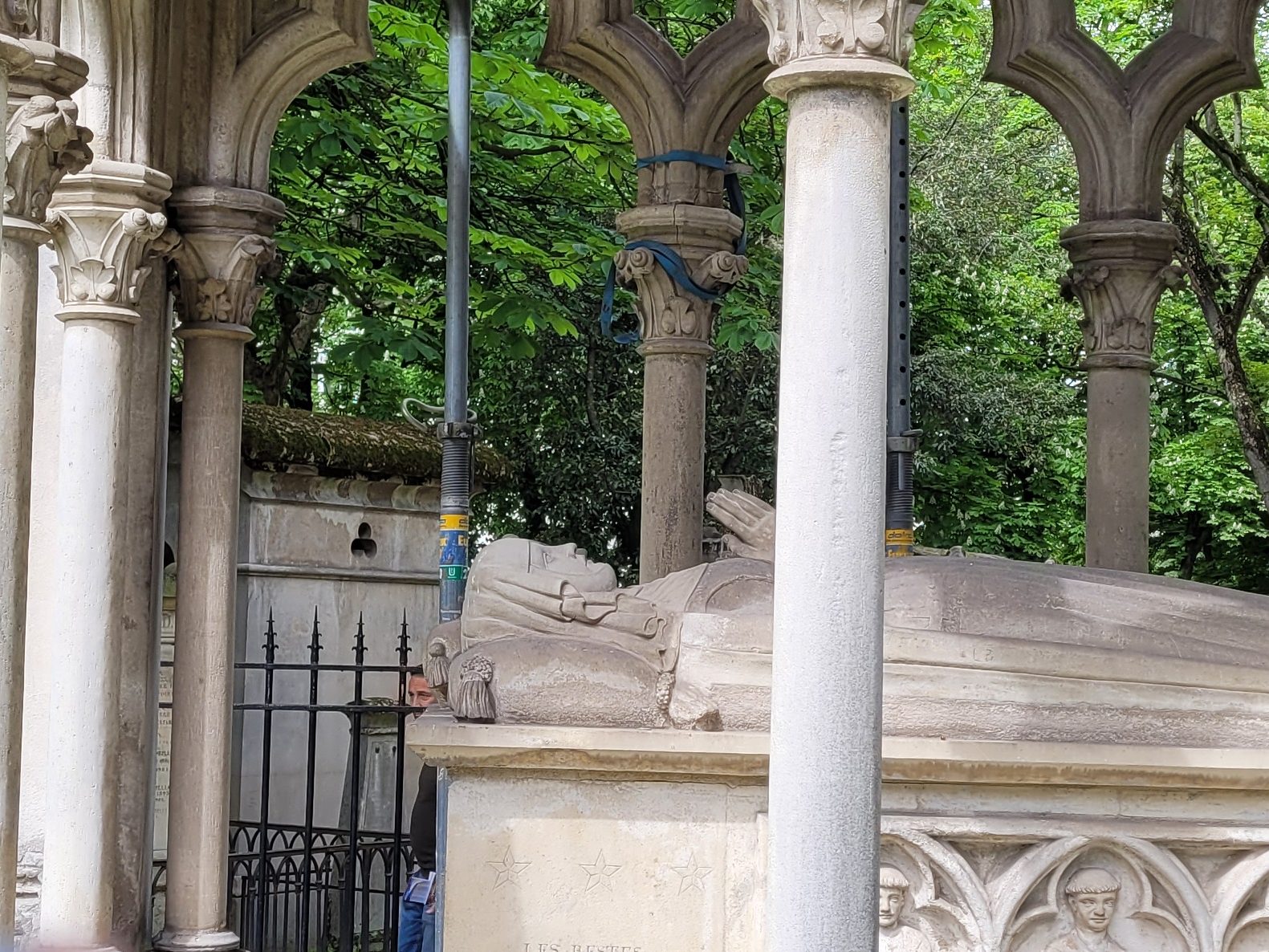
Nearby Pissarro, my map indicated that the 12th century lovers, Héloise and Abélard, were buried, their remains brought to the cemetery in 1817 from Brittany. We found their monument which is an openwork Gothic Chapel from an abbey in southwestern France. Underneath the roof are two reposing statues of the tragic lovers who were forced apart by their families and spent the rest of their lives writing letters of love.

After finding the tombs of these lovers, our luck evaporated. According to my map, the Rothschild family plot was nearby. Since the French Rothschilds were the founders of a banking dynasty in France, I expected their tomb to be colossal and easy to find. We scanned the names on several large monuments beside the dirt path, but we never found them. We found ourselves alone on the claustrophobic dirt path edging the gargantuan cemetery wall, shivered at the thought of being amongst more deceased souls than live ones, so gave up our search for the Rothschilds.

We took a teeny side path to reach Chemin Serre, a wider path than the lonely one we had just left, but still somber from the shade of countless trees which blocked out the view of the sky. Somewhere on this path was the grave of one of the most famous souls in the cemetery, the 1960s rock star Jim Morrison. According to my guide book, Morrison’s grave is the most visited in the grounds and, ever since he died, people have made pilgrimages to see his tomb, leaving behind graffiti, trash, and samples of drugs. We searched for the fenced-in tomb, which is supposedly an unexceptional relic. We asked passers-by if they knew where the grave was, and they pointed us in the right direction. We couldn’t find it. We looked for a grave that had a crowd of people gazing at it, but couldn’t find either a crowd or the famed resting place. We gave up.

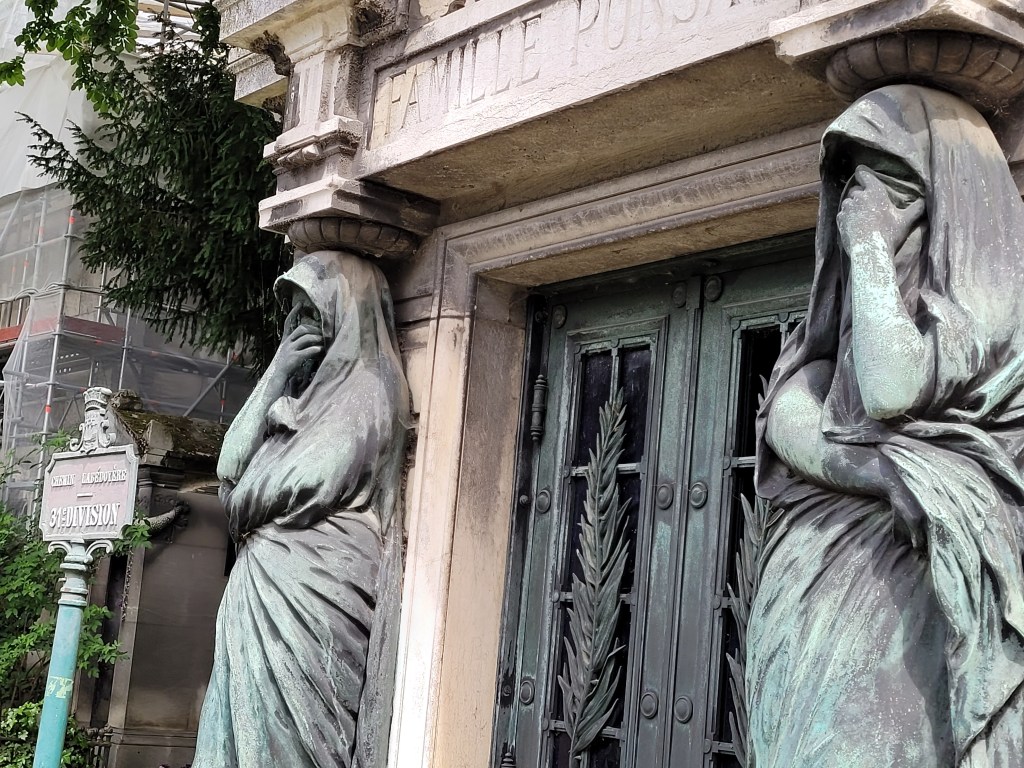
I was probably most excited about seeing the tomb of Oscar Wilde since I am a fan of his novel The Picture of Dorian Gray, Wilde’s story about a man that has his portrait painted and then sells his soul so he never loses his youth; instead, his portrait ages and records the sins of his amoral life. To reach Wilde’s grave, a visitor has to walk up the hill to the top of the cemetery, and my husband was unwilling to do this. Leaving him sitting on a bench on a popular paved pathway, I started ascending the hill. Oscar’s grave was at the juncture of Avenue Carette and Avenue Circulaire. I walked, I inhaled through my nostrils and out through my mouth to regulate my breathing as I ascended the steep terrain. I passed tombs of men surrounded by statues of weeping women, which I thought was a bit arrogant on their part.

I discovered the mausoleum of the Monet family, which may or may not be related to the impressionist artist Claude Monet who is buried in Giverny. I also found a crypt for the Macon family which I hoped was related to Emmanuel Macon, the French president. Unfortunately, though, when I reached the spot where I thought Oscar Wilde was buried, I couldn’t find him. I looked up at the grand crypts. I read the names on several flat tombs, but Wilde’s final resting place eluded me.

I next took the opportunity to find the side-by-side tombs of Gertrude Stein and Alice B. Toklas, who were also supposed to be buried at the top of the cemetery on Avenue Circulaire. Gerturde Stein was an American novelist, poet, playwright, and art collector who hosted a salon for writers and artists in Paris. Toklas was her long-time lover. Where were they? Did I have to step over graves to find them hidden in the middle of a mass of deceased humanity? I’ll never know because I gave up and went to join my own lover who was still sitting on his bench watching other people struggle with their maps.

Together, we found a memorial for the 6,000 Jews who died in World War II in the German concentration camps. We also discovered a crypt for the Famille Charlemagne, and since the ancient King of the Franks had 18 children, I know he certainly has descendants who are now buried in this Paris cemetery.

The last person I wanted to find was Frédéric Chopin, the Polish composer that I mentioned earlier. According to my almost useless map, he was buried at the juncture of three dirt paths a short walk away from the Monument aux Morts, a grandiose marble monument to the dead with several grieving statues. I left my husband again, sitting on a bench along the circular road that surrounds the monument, and, again, I traipsed uphill to find Chopin. Standing on the path, I searched every name on the tombstones near the juncture. No Chopin. Feeling desperate, I courageously scooted between the tightly packed graves to read the graves behind them. No. I hurriedly got out of there. Chopin didn’t want to be found.

Back at the entrance to the cemetery, I read that the cemetery was named after a Jesuit priest, a confessor for King Louise XIV, who lived in a house on the property before the cemetery was built. In 1804, Napolean bought the land so that all Parisiens could be buried, no matter their race or religion. I also learned that, today, over 1 million bodies and cremains are buried in the cemetery. That made me feel better. In the midst of a million ghosts, most of the ones I wanted to see were the ghosts too shy to do any spooking.

Photo by David Baker

How French Chickens Saved My Roses

A few months ago, I was touring through the gardens of Chateau Chenonceau in the Loire Valley in France with my husband. A guide had told us that the chateau used organic gardening methods for all the plants. As I walked past the gorgeous rose bushes, I wondered how the gardeners made them so healthy and beautiful. They had no black spot disease, no pests, and their blooms were vibrant and vigorous. What was their secret?

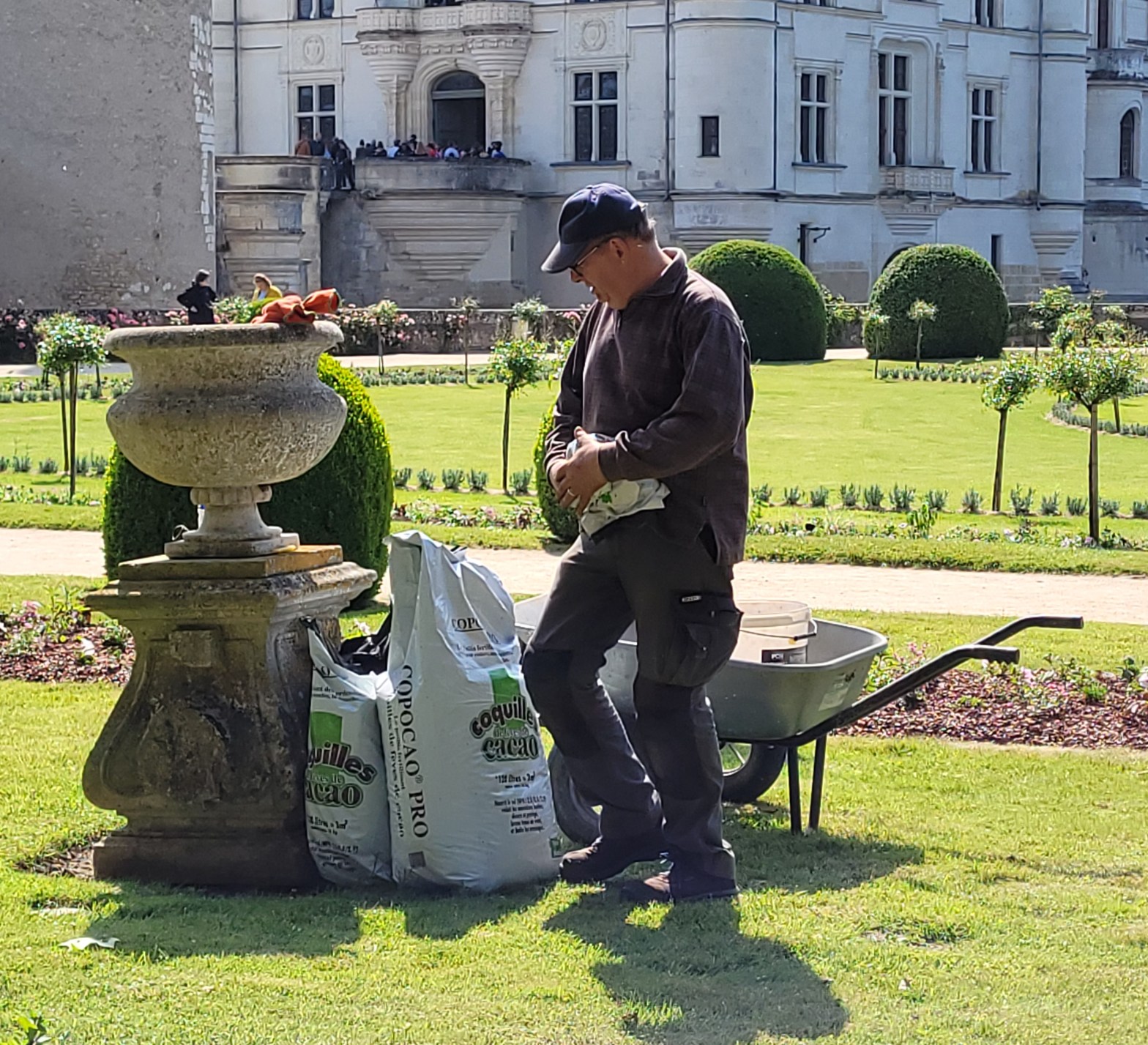
As I was about to leave the gardens, I saw a man leaning over a rose bush while sprinkling something brown around its base. Nearby, leaning up against an ancient stone urn next to his wheelbarrow, were two bags of coquilles caocao. I have had enough French training to know that the bags were full of chicken manure, and he was fertilizing the roses with them. This momentary experience transformed me from a chemical rose grower to an organic rose gardener with much better results. Here’s how I care for my roses now, and they have never been more beautiful.

Chicken Manure

I have roses under the window in my front yard, on my side yard, all along the lawn in the back, and a raised bed of my prized tea roses on the other side of the house. I’ve fertilized them, sprayed them, clipped them and I’ve always had problems. As soon as I got home from France, I bought six bags of chicken manure and spread it at the base of every rose bush. I was smelly. The mosquitoes seemed to like it, too, and they bit both me and my husband. I drank wine in my lawn chair with the smell in my nostrils. But it was worth it. Slowly, day by day, the rose bushes became stronger and their diseases cleared up. I didn’t use the fertilizer or disease control liquid at all. The chicken manure, which contains large amounts of nitrogen, phosphorus, and potassium, revitalized my roses all by themselves. And that smell, it’s gone now.

Vinegar Water

It took several days to almost two weeks for the chicken manure nutrients to be absorbed by the rose bushes, and while that was happening, some of the rose bushes had mildew. I did some research and found another organic solution to this problem. In an empty spray bottle, I combined a quarter of a cup of apple cider vinegar and one quart of water and sprayed it on the mildewed leaves of stems. I kept this container of solution near my tea roses so it was easy to use whenever I found problems. It worked. Now, two months after first applying the chicken manure and spraying the mildewed stalks and leaves, my roses are as healthy as the roses at Chateau Chenonceau.

Bone Meal Fertilizer

I was on a roll, and I kept reading about organic gardening for roses. What I found out next is that bone meal is good for promoting blooms. Its phosphorus and calcium strengthen the plant and promote bloom growth. I applied the bone meal, and low and behold, my roses staring producing more roses that ever before. I also gave some bone meal to my African irises, and they gave me the most beautiful white, yellow and purple irises I had ever seen. I only have to apply bone meal every four months since it releases its nutrients over time.

Clipping Old Blooms

I have known that a good rose gardener should clip off the old roses in order to preserve the rose plants energy for the new blooms, but when my plants were diseased and ugly, I had little incentive to do this. In the last two months, however, I’m excited to take a pair of sharp clippers and to snip off the spent flowers, making sure that I cut the stalk just above a five-pattern of leaves. While I’m clipping the old blooms, I also clip the vibrant flowers to take into the house to enjoy in a vase on the table.

I never expected that my life would be changed by walking through an ancient garden in France. Even though my roses didn’t go to France with me, I brought them back something better than a souvenir: healthier lives.

Photo by Yuliia Dementsova on Unsplash

Fabulous Fred

Some people are more memorable than others. They pop up in your mind. You visualize their wicked grin, beguiling smile, or musical voice as you recall old travels or past meetings. Recently, when I toured France with Insight Tours, I met such a man, and his name was Fred.

My fist exposure to Fred was an email he sent me before the trip started. The note contained clear details about where to meet in the hotel and what I had to do to label my luggage as part of the tour. Fred’s words were business-like and direct. He signed his name Frederique, but suggested that we call him Fred.

Fred dressed in a well-ironed red-and-purple-checked button-down shirt over a gray pair of casual trousers. His head was bald and he had a salt and pepper mustache and closely-cropped beard. It didn’t take long for this trim, conservative and snappy dresser to impress me. These are the qualities that he possessed to make him the best tour director I’ve ever had.

Clear with Directions

I came to appreciate Fred’s detailed directions, especially when he let us wander in the middle of ancient French villages and described how we could find the bus at the assigned time. He made use of landmarks such as the gothic church or the town hall. He used his arms to indicate left and right and repeated the directions as many times as we asked him. He seemed to understand that many people didn’t listen well until they realized they had to rely on themselves to find their way.

Timely

Whenever it was time to meet, Fred arrived first. He finished breakfast before us and waited for us in the lobby. He was at the bus at all the designated times, and he made sure that our luggage was picked up from our rooms and loaded into the bus timely.  How? He helped the hotel bellhops gather it and transfer it outside so as not to delay our departure.

Personable

Fred turned out to be a friendly and approachable human being. Every morning, when the bus started moving toward the next destination, Fred wished us Bonjour. After we responded, he continued with Avez-vous bien dormi? Did you sleep well? When we responded negatively, as many travelers might, he taught us a more positive way to answer that question. Say oui first, and then indicate how you might sleep better next time, coached friendly Fred.

He joked about his baldness and described how he once had a mop of hair in his twenties. On Day 2, he sprained one of his fingers moving our luggage and, most unfortunately, a pigeon defecated on his head in the middle of a town square. Neither of these incidents ruined his sunny demeanor. He allowed two tour members to clean the pigeon poop off his head and shirt and continued the tour with humor. 

Later in the tour, he was comfortable enough to describe his recent bout with cancer, showing that he was just another human being with human problems. Since many of the travelers were seniors, I’m sure they felt more at ease with him since many of them had suffered from medical problems themselves.

Caring and Attentive

Fred demonstrated sensitivity to all of us in many ways. He stood at the bottom of the bus steps and helped us climb safely to the ground. He also instructed the bus driver to stand at the other door and do the same.  When we stepped down, he smiled at each one of us as if we were the most important person on the bus.

One of the single tour members appeared to have a memory problem and Fred always made sure she was back on the bus and physically safe. He never complained that she was forgetful or not walking as fast as the rest of us. He simply took care of her kindly.

Interesting and Informative

The tour covered the country roads of France, which means, sometimes, our bus driver would drive us over remote mountain passes, into narrow tunnels, or over roads that circled country vineyards and farmland.

We were never bored while touring these far-flung French trails since Fred provided us with detailed and stimulating lectures that described what we were seeing and what the history of the area was. For example, when we were approaching Arles, where Vincent Van Gogh lived for many years, Fred revealed that the artist painted over 300 painting in Arles, but sold only two. While we drove through the walnut groves of the Dordogne Region, Fred explained that every part of the walnut tree was valuable to the French farmer. The nuts are sold for food, the shells are used as fertilizer, and the wood is used to make furniture. After listening to Fred’s lectures, I felt a little smarter and a little more French-savvy.

Resourceful

Several times throughout our trip, Fred informed us that he and our bus driver had poured over the map and found new country roads to explore that day. He assured us that the driver was an expert driver so we were sure to enjoy the new adventure.

Another way that Fred proved his resourcefulness was when we stopped in various places and he went out of his way to improve his understanding of the area. For example, when we visited Pont du Gard, a three-storied Roman aqueduct in the Languedoc Roussillon Province, Fred climbed up the trail beside the structure to view the third level, something he had never done before.

Helpful to French Travelers

In my past visits to France, I have had negative experiences with French people. Waiters ignored me. People on the street merely walked away when I asked them a question.

Fantastic Fred provided us with a remedy for situations like this. He explained that French people learn English in school, but when tourists come up to them and ask them a question in English, they freeze, once again experiencing those dreaded English classes.

Fred recommended that we approach French people with a polite Bonjour and allow them a moment to warm up to us before launching into our English question.

I put this method into action. Whenever I entered a shop, I said Bonjour to the shop clerk. Each time, I was rewarded with warm eyes and a smile. If I wanted to use a restroom in a restaurant where I wasn’t eating, I said Bonjour to a waiter, then asked to use the restroom, and the waiter never turned me away. Fred’s method seemed to be foolproof.

Funny

Who doesn’t like a comic? On the first day of the bus tour, Fred demonstrated that he had a repertoire of jokes in his tour director cache. The first joke he told us was a parody of the French people according to the Germans.

The joke went like this. When God made France, he created the dazzling Alps to the East, the stunning and bountiful Atlantic Ocean to the West, the beautiful Mediterranean to the South, fertile farmland, prolific vineyards, and bountiful orchards, ample rain, and plentiful sunny days. No other country had been blessed with such advantages.

The Germans were upset, and they asked God why he gave France so many wonderful characteristics. They insisted that it just wasn’t fair.

Upon hearing the Germans, God became contemplative. He thought and thought and thought. Finally, to balance everything out, God made the French people.

When we heard the punchline, the bus erupted in raucous laughter. You would think that we were laughing at the French people, but Fred was quintessentially French, so his joke helped us appreciate their humanness instead of thinking poorly of them.

Here’s another joke by Fred that had to be told in English to be funny. What do you call someone who jumps into the Seine River?

Answer. In Seine.

It takes a certain personality to tell a joke well. Fred could do it because he wasn’t afraid to be self-deprecating and he was naturally good-natured.

I will remember Fred every time I travel on a tour. I’ll unconsciously look for his snappy ensemble in every hotel lobby and wistfully hope that he comes walking through the door to lead us on another well-organized, comfortable, informative, and fun adventure.

My Aussie Lesson

Photo by James Wainscoat on Unsplash

I know this post may reveal my ignorance about a major country of the world, but let’s face it. Australia is far away from most places. I’m not used to thinking about this down-under country unless their government does something incredible like it did in 1996: banning assault weapons within two weeks of a mass shooting in Port Arthur, Tasmania.

I, however, recently spent over three weeks in France with about twenty Australians, who dominated the atmosphere of our bus rides and dinner conversations with their jolly personalities and proud Australian heritage. Here is what they taught me about their country and themselves.

The Aussie Name for the U.S.

My new friends consistently referred to the United States as America. Australia is on the other side of everywhere, so maybe they had never heard of Canada, Mexico or any of the countries of Central or South America. They pronounced America with wistfulness and admiration, while, at the same time blinking their eyes, then looking briefly toward the horizon as the shadow of a smile lit up their lips. My heart swelled with pride and warmth knowing that my home still generated such positive vibes.

States

As the United States adopted the names of its 50 states, it chose both creative and unique names such as California, which originated from a Spanish romance novel, named after an island located close to Paradise.

Australia has six states with less original names. Whoever came up with the names Western Australia and South Australia either lacked imagination or ran out of time. The states Queensland, New South Wales, and Victoria, regrettably, represent a devotion to England more than they do Australia. Only the state’s name Tasmania, an island southeast of the country shows any modicum of ingenuity, named after the Dutch explorer, Abel Tasmin, who first sited the island in 1642.  

Apparently, both Tasmin and Christopher Columbus thought 1642 was an excellent year for finding new lands.

Australia’s National Dessert

Apple pie? Pumpkin pie? Ice cream? I did a little research, but I couldn’t find any conclusive evidence that the United States has a national dessert. In contrast, my new Australian friends were adamant about the existence of a national Australian dessert called pavlova. This round dessert consists of a crispy meringue outside, a soft interior, and fresh fruit and whipped cream on top. The Australians eat it all summer and for special occasions.

What’s so funny about this dessert is that it was named in honor of a Russian ballerina who visited the country in the 1920’s, Anna Pavlova. I guess if you’re going to name a state after a queen of England, you can name your national dessert after a Russian ballerina.

An Aussie Kind of Domestic Terrorist

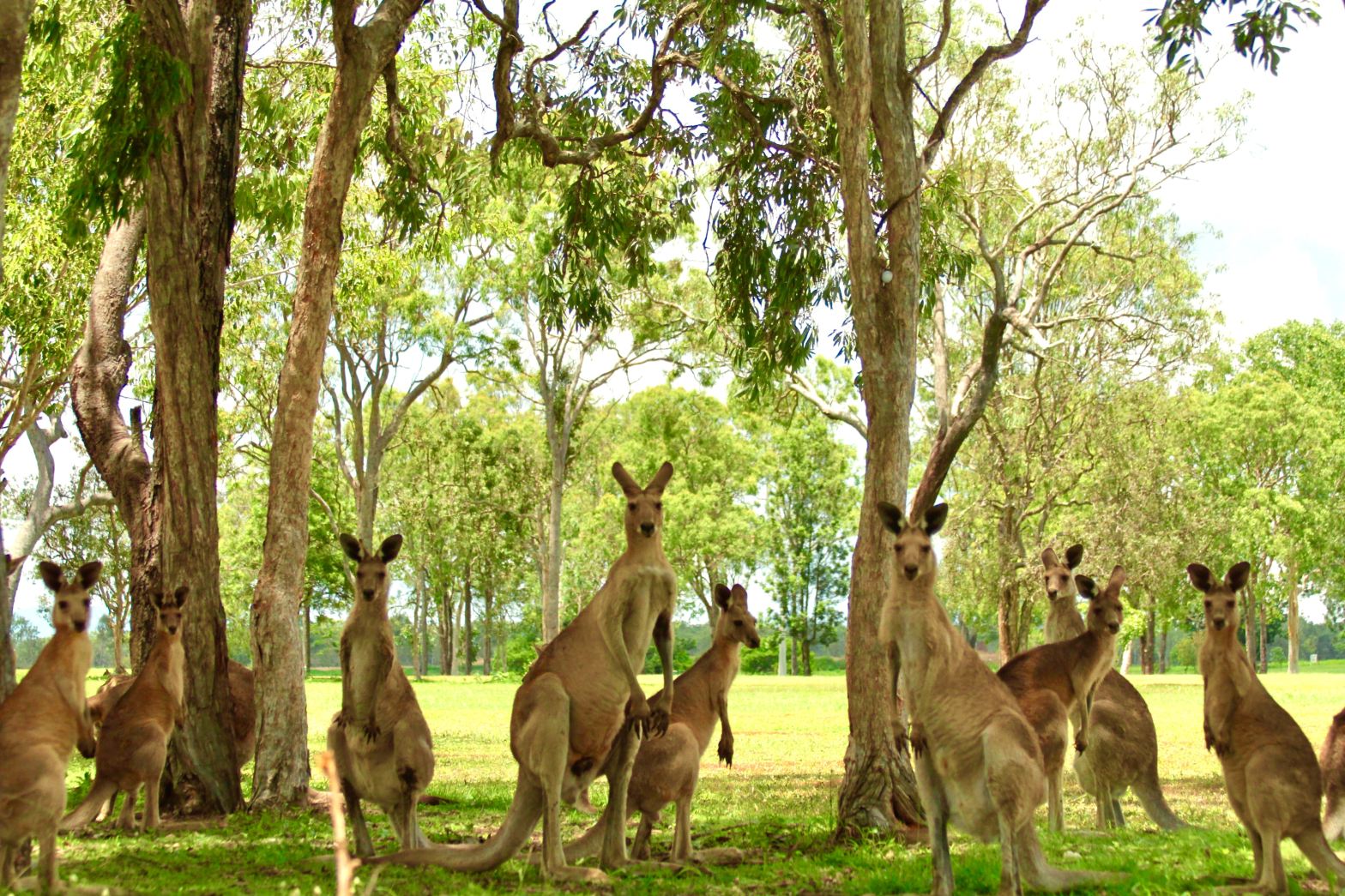
In Northern California, deer sometimes jump fences to chew off the roses on bushes, but what kind of fence could keep a hungry kangaroo out of your garden? My Aussie friends have a kangaroo problem.  In their neighborhoods, kangaroos break through fences, trample flower beds, gnaw on trees, savor all kinds of fruit, and feast on flowers and shrubbery. 

My image of a friendly kangaroo mommy with her baby poking out of her pocket has been shattered.

Upside-down Seasons

Because Australia is located in the Southern Hemisphere, the country’s seasons are reversed from those up north. Australia’s fall is at the same time as the northern spring. Their winter is our summer. Their spring is our fall, and their summer happens when we’re celebrating Christmas and Hannukah.

Honestly, I knew this, but I’m so surprised at how much confusion this difference caused during conversations about weather and holidays. I found myself tilting my head to the side, as if I was preparing to do a cartwheel, and blinking my eyes as I attempted to clarify the vision of Santa Claus wearing shorts and sunglasses while sliding down a cold, unused chimney.

Outgoing Personalities

All the Aussies on our tour were bold, outgoing, and confident. Not only did they make up the majority of our group in number, but they made most of the noise. I’ve never considered myself shy, but my assertiveness could not compete with these extroverted dispositions.

One 4’11” woman made up for her short stature with her bellowing voice and bravado mannerisms. According to her, marriage was a lifetime commitment, a fifth Covid vaccine had been approved, and Perth was a friendlier city than Sidney. I didn’t dare disagree with any of her opinions because her balled-up fists seemed serious.

One of the funny men who was married to, according to him, the best researcher on the bus, took a big liking to me and my husband. As we rotated seats around the bus during the tour, they were either sitting directly in front of us or directly behind us, which meant we had lots of opportunities for conversation. His name was Roger, but he referred to himself by his nickname, Candy Evergreen, given to him by a neighbor. Candy Evergreen claimed my husband as his bestie and told me to leave men business alone. I wasn’t insulted by Candy Evergreen’s kidnapping of my guy since both seemed to thoroughly enjoy this juvenile male-bonding experience.  

The more I learned about Australians during my days in France, the more I appreciated the brash and fulsome Australian character, and the more I empathized with them. They were opinionated, but in the next moment, they were buying your lunch. They were loud, but they were good-natured. They were corny, but funny.

After all, when you live at the end of the planet, you’ve got to shout louder to get noticed.

4th Time to Paris

(Photo by Anthony Delanoix on Unsplash)

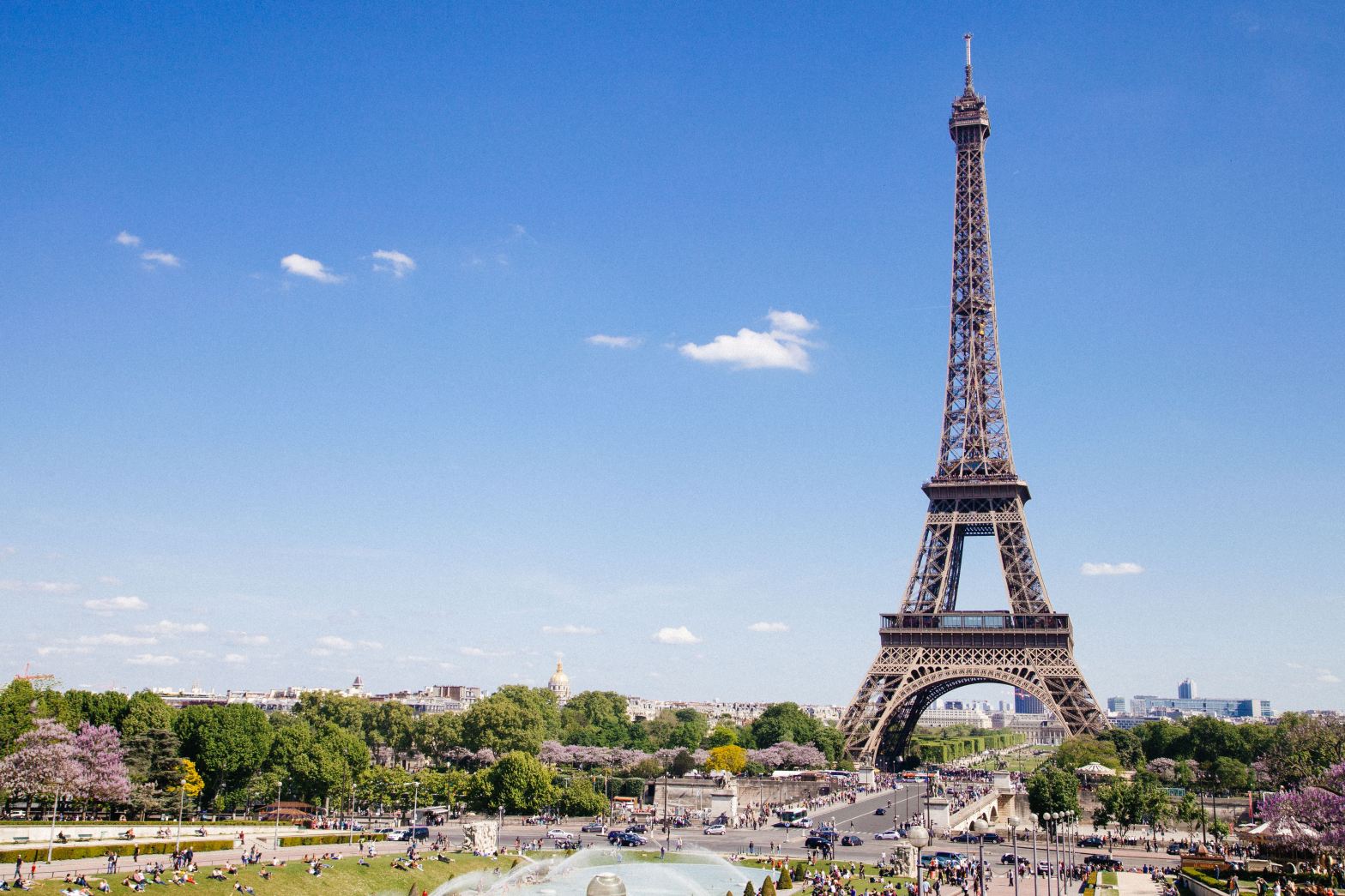
Next month, I’m going to Paris for the fourth time.

The first time I visited Paris was with six other college students. We were there on Bastille Day, July 14th, which commemorated the beginning of the French Revolution when the Parisians stormed the Bastille Prison. My friends and I were in the midst of a throng of human beings on the Champs Elysees since everybody celebrates the day by gathering in the streets. Two young men set off fireworks, and the police swept in and arrested them. To disperse the crowd, they launched tear gas grenades into the mass of bodies blocking their way. Suddenly, my throat was filled with knife-sharp chemicals and I croaked like an old frog. The crowd, a mass of forms heaving as a single unit, dragged me and my friend Nancy away from our friends. We never found them until hours later.

The second time I flew to Paris was for work. I stayed at a hotel where, every night, I watched the Eiffel Tower light up at dusk and twinkle over the city until 1:00 a.m. in the morning. I met Olivier at the office who became my French friend until he married and his wife ended our friendship. Olivier took me to a small Franc concert in a beautiful Gothic church and out for a crepe lunch where I enjoyed both savory and sweet crepes—the most delicious pancakes in my life.

The third time, my 17-year-old daughter came with me to Paris. One night, while we were sitting outside the pyramid beside the Louvre, we watched the sun set over the most beautiful skyline in the world. At 8:30, we decided to rush into the Louvre before it closed at 9 p.m. It was a free admission day, so we walked right in. We passed the headless Winged Victory of Samothrace as we climbed the grand staircase up to the gallery where the Mona Lisa was displayed behind bullet-proof glass. No one was there. No one. This gave us the unusual opportunity to gaze at Leonardo’s mystery woman from several vantage points and to watch her eyes follow us from side to side.

My daughter and I also toured the French Catacombs which contain the bones of over 6 million people who were once buried in the cemeteries of Paris above ground. We walked for miles within the old limestone tunnels underneath Paris, discovering piles of skulls, femurs, hips, and other bones stacked in piles along the shaft walls. I don’t want to ever visit those unfortunate disassembled people again.

Now, I’m going to Paris for my fourth time with my husband who has never been. We’re boating down the Seine, visiting the Louvre, inspecting the Impressionists at the Musee D’Orsay, witnessing Napoleon’s Tomb, and touring the Pantheon; however, I want to make sure we make it to Pere Lachaise Cemetery this time. This cemetery is above ground and within walking distance of the Louvre. Although people of all faiths are now buried there, the cemetery takes its name from a Jesuit priest, Francois Le Chaise, the confessor of King Louis XIV, who lived in a Jesuit house on the original site.  Hundreds of famous writers, artists, and musicians are buried there including Oscar Wilde, Honor de Balzac, Chopin, Gertrude Stein, and Jim Morrison. I’m trying not to think about why I’m so fascinated with cemetery tourist sites.

Well, I need to get started with my packing. I also have some projects to finish before I go, including completing the homework for my Spanish class. I know it’s ironic that I’m going to France while studying Spanish, but c’est mon vie.