
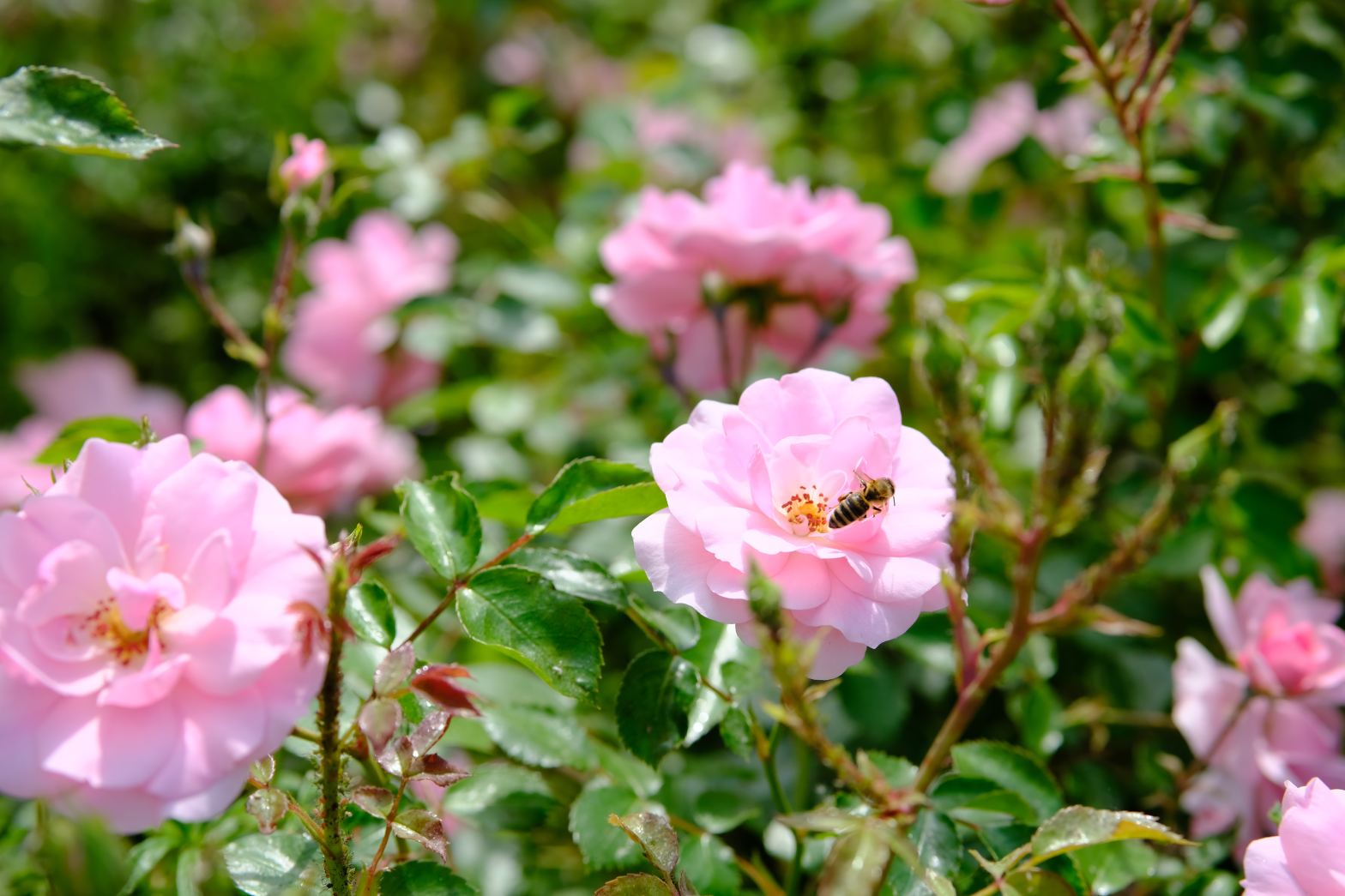
One day as I was driving through a neighborhood in my town, I saw a front yard surrounded by a white picket fence. Inside the fence was a garden full of rose bushes—tea roses, floribundas, grandifloras, pinks, reds, whites, lavenders, and yellows. Roses of every classification and color. In their midst, was a white head of hair belonging to an elderly woman. With a clipper in her gloved hands, she was snipping roses to take into her house. That’s what I want to be when I get old, I told myself. I want to be a rosarian.
The Definition of a Rosarian
A rosarian doesn’t have to be a professional rose gardener. Anyone can claim the title if they are fond of and/or cultivate roses. To cultivate means to nurture, and I already foster a large family of carpet rose bushes and three tea roses. As soon as my new retaining wall and patio is installed, I will plant at least six more tea roses against the fence. So, I’m technically already a rosarian, but I want to be a more involved one, and the goal of this post is to help me identify what a rosarian needs to do on a regular basis to grow big, bountiful, gorgeous, fragrant roses.
A Rosarian Knows Where to Plant Roses
Roses like as much sun as possible. I live in Northern California where the sun is plentiful so finding sunny places to plant my roses is not a problem. In addition to sun, however, roses need good soil with ample drainage. My yard has fertile soil with plenty of drainage so I’m lucky there, too.
A Rosarian Feeds Her Roses
I once read that roses are hungry feeders. They like to receive a lot of water, nutrients like nitrogen, phosphorus, and potassium to create strong, vigorous growth, and calcium for plentiful blooms. I used to fertilize my roses with chemicals, but, after I went to France and saw the gorgeous organic roses in the Chateau de Chenonceau Garden, I came home determined to become an organic rosarian myself. Now, I fertilize my roses with chicken manure and bone meal to promote their healthy growth and blossoming.
A true rosarian continues to learn about her expertise. I just read about Dan Bifano, the master rosarian to Oprah Winfrey who makes his own blend of fertilizer. According to an article in Veranda on April 1, 2021, Bifano creates his fertilizer using alfalfa meal, chicken manure, worm castings, cottonseed meal, and fish meal. I don’t know where I would find all these ingredients or what proportion to use, but I’m keeping this recipe for future reference.
A Rosarian Learns the History and Vocabulary of Roses
I’m currently building a library of books about roses and I’ve joined the American Rose Society. I also may join the local chapter of the rose society to learn more about growing roses in my specific area.
In the handbook from the American Rose Society, I learned that roses are grouped into three main categories: wild roses; old garden roses which existed prior to 1867; and modern roses which were not in existence before 1867.
From my reading, I also learned that the first rose breeder was Guillot who created La France, the first hybrid tea rose. Contemporary breeders focus on creating hybrids that are disease resistant and more fragrant. Modern roses come in all shapes and sizes with varying characteristics including blooms with differing numbers of petals. My favorite are the hybrid tea roses that have large blooms with over 30 to 50 petals. Who doesn’t love gigantic flowers?
A Rosarian Grows the Right Roses for Her Climate
I recently purchased The Color of Roses: A Curated Spectrum of 300 Blooms by Danielle Dall’Armi Hahn, which includes beautiful photographs of 300 kinds of roses in all shapes and sizes. While browsing through this book, I fell in love with certain rose types, but I didn’t know whether they would grow well in my garden.
In the same Veranda article, Dan Bifano recommends that rosarians become familiar with the roses that grow in their local area by visiting local rose gardens and nurseries. Luckily, just four miles from my house is a park with hundreds of rose bushes that are labeled with their names. I’ve walked in this park many, many times, but now I’ll go to inspect the rose name tags.
I also plan to tour some of our local nurseries. I’ve already been to Home Depot and found some of the roses that are listed in Dall’Armi Hahn’s book including Marc Chagall. I have also identified a few local nurseries that specialize in roses. I can’t wait to choose some for my new garden.
A Rosarian Prunes for Winter
In the past, I always pruned my roses almost to the ground for winter. Recently, however, I read that winter pruning depends on the type of rose. Climbing roses, for example, should not be pruned to the ground. The main branches should be retained while weak offshoots should be trimmed back. This winter, when I get my pruning shears ready, I’ll think carefully before I cut.
A Rosarian Removes Spent Blooms in Summer
To keep roses looking gorgeous, conscientious rosarians clip off blooms that have bloomed to maturity and then start to wilt. I think this is my most favorite rosarian task since it is an opportunity to reshape the rose bush into an attractive shape. I am careful to clip the stalks just above a three-leaf pattern so that another rose is encouraged to bloom.
When I think about the elder woman’s rose garden, my breathing slows and my heart feels peace. Someday soon, after I have added my new tea roses, my own garden will give me the same feeling, and I’ll be the rosarian wandering amongst my bountiful blooms.
 Tess Perko's Blog